Calling Crows Over a Winter Feed Site
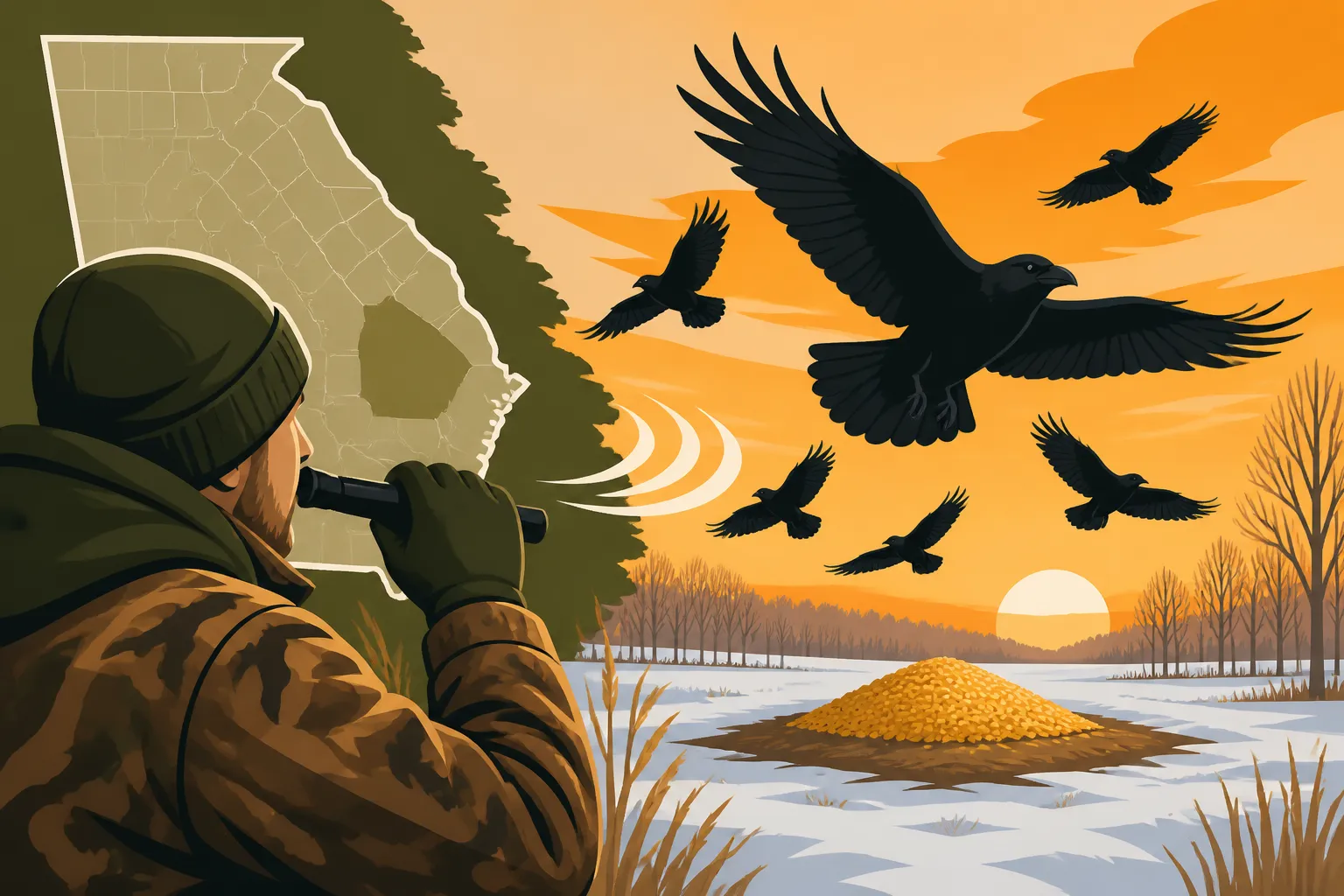
When winter sets in across Georgia, many hunters turn their thoughts to deer, ducks, or turkeys. But if you’ve spent any time on a farm or near an active agricultural area, you know there’s another incredibly challenging and often frustrating quarry that thrives in the colder months: the American crow. These highly intelligent birds can descend in massive flocks, wreaking havoc on winter feed sites, from cornfields to pecan groves, and learning to call them in effectively can feel like trying to outsmart a feathered chess master. This guide is all about diving deep into the art and science of calling crows over winter feed sites in Georgia, offering practical advice and strategies to help you bring these wary birds into range.
Understanding Winter Crow Behavior in Georgia
Before you can hope to outsmart a crow, you need to understand what makes them tick, especially when the Georgia landscape turns frosty. Winter changes everything for these birds, driving them towards reliable food sources and altering their social dynamics.
Why Winter Crows Gather at Feed Sites
As the natural forage disappears with shorter days and colder temperatures, crows, much like many other species, become incredibly opportunistic. Those vast agricultural fields that provided cover and scattered food during warmer months now become critical hubs of survival. Think about those freshly harvested cornfields where combines leave behind plenty of kernels, or the rich bounty of a pecan grove. Livestock operations, especially cattle feedlots, become magnets as well, offering spilled grain and other palatable scraps. Even suburban bird feeders, if large enough and consistent, can draw small groups.
These locations aren't just convenient; they're essential. They represent a concentrated, dependable energy source when other options are scarce. It’s not uncommon to see hundreds, sometimes thousands, of crows converging on these sites from miles around. This congregation is precisely what makes them a nuisance for farmers, who often see significant crop damage, and what makes them an exciting, though challenging, target for hunters. It's a bit like how Feral Hog Hunting Year-Round in Georgia targets another nuisance species that thrives on readily available food sources, though hogs certainly don't fly!
The Intelligence and Social Structure of Crows
Let's be real: crows are not dumb birds. If you've ever tried to hunt them, you know this frustrating truth firsthand. They boast an intelligence that rivals some primates, a memory that can hold a grudge for years, and a social structure that's truly impressive. They learn from experience, and they communicate those lessons within their flock. This means if you botch a calling setup or shoot at a group that gets too close, the remaining birds will likely remember that specific location and your setup for a long time. It's like they've got their own feathered neighborhood watch program.
During winter, this social intelligence is amplified by the formation of massive communal roosts. Thousands of crows might gather at a single roost site each night, often flying many miles to feed during the day. This creates complex flight patterns and communication networks. They use a wide array of vocalizations to warn of danger, announce food sources, or rally the flock. Successfully calling them requires tapping into this intricate communication, mimicking their sounds and understanding their responses. You're not just trying to fool an individual bird; you're trying to fool a collective mind.
Essential Gear for Successful Winter Crow Calling
Alright, now that we appreciate just how clever these birds are, let's talk about leveling the playing field with the right gear. Crow hunting isn't necessarily equipment-intensive in the same way that a big game hunt might be, but the details matter immensely.
Decoys and Their Placement
One of the biggest mistakes crow hunters make is relying solely on calls. Crows are highly visual creatures, and if they don't see what they're hearing, they're likely to hold out of range or circle endlessly. That’s where decoys come in.
You'll want full-body crow decoys, and plenty of them. We're talking a dozen or more. These aren't just for show; they sell the illusion. Place them realistically in the feed site: some looking down as if feeding, some with their heads up as if on alert. A common and highly effective tactic is to combine your crow decoys with an owl or hawk decoy. Crows have a deep-seated instinct to mob and harass predators. Placing an owl decoy on a fence post or in a tree, surrounded by a few "distressed" crow decoys, can often be the trigger that brings a reluctant flock crashing in. The crows see a predator, they hear a distress call, and their instinct to protect their territory and mob the threat often overrides their caution.
Consider your setup like a diorama. Is it a feeding scene? A territorial dispute? A predator attack? The story your decoys tell, coupled with your calls, needs to be believable. For a feed site, scattered feeding decoys are crucial, perhaps with a few "lookouts" on higher ground.
Calling Devices and Techniques
This is where the magic, and sometimes the frustration, happens. You have two main options: electronic calls and hand calls.
- Electronic Calls: These are your workhorses. Modern electronic callers, like those from FoxPro or Lucky Duck, offer incredible volume, a wide variety of realistic sounds, and the ability to project those sounds far across open fields. You can play distress calls, fighting calls, assembly calls, and even specific sounds like a "crow flying in." The ability to switch between calls instantly, adjust volume, and loop sequences makes them incredibly versatile. For winter feed sites, you'll want loud assembly calls to get distant birds' attention, followed by distress or fighting calls as they approach. Remember, crows often travel in groups, so hearing a full-blown "crow fight" or a "crow in agony" can be a powerful draw.
- Hand Calls: While electronic calls handle the heavy lifting, a good hand call can add an unparalleled layer of realism. Learning to mimic different crow vocalizations—the guttural caws, the sharp alarm calls, the excited assembly calls, or even the softer "fly-in" sounds—can make your setup incredibly convincing. You can use a hand call to respond to incoming birds, adding a human touch that an electronic call, no matter how good, sometimes lacks. Some hunters prefer to start with an electronic call for volume, then switch to a hand call as birds get closer to seal the deal.
The key is to combine these tools. Start with a loud assembly call from your e-caller, drawing birds from afar. As they get closer, switch to a distress or fighting call, perhaps incorporating your hand call to mimic the sounds of agitated crows. The table below outlines some common call types and their uses:
| Call Type | Description | When to Use | Electronic Call Setting Example | Hand Call Imitation |
|---|---|---|---|---|
| Distress Call | Sounds of a crow in pain, often from a perceived predator attack. | To draw nearby crows aggressively to mob a perceived threat, especially with an owl decoy. | "Crow in Distress" | Sharp, frantic, repetitive caws |
| Assembly Call | A series of loud, drawn-out caws used to gather the flock or announce a discovery. | When crows are distant, to get their attention and bring them closer. | "Come Here Crow" | Repetitive, deep, long caws |
| Fighting Call | Aggressive cawing and cackling, simulating a heated dispute among crows. | To create urgency and curiosity, often combined with distress or assembly calls. | "Crow Fight" | Loud, choppy, rapid caws |
| Fly-in Call | Softer, shorter caws indicating crows landing, feeding, or just arrived. | As crows get closer or are circling, to encourage them to commit and land. | "Feeding Crows" | Muffled, soft, intermittent caws |
Camouflage and Concealment
Crows have absolutely phenomenal eyesight. If you’re visible, you might as well wave a flag. Forget the idea that you can just blend into a fence line with a little green camo. Crows will spot the unnatural blob that is a human form from incredible distances. This isn't like trying to sneak up on a deer; it's a whole different ballgame.
Your camouflage needs to be meticulously applied, and your concealment needs to be absolute. A good ground blind, brushed in thoroughly with local vegetation, is almost a necessity in open field environments. Think about using natural breaks in the landscape—the edge of a woodline, a thick hedgerow, a stand of tall weeds—and integrating your blind seamlessly. Even then, watch for movement. The slightest shift of a hand, the glint of a gun barrel, or even an exposed face can send a wary flock scattering. Face masks and gloves are non-negotiable. Remember, you're not just trying to hide from one crow; you're trying to hide from a dozen pairs of eyes that are specifically looking for anything out of place. This applies even when you're Using a Ground Blind on Georgia Public Land for deer, but with crows, the stakes are even higher due to their keen vision.
Effective Calling Strategies Over Feed Sites
Now that you've got your gear sorted and you understand crow behavior, let's talk tactics. The success of a crow hunt often comes down to scouting, a methodical setup, and knowing when to adapt your calling.
Scouting Your Location for Active Crows
This is probably the most overlooked, yet most critical, step. You can have the best calls and decoys in the world, but if you're not where the crows are, you're wasting your time. Just like scouting for Reading Aerial Photos for Piedmont Deer, you need to put in the legwork to understand crow movement patterns.
- Find the Roost: Crows often have massive winter roosts. Identifying these can give you a starting point. Then, watch their flight paths in the morning as they leave the roost and in the evening as they return. This will give you clues about the general areas they're feeding in.
- Identify Active Feed Sites: Drive around the agricultural areas you have permission to hunt during the day. Look for flocks of crows actively feeding in corn stubble, peanut fields, pecan orchards, or even near poultry farms or cattle operations. These are your hotspots. Note the time of day they’re most active. An app like GoHunt can be a real game-changer here, allowing you to quickly identify property lines and potential public access points, helping you stay legal and respectful, which GoHunt excels at.
- Observe Without Disturbing: Use binoculars or a spotting scope from a distance. Watch how they approach, where they land, and how they react to different situations. Are they incredibly wary? Do they feed in tight groups or spread out? This intelligence gathering will inform your setup.
The Initial Setup and Approach
Once you've identified an active feed site and secured permission (which is paramount; Getting Private Land Permission in Georgia is a skill worth honing), your approach is critical.
- Stealth is Key: Crows are often already in the area, or flying towards it. You need to get your blind and decoys set up quietly and without being detected. This usually means a pre-dawn setup, well before the main flocks start flying, or a careful approach during a lull in activity.
- Wind Direction Matters: Crows, like most birds, prefer to land into the wind. Position your blind so that incoming birds will approach from a direction that gives you the best shot angle as they face into the wind to land near your decoys.
- Decoy Placement and Numbers: As discussed, don't skimp on decoys. Place them in a visible, natural-looking spread within shooting distance of your blind. If using an owl/hawk decoy, make sure it’s prominent and surrounded by some of your crow decoys to create that mobbing scenario.
- Electronic Call Placement: Position your electronic call roughly 20-30 yards in front of your blind, slightly off to one side. This helps to draw the crows' attention away from your exact location, focusing them on the source of the sound and the decoys.
Calling Sequences and When to Change Tactics
This is where the art meets the science. There’s no single magic calling sequence that works every time. You need to be dynamic and read the birds.
- Start with Attention-Grabbers: If crows are distant, begin with loud, drawn-out assembly calls from your electronic caller. You want to pique their curiosity and get them to turn their attention your way.
- As They Approach, Increase Intensity: Once you have their attention and they start flying your way, shift to more aggressive calls. A fighting call or distress call, especially if paired with an owl decoy, tells a compelling story. The goal is to make them think there's something urgent happening that they need to investigate or participate in. Sometimes you need to adjust your volume, just like when Rattling Volume in Thick Pine Cover for deer, depending on how close or far the birds are.
- Reading the Birds: Pay close attention to how the crows react. Are they circling high and wide? That usually means they’re wary and might have spotted something amiss, or they’re trying to locate the source of the call. If they’re circling, try switching up your call—maybe a series of sharp caws mimicking alarm, then back to a distress call. If they’re committed and coming straight in, switch to quieter "fly-in" or feeding caws to encourage them to drop.
- Patience is a Virtue: Crows are notoriously cautious. They might circle several times, making wide arcs to try and get a better look. Don’t call incessantly. Call for 30-60 seconds, then go silent for a minute or two, letting the sound echo and letting them come look for the source. Often, that silence is what draws them in. Sometimes, they'll hang up just out of range. That's when a well-placed owl decoy, combined with an intense distress call, can often push them over the edge, drawing them in to mob the perceived threat.
Shot Placement and Follow-Up
Crow hunting is often fast-paced, with birds diving and weaving. You'll primarily be using a shotgun.
- Gauge and Shot Size: A 12-gauge or 20-gauge shotgun is standard. For shot size, #6 or #7.5 lead shot (if legal in your area, and generally allowed for crows) works well. Some hunters even opt for #4 shot for longer reach. The key is a dense pattern that can handle fast-moving targets. This is similar to the considerations you'd make for Shotguns for Georgia Quail and Dove.
- Leaning and Lead: Crows are fast. You'll need to lead them adequately, especially on crossing shots. Practice on sporting clays if possible to hone your swing.
- Ethical Shots: Aim for the vitals (head and chest) for a quick, humane kill. Avoid tail-end shots that often result in crippled birds. If you do cripple a bird, follow up quickly and humanely.
- Multiple Birds: If a large flock comes in, pick a bird, shoot, and then try to swing onto another. The chaos of the first shot can sometimes disorient the flock briefly, offering a second opportunity.
Post-Hunt Considerations and Regulations
So, you’ve had a successful hunt over a winter feed site. Congratulations! But the job isn't quite done. There are still important considerations to keep in mind, both legal and ethical.
Legal Aspects of Crow Hunting in Georgia
It's absolutely vital to be aware of Georgia's specific regulations regarding crow hunting. Unlike deer or turkey, which have very structured seasons and bag limits (Georgia Deer Season Structure Explained is a good example of how detailed other seasons can be), crow seasons can sometimes be a bit more flexible, but they still exist.
Currently, Georgia offers a split season for crows. Typically, there's a fall/winter season and then a spring/summer season. The specific dates can vary slightly year to year, so always check the latest Georgia Department of Natural Resources (DNR) hunting regulations before you head afield. The good news is that there usually isn't a bag limit for crows in Georgia, reflecting their status as an agricultural pest. However, this no-limit rule does not apply to other species, so make sure you're properly identified when scouting.
Also, be mindful of local ordinances. While crow hunting might be legal statewide, some counties or municipalities might have specific rules regarding discharging firearms near residential areas. Always be sure of your backdrop and local laws. You'll also need a valid Georgia hunting license, of course; if you're unsure about the requirements, a quick check of the Georgia Hunting Licenses and What They Cost guide will clear things up.
Managing Your Harvest
Once you've harvested some crows, what do you do with them? Unlike deer or turkey, crows aren't typically a table fare bird for most hunters.
- Disposal: The most common practice is to dispose of the carcasses ethically. This means burying them, or in some rural areas, taking them to a designated disposal site away from public view.
- Decoys: Some hunters will use freshly harvested crows as additional, incredibly realistic, decoys. Just prop them up with a stick to mimic a feeding or alert posture. However, be aware that fresh birds can start to degrade quickly in warmer winter temperatures, especially in Georgia, and might attract scavengers.
- Sanitation: If you're hunting near a livestock operation or a working farm, be extra diligent about cleaning up after your hunt. Leaving behind carcasses can be unsanitary and disrespectful to the landowner.
Continued Success and Ethical Hunting
Crows are intelligent, as we've established, and they learn quickly. To ensure continued success and maintain good relationships, consider these points:
- Don't Over-Pressure a Spot: If you hammer a specific feed site repeatedly, those crows will become educated and start avoiding it. Rotate your hunting spots if possible, or give a successful spot a break for a few weeks before returning.
- Vary Your Tactics: Don't use the exact same calling sequence and decoy spread every time. Keep them guessing. Introduce new calls, change the decoy configuration, or even alter your approach to the field.
- Respect Landowners: This cannot be stressed enough, especially when hunting over agricultural feed sites. These are often private properties, and maintaining a good relationship with the landowner is crucial for future access. Always ask permission, follow their rules, leave the property cleaner than you found it, and thank them. Tools like GoHunt can help you clarify property boundaries, ensuring you always respect the landowner's space, especially when navigating Hunting Small Private Tracts in Georgia.
- Safety First: Always follow fundamental firearm safety rules. Be aware of your surroundings, know what’s beyond your target, and wear appropriate blaze orange if required (though often not for crows, it’s a good habit to consider if other hunters might be around, as discussed in Georgia Blaze Orange Requirements).
Crow hunting over winter feed sites in Georgia is a unique and engaging challenge. It demands patience, keen observation, and a willingness to adapt. But when a flock of wary crows finally commits and pitches into your decoy spread, it’s an incredibly rewarding experience that will sharpen your hunting skills for any other game in the Peach State.
Disclaimer
Always consult the Georgia Department of Natural Resources (DNR) for the most current hunting regulations, season dates, and licensing requirements before engaging in any hunting activities. Laws and regulations can change, and it is the hunter's responsibility to stay informed.