Bird Dog Boots and Cut Pads
There's nothing quite like watching your bird dog work a field in Georgia, nose to the ground, tail whipping with excitement. But any seasoned upland hunter knows that the very ground that holds those quail and doves can be brutal on a dog's paws. From relentless briars and sharp stubble to scorching summer heat and hidden dangers, unprotected paws can quickly lead to painful injuries, cutting a promising hunt short and leaving your best companion limping. This comprehensive guide is here to walk you through everything you need to know about protecting your bird dog's feet, ensuring they stay healthy, happy, and hunting-ready through every Georgia season.
The Relentless Assault: Why Georgia Terrain Demands Paw Protection
Georgia's diverse landscape is a hunter's paradise, but it's also a gauntlet for a dog's unprotected paws. We're not talking about perfectly manicured lawns here; we're talking about wild, rugged country that can take a serious toll on even the toughest pads. Ignoring these realities is a surefire way to end up with a sidelined dog and a heavy vet bill.
The Brutal Georgia Terrain: From Pines to Briars
Think about where we chase birds in Georgia: sprawling pine plantations, dense broom sedge fields, thick creek bottoms, and old, overgrown fencerows. Each of these environments presents its own unique set of challenges for your dog's paws. The pine straw can be abrasive, wearing down pads over long distances. Cut stubble from harvested fields can be razor-sharp, leading to nasty punctures and slices. And then there are the briars – oh, the briars! Whether it's greenbrier, blackberry, or multiflora rose, those thorns are designed to catch and tear, and they don't discriminate between human skin and canine pads. I've seen dogs, full of grit and determination, push through cover so thick it would make a grown man cry, only to come out with paws looking like they've been through a meat grinder. It's heartbreaking to see, and often, it's completely preventable.
Heat, Humidity, and Hard Work: Impact on Paws
It's no secret that Georgia gets hot. Even during hunting season, especially early on, temperatures can soar, and the humidity can be stifling. Imagine running for hours over sun-baked earth or sand, then through damp, humid undergrowth. Your dog's paws are their primary cooling mechanism, helping to dissipate heat. But this constant exposure to heat, friction from running, and moisture can soften their pads, making them even more susceptible to cuts, abrasions, and blistering. Just like our feet can blister from long walks in ill-fitting shoes, a dog's pads can suffer similar trauma. The combination of hard work and harsh conditions is a recipe for paw disaster if you're not proactive. You can learn more about specific hunting conditions by checking out Georgia Wild Quail Season Opening Day.
Hidden Hazards: Snakes, Insects, and Burrs
Beyond the obvious physical trauma from terrain, Georgia is home to a host of less visible threats that can impact your dog's paws. Rattlesnakes and cottonmouths, while usually avoided, can strike at an unsuspecting paw as your dog busts through thick cover. Even non-venomous snake bites can cause swelling and infection. Fire ants are another pervasive nuisance, especially in South Georgia; a dog stepping into a mound can quickly develop painful stings. And let's not forget the burrs – cockleburs, sandspurs, beggar-lice, and thorny seed pods that cling to fur and can embed themselves deeply between paw pads. Not only are these incredibly irritating, causing limping and discomfort, but if left unaddressed, they can lead to painful skin infections. Checking your dog thoroughly after every run, especially their paws, is paramount.
Types of Paw Protection for Your Hunting Companion
When it comes to safeguarding your bird dog's paws, there isn't a one-size-fits-all solution. Different conditions, different dogs, and different hunting styles might call for varying approaches. Understanding your options is the first step to making an informed choice.
Understanding Hunting Dog Boots: Pros and Cons
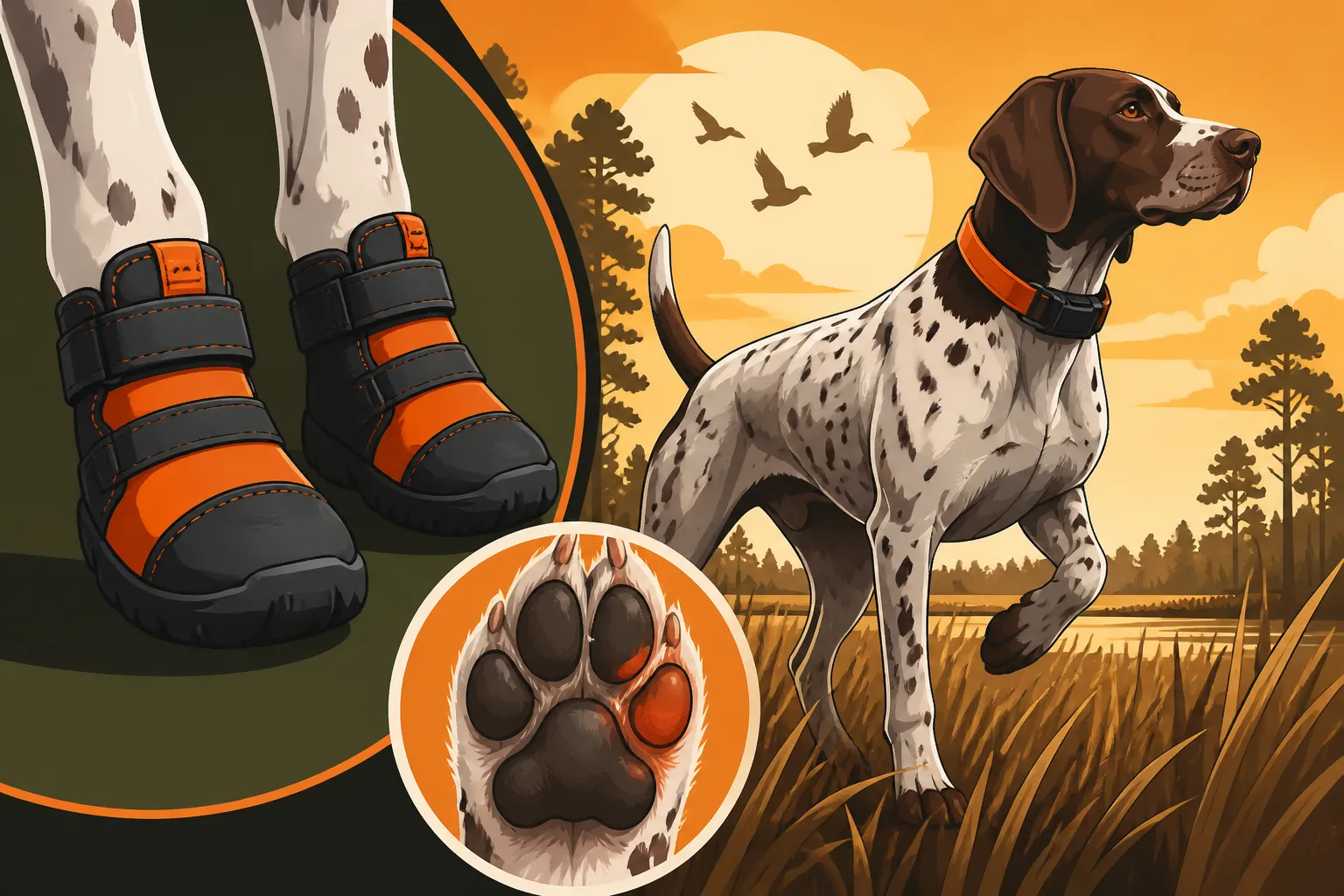
Dog boots are perhaps the most robust form of paw protection available, offering a physical barrier against almost everything the Georgia outdoors can throw at them. They come in various materials and designs, from heavy-duty Cordura to flexible rubberized options. The biggest upside is their comprehensive protection against cuts, abrasions, thorns, and even hot surfaces. They can also provide extra traction on slippery terrain. Brands like Ruffwear and other specialty hunting gear manufacturers offer excellent options. I often find myself browsing sites like GoHunt to see what's new and what other hunters are recommending.
However, boots aren't without their drawbacks. The biggest challenge is often getting your dog to accept them. Many dogs initially resist wearing boots, walking awkwardly or trying to shake them off. It takes time and patience for them to get used to the feeling. Fit is crucial – too loose, and they'll come off; too tight, and they'll rub and cause sores. They can also accumulate mud, water, and debris inside if not properly fitted or designed, potentially causing more problems than they solve. Breathability can be an issue in extreme heat, and while they protect, they can reduce a dog's natural foot sensitivity, which some handlers feel impacts performance. Despite these challenges, for serious, multi-day hunts in harsh conditions, boots are often indispensable. Think about a long day of Working Pointing Dogs on Wild Georgia Quail through tough cover – boots can make all the difference.
Paw Balms and Waxes: A Different Layer of Defense
For hunters who find boots too cumbersome or for dogs that simply won't tolerate them, paw balms and waxes offer a valuable alternative. These products, often made from natural waxes and oils, are designed to create a protective, moisturizing, and toughening layer on the pads. They work by conditioning the paw pads, preventing excessive drying and cracking, and creating a slightly grippier surface. Some formulations also contain ingredients that can help repel moisture or offer a minor barrier against mild abrasions.
The beauty of balms and waxes is their ease of application and the fact that most dogs don't even notice them. They're excellent for general conditioning throughout the year, keeping pads supple and less prone to injury. They're also great for light hunting days or when the terrain isn't overly aggressive, providing an extra layer of defense against minor irritations. The downside, of course, is that they don't offer the same physical protection as a boot. A sharp briar or a jagged rock will still penetrate a waxed pad. They also need to be reapplied periodically, especially during long hunts or after water exposure. Many hunters use them in conjunction with boots, applying balm before putting on boots to further condition the paws.
The Role of Toughened Pads
The concept of "toughened pads" isn't about an external product you apply, but rather the natural resilience your dog builds through regular exercise and exposure to varied terrain. Just like our hands develop calluses, a dog's paw pads become thicker and more durable over time with consistent activity. This natural toughening is the foundation of paw health.
However, even the toughest pads have their limits. A sedentary dog thrown into a rigorous hunting schedule will almost certainly suffer paw injuries, regardless of natural toughness. And even a well-conditioned dog can fall victim to an unlucky step on a sharp object or prolonged exposure to extreme conditions. The goal isn't just naturally tough pads, but conditioned pads supported by good husbandry and, when necessary, external protection. A dog's pads should be firm and supple, not overly dry or cracked. Think of it as a year-round commitment to paw health, not just a pre-hunt scramble. Regular walks and runs on varied surfaces, avoiding excessive concrete, help build this natural resilience.
Here's a quick comparison of common paw protection methods:
| Protection Method | Primary Benefit | Best For | Key Drawbacks |
|---|---|---|---|
| Hunting Dog Boots | Maximum physical barrier, traction | Harsh terrain, long hunts, sharp hazards | Dog acceptance, fit issues, breathability, cost |
| Paw Balms/Waxes | Conditioning, moisture protection, minor abrasion barrier | General conditioning, light terrain, supplementary | Limited protection against sharp objects/puncture |
| Natural Toughened Pads | Optimal sensitivity, comfort | Well-conditioned dogs, less abrasive terrain | Requires consistent exercise, vulnerable to extremes |
Choosing and Fitting the Right Boots for Georgia Hunting
If you decide boots are the way to go for your four-legged hunting partner, the next step is choosing the right ones and, crucially, getting them to fit properly. A poorly chosen or ill-fitting boot is often worse than no boot at all, causing rubs, discomfort, and potentially falling off at the worst possible moment.
Material Matters: Durability Versus Flexibility
Dog boots come in a variety of materials, each with its own benefits. Some of the most common include:
- Cordura/Nylon: These are popular for their durability and abrasion resistance. They're tough against briars and sharp stubble, making them a good choice for dense Georgia cover. Many feature a reinforced sole, sometimes with a rubberized or synthetic leather bottom. The downside can be their flexibility; some are stiffer than others, potentially impacting a dog's natural gait if not well-designed. Look for designs that allow for natural paw flexion.
- Neoprene: Often seen in water-resistant boots, neoprene offers good insulation and flexibility. It's great for damp conditions or hunting around Hunting Georgia Swamp and River Bottom Deer where your dog might be in and out of water. While it provides good protection, it might not be as puncture-resistant as heavy-duty Cordura against the nastiest thorns.
- Rubber/Silicone: These boots offer excellent waterproofing and a very good grip. They tend to be highly flexible, allowing for natural paw movement. However, they can sometimes lack the breathability of fabric boots, potentially causing paws to sweat more in warm Georgia weather. Durability can also vary greatly between brands; some thin rubber boots wear out quickly.
- Leather: While less common for dedicated hunting boots due to maintenance and water absorption, some specialized boots use leather for durability. They can be comfortable and form-fitting but require more care.
Consider the primary conditions you'll be hunting in. For general quail and dove hunting across varied Georgia terrain, a durable Cordura or robust nylon boot with a good, protective sole is often a solid choice. If you anticipate a lot of wet ground, a neoprene or well-ventilated rubber option might be better. When researching, I often check out gear reviews on platforms like GoHunt to see how different materials hold up in real-world hunting scenarios.
Getting the Perfect Fit: Avoiding Rubs and Loss
Getting the right size is paramount. Too small, and the boot will pinch and cause pressure points; too large, and it will twist, rub, and inevitably fall off. Here’s how to measure:
- Measure the Paw: Have your dog stand on a piece of paper. Lift the opposite paw to ensure full weight is on the paw being measured. Trace around the paw, including the toenails.
- Measure Width and Length: Measure the widest part of the paw and the longest part (from the back of the largest pad to the tip of the longest toenail).
- Check Size Charts: Compare your measurements to the manufacturer's size chart. If your dog is between sizes, it's often better to go with the smaller size, as long as it's not too tight, to ensure a snug fit. Remember, front paws are often larger than back paws, so you might need two different sizes.
Once you have the boots, introduce them slowly. Start by putting them on for short periods indoors, rewarding your dog heavily. Gradually extend the time and move to short walks outside. Watch for signs of discomfort or rubbing. It's a process, but patience pays off. A dog that's comfortable in its boots is a dog that can hunt harder and longer. Just like breaking in your own Snake Boots for Coastal Plain Walking, your dog needs time to adapt to new foot protection.
Securing the Boots: Straps, Velcro, and Adjustments
Even the perfectly sized boot can fail if it's not properly secured. Most dog boots use some combination of Velcro straps, elastic cords, or buckle systems to keep them in place. Look for designs that offer:
- Multiple Adjustment Points: A single strap around the ankle might not be enough. Boots with two straps – one around the narrower part of the ankle and one higher up on the leg – tend to stay on better.
- Wide Velcro or Strong Buckles: Thin, weak Velcro can quickly lose its grip, especially when wet or muddy. Wider, more robust Velcro or secure buckle systems are far more reliable.
- Non-Slip Cuffs: Some boots have elasticized or silicone-lined cuffs that help prevent them from sliding down.
- Easy On/Off: While security is important, you don't want to spend five minutes wrestling each boot onto your dog. A good design balances security with practical usability.
When securing, make sure the straps are snug but not tight enough to restrict circulation. You should be able to slide a finger under the strap comfortably. Check them frequently during the hunt, especially after your dog has been running through thick cover or water, as straps can loosen. Losing a boot mid-hunt, especially on public land during something like Deer Drives With Three or Four Hunters where retrieve might be difficult, is a common frustration, so invest in quality fasteners.
Preparing Paws and Maintaining Boots for Peak Performance
Protecting your bird dog's paws isn't just about slapping on some boots right before opening day. It's a year-round commitment to paw health and proper gear maintenance. Overlooking these steps can lead to unnecessary discomfort and premature wear on your equipment.
Pre-Season Paw Conditioning and Trimming
The work starts long before you ever head out to the field. Just like you'd get yourself in shape for hunting season, your dog's paws need conditioning. Throughout the off-season, ensure your dog is regularly exercising on varied surfaces. This builds natural calluses and strengthens the pads. Avoid letting your dog spend too much time on rough, abrasive surfaces like concrete without conditioning, as this can actually wear down pads too quickly.
Equally important is regular paw maintenance. Keep the hair between your dog's paw pads trimmed short. Long hair in this area can collect burrs, mud, ice, and debris, which can cause irritation, matting, and even infection. It also makes it harder for boots to fit properly. Use blunt-nosed scissors or a small electric trimmer for this task, being extremely careful not to cut the pads themselves. Regularly inspect your dog's paws for any cuts, cracks, or abnormalities. Addressing minor issues early can prevent them from becoming major problems during hunting season. A healthy paw is the best defense.
Field Care: Checking Paws and Addressing Issues
Even with the best preparation and boots, issues can arise in the field. It's crucial to regularly check your dog's paws throughout the day, especially during breaks or when you notice any change in their gait.
- During Breaks: Take a few minutes to remove the boots (if used) and inspect each paw. Look for any redness, swelling, cuts, thorns, or embedded burrs. If a boot is rubbing, you'll see a red spot or raw skin. Address anything you find immediately.
- Addressing Minor Cuts/Thorns: For minor cuts, clean the area with antiseptic wipes or a dilute saline solution from your First Aid Kits for Remote Swamp Ground. If you find a thorn or burr, carefully remove it with tweezers. A small, sterile bandage might be necessary for a deeper cut, and consider re-booting or wrapping the paw to protect it for the remainder of the hunt.
- Dealing with Lost Boots: If a boot comes off, stop and retrieve it if possible. Continuing without protection, especially if the other paws are still booted, can lead to uneven wear and injuries on the unprotected paw. Always carry spare boots or a paw wrap kit in your bag – it’s a lifesaver.
Recognizing early signs of discomfort, like frequent licking, limping, or reluctance to put weight on a paw, is vital. Don't push a dog that's clearly in pain; it's not fair to them and it only makes the injury worse. Sometimes, the best field care is knowing when to call it a day.
Cleaning and Storing Your Dog's Boots
Just like your own hunting gear, your dog's boots need proper care after each outing to ensure their longevity and effectiveness. Neglecting them can lead to odor, mildew, and premature breakdown of materials.
- Cleaning: After each hunt, remove any mud, dirt, and debris from the boots. Most fabric or neoprene boots can be rinsed under cool water and scrubbed with a brush if heavily soiled. For stubborn stains or odors, a mild, pet-safe soap can be used. Be sure to rinse thoroughly to remove all soap residue.
- Drying: This is critical. Allow the boots to air dry completely before storing. Never store damp boots, as this promotes mildew growth, which can damage the material and cause skin irritation for your dog. Hanging them in a well-ventilated area, away from direct sunlight or excessive heat, is ideal.
- Inspection: Once dry, inspect the boots for any wear and tear. Look for holes, torn seams, loose Velcro, or worn soles. Repair minor issues promptly with a durable fabric glue or by restitching. If they're too far gone, it might be time to invest in a new pair. Checking online retailers like GoHunt regularly can help you spot sales or new, improved designs. Proper care ensures your investment in paw protection lasts as long as possible, keeping your hunting buddy comfortable and ready for many more days chasing birds.
Disclaimer
This article is for general informational purposes only and does not constitute professional advice. Laws, prices and regulations vary by location and change over time. Consult a qualified professional for guidance on your specific situation.