Crossbow Scopes for Georgia Swamp Ranges
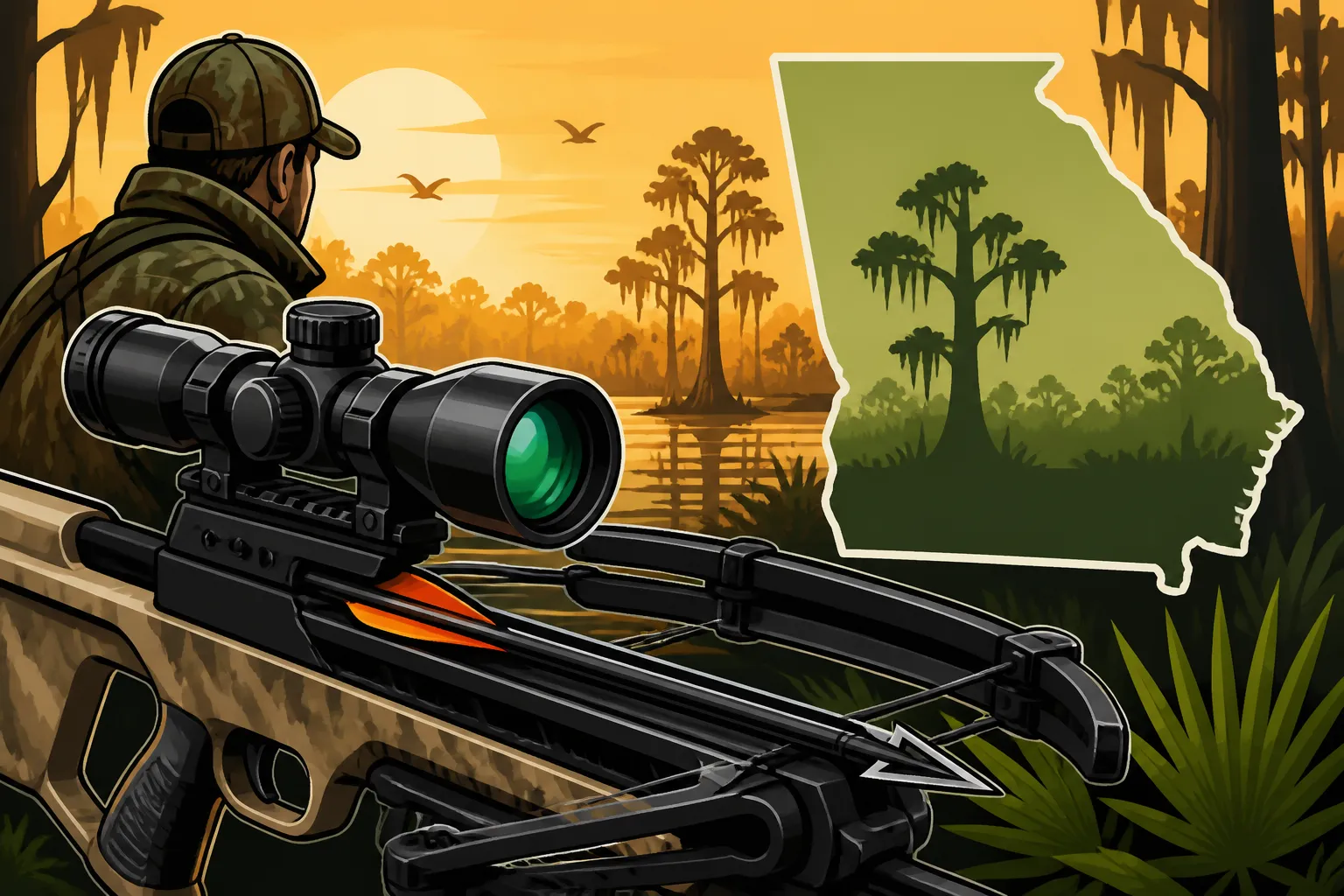
Hunting in Georgia’s dense, humid swamps presents a unique set of challenges, especially when you’re relying on a crossbow. The thick cover, low light, and often unpredictable conditions can make target acquisition incredibly difficult if your gear isn't up to snuff. This guide is all about helping you cut through the confusion and choose the absolute best crossbow scope to give you an edge in those challenging Georgia swamp ranges.
Understanding the Unique Demands of Georgia Swamp Hunting
Let's face it, hunting in a Georgia swamp isn't like sitting in a clear-cut pine plantation or overlooking a vast food plot. It's a world unto itself, demanding specialized gear and tactics. When you’re pushing through cypress knees and tangled underbrush, your equipment needs to perform flawlessly under pressure. The environment itself throws some serious curveballs your way.
Low Light Conditions and Dense Cover
One of the biggest hurdles in Georgia swamps is the perpetually dim lighting. Even on a bright, sunny day, the canopy can be so thick that it feels like perpetual dusk beneath the trees. This isn't just a minor inconvenience; it significantly impacts your ability to identify game, judge distance, and place an ethical shot. Deer, especially mature bucks, often ghost through these areas, appearing and disappearing in the blink of an eye. You might be tracking a deer through the river bottom or trying to spot movement in a Hunting a Funnel Between Two Swamps, and every shred of available light becomes precious. Your crossbow scope needs to gather as much light as possible to extend your effective hunting time from pre-dawn gloom to post-dusk shadows.
Compounding the low light is the sheer density of the cover. You're rarely looking at shots beyond 30 or 40 yards, and often much closer. This means your field of view needs to be wide enough to quickly acquire a moving target, but also clear enough to pick out a vital zone through a maze of branches and palmetto fronds. A scope that's designed for long-range, open-country shooting will be a hindrance here, providing too much magnification and a cramped field of view.
High Humidity and Temperature Swings
Ah, Georgia humidity. It's a hunter's bane, isn't it? From the moment you step out of your truck, the air hangs heavy and wet. This constant moisture can wreak havoc on optics, leading to frustrating internal fogging and external condensation. Nothing ruins a shot faster than looking through a milky, obscured lens as a swamp buck trots into view. Beyond the humidity, our weather can be fickle. A cool morning can give way to a warm, muggy afternoon, creating rapid temperature changes that challenge the seals and gas purging in lower-quality scopes.
Your scope needs to be built like a tank, completely waterproof and fogproof, capable of shrugging off sudden downpours and humid air without missing a beat. This isn't a "nice-to-have" feature; it's absolutely essential for hunting conditions where you might be walking through water or sitting in a stand as the morning mist burns off. Consider how often you wipe your brow; your scope faces similar challenges. This is where spending a bit more on quality construction pays dividends. The last thing you want is a foggy optic when you're trying to make a critical shot on a trophy. Fogging Optics in Georgia Humidity is a real problem you'll face.
Short-Range Engagements and Quick Target Acquisition
Given the tight confines of Georgia's swamps and river bottoms, most of your crossbow shots will be at relatively close distances – think 10 to 40 yards, maybe 50 if you catch a deer in a slightly more open pocket. This means your scope's magnification needs to be appropriate for these ranges. Too much magnification actually works against you, making it harder to find your target quickly, especially if it's moving.
What you need is a scope that allows for rapid target acquisition. This often means a lower base magnification, a wide field of view, and a clear, uncluttered reticle. When that buck suddenly appears through the thicket, you don't have time to fiddle with zoom rings or squint through a narrow sight picture. You need to be on target, and fast. The goal is efficiency and precision in a dynamic environment, not pinpoint accuracy at extreme distances.
Essential Features for a Crossbow Scope in Swamp Conditions
When you're outfitting your crossbow for those gnarly Georgia swamps, every component needs to pull its weight. The scope, in particular, isn't just a sighting tool; it's your window into a challenging world. Getting the right features can make or break your hunt.
Magnification and Field of View
For swamp hunting, less is often more when it comes to magnification. A fixed power scope around 3x or 4x is a fantastic choice, or a variable power scope that starts at 1.5-2x and goes up to 5-6x. Why? Because higher magnification shrinks your field of view, making it incredibly difficult to track a deer moving through tight cover or to quickly acquire a target that appears suddenly. Imagine trying to find a deer moving behind palmettos at 15 yards with a 9x scope – it's like looking through a straw!
A lower magnification provides a wider field of view, which is crucial for those close, fast-paced encounters. It allows you to see more of the surrounding environment, helping you anticipate movement and get on target faster. For those rare slightly longer shots in a swamp, say up to 50 yards, a 3x or 4x is still plenty. You're not trying to thread a needle at 100 yards; you're trying to hit a dinner plate at 30. A good comparison of Crossbow Versus Vertical Bow in Georgia will highlight the need for precision at close range.
Reticle Design and Illumination
Crossbow scopes typically come with specialized reticles, often featuring multiple aiming points (sometimes called a BDC, or Bullet Drop Compensator, though for arrows it's arrow drop). These lines or dots correspond to different distances, usually 20, 30, 40, and 50 yards. For swamp hunting, a clean, uncluttered reticle is paramount. You don't want a busy pattern that obscures your target in low light or dense cover.
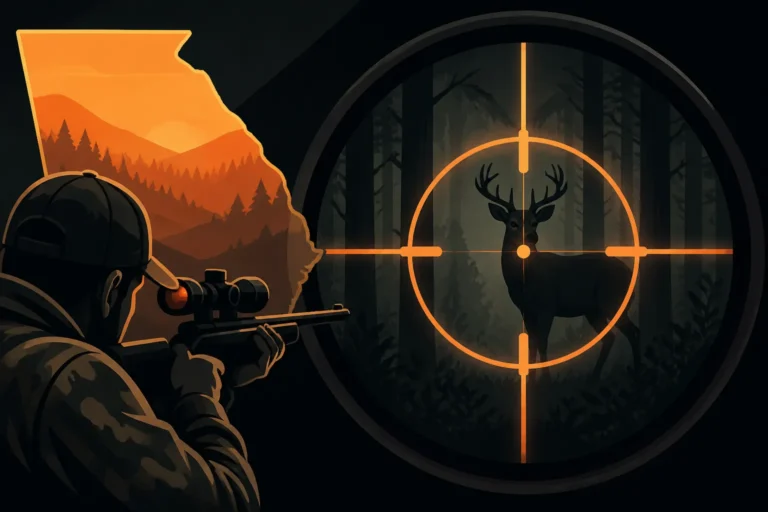
Illuminated reticles are a game-changer in the swamps. Remember those low-light conditions? A dim, black reticle can completely disappear against a dark background or a deer's hide. An illuminated reticle, typically in red or green, provides a bright, crisp aiming point that stands out, even in the deepest shadows. Look for models with adjustable brightness settings, so you can fine-tune it to the exact ambient light without blooming or overpowering your vision. Just remember to turn it off after each use to save battery life!
Lens Coatings and Light Transmission
The quality of a scope's lenses and the coatings applied to them directly impacts how much light reaches your eye. In low-light swamp environments, this isn't just an upgrade; it's a necessity. High-quality, fully multi-coated lenses significantly reduce glare, enhance contrast, and maximize light transmission. This means brighter, clearer images, allowing you to see definition and detail that cheaper optics simply won't reveal.
When you're trying to distinguish a deer from the dappled shadows or identify if there's a branch in your shot path, superior light transmission makes all the difference. Don't skimp here. Look for terms like "fully multi-coated" and consider the objective lens size – a larger objective lens (e.g., 32mm or 40mm) can gather more light, though too large can make the scope bulky. It's a balance.
Durability, Waterproofing, and Fogproofing
This is non-negotiable for Georgia swamp hunting. Your scope will get wet. It will get bumped. It will experience drastic temperature and humidity changes. A truly dependable scope will be nitrogen or argon purged to prevent internal fogging, and feature robust O-ring seals for complete waterproofing. You should be able to drop it in a puddle, wipe it off, and have it perform just as well.
Beyond the optics, consider the overall construction. A solid, one-piece tube design made from aircraft-grade aluminum is typically more durable. Turrets should be tactile and hold their zero, even if they're knocked around a bit while you're navigating rough terrain or climbing into a Treestand Setups in North Georgia Mountains. This is a tool that needs to withstand abuse and continue to perform under the toughest conditions you can throw at it.
Choosing and Setting Up Your Crossbow Scope
Picking the right scope is just the first step. To truly optimize your crossbow for Georgia's challenging swamps, you need to think about how you select, mount, and zero your chosen optic. It's about creating a harmonious system that works with you, not against you.
Selecting the Right Model for Your Crossbow
Many crossbows come packaged with a basic scope, and while these might get you started, they often fall short in the demanding conditions of a Georgia swamp. If you're serious about your hunting, upgrading your scope is one of the most impactful improvements you can make.
When researching, pay attention to brands known for durable, reliable optics. While I can't name specific prices, expect to invest a bit more for a scope that truly excels in low light, humidity, and rugged use. Read reviews focusing on performance in similar environments. Look for features like generous eye relief, which allows for a comfortable sight picture even if you're wearing glasses or have a slightly awkward shooting angle. A good resource for comparing features and reading real-world hunter reviews can often be found on platforms that cater to hunting gear enthusiasts, like some of the sections on the GoHunt community forums, where hunters share their experiences with different optics.
Consider also the weight and bulk of the scope. While a larger objective lens helps with light gathering, a massive, heavy scope can throw off the balance of your crossbow and make it cumbersome to carry through dense woods. Aim for a balance between optical performance and practical ergonomics for long days afield.
Mounting Your Scope Properly
A great scope is useless if it's not mounted correctly. This is one area where shortcuts can lead to endless frustration and missed shots. Secure mounting is paramount for maintaining zero, especially with the recoil of a crossbow and the bumps it will endure in the field.
Start with high-quality rings and a solid base. Don't reuse old, worn-out rings. Make sure they are specifically designed for your crossbow's rail system. Use a torque wrench to tighten all screws to the manufacturer's recommended specifications. Over-tightening can damage the scope tube or the rings, while under-tightening can cause the scope to shift under recoil, ruining your zero. Before tightening everything down, ensure the reticle is perfectly level. A canted reticle will cause your point of impact to shift horizontally as you adjust for elevation, leading to frustrating misses. A smart way to check this is to hold the crossbow against a plumb line or a doorframe and rotate the scope until the vertical stadia line up perfectly.
Zeroing and Dialing in for Swamp Ranges
Zeroing your crossbow scope for swamp ranges requires a slightly different approach than a rifle. Most crossbow scopes are designed to be zeroed at 20 yards, with subsequent aiming points calibrated for 30, 40, and 50 yards.
Here's a typical process:
- Start Close: Begin at 10 yards to ensure you're on paper. Fire a few shots, making adjustments to get your point of impact centered.
- Move to 20 Yards: Once you're consistently hitting the bullseye at 10, move back to 20 yards. Use your primary aiming point (often the top crosshair or dot) to dial in your zero. Take several shots, adjusting your turrets until your grouping is centered.
- Confirm Other Rages: Now, move back to 30, 40, and 50 yards. Do not adjust your turrets anymore. Instead, use the corresponding aiming points on your reticle. For example, at 30 yards, use the 30-yard mark. If your point of impact isn't centered, this indicates that the arrow speed marked on your scope might not perfectly match your crossbow's actual performance. Many modern crossbow scopes have speed adjustments – a dial or setting that allows you to fine-tune the reticle spacing to your specific arrow velocity. Consult your scope's manual for how to do this.
- Practice, Practice, Practice: The only way to truly build confidence is to practice at all the relevant distances you expect to shoot in the swamp. Understand your holdovers and how your crossbow performs in varying conditions. Rattling Volume in Thick Pine Cover or Grunt Calls in Mature Georgia Hardwoods might bring a buck in close, but you still need to be confident in your shot.
Remember, the goal is consistent, ethical shots within the typical swamp range, which for most crossbows and hunters, is within 50 yards.
Maintenance and Care for Your Swamp-Ready Scope
Even the best gear won't last if it's not properly cared for. Georgia's swamps are tough on equipment, and a little preventative maintenance can save you a lot of headache (and potentially a missed opportunity) down the line. Think of it as caring for your trusted partner in the field.
Cleaning Lenses and Scope Body
After a long day of hunting in the humid, often muddy, environment of a Georgia swamp, your scope is likely to be caked with dirt, mud, bug spray, and maybe even a few drops of swamp water. Regular cleaning is crucial to maintain optical clarity and prevent damage.
- Lenses: Always start by using a soft brush or a can of compressed air to gently remove any loose dirt, dust, or debris. Never wipe dry lenses directly, as this can scratch the delicate coatings. Next, use a lens cleaning solution specifically designed for optics and a microfiber lens cloth. Apply a small amount of solution to the cloth, not directly to the lens, and gently wipe in a circular motion from the center outwards. Avoid harsh chemicals or paper towels, as they can damage the coatings.
- Scope Body: For the main body of the scope, a damp cloth can usually remove most dirt and grime. For stubborn mud, a soft-bristled brush can help. Ensure you dry the scope thoroughly, paying special attention to crevices around turrets and caps where moisture can linger.
Preventing Fogging and Condensation
While good scopes are internally fogproof, external condensation is still a common issue in Georgia's high humidity and fluctuating temperatures.
- Acclimation: Try to let your crossbow and scope acclimate to the outdoor temperature and humidity before you head into the stand. If you bring a cold scope from an air-conditioned vehicle directly into a warm, humid swamp, it's almost guaranteed to fog up externally.
- Lens Protection: Use lens caps when not actively shooting. This not only protects the lenses from scratches but also helps to slow down the rate of temperature change, reducing condensation. Some hunters even apply an anti-fog treatment to the outer lenses, similar to what you might use on eyeglasses, though results can vary.
- Storage: When storing your scope and crossbow, ensure they are in a dry, well-ventilated area. If you live in a particularly humid climate, a dehumidifier in your gear room can be a great investment. Never store your scope in a damp case immediately after a hunt.
Routine Checks and Storage
Beyond cleaning, regular checks of your scope and its mounting system are a good habit to develop.
- Mounting Screws: Periodically check that all mounting screws on your rings and base are still tight. The vibrations from shooting and the jarring of being carried through the woods can sometimes loosen them. A quick check with a torque wrench ensures everything remains secure and your zero stays true.
- Turrets and Caps: Make sure your turret caps are securely in place to prevent moisture and debris from entering the adjustment mechanisms. Test the turrets occasionally to ensure they are moving freely and have positive, repeatable clicks.
- Battery Check: If your scope has an illuminated reticle, always check the battery before a hunt. Carry a spare battery in your pack – you never want to be caught in low light with a dead reticle.
- Long-Term Storage: For extended periods of storage, remove the battery from illuminated scopes to prevent corrosion. Store the scope uncapped if possible, or with breathable caps, in a stable, dry environment.
By following these simple maintenance steps, your crossbow scope will be ready to perform reliably season after season, giving you the confidence you need when that Georgia swamp buck finally steps into your shooting lane. It's about respecting your gear, just as you respect the game you pursue. For more advice on dealing with the elements, consider reading Bug Repellent That Holds Up in a Tree Stand or Lightweight Layering for Warm-Weather Sits. Getting your personal gear right is just as important as your optics.
Navigating Specific Swamp Challenges with Your Scope
The Georgia swamp environment throws everything it has at you, and your scope needs to be more than just capable – it needs to be an asset. Let's delve into how your chosen optic helps you overcome some of the unique obstacles you'll face.
Tackling Thick Cover and Obstructions
One of the defining features of Georgia's swamps is the incredibly dense vegetation. You're not just looking for a deer; you're looking for a path through the vegetation to the deer. Your scope plays a critical role here.
- Wide Field of View is King: As discussed, the wider your field of view at lower magnifications, the better. This allows you to quickly scan the area for shooting lanes and ensures that when a deer appears, you can see it and the path your arrow needs to take. Many crossbow hunters find that a 1.5-5x or 2-7x variable scope, when kept at its lowest setting, is ideal.
- Clear Reticle for Precision: When shooting through small gaps in the brush, a clear, sharp reticle helps you pinpoint the exact spot you need to hit, without the reticle itself obscuring your view of small twigs or leaves that could deflect your arrow. This is where quality glass and coatings truly shine. You might be shooting at a deer that is mostly obscured, and only a small window of opportunity presents itself. The ability to quickly and accurately place your reticle on that small window is essential.
- Quick Target Acquisition: In dense cover, deer often move quickly and are visible for only a few seconds. A scope that allows for rapid target acquisition means less time fumbling and more time focusing on the shot. This is where familiarity with your equipment truly comes into play; practice quickly shouldering your crossbow and finding your target through the scope.
Dealing with Water and Reflections
Hunting around standing water, especially during Hunting Georgia Swamp and River Bottom Deer, means contending with glare and reflections. This can make it incredibly difficult to see game or even judge distances accurately.
- Lens Coatings to Reduce Glare: High-quality anti-reflective lens coatings are your best friend here. They minimize the amount of light reflected off the lens surface, which in turn reduces glare and increases light transmission. This results in a clearer, more defined image, even when sunlight is bouncing off the water.
- Adjustable Parallax (on some scopes): While not common on most crossbow scopes due to their typical close range, some higher-end models might offer parallax adjustment. Parallax is an optical illusion where the reticle appears to move relative to the target if your eye isn't perfectly centered. While less critical at short swamp ranges, if you find yourself shooting across open water at longer distances, an adjustable parallax can ensure absolute precision.
- Situational Awareness: Beyond your scope's features, remember to use your own eyes. Scan the area without looking through your scope first. This gives you a broader perspective and helps you spot areas of potential glare or reflections that might hinder your shot. Sometimes, a slight shift in your body position can mitigate glare better than any scope feature.
Effective Range Estimation in Complex Terrain
Estimating range in a swamp can be tricky. The broken ground, standing water, and dense vegetation make natural rangefinding difficult. This is where your scope can assist, but also where supplementary tools come in.
- Known Reticle Subtensions: If your crossbow scope has a mil-dot or MOA reticle, or even simple hash marks, and you know the subtensions (the distance each mark represents at a certain range), you can use it for rough range estimation. However, this takes practice and precise knowledge of your reticle.
- Integrated Rangefinding Reticles: Some advanced crossbow scopes feature reticles specifically designed with rangefinding capabilities, often based on a deer's body size. You line up the reticle with the deer, and it indicates an approximate range. These can be helpful but rely on consistent deer sizes.
- Supplement with a Rangefinder: Honestly, the most reliable way to accurately range in a swamp is with a dedicated rangefinder. It's an indispensable tool for confirming distances to potential shooting lanes, trees you might hang a stand on, or even specific landmarks. Knowing the exact yardage to a key bottleneck can be the difference between a clean kill and a miss. Many hunters on platforms like GoHunt swear by carrying a lightweight rangefinder.
By combining a well-chosen, robust crossbow scope with smart hunting practices and complementary gear, you'll be much better equipped to handle the unique demands and opportunities presented by Georgia's challenging swamp ranges. It's all about preparation and having faith in your tools.
Comparing Scope Features for Swamp Hunting
To really drive home what matters, let's break down some common scope features and how they stack up for swamp hunting in Georgia. This table should help you quickly see what to prioritize when you're looking at different models.
| Feature / Consideration | Ideal for Swamp Hunting | Less Ideal / Consider Carefully | Why It Matters for Swamps |
|---|---|---|---|
| Magnification | 1.5-5x, 2-7x (variable); 3x, 4x (fixed) | 3-9x, 4-12x, or higher | Lower magnification = wider field of view, faster target acquisition in dense cover. Higher power narrows vision too much. |
| Objective Lens Size | 32mm – 40mm | Below 32mm (too dim); Above 40mm (too bulky/heavy) | Good balance of light gathering for low light without adding excessive bulk or weight. |
| Lens Coatings | Fully Multi-Coated | Uncoated, Fully Coated, or Multi-Coated (only some surfaces) | Maximizes light transmission and reduces glare, crucial for visibility in dark, reflective, and humid conditions. |
| Reticle Type | Multi-point BDC (20, 30, 40, 50 yds), Illuminated | Simple Crosshair, Overly Busy/Complex Reticles | Provides quick aiming points for various close ranges. Illumination is vital for low-light target visibility. |
| Eye Relief | Generous (3.5+ inches) | Short (under 3 inches) | Allows for comfortable viewing without needing to be perfectly positioned, useful in awkward shooting stances. |
| Waterproof/Fogproof | Nitrogen/Argon Purged, O-Ring Sealed (100% Guaranteed) | "Water Resistant" or no specific claim | Absolute necessity to prevent internal fogging and moisture ingress in high humidity and wet environments. |
| Durability | One-piece tube, Aircraft-grade aluminum | Multi-piece tube, lesser quality materials | Withstands bumps, scrapes, and harsh treatment of moving through dense swamp terrain. Holds zero better. |
| Weight | Moderate to Lightweight | Very Heavy | Easier to carry all day, maintain balance on the crossbow, and maneuver quickly in thickets. |
| Parallax Adjustment | Not typically needed/present for crossbow ranges | Typically found on rifle scopes for longer ranges | Less critical for short crossbow ranges, but understand if present, it's usually factory set for crossbow distances. |
| Speed Adjustment | Yes, matching scope to crossbow FPS | None, or limited | Allows you to fine-tune the reticle spacing to your specific crossbow's velocity for accurate holdovers. |
Wrapping Up Your Swamp Scope Quest
Choosing the right crossbow scope for hunting Georgia's swamps isn't just about picking a fancy piece of glass; it's about making a strategic decision that directly impacts your success and enjoyment in some of the state's most challenging terrain. From the moment you step foot into those dense, humid bottomlands, every piece of gear needs to be an asset, not a liability.
We've talked about the unique demands: the perpetual low light, the relentless humidity, the need for quick, close-range shots. Your scope needs to be a workhorse, gathering every available photon, shrugging off moisture like it's nothing, and offering a clear, intuitive aiming solution. Prioritizing features like lower magnification for a wide field of view, superior lens coatings for maximum light transmission and glare reduction, and, crucially, rock-solid waterproofing and fogproofing will serve you well. An illuminated reticle isn't just a luxury; it’s a vital tool for those dim hours when swamp bucks are most active.
Remember, a solid, properly mounted scope that you've diligently zeroed and practiced with is your best friend in the woods. Don't be afraid to invest in quality – the frustration of a foggy or dim optic when that trophy buck finally appears is a feeling no hunter wants. Take the time to research, practice, and maintain your gear, and you'll find yourself much more confident and successful when you're navigating the incredible hunting opportunities that Georgia's swamps have to offer. Good luck out there, and stay safe! You might also find helpful insights in Hunting a Clear-Cut Regrowth Edge or Where to Hang a Camera on a Logging Road to further enhance your hunting strategy.
Disclaimer
This article is for general informational purposes only and does not constitute professional advice. Laws, prices and regulations vary by location and change over time. Consult a qualified professional for guidance on your specific situation.