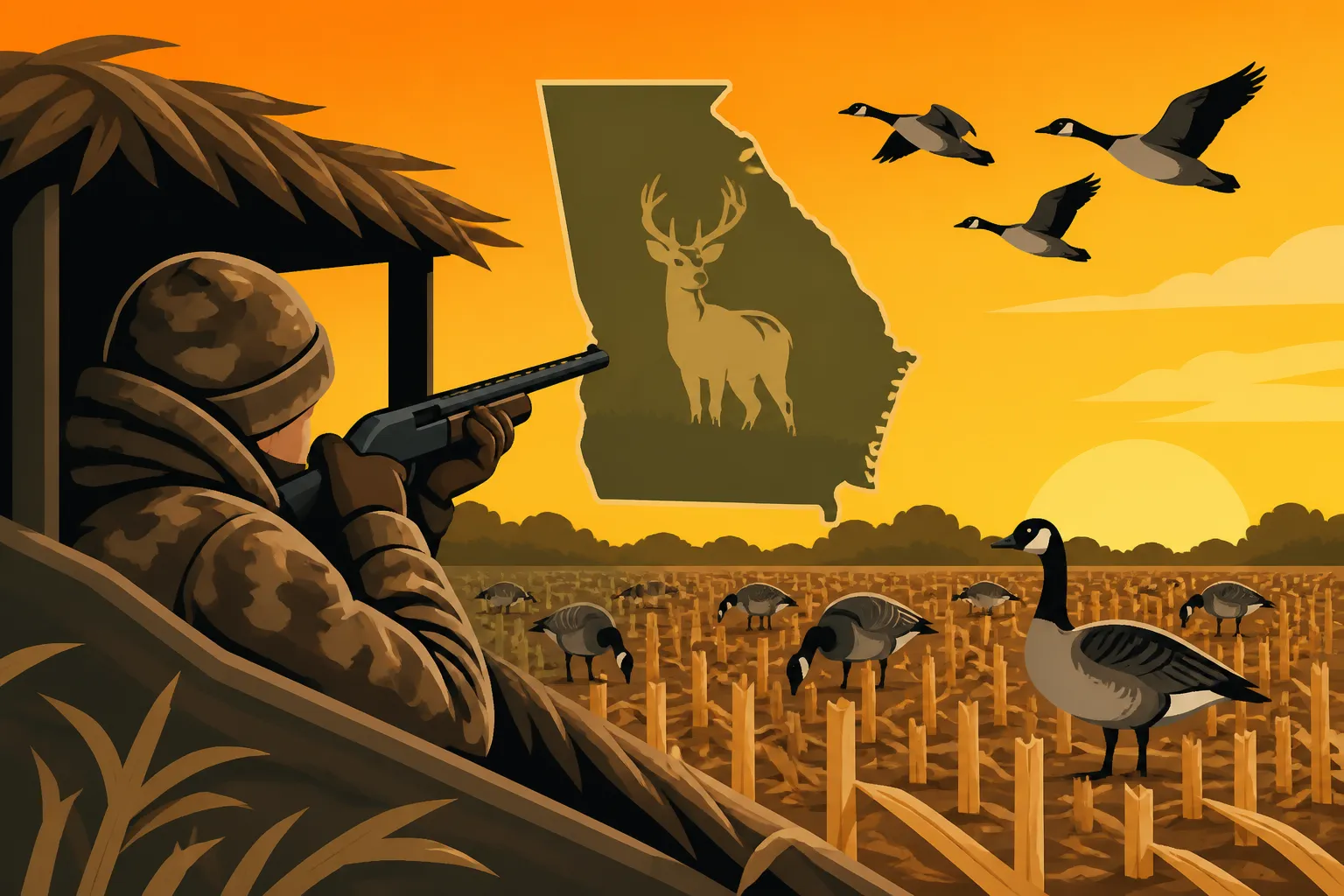
Layout Blinds for Georgia Cut Corn
If you've ever found yourself squinting into a vast, flat expanse of cut cornfield in Georgia, watching ducks or geese circle high before flaring at the last second, you know the frustration. It feels like they can see every single stitch of your blind, or worse, your silhouette sticking out like a sore thumb. This guide is all about tackling that specific challenge by mastering the art of hunting from a layout blind in Georgia's cut corn, helping you blend seamlessly into the environment and turn those circling birds into decoying birds.
The Unique Challenge of Hunting Georgia Cut Cornfields
Hunting waterfowl, particularly ducks and geese, in Georgia's agricultural fields presents a very distinct set of challenges compared to timber hunting or marsh hunting. Cut cornfields, in particular, are notorious for offering minimal natural cover, making effective concealment paramount for success. You’re not dealing with dense cypress knees or thick marsh grass here; it's often wide-open spaces where birds have an unobstructed view for hundreds of yards.
Why Conventional Blinds Fall Short on Flat Ground
Traditional panel blinds or even portable upright blinds, while fantastic in other scenarios, often fall short in a cut cornfield. Imagine setting up a tall blind in a field that's been mowed down to mere stubble. Even if it's camouflaged, its height creates an unnatural silhouette against the horizon, especially from a bird's-eye view. Ducks and geese have incredible eyesight, and they've evolved to spot anything out of place in their feeding grounds. A conventional blind might work if you're tucked against a thick tree line or a fence row, but out in the middle of a vast corn stubble field, it screams "hunter!" from a mile away.
This visibility issue is compounded by the fact that many of these fields are relatively flat. There's no undulating terrain to break up your outline, no deep ditches to disappear into. You're essentially lying in wait on a billiard table, and every slight rise or dip can become a visual anomaly to a sharp-eyed mallard or a wary Canada goose. The goal isn't just to hide you, but to hide any indication that humans are present, including the blind itself. This is where the low profile of a layout blind truly shines, allowing you to become part of the landscape rather than an intrusion on it.
Understanding Waterfowl Behavior Over Agricultural Fields
To truly excel at hunting cut corn, you need to think like a bird. Waterfowl, especially geese and puddle ducks, are drawn to these fields because they offer a high-energy food source – the waste grain left behind after harvest. They'll often scout fields from high altitudes, looking for large, open areas where their flock can feed safely. They're wary creatures, constantly looking for predators, and anything out of the ordinary will send them flying in the opposite direction.
When birds approach a field, they usually do so into the wind, circling multiple times to get a good look at the setup. They're checking for movement, for unnatural shapes, and for other birds already on the ground. If your blind stands out, or if they spot you shifting inside it, they'll flare faster than you can blink. This is particularly true for older, more experienced birds that have seen it all. Their caution increases exponentially the closer they get to the ground. Your entire setup, from the blind to the decoys, needs to convince them that the field is safe and inviting, a place where other birds are already happily feeding. Understanding this behavior is the foundation of successful field hunting. For more insights on the species you're likely to encounter, check out our guide on Canada Geese on Georgia Farmland.
Choosing the Ideal Layout Blind for Georgia's Fields
Selecting the right layout blind isn't a one-size-fits-all decision, especially when considering the specific conditions of Georgia's cut cornfields. You need a blind that offers top-tier concealment, reasonable comfort for long waits, and the durability to stand up to the elements and repeated transport. Don't just grab the first one you see; think about how it will perform in your hunting environment.
Key Features for Effective Concealment and Comfort
When you're lying flat in a cut cornfield, concealment is your number one priority. Look for a layout blind with a very low profile, designed to disappear into minimal stubble. The fabric color and pattern are crucial; typically, a cornfield pattern or a khaki/brown stubble pattern will blend best. Many quality blinds feature stubble straps or pockets, allowing you to easily add natural vegetation from the field directly onto the blind. This "brushing in" is absolutely critical for breaking up the blind's outline and making it truly disappear.
Comfort, while secondary to concealment, is still very important. You might be spending hours waiting for birds, often in chilly or damp conditions. A good layout blind will have a comfortable headrest and back support, keeping you off the cold, hard ground. Some models offer thicker padding or even integrated seats. Pay attention to the size of the blind as well; ensure it's large enough to accommodate you and your layers of clothing comfortably, but not so large that it becomes difficult to hide. A good rule of thumb is to lie down in one if you can, to get a feel for the interior space.
Portability and Durability for Frequent Georgia Hunts
Georgia's weather can be unpredictable, ranging from crisp, cool mornings to surprisingly warm and humid days, sometimes even within the same hunt. Your layout blind needs to be built to withstand these conditions. Look for robust construction, strong zippers, and durable, waterproof or water-resistant fabric. Reinforced stress points are a big plus, as these blinds get a lot of wear and tear from being set up, packed down, and dragged across fields.
Portability is another major consideration. You might be walking a considerable distance into a field, possibly even with decoys, before setting up. A lightweight blind that folds down compactly and has comfortable shoulder straps or handles will be a game-changer. Some blinds even feature backpack straps, allowing you to carry it hands-free, which is invaluable when you're also hauling a shotgun, a decoy bag, and other essentials. You want a blind that's easy to deploy quickly when birds start showing up unexpectedly, and equally easy to pack up at the end of a successful day. Imagine having to make a quick move to another part of the field – a cumbersome blind will slow you down and might cost you opportunities.
Integrating Gear into Your Layout Blind Setup
Once you're tucked into your layout blind, you need to have immediate access to your gear without giving away your position. This means thinking about how you'll store and access your calls, shells, phone, and anything else you might need. Many layout blinds come with internal pockets or storage compartments, which are perfect for keeping smaller items organized and within reach. You want to avoid fumbling around or having to sit up to grab something from outside the blind, as this movement will instantly alert incoming birds.
Consider a small, flat bag or pouch that can lay inside the blind with you, keeping your most-used items easily accessible. Your shotgun should be positioned so you can smoothly swing it up and out of the blind's lid without snagging. Some blinds have a small flag port, allowing you to use a goose flag with minimal movement. It's a good idea to lay out all your gear in and around your blind at home before your first hunt to develop a system. This practice run will help you identify any awkward movements and refine your setup, ensuring a smooth, silent, and efficient operation in the field. Every second counts when a flock is cupping its wings over your spread.
Mastering the Art of Setup and Concealment
Having the best layout blind won't do you any good if you don't set it up correctly. In cut corn, especially, the devil is truly in the details when it comes to disappearing into the landscape. This isn't just about throwing down a blind; it's about crafting an illusion that convinces wary birds they're landing in a safe, undisturbed feeding area.
Brushing In Your Blind: The Devil's in the Details
Brushing in is, without a doubt, the most critical step for effective concealment in a layout blind. You can have the most expensive, technically advanced blind on the market, but if it's not brushed in properly, it's just a lump in the field that birds will avoid. The goal is to break up the hard lines and silhouette of the blind with natural vegetation from the immediate area. In a cut cornfield, this means using cornstalks, leaves, and any other stubble you can find.
Start by placing heavier, thicker pieces of cornstalks along the sides and ends of the blind to disrupt its shape. Then, layer lighter, smaller pieces, like corn husks or individual leaves, over the top and along the edges. Pay particular attention to the head and foot ends, as these are often the most noticeable from above. Don't be afraid to overdo it slightly; it's better to be too brushed in than not enough. Take a step back (or even walk a few yards away) and look at your blind from different angles, and especially from a slightly elevated position, mimicking a bird's approach. Does it blend in? Does anything stand out? If you're hunting with a partner, have them stand far off and give you feedback. A well-brushed blind becomes virtually invisible, turning it into a natural part of the cut corn landscape.
Strategic Decoy Spreads for Cut Corn Success
Your decoy spread works hand-in-hand with your blind's concealment to attract birds. In a cut cornfield, you're primarily mimicking feeding waterfowl, so full-body decoys or shell decoys placed in feeding positions are ideal. For geese, a spread simulating a family group or a scattered feeding flock works well. For ducks, especially mallards, a more concentrated feeding group or a mix of feeding and loafing positions can be effective. Consider adding a few motion decoys, like spinning wing ducks or a feeder butt decoy, to add life and draw attention.
The placement of your layout blinds within the spread is crucial. You want to place your blinds on the downwind side of your spread, allowing birds to cup their wings and work into the wind, landing right in front of you. Leave a clear landing zone (the "kill hole") directly in front of your blinds. This zone should be free of decoys and obstacles, making it an inviting place for birds to land. The exact configuration will vary based on wind direction, field topography, and the specific birds you're targeting, but the principle remains the same: create a realistic, inviting scene that leads birds directly into your shooting zone. For deeper dives into decoy strategies, particularly for different species, consider guides like Setting Decoys on a Farm Pond or even broader topics like Layout Blind Hunting a Cut Cornfield.
Reading the Wind and Sun for Optimal Positioning
The wind and sun are your two most important allies (or enemies) when setting up in a cut cornfield. Waterfowl almost always land and take off into the wind. This means your blinds should be positioned so that birds approach your spread and landing zone directly into the wind, placing them ideally for a shot. If the wind shifts, you may need to adjust your blinds and even your spread to maintain this advantage. It's not uncommon to make mid-hunt adjustments if the wind dictates it.
The sun also plays a critical role. Whenever possible, position your blinds so that the sun is at your back. This puts the sun directly in the eyes of approaching birds, making it harder for them to spot your blinds and movement. It also illuminates the birds for you, giving you a clearer view for identification and shot placement. Conversely, if the sun is in your face, not only will birds see you more easily, but you'll struggle with glare. Always consider these two factors when scouting a field and choosing your initial setup location. Apps like GoHunt can be incredibly helpful for scouting fields beforehand, using satellite imagery to identify potential blind locations based on field contours, stubble density, and access points, allowing you to plan your approach and setup even before you get there.
Executing Your Hunt: Tactics from the Layout Blind
Once your blinds are brushed in and your decoy spread is looking inviting, the real waiting game begins. But waiting isn't passive; it's an active process of observing, calling, and making decisions that will ultimately determine your success.
Calling and Flagging Techniques Specific to Cornfields
Calling is your voice in the field, drawing distant birds' attention and reassuring closer ones. In cut corn, goose calling is often focused on realistic clucks, moans, and double clucks, mimicking feeding and contented geese. For ducks, especially mallards, a series of quick greeting calls followed by feeding chuckles can be highly effective. The key is to match the intensity of your calls to the birds' distance and behavior. Don't overcall; let the birds work, and call only to turn them, pull them closer, or reassure them. If they're coming straight in, sometimes silence is golden.
Flagging, especially for geese, is incredibly powerful in open fields. A goose flag, mimicking the flash of a goose's wings, can catch the attention of high-flying birds that might otherwise pass you by. When you see distant geese, flag vigorously to get their attention, then slow down to mimic a goose settling in. As they get closer, hide the flag, and switch to calling. The combination of visual attraction and auditory reassurance is a deadly one in cut corn. Remember that effective calling and flagging requires practice and observation of real birds to truly master the rhythm and tone.
Group Hunting Considerations and Communication
Hunting from layout blinds with a group requires excellent communication and discipline. Before any birds appear, establish clear shooting zones and calling responsibilities. Who will make the primary calls? When will people flag? What's the signal to shoot? These discussions prevent confusion and ensure safety. A common strategy is to have one or two designated callers, with others ready to flag or provide secondary calls if needed.
When birds commit and start to come in, absolute stillness is paramount. No peeking, no fidgeting, no whispering. Every hunter must remain completely hidden until the shot is called. The designated shot caller (often the most experienced hunter or the one with the best view) should wait until the birds are in range and committed, then loudly call "Take 'em!" or "Kill 'em!" This clear command prevents sky-busting and ensures everyone is on the same page for safe, effective shots. After the shooting, retrieve downed birds quickly to prevent them from becoming cripples and to maintain the integrity of your spread if more birds are on the way.
Post-Hunt Breakdown and Field Care
A successful hunt doesn't end with the shot. Proper post-hunt procedures are essential for ethical hunting and for preparing for future trips. After all birds are retrieved, it's time to pack up your decoys and blinds. Start by collecting your birds and ensuring they are legally tagged according to Georgia's regulations. Then, methodically pack up your decoy spread. If you used motion decoys, remove their batteries or secure their components. Your blinds should be cleaned of any mud or debris, and the natural brushing material removed.
Take the time to properly fold and pack your layout blinds. This not only protects them from damage but also ensures they're ready for your next outing. Inspect your gear for any damage that might have occurred during the hunt. This is also a great time to clean your shotgun, especially after being exposed to field conditions. Finally, always pack out everything you packed in – spent shells, trash, and any unused brushing material that isn't native to the immediate area. Leaving no trace is a cornerstone of responsible hunting and helps ensure access to these prime locations for years to come. Checking your birds through the Georgia Game Check system after your hunt is also a crucial step to fulfill your reporting requirements.
Table: Layout Blind Features Comparison
| Feature Category | Basic / Entry-Level Blinds | Mid-Range Blinds | Premium / High-End Blinds |
|---|---|---|---|
| Concealment | Simple camo fabric, minimal stubble straps | Good camo patterns, ample stubble straps/pockets | Advanced camo, extensive stubble straps, low profile |
| Comfort | Thin foam pad, basic headrest | Padded backrest, thicker cushioning | Ergonomic design, adjustable head/back, thick padding |
| Durability | Lightweight fabric, basic zippers | Reinforced stress points, better zippers | Heavy-duty waterproof fabric, robust frame, YKK zippers |
| Portability | Folds simply, basic carry straps | Compact fold, comfortable backpack straps | Lightweight materials, quick setup/takedown, backpack straps |
| Access/Storage | Minimal internal pockets | Several internal pockets, shell holders | Integrated storage, flag port, gun rest, zippered access |
| Ideal For | Occasional hunter, budget-conscious, less wary birds | Regular hunter, varied conditions | Serious hunter, frequent use, highly pressured birds |
This table gives you a quick overview of what to expect at different price points and how various features impact your hunting experience. While a basic blind can certainly get the job done, investing in a mid-range or premium option often translates to better concealment, more comfort, and greater durability, especially if you plan to hunt cut cornfields frequently throughout the Georgia Waterfowl Hunting on Coast and Swamp season.
Remember, successful hunting in cut corn is a combination of good gear, meticulous setup, and strategic execution. By taking the time to master these aspects, you'll significantly increase your chances of calling those wary birds right into your lap.
Disclaimer
This article is for general informational purposes only and does not constitute professional advice. Laws, prices and regulations vary by location and change over time. Consult a qualified professional for guidance on your specific situation.