First Aid Kits for Remote Swamp Ground
There's nothing quite like the wild, untamed beauty of hunting in Georgia's swamps and remote river bottoms. The quiet, the history, the sheer challenge of navigating that unique landscape—it calls to us. But let's be honest, chasing deer or turkeys through those cypress knees and mucky sloughs isn't just physically demanding; it comes with a whole host of risks that most of us don't encounter in a typical day-to-day existence. When you're miles from the nearest paved road, much less a cell signal or a clinic, a minor cut can become a major problem, and a sprained ankle can turn into a full-blown survival situation. This guide is all about equipping you, not just with the right gear, but with the knowledge to assemble and use a first aid kit specifically designed for the remote, humid, and often challenging terrain of Georgia's swamps and wildlands, ensuring you're as prepared as possible for whatever nature throws your way.
Why Georgia's Swamps Demand a Specialized First Aid Kit
Hunting deep in the cypress and tupelo stands or along the meandering, tannin-stained rivers of Georgia is an experience unlike any other. However, this unique environment also presents a distinct set of challenges that can turn a fantastic outing into a serious emergency if you're not properly prepared. It’s not just about patching up a scrape; it's about managing a situation where professional medical help might be hours, not minutes, away.
The Isolated Nature of Swamp Hunting
One of the biggest draws of swamp hunting is the solitude, the feeling of being truly disconnected from the hustle and bustle of modern life. But that very solitude is also its greatest danger when it comes to emergencies. Cell service is notoriously spotty, if it exists at all, deep within these wild areas. You might be navigating a maze of sloughs and thick undergrowth where simply getting to you on foot or by ATV could take a search and rescue team hours, even if they know exactly where you are. This isolation means every injury or illness, no matter how minor it seems at first, has the potential to escalate rapidly. You are your own first responder, and your ability to treat yourself or a hunting partner is paramount. Think about how long it would take to simply drag a deer out of a thick cypress swamp, and then imagine that effort applied to a severely injured person. Recovering a Deer From a Cypress Swamp is one thing, but a human life is another.
Inherent Environmental Risks and Wildlife Encounters
Georgia's swamps are teeming with life, and not all of it is friendly. The high humidity and often stagnant water create perfect breeding grounds for mosquitoes, ticks, and other biting insects, which can transmit diseases or cause severe allergic reactions. Then there's the local wildlife. Encounters with snakes, particularly venomous species like cottonmouths (water moccasins) and rattlesnakes, are a very real possibility when you're wading through murky water or stepping over logs. While snake bites are rare, they are serious medical emergencies that require immediate, specialized attention. Don't forget the alligators; while they typically avoid humans, knowing Georgia Alligator Nuisance Complaints tend to rise in summer, accidental encounters can happen, especially in thick cover. Beyond the creatures, the terrain itself is a hazard: slippery roots, uneven ground, submerged obstacles, and thick mud can lead to falls, twists, and breaks. The relentless heat and humidity can also quickly lead to heat exhaustion or heatstroke, even on days that don't feel oppressively hot.
Common Ailments and Injuries Far From Help
In these remote, wet environments, even seemingly minor issues can become debilitating. Blisters from wet boots or long walks can make every step agonizing. Cuts and abrasions, common when pushing through briars or handling gear, are prone to infection in warm, moist conditions if not treated promptly and properly. Sprains and strains, especially to ankles and knees, are a frequent occurrence on unstable ground. Allergic reactions to insect stings or certain plants (like poison ivy, which thrives in many swampy areas) can range from uncomfortable rashes to life-threatening anaphylaxis. And let's not overlook the potential for a severe cut from a broadhead or knife, which requires immediate and effective blood control. Having the right supplies to manage these specific issues is non-negotiable when you’re out Hunting Georgia Swamp and River Bottom Deer.
Building Your Comprehensive Swamp First Aid Kit
When you're putting together a first aid kit for Georgia's remote swamps, you can't just grab a generic box from a big-box store. You need to think about the specific challenges of the environment, the types of injuries you're most likely to encounter, and the extended time you might have before professional help arrives. This isn't just about band-aids; it's about having the tools and knowledge to stabilize a serious situation.
Core Supplies for Immediate Medical Needs
Your kit needs a solid foundation of general medical supplies, but with an emphasis on durability and effectiveness in wet conditions. Think waterproof packaging for everything.
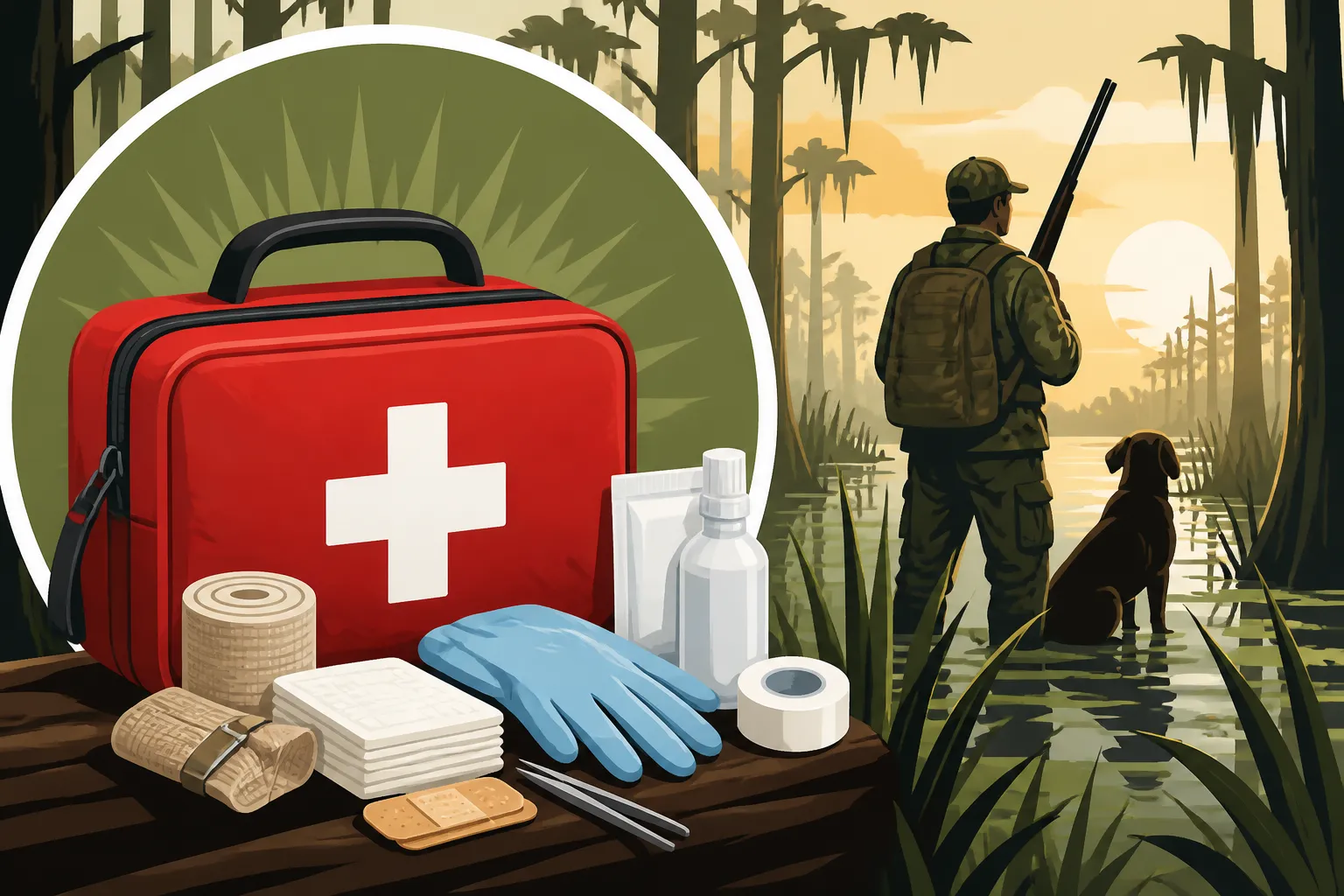
- Wound Care and Trauma: This is paramount. Pack a variety of adhesive bandages, from small strips to large fabric ones for bigger cuts. Crucially, include several sizes of sterile gauze pads, medical tape that holds up to moisture, and a roll of self-adhering elastic bandage (like Coban) for sprains or securing dressings. Antiseptic wipes or a small bottle of iodine solution are essential for cleaning wounds to prevent infection. Don't forget a small pair of trauma shears or tough scissors, and a good pair of tweezers for splinters or tick removal. Consider a small bottle of super glue or wound closure strips for minor lacerations that might gape open. A compact hemostatic dressing (like QuickClot or Celox) is an absolute must for controlling severe bleeding – it could be the difference between life and death.
- Pain Relief and Inflammation: Long days wading through water or trekking over uneven ground can bring on aches and pains. Over-the-counter pain relievers like ibuprofen or acetaminophen are important. Anti-inflammatory gels or creams can also provide relief for muscle strains or joint pain.
- Allergy and Reaction Management: Given the prevalence of biting insects and allergenic plants, antihistamines (like Benadryl) are critical. If you or anyone in your hunting party has known severe allergies, an EpiPen should be included and its use understood by everyone.
- Stomach and Hydration Issues: Diarrhea or upset stomach can be debilitating when you're miles from a latrine. Include anti-diarrhea medication (like Imodium) and oral rehydration salts. A small water filter or purification tablets are also smart, in case you run out of potable water or need to extend your supply.
Specialized Items for the Georgia Swamp Environment
This is where your kit truly adapts to the specific challenges of the Georgia wilderness.
- Snake Bite Preparedness: While opinions vary, carrying a legitimate snake bite kit with extractor suction devices is generally not recommended as they can often do more harm than good and delay proper medical treatment. Instead, focus on prevention (wear Snake Boots for Coastal Plain Walking), carrying a satellite messenger for emergency contact, and immediate evacuation plans. If you are bitten, keep the affected limb still and below heart level, and seek immediate medical attention. Your best "snake bite kit" is knowing how to get help quickly.
- Insect and Tick Protection: Beyond repellent, include a tick removal tool. Small hydrocortisone cream packets can soothe itchy bug bites and rashes.
- Blister Care: Moleskin, blister patches, and antiseptic wipes are crucial for preventing and treating blisters, which can cripple a hunt if left unchecked in wet boots.
- Survival Whistle and Mirror: These simple, lightweight items can be invaluable for signaling for help if you become disoriented or injured. Three short blasts on a whistle is a universal distress signal.
- Headlamp with Extra Batteries: Even if you plan to be out of the woods before dark, an unexpected delay or emergency can leave you navigating in pitch black. A reliable headlamp (preferably waterproof) with spare batteries is critical.
Essential Communication and Navigation Backup
Your first aid kit isn't just about treating injuries; it's about getting yourself and your partners out of a bad situation.
- Satellite Messenger or PLB (Personal Locator Beacon): This is perhaps the single most important "first aid" item for remote hunting. Devices from brands like Garmin inReach or Zoleo allow you to send SOS messages with your GPS coordinates, even when there's no cell service. They can literally be lifesavers. Some even allow two-way text communication, so you can describe your situation to rescuers.
- Handheld GPS Device or GPS-Enabled Phone with Downloaded Maps: Don't rely solely on your phone's cell signal. Use mapping apps like GoHunt that allow you to download maps for offline use. Mark your truck, treestand, and potential emergency rendezvous points. This is essential for preventing becoming lost, which adds a whole new layer of danger to any medical emergency.
- Power Bank: Keep your electronic communication and navigation devices charged with a waterproof, high-capacity power bank.
| Item Category | Essential Swamp Kit Items | Notes |
|---|---|---|
| Wound & Trauma | Assorted bandages, sterile gauze, medical tape, elastic bandage, antiseptic wipes/iodine, trauma shears, tweezers, hemostatic dressing, wound closure strips | Prioritize waterproof packaging. |
| Medication & Allergies | Ibuprofen/Acetaminophen, anti-diarrhea meds, antihistamines (e.g., Benadryl), EpiPen (if needed) | Consider personal prescription meds. |
| Environmental Protection | Tick removal tool, hydrocortisone cream, insect repellent, water purification tablets/filter, moleskin, blister patches | Focus on prevention and quick treatment for swamp-specific issues. |
| Survival & Navigation | Satellite messenger/PLB, handheld GPS/GoHunt app with downloaded maps, power bank, headlamp, extra batteries, whistle, signal mirror | Redundancy is key for communication and navigation. |
| Other | Small knife, emergency blanket, fire starter, duct tape (small roll) | Multi-purpose items that can save the day. |
Preparing Beyond the Kit: Knowledge, Planning, and Tools
Having the right gear is only half the battle. A beautifully stocked first aid kit is useless if you don't know how to use it, or if you haven't laid the groundwork for an emergency before you even leave the truck. Being truly prepared for hunting in Georgia's remote swamps means investing in knowledge and diligent planning.
Knowing Your Kit and Basic First Aid Skills
Think of your first aid kit as a toolbox. You wouldn't buy a hammer and expect to build a house without knowing how to swing it. Similarly, simply owning a first aid kit isn't enough; you need to know how to effectively use every item within it. Take the time to familiarize yourself with the contents. Read the instructions on specialized items like hemostatic dressings or water filters. Even better, take a basic first aid and CPR course. Many local community centers or Red Cross chapters offer these. Understanding how to control severe bleeding, stabilize a broken bone, treat for shock, or perform CPR can make all the difference in a remote setting. Practice applying bandages and splints, not just on yourself, but on a partner. The stress of an actual emergency is not the time to be fumbling with unfamiliar equipment or techniques. This goes double for items like an EpiPen, where quick and correct application is absolutely critical.
Pre-Hunt Planning for Emergency Situations
Before you even step foot into the woods, especially in a place like the Okefenokee or along a winding river, you need a solid plan. Share your detailed hunting itinerary with someone reliable who isn't coming with you. This should include your exact hunting location, expected return time, and the make and model of your vehicle. Let them know your "trigger time" – the point at which they should initiate a search if they haven't heard from you. Always check the weather forecast for the entire duration of your trip, and be prepared for sudden changes, which are common in Georgia. Scout your hunting area beforehand, if possible, not just for game sign, but for potential emergency extraction routes. Identify any unique landmarks or open areas that could serve as a helicopter landing zone if the worst happens. Using a tool like the GoHunt app can help you mark these potential access and exfil points directly on your map, even identifying land ownership for potential emergency access. Scouting Georgia Public Land Before Season isn't just for finding deer; it's for finding safety.
Utilizing Technology for Safety, like GoHunt
Modern technology has given us incredible tools to enhance safety in the backcountry, and you should leverage them. As mentioned, a satellite messenger is a game-changer for emergency communication beyond cell service. But even your smartphone, loaded with the right apps and precautions, can be a powerful safety device. Apps like GoHunt provide detailed topo maps, public and private land boundaries, and satellite imagery that can be downloaded for offline use. This means you can navigate confidently even without a signal. You can pinpoint your exact location, track your movement, and mark critical waypoints like your vehicle, treestand, or a potential escape route. Furthermore, GoHunt can offer insights into the terrain and potential obstacles you might encounter, helping you anticipate dangers before you face them. When you're thinking about Using Georgia Outdoors Without Cell Service, having robust, pre-downloaded maps from a reliable platform is absolutely essential. Remember to keep all these devices fully charged and protected in waterproof bags.
What to Pack: A Detailed Breakdown and Checklist
Putting together your swamp first aid kit should be a thoughtful process, not just throwing a few things into a bag. Each item has a purpose, and knowing that purpose is key to feeling confident in an emergency. Let's break down some specific categories and items that you truly shouldn't leave home without when venturing into Georgia's wild, wet places.
Wound Care and Trauma Essentials
In the dense, sometimes unforgiving environment of a Georgia swamp, cuts, scrapes, and even more serious trauma are real possibilities. From a slip on a slick log to a mishap with a sharp knife, you need to be ready to handle wounds effectively.
- Trauma Bandages and Dressings: Beyond standard adhesive bandages, pack a few larger, sterile wound pads (4×4 inches or larger). Combine these with a roll of medical tape that actually sticks when wet. For significant bleeding, a pressure dressing or an Israeli bandage can be invaluable. These are designed to apply direct pressure and can be secured tightly to help control hemorrhage until further care can be sought.
- Hemostatic Agents: As mentioned, items like QuikClot or Celox gauze are critical for severe bleeding. These chemically treated dressings accelerate clotting and can be packed into deep wounds. Make sure you understand how to apply them.
- Antiseptics and Cleansing: Individual packets of antiseptic wipes (like BZK or alcohol pads) are great for cleaning minor cuts. For larger wounds, a small bottle of povidone-iodine solution or a wound irrigation syringe with sterile saline can thoroughly clean out dirt and debris, drastically reducing the risk of infection in the humid swamp environment. Infection in a remote area is a dangerous complication.
- Wound Closure: For smaller cuts that are too wide for a standard bandage, wound closure strips (Steri-Strips) or even a small tube of medical-grade super glue can help pull skin edges together, promoting faster healing and reducing scarring. Again, practice using these at home.
- Gloves: Always carry several pairs of non-latex examination gloves. They protect you from potential bloodborne pathogens and keep wounds cleaner during treatment.
Medications and Allergy Relief
Beyond external injuries, internal ailments and allergic reactions can quickly become debilitating or even life-threatening in the backcountry.
- Pain Relievers and Anti-inflammatories: Pack a generous supply of your preferred over-the-counter pain relievers, such as ibuprofen (Advil, Motrin) for pain and inflammation, and acetaminophen (Tylenol) for pain and fever. These can make a long walk out much more bearable.
- Antihistamines: Diphenhydramine (Benadryl) is a must-have. It can alleviate symptoms of insect stings, allergic reactions to plants, and mild food allergies. For anyone with severe allergies, two epinephrine auto-injectors (EpiPens) should always be carried, and you and your hunting partners should know how to use them.
- Anti-Diarrhea Medication: Loperamide (Imodium) can be a lifesaver when you're miles from any facilities. Dehydration from diarrhea in hot, humid conditions can quickly lead to more serious problems. Oral rehydration salts are also excellent for combating dehydration.
- Personal Prescriptions: If you or your hunting partners take any prescription medications, ensure you have an adequate supply, plus a few extra days' worth, in a waterproof container. This includes inhalers, insulin, heart medications, etc.
- Topical Creams: Small tubes of hydrocortisone cream for bug bites or rashes, and antibiotic ointment (like Neosporin) for minor cuts, are small but mighty additions.
Environmental Protection and Survival Aids
The Georgia swamp itself is a formidable opponent. Protecting yourself from its elements is as crucial as treating an injury.
- Insect Repellent: A strong insect repellent containing DEET or picaridin is non-negotiable for combating mosquitoes, gnats, and ticks. Bug Repellent That Holds Up in a Tree Stand is essential for sanity and health.
- Tick Removal Tool: Specialized tick removers are far more effective than tweezers for safely extracting ticks without leaving parts embedded, which can lead to infection.
- Sun Protection: Even under canopy, sunburn can be an issue, especially on water. A small tube of sunscreen and lip balm with SPF are wise additions.
- Blister Prevention and Treatment: Moleskin, athletic tape, and specialized blister pads are crucial. Prevention is key – address hot spots on your feet before they become full-blown blisters. Having the right Waders for Georgia Tidal Marsh Hunting or boots for the conditions can also help prevent foot issues.
- Water Purification: A small, lightweight water filter (like a Sawyer Mini) or a supply of water purification tablets can ensure you have access to safe drinking water if your primary supply runs out or is compromised. Dehydration is a serious risk in the Georgia heat and can exacerbate any other medical condition.
- Emergency Blanket: A compact, reflective emergency blanket can provide critical warmth and protection from hypothermia if you become wet and stranded, even on a warm day if temperatures drop at night.
- Fire Starter: Waterproof matches, a lighter, or a ferro rod can be used to build a signal fire or provide warmth and psychological comfort in a survival situation.
- Duct Tape: A small roll of duct tape has a million uses, from patching gear to fashioning an improvised splint.
- Compass and Map: While electronic devices are great, a good old-fashioned compass and a waterproof physical map of your hunting area are indispensable backups. Knowing how to use them is, of course, the most important part.
Remember, the goal isn't to turn yourself into a mobile hospital, but to be able to manage the most common and dangerous emergencies until you can get to professional medical care. Your first aid kit is an investment in your safety and peace of mind when you're out pursuing game in Georgia's incredible, yet challenging, wild places.
Disclaimer
This article is for general informational purposes only and does not constitute professional advice. Laws, prices and regulations vary by location and change over time. Consult a qualified professional for guidance on your specific situation.