Still-Hunting South Georgia Pine Flats
Hunting the vast, often monotonous pine flats of South Georgia can feel like searching for a needle in a haystack, especially when deer movement seems sporadic and unpredictable. It’s easy to get discouraged when you’re walking for miles through what feels like endless timber, seeing nothing but pines and wiregrass. This guide is all about equipping you with the specialized tactics and mindset needed to successfully still-hunt these unique environments, turning those long, quiet walks into productive encounters with elusive whitetails.
Understanding the Unique Environment of South Georgia Pine Flats
South Georgia’s pine flats are a world unto themselves, distinct from the dense hardwoods of the Piedmont or the steep ridges of the mountains. To successfully hunt here, you first need to understand this environment and how deer thrive within it.
Habitat Characteristics and Deer Behavior
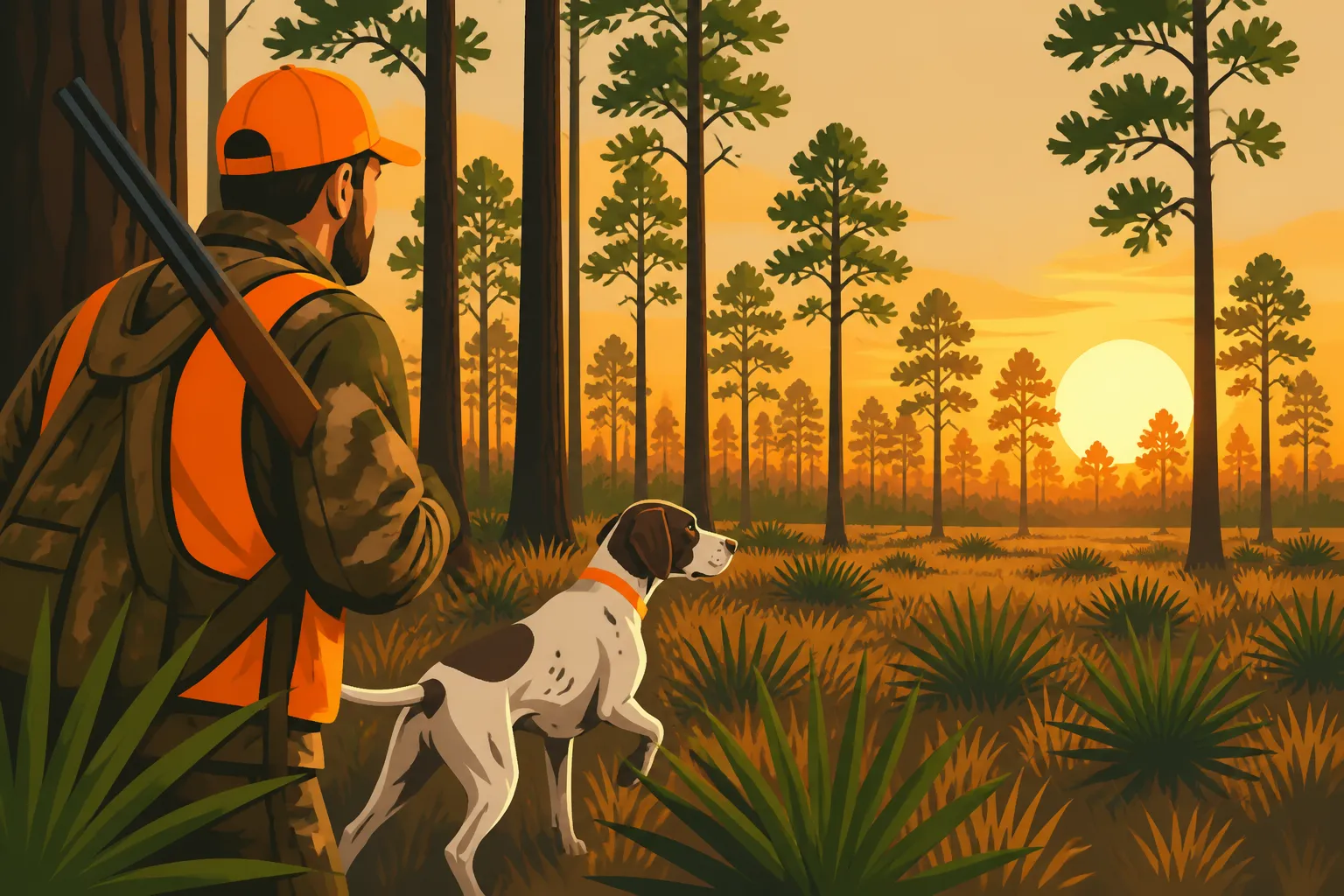
When you picture South Georgia pine flats, you’re likely envisioning vast stands of longleaf and loblolly pines, often with a surprisingly sparse understory. This openness is largely due to the frequent use of prescribed burns, a crucial management tool that keeps the forest floor clear of dense brush and promotes healthy growth. While this creates seemingly open visibility, it also means deer are incredibly adept at using even the most subtle cover – a slightly denser patch of pines, a small depression, or a strip of palmettos – to disappear right before your eyes. They don't just live in thick swamps; they travel through these open areas with purpose, often moving between bedding and feeding sites under the radar of less observant hunters.
This characteristic openness profoundly influences how deer behave. They are constantly alert, relying heavily on their eyesight, hearing, and incredible sense of smell. You’ll often find them moving during the low-light hours of dawn and dusk, when the visibility is naturally reduced, or hugging the edges of denser cover. Understanding why a deer is in a particular spot – is it feeding, bedding, or traveling? – is far more important than simply knowing it's there. The very nature of still-hunting, which involves slow, deliberate movement, is crucial here. Unlike the dense thickets or river bottoms where you might be able to sneak within a few yards, every single movement in these open pines can be seen. This demands extreme patience and an almost hyper-awareness of your surroundings, making the hunting experience truly immersive.
Ultimately, hunting pine flats is about adapting to the deer's terms. They are masters of their open domain, using every slight advantage the terrain offers. Your ability to move like a ghost and anticipate their next move will be the difference between a frustrating walk and a successful encounter.
Identifying Key Food Sources and Water
Deer in pine flats aren't always looking for the sprawling food plots you might find in other regions. Their diet here is diverse and often requires a keen eye to spot. Key food sources include acorns from scattered live oaks, water oaks, or small white oak pockets that dot the landscape. These might not be as widespread as in a true hardwood forest, but where they occur, they can be absolute magnets. You'll also find muscadines, beautyberry, and various green browse species that flourish after prescribed burns, offering tender, nutritious forage. The trick is that these aren't always obvious; they require diligent scouting to pinpoint.
The ephemeral nature of these food sources makes scouting an ongoing process. A fantastic acorn crop one year might be a complete bust the next. This means you can't rely on last season's hotspots. You need to be on the ground, or at least observing recent aerial imagery, to identify current food availability. Even small, secluded food plots planted by landowners or clubs can act as powerful attractants in otherwise sparse areas, drawing deer from miles around. Understanding Hunting After a Poor Acorn Year can be incredibly insightful when these primary food sources are scarce, as deer will shift their focus to alternative browse.
Water sources, while less dramatic than in swamp country, are just as vital. In the dry pine flats, water often concentrates in cypress heads, isolated sloughs, or small, scattered ponds. Deer will hit these regularly, especially during warmer months, making them prime ambush points or natural travel corridors to focus your still-hunting efforts around. A deer rarely passes up a chance for a drink, and these scarce resources become focal points in an otherwise open landscape.
Impact of Prescribed Burns
Prescribed burns are not just a tool; they are a way of life in South Georgia pine country. These controlled fires serve multiple purposes: habitat management, reduction of wildfire risk, and the promotion of a healthier ecosystem. Immediately after a burn, the forest floor is cleared of dense understory, exposing mineral-rich soil and creating an almost stark landscape. This might seem counterintuitive for deer hunting, but it's actually the start of something beautiful.
The magic happens shortly after the fire. Within days or weeks, depending on moisture, a flush of new growth emerges from the blackened earth. These tender shoots, forbs, and grasses are incredibly palatable and nutritious for deer. This post-burn flush creates temporary, but intensely attractive, feeding opportunities. Timing your hunts to coincide with this period, typically a few weeks to a month after a burn, can be incredibly productive, as deer will gravitate to these fresh, green buffets.
Beyond the immediate feeding frenzy, prescribed burns have a long-term positive impact. They maintain the open, park-like feel that defines many pine flats, which supports a healthier deer herd by reducing parasites, improving overall forage quality, and enhancing visibility for both predator and prey. This ecological cycle is vital to understanding the dynamic nature of this hunting environment, and knowing when and where burns have occurred can give you a significant advantage.
Reading the Landscape for Deer Movement
In an environment as seemingly uniform as pine flats, the ability to read subtle signs and terrain features becomes paramount. Deer leave clues, but you have to know what you’re looking for.
Interpreting Tracks, Trails, and Rubs
In the thick carpet of pine straw that often covers the forest floor, deer tracks can be more challenging to read than in soft mud. They might not be as crisp, but they are still there. Look for patterns, direction of travel, and, most importantly, freshness. Fresh tracks – those with sharp edges and no debris accumulation – are golden. Don’t just look at individual tracks; focus on where the track lines end or go. Are they leading to a bedding area, a water source, or a feeding ground? You can gain a similar appreciation for interpreting ground signs by reading our guide on Reading Georgia Mud for Fresh Deer Movement.
Game trails in open pine flats are rarely the well-worn paths you might see in dense hardwoods. Instead, they’re often subtle – areas where the pine straw is slightly disturbed, a faint depression in the ground, or where saplings show signs of being bent or broken over time. Look for parallel tracks, indicating a frequently used route, or subtle corridors between denser pockets of trees. Deer here don't always follow clear, defined trails but often utilize the paths of least resistance, making these subtle indicators crucial for the still-hunter.
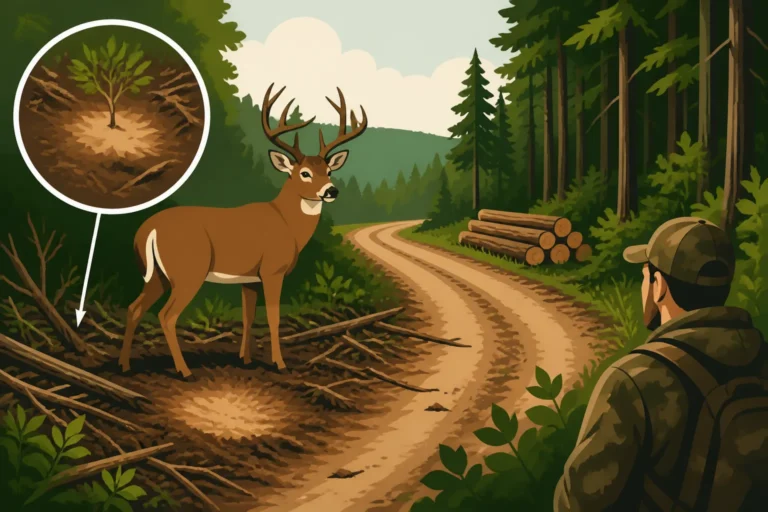
Rubs and scrapes also tell a story. Bucks still create them, but they might be on smaller pines, sparse hardwoods, or even palmetto stems. Look for clusters of rubs, or rub lines that clearly indicate a travel route between a bedding area and a feeding site. A fresh scrape, pawed out and often with an overhead licking branch, is a definite sign of recent buck activity and a signal to slow down even more and observe carefully.
Locating Funnels and Travel Corridors
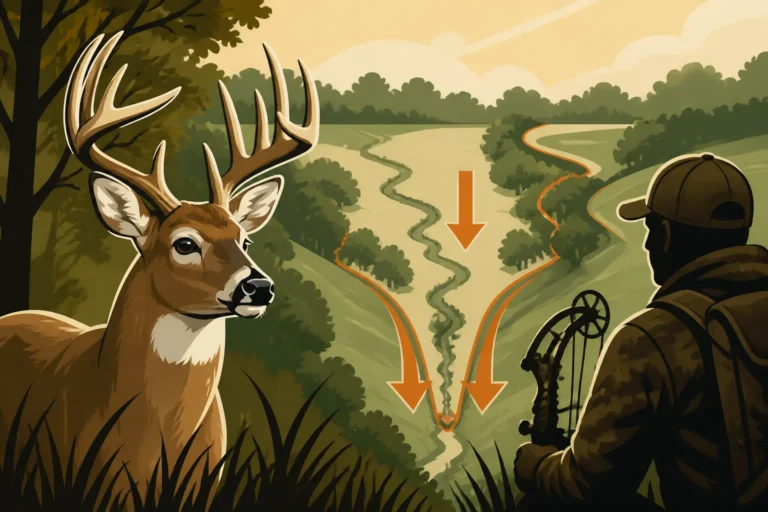
Even in the most seemingly flat and monotonous terrain, subtle changes create funnels that concentrate deer movement. A slight rise in elevation, a drainage ditch that deer prefer to cross at specific points, a string of slightly denser pines, or the distinct edge of a cypress head can all act as natural pinch points. These features, often overlooked by the casual observer, are critical for a still-hunter to identify and exploit. Deer, like all animals, are efficient and will choose the easiest, safest route available, and these funnels provide just that.
Man-made features also create powerful funnels. Old logging roads, the distinct edges of a clear-cut, or even property lines can be heavily used travel corridors. Deer often skirt these linear features, using the cover they provide for security as they move. These can be excellent starting points or routes for a still-hunt, allowing you to move quietly along their edges, observing into the adjacent cover.
Ultimately, your goal is to understand how deer move between resources. A bedding area – perhaps a thicket of palmettos or a dense block of young pines – will be connected to a feeding area by a travel corridor that might traverse a more open flat. This connection, this invisible highway that deer use daily, is precisely where you want to be. Gaining insight into Where South Georgia Pine Flat Bucks Bed can help you better identify where these movements begin and end, enhancing your ability to predict their travel routes.
Utilizing Aerial Imagery and Mapping Tools
This is where modern technology truly shines for hunters navigating the sprawling pine flats. Before you even set foot in the woods, leverage mapping apps like GoHunt or OnX Hunt. These tools allow you to pore over aerial imagery, looking for variations in timber density, the tell-tale green of cypress heads, subtle drainage patterns, and old roadbeds that might not be visible from the ground. What looks flat from a distance often reveals nuances when viewed from above.
Aerial maps are invaluable for identifying subtle changes in elevation or cover that act as natural funnels. You can pinpoint areas of transition, such as where a younger, thicker pine plantation meets mature, open timber, or where a burn line created a new edge. These transition zones are often magnets for deer, providing both security and easy access to food. If you've previously read about Reading Aerial Photos for Piedmont Deer, you'll find similar principles apply, just with different habitat types.
Using these mapping tools, you can plot your potential still-hunting routes in advance. Mark points of interest—potential bedding areas, feeding zones, water sources—and meticulously plan your approach based on predicted wind direction and time of day. This level of preparation saves countless wasted steps and dramatically increases your efficiency in the field. Crucially, many mapping apps, including GoHunt, allow you to download maps for offline use, which is absolutely vital for Using Georgia Outdoors Without Cell Service in the more remote areas of the pine flats.
Mastering the Art of Still-Hunting
Still-hunting is more than just walking slowly; it's a deliberate, thoughtful dance with the environment, where observation trumps movement.
Pacing and Movement Strategies
True still-hunting isn't a continuous walk; it’s a methodical, stop-and-go process. The fundamental rule is to take three to four steps, then stop for several minutes. During these pauses, you’re not just resting; you’re engaging in intense observation, letting your eyes do the work. The goal is to move so deliberately and slowly that you observe a deer before it observes you. Many hunters rush this, but patience is the cornerstone of success in pine flats.
Your pace should be entirely dictated by the terrain and visibility. In open, sparse pines, you might only take a step or two before pausing for an extended scan. In slightly denser pockets or along the edge of a thicket, you might cover a bit more ground, but always be ready to freeze instantly. Think like a predator, not a hiker casually enjoying the scenery. Every step should be considered, every sound accounted for.
Use the environment to your advantage to mask your movement. Step carefully on pine needles, which are generally quieter than crunchy leaves. Move when a gust of wind rustles the trees, or when distant bird calls provide natural auditory camouflage for your soft footfalls. This strategic, almost imperceptible movement minimizes your impact on the environment and maximizes your chances of spotting undisturbed game.
Scanning and Utilizing Cover
When you stop for your mandatory pause, don't just stare straight ahead. Develop a disciplined scanning technique. Work your eyes in a grid pattern: near to far, side to side, then back again. Look for anything that breaks the natural patterns of the woods – a horizontal line (a deer's back) in a vertical world (tree trunks), an unnatural curve, a flicker of an ear, or the twitch of a tail. Use your binoculars constantly to pick apart distant shadows and confirm what your naked eye might suspect. Having Binocular Choice for Georgia Whitetails squared away is crucial here, as you'll be using them far more than your rifle scope.
Even in seemingly open pine flats, there is always some form of cover. Use the trunks of pines, small clumps of palmettos, or subtle dips in the terrain to break up your outline. Move from one piece of cover to the next, always keeping something between you and where you expect deer to be. This doesn't mean you're hiding; it means you're presenting a less distinct, less threatening silhouette.
The key is to blend in, to be perceived as part of the environment rather than an obvious intruder. Your movements, when you do take those few steps, should be fluid and quiet. When you pause, stand absolutely still, becoming indistinguishable from the trees around you. It's truly amazing how often deer will walk right past a motionless hunter they simply don't perceive as a threat.
Leveraging Wind and Thermals
Wind is your most critical ally or your most damning enemy in still-hunting. Always, always hunt into the wind or with a quartering wind. Deer rely overwhelmingly on their sense of smell, and a direct downwind approach is a guaranteed bust, scattering deer long before you ever see them. If the wind isn't right for your chosen path, change your path or change your plan entirely.
In South Georgia, thermals – the rising and falling air currents – are less dramatic than in mountainous terrain, but they are still a factor, especially around water features or subtle elevation changes. Generally, in the mornings, cooler air sinks and flows downhill or into low-lying areas. In the evenings, as the ground warms, air tends to rise. Pay close attention to how the air moves, particularly at sunrise and sunset when deer are most active. A slight draw or a cypress swamp can create its own mini-thermal, pulling your scent right into a bedding area.
Use a wind checker frequently. These small bottles of powder or smoke are invaluable for confirming the exact wind direction and any subtle shifts. Don't just guess; verify. Sometimes, a slight detour of a hundred yards, or even a different approach angle, can make all the difference in keeping your scent from spooking a wary whitetail. It’s a constant chess match, and the wind is your opponent’s queen.
Essential Gear and Preparation for Pine Flat Success
Having the right gear won't guarantee success, but it will certainly improve your comfort, stealth, and overall effectiveness when still-hunting South Georgia pine flats.
Appropriate Clothing and Footwear
Georgia's deer seasons often span surprisingly warm temperatures, even well into November. Therefore, lightweight, breathable layers are paramount. Opt for synthetics or merino wool, which excel at wicking moisture away from your body, keeping you cooler and drier. Your camouflage pattern should effectively break up your outline against the pine bark and sparse undergrowth; patterns with vertical elements or open country designs often work well. If you’re heading out in early season, a deeper dive into Warm-Weather Clothing for Georgia Hunters will prove invaluable.
Footwear is absolutely critical for quiet movement. Soft-soled boots or even specialized hunting shoes with flexible soles can make an enormous difference in your ability to move silently across pine straw and occasional crunchy leaves. While stealth is key, you also need protection from the myriad of hazards on the forest floor, including thorns, hidden stumps, and, most importantly, venomous snakes. Many seasoned hunters opt for quality rubber boots or dedicated snake boots for both stealth and protection. You might find our detailed guide on Snake Boots for Coastal Plain Walking particularly helpful in making your selection.
Lastly, never forget the bane of warm-weather hunting: insects. Bug repellent is a non-negotiable item, especially during the early season or when hunting near damp areas. Ticks, mosquitoes, and gnats can quickly undermine your focus and patience, turning a productive still-hunt into a miserable ordeal. Consider permethrin-treated clothing and a head net for extreme situations. Ensuring you have Bug Repellent That Holds Up in a Tree Stand will mean it’s equally effective on the move.
Optics and Navigational Aids
Good binoculars are non-negotiable for still-hunting pine flats. An 8x or 10x magnification will be your best friend. You will spend far more time looking through your binoculars, slowly scanning and picking apart distant cover, than you ever will looking through your rifle scope. They are essential for identifying deer at long range, allowing you to plan your approach or freeze before they ever know you're there. Don't skimp on quality here; clear glass makes a world of difference in low light.
A reliable rangefinder is also extremely useful, especially in the open pine country where judging distance can be surprisingly tricky. The lack of distinct landmarks can play tricks on your eyes. Knowing the exact distance to that patch of palmettos or the edge of a distant clear-cut allows for confident shot placement when the opportunity arises, eliminating guesswork in the heat of the moment.
Finally, a GPS unit or a robust mapping app on your smartphone (like GoHunt or OnX Hunt) is absolutely essential. These pine flats can be deceptively uniform, making it incredibly easy to get disoriented, especially when focused on a slow still-hunt. Mark your vehicle, any points of interest (food, water, old rubs), and your planned route. Always carry a fully charged phone and a portable power bank, as relying solely on cell service is a risky gamble in remote areas of South Georgia.
Weapon and Ammunition Choices
For still-hunting, where you'll be carrying your weapon for hours and potentially taking shots from less-than-ideal positions, a lightweight, maneuverable rifle is often preferred. Calibers like .243, 6.5 Creedmoor, or .308 are popular choices, offering excellent accuracy and sufficient power for Georgia whitetails without the excessive weight or recoil that can fatigue you over a long day. Thinking through your overall weapon system can be further aided by our comprehensive guide on Rifle Setups for Georgia Deer Hunting.
Ammunition choice is just as important as the rifle itself. Select a bullet that performs reliably at various ranges, capable of delivering a clean kill whether a deer presents a quick, close-range shot in a thicket or a longer opportunity across an opening. Good quality soft points or bonded bullets are generally reliable choices, offering a balance of expansion and penetration.
If you prefer to bowhunt, a compound bow or crossbow can be effective in the pine flats. The key is to ensure your setup is quiet and allows for quick, silent draws or cocking if a deer suddenly appears at close range. Practice shooting from various realistic stances – kneeling, standing, leaning against a tree – as you won't always have a perfect, level setup. If you're weighing your options, our comparison of Crossbow Versus Vertical Bow in Georgia might help inform your decision.
Adapting to Weather and Seasonal Changes
The weather and the changing seasons profoundly influence deer behavior in South Georgia, requiring still-hunters to adapt their tactics for consistent success.
Hunting During Warm Early Season Days
Georgia's early archery and firearms seasons, particularly in September and October, are often characterized by high temperatures and stifling humidity. During these conditions, deer movement will be heavily concentrated during the coolest parts of the day: the first few hours after dawn and the last few hours before dusk. Plan your still-hunting efforts to coincide with these narrow windows, and consider taking a longer break during the unproductive midday heat.
During the hotter hours, focus your still-hunting efforts near readily available water sources and dense, shady bedding areas. Deer will be seeking relief from the heat, minimizing their movement in open, sun-baked flats. Moving through wide-open areas at midday is not only often unproductive but can also quickly overheat you, reducing your effectiveness and enjoyment.
Hydration is absolutely critical for the hunter. Carry plenty of water, and consider electrolyte supplements to combat the effects of sweating. Should you be fortunate enough to harvest a deer, speed and efficiency in field dressing are paramount to preserve the meat quality in warm temperatures. Our guide on Field Dressing a Deer in Warm Weather provides essential tips for handling game when the mercury is high.
Dealing with Rain and Fog
Rain, especially a light, steady drizzle, can be a still-hunter's secret weapon. It dampens noisy leaves and pine straw, quieting your footsteps and allowing for an incredibly stealthy approach. Often, deer become more active during or immediately after a light rain, moving to feed or simply enjoying the cooler, damp air. While visibility might be slightly reduced, the advantage of quiet movement often outweighs this, provided you slow down even more and pay extra attention.
Fog presents both a unique challenge and an incredible opportunity. While it can drastically limit visibility, making long shots impossible, it also allows for incredibly close encounters. Use the fog to your advantage by moving silently through areas you might normally avoid due to high visibility, knowing that deer won't see you coming from afar. This can be an exhilarating experience, forcing you to rely more on sound and smell.
Ensure all your gear is waterproof, from your outerwear to your rifle scope covers. A wet hunter quickly becomes a cold and miserable hunter, and misery is the enemy of focus and patience. Protect your optics from fogging with anti-fog treatments, and keep your calls dry to ensure they function properly.
Late-Season Strategies in Pine Flats
As temperatures drop and primary food sources like acorns diminish, deer behavior in the pine flats shifts significantly. Deer will transition to browsing on remaining green foliage, seeking out late-season food plots, or targeting specific browse species that stay palatable longer. Identifying these vital, often overlooked, food sources becomes crucial for late-season success. We have in-depth discussions on both Hunting After a Poor Acorn Year and Late-Season Food Sources for Georgia Whitetails that can help you pinpoint these changing patterns.
During the late season, with less dense understory due to frosts and natural die-back, deer may become more visible. This means still-hunting can be highly effective as you can often see further into the woods. However, it also means deer can see you more easily, demanding even greater stealth, meticulous cover use, and unwavering patience. Every movement must be even more deliberate.
Consider focusing your still-hunting efforts on areas with standing crops if available, or dense thermal cover if a significant cold snap hits. Bucks, often recuperating from the rigors of the rut, might be less active but still need to feed and find sanctuary. Look for areas where dense cover provides both food and crucial protection from the elements, as these will be their preferred haunts.
Overcoming Common Challenges and Staying Persistent
Still-hunting is as much a mental game as it is a physical one, requiring resilience, patience, and a well-developed strategy to overcome inevitable challenges.
Dealing with Hunting Pressure
Public lands and even some private tracts in South Georgia can experience significant hunting pressure, especially during opening weekends and peak rut periods. Deer, being intelligent animals, learn quickly to avoid easily accessible areas and human activity. This is precisely where the disciplined practice of still-hunting truly shines, as it allows you to adapt and exploit the patterns created by this pressure.
To effectively beat the pressure, you need to be willing to go where others won't. This often means walking further, penetrating deeper into dense pockets of cover that most hunters avoid, or focusing on less obvious, more secluded travel routes. Study your aerial maps intently and identify areas that are difficult to access due to natural barriers or are simply surrounded by thicker, less appealing habitat. You’ll often find Finding Ground Others Walk Past by doing this, revealing pockets of unpressured deer.
Whenever possible, hunt mid-week or later in the day, when other hunters have likely packed up and left. Deer will often return to prime feeding or bedding areas once the immediate human pressure subsides, making these times surprisingly productive. Ultimately, patience and persistence are your greatest assets against pressured deer; the willingness to put in the effort will often separate you from the crowds and lead to success.
Staying Motivated and Patient
Still-hunting pine flats can be mentally taxing. Long stretches of quiet walking without seeing a single deer are not just common; they are an inherent part of the experience. It's incredibly easy to get discouraged, to feel like you're just wandering aimlessly, and to start rushing your pace. However, it's crucial to remember that the process is the hunt. Embrace the immersion in nature, the quiet solitude, and the challenge itself.
To maintain motivation, set small, achievable goals for yourself on each outing. Perhaps today's objective isn't necessarily a deer, but to find fresh sign in a new area, or to silently stalk to a particular cypress head you marked on your map. Celebrate these small victories – every fresh track, every rubbed tree, every fresh browse mark tells a story and confirms you're in the right neighborhood. These incremental successes build confidence and reinforce your efforts.
Always remind yourself why you're out there. It’s not just about pulling the trigger; it's about the deep satisfaction of the challenge, the profound connection with the natural world, and the personal growth that comes from mastering a difficult technique. The eventual reward, when it finally comes, will be immeasurably sweeter precisely because of the immense effort, patience, and dedication you poured into the journey.
Safety Considerations in Remote Areas
South Georgia pine flats, while beautiful, can be incredibly remote, and cellular service is often spotty or completely nonexistent. Prioritize safety by always letting someone know exactly where you’re going, your planned route, and when you expect to return. Carry a fully charged phone with downloaded maps and a portable power bank as a backup.
Be thoroughly prepared for unexpected emergencies. A small, but comprehensive, first-aid kit, a reliable whistle, a fire-starting tool, and extra water are absolute minimum requirements. Familiarize yourself with the local wildlife, particularly venomous snakes like Eastern Diamondback Rattlesnakes and Cottonmouths, which are prevalent in many areas. Taking precautions, such as wearing snake boots or gaiters, is a wise choice.
Finally, always be acutely aware of other hunters, especially during firearms season. Wear blaze orange or blaze pink (where legally permitted) to ensure you are highly visible to others. Adhere strictly to the fundamental rule of positive target identification: identify your target, and what is beyond it, beyond all doubt before ever taking a shot. Safety should always, unequivocally, be your absolute top priority in the field.
| Still-Hunting Scenario | Movement Speed | Observation Strategy | Best for |
|---|---|---|---|
| Dense Cover/Thickets | Very Slow (1-2 steps/min) | Ultra-focused, close-range scanning, listening for subtle sounds | Flushing bedded deer, extremely wary animals |
| Open Pine Flats (Typical) | Slow (3-5 steps/min) | Wide-angle scanning, binoculars for distance, pattern breaks | General still-hunting, traversing open areas cautiously |
| Logging Roads/Field Edges | Moderate (5-10 steps/min) | Scanning edges for movement, focused on transition zones | Covering ground along known travel routes |
| Post-Burn Areas (Sparse) | Very Slow/Extended Pauses | Detailed scanning for new growth, exposed sign, feeding deer | Capitalizing on temporary high-activity feeding zones |
| Approaching Known Bedding | Extremely Slow/Crawl (if needed) | Maximize cover, listen for rustles, look for specific body parts | Sneaking into high-risk, high-reward areas |
Disclaimer
Please note that hunting regulations and conditions can change. Always consult the latest Georgia Department of Natural Resources (DNR) guidelines and local regulations before heading afield. Safety should always be your primary concern.