Reading Georgia Mud for Fresh Deer Movement
There's nothing quite as frustrating as stepping out into the Georgia woods, hoping to connect with a big buck or a wily doe, only to feel like you're stumbling around blindly. We've all been there – the leaves are crunchy, the pine straw is thick, and you just can't seem to find any clear indication of where the deer are moving. But what if I told you that one of the most reliable and often overlooked indicators of fresh deer activity is right under your feet, especially after a good rain? This guide is all about honing your skills to read Georgia's diverse mud, transforming those muddy patches from an obstacle into your personal hunting intelligence report.
The Subtle Art of Mud Tracking in Georgia
For many hunters, mud is just something you try to avoid. It sticks to your boots, makes a mess, and can be noisy to walk through. But for those of us who have learned to interpret its secrets, mud becomes an open book, revealing the recent movements and even the habits of Georgia's whitetails. It’s a skill that takes patience and practice, but the rewards are well worth the effort.
Why Mud is a Goldmine for Deer Hunters
Think about it: unlike dry leaves or hard-packed dirt, mud is a perfect recording medium. Every step a deer takes leaves an impression, a clear picture of its passing. These impressions tell a story that can be surprisingly detailed if you know how to read it. When you're trying to figure out where deer are feeding, bedding, or traveling, a fresh track in the mud is like a neon sign pointing you in the right direction. It's a direct, undeniable piece of evidence that a deer was just here.
Moreover, mud often accumulates in natural travel corridors, creek crossings, low-lying areas, or along the edges of agricultural fields. These are exactly the kinds of places deer prefer to frequent. For instance, after a heavy rain, a small dip in a logging road or a muddy stream bank can become a hotspot for fresh tracks as deer navigate the landscape. Instead of just walking past these muddy spots, start seeing them as opportunities. They condense deer sign into easily observable areas, giving you a chance to see what kind of deer are in the area and, crucially, when they were there. This intel can be far more valuable than a grainy trail camera picture that might be days old.
The Challenges of Tracking in Georgia's Varied Soils
Now, let's be realistic: tracking in Georgia isn't always a walk in the park. Our state boasts an incredible diversity of terrain and soil types, from the red clay hills of the Piedmont to the sandy loam of the Coastal Plain, and the thick, black muck of our river bottoms and swamps. Each presents its own unique set of challenges. That red clay, while often holding a track well, can dry out quickly and turn into an unyielding, rock-hard surface where only the heaviest deer leave a faint impression. Conversely, the sandy soils of South Georgia might seem easy to track, but a light rain can smooth out old tracks, and fresh ones can be quickly erased by subsequent wind or even a light drizzle.
Then there's the truly challenging stuff: the thick, often soupy mud found in our river swamps and marshy areas. Here, tracks can be indistinct, smeared, or filled with water, making precise identification tough. You might find yourself knee-deep in goo, wondering if that blob was a deer, a hog, or just a particularly lumpy cow patty. The key is to understand the local soil conditions and how they react to moisture. Learning to distinguish between the subtle nuances of a track left in firm clay versus a track left in a loose, sandy mud requires time in the field. Don't get discouraged if your initial attempts leave you scratching your head; it's a learned skill, like anything else in hunting. A tool like GoHunt's mapping features can actually help you identify areas with different soil types and water features, giving you a heads-up on where certain kinds of mud might be more prevalent.
Deciphering Deer Tracks: Size, Shape, and Depth
Once you've found some tracks in the mud, the real detective work begins. It's not just about seeing a hoof print; it's about interpreting what that print tells you. The size, shape, and depth of a track are all crucial pieces of a larger puzzle, helping you determine not just that a deer passed by, but what kind of deer it was and how it was moving.
Estimating Deer Size from Hoof Prints
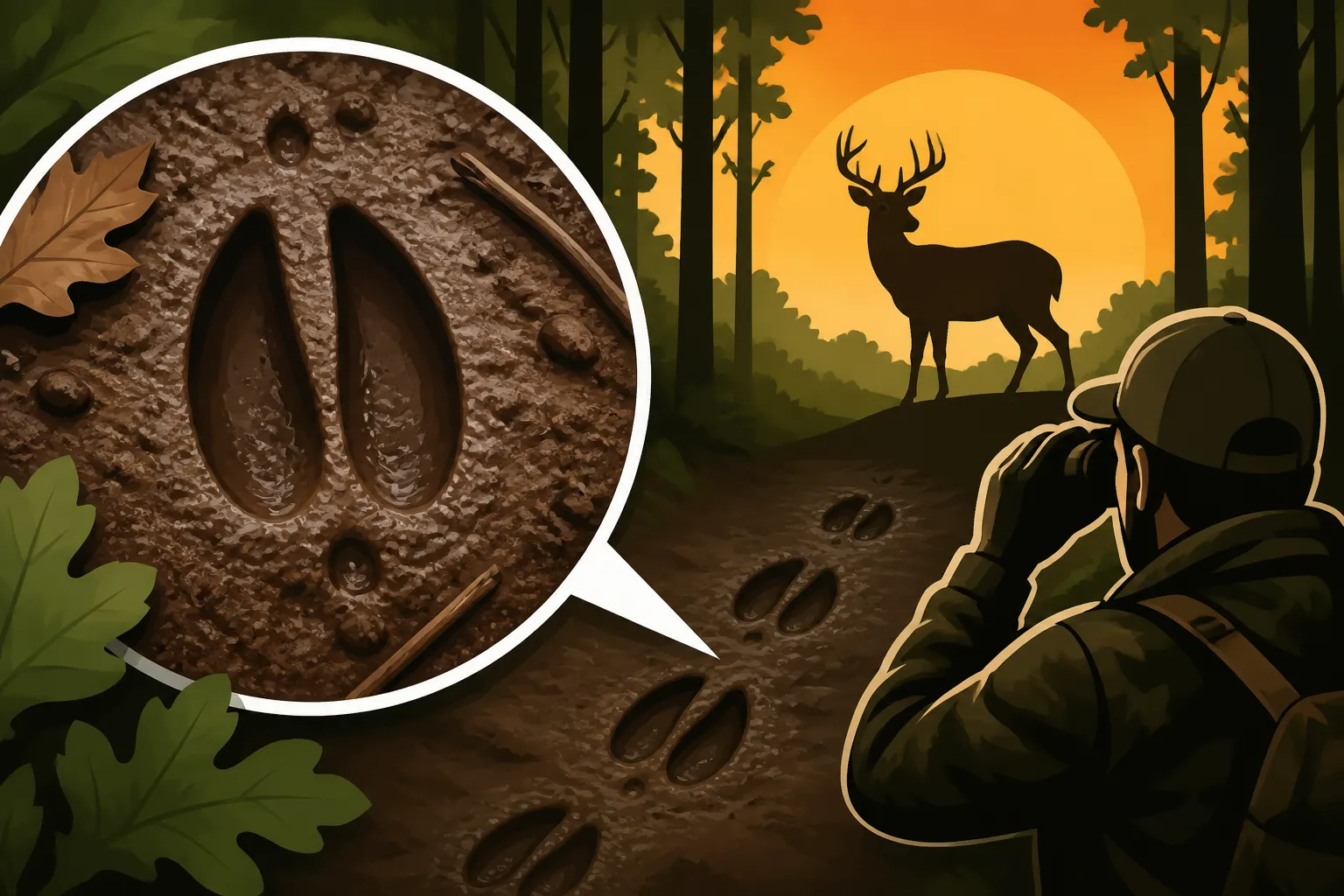
When you encounter a deer track in the mud, the first thing most hunters want to know is: "Was that a big deer?" While it's certainly not an exact science, you can get a pretty good estimate of a deer's size from its tracks. A larger, mature buck typically leaves a track that is longer and wider than a doe's. The average track of a mature doe in Georgia might measure around 2 to 2.5 inches in width and 3 to 3.5 inches in length. A mature buck, especially a heavier one, often leaves tracks that are 3 inches or more in width and upwards of 4 to 5 inches in length.
Look closely at the dewclaws, too. These are the small, secondary toes located higher up on the leg. On soft ground or when a deer is moving quickly, these dewclaws will often register in the mud behind the main hooves. Larger, heavier deer, especially mature bucks, tend to have their dewclaws register more frequently and deeper, even at a walk, because their weight forces their feet further into the mud. A young deer or a lighter doe might only show dewclaw marks when running or jumping. Remember, these are general guidelines. A very large doe might leave tracks similar to a smaller buck, and factors like gait and mud consistency can affect the appearance of a track. This is where experience really pays off.
Reading Gait and Speed from Track Patterns
Beyond just the size of an individual track, the pattern of multiple tracks in the mud can tell you a lot about how the deer was moving. Was it casually strolling, cautiously walking, or dashing through the woods? A deer that is walking slowly and deliberately will leave tracks that are typically spaced further apart and may even show an "overstep" pattern, where the hind foot lands slightly ahead of the front foot's impression. This indicates a relaxed deer, perhaps feeding or cautiously observing its surroundings.
If the tracks are closer together and the deer appears to be placing its hind foot directly into or very near the front foot's print, it’s often indicative of a more cautious or concentrated walk, often seen when a deer is scent-checking an area or moving through dense cover. When a deer moves at a trot, the track pattern becomes more elongated and the hoof prints might show a bit more splaying, especially in softer mud. And if a deer is running or bounding, the tracks will be widely spaced, often showing distinct dewclaw marks, and the mud might be kicked up or displaced significantly. Pay attention to the direction of these displaced mud sprays to determine the direction of travel. Learning to differentiate these gaits can help you understand the deer's behavior in that specific area and whether it was merely passing through or actively engaged in some activity.
Beyond Hoofprints: Other Muddy Clues to Fresh Activity
Deer are messy creatures, and their passage through muddy areas leaves more than just hoof prints. There are a variety of other subtle signs that, when combined with tracks, paint a much clearer picture of recent activity. Overlooking these additional clues is like reading only half a book; you're missing crucial plot points that could lead you to your next encounter.
Muddy Rubs and Scrapes
While you might typically associate rubs and scrapes with trees and bare earth, mud can play a significant role in how these signs appear and how long they remain "fresh." Bucks, especially during the pre-rut and rut phases, will often utilize muddy areas for their scrapes. A scrape is an exposed patch of earth, usually under a low-hanging branch, where a buck paws away the leaf litter to expose the soil, then urinates on it, depositing scent from his tarsal glands. If a scrape is made in a muddy patch, it becomes an even more potent indicator of recent activity. The fresh churned mud, combined with the strong scent, signals a buck's presence.
Similarly, though less common, a buck might rub its antlers on a sapling or brush that’s covered in mud, leaving a tell-tale muddy stain on the rub itself. The freshness of these muddy scrapes and rubs can be gauged by the mud's consistency and color. If the mud in the scrape is still damp and dark, it's likely very fresh. If it's dried out and cracked, the sign is older. Look for tracks leading directly into and out of these muddy scrapes, which further confirms their recent use. During the critical period of Hunting the Rut in Mid-October, these muddy scrapes can be particularly hot.
Reading Browse and Droppings in Muddy Areas
Deer don't just walk through muddy areas; they often feed in them or along their edges, and their droppings can provide excellent intel. If you find browse marks – where deer have nipped off leaves, twigs, or other vegetation – in or near a muddy patch, it indicates a feeding area. The key here is to look for fresh browse. Are the cuts clean and still moist, or are they dried and discolored? The presence of fresh browse alongside fresh tracks reinforces the idea that deer are actively using this area for foraging.
Deer droppings found in muddy areas are another invaluable sign. Like tracks, the freshness of droppings can be determined by their appearance. Fresh droppings will be dark, shiny, and moist, sometimes even still warm. As they age, they become dull, drier, and eventually crumble. The consistency can also tell you about their diet; firmer pellets are typical of a browse-heavy diet, while softer, more amorphous droppings suggest a diet of lush greens or forages. If you find fresh, soft droppings in a muddy patch, it's highly likely a deer has been feeding there very recently. Pay attention to areas where you might find Late-Season Food Sources for Georgia Whitetails and check the muddy edges; these can be prime spots for droppings and browse.
| Track Characteristic | Potential Indication | Explanation |
|---|---|---|
| Large Size (3"+ wide) | Mature Buck | Heavier body mass and larger hooves of older males. |
| Small Size (2-2.5" wide) | Doe or Young Deer | Lighter body weight and smaller hooves. |
| Deep Prints, Splayed Toes | Soft Mud / Running | Weight forces hooves deeper; splaying indicates speed. |
| Clear Dewclaw Marks | Heavy Deer / Running | Dewclaws register under weight or high impact from speed. |
| "Overstep" Gait | Relaxed Walk / Trot | Hind foot lands ahead of front, indicating unhurried movement. |
| Short, Concentrated Steps | Cautious Movement | Deer is moving slowly, possibly scent-checking or in thick cover. |
| Kicked-up Mud | Running / Bounding | High impact and propulsion from a fast-moving deer. |
| Wet, Dark Mud in Scrape | Fresh Scrape | Recently pawed and urinated on by a buck. |
| Shiny, Moist Droppings | Very Recent Activity | Deer passed by hours ago or less. |
Putting it All Together: Locating Hot Spots
Reading individual signs in the mud is important, but the real power comes from combining these observations. By connecting the dots between tracks, gaits, browse, and droppings, you can start to form a complete picture of deer movement patterns and identify the "hot spots" where you're most likely to encounter deer. This holistic approach is what separates a casual observer from a skilled tracker.
Following Tracks to Bedding and Feeding Areas
Once you've identified fresh tracks heading in a particular direction in a muddy area, the next logical step is to follow them. This isn't always easy, especially in Georgia's dense cover or across varied terrain, but it’s an invaluable way to discover where deer are spending their time. For instance, if you find a concentration of fresh tracks moving from a swampy, muddy creek bottom towards a nearby hardwood ridge, you can infer that deer are likely transitioning from a bedding area in the cover of the swamp to a feeding area on the ridge, where acorns or other food sources might be present. This kind of systematic tracking is a fantastic way to Scouting Georgia Public Land Before Season or even during the season.
The consistency of the tracks can also provide clues. If you notice tracks that start off widely spaced (indicating movement) and then become more concentrated and eventually lead into a thicket or dense cover, you might be on the edge of a bedding area. Similarly, tracks that meander and show signs of browsing in a particular direction often lead to a prime feeding location. Using a mapping app like GoHunt can be incredibly useful here. You can mark individual tracks or concentrations of sign, then overlay aerial photos or topographical maps to visualize the terrain and predict where those tracks might lead, helping you to connect the dots between muddy funnels and known deer habitats. Don't be afraid to put in the legwork and follow those tracks as far as they lead – you might just uncover a hidden gem, a place others walk past.
Seasonal Considerations for Mud Tracking
The effectiveness and interpretation of mud signs can vary greatly with the seasons in Georgia. During the early archery season, often still hot and dry, widespread muddy conditions might be rare. However, even a localized rain event can create temporary muddy hotspots around watering holes or low spots. The fresh, clear tracks after such an event are incredibly valuable because they stand out so starkly. This is especially true when Bowhunting Georgia's Early Archery Season when deer are moving to and from water in specific patterns.
As hunting season progresses into fall and winter, rain becomes more frequent, and colder temperatures mean mud might dry out slower, preserving tracks for longer. This is a prime time for tracking. During the peak of the rut, bucks are constantly on the move, chasing does, and checking scrapes. This heightened activity means more fresh tracks in muddy travel corridors and around traditional scrape lines. Later in the season, when temperatures drop significantly and food sources become scarcer, deer often concentrate around remaining food, creating high-traffic areas that are easy to spot in the mud. For those hunting the Extended Southwest Georgia Season, understanding how colder, wetter conditions impact mud sign is paramount. A good rain can totally change how you approach your hunt, allowing you to narrow down areas where deer are actively moving and concentrating.
Ultimately, reading the mud is about understanding the deer's world from the ground up. It’s an intimate way to connect with the animals you pursue, giving you an edge that no high-tech gadget can fully replicate. The next time you're in the Georgia woods, don't just trudge through the mud; stop, look, and learn.
Disclaimer
Hunting is an inherently dangerous activity. Always prioritize safety, follow all local, state, and federal regulations, and obtain appropriate licenses and permits. This guide is for informational purposes only and does not substitute for professional instruction or adherence to official Georgia Department of Natural Resources guidelines. Be aware of your surroundings and hunt ethically and responsibly.