Turkey Calls Worth Carrying in Georgia
There's nothing quite like the sound of a gobbler hammering back at your call, especially when you've been sitting for hours in the pre-dawn gloom, wondering if any birds are even in the county. But choosing the right turkey call for Georgia's diverse terrain and often pressured birds can feel like a daunting task, leaving many hunters frustrated when their efforts don't yield results. This guide will walk you through the various types of turkey calls available, when and how to use them effectively, and how to build a versatile arsenal that will have you ready for any gobbler challenge Georgia throws your way.
Understanding the Symphony of Turkey Calls
Before we dive into the specifics of each call, it’s important to understand why we use them. We're trying to mimic the sounds turkeys make to communicate with each other – primarily the hen to attract a gobbler, or sometimes other turkeys to locate each other. The goal isn't always to perfectly replicate a specific turkey, but to sound natural, compelling, and consistent enough to pique a tom's interest or draw a hen closer.
The Basic Turkey Vocabulary
Turkeys have a surprisingly rich vocabulary, and understanding the core sounds can make you a more effective caller. The most common calls are the yelp, cluck, purr, cut, and gobble. Each serves a different purpose, and the tone, volume, and cadence can convey different messages. A soft tree yelp is meant to wake up a gobbler, while an aggressive cutting sequence might challenge his dominance or express a hen's eagerness. Knowing these basics is the foundation for selecting the right call.
A yelp is probably the most recognized turkey call, a series of notes that can vary in pitch and intensity. Clucks are short, sharp notes, often used as contentment or to get attention. Purrs are soft, rolling sounds, indicative of a calm, contented bird, often feeding. Cuts are abrupt, sharp yelps, conveying excitement or agitation. Then there’s the gobble itself, primarily a male's call to announce his presence and attract hens. Mastering these individual sounds, and then combining them into realistic sequences, is what truly separates the seasoned caller from the beginner. It's not just about making the noise; it's about conveying emotion.
Matching Calls to Conditions
The biggest mistake many hunters make is calling too much or too little, or using the wrong call for the situation. Early in the morning, when birds are still on the roost, soft tree yelps and fly-down cackles are often most effective. Once they're on the ground, the situation dictates the cadence. If a gobbler is hot and coming, often less is more, letting him work. If he's hung up or unresponsive, more aggressive calling or a change in call type might be necessary. Wind, rain, and thick cover all influence how far sound travels and what calls you should choose.
For instance, on a blustery day in the open pine flats of South Georgia, a loud, sharp box call might cut through the wind better than a quiet mouth call. Conversely, on a still, frosty morning in a North Georgia hardwood bottom, soft purrs and clucks from a slate call could be all it takes to convince a wary gobbler that a hen is close by. It's about being adaptable. Understanding Calling a Georgia Gobbler Off the Roost is crucial here, as your initial morning calls set the tone for the entire hunt.
Types of Friction Calls and When to Use Them
Friction calls, often called pot calls or slate calls (though they can be made from various materials), rely on rubbing a striker across a surface to create sound. They are incredibly versatile and relatively easy to learn, making them a staple in most Georgia turkey hunters' vests.
Slate and Pot Calls
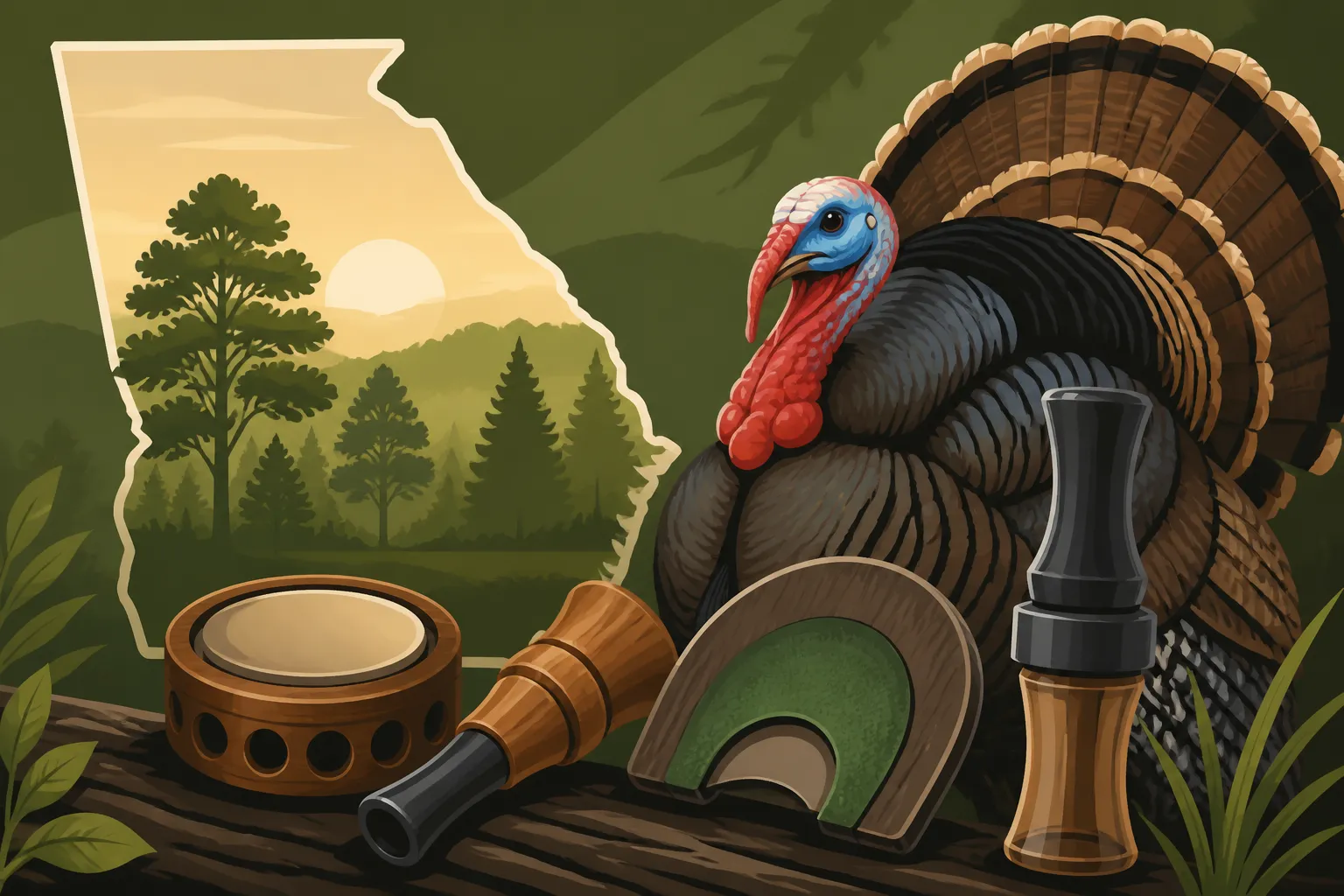
Slate, glass, and aluminum pot calls are perhaps the most popular friction calls, and for good reason. They are incredibly versatile, capable of producing a wide range of turkey sounds, from soft purrs and clucks to loud, piercing yelps and cuts. The key is the combination of the pot material and the striker material. A wooden striker on a slate call will produce a different sound than a carbon striker on a glass call.
For new hunters, a slate or glass call is an excellent starting point because they are forgiving and produce very realistic sounds with a little practice. You can vary pressure and angle to change the tone and volume, allowing you to go from a soft, seductive purr to an excited series of cuts. Many veteran hunters carry multiple pot calls with different surfaces and strikers to adapt to varying conditions and bird temperaments. Imagine you’re trying to locate a bird in a thick creek bottom; a loud, sharp yelp from an aluminum pot might be heard better than the softer tones of a slate. However, if that bird answers and starts closing the distance, switching to a soft purr on a slate can be incredibly convincing. These calls are also fantastic for working a bird that's hung up at 80 yards, allowing you to subtly change your tone and intensity without much movement.
Box Calls for Loud and Clear Locator Calls
The classic box call is a simple yet highly effective turkey call. It consists of a box, usually made of wood, and a lid that pivots. When the lid is rubbed across the lip of the box, it produces loud, resonant yelps and cuts. Their volume makes them excellent locator calls, especially in windy conditions or across large, open fields.
While sometimes stereotyped as "beginner calls," a well-tuned box call in the hands of an experienced hunter can be deadly. They are fantastic for reaching out to distant gobblers, perhaps across a longleaf pine stand or a clear-cut in South Georgia. The distinct "clack" and "yelp" can really get a tom to sound off. They're also great for producing aggressive cutting sequences that can sometimes pique the interest of a gobbler that's playing hard to get. The downside is that they require a bit more movement than other calls, which can be a problem when a bird is close and looking your way. However, for getting a bird to respond from a distance, or breaking a stubborn gobbler's silence, a good box call is indispensable in your vest.
Mastering Mouth Calls for Versatility
Mouth calls, also known as diaphragm calls, are arguably the most versatile calls available to turkey hunters. They consist of a frame with one or more stretched latex or prophylactic reeds that vibrate when air is forced over them. The beauty of a mouth call is that it's hands-free, allowing you to keep your shotgun mounted or stay perfectly still when a gobbler is in sight.
The Art of the Diaphragm Call
Learning to use a diaphragm call takes practice, but the payoff is immense. With just one call in your mouth, you can produce every turkey sound imaginable – yelps, clucks, purrs, cuts, and even gobbles – all without moving your hands. This is a huge advantage when a gobbler is closing the distance and searching for the hen making the sounds. Imagine a wary North Georgia mountain gobbler slowly picking his way through the timber. Any movement from you, even reaching for a friction call, could blow the hunt. A mouth call keeps you concealed and ready.
There's a variety of reed configurations, from single reed to triple or even quad reed, each offering different tones and volumes. Single reeds are often softer and higher pitched, while triple reeds tend to be louder and raspier. Experimenting with different cuts (ghost, batwing, v-cut) will help you find the one that fits your palate and produces the most realistic sounds for you. The ability to purr and cluck softly while the bird is in close range, then immediately switch to a sharp cut if he pauses, is why many seasoned hunters consider the diaphragm call their most crucial tool. When trying Run-and-Gun Turkey Tactics on Public Land, a hands-free mouth call allows for quick setup and calling without fumbling.
When a Hands-Free Call is Essential
There are countless scenarios where a mouth call truly shines. Picture a gobbler strutting just out of range in a Piedmont field, periodically glancing your way. If you need to make one last soft purr to entice him those final few yards, a mouth call allows you to do it while keeping your shotgun up and ready, minimizing movement. Or consider a situation where a bird is coming in silently, giving you no indication of his exact location until he's almost on top of you. Being able to make soft, reassuring clucks or purrs without putting your gun down or fumbling for another call is a game-changer.
Furthermore, when you're hunting aggressive gobblers that might come running hard, or multiple birds that are circling, the ability to maintain continuous eye contact and react instantly is paramount. This is where the mouth call truly makes you a more efficient and effective hunter. It’s also incredibly useful when you're Setting Up Against a Big Pine and need to stay absolutely locked down. Many hunters use their GoHunt app to mark precise locations where they've roosted birds or found fresh sign, and a hands-free call helps them focus on the approach and setup.
Specialty Calls for Tough Situations
While friction and mouth calls cover the vast majority of turkey hunting scenarios, there are times when a specialty call can be just the ticket to seal the deal on a wary gobbler or locate a distant bird.
Locator Calls and Their Purpose
Locator calls are designed not to sound like a turkey, but to elicit a shock gobble from a tom. Owl hoots, crow calls, and coyote howlers are the most common. A gobbler will often gobble back at these sounds out of instinct or territoriality, giving away his position without putting pressure on him by sounding like another turkey. This is particularly effective early in the morning when birds are still on the roost or mid-day when they've gone quiet.
An owl hooter is great for pre-dawn darkness, imitating a barred owl. If you're in the deep woods of the Oconee National Forest, a series of realistic owl hoots can make a distant gobbler sound off from his roost. Once the sun is up, a crow call works wonders, especially in open country or along field edges. A loud series of caws can get a tom to gobble on a tough, quiet morning. Even a coyote howler, used sparingly, can sometimes shock a gobbler into revealing his location, particularly if there's significant coyote pressure in the area. These calls are all about data gathering – finding out where the birds are – before you even think about trying to call them in. Using your GoHunt app to pinpoint these locations on public land can be very effective for later planning.
Wing Bone Calls and Trumpet Calls
Wing bone calls and trumpet calls are older, more traditional forms of turkey calls that still hold their own today. Wing bone calls are made from the bones of a turkey's wing and produce soft, natural yelps and clucks. Trumpet calls, often made from wood or other materials, produce similar sounds with a unique resonance.
These calls might not be as loud or versatile as some modern calls, but their soft, realistic tones can be incredibly effective on shy or pressured birds. They require a bit more skill and control to master, but the sounds they produce are often unparalleled in their authenticity. Imagine a Georgia gobbler that’s been called to every day for a week; he might blow out at the sound of a plastic friction call, but a soft, subtle yelp from a handcrafted wing bone call could be just the nuance he hasn't heard, sparking his interest. These are often calls of choice for hunters pursuing birds on heavily hunted public lands where subtle differences can make all the difference. Sometimes, a very specific call from your trumpet is exactly what's needed for Turkey Tactics for Piedmont Field Edges where birds are especially wary.
Choosing and Maintaining Your Turkey Call Arsenal
Building a robust turkey call arsenal isn't just about buying every call on the market. It's about selecting a few versatile calls that you're proficient with and know how to maintain, ensuring they're always ready when the moment of truth arrives.
Building a Versatile Call Kit
A truly versatile call kit will include a mix of call types. I always recommend at least one friction call (slate or glass), a few different mouth calls (varying reed configurations), and one or two locator calls. This combination gives you the flexibility to adapt to different terrains, weather conditions, and bird temperaments.
For example, I might start the morning with an owl hooter to locate a gobbler on the roost. Once I hear a response, I'll switch to a soft tree yelp on a glass call. As I get closer and set up, I'll put a triple-reed mouth call in my mouth for hands-free calling as the bird approaches. If he hangs up, I might reach for a small box call for some aggressive cutting to try and pull him those last few yards. Having options means you're never caught off guard. Thinking about Decoy Placement for Pressured Georgia Birds, your call kit should complement your decoy strategy, allowing you to fine-tune your sounds to match the visual.
| Call Type | Primary Use | Pros | Cons | Ideal Georgia Scenario |
|---|---|---|---|---|
| Slate Call | Versatile, soft to medium volume | Realistic purrs/clucks, good mid-range yelps | Can be affected by moisture, requires hand movement | Working a bird in open hardwoods, soft purrs for close-in birds |
| Glass Call | Medium to loud volume, sharp | Excellent cuts and crisp yelps, good moisture resistance | Higher pitch can sound less natural to some, requires hand movement | Cutting through wind, attracting distant birds in pine stands |
| Box Call | Loud locator, aggressive calls | High volume, easy to use, great for loud yelps | Requires significant hand movement, less subtle for close birds | Locating birds across open fields, aggressive cutting on unresponsive toms |
| Mouth Call | Hands-free, versatile | Hands-free, wide range of sounds, compact | Takes practice to master, can collect saliva | Final stages of a close approach, keeping gun mounted, stealthy calling in thick cover |
| Owl Hooter | Locator call (pre-dawn/mid-day) | Excellent for shock gobbles on roosted birds | Doesn't work once birds are on the ground | Locating a gobbler off the roost in the North Georgia mountains |
| Crow Call | Locator call (daylight hours) | Effective mid-day for shock gobbling | Can sound too aggressive if overused | Searching for birds across Piedmont farmlands after fly-down |
Call Maintenance and Practice Tips
Maintaining your calls is just as important as choosing them. Friction calls need their surfaces conditioned regularly; slate calls need to be scuffed with sandpaper, and glass calls with a conditioning pad, to ensure good friction. Keep your strikers clean and dry. Mouth calls should be rinsed with water after use and allowed to air dry to prevent mold and prolong reed life. Store calls properly to prevent damage, especially fragile mouth calls.
Consistent practice is key. Turkeys don't care how expensive your call is; they care how realistic you sound. Practice the basic sounds until they become second nature. Record yourself and listen back, comparing your calls to actual turkey sounds you can find online or hear in the field. Vary your cadence, volume, and emotion. The more you practice, the more confident and natural you'll sound, which ultimately leads to more success in the field. Remember, just like scouting with tools like GoHunt for good habitat, consistent practice with your calls prepares you for success. Don't be afraid to take your calls out for a walk in the woods before the season to get a feel for how they sound in a natural environment. Even something as simple as walking a logging road and practicing your yelps and clucks can significantly improve your calling confidence.
Adapting Your Calling Strategy to Georgia's Diverse Terrains
Georgia is a state of incredible diversity, from the steep, rugged mountains of the north to the sprawling pine plantations and swamps of the south. Your calling strategy needs to adapt to these varied environments if you want to consistently bring home a gobbler.
Calling in North Georgia Mountains
Hunting turkeys in the North Georgia mountains presents unique challenges and opportunities. The terrain is often steep, covered in dense hardwoods and thick rhododendron. Sound travels differently here, bouncing off ridges and getting swallowed by hollows. When you're trying to locate a bird, your calls need to be loud enough to penetrate the cover but not so loud that you sound unnatural when he's close.
Early in the morning, a powerful owl hooter or even an aggressive box call can be essential for reaching gobblers across deep ravines. Once you've located a bird, getting to him can be a workout. As you get closer, switch to softer friction calls or mouth calls. Pay close attention to Wind and Thermals on a Mountain Ridge, as these can carry your scent or alter the direction of sound. When setting up, remember that mountain birds often prefer to gobble from high ground, and they can be wary of coming downhill into thick cover. Sometimes, soft purrs and clucks are all it takes to make that last-ditch effort to pull a hung-up bird the final few yards.
Calling in Piedmont Farmlands and Woodlands
The Piedmont region of Georgia, with its mix of rolling hills, agricultural fields, and patchy woodlands, demands a different approach. Here, birds might be more accustomed to human activity, and open fields mean they can spot you from a long distance. Your calling needs to be convincing but also cautious.
Locator calls like crow calls or even a distant coyote howl can work well in this mixed habitat to get a response. Once a bird answers, careful scouting and approach are key. Many Piedmont birds love to strut in open fields, so calling them across a field can be challenging. Often, it's better to try and intercept them as they move between a roost site in the woods and a feeding area in the field. Using a ground blind or natural cover along a field edge is often vital. A good friction call with a medium volume, coupled with a hands-free mouth call for those final close encounters, is a solid choice. If you’re Setting Up on a Piedmont Field Edge, subtlety in your calling can often outperform aggressive sequences, especially when those birds have been pressured.
Calling in South Georgia Pine Flats and Swamps
South Georgia offers vast expanses of pine plantations, dense palmetto thickets, and cypress swamps – each requiring specific calling considerations. The thick cover can make it hard for sound to travel, but it also provides excellent concealment for hunters.
In the endless pine flats, loud, sharp yelps from a box call or a glass call can cut through the dense rows of pines. These birds might be spread out, so volume is important for initial location. Once a bird is located and you're moving in, be ready for quick setups, as the thick cover can offer unexpected close encounters. For swamp hunting, especially in dense river bottoms or around the edges of the Okefenokee, the acoustics are unique. Sound can get swallowed up by the cypress trees and thick undergrowth. Soft, realistic calls that don't echo excessively are often best here. A slate call for soft purrs and clucks or a mouth call for hands-free calling in dense cover is often preferred. Also, consider the specific challenges of Hunting Georgia Swamp and River Bottom Deer, as these environments share similar acoustic and concealment issues for turkey hunting.
The Mental Game of Turkey Calling
Beyond the mechanics of the calls themselves, successful turkey hunting involves a significant mental game. It's about patience, confidence, and understanding the bird's mood, which can often be as complex as reading a human.
Patience and Persistence
Turkey hunting, especially calling, is often a test of patience. You might spend hours calling with no response, only for a gobbler to suddenly appear out of nowhere. Or a bird might gobble his head off from the roost, only to go completely silent once he hits the ground. Don't get discouraged. Persistence pays off. Change your location, change your call, change your cadence, but never give up too early.
There are days when the birds just aren't talking, and no matter what call you use, they won't answer. That's when scouting and woodsmanship become paramount. But on those days when a gobbler is responsive, your patience in calling, giving him space, and letting him work the setup will often be rewarded. It's about letting the hunt unfold, rather than trying to force it. Sometimes, the best call is no call at all, just silent waiting after a good setup.
Reading the Bird's Mood
One of the most valuable skills a turkey hunter can develop is learning to "read" the bird. Is he coming in hot and fast, gobbling with every breath? Or is he hanging up, gobbling less frequently, or just clucking and purring? His behavior should dictate your calling strategy. If he's coming in, often less calling is better, letting him come look for the hen he thinks he heard. If he hangs up, a change in tone, a soft purr, or even aggressive cutting can sometimes provoke a response.
A bird that's gobbling consistently but not closing the distance might be looking for the hen to come to him. This is when you might need to try a fly-down cackle or even slowly back away from your setup, making soft calls to make him think the hen is leaving. This subtle chess match is what makes turkey calling so engaging. Understanding When Georgia Gobblers Go Quiet in May can give you an edge, as you learn to adapt to the late-season doldrums when birds are less vocal. Staying connected with hunting resources, like the articles found through GoHunt, can also provide valuable insights into regional turkey behavior.
Disclaimer
This article is for general informational purposes only and does not constitute professional advice. Laws, prices and regulations vary by location and change over time. Consult a qualified professional for guidance on your specific situation.