Alligator Hunting Gear and Tackle
Embarking on a Georgia alligator hunt is an experience unlike any other, blending thrilling pursuit with the unique challenges of the state's vast swamp and marsh ecosystems. But without the right gear and tackle, you're not just at a disadvantage; you're risking a difficult, potentially dangerous, and ultimately unsuccessful endeavor. This comprehensive guide will walk you through every piece of equipment, from the essential permits to specialized tools, ensuring you're fully prepared to tackle the powerful reptiles of the Georgia low country.
The Essentials: Licenses, Permits, and Pre-Hunt Prep
Before you even think about buying a new harpoon or tying on a snatch hook, you need to make sure you've got your ducks in a row concerning the legalities and logistics. Alligator hunting in Georgia isn't something you can just decide to do on a whim; it requires careful planning, specific permits, and a solid understanding of the regulations. Skipping this crucial first step is a sure-fire way to end up disappointed, or worse, in trouble with the law.
Understanding Georgia's Alligator Quota Hunt
Georgia manages its alligator population through a quota hunt system, which means permits are limited and allocated through a lottery drawing. This isn't like deer season where you just buy a license and go; you have to apply, hope your name is drawn, and then be assigned a specific zone. Each zone has a limited number of permits to ensure sustainable harvesting and to manage the population effectively. It’s a highly sought-after hunt, reflecting the unique challenge and reward of pursuing these ancient creatures.
This system ensures that hunting pressure is distributed and doesn't negatively impact local alligator populations. It also means that securing a permit is often the hardest part of the entire process, requiring patience and a bit of luck. Understanding the zones, the application deadlines, and the specific rules for each area is paramount. You'll want to review the official regulations thoroughly well in advance of the application period. You can find detailed information on Georgia Alligator Quota Hunt Rules.
Essential Licenses and Permits
Once you've secured that coveted quota hunt permit, you're not quite done with the paperwork. In addition to your alligator permit, you'll need a valid Georgia hunting license. For residents, this might be your basic annual license, or perhaps a more comprehensive "Sportsman" license that covers various game. Non-residents will need to purchase a specific non-resident hunting license. Beyond the general license, make sure to check if any additional endorsements or stamps are required for alligator hunting in your chosen zone.
It’s easy to overlook these secondary requirements when you’re excited about the main permit, but trust me, game wardens don't take kindly to missing documentation. Always carry physical or digital proof of all your licenses and permits while afield. I've heard stories of hunters getting everything right for the alligator permit, only to forget their basic hunting license and face fines. Keep everything organized, perhaps in a waterproof pouch, so it’s readily accessible when needed.
Pre-Season Scouting and Gear Checks
Effective alligator hunting starts long before opening day with thorough scouting and meticulous gear preparation. Since most alligator hunting occurs at night, scouting involves more than just looking for tracks. You'll be looking for signs of alligator activity like trails leading into water, basking spots during the day, and listening for vocalizations at night. Understanding the layout of your assigned zone, including access points, potential hazards, and prime hunting areas, is critical. This is where tools like mapping apps, such as those found on GoHunt, become invaluable for identifying likely hotspots and planning your approach.
Beyond scouting the gators themselves, you need to conduct a full inventory and check of all your gear. Is your boat running smoothly? Are your lights bright and fully charged? Are your ropes free of frays? A single piece of malfunctioning equipment can ruin a hunt or, worse, create a dangerous situation when you're dealing with a powerful reptile in the dark. Take the time to test everything, from your harpoons to your headlamps, well before your hunt date. This proactive approach saves frustration and potential failure when it matters most.
Primary Hunting Gear: Weapons and Restraint
Now we're getting into the exciting stuff: the actual tools you'll use to pursue and secure your alligator. Georgia has very specific regulations about what methods and equipment are legal for taking alligators. It's not a free-for-all; you need to understand these rules implicitly to avoid violations and to ensure a humane and effective harvest. This isn't just about complying with the law; it's about being prepared for the immense power of these creatures.
Legal Weapons for Georgia Alligator Hunts
Georgia allows a variety of methods for taking alligators, but the most common and effective typically involve a initial "snatch" or "capture" method, followed by a dispatch weapon. Legal methods for initially securing an alligator include harpoons, snatch hooks, and bowfishing equipment. Firearms are generally not permitted for the initial taking of an alligator, but are allowed for dispatching after the animal is secured. This distinction is crucial. You're not shooting a gator swimming freely; you're securing it first, then dispatching it.
For dispatch, powerful handguns (often .22 magnum or higher, usually with solid-point ammunition), bang sticks, or even certain blunt instruments are commonly used. The goal is a quick, humane dispatch once the alligator is under control. Remember, the game wardens are particularly stringent about humane dispatch. Ensure your chosen dispatch weapon is appropriate for the task and that you are proficient in its use, especially in a boat at night.
Harpoons and Catch Poles
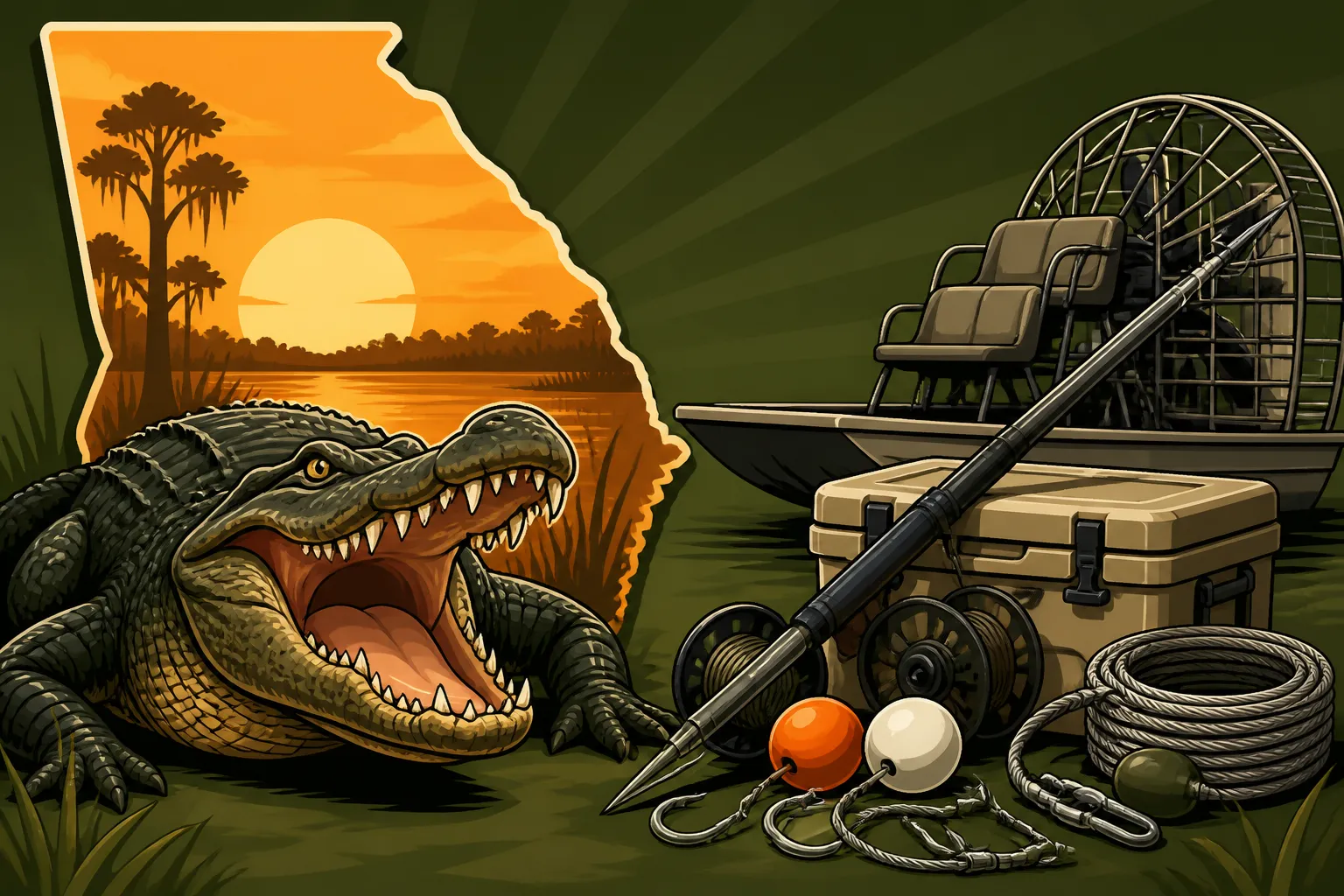
Harpoons are arguably the most iconic piece of alligator hunting gear, and for good reason. They allow you to strike and secure an alligator from a distance, attaching a line that can then be used to bring the animal closer to the boat. A good harpoon consists of a stout pole, a detachable harpoon head (often called a "dart" or "fluke") that penetrates the alligator's hide, and a strong line (typically 300-500 lb test braided nylon or polypropylene rope) that connects the dart to a float or directly to the boat.
When choosing a harpoon, consider the shaft material (fiberglass or aluminum are common), the quality of the dart (ensure it has a solid barb that will hold), and the strength of the line. You'll want multiple harpoon setups, as you might miss or need more than one to fully secure a large gator. Practicing your aim and understanding the trajectory of the dart are essential. These aren't lightweight spears; they require a firm, controlled thrust. For more specific advice on this critical gear, check out Harpoons and Snatch Hooks for Alligators.
Snatch Hooks and Gigging Poles
Snatch hooks are another primary method for initially securing an alligator, particularly useful when gators are submerged or in dense cover. A snatch hook is a large, stout treble hook attached to a strong line, often weighted, and cast out over suspected alligator locations. The idea is to "snatch" or foul-hook the alligator, usually in its thick hide or a limb, allowing you to bring it to the surface. Gigging poles, which have multiple sharp prongs on the end, can also be used in some situations, especially for smaller gators in shallower water, but snatch hooks are generally more versatile for larger animals.
Much like harpoons, the quality of your snatch hooks and the strength of your line are paramount. Cheap hooks will bend or break under the strain of a thrashing alligator, and weak line can snap. You'll need a stout rod and reel combo, or simply a handline, capable of handling hundreds of pounds of pulling power. It's often a game of patience and repeated casting to hook an alligator successfully. Don't underestimate the power a hooked gator can exert; it's a battle of wills and strength.
Restraint and Control Equipment
Once an alligator is secured with a harpoon or snatch hook and brought alongside the boat, the real work begins: bringing it under control and dispatching it safely. This requires a dedicated set of restraint and control equipment. Heavy-duty ropes (again, 300-500 lb test) are essential for tying off the alligator's mouth and sometimes its tail. You'll need several lengths, often 15-20 feet each, readily available and untangled. Zip ties, particularly the heavy-duty industrial kind, are also incredibly useful for securing the mouth for transport, acting as a secondary restraint after the rope.
A critical piece of equipment is a sturdy "gator stick" or "snare pole." This is typically a long, strong pole with a loop on the end that can be tightened around the alligator's neck or snout. It helps keep the animal's head under control, preventing it from snapping or lunging, which is absolutely vital for safety in the boat. Learning how to properly apply these restraints is a skill that takes practice and experience. The last thing you want is a thrashing, uncontained alligator in a small boat at night. For in-depth instruction on this, refer to Handling Rope and Restraint Gear for Gators.
Boat and Navigation Equipment
Alligator hunting in Georgia usually means hunting from a boat, navigating through rivers, creeks, and swampy areas, often under the cloak of darkness. Your vessel isn't just transportation; it's your mobile hunting platform, your recovery vehicle, and your primary safety zone. Choosing and outfitting the right boat, along with reliable navigation tools, is paramount for both success and safety.
Choosing the Right Boat for Gator Hunting
When selecting a boat for alligator hunting, you need something stable, spacious enough for your crew and gear, and capable of operating in shallow, often obstructed water. Aluminum jon boats are a popular choice due to their durability, shallow draft, and relatively low maintenance. A boat in the 16-18 foot range is often ideal, providing enough room for two to three hunters, their gear, and a decent-sized alligator, while still being maneuverable in tight spaces. Flat-bottom designs are excellent for shallow water, but ensure it's wide enough for stability when wrestling a gator.
Consider the layout: a clear, open deck space is crucial for managing lines, harpoons, and the alligator itself. High sides offer an added layer of safety. You'll want a sturdy transom to handle a reliable outboard motor. Airboats are also used in certain wide-open marsh or shallow lake environments, but for many of Georgia's winding rivers and cypress swamps, a well-equipped jon boat is the workhorse. Think about the specific waters you'll be hunting; a big river might allow for a slightly larger v-hull, but most swamp hunting favors the rugged, flat-bottomed utility of a jon boat. You can learn more about specific choices in Choosing a Boat for Night Alligator Hunts.
Motors and Propulsion Systems
Your motor setup is just as important as the boat itself. A reliable outboard motor is non-negotiable. For navigating shallow, stumpy waters, a robust, prop-driven outboard in the 25-50 horsepower range is common for jon boats. Some hunters also utilize mud motors (surface drive or longtail) which excel in extremely shallow, vegetated areas where traditional outboards would get bogged down. Having a trolling motor, particularly a bow-mounted electric one, is also incredibly beneficial. It allows for silent, precise maneuvering when stalking an alligator, helping you get into position without spooking the animal.
Always carry a spare propeller and the necessary tools for changing it. Running aground or hitting a submerged log is a common occurrence in swampy terrain, and a damaged prop can quickly end your hunt if you're not prepared. Also, ensure you have enough fuel, plus a reserve, for your entire outing. Running out of gas in the middle of a dark, remote swamp is not an experience you want to have.
Navigation and Lighting for Night Hunts
Night hunting for alligators means visibility is almost entirely dependent on your artificial light sources. You'll need a powerful spotlight or two, preferably waterproof and rechargeable, to scan the water for alligator eyes (they reflect red in the beam). These should be mounted on the boat or held by a dedicated "spotter" to effectively cover the water. In addition to spotlights, powerful headlamps or cap lights are essential for each crew member. These keep your hands free for handling gear while illuminating your immediate workspace.
For navigation, a reliable GPS unit or a mapping app on your smartphone or tablet (such as the GoHunt app) is absolutely critical. Pre-load your hunting zone maps and mark any known hazards, shallow spots, or good access points. In the dark, even familiar waterways can become disorienting. Always carry a compass as a backup, and know how to use it. Your boat should also be equipped with legal navigation lights (red/green bow lights and an all-around white stern light) for safety, especially if other boats might be on the water.
Safety and Communication on the Water
Alligator hunting, by its very nature, carries inherent risks. You're dealing with a powerful, predatory animal in often remote, dark, and challenging environments. Prioritizing safety and having reliable communication systems isn't just a good idea; it's a non-negotiable aspect of responsible hunting. Don't let the thrill of the hunt overshadow the need for a well-thought-out safety plan.
Personal Flotation Devices and Safety Gear
Every person in the boat must have an approved personal flotation device (PFD), or life vest, readily accessible. It's not enough to have them stowed away; they should be easy to grab, or better yet, worn, especially when actively engaging an alligator or navigating tricky water at night. Accidents happen quickly, and the ability to stay afloat could be life-saving. Beyond PFDs, a well-stocked safety kit is essential. This should include items like a fire extinguisher, a loud air horn or whistle, an anchor with sufficient rope, and a spare paddle or push pole.
Consider the hazards of the environment: snakes, submerged obstacles, and thick mud. Wearing snake boots, even in the boat, is a smart precaution when moving to and from the launch point. Always tell someone responsible your float plan – where you're going, your estimated return time, and who is with you. This simple step can make a huge difference if something goes wrong and you become overdue.
Communication Devices and Emergency Protocols
Reliable communication is vital when you're often out of cell service range. While cell phones are useful, they shouldn't be your only communication device. A marine VHF radio is an excellent investment, allowing you to communicate with other boats or, in an emergency, hail the Coast Guard or local authorities if they monitor the channel. Ensure it's waterproof and fully charged. For areas truly off-grid, a satellite messenger or personal locator beacon (PLB) offers peace of mind, allowing you to send emergency signals or check-in messages even when miles from civilization.
Before leaving the dock, discuss emergency protocols with your hunting partners. What's the plan if someone goes overboard? What if the boat breaks down? What's the signal for "alligator secured" versus "alligator lost"? Having these conversations beforehand ensures everyone knows how to react calmly and effectively in a crisis. Knowing how to Report a Poacher in Georgia is also a good skill to have, as hunters are often the eyes and ears of wildlife enforcement.
First Aid and Basic Repair Kits
A comprehensive first aid kit is an absolute must-have. You're dealing with sharp hooks, harpoons, knives, and the potential for scrapes, cuts, and even more serious injuries. Your kit should be waterproof and contain supplies for treating various injuries, including bandages, antiseptic wipes, pain relievers, and any personal medications. Knowing basic first aid and CPR is also highly recommended for at least one person in the group.
Beyond medical emergencies, your hunting often takes you to remote spots where a minor mechanical issue can become a major headache. A basic repair kit for your boat and motor should include items like a spare prop, prop wrench, shear pins, duct tape, electrical tape, zip ties (again, super versatile!), basic hand tools, and perhaps a small can of starting fluid. These simple items can often get you out of a bind and prevent a long, frustrating wait for assistance.
Processing and Handling Gear Post-Harvest
Congratulations, you've successfully harvested an alligator! But the work isn't over. Proper processing and handling of your alligator are crucial for utilizing the meat and hide, and for complying with Georgia's harvest reporting requirements. Having the right tools on hand will make this challenging part of the hunt much more manageable and efficient.
Field Dressing Tools
Field dressing an alligator is a unique process compared to deer or other game. You'll need heavy-duty, sharp knives that can handle tough hide and muscle. A sturdy skinning knife with a thick blade and a boning knife are essential. Some hunters also carry a small saw for cutting through bone if needed. Beyond knives, a gambrel or hoist system can be incredibly useful, especially for larger alligators, to lift and suspend the animal for easier working.
Gloves are also highly recommended – thick, cut-resistant gloves to protect your hands from sharp tools and the alligator's rough hide. Given the warm Georgia climate, speed and efficiency in field dressing are important to begin cooling the meat. You'll want to remove the valuable backstrap meat and often the tail meat as quickly and cleanly as possible.
Coolers and Storage
Alligator meat is delicious, but like any game meat, it needs to be cooled quickly and properly to prevent spoilage, especially in Georgia's typically warm temperatures. You'll need large, high-quality coolers filled with plenty of ice. Plan for more ice than you think you'll need. Once the meat is removed from the alligator, it should be placed immediately into these coolers to chill. For a decent-sized gator, you might need two or three large coolers to accommodate the meat and to pack it with sufficient ice.
The hide, if you plan to keep it, also needs proper care. While not as critical for immediate cooling as the meat, it needs to be kept clean and cooled if it's not being processed immediately. Many hunters will simply roll the hide up and place it in a cooler or cover it with ice until they can get it to a tanner or begin the skinning process.
Measuring and Tagging Supplies
Georgia has specific regulations regarding measuring and tagging your harvested alligator. You'll need a reliable tape measure, preferably one that's flexible and long enough to accurately measure the total length of the alligator, often from snout to the tip of the tail. Ensure you know the Minimum Legal Alligator Length in Georgia for your zone before you even head out. Misjudging length can lead to penalties.
Once harvested, your alligator permit will come with tags that must be immediately attached to the alligator in the manner specified by the regulations. You'll also need a permanent marker to fill out any required information on the tag. It's critical that these tags are securely affixed and remain with the alligator until it's processed and reported. Failure to tag properly is a serious violation. Don't forget your reporting requirements after harvest; you'll typically need to call in or log your harvest through the Georgia Game Check system within a specific timeframe. You can generally check the Georgia Deer Harvest Reporting Rules to get an idea of the kind of process involved, though alligator rules might have specific variations.
Specialized Gear and Accessories for Success
Beyond the core equipment, there are numerous specialized items and accessories that can significantly enhance your alligator hunting experience. These are the tools that can make a good hunt great, improving your efficiency, safety, and overall chances of success. They range from enhanced visibility aids to comfort items that make long nights on the water more bearable.
Lighting Solutions for Night Hunting
While we touched on spotlights and headlamps, delving deeper into lighting is key for effective night hunting. Consider a hands-free spotlight solution, such as a powerful LED bar mounted to your boat's bow. This frees up the spotter to focus on other tasks and provides a wider, more consistent beam. Rechargeable batteries are a must for all your portable lights. Always carry spare batteries or a portable power bank, especially for crucial items like headlamps.
Beyond illumination, think about light management. Red or green filters for some of your lower-power lights can help preserve your night vision while still providing enough light for tasks inside the boat. A red light, for instance, is great for checking maps or tying knots without completely ruining your ability to see in the dark.
Spotting and Tracking Equipment
While most spotting is done with bright lights, sometimes a good pair of binoculars can help confirm an alligator's size or behavior from a distance, particularly in transitional light or if you're trying to stay stealthy. Image-stabilized binoculars can be a game-changer on the water, compensating for boat movement. However, their primary role is less critical than in other hunts, given the close-quarters nature of gator hunting.
More important for tracking after the initial strike are your lines and floats. Each harpoon dart should be rigged with a bright, buoyant float (often an old plastic jug or a dedicated marker buoy) that is easily visible, even at night. These floats act as indicators of the alligator's location once it dives. Having multiple floats, perhaps in different colors, can help you keep track of multiple lines if you have several harpoons in an alligator.
Essential Tools and Miscellaneous Items
Every seasoned hunter has a "junk drawer" of essential items that might not fit neatly into categories but are invaluable. For alligator hunting, this includes a robust set of pliers or wire cutters for dealing with hooks, perhaps a small cooler just for drinks and snacks, and a sturdy dry bag or box for electronics like cell phones and extra batteries. A knife sharpener or honing steel is a smart addition, as your knives will get a workout.
Don't forget bug spray! Mosquitoes and gnats can be relentless in the Georgia swamps, especially at night. A powerful repellent with DEET or picaridin is critical for maintaining your sanity and focus. A comfortable, waterproof cushion for sitting can also make a long night much more enjoyable. Think through every scenario, and pack accordingly.
Clothing and Personal Comfort in the Georgia Swamp
Hunting alligators means spending hours, often at night, in the humid, warm, and sometimes buggy environments of Georgia's swamps and marshes. Your clothing choices aren't just about camouflaging (which is less critical at night for gators), but about personal comfort, protection from the elements, and safety. Ignoring these details can lead to a miserable hunt.
Appropriate Attire for Warm, Humid Nights
Despite hunting at night, Georgia's temperatures rarely drop significantly in the prime alligator hunting months. You'll want lightweight, breathable clothing that wicks away moisture. Synthetic blends or specialized performance fabrics are often better than cotton, which can get heavy and uncomfortable when wet from sweat or splash. Long sleeves and long pants, even in warm weather, offer protection from mosquitoes, biting flies, and incidental contact with brush or boat surfaces.
Layers are always a good idea, even if it's just a thin long-sleeve shirt over a t-shirt. The wind on the boat can create a chill, or a sudden rain shower can drop temperatures. Choose muted, dark colors to help with stealth against the night sky, though for gator hunting, silence and scent control are often more important than visual camouflage.
Footwear for Wet and Mucky Conditions
Your feet are going to get wet, dirty, and likely mucky. Period. Waterproof boots are essential. Rubber boots, often knee-high, are a favorite among swamp hunters. They keep your feet dry when launching the boat, wading through shallow edges, or stepping into unexpected mud. Look for boots with good traction, as boat decks can be slippery, and uneven terrain near the water's edge can lead to falls.
While snake boots offer additional protection, especially if you anticipate walking through heavy underbrush to access your launch, standard rubber boots are often sufficient for strictly boat-based hunting. Just ensure they are comfortable enough for extended wear, as you'll be on your feet for long stretches. Bringing a change of socks and shoes for the ride home is a small luxury that feels enormous after a successful, messy hunt.
Insect Protection Strategies
We touched on bug spray, but it's worth emphasizing. Mosquitoes are more than just an annoyance; they can transmit diseases and ruin your focus when you need it most. Beyond sprays with DEET or picaridin, consider permethrin-treated clothing. This insect repellent, applied to clothing (not skin!), can significantly reduce bug bites without having to apply sprays directly to your skin.
Another option is a thermacell or similar personal mosquito repellent device. These can create a small zone of protection around your boat, greatly improving comfort. Some hunters even wear head nets or bug suits in particularly heavy infestations, though this can interfere with visibility and range of motion. The key is to have a multi-pronged approach to insect protection. Don't underestimate the power of a thousand buzzing insects to make you question your life choices in the middle of a swamp.
Table: Key Alligator Hunting Gear Checklist
Here's a quick reference table for the essential gear you'll want to consider for your Georgia alligator hunt:
| Category | Essential Items | Recommended Additions | Notes |
|---|---|---|---|
| Permits & Docs | Alligator Quota Permit, Georgia Hunt License | Copies of all docs, waterproof pouch | Required by law, keep accessible. |
| Weapons & Restraint | Harpoon(s) with multiple darts, snatch hook(s) | Gigging pole, additional heavy-duty ropes | Ensure ropes are 300-500lb test. |
| Dispatch weapon (.22 Mag handgun, bang stick) | Heavy-duty zip ties, gator stick/snare pole | Practice humane dispatch. | |
| Boat & Navigation | Stable Jon Boat (16-18ft), Outboard Motor | Electric Trolling Motor, Spare Propeller | Match boat to hunting waters (e.g., Night Hunting Georgia Alligators From a Boat). |
| Powerful Spotlight(s), Headlamps | Mounted LED bar, red/green light filters | Ample lighting for night vision. | |
| GPS unit/Mapping App (e.g., GoHunt), Compass | Marine VHF Radio, Satellite Messenger/PLB | Pre-load maps, identify hazards. | |
| Safety & Comm. | PFDs for all, Fire Extinguisher | Air horn, anchor, spare paddle, snake boots | Prioritize safety above all else. |
| First Aid Kit, Basic Repair Kit | Dry bag for electronics, spare batteries | Be prepared for minor incidents or breakdowns. | |
| Processing & Storage | Heavy-duty Skinning/Boning Knives | Gambrel/Hoisting system, Cut-resistant gloves | Speed and cleanliness are key for meat. |
| Large Coolers (with ample ice) | Separate cooler for hide, large game bags | Keep meat and hide cool. | |
| Reliable Tape Measure, Alligator Tags | Permanent marker, harvest reporting details | Accurate measurement (e.g., Spotting a Legal Forty-Eight-Inch Alligator) and tagging are critical. | |
| Clothing & Comfort | Lightweight, quick-dry long-sleeve shirt | Synthetic layers, waterproof jacket | Protect from sun, bugs, and elements. |
| Knee-high Rubber Boots, long pants | Change of socks/shoes, insect-repellent socks | Keep feet dry and protected. | |
| Strong Insect Repellent (DEET/Picaridin) | Permethrin-treated clothing, Thermacell device | Mosquitoes can ruin a hunt. |
This article is for general informational purposes only and does not constitute professional advice. Laws, prices and regulations vary by location and change over time. Consult a qualified professional for guidance on your specific situation.