Hog Traps Worth the Investment
Few things are as disheartening to a Georgia landowner, farmer, or even a public land hunter trying to protect native game, as seeing the devastating rooting and destruction left behind by feral hogs. These incredibly intelligent and prolific animals can turn a lush pasture into a moonscape overnight, demolish food plots, and outcompete native wildlife for critical resources. If you've been battling these destructive invaders and wondering if a significant investment in hog traps is truly "worth it," you're in the right place. This guide dives deep into the world of hog trapping, explaining why it's often the most effective long-term solution and how to ensure your investment pays off.
The Feral Hog Problem: Why Trapping Becomes Necessary
Feral hogs are not just a nuisance; they are an ecological and economic disaster across Georgia. Their impact is felt deeply, from agricultural losses to the degradation of sensitive habitats. Trying to manage them solely through hunting can feel like bailing water with a sieve, which is why many turn to more systematic approaches.
The Relentless Damage Feral Hogs Inflict
Imagine waking up to see your carefully planted spring food plot, intended to provide nutrition for deer and turkeys, completely plowed under. Or picture a farmer losing a significant portion of their peanut or corn crop before harvest. This isn't an exaggeration; it's a daily reality for many in Georgia. Feral hogs are constantly rooting for food, destroying crops, pastures, and even timber saplings. Their wallowing creates muddy pits that contaminate water sources, and their presence spreads disease to livestock and native wildlife. The sheer scale of their destruction is hard to overstate, making effective control a critical need. You might be surprised to learn about the extent of Damage Feral Hogs Cause Georgia Farms. This isn't just about what they eat; it's about the sheer physical alteration of the landscape.
Beyond agriculture, feral hogs also pose a serious threat to Georgia's diverse ecosystems. They consume the eggs of ground-nesting birds, raid turkey nests, and compete directly with deer, turkeys, and other small game for acorns, roots, and other food sources. This competition can severely impact native populations, leading to declines in species that are vital to our state's natural heritage. Hunters often lament seeing hog sign in prime deer bedding areas, understanding that the presence of hogs often means deer will relocate.
Understanding Hog Intelligence and Reproduction
Feral hogs are incredibly resilient, intelligent, and adaptable creatures. They learn quickly, becoming "trap-shy" if traps are deployed incorrectly or if they associate negative experiences with a particular setup. This intelligence means that a simple, poorly thought-out trap might catch a few naive individuals, but the smarter, older hogs will quickly learn to avoid it. Moreover, their nocturnal nature often allows them to evade traditional hunting efforts. Many hunters prefer Thermal Hunting Georgia Hogs at Night precisely because it counters their tendency to move under the cover of darkness.
What truly makes them such a formidable foe is their reproductive rate. A sow can become sexually mature as young as six months old and can have two litters per year, averaging 4-6 piglets per litter, though larger litters are common. This means that even if you remove a significant number of hogs through hunting, the population can rebound alarmingly quickly. This rapid reproduction explains Why Feral Hogs Spread So Fast in Georgia. Without a systematic approach to removal, like comprehensive trapping, you're constantly fighting an uphill battle against an exponential population curve. This biological reality is what truly makes trapping a "worthwhile investment"—it's about getting ahead of the curve, not just reacting to individual sightings.
Decoding Your Investment: Types of Hog Traps
When we talk about investing in hog traps, it’s not just about the monetary cost. It’s also an investment of your time, effort, and strategic thinking. Understanding the different types of traps available is the first step in choosing the right tool for your specific situation and ensuring that investment pays off.
Corral Traps: The High-Capacity Solution
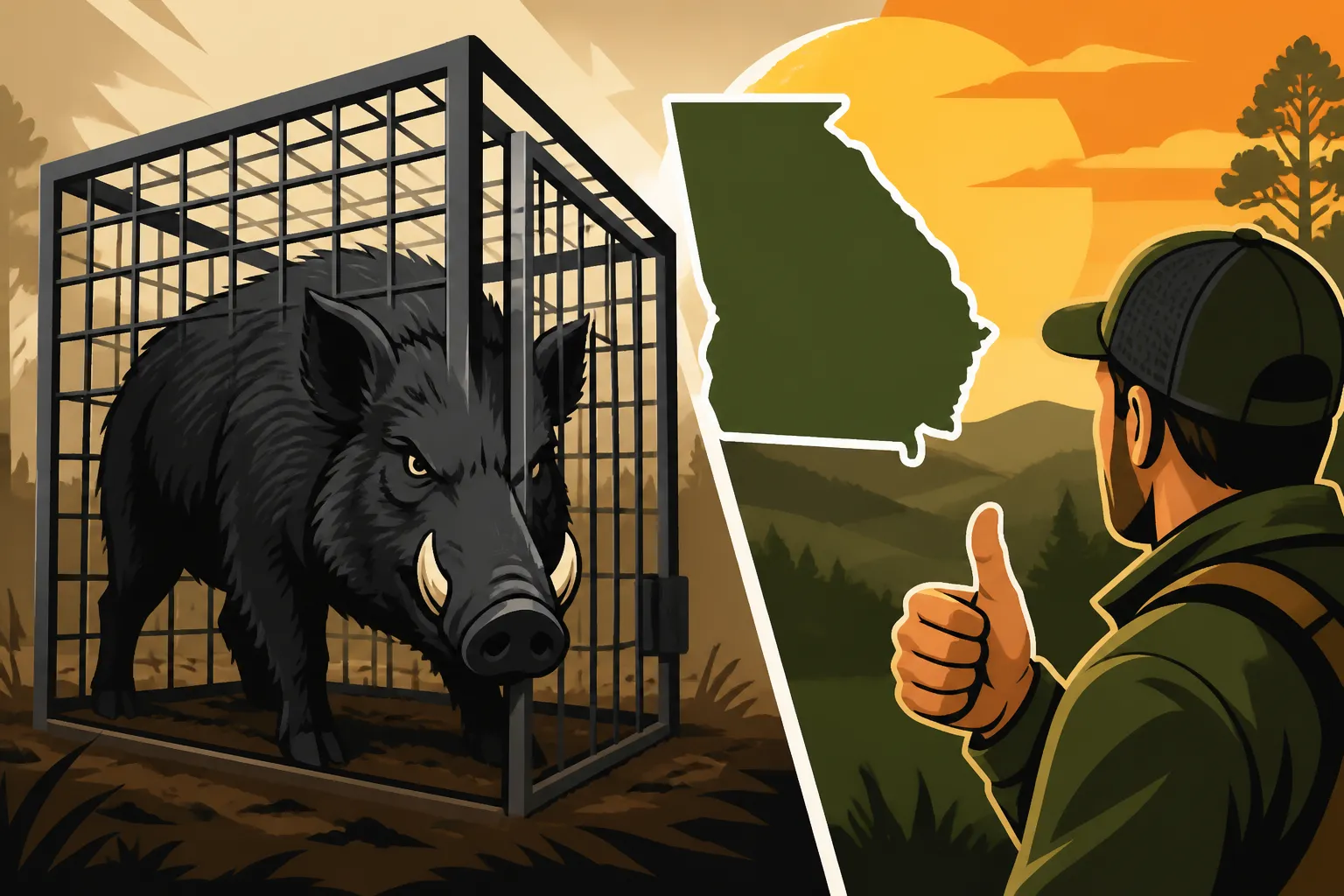
Corral traps, sometimes called panel traps, are the big guns of hog trapping. These are typically large enclosures made from heavy-duty livestock panels or welded wire, often forming a circle, square, or irregular shape. They are designed to catch multiple hogs—often an entire sounder (family group)—at once. The investment here is significant, both in materials and labor. You're looking at sturdy panels, robust T-posts, heavy-duty gates, and a reliable trigger mechanism.
The core of a good corral trap is its gate system. Common designs include "rooter gates" that swing inward and close behind the hogs, or "drop gates" that fall from above. More advanced systems, often referred to as "smart traps," might incorporate cellular technology that allows you to monitor the trap remotely and trigger the gate from your phone or computer. This is where tools that help you visualize and plan, like a mapping app from a company such as GoHunt, can be incredibly useful. You can mark potential trap locations, track hog sightings, and even overlay property lines to ensure you're trapping effectively and legally.
The benefit of a corral trap is its efficiency. Once properly conditioned and sprung, you can remove a large number of hogs in one go, making a serious dent in local populations. The drawback, besides the initial cost, is their lack of portability. Once a corral trap is set up, it's generally there to stay for the season, or longer. It requires dedicated pre-baiting for an extended period to habituate the hogs to feeding inside the enclosure before you set the trigger. This patient approach is crucial to maximize your investment and avoid creating trap-shy hogs.
Box Traps: Portable and Practical
On the other end of the spectrum are box traps. These are generally smaller, self-contained units made of heavy-gauge wire or welded mesh, often designed to catch one or two hogs at a time. They are typically equipped with a trip plate or a rooter door that closes once a hog enters. The investment in a box trap is considerably lower than a corral trap, both in terms of materials and setup time.
Box traps excel in situations where portability is key. If you're hunting small tracts of private land, or need to place traps in areas with limited access, a box trap can be easily moved and deployed. They are often a good starting point for individuals new to trapping, allowing them to learn the ropes without a massive upfront commitment. While they won't clear an entire sounder, they can be highly effective for catching individual problem hogs or smaller groups that might be wary of larger setups.
The downside is their limited capacity. If you have a large, active population of hogs, a single box trap will barely scratch the surface. You'll need multiple box traps or more frequent monitoring and resetting to make a significant impact. However, for targeting specific areas where hog activity is intermittent, or for property owners with smaller hog issues, a series of well-placed box traps can be a very wise and manageable investment. It’s about matching the tool to the scale of your problem.
Smart Traps: Leveraging Technology for Efficiency
In recent years, technology has revolutionized hog trapping, particularly with the advent of "smart traps." These sophisticated systems integrate cameras, sensors, and cellular connectivity into the trapping process. Typically, a smart trap consists of a large corral-style enclosure, but the gate is controlled remotely. A camera monitors the bait site, and when enough hogs are present, you receive a notification on your smartphone, allowing you to trigger the gate from anywhere with cell service.
The investment in a smart trap is undoubtedly higher than traditional mechanical traps. However, the returns in terms of efficiency and time savings can be immense. Instead of making daily trips to check a trap, often wasting gas and time on an empty trap, you only visit when you know you have a viable catch. This dramatically reduces disturbance to the trapping site, prevents false triggerings by non-target animals, and allows you to capture an entire sounder at the optimal moment. For serious hog management, especially across large or multiple properties, the efficiency gained can quickly justify the initial cost. Being able to see what's visiting your trap and make an informed decision about when to drop the gate significantly increases your success rate and reduces the chance of creating trap-shy animals. Many hunters use apps from companies like GoHunt to scout and understand land features before even considering a trap placement.
Beyond the Hardware: Strategic Baiting and Placement
Having the right trap is only half the battle. The true return on your investment comes from how skillfully you deploy and manage that trap. This involves understanding what lures hogs in and where they are most likely to encounter your setup.
Crafting the Irresistible Bait Site
Baiting isn't just throwing some corn on the ground; it's a strategic process aimed at conditioning hogs to view your trap area as a safe and abundant food source. The most common and often most effective bait is soured corn. The fermentation process enhances the aroma, making it incredibly attractive to hogs. You can create soured corn by soaking shelled corn in water for several days, allowing it to ferment. Adding a packet of yeast or a little sugar can speed up the process.
Pre-baiting is absolutely critical, especially for corral traps. You need to consistently put out bait without setting the trap for days, or even weeks, until hogs are regularly visiting the site and feeling comfortable entering the trap structure. This builds trust and ensures that when you finally set the trigger, an entire sounder is likely to be present. Don't be stingy with the bait during this phase; you want them to associate the trap area with an easy meal. For a deeper dive into this, check out Baiting a Feral Hog Trap Site. The goal is to make them completely accustomed to the sight and smell of the trap before it becomes a threat.
Beyond soured corn, other baits can be effective. Commercial hog attractants, often highly scented, can draw hogs in. Some trappers use expired pastries, overripe fruits, or even jello mix to add variety and increase the appeal. Consistency is key; once you start a baiting regimen, stick with it. If the bait runs out or becomes stale, hogs might lose interest and move on.
Pinpointing the Perfect Trap Location
Where you place your trap is just as important as what kind of trap you use and what bait you offer. Hogs are creatures of habit, often using the same travel corridors, feeding areas, and water sources repeatedly. Your job is to identify these high-traffic locations.
Start by scouting thoroughly. Look for fresh rooting, tracks, wallows, and rubs on trees or posts. Pay attention to areas where dense cover meets open fields, along creek bottoms, or near agricultural fields where they are actively feeding. Natural funnels, such as narrow strips of woods between two fields or a break in a fence line, can be prime locations. An app from a company like GoHunt can be invaluable here, allowing you to mark all your findings on a map and identify patterns of movement, almost like learning Reading Georgia Mud for Fresh Deer Movement.
Consider accessibility for both the hogs and for you. You want a spot that hogs feel comfortable approaching, usually close to heavy cover. However, you also need to be able to access the trap for baiting, monitoring, and most importantly, for dispatching captured animals and removing them. Trying to drag multiple hogs out of a cypress swamp is not an experience anyone looks forward to. Think about the terrain: firm, level ground is best for stable trap setup. Avoid placing traps directly in known game trails if you're concerned about catching non-target animals, though hogs will often create their own well-worn paths.
The Long-Term Return: Measuring the Value of Your Hog Trap Investment
The initial cost of a quality hog trap, especially a large corral or smart trap system, can seem daunting. However, when you look at the bigger picture—the ongoing damage caused by feral hogs versus the benefits of their effective removal—the investment quickly proves its worth.
Economic and Environmental Protection
For farmers and landowners, the economic benefits of effective hog trapping are often immediate and substantial. Reduced crop damage translates directly into higher yields and profits. Protecting pastures means healthier livestock and lower costs for reseeding. Timberland owners see fewer young trees rooted up, preserving future income. In many cases, the cost of a trap can be recouped in just one or two seasons of prevented damage. This proactive approach saves money and preserves the value of your land.
Beyond the direct financial gains, there are significant environmental advantages. Removing feral hogs helps native plant communities recover, as sensitive species are no longer being rooted up or consumed. Ground-nesting birds, like bobwhite quail and wild turkeys, see improved nesting success when predators like hogs are controlled. By reducing competition for food sources, you create a healthier environment for white-tailed deer and other game animals that hunters value. In a holistic sense, investing in hog traps is investing in the ecological health and productivity of your land. This aligns with broader efforts to protect Georgia's diverse wildlife, including species like those discussed in Georgia's Black Bear Population and Wild Turkeys in Georgia, which also face pressure from habitat degradation.
Efficiency and Peace of Mind
Think about the time, effort, and frustration involved in trying to manage hogs through sporadic hunting. Hours spent sitting in a stand, often for minimal results, or the constant worry about what destruction they'll cause next. Trapping, once properly set up and managed, offers a level of efficiency and consistent removal that other methods struggle to match. Being able to capture an entire sounder at once, or to monitor and trigger a trap remotely using a smart system, frees up your valuable time. Instead of constantly chasing ghosts, you're proactively managing the problem.
This efficiency translates into peace of mind. Knowing that you have an active, effective hog removal program in place can significantly reduce stress and allow you to focus on other aspects of land management or simply enjoy your property. While Running Dogs on Georgia Feral Hogs can be exciting and effective in certain situations, it doesn't offer the consistent, large-scale removal that trapping does for long-term population control. The investment in a good trap is an investment in regaining control over your property and protecting your resources from a pervasive threat. Tools like those offered by GoHunt, which assist in scouting and monitoring, only enhance this efficiency, ensuring your time and financial investment are well spent.
| Trap Type | Initial Investment | Portability | Capacity | Setup Difficulty | Ideal Use Case |
|---|---|---|---|---|---|
| Box Trap | Low to Moderate | High | 1-2 hogs | Easy | Small properties, specific problem hogs, novice trappers |
| Corral Trap | Moderate to High | Low | Multiple hogs (sounder) | Moderate | Large properties, high hog populations, long-term control |
| Smart Trap | High | Low | Multiple hogs (sounder) | Moderate to High | Remote monitoring, high efficiency, large-scale management |
Disclaimer
This article is for general informational purposes only and does not constitute professional advice. Laws, prices and regulations vary by location and change over time. Consult a qualified professional for guidance on your specific situation.