Rifle Setups for Georgia Deer Hunting
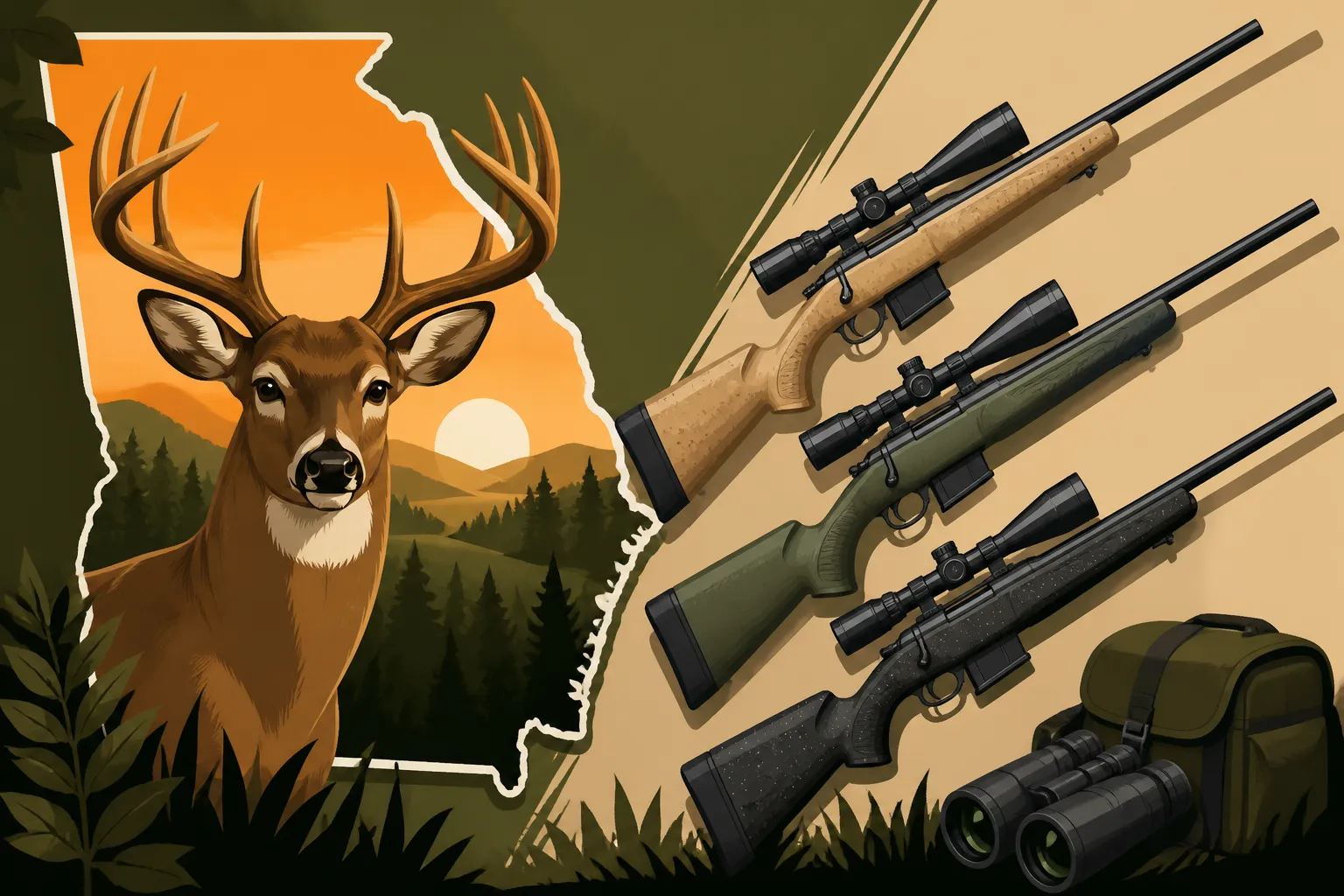
Choosing the right rifle for deer hunting in Georgia can feel like a real puzzle, given the state's incredible diversity of landscapes, from the steep, dense mountains to the open agricultural fields and thick, humid river bottoms. Many hunters wrestle with questions about caliber, action type, and optics, wondering what setup will truly perform best when that hard-earned shot opportunity finally arises. This comprehensive guide is here to untangle those complexities, offering detailed insights into building a rifle setup that is perfectly matched to Georgia's unique hunting environments and your personal hunting style.
Understanding Georgia's Diverse Terrains and Hunting Scenarios
Georgia isn't just one type of hunting ground; it's a tapestry of varied ecosystems, each presenting its own challenges and dictating different rifle setup preferences. What works perfectly in the wide-open expanse of a south Georgia pine flat might be utterly impractical in the choked rhododendron thickets of the north Georgia mountains. Truly understanding these regional differences is the first step in assembling your ideal deer rifle.
North Georgia Mountain Challenges
Up in the North Georgia mountains, you're often dealing with significant elevation changes, dense timber, and thick underbrush that limits visibility. Shots are typically close and quick, often presenting themselves as deer move through saddles or along ridge lines. Long-range precision, while still valuable, takes a backseat to maneuverability and quick target acquisition. Hauling a heavy, long-barreled magnum rifle up and down these hills quickly becomes a burden. You'll want something relatively lightweight and compact, easy to carry through the rugged terrain, and capable of a rapid, powerful shot at a deer that might only be visible for a fleeting moment. Hunting North Georgia Mountain Country offers a deeper dive into these unique challenges.
The shots you get in the mountains are rarely beyond 150 yards, and more often than not, they are within 75. A deer might pop out from behind a stand of oaks, cross an old logging road, or appear in a small rhododendron tunnel. The dense canopy and steep slopes also mean that light can be limited, even midday, making good optics with excellent light gathering capabilities crucial. A rifle that's quick to shoulder, has a clear sight picture, and can handle a bit of rough-and-tumble without losing its zero is what mountain hunters prize most. Think about a rifle that feels like an extension of yourself as you navigate downed timber and slippery leaf litter.
Piedmont and Farm Country Realities
Venture south into Georgia's Piedmont region, and the landscape shifts dramatically. Here, you'll find a mix of rolling timber, hardwood ridges, creek bottoms, and expansive agricultural fields—corn, soybeans, peanuts, and pastureland. This terrain offers a wider variety of shot opportunities. You might have a deer step out into a soybean field at 250 yards just before dark, or encounter one slipping through a creek bottom at 40 yards. The shooting lanes can vary significantly, from tight woods to wide-open cuts.
Hunting in the Piedmont often involves sitting on field edges, in treestands overlooking food plots, or still-hunting through mixed pine and hardwood forests. The rifle setup here needs to be versatile. You need a caliber that can handle both close-range brush busting and longer shots across fields, and optics that can perform well from dawn to dusk. While weight is less of an issue than in the mountains, a balanced rifle that's comfortable to shoot from a seated position in a stand or from shooting sticks on a field edge is important. Hunting Piedmont Farmland Deer provides more specific strategies for this region. The need for a stable shooting platform, whether it's a treestand rail or a set of shooting sticks, becomes more pronounced when you anticipate longer shots.
South Georgia Swamps and Pine Flats
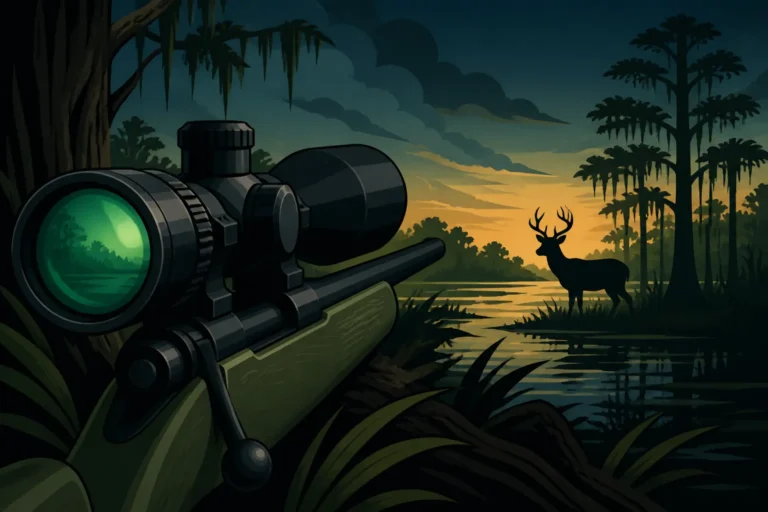
The coastal plain and southern regions of Georgia present yet another distinct set of conditions. Here, the land is generally flatter, but cover can be incredibly thick. Vast pine plantations, dense palmetto thickets, and expansive cypress swamps and river bottoms define much of the landscape. Shots are almost exclusively at close range, often under 100 yards, and frequently through dense vegetation. Accuracy over distance is less critical than terminal ballistics and the ability of a bullet to navigate light brush without deflecting too much.
Hunting these areas often involves still-hunting through pine stands, sitting on the edges of swamps, or hunting along logging roads and power lines. The humidity can be brutal, and rain is always a possibility, so a durable, weather-resistant rifle is a huge asset. Scopes need to perform well in low light, as the thick canopy can create perpetual twilight. Forget carrying a heavy magnum with a huge scope; instead, focus on a rifle that's quick, relatively short, and delivers a solid punch. The challenges of tracking a deer through this kind of dense cover also emphasize the need for a clean, ethical kill. For tips on where deer might bed in this terrain, check out Where South Georgia Pine Flat Bucks Bed.
Choosing the Right Caliber for Georgia Whitetails
With Georgia's varied terrain, selecting the right caliber is paramount. You want enough power to ethically harvest a deer, but not so much that recoil becomes a problem or that you're severely over-gunned for the typical shot distances. Georgia deer aren't giants, but they're resilient, and a well-placed shot from an appropriate caliber is always the goal.
Popular All-Around Calibers
For the vast majority of deer hunting in Georgia, a handful of calibers truly shine as excellent all-around performers. These strike a fantastic balance between manageable recoil, sufficient energy, and readily available ammunition.
- .308 Winchester: This is a perennial favorite for good reason. The .308 offers a compact cartridge that performs exceptionally well from shorter barrels, making it great for maneuverability in tight spaces. It delivers plenty of punch for Georgia whitetails, and ammunition is widely available. It's flat-shooting enough for most Piedmont field edges and still effective in dense timber. Many hunters appreciate its moderate recoil, allowing for quicker follow-up shots if needed, and better accuracy for extended practice sessions. If you're looking for a single rifle to cover all your Georgia deer hunting bases, the .308 Winchester is a strong contender. Is a .243 Enough for Georgia Whitetails? discusses another popular option often compared to the .308.
- .270 Winchester: Another classic, the .270 is known for its flat trajectory and excellent long-range capabilities, making it a favorite for open country and longer shots across fields. While it might have a bit more recoil than a .308, it's still very manageable for most shooters. It's a fantastic choice for those hunting the Piedmont or areas with more expansive views, offering a good blend of speed and knock-down power. It maintains energy well over distance, ensuring a clean kill on deer that might be a couple hundred yards away.
- 6.5 Creedmoor: This relative newcomer has taken the hunting world by storm, and for good reason. The 6.5 Creedmoor offers incredibly low recoil, excellent accuracy, and superb ballistic performance, especially at longer ranges. While perhaps more than strictly necessary for typical Georgia timber shots, its accuracy and mild recoil make it a joy to shoot and very effective for those longer field-edge shots common in the Piedmont. Its energy retention is impressive, making it an ethical choice for deer out to considerable distances, all while being very shooter-friendly. 6.5 Creedmoor for Piedmont Field Edges expands on its specific advantages in that terrain.
Heavier Hitters for Bear or Longer Shots
While the above calibers are perfectly adequate for deer, some hunters prefer or occasionally need something with a bit more horsepower. This might be due to personal preference, the possibility of encountering a black bear, or consistently facing very long shots.
- .30-06 Springfield: The venerable .30-06 is perhaps the quintessential American hunting cartridge. It's more powerful than the .308, offering a heavier bullet and more energy, which can be reassuring when hunting larger game like black bears, or if you simply prefer a more robust cartridge for deer. While it does have more recoil, it's still manageable for most. It's an excellent choice for a do-it-all rifle that can handle deer, bear, and anything else you might legally pursue in Georgia. Its versatility in bullet weight selection is also a huge plus. For more on bear hunting, check out Rifle Calibers for Georgia Bear.
- .300 Winchester Magnum / .300 WSM: These cartridges represent a step up in power and recoil. While undoubtedly capable of taking any deer or bear in Georgia, they are often considered overkill for typical deer hunting. Their primary advantage lies in their extended range and increased energy for truly long-distance shooting, which is rare in most Georgia hunting scenarios. If you hunt areas where 300-400 yard shots are common, or if you specifically target larger bears at extended ranges, these can be good options. However, for the average Georgia deer hunter, the added recoil and cost of ammunition might outweigh the benefits.
- .35 Whelen / .45-70 Government: These are heavier, slower calibers that deliver a massive punch at closer ranges. The .35 Whelen, in particular, offers excellent energy and bullet weight for breaking through light brush and stopping deer or bear effectively. The .45-70 is a classic thumper, often found in lever-action rifles, perfect for dense timber and quick, powerful shots where extreme range isn't a factor. These are specialized calibers, great for specific scenarios like deep swamp hunting or bear drives where close-range power is paramount, but less ideal for open fields.
Straight-Wall Cartridges and Special Rules
Georgia does not have specific "straight-wall cartridge" regulations like some other states, meaning you can generally use bottlenecked rifle cartridges in most areas where rifle hunting is permitted. However, it's always wise to be aware of local ordinances, especially in suburban archery-only zones where firearms discharge rules might apply, or on specific Wildlife Management Areas (WMAs) which may have their own unique restrictions for various hunts. You should always check the current Georgia hunting regulations provided by the Georgia Department of Natural Resources (DNR) to confirm legal firearms. Georgia Legal Firearms for Deer Hunting provides general information, but specific rules for WMAs can vary.
While Georgia does not restrict bottlenecked cartridges, the rise in popularity of straight-wall cartridges like the .350 Legend or .450 Bushmaster is often driven by regulations in neighboring states or specific hunting types. These cartridges offer performance akin to some magnum handgun calibers or traditional lever-action rounds, providing excellent stopping power at short to medium ranges with manageable recoil. If you happen to own a rifle chambered in one of these for hunting elsewhere, rest assured they are perfectly capable and legal for deer in Georgia, particularly for the dense cover scenarios where shots are close and quick.
Rifle Actions and Features for Georgia Hunting
Beyond caliber, the type of rifle action and its specific features play a significant role in how effective and enjoyable your hunting experience will be in Georgia's diverse environments. Each action type has its own strengths and weaknesses.
Bolt-Action Reliability and Accuracy
The bolt-action rifle remains the gold standard for accuracy and reliability, which is why it's so popular among Georgia deer hunters. These rifles are known for their precision, sturdy construction, and generally simpler mechanisms, making them less prone to malfunctions in adverse weather conditions.
- Accuracy: The rigid design and direct locking of the bolt into the receiver contribute to excellent accuracy, often making them the choice for longer shots across fields or when pinpoint precision is paramount. Many modern bolt-actions can achieve sub-MOA accuracy right out of the box, meaning consistent groupings within an inch at 100 yards. This level of precision is invaluable when a deer presents itself at 200+ yards on a Piedmont field edge.
- Reliability: Bolt-actions are relatively simple, with fewer moving parts than semi-automatics, which translates to high reliability. They tend to cycle well even when dirty or in humid conditions, which is a major plus in Georgia's often damp environment. A well-maintained bolt-action will rarely let you down. This robust nature also makes them durable for the bumps and knocks that can occur while hiking through thick timber or pulling a rifle up into a treestand.
- Versatility: Most popular hunting calibers are available in bolt-action platforms. They can be fitted with a wide array of optics and accessories, allowing for a highly customized setup tailored to your specific needs. From lightweight mountain rifles to heavier long-range setups, the bolt-action offers immense flexibility. For hunters who value deliberate, precise shot placement, the bolt-action is an ideal partner.
Lever-Action for Quick Shots in Thick Cover
For those who love tradition, or who hunt primarily in dense cover where quick, close-range shots are the norm, the lever-action rifle holds a special place. These rifles are iconic and exceptionally fast for follow-up shots compared to a bolt-action, without the semi-automatic stigma some areas might carry.
- Speed and Maneuverability: Lever-actions are quick to shoulder and cycle, making them excellent for fast-moving game or when you might get multiple opportunities in thick timber or brush. Their compact nature, often with shorter barrels, also makes them highly maneuverable in dense woods and easier to carry. This agility is a significant advantage when still-hunting through a creek bottom or navigating palmetto thickets in south Georgia.
- Classic Design and Handling: There's an undeniable appeal to the classic lines and feel of a lever-action. Many hunters find them comfortable to carry and instinctive to operate. They are particularly well-suited for still-hunting or walking through the woods, ready for a snap shot. The traditional look also blends well into a deer camp environment, evoking a sense of heritage.
- Caliber Options: While many lever-actions are associated with traditional calibers like the .30-30 Winchester or .45-70 Government, modern iterations also come in more contemporary rounds. The .30-30 is a phenomenal deer cartridge for shots under 150 yards, delivering ample energy for Georgia whitetails. 30-30 in Thick Coastal Plain Cover explores its specific strengths in that environment. These calibers are typically excellent for breaking through light brush without excessive deflection, leading to more ethical kills in challenging conditions.
Semi-Automatics and Their Place
Semi-automatic rifles, particularly those based on the AR platform, have seen a rise in popularity for hunting. While perhaps not traditional, they offer distinct advantages in certain Georgia hunting scenarios.
- Rapid Follow-Up Shots: The primary advantage of a semi-automatic is the ability to fire multiple shots quickly without having to break your sight picture or manipulate a bolt. This can be beneficial if you're trying to stop a running hog or if you get a rare opportunity at multiple deer (within legal limits, of course). While Georgia deer limits allow for multiple deer, careful shot placement is always the priority.
- Ergonomics and Modularity: AR-style rifles are highly ergonomic, with adjustable stocks and pistol grips that many shooters find very comfortable. They are also incredibly modular, allowing for easy customization with different optics, lights (where legal for specific game like hogs at night), and other accessories. This adaptability means you can fine-tune the rifle to your exact preferences and the hunting conditions.
- Caliber Availability: While historically associated with smaller calibers, modern AR platforms are available in a wide range of hunting calibers, including .308 Winchester, 6.5 Creedmoor, and even more powerful options. This makes them perfectly viable for deer and bear hunting in Georgia. Always remember to check Georgia's specific regulations on magazine capacity for hunting deer, as this can vary. While not often discussed for deer, Thermal Hunting Georgia Hogs at Night highlights where semi-automatics paired with specific optics truly shine.
Optics: Scopes, Mounts, and Magnification
A great rifle is only as good as the optic sitting on top of it. In Georgia's diverse light conditions and varied terrains, choosing the right scope and ensuring it's properly mounted is critical for making accurate, ethical shots.
Magnification for Georgia's Ranges
The ideal scope magnification for Georgia deer hunting is a balance, not necessarily the highest power available. Given the typical shot distances, excessive magnification can actually be a hindrance.
- Low to Moderate Power (1-4x, 2-7x, 3-9x): For the majority of Georgia hunting, especially in the thick timber of the mountains or swamps, a scope with a lower magnification range is often best. A 1-4x or 2-7x scope allows for a wide field of view, critical for quickly picking up a deer in dense cover and for snap shooting. Even a classic 3-9×40 is an excellent all-around choice. At 3x, you still have a generous field of view for close shots, and 9x is more than enough magnification for 200-yard shots. Rifle Scope Magnification for Georgia Deer delves deeper into these choices.
- Variable Power for Versatility: Variable power scopes are almost universally preferred as they allow you to adapt to changing conditions. You can dial down to the lowest power for walking through thick woods, offering a wide field of view similar to open sights, and then dial up for a more precise shot across a food plot. This versatility is crucial when hunting areas like the Piedmont, where you might encounter both close-quarter timber and open field edges in the same hunt.
- Higher Power (4-12x, 4.5-14x): For hunters who frequently encounter longer shots, perhaps consistently hunting large open fields or power lines, a scope with a higher top-end magnification like 12x or 14x can be beneficial. However, ensure the lowest setting is still manageable (4x or 4.5x) for those unexpected close encounters. Remember, a wider field of view at low power is often more important for quick target acquisition than high magnification for typical Georgia deer hunting.
Low-Light Performance and Reticle Choices
Georgia's hunting hours often extend into the low light of dawn and dusk, and thick canopies can make midday feel like twilight. A scope's ability to gather light and a well-designed reticle are invaluable.
- Objective Lens Size: A larger objective lens (the front lens) generally gathers more light, making the image brighter in low-light conditions. A 40mm or 44mm objective is a great compromise, offering excellent light gathering without adding excessive weight or requiring very high scope mounts. While 50mm and 56mm objectives gather even more light, they often make the rifle top-heavy and require higher rings, which can affect comfortable cheek weld. Low-Light Performance in a Scope emphasizes this further.
- Glass Quality: The quality of the glass and coatings is paramount for low-light performance, often more so than objective lens size alone. Premium glass transmits more light and provides a clearer, sharper image, allowing you to discern antler tips or a deer's vitals in fading light. This is an area where investing a bit more pays off significantly, as it can extend your effective hunting time by precious minutes at the beginning and end of the day.
- Reticle Types: A simple duplex reticle is often perfectly sufficient and quick to use. For longer shots or in variable wind, a reticle with holdover points (like a BDC reticle or a simple hashmark reticle) can be very useful, allowing for quick adjustments without dialing turrets. Illuminated reticles are also gaining popularity, especially for low-light conditions, as they provide a bright aiming point against a dark background. However, ensure the illumination can be turned down low enough not to be distracting. Tools from brands like GoHunt can help you understand game movement during these critical low-light periods.
Durable Mounts and Rings
Even the most expensive scope is useless if it's not securely mounted to the rifle. The bumps, jolts, and vibrations of hunting—especially in rugged Georgia terrain—demand rock-solid mounts and rings.
- Material and Construction: Opt for steel or high-quality aluminum mounts and rings. Avoid anything flimsy or made of questionable alloys. One-piece scope bases are often preferred for their rigidity and ability to maintain zero. Ensure that the rings match your scope's tube diameter (1-inch or 30mm being most common).
- Proper Installation: This is not an area to cut corners. Use a torque wrench to tighten screws to the manufacturer's specifications to prevent over-tightening (which can damage the scope tube) or under-tightening (which can lead to the scope shifting). Lapping rings can also improve contact and reduce stress on the scope. If you're not confident, have a reputable gunsmith mount your scope. A loose scope will cause endless frustration and missed opportunities.
- Zeroing and Confirming: Once mounted, your rifle needs to be properly zeroed. For most Georgia hunting, a 100-yard zero is a great starting point, offering a point-blank range out to around 200-250 yards depending on your caliber and bullet. Always confirm your zero by shooting groups, not just one shot. After zeroing, shoot a few rounds, then pick up your rifle, drop it (gently!) from knee height onto a padded surface, or tap it against a soft target, then shoot another group to ensure it holds zero under some stress. Zeroing at 100 Yards for Field Edge Hunting explains this process in detail.
Ammunition Selection for Georgia Deer
The bullet you send downrange is the only part of your entire setup that actually touches the deer. Choosing the right ammunition is just as important as the rifle and scope, influencing terminal performance, accuracy, and ultimately, an ethical harvest.
Bullet Construction and Performance
Not all bullets are created equal. Different constructions are designed for different purposes, impacting how they perform upon impact. For deer, you want a bullet that expands reliably and retains enough weight to penetrate deeply into the vitals.
- Soft Point (SP) and Jacketed Hollow Point (JHP): These are traditional hunting bullets. Soft points have an exposed lead tip that initiates expansion, while jacketed hollow points have a cavity that promotes expansion. Both are effective for deer hunting. They typically expand well at various velocities, creating a wider wound channel and transferring energy efficiently to the animal. Many classic deer loads still use these proven designs.
- Bonded Core Bullets: These bullets feature a lead core that is chemically bonded to the copper jacket. This bonding prevents the core from separating from the jacket, ensuring high weight retention and deep penetration, even through bone. Bonded bullets are excellent for deer and even larger game like bear, as they offer a good balance of expansion and penetration, making them very reliable for through-and-through shots.
- Partition and Segmented Bullets: Partitioned bullets have a internal barrier that separates the front and rear lead cores. The front section expands rapidly, while the rear half remains intact for deep penetration. Segmented bullets are designed to break into multiple pieces upon impact, creating multiple wound channels and transferring massive energy. These are highly effective but can sometimes result in less penetration if too much fragmentation occurs too early.
- Monolithic or Copper Bullets: Made entirely of copper or other non-lead alloys, these bullets are designed to expand reliably into a mushroom shape while retaining nearly 100% of their original weight. This leads to very deep penetration and consistent performance. They are an excellent choice for hunters who prioritize deep penetration, even in adverse shot angles, and are also required in some areas that mandate lead-free ammunition. Lead-Free Ammunition Choices for Deer provides more information on this type of bullet.
Ammunition Weight and Ballistics
The weight of your bullet (measured in grains) affects its ballistic trajectory and how much energy it carries. For Georgia deer, a moderate to heavy bullet for your chosen caliber is usually best.
- Bullet Weight for Caliber: Within a given caliber, heavier bullets tend to retain more energy downrange and are less susceptible to wind drift. For deer, typical weights range from 130 grains to 180 grains for common calibers like .270, .308, and .30-06. A heavier bullet also often provides better penetration through light brush, which can be an advantage in dense Georgia woods. However, too heavy a bullet can sometimes result in a rainbow trajectory, requiring more holdover at longer ranges if your rifle isn't zeroed specifically for it.
- Ballistics and Drop: Understanding your chosen ammunition's ballistic trajectory is crucial, especially for longer shots. While most shots in Georgia are under 150 yards, knowing how much your bullet drops at 200 or 250 yards will allow for more precise holdover. Many ammunition manufacturers provide ballistic charts, and tools like the GoHunt app can even help calculate bullet drop for specific loads. Always confirm these charts with actual shooting at the range.
- Practice with Your Chosen Load: The most critical aspect of ammunition selection is to practice extensively with the exact load you intend to hunt with. Different bullets, even from the same manufacturer and in the same caliber, can shoot to different points of impact. Confirm your zero with your hunting ammunition, and practice shooting at various distances you might encounter in the field. This builds confidence and ensures ethical accuracy. Ammunition Availability Before Opening Day is a good reminder to stock up and practice well in advance.
Ethical Shot Placement and Practice
Regardless of your rifle setup or ammunition choice, ethical shot placement is paramount. A well-placed shot from a .243 is far more effective than a poorly placed shot from a .300 Win Mag.
- Aim for the Vitals: The primary goal is to hit the deer's heart and lungs. This area offers the largest target and leads to a quick, humane harvest. A shot behind the shoulder, aiming for the middle of the body, is generally the safest bet. Avoid shoulder or head shots unless you are absolutely confident in your ability, as these can easily wound a deer without being immediately lethal.
- Know Your Limitations: Only take shots you are confident you can make. If the deer is too far, moving too fast, or obscured by too much cover, pass on the shot. A responsible hunter knows when to wait for a better opportunity. Using shooting sticks or a stable rest whenever possible greatly improves accuracy, especially in variable terrain.
- Year-Round Practice: Sharpening your shooting skills isn't just for the weeks leading up to hunting season. Regular practice throughout the year helps maintain muscle memory, improve trigger control, and build confidence. Practice shooting from various positions—standing, kneeling, sitting, and from your treestand or ground blind—to simulate real-world hunting scenarios. This ongoing commitment to practice will make you a more effective and ethical hunter.
Essential Accessories and Maintenance for Georgia Conditions
Once you've got your rifle, scope, and ammunition sorted, a few key accessories can significantly enhance your hunting experience in Georgia. Equally important is understanding how to maintain your rifle in the often-challenging Georgia climate.
Slings, Bipods, and Shooting Sticks
These accessories help with carrying your rifle and providing a stable shooting platform, both crucial for success.
- Quality Sling: A good sling is non-negotiable for hunting in Georgia. Whether you're hiking miles in the mountains, still-hunting through swamps, or just walking to your stand, a comfortable, durable sling will save your arms and allow you to carry your rifle securely. Look for one that's wide enough to distribute weight, padded for comfort, and made of non-slip material. A two-point sling that allows you to carry the rifle across your chest or shoulder is usually most versatile. For long walks in the Chattahoochee, a reliable sling is key, as discussed in Slings for a Long Chattahoochee Walk.
- Bipods: Bipods are excellent for prone shooting or when shooting from a bench, offering a rock-solid front rest. They are particularly useful when hunting open areas like power lines or large fields in the Piedmont, where long shots from a stable position are anticipated. However, they can be cumbersome in thick timber and add weight to your rifle. Choose a model that's quick to deploy and retract if you anticipate varying scenarios.
- Shooting Sticks: Perhaps the most versatile shooting rest for Georgia hunting, shooting sticks offer stability from various positions (sitting, kneeling, standing) without the weight and bulk of a bipod. They are invaluable when hunting field edges, in open pine stands, or on mountain slopes where natural rests are scarce. A good set of adjustable shooting sticks can make a significant difference in your ability to make a steady shot when a deer suddenly appears. Shooting Sticks From a Mountain Ridge elaborates on their utility in such terrain.
Cleaning and Rust Prevention in Humidity
Georgia's notorious humidity can be a rifle's worst enemy. Rust, especially on blued steel, can form quickly if preventative measures aren't taken.
- Post-Hunt Cleaning: After every hunt, especially if your rifle has been exposed to rain, sweat, or heavy humidity, wipe it down thoroughly. Disassemble it as needed to get into all the nooks and crannies. Use a good quality gun oil or rust preventative on all metal surfaces, inside and out. Don't forget the bore; a quick pass with a bore snake and some oil can prevent rust from pitting the rifling. Cleaning a Rifle After a Humid Sit covers specific steps for this.
- Moisture-Wicking Storage: When storing your rifle, consider a gun safe with a dehumidifier rod or desiccant packets. Alternatively, use silicone-treated gun socks, which absorb moisture and protect the finish. Avoid storing your rifle in a soft case for extended periods, as these can trap moisture against the metal. Ensuring good airflow around the rifle in storage is also beneficial.
- Regular Inspection: Even if you haven't been out hunting, it's a good idea to inspect your rifle periodically, especially during humid months. Look for any signs of rust or corrosion and address them immediately. A small patch of rust can quickly spread and become a much bigger problem if left unattended. Pay particular attention to screws, the action, and the muzzle.
Safe Storage and Transport
Responsible firearm ownership includes safe storage and transport, especially important in Georgia, where hunters often travel across the state.
- Secure Storage at Home: Always store your firearms securely to prevent unauthorized access. A quality gun safe is the best option, keeping your rifles out of the hands of children or burglars. Store ammunition separately from firearms. Follow all local and state laws regarding firearm storage.
- Transporting to the Field: When transporting your rifle, it should be unloaded and preferably in a case. While Georgia doesn't universally require cased firearms for transport in vehicles, it's always the safest and most responsible practice. Many WMAs or specific hunting areas may have rules requiring uncased firearms to be unloaded and secured in the vehicle. Always check the specific regulations for your hunting destination. Rifle Cases for Travel to Georgia highlights the importance of this.
- Handling in Camp: When in hunting camp, always treat every firearm as if it's loaded. Point the muzzle in a safe direction, keep your finger off the trigger until you're ready to shoot, and ensure the action is open or visibly clear when handling it around others. Unload your rifle before entering camp or a dwelling, and only load it when you're ready to hunt.
Legal Considerations and Hunter Education
Hunting in Georgia, like anywhere else, comes with specific legal responsibilities. Understanding these rules and completing hunter education are foundational to a safe and enjoyable experience.
Georgia's Firearms Regulations
Georgia has a comprehensive set of regulations concerning what firearms can be used for deer hunting, and where. It's crucial to stay informed, as laws can change.
- Legal Firearms: For deer, Georgia generally allows rifles, shotguns (with slugs or buckshot), muzzleloaders, handguns, and archery equipment. There are specific rules regarding minimum calibers and barrel lengths for certain types of firearms. For centerfire rifles, there typically isn't a minimum caliber restriction, but ethical hunters almost always choose calibers that ensure a humane harvest. Georgia Minimum Rifle Caliber Rules provides clarity on these requirements.
- Restricted Areas: Certain areas may have specific restrictions. For instance, many suburban zones around metro areas are archery-only, and discharge of firearms is prohibited or heavily restricted. Some WMAs may also have specific weapons restrictions during certain managed hunts. Always consult the current Georgia hunting regulations and WMA-specific rules before heading out. Information can often be found through the Go Outdoors Georgia website or app.
- Blaze Orange Requirements: During firearms deer season, all hunters on public land, and any hunter on private land during a firearms season, are required to wear at least 500 square inches of blaze orange (or blaze pink) above the waist. This is a crucial safety measure to ensure you are visible to other hunters. There are some exceptions for archery-only seasons or specific types of hunting, so always check the regulations. How Much Blaze Orange Georgia Requires provides detailed information.
Hunter Education and Safety Best Practices
Hunter education is mandatory for many new hunters in Georgia and provides essential knowledge for safe and ethical hunting. Even experienced hunters benefit from refreshing their knowledge.
- Who Needs Hunter Education: If you were born on or after January 1, 1961, you must complete a hunter education course to hunt in Georgia, with a few exceptions like the Apprentice Hunter License. This course covers firearm safety, wildlife identification, hunting ethics, and game laws. Who Needs Georgia Hunter Education outlines the requirements.
- Online and In-Person Courses: Georgia offers both online and in-person hunter education courses. While online courses offer convenience, in-person courses often provide valuable hands-on experience and interaction with experienced instructors. Whichever method you choose, take it seriously; it's about far more than just getting a license.
- The Ten Commandments of Firearm Safety: These principles are the bedrock of safe gun handling:
- Treat every gun as if it were loaded.
- Always point the muzzle in a safe direction.
- Be sure of your target and what is beyond it.
- Keep your finger outside the trigger guard until you are ready to shoot.
- Know your target's identifying features.
- Use the correct ammunition for your firearm.
- Know how to operate your firearm safely.
- Wear appropriate eye and ear protection.
- Do not use alcohol or drugs before or while shooting.
- Store firearms securely and unloaded.
Adhering to these rules at all times will prevent accidents and ensure a positive hunting experience for everyone. Georgia Hunter Education Requirements emphasizes the importance of these guidelines.
Comparing Popular Georgia Deer Calibers
To help consolidate your choices, here's a quick comparison of some of the most popular rifle calibers for deer hunting in Georgia, considering their typical performance in various terrains.
| Caliber | Typical Georgia Terrain | Pros | Cons | Optimal Shot Range (Yards) |
|---|---|---|---|---|
| .308 Win | All-around, Piedmont, Mountains | Excellent versatility, manageable recoil, good energy, widely available | Not ideal for extreme long-range (400+), less "thump" than larger | 50-300 |
| .270 Win | Piedmont, open country | Flat trajectory, good for longer shots, widely available | More recoil than .308, might be more than needed for dense timber | 75-350 |
| 6.5 Creedmoor | Piedmont, open country | Very accurate, low recoil, excellent long-range ballistics | Less energy than .308/.270 at close range, newer to hunting | 75-400 |
| .30-06 Spr. | All-around, Mountains, Bear | High energy, versatile bullet weights, proven performance | More recoil than .308/.270, often in heavier rifles | 50-300 |
| .30-30 Win | Dense timber, Swamps | Excellent for quick, close shots, low recoil in lever-actions | Limited range, poor ballistics beyond 150 yards | 25-150 |
Disclaimer
This article is for general informational purposes only and does not constitute professional advice. Laws, prices and regulations vary by location and change over time. Consult a qualified professional for guidance on your specific situation.