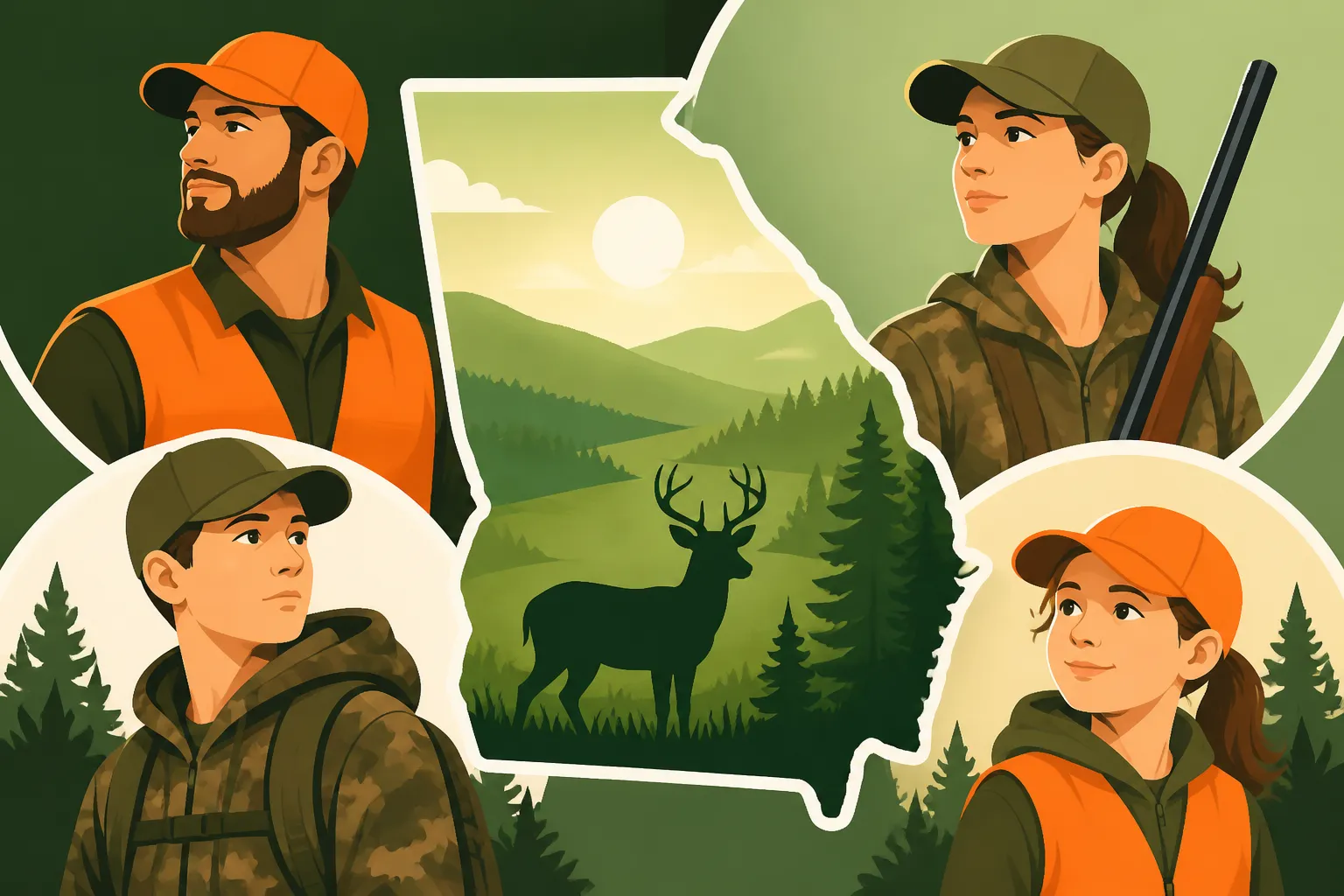
Who Needs Georgia Hunter Education
It can feel like navigating a dense thicket trying to figure out all the rules and regulations for hunting in Georgia, especially when it comes to something as fundamental as hunter education. Many new hunters, or even those just getting back into the sport, often find themselves scratching their heads, wondering, "Do I really need that hunter ed card, or am I exempt?" This guide is here to clear up that confusion, lay out exactly who needs to complete the Georgia hunter education course, and explore the pathways available to get you safely and legally into the woods.
Understanding the Baseline Requirement for Hunter Education in Georgia
At its core, Georgia's hunter education requirement is designed to ensure that hunters, especially newer generations, understand the fundamental principles of firearm safety, wildlife conservation, and ethical hunting practices. It's not just about passing a test; it's about fostering a culture of responsibility in the field. If you're planning to purchase a hunting license in Georgia and you fall within a certain age bracket, this requirement will apply to you, unless specific exemptions are met. The Georgia Department of Natural Resources (DNR) wants everyone to be safe, both for themselves and for others sharing the woods, whether they are hunting deer, turkey, or simply enjoying the outdoors.
Generally speaking, anyone born on or after January 1, 1961, who wishes to hunt in Georgia and isn't covered by an exemption, must complete a hunter education course. This is a pretty broad sweep, covering a huge percentage of today's hunting population. It means if you're in your early sixties or younger, you're likely going to need that card. This applies whether you're stalking white-tailed deer in the Piedmont region or pursuing wild turkeys in the sprawling hardwoods. Even if you've been around guns your whole life, the course covers regulations, ethics, and conservation principles that are specific to Georgia and hunting. It’s a foundational piece of knowledge that sets the standard for responsible hunting.
The goal here isn't to create hurdles but to promote safety. Think about the variety of hunting environments we have in Georgia, from dense pine plantations in the south to rugged mountain terrain up north. Each setting presents its own challenges and requires a keen awareness of your surroundings and your firearm. The hunter education course prepares you for these diverse conditions, teaching you how to handle your weapon safely, identify game legally, and respect the land you’re hunting on. It's an investment in your safety and the longevity of Georgia's hunting traditions.
Key Exemptions to Georgia's Hunter Education Rule
While the general rule casts a wide net, the Georgia DNR also understands that not everyone needs to sit through a basic hunter education course. There are several common-sense exemptions in place that acknowledge prior experience, age, or specific circumstances. Knowing these can save you time and ensure you're on the right side of the law without unnecessary steps. It’s always worth double-checking your situation against the official regulations, which you can usually find detailed on the GoHunt website or through other official channels.
The most common exemption is for age. If you were born before January 1, 1961, congratulations – you are generally exempt from the mandatory hunter education requirement in Georgia. This means if you're currently 63 years old or older, you can purchase a hunting license without needing to show proof of a hunter education certificate. This acknowledges that older generations likely grew up with hunting as a more common pastime and gained their experience through hands-on learning rather than formal courses. They’ve often accumulated decades of practical knowledge, which the DNR recognizes as sufficient for safe hunting.
Another significant exemption applies to those who have already completed a hunter education course in another state or country. Georgia has reciprocity with other jurisdictions, meaning if you've been certified elsewhere, your certificate is typically honored here. You just need to be able to provide proof of that certification. This is a huge relief for hunters who might move to Georgia from another state or those who hunt across state lines and have already gone through the process. For example, if you earned your hunter ed card in Florida or Alabama, that should generally be accepted when you go to purchase your Georgia Hunting Licenses and What They Cost. Always carry proof of your certification, whether it’s a physical card or a digital record, when in the field, just in case a game warden requests it.
Furthermore, active duty military personnel, including the National Guard and Reserves, and veterans who have been honorably discharged are also exempt from the hunter education requirement. This exemption recognizes the extensive firearms training and discipline that members of the armed forces receive. It's a way of honoring their service while acknowledging their proficiency with weapons. Similar to out-of-state certifications, carrying appropriate military identification or discharge papers is wise when relying on this exemption. These categories cover a good portion of the population who might otherwise need the course, ensuring that those with proven experience or training can continue to enjoy Georgia's hunting seasons.
The Georgia Apprentice Hunter License Pathway
What if you don't meet any of the exemptions and you still want to get out into the woods right away, perhaps with a seasoned family member or friend? Georgia offers a fantastic option called the Apprentice Hunter License, which acts as a bridge for new hunters who haven't yet completed the full hunter education course. This license is specifically designed to allow new hunters to gain supervised experience in the field before they have to commit to and pass the formal education program. It’s a great way to "try before you buy" the full commitment to hunter education, or just to get some hands-on experience under the watchful eye of a mentor. You can find more details about the specific Georgia Apprentice Hunter License Rules directly on the DNR's website.
The beauty of the Apprentice Hunter License is its flexibility. It allows an individual to hunt immediately without having to complete the traditional hunter education course, provided they are accompanied by a qualified mentor. This mentor must be at least 18 years old, be a licensed hunter in Georgia, and have completed their own hunter education course (if required for their age) or be exempt from it. The mentor must also remain within "normal voice contact and in the immediate vicinity" of the apprentice hunter, which means close enough to provide direct supervision and instruction. This isn't a license to just drop off a new hunter in the woods; it’s about providing genuine, hands-on guidance. For those wondering about the specifics, the rules for How Close a Georgia Mentor Must Stay are pretty clear.
This pathway is particularly valuable for youth hunters or adults new to the sport. Imagine a teenager who wants to join their parent for a morning of Bowhunting Georgia's Early Archery Season or wants to experience the thrill of Spring Turkey Hunting in Georgia. With an Apprentice Hunter License, they can participate directly, learning safe practices, ethical considerations, and game identification in a real-world setting. This mentored experience can be incredibly formative, building confidence and reinforcing the lessons that will later be covered in a formal hunter education class. It's a hands-on approach to learning that many find more engaging than sitting in a classroom, making the transition to independent hunting much smoother and safer.
It’s important to remember that the Apprentice Hunter License has its limitations. It's generally valid for a specific period, often a single license year, and is intended as a temporary measure. It's not a permanent substitute for hunter education if you were born after the cutoff date. The expectation is that after gaining some experience under a mentor, the apprentice hunter will then go on to complete the full certification. This ensures that eventually, all hunters requiring education will have that comprehensive knowledge base, solidifying their understanding of safety and conservation for the long haul.
| Category | Hunter Education Required? | Notes |
|---|---|---|
| Born Before January 1, 1961 | No | Exempt due to age. |
| Born On or After January 1, 1961 | Yes | Unless another exemption applies. |
| Apprentice Hunter License Holder | No (temporarily) | Must hunt under direct supervision of a qualified, licensed mentor. Requires eventual completion of hunter education for independent hunting. |
| Certified in Another State/Country | No | Must provide proof of certification from reciprocal states/countries. |
| Active Military/Veteran | No | Must provide proof of active duty status or honorable discharge. |
| Under 16 Years Old (without weapon) | No | Can participate in hunting activities without a weapon under supervision. |
How to Fulfill Your Hunter Education Requirement
So, if you've determined you need hunter education, the next step is figuring out how to get it done. The Georgia DNR has made it increasingly convenient for residents and non-residents alike to complete the necessary training, offering both traditional in-person classes and modern online options. The goal is to provide comprehensive instruction that fits into various schedules and learning preferences, ensuring that anyone who needs to get certified can do so with relative ease. Checking the GoHunt website or the Georgia DNR's official portal will give you the most up-to-date schedule and options.
For many, the most traditional route is an in-person hunter education course. These classes are typically taught by certified instructors, often game wardens or experienced volunteers, and involve classroom instruction, hands-on practice, and a final written exam. They cover everything from firearm handling and archery safety to wildlife identification, game laws, and ethical hunting practices. These courses usually run over a weekend or several evenings, and the interaction with instructors and other students can be a huge benefit. You get to ask questions directly, handle inert firearms to practice safe carries, and sometimes even get hands-on experience with things like blood trailing or setting up a treestand safely. These practical components can be invaluable, especially for visual or kinesthetic learners.
However, recognizing the demands of modern life, Georgia also offers approved online hunter education courses. This is a fantastic option for those with busy schedules or who prefer to learn at their own pace from home. There are several reputable online providers that are approved by the Georgia DNR, such as Hunter-Ed.com or the National Shooting Sports Foundation's online offerings. These courses typically involve reading modules, watching videos, and completing quizzes, culminating in a final exam. While the bulk of the course is done online, some providers or specific state requirements might still necessitate a short, in-person field day to demonstrate practical skills. Always confirm if an in-person component is needed when choosing an online course by checking the specific requirements for Taking Georgia Hunter Education Online.
Once you successfully complete either an in-person or online course and pass the final exam, you’ll receive your hunter education certificate. This certificate is your proof of completion and should be kept in a safe place. When you purchase your hunting license, whether it's a standard resident license, a non-resident option, or the comprehensive Georgia Resident Sportsman License Bundle, you'll typically need to input your hunter education certification number or present the physical card. Remember, this certification is for life, so once you have it, you're set for all future hunting endeavors in Georgia, provided you continue to meet all other licensing requirements. It’s a vital step towards enjoying Georgia's abundant wildlife resources responsibly.
Disclaimer
Please note that hunting regulations, license requirements, and season dates are subject to change. Always consult the official Georgia Department of Natural Resources (DNR) website or the current Georgia Hunting Regulations guide for the most up-to-date and accurate information before planning any hunting activity. This guide is for informational purposes only and should not be considered legal advice.