Is a .243 Enough for Georgia Whitetails?
Alright, let's talk about the .243 Winchester for deer hunting here in Georgia. It’s a question that sparks a lot of debate around campfires and online forums: "Is a .243 truly enough for a Georgia whitetail?" Many hunters, especially those new to the sport or stepping up from smaller calibers, worry if they're undergunned. This guide will dive deep into the .243’s capabilities, its limitations, and how to maximize its effectiveness for an ethical harvest right here in the Peach State.
Understanding the .243 Winchester Cartridge
The .243 Winchester has been a staple in hunting camps for decades, known for its flat trajectory and mild recoil. But what exactly makes it tick, and why has it maintained such a loyal following among hunters, even with so many newer cartridges on the market? It’s more than just a number on the box; it's a carefully engineered round.
Ballistics and Characteristics
When you pull the trigger on a .243, you’re sending a relatively lightweight, high-velocity bullet downrange. Typically, you’re looking at bullet weights ranging from 80 to 100 grains, with 100-grain bullets often being favored for deer. These bullets leave the barrel at impressive speeds, often exceeding 3,000 feet per second, which contributes to its reputation for a flat trajectory. This means less bullet drop over common hunting distances, making it a bit more forgiving if your range estimation isn't absolutely spot-on in the heat of the moment.
The projectile's design is critical for its performance. Unlike heavier, slower bullets that rely on raw energy and momentum, the .243 relies on velocity to create hydrostatic shock and initiate expansion. A well-constructed bullet, designed to hold together and expand reliably upon impact, is key to ensuring that kinetic energy is transferred effectively into the animal, creating a quick and humane kill. You’ll find many excellent bullet choices available today that are specifically engineered for deer-sized game.
Why Hunters Choose the .243
There are several compelling reasons why hunters, both seasoned and novice, gravitate towards the .243. Chief among them is its incredibly low recoil. For many, especially younger hunters or those who are recoil-sensitive, a .243 allows for more comfortable practice sessions, leading to better marksmanship and greater confidence in the field. And let's be honest, hitting your target accurately is far more important than the raw power of the cartridge itself.
Beyond comfort, the .243 is also renowned for its inherent accuracy. Many rifles chambered in .243 Winchester are tack drivers, capable of consistently grouping shots tightly at typical hunting distances. This precision, combined with its flat trajectory, makes it an excellent choice for hunters who prioritize putting the bullet exactly where it needs to go. Furthermore, it's a versatile round, capable of ethically taking not only whitetail deer but also smaller game like coyotes and even larger varmints, making it a true dual-purpose rifle for many landowners here in Georgia who might also be dealing with predators. You can explore more about Coyote Calling in Georgia Farm Country.
Georgia Whitetails and Shot Placement
Regardless of the caliber you choose, the golden rule of ethical hunting remains: shot placement is paramount. A perfectly placed shot from a .243 is far more effective than a poorly placed shot from a magnum rifle. This holds true for hunting deer in any region, but particularly when considering the diverse habitats and varying deer sizes found across Georgia. Understanding deer anatomy and how to exploit it with your chosen caliber is crucial.
Anatomy and Vital Zones
A Georgia whitetail, whether a small doe from the Piedmont or a mature buck from the Coastal Plain, has the same fundamental vital organs. Your target zone for a clean, ethical kill is the heart-lung area, often referred to as the "boiler room." This area is located just behind the shoulder and slightly below the midline of the body. A bullet passing through both lungs will cause rapid blood loss and incapacitation, typically resulting in the animal expiring within a very short distance.
The heart is a smaller, tougher target nested low within the chest cavity. While a direct heart shot is immediately fatal, aiming for the larger lung area offers a greater margin of error. Avoid aiming for the shoulder blade directly, as this bone is dense and can deflect lighter bullets, leading to a wounded animal and a difficult tracking job. Similarly, head or neck shots, while sometimes effective, are incredibly precise and should generally be avoided by most hunters due to the small target area and the high risk of only wounding the animal.
The Importance of Shot Angles
Understanding shot angles is just as critical as knowing where the vital organs lie on a broadside deer. A deer rarely stands perfectly still, perfectly broadside, presenting the ideal shot. You might encounter quartering-away shots, quartering-to shots, or even a deer slightly angled as it feeds. For a .243, with its lighter bullet weight compared to some other popular deer calibers, choosing the right angle becomes even more important.
A broadside shot is always preferred, allowing the bullet to pass cleanly through the vitals without encountering major bone. For a quartering-away shot, aim to place the bullet so it exits through the opposite shoulder, ensuring it travels through the vitals. Avoid steep quartering-to shots, as this often means the bullet has to penetrate heavy muscle and potentially the shoulder bone before reaching the vitals, which might be too much for a .243 to handle reliably. Always visualize the bullet's path through the animal before you squeeze the trigger. If you're unsure, it's always better to wait for a better shot opportunity or let the deer walk.
Factors Influencing .243 Effectiveness in Georgia
The effectiveness of your .243 isn't just about the cartridge itself; it's a combination of environmental factors, bullet choice, and your own capabilities as a hunter. Georgia presents a variety of hunting environments, from the dense undergrowth of river bottoms to the more open pine flats, and these conditions can certainly influence how your rifle performs.
Typical Shot Distances and Cover Types
One of the biggest factors in Georgia deer hunting is the terrain itself. Unlike wide-open western states, much of our hunting, especially on public land or smaller private tracts, happens in relatively thick cover. Whether you’re Hunting Piedmont Creek Bottom Funnels or still-hunting through thick Coastal Plain cover, shots are often short, typically well within 100 yards. In these scenarios, the .243 excels. Its flat trajectory is still an asset, but its low recoil allows for quicker follow-up shots if needed, and its accuracy is more than sufficient.
However, if you're hunting vast agricultural fields in South Georgia or powerline cuts, where shots might stretch out to 200-300 yards, the .243 can still perform admirably if you've practiced at those distances and selected the right bullet. The key is knowing your rifle’s capabilities and, more importantly, your capabilities. Don't push the limits of your comfort zone, especially when ethical harvest is on the line. Many hunters find tools like GoHunt invaluable for scouting these varied terrains, allowing them to anticipate potential shot distances and adjust their approach.
Bullet Selection
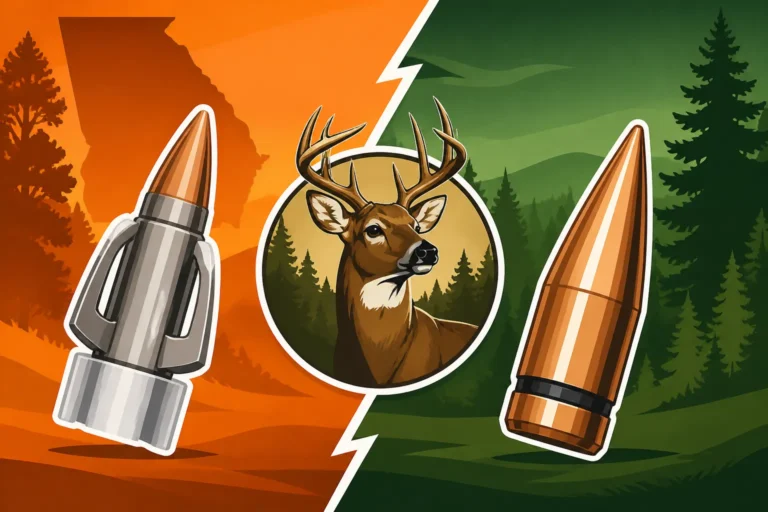
This is perhaps the single most critical factor in making your .243 an ethical deer cartridge. Not all .243 bullets are created equal. Varmint bullets, for example, are designed for rapid, explosive expansion on small animals and will often fragment prematurely on a deer, failing to penetrate sufficiently to reach vital organs. For deer, you absolutely need a bullet designed for controlled expansion and adequate penetration.
Look for bullets specifically marketed for deer or medium game. These typically feature heavier jackets, bonded cores, or internal partitions that help the bullet retain its weight and penetrate deeply, even after hitting bone. Common choices include Nosler Partition, Hornady InterLock, Federal Fusion, or Barnes TTSX. Testing different bullet brands and weights in your specific rifle is essential to find what shoots most accurately and provides reliable performance. A 100-grain bullet is often considered the sweet spot for Georgia whitetails, offering a good balance of weight and velocity for deep penetration.
Hunter Skill and Confidence
Ultimately, the most powerful rifle in the world is only as good as the hunter behind it. This is where the .243 truly shines for many. Its mild recoil and excellent accuracy potential mean that hunters are generally more comfortable shooting it, leading to less flinching and better overall shot placement. A hunter who practices regularly with their .243 and is confident in their ability to make a precise shot at a given distance is far more effective than someone flinching behind a larger, more powerful rifle they rarely shoot.
Before you head into the woods, spend time at the range. Practice shooting from various positions you might encounter in the field – offhand, kneeling, from a rest. Familiarize yourself with your rifle's point of impact at different ranges. Knowing your limitations and sticking to ethical shot opportunities are signs of a responsible hunter. Remember, it's not about the biggest bang, it's about putting the bullet precisely where it needs to go. For more on preparing, check out Zeroing a Rifle for Mixed Distances.
Comparing the .243 to Other Popular Georgia Deer Calibers
While the .243 is perfectly capable, it’s helpful to understand its place among other popular deer hunting calibers here in Georgia. Hunters often consider options like the .30-30 or the .270 Winchester for similar reasons – reliability and effectiveness on whitetails.
The .30-30 and .270 Winchester
The venerable .30-30 Winchester is a classic deer cartridge, especially in lever-action rifles, and it’s a staple in the thick woods of Georgia. It typically fires heavier, slower bullets (150-170 grains) than the .243, which are excellent for punching through brush and delivering significant energy at shorter ranges, say up to 150 yards. While its trajectory isn't as flat as the .243, its heavier bullet can be comforting in dense cover where you might encounter an unexpected close-range shot. Many consider it an ideal brush gun for Hunting Georgia Swamp and River Bottom Deer.
On the other end of the spectrum is the .270 Winchester, which often fires 130-150 grain bullets at higher velocities than the .243. The .270 is known for its flat trajectory and superior energy retention at longer ranges, making it a favorite for more open country or longer shots across fields. It offers a noticeable step up in power compared to the .243, with a corresponding increase in recoil. For a detailed comparison, you might want to read .308 Versus .270 for Whitetails.
Here's a quick comparison of these popular calibers for Georgia deer hunting:
| Caliber | Typical Bullet Weight (Grains) | Typical Muzzle Velocity (fps) | Recoil Level | Common Georgia Use | Advantages |
|---|---|---|---|---|---|
| .243 Winchester | 80-100 | 2,900 – 3,300 | Low | All-around, youth/recoil-sensitive, longer field shots | Flat trajectory, low recoil, high accuracy |
| .30-30 Winchester | 150-170 | 2,200 – 2,400 | Moderate | Thick brush, short-range woods, lever-action enthusiast | Excellent terminal performance at close range, good brush penetration |
| .270 Winchester | 130-150 | 2,900 – 3,100 | Moderate | Open fields, longer shots, larger deer | Flat trajectory, significant energy, good for larger-bodied deer |
When to Consider a Larger Caliber
While the .243 is undoubtedly capable, there are specific scenarios where a larger caliber might offer an advantage or simply provide more peace of mind. If you routinely hunt in areas with potentially longer shot distances (beyond 250 yards) or if you're specifically targeting some of the larger-bodied bucks found in certain parts of Georgia, a caliber like the .270, .308, or 6.5 Creedmoor for Piedmont Field Edges could be a good choice. These calibers carry more energy downrange and generally offer deeper penetration, especially if you hit bone, which can be beneficial on less-than-perfect shot angles.
However, it's crucial to remember that this "advantage" is often negligible within typical Georgia hunting ranges of 150 yards or less, assuming proper bullet selection and shot placement with the .243. Also, consider the Georgia regulations regarding Georgia Minimum Rifle Caliber Rules and Georgia Legal Firearms for Deer Hunting. The .243 meets these requirements comfortably. Don't feel pressured to step up in caliber just because others do. Focus on what you shoot best and what gives you the most confidence in making an ethical shot every single time. Sometimes, less recoil and more practice translate to better hunting success.
The .243 Winchester in the Georgia Woods: A Capable Choice
So, is a .243 enough for Georgia whitetails? The resounding answer from many experienced hunters, including myself, is yes, absolutely. With appropriate bullet selection, diligent practice, and a commitment to ethical shot placement, the .243 Winchester is a highly effective and humane cartridge for harvesting deer across all regions of Georgia. It’s a joy to shoot, encourages good marksmanship, and has proven its worth time and time again in our varied terrain.
Don't let anyone tell you that you need a "cannon" to hunt deer here. The truth is, a well-placed 100-grain bullet from a .243 will put down a Georgia whitetail just as quickly and efficiently as a heavier slug from a larger caliber. Focus on your fundamentals: know your rifle, practice your shooting, choose a quality bullet, and always strive for that perfect shot. When you head out into the woods, whether you're using GoHunt to scout new areas or just enjoying a familiar stand, hunt with confidence in your equipment and your abilities. You'll find that the .243 is a solid performer you can rely on season after season. Before you head to the processing table, understanding Deer Meat Yield From a Georgia Buck can help you appreciate your harvest even more.
Disclaimer
This article is for general informational purposes only and does not constitute professional advice. Laws, prices and regulations vary by location and change over time. Consult a qualified professional for guidance on your specific situation.