Where North Georgia Bears Range
You know how it goes – you hear whispers of black bears roaming the North Georgia mountains, maybe you’ve even seen a blurry photo from a trail camera or spotted some scat on a hike. But actually knowing where these magnificent animals consistently live, move, and thrive, especially if you're thinking about hunting them, is a whole different ballgame. It’s not just about "the mountains;" it’s about understanding the specific nooks and crannies, the seasonal shifts, and the subtle cues that tell you you're in prime bear country. This guide is going to peel back the layers, giving you a comprehensive look at the actual range and habits of North Georgia's black bears, helping you decode their secretive lives in these beautiful, rugged hills.
Understanding North Georgia's Bear Country
When we talk about black bears in North Georgia, we're really focusing on a very specific, and often challenging, landscape. It's a place of dramatic elevation changes, dense forest, and an abundance of natural resources that make it a perfect home for these adaptable creatures.
The Lay of the Land: Appalachian Foothills and Mountains
North Georgia is dominated by the southern reaches of the Appalachian Mountains, a truly rugged and breathtaking terrain. We're talking about counties like Rabun, Fannin, Union, Towns, White, Lumpkin, Dawson, Gilmer, and Pickens. These areas are characterized by steep ridges, deep valleys, and thick stands of both hardwoods and pine. The elevation can vary dramatically, from several hundred feet in the foothills to over 4,700 feet at Brasstown Bald, Georgia's highest point. This diverse topography isn't just scenic; it’s fundamental to where bears live and move.
The sheer ruggedness of this landscape creates vast tracts of inaccessible or at least minimally disturbed habitat. Bears, being naturally shy and preferring solitude, thrive in these remote areas. The dense undergrowth provides excellent cover, allowing them to move unseen, and the numerous hollows and coves offer ideal denning sites. Unlike the flatter, more agricultural parts of Georgia, North Georgia's mountainous terrain often discourages extensive human development, preserving large swathes of continuous forest that are vital for a healthy bear population. It’s this combination of elevation, dense vegetation, and reduced human footprint that truly defines North Georgia as prime bear country.
Habitat Preferences: Food, Water, and Cover
Just like us, bears need food, water, and shelter to survive and flourish. In North Georgia, these necessities are typically found in abundance, but their availability changes with the seasons, directly influencing bear movements. Bears are omnivores, meaning they'll eat just about anything, but their diet largely consists of plants. During spring and early summer, they feast on tender emerging greens, roots, and opportunistic protein sources like insects or even fawns if they stumble upon them. As summer progresses, soft mast, like blackberries, blueberries, and wild grapes, becomes a major draw, often pulling bears to lower elevations or sunnier slopes where these fruits ripen earlier.
The most critical food source, however, is hard mast, primarily acorns and hickory nuts, which become available in the fall. A good mast crop can mean the difference between a bear entering winter with sufficient fat reserves for denning or facing a lean, difficult period. This is why you'll often see concentrated bear activity in mature hardwood forests during the autumn. Water, in the form of countless springs, creeks, and rivers that crisscross the mountains, is never far away. As for cover, the dense rhododendron thickets, mountain laurel, and vast stretches of pine and hardwood timber provide ample places to bed down, raise cubs, or simply disappear from sight. The connectivity of these habitat elements – food, water, and cover – is what makes specific areas within North Georgia so consistently productive for bears.
Core Bear Range in the Northern Zone
When the Georgia Department of Natural Resources talks about the "Northern Zone" for bears, they're not just drawing lines on a map; they're delineating the heartland of Georgia's largest and most robust black bear population. This zone is a testament to intelligent wildlife management and the incredible resilience of these animals in their preferred habitat.
The Chattahoochee National Forest Stronghold
At the very core of North Georgia's bear range is the expansive Chattahoochee National Forest. This isn't just a patch of woods; it's a massive, contiguous block of public land spanning nearly 750,000 acres across the northern part of the state. It acts as a true stronghold for black bears, offering an unmatched combination of undisturbed wilderness, diverse foraging opportunities, and critical denning sites. Within the Chattahoochee, specific areas like the Cohutta Wilderness, the rugged terrain around Blood Mountain, and the vast wilderness surrounding Brasstown Bald are particularly renowned for high bear concentrations. These regions are often characterized by steeper grades, fewer roads, and denser cover, making them less accessible to humans and more appealing to bears.
The immense size and connectivity of the Chattahoochee National Forest are crucial. It provides bears with the ability to roam widely, find mates, and establish large home ranges without constantly encountering human development. This minimizes human-bear conflict and allows the population to thrive naturally. Hunters targeting bears in this region will often find themselves exploring challenging but incredibly rewarding landscapes, utilizing knowledge of areas like those mentioned in our guide on Hunting North Georgia Mountain Country. The Forest's sheer scale allows it to absorb hunting pressure without significantly impacting the overall bear population, ensuring that the Northern Zone remains a vital habitat for Georgia's black bears for generations to come.
Extending Beyond the National Forest Boundaries
While the national forest forms the backbone of the North Georgia bear population, bears, being excellent navigators and opportunists, don't recognize property lines. Their range extends well beyond the official boundaries of public land, spilling over into adjacent private timberlands, agricultural fields, and even suburban fringes in search of food. Counties directly bordering the Chattahoochee National Forest, such as Gilmer, Lumpkin, and Dawson, see significant bear activity, especially in areas with large, unfragmented private timber tracts or extensive river bottomlands. These river corridors and creek drainages act as natural highways for bears, allowing them to move between patches of public land and private holdings while remaining relatively concealed.
This expansion into private lands presents both challenges and opportunities. For private landowners, it can sometimes lead to nuisance issues, particularly if bears discover easy food sources like bird feeders, trash cans, or unprotected livestock feed. For hunters, however, it means there are opportunities to encounter bears on private ground, provided they have permission. Understanding these broader patterns is key, as a bear spotted on a private farm in Dawson County might have traveled miles from its core range in the national forest. These fringe areas often offer different hunting scenarios, sometimes with less hunting pressure than the more popular public land spots, requiring a keen understanding of both bear habits and local land access, as discussed in our Getting Private Land Permission in Georgia article.
Seasonal Movements and Food Sources
The North Georgia black bear is a creature highly attuned to the rhythm of the seasons, with its movements and activity patterns largely dictated by the availability of food. Understanding these seasonal shifts is paramount for anyone hoping to truly grasp where these animals are ranging throughout the year.
Spring and Summer Foraging Patterns
When spring arrives in North Georgia, bears emerge from their dens, often lean and hungry. Their initial diet consists of whatever fresh greens they can find—tender grasses, clovers, and emerging forbs in open areas or along forest edges. They're also not above scavenging carrion left over from winter. As spring turns to summer, their diet shifts dramatically to capitalize on the ripening bounty of the forest. Berries become a huge draw: wild strawberries, blackberries, and blueberries are consumed voraciously, often leading bears to sunnier, more open slopes, clear-cuts, or field edges where these fruits thrive. You might find them spending significant time in areas of younger forest regrowth, which tend to produce more soft mast.
During this time, bears are also avid insect eaters, tearing apart logs and stumps for grubs and ants. While primarily herbivorous, they are opportunistic predators and will take fawns or other small animals if the chance presents itself, though this makes up a relatively small portion of their diet. The search for these diverse food sources means that during late spring and summer, bear activity can be widespread, but often concentrated in areas with active berry production or high insect populations. This makes for dynamic, sometimes unpredictable, movement patterns as they follow the progression of ripening food throughout the landscape.
Fall: The Crucial Mast Crop Impact
Fall is arguably the most critical season for North Georgia black bears. This is when they enter hyperphagia – a period of intense feeding designed to pack on fat reserves before winter denning. The absolute king of fall food sources is hard mast, predominantly acorns from various oak species (red, white, and chestnut oaks) and hickory nuts. The success or failure of the annual mast crop directly dictates where bears will concentrate and how widely they might range. In years with an abundant acorn crop, bears may remain relatively localized within mature hardwood forests, gorging themselves on the easily accessible, nutrient-dense nuts. You can learn more about this by reading Hunting Bears Over Natural Food in the Mountains.
Conversely, in years with a poor mast crop, bears will be forced to travel much farther and wider in search of alternative foods. This might lead them to seek out soft mast that ripens later, like persimmons and wild grapes, or even to venture closer to human settlements if those areas offer easily accessible food sources like cornfields, orchards, or even residential garbage. Scouting for mast production becomes paramount for any bear hunter. Tools like GoHunt can be invaluable here, helping you identify areas with high concentrations of oak and hickory trees on public land, which you can then scout in person to determine the mast crop. Understanding this seasonal cycle and how it influences bear foraging strategies is key to predicting their movements and finding them in the vast North Georgia wilderness.
Key Counties for North Georgia Bear Sightings and Hunting
While the general "Northern Zone" designation covers a large area, certain counties stand out as consistent hotspots for black bear activity. These are the places where the habitat is just right, and historical populations have remained strong.
High-Density Counties
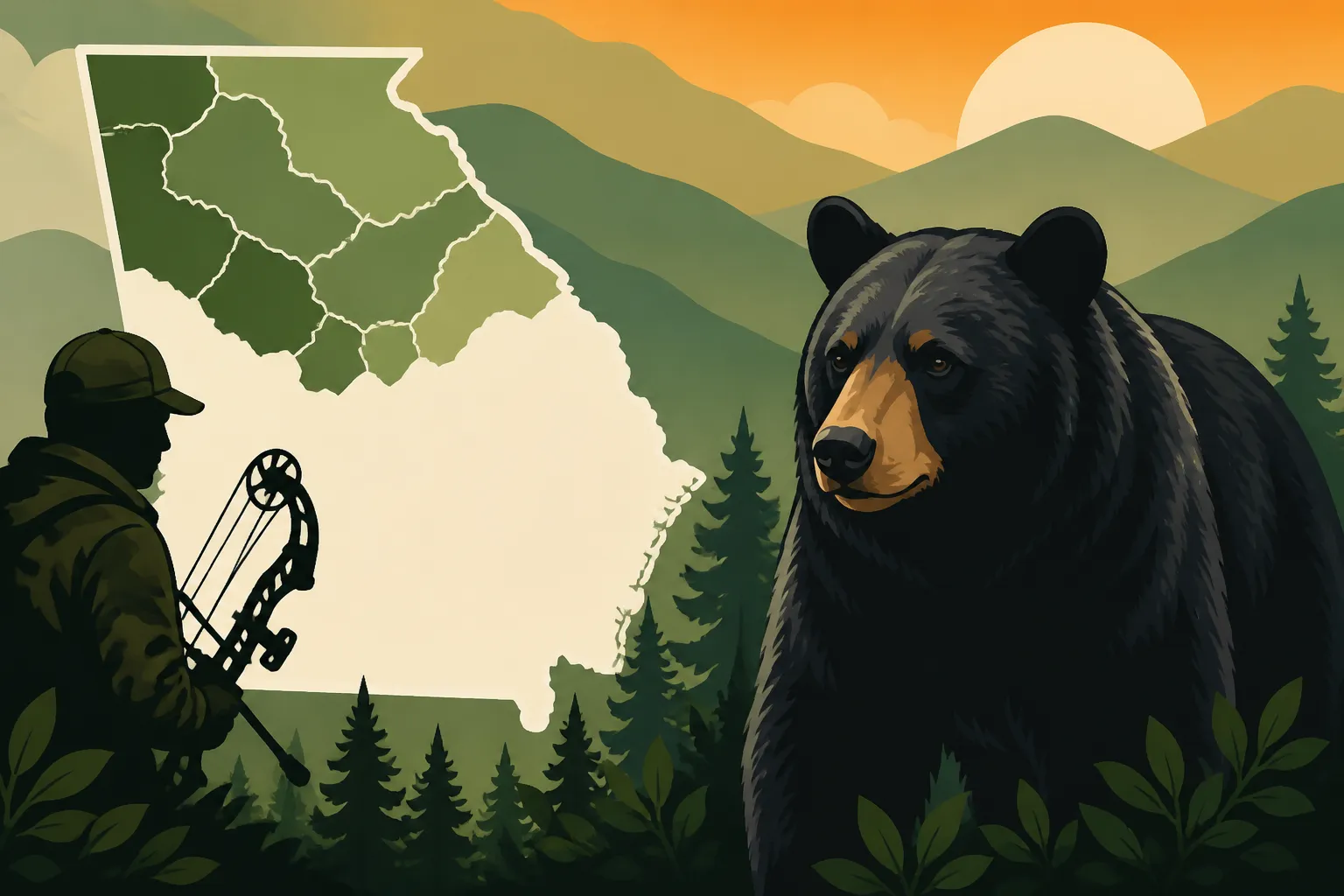
If you're looking for the heart of North Georgia's bear country, you'll want to focus on counties like Rabun, Fannin, Union, Towns, and White. These counties consistently exhibit the highest bear populations and activity for a few key reasons. First, they all contain significant portions of the Chattahoochee National Forest, providing vast, undisturbed habitat. Rabun County, for instance, is practically synonymous with mountainous wilderness, boasting large tracts of national forest and plenty of rugged terrain perfect for bears to thrive. Union and Fannin counties, similarly, offer extensive public land access and deep, remote drainages.
What makes these areas particularly productive is often a combination of dense cover, reliable water sources, and consistent mast production from mature hardwood stands. There's less fragmented habitat compared to counties further south or closer to major population centers. When you're in these high-density areas, you're not just looking for "a bear;" you're looking for signs of multiple bears, indicating a healthy, established population. This concentration means better odds for sightings and hunting opportunities, provided you're willing to put in the effort to navigate the challenging topography. For those interested in public land strategies, our guide on Why the Northern Zone Holds the Most Bears delves deeper into these specific characteristics.
Expanding Range and Lesser-Known Spots
While the core counties remain consistently strong, Georgia's black bear population has been steadily expanding its range, a testament to conservation efforts and the bears' adaptability. This means you're seeing increased bear activity and occasional sightings in counties that might not have been considered "bear country" even a few decades ago. Counties like Dawson, Lumpkin, Gilmer, and Pickens, while bordering the main national forest strongholds, are seeing more resident bears. These areas often feature a mix of private timberland, smaller mountains, and even some agricultural landscapes, which bears are learning to navigate.
This expansion offers exciting new opportunities for hunters willing to explore. You might find less hunting pressure in these emerging bear zones, though understanding localized patterns becomes even more crucial. Bears here might be more accustomed to human presence, or they might be transient animals moving through. It also highlights a growing challenge: as bears move into more developed areas, human-bear conflicts, such as those discussed in Bear Encounters Around North Georgia Cabins, become more common. Being aware of these expanding ranges means keeping an eye on local news, talking to landowners, and utilizing resources like the Georgia DNR's data, which often shows increasing nuisance calls and sightings in these peripheral counties. It’s a dynamic situation, reflecting a healthy, growing bear population that is spreading its paws across more of North Georgia.
Challenges and Opportunities for Bear Hunters
Hunting black bears in North Georgia is not for the faint of heart. It demands physical stamina, sharp navigational skills, and a deep understanding of the environment. But for those willing to embrace the challenge, the rewards can be immense.
Navigating Rugged Terrain and Dense Cover
North Georgia's mountains are beautiful, but they are unforgiving. The terrain is often steep, rocky, and riddled with thick patches of mountain laurel and rhododendron so dense they can feel impenetrable. A day of still-hunting or packing a stand into these areas is a serious workout, making physical fitness a non-negotiable requirement. It's not uncommon to gain and lose thousands of feet of elevation in a single day, often off-trail, navigating slippery leaves, downed timber, and hidden ravines. Beyond the physical demands, navigation can be tricky. Even with GPS devices or mapping apps like GoHunt, the dense canopy can sometimes interfere with signal, and the repetitive nature of ridges and hollows can disorient you.
Safety is paramount. Carrying a well-stocked first-aid kit, knowing your limits, and letting someone know your plans are critical. Furthermore, the dense cover means visibility is often limited to short distances, making shot opportunities fleeting. This necessitates quiet movement, patience, and the ability to react quickly when a bear suddenly materializes in the underbrush. A good understanding of Wind and Thermals on a Mountain Ridge is also essential, as changing air currents can quickly betray your presence to a keen-nosed bear. This ruggedness is precisely why many hunters find bear hunting so appealing; it’s a true test of woodsmanship and physical endurance.
Scouting and Strategy for Success
Success in North Georgia bear hunting hinges almost entirely on diligent pre-season scouting. Bears leave plenty of sign if you know what to look for: tracks in soft earth near water sources, fresh scat (which varies greatly depending on their diet), claw marks on trees where they’ve been climbing for mast or marking territory, and overturned rocks or torn-up logs where they’ve foraged for insects. Locating consistent food sources, particularly hard mast in the fall, is the most crucial element. Spend time in potential bear areas, focusing on mature hardwood ridges and creek bottoms, identifying where acorns and hickory nuts are dropping.
Trail cameras can be incredibly effective for monitoring activity in key areas, revealing travel corridors and feeding patterns. Utilizing digital mapping tools is also a game-changer. Apps like GoHunt allow you to overlay public land boundaries, topo maps, and aerial imagery, helping you identify potential pinch points, saddles, and dense bedding cover without ever stepping foot in the woods initially. This kind of virtual scouting can save countless hours of physical exertion. For a deeper dive into scouting techniques, check out our guide on Scouting Georgia Public Land Before Season. Whether you choose to still-hunt, ambush from a treestand, or use a ground blind, placing yourself where bears are naturally moving between bedding and feeding areas, or along escape routes, is key. Remember, patience and persistence are often the most valuable tools in a North Georgia bear hunter’s arsenal.
Here's a quick look at some of the prime bear counties and what makes them stand out:
| County Name | Primary Habitat Type | Key Geographical Features | Typical Food Sources | Hunting Challenges |
|---|---|---|---|---|
| Rabun County | Heavily forested mountains, wilderness areas | Chattahoochee NF, Black Rock Mountain State Park, Tallulah Gorge | Acorns, hickory nuts, berries, wild grapes | Steep terrain, dense cover, high elevation, limited access in wilderness areas |
| Fannin County | Rolling mountains, deep valleys, river corridors | Chattahoochee NF, Cohutta Wilderness, Toccoa River | Acorns, soft mast, creek bottom vegetation | Rugged wilderness, navigating remote areas, encountering other recreationists |
| Union County | Mountain ridges, extensive hardwood forests | Chattahoochee NF, Blood Mountain, Brasstown Bald | Acorns, persimmons, berries, insect larvae | Significant elevation changes, thick undergrowth, navigating varied public/private boundaries |
| Towns County | High mountain elevations, mature timber | Chattahoochee NF, Brasstown Bald vicinity | Acorns, beech nuts, rhododendron thickets | Extreme terrain, cold weather late season, difficult game retrieval |
| White County | Mountainous to hilly, mixed pine-hardwood | Chattahoochee NF, Yonah Mountain, many creek systems | Acorns, berries, roots, agricultural fringe crops | Proximity to developed areas, mixed land ownership, potential for human-bear conflict |
Disclaimer
Please remember that hunting regulations and seasons can change. Always consult the Georgia Department of Natural Resources (DNR) official hunting regulations before planning any hunting trip to ensure you are compliant with the most current laws and requirements. Your safety and ethical hunting practices are paramount.