Safety Harnesses and Lifelines
The chilling truth about hunting from a tree stand is that gravity doesn't care how experienced you are, how careful you think you're being, or how long you've been using that stand. Far too many hunters in Georgia, and across the country, have experienced life-altering injuries or worse from a fall, often because they thought "it won't happen to me." This comprehensive guide isn't here to preach, but to equip you with the knowledge and understanding of safety harnesses and lifelines, making sure you come home safely after every hunt.
The Unseen Danger: Why Tree Stand Safety is Non-Negotiable
Let's be honest, we've all done it. Rushed to get into the stand at first light, or climbed down in the dark feeling a little too confident after a long sit. Maybe you've even heard the old adage, "If you haven't fallen, you haven't been hunting long enough." But that's a dangerous myth that needs to be busted. The fact is, falls from elevated stands are the leading cause of serious injury and fatalities among deer hunters. It's a silent threat, often underestimated, until it's too late.
The Realities of a Tree Stand Fall
It's easy to dismiss the risk when you're standing on solid ground. You feel agile, balanced, in control. But imagine a cold morning, your fingers are numb, the stand platform is slick with dew, and you're hauling up your bow. One slip, one missed step, one component failure, and suddenly you're plummeting towards the hard ground below. The impact can be catastrophic. We're talking broken bones, spinal injuries leading to paralysis, traumatic brain injuries, or worse. Even if you survive the initial fall, being injured and alone in a remote area of the Chattahoochee-Oconee National Forest Hunting or a far-flung corner of a private tract can quickly turn a bad situation into a deadly one due to exposure or delayed medical attention. It's not just about the fall itself, but the consequences that follow, especially when you're out there by yourself.
Overcoming Common Hunter Hesitations
I hear the excuses all the time, and I get it, really. "They're uncomfortable." "They're too much hassle." "I'm only going up 10 feet." "I don't need one on my stand." These hesitations are incredibly common. Modern safety harnesses, however, have come a long way. Many are now lightweight, form-fitting, and designed to be worn all day without restricting movement. Think of it like a seatbelt in a car – it's a minor inconvenience that provides major protection when you need it most. The few extra minutes it takes to properly don your harness and attach your lifeline are nothing compared to the lifetime of regret or physical limitations that a fall can bring. It's an investment in your well-being, and frankly, an investment in your family's peace of mind. When you're Scouting Georgia Public Land Before Season, planning your stand placements, make sure safety gear is at the forefront of your mind, not an afterthought.
Understanding Your Lifeline: Harnesses, Lineman's Ropes, and Fall Arrest Systems
When we talk about tree stand safety, it's not just one piece of gear; it's a system designed to work together. Understanding each component is crucial to ensure you're using it effectively. It’s like understanding all the parts of your rifle setup; each has a specific job.
Full-Body Safety Harnesses: Your Wearable Safety Net
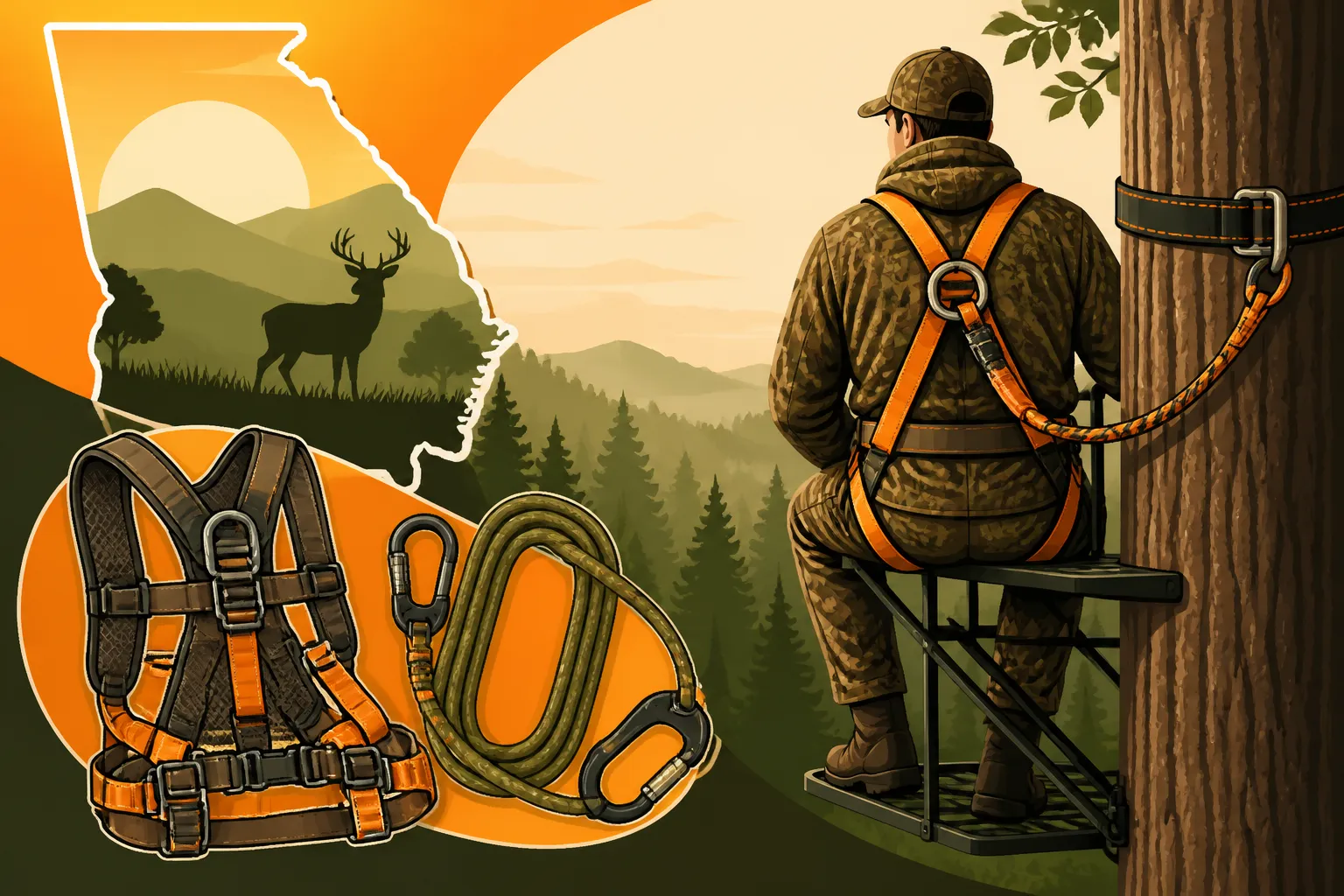
At the core of any elevated hunting safety system is the full-body safety harness. This isn't just a strap around your waist; it's a complex piece of equipment designed to distribute the impact of a fall across your entire body, specifically your chest, shoulders, and legs, significantly reducing the risk of injury. A good harness will have multiple adjustment points to ensure a snug, secure fit, regardless of your body shape or the layers of Warm-Weather Clothing for Georgia Hunters you might be wearing. Look for harnesses that meet industry standards set by organizations like the Treestand Manufacturer's Association (TMA), ensuring they've been rigorously tested.
Many harnesses now come integrated into lightweight vests or jackets, making them even easier to wear and less cumbersome. They typically feature a D-ring attachment point on the back, between your shoulder blades, where your tether strap connects. Some also offer additional loops or rings for a lineman's rope or other accessories. Companies like GoHunt, for instance, often feature a wide array of harness options, allowing you to compare features and find one that truly suits your comfort and needs for long sits.
Lifelines and Tethers: Your Connection to Security
A safety harness is only as good as its connection to the tree. That's where lifelines and tethers come in.
- Tether: This is the short strap that connects the D-ring on your harness to the lifeline or directly to the tree once you're in your stand. It's designed to limit the distance you fall if you slip, usually to no more than 12 inches, preventing you from hitting the stand platform or bouncing out of your stand. Always ensure your tether is snug but allows for comfortable movement.
- Tree Straps/Safety Ropes: This is the most common "lifeline." It's a sturdy strap or rope that wraps around the tree above your stand. Once you're in the stand, your tether connects to this strap. The key here is to keep it taut and positioned correctly so that if you do fall, it catches you quickly.
- Ascending/Descending Lifelines: For maximum safety, especially with hang-on stands or when using Climbing Sticks for Mountain Hardwoods, an ascending/descending lifeline is invaluable. This system consists of a long rope that extends from the base of the tree all the way up to above your stand. You attach a prusik knot or similar sliding rope grab to this mainline, and then connect your harness tether to that knot. As you climb, you slide the knot up the rope, ensuring you are connected to the tree from the moment your feet leave the ground until you are safely back down. This eliminates the dangerous "unattached" moments during ascent and descent. It might seem like an extra step, but it's during these transitional moments that many falls occur.
Lineman's Ropes: Hands-Free Security While Setting Up
This often-overlooked piece of equipment is a game-changer for anyone hanging a stand. A lineman's rope, also known as a lineman's belt, is a rope with a carabiner on each end. You clip one end to a loop on your harness, wrap the rope around the tree, and then clip the other end to a different loop on your harness. This creates a secure, hands-free connection to the tree while you are climbing, positioning, or securing your stand. It allows you to use both hands to manipulate your stand, Hanging a Stand on a Mountain Saddle, or climbing sticks, drastically reducing the risk of a fall during these critical moments. Whether you're using a traditional ladder stand, a hang-on, or exploring Saddle Hunting in Georgia Hardwoods, a lineman's rope is an essential part of the setup process.
From Ground to Stand and Back: Proper Use and Installation
The best safety equipment in the world is useless if not used correctly. This isn't about rushing; it's about methodical, deliberate action that ensures your safety from the moment you leave the ground until you're back on it. Think of it as a pre-flight checklist for your hunt.
Step-by-Step Installation of Your Lifeline System
Proper installation is critical. Let's walk through it, assuming you're using a full-body harness with an ascending/descending lifeline for maximum protection.
- Before Leaving the Ground: Put on your full-body safety harness. Ensure all straps are snug and buckles are securely fastened. A good fit means you can't easily slip out of it, but it's not uncomfortably tight. Take a moment to adjust it, especially if you've added or removed layers of clothing.
- Attaching the Lifeline: Secure your ascending/descending lifeline to the tree. This usually involves wrapping a tree strap around the trunk well above your intended stand height, ensuring it's on a healthy, sturdy part of the tree, and then letting the rope hang down. Attach the rope to the base of the tree or use a heavy-duty carabiner to ensure it stays taut and accessible.
- Initiating the Climb: As soon as your feet leave the ground, attach your tether to the prusik knot or rope grab on the ascending/descending lifeline. As you ascend using your climbing sticks or ladder sections, slide the knot up the rope with you, keeping it at chest height. This ensures you are always connected, even if a step gives way or you lose your footing. For Climber Stands on Straight Trunks, you'll typically use the tree strap directly above your head as you climb, moving it up with you as you ascend, but the full lifeline system offers superior continuous protection.
- Reaching the Stand: Once you're at your stand platform, slowly and carefully step onto it. Maintain your connection to the lifeline.
- Securing in the Stand: While still attached to the lifeline, adjust the prusik knot or rope grab so that your tether is snug. This tether should allow you to comfortably sit and turn, but if you were to fall, it would prevent you from dropping more than a few inches. Never allow enough slack for you to hit the stand platform. Once you're securely in place, you can bring up your bow or firearm. Some hunters choose to use a separate tree strap around the tree at stand height to connect their tether to, for redundancy or if they don't have a full lifeline system.
- Descent: The process is reversed. Before you even think about stepping off your stand, ensure your tether is connected to your ascending/descending lifeline. As you step onto your climbing method, gradually lower the prusik knot or rope grab as you descend, maintaining a connection all the way to the ground.
Practicing for Safety: Not Just for New Hunters
You wouldn't head to the range with a new rifle and expect to shoot perfectly without practice, right? The same goes for your safety harness and lifeline. Practice using your system at ground level or just a few feet up, especially if it's new to you or you've made changes to your setup. Get comfortable with the feel of the harness, the adjustment of the straps, and the mechanism of your tether and lifeline. Understanding how to react if you do fall – how to use suspension relief straps, for example – is critical. GoHunt often shares instructional videos and guides on their website for new products or safety best practices, which can be a great resource for hands-on learning. This practice isn't just for beginners; it's a vital refresher for every hunter at the start of each season.
Beyond the Hunt: Inspection, Maintenance, and Storage
Your safety harness and lifeline are critical pieces of gear that literally hold your life in their hands. Treating them with care, inspecting them regularly, and storing them properly ensures they'll be ready when you need them most, season after season. Just like you'd meticulously clean your firearm after a hunt, your safety gear deserves the same attention.
Pre-Season and Pre-Hunt Inspection Checklist
Before the season even begins, and definitely before every single hunt, you need to conduct a thorough inspection of your harness and lifeline system. Don't skip this step. It could literally save your life. Here's what to look for:
| Component | What to Inspect For | Action If Found |
|---|---|---|
| Webbing/Straps | Cuts, tears, fraying, excessive wear, chemical damage, UV degradation (fading/brittleness) | Replace immediately. Never try to repair. |
| Stitching | Loose, broken, or pulled threads, especially at stress points | Replace immediately. |
| Buckles/Hardware | Cracks, deformities, rust, corrosion, bent pins, proper function, locking mechanism | Replace immediately. Ensure all moving parts operate smoothly and securely. |
| Ropes/Tethers | Cuts, fraying, excessive wear, soft spots, stiff areas, knot integrity (for prusik) | Replace immediately. |
| Carabiners | Cracks, deformities, rust, corrosion, gate function, locking mechanism, spring tension | Replace immediately. Ensure gate opens freely and locks securely. |
| Impact Indicators | Any visible signs of activation (if present, indicating a previous fall) | Replace immediately, even if no other damage is visible. |
If you find any signs of damage, no matter how minor, it's time to retire that piece of equipment. It's not worth the risk. Think of your safety gear as having a finite lifespan, similar to how you might rotate out old Deer Carts for Coastal Plain Ground or refresh your hunting knife blades.
Proper Storage and Care for Longevity
Once the hunt is over, your safety gear shouldn't just be tossed into a pile in the garage. Proper care extends its life and ensures its reliability.
- Cleaning: If your harness or ropes get dirty, especially after a hunt in the Georgia Swamp and River Bottom Deer or a rainy day, clean them gently. Use mild soap (like dish soap, but check manufacturer recommendations) and cool water. Avoid harsh chemicals, bleach, or detergents, as these can degrade the synthetic fibers. Rinse thoroughly and allow to air dry completely in a shaded, well-ventilated area. Never machine wash or machine dry, as the heat and agitation can cause damage.
- Storage: Store your harness and lifeline in a cool, dry place away from direct sunlight, extreme temperatures, and chemicals (like gasoline, oils, solvents, or battery acid). Hanging it up, rather than folding or wadding it, helps prevent kinks and allows air circulation. A dedicated gear bag, like one you might use for your Packs for a Day on Public Land, can protect it from dust and accidental damage.
- Manufacturer Recommendations: Always, always refer to the manufacturer's instructions for specific care, cleaning, and storage guidelines. Some materials have unique requirements. They often specify a "shelf life" for their products, even if they haven't been used or suffered a fall, due to the natural degradation of materials over time. Adhere to these recommendations strictly.
By committing to regular inspection, proper cleaning, and careful storage, you're not just taking care of your gear; you're taking care of yourself. Hunting is an incredible pursuit, and being able to do it safely, year after year, is paramount. Never underestimate the importance of your safety harness and lifeline – they are your last line of defense against an unpredictable fall.
Disclaimer
This article is for general informational purposes only and does not constitute professional advice. Laws, prices and regulations vary by location and change over time. Consult a qualified professional for guidance on your specific situation.