Ground Blind Anchoring in Wind
There are few things more frustrating than arriving at your hunting spot before dawn, excited for the day, only to find your carefully placed ground blind crumpled like an empty potato chip bag, a victim of a sneaky overnight windstorm or a sudden Georgia squall. It's not just a minor inconvenience; it can ruin a hunt, waste your precious time, and even damage expensive gear. This guide will walk you through robust anchoring techniques to ensure your ground blind stays put, no matter what Mother Nature throws at it in the varied Georgia landscape.
Why Ground Blinds Need Anchoring in Georgia's Wild Weather
Georgia's weather is a beautiful, wild beast, often unpredictable and capable of turning a calm morning into a blustery afternoon in a blink. From the open fields of the Piedmont to the humid swamps of the Coastal Plain and the exposed ridges of the North Georgia Mountains, your ground blind faces a unique set of environmental challenges. Ignoring these forces is like inviting trouble, and trust me, trouble often arrives with high winds and driving rain, usually when you least expect it.
Understanding Wind Forces and Blind Vulnerability
Ground blinds, by their very nature, are lightweight, portable structures designed for concealment. Their fabric walls catch the wind much like a sail, and if not properly secured, they can become airborne or collapse under sustained pressure. Imagine the wind whipping through a cut bean field in South Georgia, or gusting over a mountain saddle in Fannin County; these blinds become giant kites. Even a seemingly sturdy structure can be torn from its moorings if the anchors aren't up to the task. We're not just talking about a gentle breeze here; we're talking about gusts that can snap branches and make trees sway. The flat, broad sides of a blind are particularly susceptible, creating lift and drag that can easily overpower inadequate stakes. It's not just about the blind itself blowing away; it's about the frame getting twisted, hubs breaking, and the fabric tearing. A damaged blind might not provide the concealment you need, rendering it useless for the hunt.
The Impact of Georgia's Diverse Terrain and Soil Types
Georgia's diverse topography means wildly different soil conditions. What works for anchoring in the soft, loamy soil of a river bottom might utterly fail in the rocky, red clay of the Piedmont or the sandy soils of the Coastal Plain. In the mountains, you might encounter thin topsoil over bedrock, making traditional staking difficult or impossible. In the low country, water-saturated ground can quickly turn solid earth into a muddy mess, reducing the holding power of any anchor. You can't just rely on the flimsy tent stakes that come with most blinds; those are usually designed for backyard camping, not for withstanding the forces of nature in a hunting environment. Considering the specific ground beneath your blind is paramount. It’s important to scout your intended blind location not just for deer sign, but also for soil composition. Using a tool like the GoHunt app to examine topographical maps can give you an idea of the general terrain and potential soil challenges before you even step foot on the property.
Protecting Your Investment and Maintaining Concealment
Let’s be honest, ground blinds aren’t cheap, and the time it takes to set one up and brush it in properly is valuable. A blind that blows away or collapses not only costs you money in repairs or replacement but also compromises your hunting efforts. A dislodged blind can spook game for days, especially if it ends up in an unnatural position or if its remnants are scattered across the landscape. Animals quickly become wary of changes in their environment. Moreover, a damaged blind usually means compromised concealment. If the fabric is torn or the frame is bent, those gaps and odd angles will stick out like a sore thumb to a wary whitetail or a sharp-eyed gobbler. Maintaining the integrity of your blind is crucial for both its longevity and your hunting success. Think about the effort you put into Brushing In a Blind on a Field Edge – all that work can be undone in a single gust if it's not anchored correctly.
Essential Anchoring Tools and Techniques
When it comes to keeping your ground blind firmly planted, you need to go beyond the basic stakes. Think heavy-duty, think redundancy, and think smart. We're aiming for a fortress, not a flimsy pop-up tent.
Heavy-Duty Stakes and How to Use Them
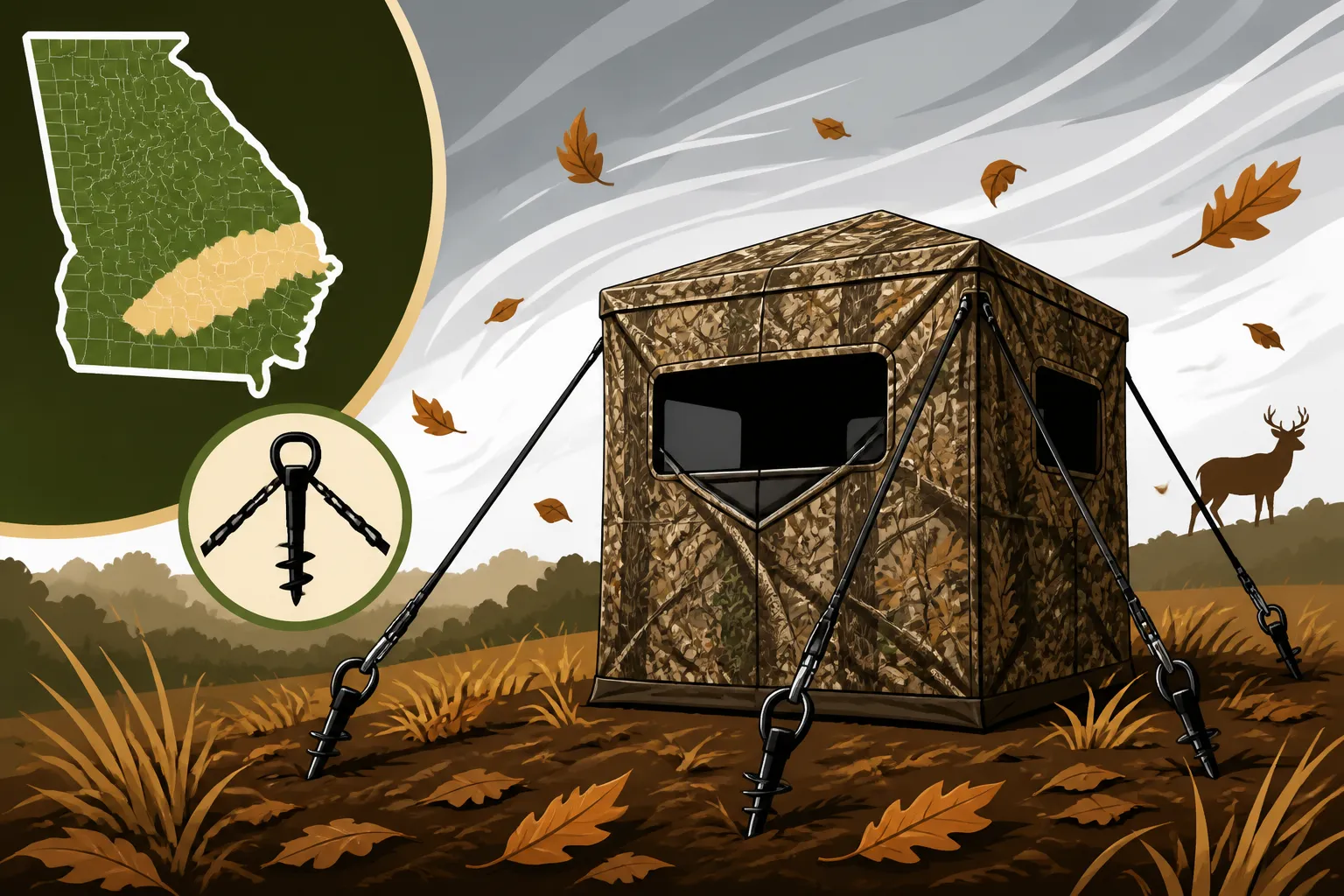
The small, flimsy metal stakes that often come with ground blinds are frankly inadequate for anything more than a light breeze on perfect soil. You need something more substantial. Look for robust metal stakes, like those made from rebar or heavy-gauge steel, often sold as "dog tie-out stakes" or specialized "ground blind stakes." Many hunters swear by thicker, spiral-shaped stakes designed for better grip in various soil types.
When deploying these, don't just push them into the ground. Angle them away from the blind, creating tension against the guy lines. For maximum holding power, drive them in as deep as possible, ideally at least 8-10 inches, if not more. Use a small sledgehammer or a rubber mallet to get them in deep. If you're on softer ground, consider using longer stakes, perhaps 12-18 inches, to gain more purchase. Don't be shy about using more stakes than the blind has loops for; you can always add additional loops using paracord if needed. The goal is to distribute the holding force.
Guy Lines and Rope for Added Stability
Guy lines are your blind's best friend. These are ropes that extend from the blind's frame or exterior loops to stakes driven further out from the blind. This creates a wider, more stable footprint, significantly reducing the chance of the blind lifting. Paracord is an excellent choice for guy lines – it's strong, lightweight, and easily packable. Make sure your guy lines are taut, but not so tight that they distort the blind's frame. A little bit of flex is good, but slack is your enemy.
Attach guy lines to the corners and, if possible, the middle sections of the blind's roof or upper frame. The more attachment points, the better. When running lines, try to clear any low-hanging branches or brush that could rub and fray the rope. If you're using your blind in an open field, like when Setting Up on a Piedmont Field Edge, the guy lines will be exposed, so consider camouflaged paracord to maintain concealment. Remember, even if the stakes directly holding the blind in place pull out, robust guy lines can still keep it from becoming a tumbleweed.
Utilizing T-Posts, Rebar, and Natural Anchors
For extreme wind or prolonged setups, T-posts or sections of rebar driven deep into the ground offer unparalleled holding power. These are much more substantial than typical stakes and are almost impossible to pull out by wind alone once properly installed. You can drive a 2-3 foot section of rebar or a T-post deep into the ground near each corner of your blind, leaving a few inches exposed. Then, simply tie your blind's corner loops or guy lines directly to these posts. This method is particularly effective in softer soils or areas prone to sustained high winds, such as coastal regions or exposed fields.
Beyond man-made anchors, don't forget the power of nature. If you're setting up near large, immovable objects like fallen logs, sturdy trees, or substantial rocks, use them! Wrap paracord around a thick tree trunk or a large boulder and tie it off to your blind. This provides an incredibly strong anchor point that won't budge. This is especially useful when hunting in areas like the Chattahoochee National Forest Hunting, where you have plenty of large trees. Just be mindful of how wrapping rope around a tree might affect its growth or bark over time, especially if it's a long-term setup.
| Anchoring Method | Pros | Cons | Best Use Case |
|---|---|---|---|
| Flimsy Stock Stakes | Lightweight, included, easy to install | Minimal holding power, prone to pulling out in wind | Very calm conditions, temporary setups, last resort |
| Heavy-Duty Stakes | Good holding power, portable, relatively easy | Can still pull out in extreme wind or soft soil | Moderate winds, varied soil types, general use |
| Guy Lines/Rope | Excellent stability, wide footprint, adjustable | Requires more setup time, can be tripping hazard if not careful | All conditions, especially with other anchoring |
| T-Posts/Rebar | Superior holding power, very sturdy | Heavy, difficult to install/remove, can be less portable | Extreme winds, long-term setups, open areas |
| Natural Anchors | Free, excellent holding power | Availability dependent on location, can limit blind placement | Wooded areas, rocky terrain, swamp edges |
Advanced Anchoring Strategies for Extreme Conditions
Sometimes, the standard stakes and guy lines just aren't enough, especially when Georgia's weather decides to get truly wild. If you're planning a longer hunt, anticipating severe weather, or deploying your blind in a particularly exposed location, it's time to bring out the heavy artillery.
Internal Bracing and Weighting Down the Blind
Even with external anchoring, a strong gust can sometimes cause the blind's roof or walls to invert or buckle inwards. To combat this, consider internal bracing. Simple PVC pipes cut to specific lengths can be used to reinforce the ceiling hubs or brace the walls from the inside. This provides structural rigidity that helps the blind maintain its shape even under extreme wind pressure. You can fit these sections snugly between the frame hubs, effectively creating a more robust skeleton for your blind.
Another effective internal strategy is weighting down the blind. Place heavy objects inside each corner. Sandbags, bags of gravel, rocks, or even full gallon jugs of water can work wonders. Many hunters use inexpensive five-gallon buckets filled with concrete or sand for this purpose. These aren't just for keeping the blind from blowing away; they lower the blind's center of gravity, making it much more stable and resistant to uplift. If you're concerned about portability, consider using collapsible water jugs that you can fill once you reach your hunting site. Even a few cinder blocks can make a significant difference.
Integrating Camouflage and Anchoring Points
When adding additional anchoring points, especially with guy lines or T-posts, it's crucial not to compromise your blind's primary function: concealment. Brightly colored ropes will stand out like a neon sign in the woods. Always opt for camouflaged paracord or earth-toned ropes that blend in with the natural surroundings. If you're using T-posts or rebar, consider painting them a dull brown or green, or at least strategically brushing them in with natural vegetation.
When running guy lines, try to run them alongside existing cover whenever possible. If you're setting up on a field edge, run them along the brush line. In the timber, use deadfalls or thickets to your advantage. This not only hides the lines from game but also makes them less of a tripping hazard for you. Don't forget that consistent Scouting Georgia Public Land Before Season can help you identify ideal blind locations that offer natural concealment and sturdy anchoring points.
Long-Term Setups and Seasonal Considerations
If you plan to leave your ground blind out for an extended period, perhaps for the entire deer season, seasonal considerations become paramount. Georgia's seasons can bring everything from scorching early fall heat to torrential winter rains and occasional ice. Long-term setups require the most robust anchoring. Not only do you need to protect against high winds, but also against constant exposure to the elements that can degrade ropes and stakes.
For these longer deployments, driving T-posts or rebar deep into the ground is often the most reliable solution. Consider using heavy-duty zip ties or wire to secure the blind to these permanent anchors, as rope can degrade over time due to UV exposure and moisture. Regularly inspect your anchoring system throughout the season, especially after major weather events. A small adjustment or re-tightening can prevent a major headache down the road. Also, remember that prolonged exposure can cause other issues, like mildew or fading, so choose a blind designed for durability. When hunting into the Late-Season January Rut Lull, weather can be especially volatile, demanding robust setups.
Pre-Season Setup and Maintenance
Like any piece of hunting gear, your ground blind needs some love and attention before it's deployed in the field. A little preparation goes a long way in ensuring it performs optimally and withstands the elements.
Site Selection and Scouting for Optimal Placement
The best anchoring strategy starts before you even pull the blind out of its bag. When you're scouting, look for locations that offer natural windbreaks. A thick stand of pines, a dense hedgerow, or the lee side of a rise can significantly reduce the wind load on your blind. Avoid wide-open, exposed areas if possible, especially if you anticipate strong winds. While sometimes an open field is exactly where you need to be for a deer hunt, always consider the prevailing wind direction and how it might impact your blind.
Look for areas with good soil for anchoring. If you're in the mountains, avoid placing your blind directly on rocky outcrops where stakes won't penetrate. In swampy areas, look for slightly higher ground with firmer soil. Sometimes, even shifting your blind a few feet can make a huge difference in the quality of your anchoring points. Using mapping apps, like those provided by GoHunt, can help you identify terrain features that might offer natural protection or present anchoring challenges. This allows you to plan your anchoring strategy before you even load up the truck.
Inspecting and Upgrading Your Anchoring Gear
Before each season, and especially before deploying your blind for an extended period, give all your anchoring gear a thorough inspection. Check your stakes for bends or rust that might compromise their strength. Examine all ropes and guy lines for fraying, cuts, or weak spots. Over time, UV exposure can weaken synthetic ropes, so replace them if they show signs of degradation.
Consider upgrading any flimsy stock components. If your blind came with lightweight plastic stakes, invest in a set of heavy-duty metal ones. If the attachment points on your blind seem weak, reinforce them with grommets or extra stitching. Think about adding a small, lightweight hammer or mallet to your pack, specifically for driving stakes. Don't wait until you're struggling in the dark on opening morning to realize your gear isn't up to par. Proactive maintenance saves headaches and helps you stay focused on the hunt. Using a Ground Blind on Georgia Public Land often means encountering diverse conditions, so having versatile, strong anchoring gear is essential.
Post-Hunt Care and Storage
Once the season is over or you're done with a particular setup, proper care of your blind and anchoring gear is important for their longevity. Before packing up, brush off any loose dirt, leaves, or mud from your blind and stakes. If the blind is damp, try to let it air dry completely before folding it for storage. Storing a wet blind is a sure way to encourage mold and mildew, which can damage the fabric and create an unpleasant smell.
Clean your stakes and ropes, removing any caked-on mud or debris. Store everything in a dry place, away from direct sunlight, which can cause premature wear on fabrics and ropes. Keep all your anchoring gear together in a dedicated bag so it’s ready for the next season. A well-maintained blind and anchoring system will serve you reliably for many seasons to come, letting you focus on the hunt, not on chasing your blind across a Georgia field.
Disclaimer
This article is for general informational purposes only and does not constitute professional advice. Laws, prices and regulations vary by location and change over time. Consult a qualified professional for guidance on your specific situation.