Climbing Sticks for Rough Bark
There's nothing quite like the feeling of finding that perfect tree for your stand, nestled deep in a Georgia hardwood bottom or perched on a ridge overlooking a prime deer trail. But then you get closer, and you see it: a trunk covered in thick, gnarly bark that makes scaling it with traditional methods a downright nightmare. This guide is all about tackling those tricky trees head-on, showing you how climbing sticks can transform your access and make your hunt safer and more effective, even on the roughest bark Georgia has to offer.
Why Rough Bark is a Challenge for Tree Stand Access
Anyone who's spent a few seasons hunting in Georgia knows our trees come in all shapes and sizes. From the ancient, craggy oaks of the Piedmont to the deeply furrowed pines of the Coastal Plain, and the often-slick sweet gums of the swamp bottoms, bark texture presents a unique set of challenges. It's not just about getting up there; it's about getting up there safely and silently.
The Frustration of Traditional Climbing Methods
Think back to the old days, or even current struggles, with those screw-in steps or rudimentary strap-on steps. On a smooth-barked pine, they might work okay, though screw-ins are a no-go on public land and even some private tracts. But try to get a secure grip with a screw-in step on a huge, mature oak with bark like an alligator's hide. The threads just chew up the soft outer layers, never finding solid purchase, or they twist and wobble as you apply weight. It feels unstable, loud, and frankly, dangerous.
Even some older strap-on steps, with their less aggressive attachment designs, can slip and slide on particularly rough or wet bark. You spend more time trying to get the strap to bite and the step to stay put than you do actually climbing. This isn't just frustrating; it's a wasted effort that can leave you sweating and discouraged before you even get to hunting height. Imagine trying to set up quietly in the dark of an early morning, fumbling with straps on a sweet gum with bark peeling off in sheets. It's enough to make you just pack up and go home, wishing you'd chosen a different tree.
Safety Concerns with Unstable Footing
Beyond the sheer annoyance, unstable footing is a serious safety hazard. When you’re high off the ground, even a small slip can have dire consequences. Rough bark, especially if it’s wet from morning dew or recent rain, can be incredibly slick. If your steps aren't perfectly secure, you risk a foot slipping, leading to a fall. The very texture that makes the tree look formidable can also hide loose sections or provide poor contact points for your boots.
Consider the cumulative effect: multiple steps, each with slightly less than ideal purchase, adding up to a shaky climb. The goal is to reach your stand feeling confident and ready to hunt, not rattled and relieved to be off the ladder. Every time you hesitate because a step feels wobbly, you're not just losing confidence; you're putting yourself at risk. A secure climbing method isn't a luxury; it's a necessity, especially when you're hunting alone, miles deep in the Georgia woods. Make sure you're always using a full-body safety harness, and considering a lifeline from the moment your feet leave the ground.
Understanding Climbing Sticks: A Better Solution
Climbing sticks have truly revolutionized how many of us access our elevated hunting positions, and for good reason. They offer a level of stability and versatility that traditional climbing methods simply can't match, especially when dealing with Georgia's diverse and often challenging tree bark.
What Makes Climbing Sticks Ideal for Rough Bark
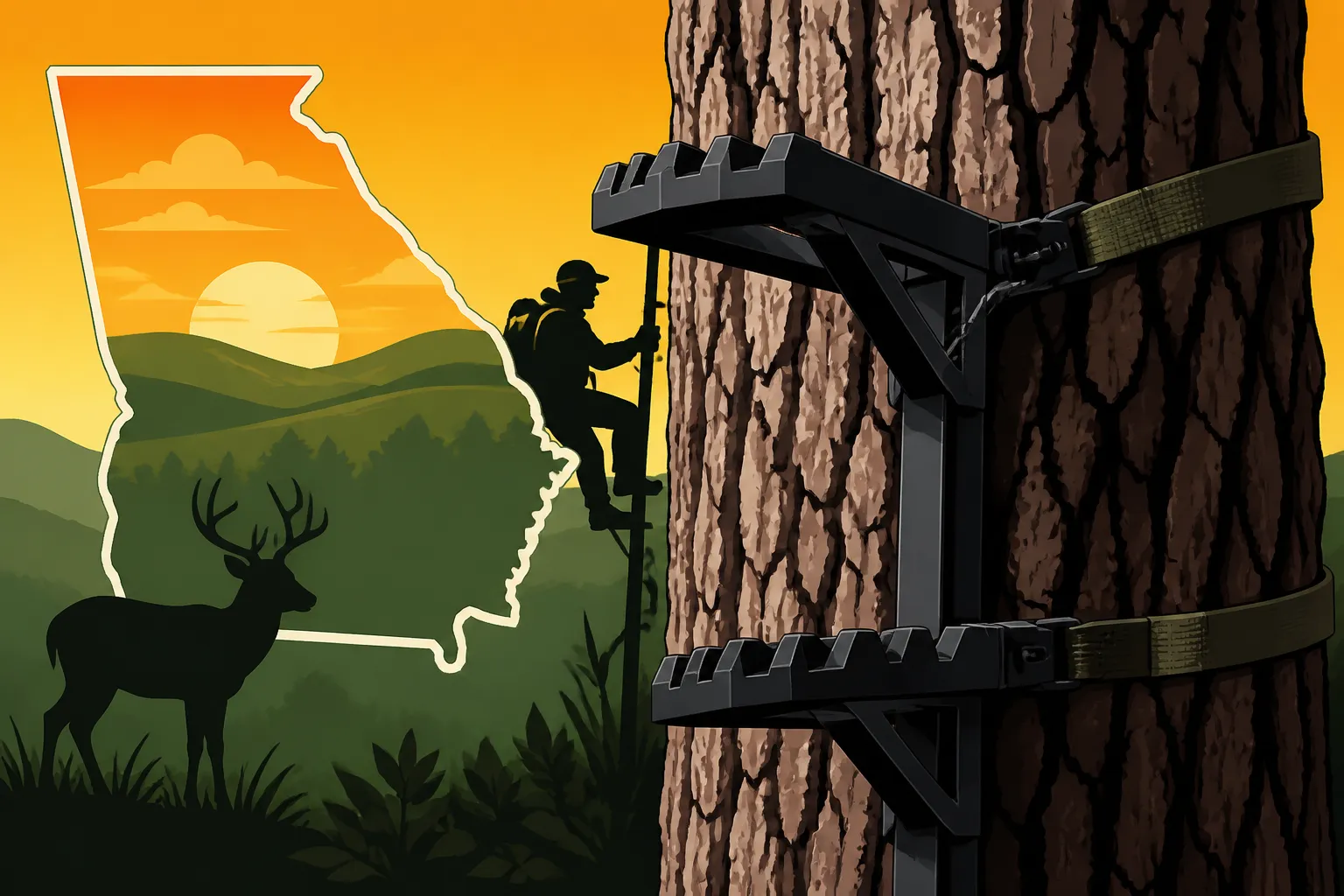
The genius of climbing sticks lies in their design. Unlike screw-in steps that rely on penetrating the bark or ladder sections that might wobble against an uneven trunk, climbing sticks use a robust strapping system or cam-buckle mechanism that cinches tightly around the tree. This design means they don't depend on the bark's texture for purchase. Instead, they leverage the tree's circumference, creating a stable, rigid platform for each step.
When you're dealing with thick, uneven bark – like on an old growth pine or a huge water oak – the strap simply wraps around the irregularities, and when tightened, it pulls the stick firmly against the trunk. The pressure is distributed, and the stick becomes an integrated part of your ascent path. This offers significantly more stability than trying to find a flat spot for a single step. Each stick acts as a mini-ladder section, firmly secured to the tree, giving you predictable and solid footing. They transform a seemingly unclimbable tree into a highway to your stand, allowing you to focus on quiet movement rather than precarious balance.
Key Features to Look for in Rough Bark Climbing Sticks
Choosing the right climbing sticks is paramount, particularly when facing rough bark. Here are some features to prioritize:
- Material: Most sticks are made from aluminum or steel. Aluminum is fantastic for weight savings, making long hauls through the Georgia woods much easier. Steel, while heavier, often provides superior durability and rigidity, though the weight trade-off can be significant. If you're backpacking deep, lightweight aluminum is probably your friend.
- Step Design: Look for steps with good traction. Some sticks have serrated edges, others have a slightly wider platform, or a textured coating. This is crucial for wet or muddy boots, preventing slips as you ascend. Width also plays a role; wider steps offer more comfort and foot placement options.
- Attachment Systems: This is where the magic happens. Look for strong, quiet straps or cam buckles. Neoprene or rubberized coatings on the part of the stick that contacts the tree can also help prevent slippage and protect the tree, while also dampening sound. Some systems, like those you might research on a platform like GoHunt, are designed for ultra-fast and secure deployment. You want a system that you can confidently cinch down to eliminate any wobble.
- Stackability and Portability: Since you'll likely be carrying multiple sticks, how they stack or nest together is important. Compact designs mean less bulk and less noise clanking around on your pack. Consider the overall length of each stick – shorter sticks might be easier to pack, but longer sticks might cover more ground faster, requiring fewer individual sticks for the same height.
Different Climbing Stick Designs
Climbing sticks aren't a one-size-fits-all product. Understanding the different designs can help you pick the best option for navigating Georgia's varied terrain and tree types.
- Single-Piece Sticks: These are individual sticks, each with one or two steps, and their own attachment strap. They offer maximum flexibility in spacing and placement, which can be a huge advantage on a tree with an odd branch or significant bark irregularities. You can place them exactly where they fit best. The downside is that you have more individual units to manage during transport and setup.
- Two-Piece Sticks: These typically have two steps per section and are a bit longer. They cover more vertical distance per stick, meaning you might need fewer overall sticks to reach your desired height. This can be faster to deploy. However, their fixed length might be less adaptable to trees with very close branches or unusually shaped trunks.
- Sectional/Stackable Sticks: Many modern sticks are designed to stack or nest together, forming a compact bundle for transport. Some even connect end-to-end to create a longer, more rigid ladder system once on the tree. This is excellent for portability and minimizing clanking, which is always a concern when you're trying to sneak into your stand during Bowhunting Georgia's Early Archery Season. The ability to adjust individual stick height while still benefiting from a cohesive setup makes them very appealing for diverse hunting conditions.
When considering options for thick or rough bark, remember that a longer stick might be able to span larger gaps or irregularities in the bark more effectively, providing a more stable anchor point. However, shorter sticks offer more granular control over step placement. It's a balance of efficiency and adaptability.
Strategies for Deploying Climbing Sticks on Gnarly Georgia Trees
Putting climbing sticks into action on those challenging Georgia trees requires a bit of strategy and practice. It's not just about getting them up there; it's about getting them up right, safely, and efficiently.
Pre-Season Scouting and Tree Selection
Even with the best climbing sticks, pre-season scouting is your secret weapon. You're not just looking for deer sign; you're looking for the right tree. While climbing sticks make more trees accessible, a tree with fewer major obstructions or less extreme bark can still make your climb easier and quieter. Look for trees that offer natural cover, a clear shot, and a relatively straight trunk in the climbing zone.
When using mapping tools or apps like those offered by GoHunt, you can mark potential stand trees and even analyze the terrain around them. This allows you to plan your entry and exit routes, minimizing disturbance. Scouting Georgia Public Land Before Season is crucial. When you're physically scouting, actually put your hands on the bark. Feel for loose sections, moss, or anything that might compromise your strap's grip. Identify the side of the tree that offers the clearest path up, away from thorny vines or low-hanging branches. Sometimes, a slight angle in your approach can make all the difference in securely attaching your sticks.
Proper Installation Techniques
Once you’ve found your tree, proper installation is key. Here's a step-by-step approach for rough bark:
- Clear the Path: Before you even unstrap your first stick, ensure the area at the base of your chosen tree is clear of debris. You don't want to step on a loose stick or rock when your attention is focused upwards.
- Start Low and Level: Attach your first stick as low as comfortably possible, ensuring it's perfectly level. This sets the foundation for a straight and stable climb. If the bark is extremely uneven, try to find a spot where the strap can get maximum contact around the circumference. You might need to slightly adjust the vertical position to avoid a major knot or divot.
- Cinch it Tight: This is arguably the most critical step. Whether you have cam buckles or a traditional strap, pull that webbing as tight as humanly possible. There should be zero wiggle in the stick. Lean into it, use your body weight if necessary. A loose stick is a dangerous stick.
- Stagger Your Ascent: As you climb and attach subsequent sticks, aim to keep them roughly the same distance apart, matching your stride. However, don't be afraid to slightly stagger their vertical alignment on really rough bark if it helps you find a better, more stable purchase for the strap. Maintain three points of contact at all times (two hands and one foot, or one hand and two feet).
- Listen for Noise: While setting up, pay attention to any creaking or scraping sounds, especially if you're installing during a hunt. Rough bark can be noisy. Take your time, move deliberately, and adjust placement if a stick is rubbing too much. Hanging a Stand on a Mountain Saddle requires particular attention to quiet setup.
Pairing Sticks with Your Treestand
Climbing sticks are usually paired with hang-on treestands, but they're also a favorite for saddle hunters. The goal is a seamless transition from your top stick to your stand or hunting platform.
- Height Alignment: When placing your second-to-last stick, gauge the height needed for your stand. The top of your last stick should be just below or even with the platform of your hang-on stand, allowing for an easy step off and onto the stand. For saddle hunting, your platform often sits lower than a traditional stand, so you might need to adjust your top stick accordingly.
- Secure the Stand First: Before making that final step onto your stand, make sure it's also cinched down tightly and feels rock-solid. There's nothing worse than getting to the top, only to realize your stand is wobbly.
- Consider a Tree Saddle: For ultimate flexibility and adaptability on those super rough trees, a tree saddle system, combined with climbing sticks, can be incredibly effective. Saddles allow you to hunt around the tree, using its bulk for cover, and don't require a perfectly level stand platform. This can be a game-changer when dealing with trees that have a significant lean or multiple large limbs. If you're using a saddle, your top climbing stick often serves as a primary platform or a stepping stone to your actual saddle platform. Mastering Treestand Setups in North Georgia Mountains often involves a good set of sticks and a solid transition strategy.
| Feature | Benefit for Rough Bark | Consideration |
|---|---|---|
| Material | Aluminum: Lightweight for portability | Steel: More durable, but heavier |
| Attachment | Cam buckles/Strong straps: Secure cinch on uneven bark | Rubberized tree contact: Reduces slip & noise, protects tree |
| Step Design | Wide, textured steps: Better footing on wet/muddy boots | Serrated edges: More grip, but can be hard on soft boot soles |
| Stackability | Compact transport: Less bulk, quieter movement | Longer individual sticks: Fewer needed, but might be bulkier in a pack |
| Tree Stand-off | Built-in offset: Creates climbing room for boots | Too much offset: Can make the stick less stable against the tree |
Maintenance, Safety, and Best Practices
Climbing sticks are durable tools, but like any piece of hunting gear, they require proper care and a commitment to safety. Especially in Georgia's humid and sometimes harsh environment, overlooking these aspects can lead to problems.
Routine Inspection and Care
Your climbing sticks take a beating, especially if you're hauling them through dense brush or leaving them out in the elements for short periods. Before and after every season, and even periodically throughout a busy season, give them a thorough inspection.
- Check Straps and Buckles: Look for fraying, cuts, or excessive wear on the webbing. Ensure cam buckles are free of dirt and debris, and that they engage properly. If a strap looks compromised, replace it immediately. Georgia's humidity can degrade webbing over time, so don't take chances.
- Inspect Welds and Bolts: Examine all weld points for cracks or stress fractures, especially on aluminum sticks. Check that all bolts, nuts, and pins are securely tightened. If any hardware is loose, tighten it; if it's rusted or compromised, replace it.
- Clean Regularly: Mud, sap, and general forest grime can build up on your sticks, making them heavier and potentially interfering with the attachment mechanism. A simple wipe-down with water and a brush can extend their life and ensure optimal performance. This is particularly important if you've been Dragging a Deer Out of a Swamp and gotten mud all over your gear.
Essential Safety Gear and Habits
Climbing sticks significantly improve stability, but they don't negate the need for rigorous safety protocols. Never get complacent.
- Full-Body Harness: This is non-negotiable. Always wear a properly fitted full-body harness from the moment your feet leave the ground until they touch back down.
- Lifeline/Safety Rope: Use a climbing stick's lifeline or a separate safety rope that keeps you tethered to the tree throughout your ascent and descent. This ensures that if you slip, you're immediately caught, preventing a fall to the ground. Many lifelines integrate a Prusik knot or similar system that allows you to slide it up as you climb.
- Practice, Practice, Practice: Set up your sticks and stand at a low height in your backyard or a safe area before hunting season. Practice attaching them, climbing, and transitioning to your stand. This builds muscle memory and helps you identify any potential issues with your setup or technique before you're out in the dark, cold woods. This practice will make you more proficient and safer, ensuring you can quickly and quietly get into position without fuss, which is critical for hunts like Spring Turkey Hunting in Georgia.
- Buddy System: Whenever possible, especially when setting up new stands or in unfamiliar territory, let someone know exactly where you are and when you expect to be back. Better yet, hunt with a buddy, taking turns setting up sticks and watching out for each other.
Ethical Considerations and Tree Health
As hunters, we are stewards of the land, and that includes the trees we climb. Using climbing sticks responsibly helps ensure minimal impact on the environment.
- Tree-Friendly Attachments: Opt for sticks with padded or rubberized contact points to minimize bark abrasion. Avoid any sticks that use spikes or aggressive teeth unless absolutely necessary and permitted. On public land, always verify specific WMA or National Forest rules regarding tree modification.
- Temporary Placement: Whenever possible, remove your sticks and stand after each hunt or at the end of the season. Leaving them permanently attached can damage the tree as it grows, invite theft, and is often prohibited on public hunting grounds like those in the Chattahoochee-Oconee National Forest Hunting area.
- Respect the Resource: A tree provides food, shelter, and oxygen, not to mention a perfect perch for your stand. Treat it with respect, ensuring your hunting practices are sustainable and leave no trace. This also applies to any litter or waste; pack out everything you pack in.
Disclaimer
This article is for general informational purposes only and does not constitute professional advice. Laws, prices and regulations vary by location and change over time. Consult a qualified professional for guidance on your specific situation.