Hunting a Ridge-Top Saddle for Rutting Bucks
Finding consistent deer movement during the rut can feel like chasing a ghost, especially in Georgia's diverse and often challenging terrain. You scout endlessly, pore over maps, and still, those elusive rutting bucks seem to evaporate when you hit the woods. It's frustrating to know there are big deer out there, but connecting with them feels like a game of chance. This guide will shine a light on one of the most reliable hotspots for rutting bucks – the ridge-top saddle – explaining exactly why they're so productive and providing actionable strategies to hunt them effectively, helping you turn those "what ifs" into solid opportunities.
Understanding the Ridge-Top Saddle Dynamic
When you're trying to figure out where deer are going to be, especially during the frantic energy of the rut, you need to think like a deer. And deer, bless their hearts, are creatures of efficiency and safety. That's precisely why ridge-top saddles are such absolute magnets for movement.
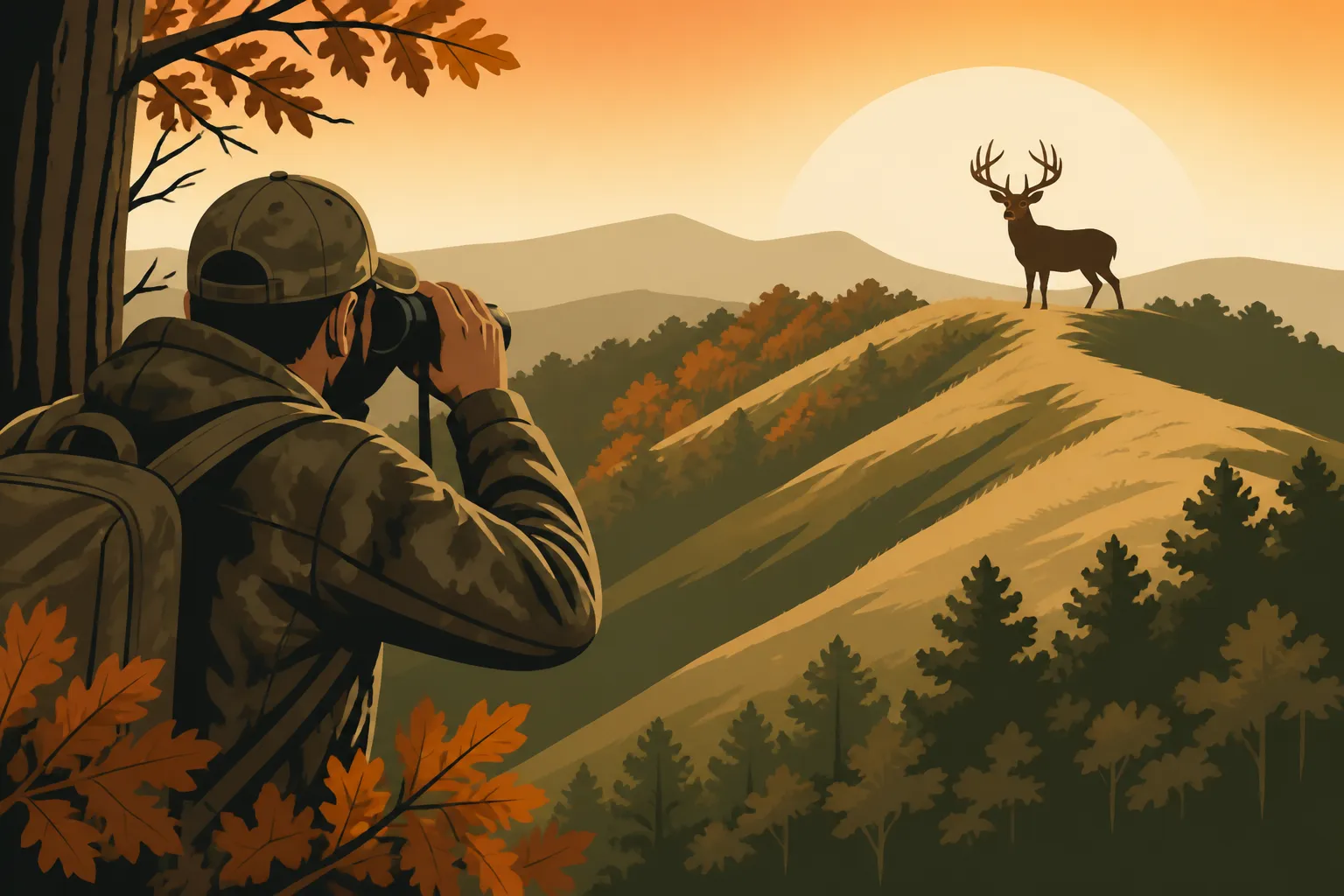
A ridge-top saddle, simply put, is a low spot or a dip in a ridge line. Imagine a mountain range or a series of rolling hills. Instead of a uniform crest, there are sections where the elevation dips, almost like a saddle on a horse's back. These formations are natural funnels, directing animal movement whether they're traveling between bedding areas, heading to food, or, crucially, cruising for does during the rut. In Georgia, whether you're up in the rugged Hunting the North Georgia Mountain Bear Zone or navigating the rolling hills of the Piedmont, these topographical features are goldmines.
During the rut, bucks aren't just looking for the path of least resistance; they're actively covering ground, scent-checking, and trying to locate receptive does. A ridge acts as a natural barrier, and any dip in that barrier becomes a superhighway. Instead of expending energy climbing over a peak, deer naturally gravitate to the easier traverse of a saddle. This makes them ideal travel corridors. Bucks will often cruise these saddles, scent-checking for does, rubbing trees along the edges, and laying down fresh scrapes. Does also use these saddles for easier travel between different parts of their home range, often leading a buck right through your setup.
Think about it this way: if you're trying to get from one side of a neighborhood to another, and there's a steep hill or a convenient valley, you're going to take the path of least resistance. Deer are no different. They'll use these natural breaks in the terrain to move efficiently. The advantage for a hunter is that it concentrates deer movement into a predictable, narrower corridor. This predictability is what makes them so powerful when you're trying to intercept a rutting buck who's got one thing on his mind.
Scouting and Locating Key Saddles
Finding these prime ridge-top saddles isn't just about stumbling upon them in the woods. It requires a strategic approach, blending modern technology with good old-fashioned boot-on-the-ground reconnaissance.
Using Topographic Maps and Aerial Imagery
Before you ever set foot in the woods, your first stop should be a good mapping application. Tools like GoHunt are invaluable for this initial phase. You want to study contour lines. A saddle will appear as an hourglass shape in the contour lines – the lines will pinch together in the middle of a ridge, indicating a drop in elevation. This is your first clue.
Once you’ve identified potential saddles on a topographic map, switch to aerial imagery. This allows you to visualize the cover, escape routes, and potential bedding areas or food sources connected to that saddle. Are there thick pine plantations on one side and a mature hardwood bottom on the other? That saddle might be a transition point where deer move from bedding to feeding. Is there a series of parallel ridges with several saddles? This indicates a complex travel network. Look for signs of clear-cuts or other timber work nearby, as these can drastically alter deer travel patterns and create new, unpressured funnels. A detailed map can also help you identify areas of public land versus private, which is crucial if you're Scouting Georgia Public Land Before Season. The ability to overlay different map layers and pinpoint exact locations, as offered by platforms like GoHunt, truly gives you an edge in understanding the full picture before you even leave your couch.
On-the-Ground Reconnaissance
After identifying promising saddles on your maps, it's time to hit the woods. This is where you confirm your suspicions and gather crucial intel. Walk the ridge lines leading into and out of the saddle. Look for rub lines—groups of small trees or saplings that bucks have rubbed with their antlers. These indicate frequent travel. Scrape lines, particularly large community scrapes, are another huge sign of rutting activity. These are often found just off the main travel corridor, usually under a licking branch, where bucks deposit scent to communicate their presence. If you find fresh rubs and scrapes, you know you're in an active area.
Pay close attention to primary and secondary trails. Primary trails are well-worn paths, often used by multiple deer. Secondary trails might be fainter but can indicate less pressured routes for mature bucks. Confirm pinch points created by thickets, rock outcroppings, or drainages that lead directly into the saddle. These natural barriers will condense deer movement even further. As you scout, always be mindful of the prevailing wind direction. Understanding Wind and Thermals on a Mountain Ridge is paramount, especially in hilly country. Your stand placement will depend heavily on this. And remember, try to scout smartly, leaving minimal scent, especially close to the season. The goal is to gather information without alerting the deer to your presence.
Tactics for Hunting Ridge-Top Saddles During the Rut
Once you've done your homework and found a promising ridge-top saddle, the real fun begins: putting a plan into action to intercept a rutting buck.
Optimal Stand Placement
Your stand placement is perhaps the most critical element of saddle hunting. You need to be in a spot that offers a clear shot at the primary travel corridors without being easily detected. This usually means setting up downwind or crosswind of where you expect deer to approach. Deer will almost always try to use the wind to their advantage, circling downwind of a saddle before entering to scent-check for danger. Anticipate this by setting your stand accordingly.
Look for a tree that offers good cover, breaking up your outline, and sufficient height for a clear view. Often, positioning your stand to overlook trails that converge in the saddle, or a specific pinch point within it, will be highly effective. If deer are moving through a particularly dense section, even a slight opening can be a prime ambush point. Consider your entry and exit routes meticulously. You want to be able to get to and from your stand without spooking deer that might be bedding nearby or already moving through the area. Early morning entries are often best, allowing you to get in before daylight, while late exits ensure you don't bump deer still moving at dusk.
When it comes to the type of stand, both Treestand Setups in North Georgia Mountains and Using a Ground Blind on Georgia Public Land can be effective, depending on the specific saddle and cover. In dense hardwoods, a climbing stand or a hang-on with climbing sticks offers versatility. If the cover is thick enough, or if you're dealing with very wary bucks, a well-brushed-in ground blind can offer excellent concealment and scent control.
Timing Your Hunt
The rut in Georgia typically peaks in mid-October, though it can vary by region. Knowing Hunting the Rut in Mid-October for your specific area is key. During this period, deer activity around saddles intensifies. Mornings are often fantastic, as bucks will be cruising after a night of chasing, and does will be moving from bedding to feeding. Midday can also be surprisingly productive. Don't fall into the trap of leaving your stand at 10 AM; rutting bucks are often on their feet all day, especially in less pressured areas. Late afternoon, as deer begin their evening movements, is another prime window.
Weather plays a huge role. Cold fronts that push through Georgia after a period of warm weather can ignite deer movement. A crisp, cool morning after a rain can also be phenomenal, as deer are often up and moving, and the damp ground makes for quieter travel. Keep an eye on the forecast and plan your hunts around these favorable conditions.
Calling and Decoying Strategies
Once you're in your stand, don't be afraid to add some active calling to your strategy. During the rut, bucks are more responsive than at any other time of year. Rattling and Grunting in Georgia can be incredibly effective in a saddle. The sounds of two bucks fighting or a buck grunting can pique the curiosity of a cruising deer or even challenge a dominant buck to come investigate. Start with softer grunts, then escalate to more aggressive rattling sequences, especially if you haven't seen anything in a while. Remember to position yourself so you can see downwind of where you're calling, as bucks will often try to circle and approach from that direction.
Decoys can be a bit more situational in dense saddle terrain. A well-placed doe decoy, perhaps with a buck decoy slightly behind her, can sometimes stop a cruising buck long enough for a shot. However, decoys require good visibility and can sometimes spook wary deer if not used correctly. If you do use a decoy, make sure it's visible but not overly exposed, and always be prepared for a deer to approach cautiously, trying to get downwind of it.
Overcoming Challenges and Maximizing Success
Hunting ridge-top saddles isn't always straightforward. There are challenges, but with a bit of foresight and preparation, you can turn them into opportunities.
Dealing with Hunting Pressure
Public land in Georgia, especially popular Wildlife Management Areas (WMAs) or sections of the Chattahoochee National Forest, can see significant pressure. During the rut, everyone has the same idea: find a hot spot. This means those easily accessible saddles might be getting a lot of attention. The key here is to go deeper or find ground that others walk past. Use your mapping tools to identify saddles that are further from roads or trails. Sometimes, even walking an extra 15-20 minutes can put you into an entirely different caliber of hunting. Early morning entry is crucial to beat other hunters to prime spots. If you know a saddle sees heavy traffic, consider hunting it during the week rather than on a crowded weekend. Finding less-pressured areas means you might need to adjust your approach or put in a little more legwork, but the reward is often a less wary buck. Don't be afraid to think outside the box and explore areas that might look less appealing on paper but hold hidden potential for deer that are avoiding the crowds.
Wind and Thermals on a Mountain Ridge
Georgia's varied terrain means you're constantly battling shifting winds and thermals. On a ridge, air currents often behave differently than on flat ground. In the mornings, as the sun rises, thermals tend to rise, pulling your scent uphill. In the evenings, as temperatures drop, thermals fall, carrying your scent downhill. This creates a challenging dynamic, especially in a saddle where the terrain might create a swirling effect.
Always pay attention to the actual wind direction on your face, not just what your weather app says. A small powder bottle can be invaluable for checking localized air currents. If the wind is swirling, it might be better to move to a different stand or hunt a different type of terrain entirely. Ideal conditions for a saddle hunt would be a consistent crosswind that carries your scent away from the primary travel routes. You might need to have multiple stand locations for a single saddle, allowing you to adapt to the daily wind conditions. This flexibility is key to consistent success.
Post-Shot Recovery in Hilly Terrain
Making a clean shot is always the goal, but in the undulating terrain surrounding a ridge-top saddle, recovering a deer can be particularly challenging. The ground can be steep, rocky, and often covered in thick underbrush or Georgia pine straw, making blood trailing difficult.
Always take a moment after the shot to mark the exact spot where the deer was standing and the direction it ran. Use natural landmarks or tie a piece of flagging tape if legal. Give the deer enough time before you begin tracking, especially if it's a marginal hit. If you're Tracking a Deer Through Georgia Pine Straw, look for overturned leaves, disturbed pine needles, and specks of blood on low-hanging vegetation, not just on the ground. A bright, powerful headlamp is essential if you find yourself Blood Trailing After Dark in Georgia. Having a good quality headlamp like those from companies like Streamlight or Fenix can make a world of difference. Furthermore, consider carrying a small, lightweight game cart if the terrain allows, or at least a good game bag and bone saw if you're planning to quarter a deer out in the field. Preparing for the recovery before you even climb into your stand can save a lot of heartache and effort later.
Here’s a quick overview of how different rut stages might influence your saddle hunting strategy:
| Rut Stage | Buck Behavior | Saddle Hunting Considerations |
|---|---|---|
| Pre-Rut | Bucks are staging, making scrapes, establishing dominance. | Less active cruising. Focus on fresh scrapes, rub lines. Occasional rattling might work. |
| Peak Rut | Bucks actively chasing and breeding does, covering lots of ground. | Prime time! Bucks are constantly cruising saddles. Aggressive calling (rattling, grunts) is highly effective. All-day sits are recommended. |
| Post-Rut | Bucks are tired, replenishing energy, still looking for late-breeding does. | Activity tapers off. Focus on saddles near late-season food sources. Less calling, more ambush tactics. |
By understanding these dynamics and employing these strategies, hunting ridge-top saddles during the rut in Georgia can become one of your most productive tactics for consistently encountering mature whitetails.
Disclaimer
Please remember that hunting regulations and seasons in Georgia can change. Always consult the latest Georgia Department of Natural Resources (DNR) guidelines and regulations before heading into the field. Ensure you have all necessary licenses and permits for the current hunting season.