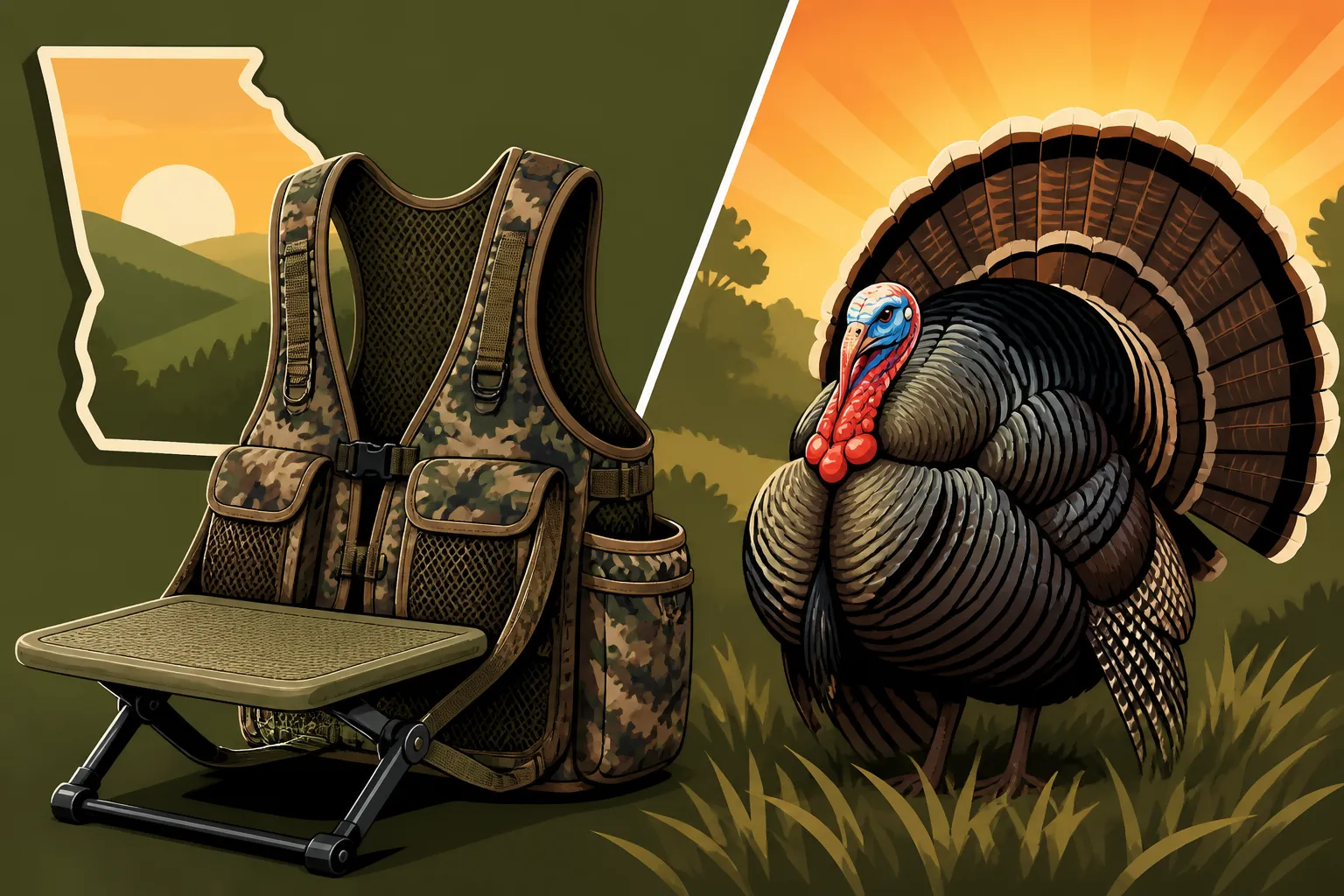
Turkey Vests With a Kickstand Seat
There's nothing quite like the rush of a Georgia spring morning, hearing a gobbler crank up on the roost, and knowing the hunt is on. But as any seasoned turkey hunter knows, those thrilling moments often come after long, sometimes uncomfortable waits, whether you're trying to call a hung-up bird or just patiently waiting for dawn. That's where a turkey vest with a kickstand seat can genuinely change your game, saving your back, legs, and backside from the strain of squatting or perching on uncomfortable stumps for hours. This guide will walk you through why these innovative vests are a real asset for Georgia hunters, what features matter most, and how to make the most of them in our diverse terrain.
Why a Kickstand Vest Makes Sense for Georgia Turkey Hunters
Georgia's turkey hunting often demands patience and adaptability. From the steep, rugged slopes of the North Georgia mountains to the sprawling pine flats of the Coastal Plain, and the dense river bottoms in between, you never know exactly where a gobbler might hang up or where you'll need to set up for a shot. Traditional sitting methods, like a simple foam pad or just relying on a handy tree, often fall short when the going gets tough or the wait gets long.
The Problem with Traditional Sitting Methods
For years, hunters have relied on butt pads or simply sitting against a tree trunk. While these methods are certainly minimalist and lightweight, they come with significant drawbacks, especially during those extended standoffs with a wary tom. A small foam pad offers minimal cushioning against roots, rocks, or damp ground, and it does absolutely nothing for back support. Sitting against a tree can be comfortable if you find the perfect one – a rare occurrence when a gobbler is spitting and drumming 80 yards out and you need to set up now. More often, you end up slouching, twisting, or constantly shifting, which not only makes you uncomfortable but also increases your chances of movement that a sharp-eyed gobbler will pick up on.
When you're trying to stay absolutely still for what feels like an eternity, having your back aching or your legs cramping is the last thing you need. It compromises your focus, makes it harder to stay quiet, and can even affect your ability to get your gun up smoothly and make a clean shot when the moment finally arrives. Plus, in the warmer Georgia spring, getting off the damp, buggy ground can be a huge relief, saving you from cold spots and an army of crawling critters.
The Advantage of Integrated Seating and Support
A turkey vest with an integrated kickstand seat fundamentally addresses these problems by combining a comfortable, supportive chair with all the organizational benefits of a hunting vest. Imagine this: you've sprinted half a mile after a hot gobbler, he's just crested a ridge and is strutting, and you need to disappear immediately. With a kickstand vest, you simply drop to your knees, deploy the integrated legs, and in a second, you're seated comfortably, upright, and ready to shoulder your gun. There's no fumbling for a cushion, no awkward shifting to find a suitable tree.
This rapid, stable setup is invaluable in scenarios where speed and silence are paramount. It allows you to maintain consistent shooting posture, which is crucial for accuracy. Furthermore, the elevated seat keeps you off the cold or damp ground, providing insulation and a much-appreciated barrier against ticks, chiggers, and snakes that are becoming more active in the spring. The back support means less fatigue, allowing you to remain patient and focused for longer periods. It's truly a game-changer for maintaining comfort and readiness throughout the often unpredictable and demanding Georgia turkey season. Whether you're calling a stubborn gobbler off the roost or trying a run-and-gun tactic, the ability to quickly and comfortably settle in is an undeniable advantage.
Key Features to Look for in a Georgia Turkey Kickstand Vest
Choosing the right kickstand turkey vest is more than just picking one off the shelf. Georgia's varied terrain and often warm, humid spring weather mean certain features become far more important than others. You want a vest that's going to stand up to the challenge, keep you comfortable, and allow you to stay organized without fumbling when a gobbler is closing the distance.
Comfort and Ergonomics
Comfort starts with how the vest actually fits and feels when you're wearing it, especially with all your gear loaded in. Look for vests with well-padded, adjustable shoulder straps that distribute weight evenly across your shoulders, not just digging in. A sturdy waist belt or sternum strap is also crucial, as it helps transfer some of that weight to your hips, relieving shoulder strain and keeping the vest from bouncing around as you move.
The seat itself needs to be more than just a thin pad. Seek out vests with a generously padded, thick seat cushion that can stand up to hours of sitting on uneven ground. Consider the height of the seat; some vests offer a slightly higher perch, which can be easier for older hunters or those with knee issues to get in and out of. Adjustability in the kickstand legs is a huge bonus, allowing you to level your seat even on sloped terrain, ensuring you're not constantly sliding or listing to one side. A vest that feels good on a short scout will feel even better after a long sit waiting for that tom.
Storage and Organization for Your Calls
A turkey hunter's vest is practically a portable tackle box for calls, shells, snacks, and other essentials. Good organization is key to efficiency in the woods. Look for dedicated pockets that are specifically designed for different types of calls:
- Slate/Pot Calls: Pockets with dividers or individual sleeves to prevent your slate or glass from rubbing together, and perhaps a separate slot for strikers.
- Box Calls: A secure, often padded, external pocket that keeps your box call from rattling or getting damaged while providing quick access.
- Mouth Calls: Small, easily accessible pockets, sometimes with elastic loops, to keep several mouth calls organized and ready.
- Diaphragm Call Pouches: Some vests offer small, zippered pouches on the chest or shoulder straps, perfect for keeping your most-used mouth calls within immediate reach.
Beyond calls, consider pockets for extra shotgun shells, a rangefinder, bug spray, water bottles, snacks, face mask, gloves, and a flashlight. Zippered pockets are great for securing valuables like your phone or keys. External mesh pockets can be handy for wet gloves or a soft-sided water bottle. The easier it is to access a specific call or piece of gear silently and quickly, the better your chances of success. When you're trying to lure in a gobbler, fumbling through a disorganized bag is the last thing you want to do. You might even use a resource like GoHunt to research different vest layouts and read reviews from other hunters on what organizational features they find most useful.
Durability and Materials
Georgia's woods can be tough on gear. From thick briars and abrasive pine bark to sudden downpours, your turkey vest needs to be built to last. Look for vests made from durable, quiet fabrics like Cordura or robust polyester blends. Ripstop fabrics are excellent for preventing small tears from becoming large ones. The stitching should be reinforced at stress points, especially where the shoulder straps meet the main body of the vest and around the kickstand frame.
The kickstand frame itself is critical. It should be made of lightweight yet strong materials like aluminum or a reinforced polymer, designed to withstand repeated deployment and the weight of a hunter plus their gear. Check the hinges and pivot points to ensure they are robust and won't bind or break after a few uses. Water resistance is another important factor; while few vests are completely waterproof, materials with a DWR (Durable Water Repellent) coating will help shed light rain and keep your gear dry during a brief shower. Remember, a well-made vest will endure many seasons of abuse, whereas a cheaper option might leave you literally sitting on the ground when you least expect it.
Here's a quick comparison of features to consider:
| Feature | Budget-Friendly Vest | Mid-Range Kickstand Vest | Premium Kickstand Vest |
|---|---|---|---|
| Kickstand Frame | Basic, less stable, fixed height | Sturdy, may have limited adjustability | Lightweight aluminum, highly adjustable, quiet deployment |
| Seat Cushion | Thin foam pad, minimal comfort | Moderate padding, decent comfort for short sits | Thick, contoured, high-density foam, all-day comfort |
| Shoulder Straps | Lightly padded, may dig in under heavy load | Moderately padded, adjustable | Heavily padded, ergonomic, load-lifting features |
| Waist Belt | Basic webbing, minimal support | Padded, helps distribute weight | Wide, thickly padded, lumbar support, extra pockets |
| Call Organization | Few dedicated pockets, general purpose | Dedicated pockets for common calls, some dividers | Custom-fit pockets for all call types, magnetic closures, silent access |
| Material Durability | Standard polyester, prone to snags | Durable polyester/nylon blend, some reinforcement | Ripstop, highly durable Cordura, reinforced stress points |
| Water Resistance | Minimal, absorbs water | Basic DWR coating | Advanced DWR, quicker drying, some waterproof sections |
| Weight (Empty) | Lighter due to less padding/features | Moderate | Can be heavier due to features, or lighter with advanced materials |
Practical Applications and Setup Tips in Georgia's Diverse Terrain
One of the greatest strengths of a turkey vest with a kickstand seat is its versatility across Georgia's varied landscapes. Whether you find yourself perched on a mountain ridge or tucked into a swamp bottom, the ability to quickly and comfortably establish a solid setup can make all the difference.
Setting Up in North Georgia Mountain Country
Hunting turkeys in the North Georgia mountains often means navigating steep ascents and descents, and finding yourself on uneven ground. When a gobbler sounds off across a hollow, you might need to quickly scramble into position on a slope. A kickstand vest excels here because its adjustable legs allow you to level your seat even on steep terrain. Instead of trying to find a perfectly flat spot – which is a rarity – you can simply extend one leg more than the other to achieve a stable, level sitting position. This means you can focus on calling and watching, rather than fighting to stay balanced.
Consider positioning yourself with a thick tree or rock formation directly behind you for maximum concealment and back protection. This helps break up your outline against the skyline and provides a natural barrier if a bird comes in from behind. With the kickstand, you can sit closer to the ground, offering a lower profile, which is particularly effective when Reading a Ridge for North Georgia Deer or turkeys, as birds are often looking down into hollows. Being able to shift your weight subtly without making noise is also a huge benefit when you're anticipating a shot on a bird working its way up a steep incline.
Hunting Piedmont Field Edges and Pine Flats
The Piedmont region and South Georgia's pine flats often present different challenges, typically involving more open ground, such as field edges, power lines, or thinly scattered timber. Here, concealment isn't about finding the perfect backrest, but about blending into sparse cover. A kickstand vest allows you to sit low, almost like being in a ground blind, but with the flexibility to quickly pick up and move.
When Setting Up on a Piedmont Field Edge, you can use the vest to hunker down just inside the treeline or behind a fence row, using the natural vegetation to break up your outline. The kickstand keeps you off the potentially damp or muddy ground common in these areas, and the elevated seat can give you a better line of sight over low weeds or brush, without exposing too much of your body. If you're using decoys, sitting low helps create a natural-looking scenario. It also enables you to easily turn and call in different directions if a bird pops up unexpectedly, without having to awkwardly twist your body from a sitting-on-the-ground position. This adaptability is critical when running and gunning on Run-and-Gun Turkey Tactics on Public Land. Many hunters also find that using a tool like GoHunt to scout aerial maps beforehand helps them pinpoint prime field edges and setup locations, further enhancing the effectiveness of a kickstand vest.
Navigating River Bottoms and Swampy Terrain
Georgia's river bottoms and swampy areas are notorious for their challenging conditions: soft, damp ground, dense undergrowth, and an abundance of biting insects. A kickstand vest truly shines in these environments by getting you off the muck. The adjustable legs prevent you from sinking into soft earth, and the elevated seat provides a much-needed barrier from the dampness and the teeming insect life below.
When you're Hunting Georgia Swamp and River Bottom Deer, the same principles apply for turkeys. You'll often find yourself needing to set up quickly in thick cover or along a cypress-lined slough. The kickstand provides stability where a tree might be too small or non-existent to lean against. Furthermore, the quick deployment allows for silent setup, which is essential when a gobbler is close and you're trying to get a bead on him through dense foliage. Staying dry and comfortable not only improves your patience but also significantly reduces your exposure to ticks and chiggers that thrive in these damp, brushy habitats. Being able to quickly pack up and move through such terrain, knowing you can set up comfortably again in seconds, is a huge advantage.
Maintaining Your Kickstand Vest for Longevity
Investing in a quality turkey vest with a kickstand seat means you'll want it to last for many seasons to come. Georgia's spring weather, with its humidity, mud, and occasional downpours, can be tough on gear, so a little routine maintenance goes a long way. Proper care ensures your vest remains comfortable, functional, and ready for action when that first gobble echoes through the timber.
Cleaning and Drying After Each Hunt
One of the most important aspects of maintaining your vest is cleaning it after each trip to the woods, especially if you've been in muddy or wet conditions. Mud, sweat, and pine needles can accumulate quickly, and if left unchecked, can lead to mildew, odors, and premature wear.
- Shake out debris: Start by shaking out any loose dirt, leaves, and pine straw from all the pockets and the main compartment.
- Spot clean: For mud or stubborn stains, use a damp cloth with a mild detergent (like a scent-free laundry soap) and gently scrub the affected areas. Avoid harsh chemicals or bleach, as these can damage the fabric and camouflage pattern.
- Rinse thoroughly: If the vest is heavily soiled, you might need to hose it down gently. Ensure you rinse off all soap residue.
- Air dry completely: This is crucial. Hang your vest in a well-ventilated area, out of direct sunlight, until it is absolutely bone dry. Hanging it upside down can help water drain from pockets. Never put your vest in a clothes dryer, as the heat can damage the fabric, padding, and the kickstand frame. Drying it thoroughly prevents mildew, which not only smells terrible but also degrades materials over time.
For specific gear like calls, make sure they are cleaned and dried separately before being returned to the vest. For instance, Slate and Glass Calls in Humid Weather should be wiped down to prevent moisture from affecting their sound.
Inspecting the Frame and Zippers
The kickstand frame is the heart of this type of vest, so regular inspection is vital. After each season, or periodically if you hunt frequently, examine the frame for any signs of bending, cracks, or loose rivets. Check the hinges and pivot points to ensure they operate smoothly and aren't accumulating rust or grit. A little lubrication (such as a dry Teflon spray, avoiding oil-based lubricants that attract dirt) can keep hinges moving freely. If any part of the frame appears damaged, consider if it can be repaired or if it's time for a replacement to ensure your safety and comfort in the field.
Zippers are another common point of failure. Check all zippers for smooth operation. If a zipper is sticking, try rubbing a graphite pencil tip along the teeth – the graphite acts as a lubricant. Also, inspect the zipper pull tabs and replace any that are broken or bent before they cause a bigger problem. Small repairs, like re-stitching a loose seam or replacing a faulty zipper pull, can prevent larger, more costly damage down the line. Many hunters rely on resources like GoHunt to find replacement parts or tips on repairing their gear.
Proper Storage Between Seasons
How you store your vest in the off-season dramatically impacts its lifespan.
- Clean and dry: As mentioned, ensure the vest is completely clean and dry before putting it away.
- Open and air out: Leave all pockets open to allow air circulation and prevent any residual moisture from getting trapped.
- Hang it up: Store your vest by hanging it in a cool, dry place, away from direct sunlight. Hanging prevents creases in the padding and keeps the frame from getting bent or crushed. Avoid cramming it into a tight box or corner where it can be subjected to pressure.
- Pest control: If storing in a garage or shed, consider using cedar sachets or other natural pest deterrents to keep rodents and insects from making a home in your vest.
By taking these simple steps, your kickstand turkey vest will not only perform optimally season after season but will also be a reliable companion for all your Spring Turkey Hunting in Georgia adventures.
Disclaimer
This article is for general informational purposes only and does not constitute professional advice. Laws, prices and regulations vary by location and change over time. Consult a qualified professional for guidance on your specific situation.