Georgia Cottontail Population Trend
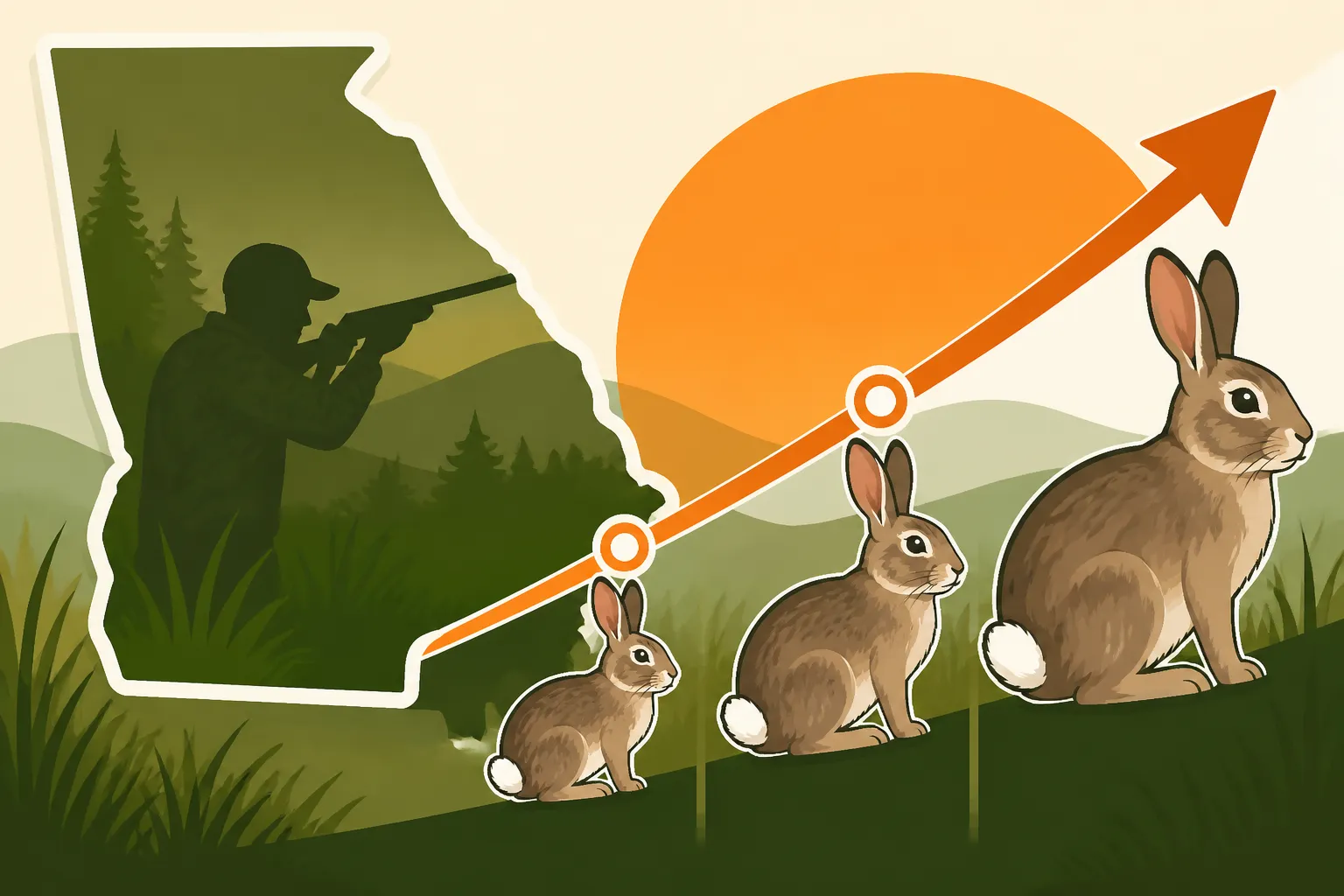
It's a question many of us Georgia hunters have pondered over a crackling campfire or after a long day in the field: "Where have all the cottontails gone?" Or perhaps, "Are there more rabbits than there used to be?" The truth is, Georgia's cottontail population trend isn't a simple straight line; it's a dynamic, sometimes frustratingly complex picture influenced by a myriad of factors. This guide aims to shed light on what's happening with these elusive little bundles of fur, helping you understand the changes and perhaps even spot more of them on your next outing.
The Ebbs and Flows of Georgia's Cottontail History
For many of us who grew up hunting small game in Georgia, rabbits were often the first quarry. They seemed to be everywhere – in every briar patch, along every field edge, darting across every rural road at dusk. But times change, and so does the landscape, and with it, the fortunes of our cottontail rabbits. Understanding where we've been helps us make sense of where we are now.
A Look Back: When Rabbits Were Everywhere
Think back to your grandpappy's stories, or even your own childhood if you're a seasoned veteran like me. The Georgia of yesteryear was a patchwork of small farms. These weren't the massive, monoculture operations we often see today, but smaller fields interspersed with thick fencerows, overgrown pastures, woodlots, and neglected corners. This kind of "edge habitat" was prime real estate for cottontail rabbits. They thrive where there's a mix of open areas for feeding and dense cover for escaping predators and rearing young.
Back then, farming practices often inadvertently created this perfect mosaic. Crops were rotated more frequently, fields were smaller, and less intensive herbicides and pesticides were used. Abandoned farmsteads quickly reverted to briar and brush, creating instant rabbit havens. There were fewer coyotes, fewer suburban developments pushing out rural land, and a general land use pattern that was far more beneficial to small game. Hunters, often with a pack of beagles, could pretty reliably find rabbits in almost any suitable cover. It was a simpler time, and for the cottontail, a more abundant one. Rabbit Hunting Georgia Fencerows was practically a way of life.
The Shifting Landscape: Habitat Loss and Fragmentation
Fast forward to today, and the picture is markedly different. The biggest driver behind changes in Georgia's cottontail population is undoubtedly habitat. It's not just "loss" in the sense of concrete covering everything, but also "fragmentation" and "degradation." Those small farms have given way to larger agricultural operations, often with clean fence rows and vast, open fields. While these can provide food, they lack the crucial escape cover that rabbits need to survive.
Suburban sprawl, especially around major metropolitan areas like Atlanta, Macon, and Savannah, eats up suitable habitat at an alarming rate. What were once sprawling woodlands and agricultural fields are now housing developments, shopping centers, and office parks. Even when green spaces are preserved, they are often manicured lawns or mature forests lacking the undergrowth and briar patches that cottontails depend on. Modern forestry practices, while beneficial for timber production, can sometimes reduce the diversity of ground cover that rabbits require, especially large, unbroken tracts of mature pine plantations that are "clean" underneath. The result is that cottail populations often become isolated in smaller, less viable pockets, making them more vulnerable to localized threats.
Understanding Current Cottontail Population Dynamics
To really get a handle on what's going on with Georgia's cottontails, we need to look at the forces at play right now. It's a delicate balance of factors, and any shift can have a noticeable impact on local numbers.
Habitat: The Cornerstone of Rabbit Abundance
As we've touched on, habitat is king for cottontail rabbits. They aren't big travelers; they typically live their entire lives within a relatively small area, often no more than a few acres. This means that the quality of that specific piece of land is paramount. They need a year-round supply of low-growing vegetation for food – grasses, clovers, tender shoots, and even bark in winter. But just as important, they need dense, thorny cover to escape from predators, especially aerial threats like hawks and owls, and terrestrial ones like coyotes and bobcats. Think of blackberry thickets, honeysuckle tangles, brush piles, fallen logs, and dense, unmanaged edges of fields.
The decline in these specific types of habitat is a primary reason for perceived declines in some areas. Farmers today often clear fencerows to maximize planting space or to prevent equipment damage. Landowners might "clean up" brush piles or cut back overgrown edges for aesthetic reasons. While it might look tidy to us, to a cottontail, it looks like a death sentence. Areas with good habitat often report healthy, stable rabbit populations, while areas that lack it, regardless of other factors, will struggle to hold many rabbits. If you're out scouting, pay close attention to these thick, messy areas – that's where the rabbits will be. Tools like GoHunt can be incredibly helpful for reviewing aerial maps to pinpoint potential thickets and edge cover, even before you set foot on the ground.
The Impact of Predators and Disease
Rabbits are a fundamental prey species in nearly every ecosystem they inhabit, and Georgia is no different. They are literally built to be eaten, and their primary survival strategy is rapid reproduction. However, an imbalance in predator populations can certainly put a dent in cottontail numbers, especially in areas with already marginal habitat. Coyotes, bobcats, foxes, feral cats, and a host of avian predators, including great horned owls and various hawks, all prey on rabbits. When rabbit habitat is sparse, they become easier targets.
While coyotes often get the blame for everything from deer declines to dwindling rabbit numbers, it's usually a symptom of a larger problem – namely, poor habitat. In areas with abundant, dense cover, rabbits can often out-reproduce predator pressure. However, in fragmented landscapes, a healthy predator population can keep rabbit numbers suppressed. Diseases, while less frequently discussed, can also play a role. Conditions like tularemia or coccidiosis can sweep through local populations, especially during times of stress or high density. For more on how game populations interact, check out Georgia Squirrel and Rabbit Populations.
Weather and Environmental Influences
Georgia's weather patterns also exert a significant influence on cottontail populations. Rabbits are pretty hardy, but extreme conditions can impact their survival and reproductive success. Prolonged droughts, for instance, can reduce the availability of green forage and succulent plants, stressing populations and making them more susceptible to disease and predation. Conversely, excessively wet springs, especially during the peak birthing season, can lead to high fawn mortality. Young rabbits are incredibly vulnerable to cold, wet conditions.
Severe winters, while less common in most of Georgia, can also reduce populations, particularly if heavy snow or ice covers their food sources and makes it harder to access crucial cover. Hurricanes or tropical storms, which Georgia's coast occasionally experiences, can temporarily devastate low-lying habitats, flooding burrows and destroying cover. However, nature has a way of rebounding, and rabbits are quick to recover if habitat conditions improve after such events. Understanding these environmental fluctuations can help explain why rabbit numbers might seem to boom one year and bust the next in your favorite hunting spot.
Regional Differences in Georgia's Cottontail Numbers
Georgia is a state of diverse landscapes, from the mountains in the north to the coastal plain in the south. This geographical variety means that cottontail population trends aren't uniform across the entire state. What you see in one region might be completely different from another.
Piedmont and Coastal Plain: A Tale of Two Regions
The Piedmont region, stretching across the middle of Georgia, is characterized by rolling hills, a mix of hardwood and pine forests, and significant agricultural activity, alongside considerable suburban growth. Here, cottontail populations are often highest in areas with good interspersion of small fields, old pastures, and regenerating timber cuts. However, intense development pressure and large-scale agricultural practices that eliminate fencerows and hedgerows can limit their numbers. If you're looking for rabbits in the Piedmont, focus on neglected corners of farms, power line cuts, and creek bottoms with dense cover. This is often similar ground where you might find deer, as discussed in Hunting Piedmont Farmland Deer.
The Coastal Plain, covering South Georgia, is generally flatter, with extensive pine plantations, wetlands, and large agricultural fields, particularly for crops like peanuts and cotton. Here, large tracts of managed pine, especially those that are regularly burned and thinned, can provide excellent rabbit habitat with a diverse understory. However, vast, clean fields offer little. The edges of swamps and river bottoms, particularly those with dense palmetto or briar growth, can also hold good numbers. Traditional quail plantations, often managed with prescribed fire and diverse cover, are often strongholds for cottontail populations as well. Places where you'd be Still-Hunting South Georgia Pine Flats for deer might just be holding some rabbits too.
Mountain Influence and Scattered Pockets
The North Georgia mountains present a different challenge for cottontails. While rabbits can certainly be found there, the steep terrain, extensive mature forests with dense canopies but often sparse undergrowth, and colder winters make for generally lower overall densities compared to the Piedmont or Coastal Plain. Rabbits in the mountains tend to concentrate in valleys, along creek bottoms, around old logging clearings, and near small human disturbances like old homesteads or pasture edges. They rely heavily on brush piles, rock crevices, and root wads for escape cover. Finding these pockets of suitable habitat is key to success in the mountains.
Across all regions, urban and suburban areas, surprisingly, can sometimes support small, localized populations of cottontails, particularly in larger parks, golf courses, or undeveloped greenways that retain enough cover. These areas, however, face immense pressure from domestic pets, human disturbance, and vehicle traffic, making consistent populations difficult to maintain.
What Hunters and Landowners Can Do to Support Cottontails
The good news is that cottontails are incredibly prolific breeders. Given the right conditions, their populations can rebound quickly. This means that proactive efforts from landowners and hunters can make a real difference in supporting Georgia's cottontail population trend.
Habitat Improvement Strategies
If you own land or manage a hunting lease, creating and maintaining ideal rabbit habitat is the most impactful thing you can do. This often involves thinking "messy" from a rabbit's perspective. Consider these strategies:
- Create Brush Piles: Instead of burning or hauling off downed trees and limbs, stack them into brush piles. The bigger and denser, the better. These provide immediate, critical escape cover and nesting sites.
- Encourage Native Cover: Let fencerows, field edges, and unproductive corners grow up in briars, honeysuckle, and native shrubs. Avoid excessive mowing or herbicide use in these areas.
- Prescribed Burning: In suitable forest types, especially pine, controlled burns can stimulate the growth of new, tender vegetation that rabbits love, while also creating open patches for foraging. This is a common practice you'll see in Habitat Work on Georgia WMAs.
- Food Plots with Cover: While food plots are often for deer, consider planting strips of clover, winter wheat, or native grasses adjacent to dense cover. The food will attract rabbits, and the cover will keep them safe.
- Hedgerows and Living Fences: Planting rows of dense, thorny shrubs can create linear corridors of cover and food for rabbits, connecting otherwise fragmented habitats.
When scouting private land, or even looking at public land maps using a tool like GoHunt, always be on the lookout for these messy, overgrown areas. They are the true gems for rabbits.
Smart Hunting Practices and Management
For hunters, ethical and informed practices can contribute to healthy populations. Because rabbits reproduce so quickly, they can sustain relatively high harvest rates without long-term damage to the population, assuming habitat is sufficient.
- Selective Harvest: Focus on harvesting adult rabbits, leaving younger animals to mature and reproduce. However, given their short lifespans and high reproductive rates, taking a reasonable number of rabbits is a form of management that can actually stimulate healthier populations by reducing competition for resources.
- Season Timing: Be mindful of hunting during the breeding season if you're concerned about local numbers. Georgia's rabbit season is generally well-timed to avoid major impacts on reproduction, but understanding local conditions is always wise.
- Predator Management: While rabbits are prey, localized predator management can sometimes benefit small game if habitat is a limiting factor. However, this is a complex issue and should be approached with caution and knowledge, not simply indiscriminate predator removal. Coyote calling, for example, is more commonly practiced for deer hunters, but can impact rabbits. You can learn more about this in Coyote Calling in Georgia Farm Country.
- Respect Private Land: If hunting on private land, ensure you have proper permission. Asking a Georgia Farmer for Permission is not only respectful but can open doors to some excellent rabbit hunting opportunities where habitat is managed.
Utilizing Resources and Data
Staying informed is crucial. The Georgia Department of Natural Resources (DNR) monitors small game populations, including cottontails, through various surveys and harvest reports. While rabbit populations can be challenging to survey precisely due to their secretive nature and rapid turnover, these trends offer valuable insights.
For instance, reviewing annual game harvest reports can give you a general idea of hunter success and overall trends. While specific population numbers are hard to come by, changes in reported harvests can indicate broader patterns. You can often find this information through the Georgia Wildlife Resources Division website. Furthermore, leveraging technology like the GoHunt app or other mapping software allows you to analyze satellite imagery, identify potential habitat, and plan your hunts more effectively, which can indirectly help you gauge local rabbit numbers. Looking at areas that remain unpressured, as discussed in Finding Ground Others Walk Past, can also lead to more successful rabbit hunts.
By understanding these dynamics and actively engaging in habitat improvement and smart hunting practices, we can all contribute to a positive Georgia cottontail population trend, ensuring that future generations can enjoy the thrill of chasing these quick and crafty little game animals.
Disclaimer
This article is for general informational purposes only and does not constitute professional advice. Laws, prices and regulations vary by location and change over time. Consult a qualified professional for guidance on your specific situation.