Georgia Squirrel Season Dates
Missing out on prime hunting opportunities because you're not entirely sure when a specific season kicks off can be incredibly frustrating. When it comes to something as accessible and enjoyable as squirrel hunting in Georgia, having those season dates locked down is key to planning your outings and making the most of your time in the woods. This guide is here to untangle all the specifics of Georgia's squirrel season dates, helping you get ready for a successful hunt.
Understanding Georgia's Squirrel Seasons
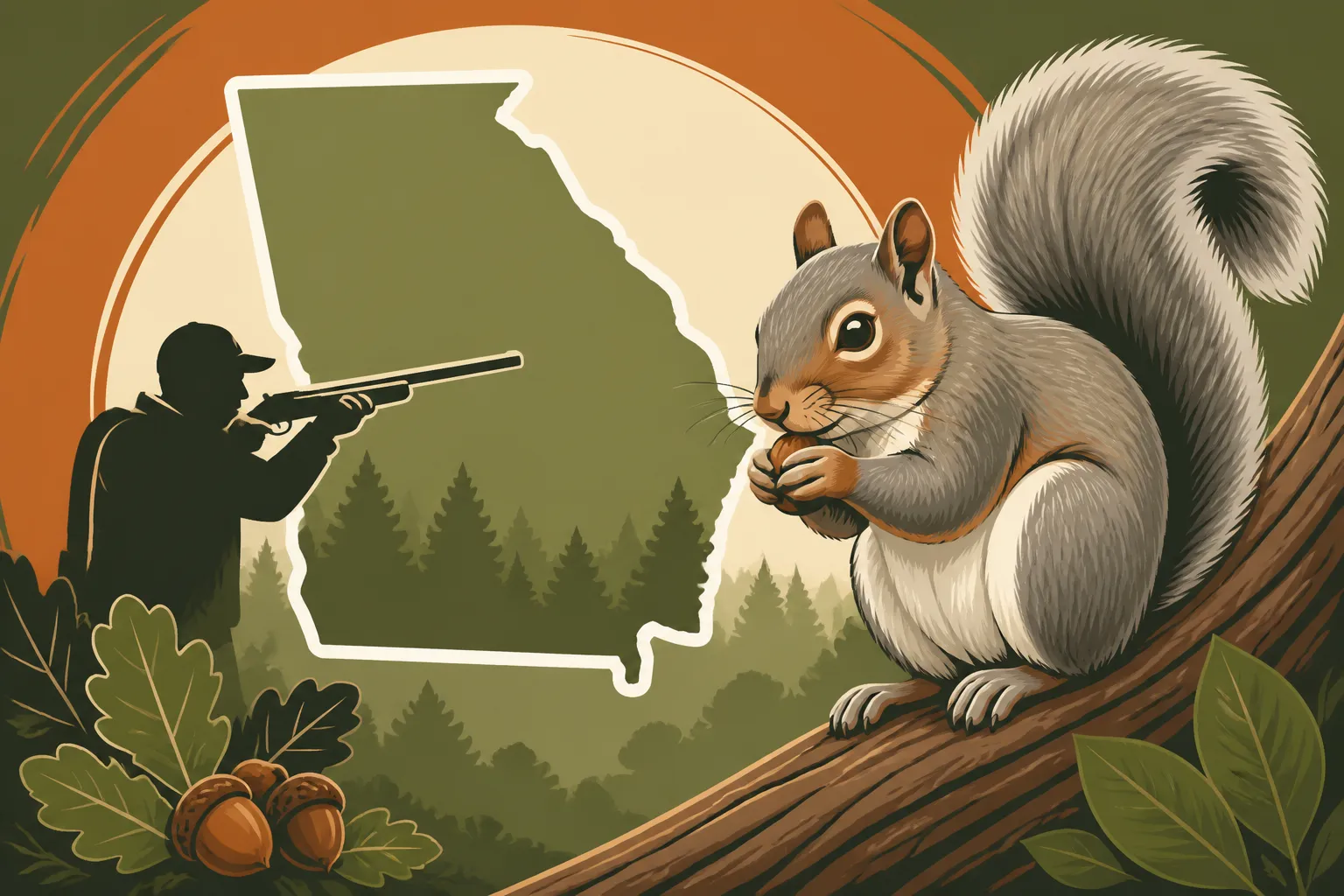
Squirrel hunting holds a special place in the hearts of many Georgia outdoors enthusiasts. It's often the first game animal a new hunter pursues, and it remains a cherished tradition for many seasoned veterans. Knowing the precise season dates is the very first step in preparing for a successful hunt, whether you're after the nimble gray squirrel or the larger, more elusive fox squirrel. The good news is, Georgia keeps its squirrel season pretty straightforward, making it easier for hunters to plan.
Statewide Season Dates and Bag Limits
For both gray and fox squirrels in Georgia, the season typically opens in mid-August and extends all the way through the end of February. This generous timeframe provides ample opportunity to get afield, from the sweltering late summer days when the leaves are thick, to the crisp, often frigid days of late winter after the foliage has dropped. The specific dates can shift slightly year to year, so it's always crucial to consult the Georgia Department of Natural Resources (DNR) official hunting regulations each season. However, you can generally mark your calendar for an August start and a February close.
The daily bag limit for squirrels in Georgia is quite generous at 10 squirrels per hunter. This means you can have a very productive day in the woods, providing plenty of bushytails for the pot. There's no possession limit, which means you're only restricted by what you can harvest in a single day. This abundance reflects a healthy and widespread squirrel population across the state, making them a fantastic target for small game hunters.
Here's a quick reference for the typical season framework:
| Species | Season Opening (Approx.) | Season Closing (Approx.) | Daily Bag Limit | Possession Limit |
|---|---|---|---|---|
| Gray Squirrel | Mid-August | End of February | 10 | None |
| Fox Squirrel | Mid-August | End of February | 10 | None |
Remember, these are approximate dates. Always verify with the current Georgia hunting regulations.
Why the Dates Matter for Hunters
The long squirrel season is a huge benefit, but understanding why these dates are chosen, and how they influence your hunting strategy, is a game-changer. The timing allows for hunting during different stages of the squirrels' annual cycle and varying habitat conditions.
Early in the season, when it's still warm, and the trees are full of green leaves, squirrels are incredibly active. They're busy foraging on early mast crops like mulberries and early acorns, and their movements are often dictated by the need to gather and store food. However, the dense foliage can make spotting them a real challenge. You'll often hear them before you see them, cutting nuts or barking warnings. This period requires patience and keen ears. As the season progresses into fall, the leaves begin to drop, offering clearer lines of sight, which is often a favorite time for many squirrel hunters. This coincides with peak acorn drop, making squirrel locations more predictable around oak trees.
Later in the season, from December through February, squirrels are still active, but their routines change. Food sources become scarcer, pushing them to rely on cached stores or less desirable forage. They spend more time denned up during cold snaps but will emerge on warmer, sunny days. The bare trees of late winter offer the best visibility, but the cold can also make squirrels more wary and less active overall. Understanding these seasonal shifts helps you adapt your tactics, from where you scout to what time of day you head out. It's a fantastic way to sharpen your woodsman skills, learning to adapt to the rhythm of the forest.
Public vs. Private Land Season Consistency
One less thing to worry about when planning your squirrel hunt in Georgia is whether the season dates change between different types of land. The statewide squirrel season dates and bag limits apply uniformly across both private land and Georgia's extensive public hunting lands, including Wildlife Management Areas (WMAs) and the Chattahoochee-Oconee National Forest. This means you don't have to stress about different open and close dates depending on where you're hunting.
However, while the season dates themselves are consistent, it’s vital to remember that specific WMAs or other public lands might have additional regulations you need to be aware of. These could include restrictions on hunting days (e.g., only open certain days of the week), specific weapon restrictions, or even temporary closures for other managed hunts. Always, and I mean always, check the individual WMA regulations or National Forest rules before heading out. The Georgia Outdoors app or the official Georgia DNR website are your best friends here. For general information on different hunting opportunities, you might want to look into topics like Public Hunting Land in Georgia or even explore Chattahoochee-Oconee National Forest Hunting for deeper insights into those specific areas.
Planning Your Georgia Squirrel Hunt
With the season dates firmly in mind, let's talk about how to actually plan and execute a successful squirrel hunt in the Peach State. Squirrel hunting, while often seen as an introductory pursuit, can be incredibly rewarding and challenging, sharpening your senses and marksmanship.
Early Season Strategies
Hunting squirrels in Georgia during the early part of the season, typically from August through September, presents a unique set of challenges and opportunities. The weather is still very warm, and the humidity can be thick. This means dressing appropriately in lightweight, breathable clothing is crucial. You might find some helpful tips in our guide on Warm-Weather Clothing for Georgia Hunters. Bug spray is also a non-negotiable item, as mosquitoes and gnats can be relentless.
During this period, the trees are still fully leafed out, making visual spotting difficult. Your ears become your most important tool. Listen for the distinct sound of squirrels cutting nuts, chattering warnings, or scampering across branches. Early mornings are often the most productive, as squirrels are most active as they emerge from their dens to forage. Focus your efforts around trees producing early mast crops, such as mulberry, hickory, and various oak species that drop acorns early. Creek bottoms and areas with mixed hardwoods are often hotspots. Patience is key; find a comfortable spot, sit still, and listen. If you're moving, do so slowly and deliberately, stopping often to scan and listen. Sometimes a good tactic is to still-hunt, moving a few steps and then freezing for several minutes, allowing the forest to settle and squirrels to resume their activity. Consider reading up on Still-Hunting South Georgia Pine Flats for some excellent movement-based strategies applicable to various terrains.
Late Season Opportunities
As the Georgia squirrel season rolls into late fall and winter (November through February), the landscape transforms, and so do the hunting tactics. The cooler weather means bugs are less of an issue, and you can focus more on comfort. However, it also means squirrels might be less active during the coldest parts of the day.
The biggest change in the late season is the absence of leaves on deciduous trees. This dramatically improves visibility, allowing you to spot squirrels from a greater distance. Target areas with mature hardwoods, especially oak and hickory stands, as squirrels will be heavily focused on any remaining mast or their cached stashes. Pine stands can also be productive, as squirrels will feed on pine cones. During really cold spells, squirrels might stay denned up more, so look for them to be most active during the warmest part of the day, often mid-morning to early afternoon, especially on sunny days. If the ground has a fresh dusting of snow (a rare but magical occurrence in parts of Georgia), tracking becomes an option, making their movements easy to follow. This season also offers excellent opportunities for hunting in bottomland hardwoods where squirrels are often abundant, and you can learn more about this habitat type from our article on Squirrel Hunting Georgia Bottomland Hardwoods.
Equipment Considerations for Squirrel Hunting
Squirrel hunting is incredibly accessible, requiring minimal specialized gear, which is part of its appeal. However, a few key pieces of equipment can greatly enhance your success and enjoyment.
- Firearms: A .22 caliber rimfire rifle is the classic choice for squirrels. It's accurate, quiet, and its low recoil makes it perfect for precise headshots, which many hunters prefer for meat preservation. Shotguns, typically a .410, 20-gauge, or even 12-gauge with light loads (like #6 or #7.5 shot), are excellent for fast-moving squirrels or those in thick cover where precise rifle shots are difficult. An air rifle, particularly a powerful PCP model, is another increasingly popular and quiet option, especially for suburban or smaller private tracts where noise might be a concern.
- Ammunition: For rifles, choose good quality .22LR rounds. For shotguns, light field loads are generally sufficient.
- Optics: A small, fixed-power scope (4x or 6x) on a .22 rifle can greatly improve accuracy. Good binoculars (8x or 10x) are invaluable for spotting squirrels, especially in dense foliage or high in trees. Even a compact pair can make a huge difference, helping you identify what you're seeing as you scan the branches. Our guide on Binocular Choice for Georgia Whitetails offers general advice on optics that can also be applied to small game.
- Clothing: Beyond the early season considerations, layering is always smart for Georgia's unpredictable weather. Comfortable, quiet clothing in subdued colors or camouflage is best.
- Miscellaneous Gear: A comfortable seat or small cushion for sitting still, a small backpack for carrying water, snacks, and harvested squirrels (a basic pack like those mentioned in Packs for a Day on Public Land works great), and a knife for field dressing are all you really need.
Navigating Regulations and Resources
Even for seemingly simple small game like squirrels, understanding the regulations and knowing where to find reliable information is paramount. This ensures you're hunting legally and ethically, contributing to the conservation efforts that keep Georgia's wildlife populations healthy.
Essential Licenses and Stamps
Before you even think about heading out for squirrels, you need to make sure your licensing is squared away. In Georgia, any resident or non-resident hunter needs a valid hunting license. For small game like squirrels, you generally only need a basic hunting license. There isn't a specific "squirrel license."
- Georgia Resident Hunting License: Residents have several options, from an annual license to a comprehensive Sportsman's License that covers most hunting and fishing activities.
- Georgia Non-Resident Hunting License: Non-residents can purchase annual or short-term licenses (e.g., a 3-day or 10-day option), which can be convenient for a quick trip.
Youth hunters (under 16) typically have reduced or waived license fees, but they must still comply with all other regulations. Always confirm the specific requirements based on your age and residency status. You can find detailed information on these requirements in resources like Georgia Hunting Licenses and What They Cost or Georgia Resident Hunting License Options.
Checking Official Sources for Updates
While this guide provides general information, the absolute, undeniable source for current season dates and regulations is the Georgia Department of Natural Resources (DNR), Wildlife Resources Division. Regulations can occasionally change due to biological factors, population shifts, or legislative updates.
Here's how to stay updated:
- Georgia DNR Website: This is the primary online resource. Look for the annual "Georgia Hunting Regulations" or "Small Game Regulations" booklet, usually available as a PDF download.
- Georgia Outdoors App: This free mobile application is incredibly useful. It provides digital access to your license, regulations, and often has mapping features to help you navigate public lands. Many hunters find tools like this invaluable for real-time information. You can even use it for scouting, as highlighted in Scouting With the Georgia Outdoors App.
- Physical Regulations Booklet: Available at most license vendors, sporting goods stores, and DNR offices.
While popular hunting apps like GoHunt can provide excellent mapping features, property line overlays, and general hunting information, always remember to cross-reference with the official Georgia DNR sources for regulatory specifics like season dates, bag limits, and any WMA-specific rules. Think of GoHunt and similar platforms as powerful planning tools that complement, but don't replace, the official rulebook.
Legal Firearms and Methods
Georgia has relatively straightforward rules for hunting squirrels, making it accessible to hunters using various methods.
- Legal Firearms: As mentioned earlier, rimfire rifles (.22LR is most common), shotguns, and air rifles are all legal for squirrel hunting. There are no minimum caliber restrictions for small game like squirrels.
- Bows/Crossbows: While not traditional for squirrels, a bow or crossbow can technically be used, provided it meets legal hunting requirements for small game. However, hitting a small, fast-moving squirrel with an arrow is quite a feat!
- Dogs: Using trained squirrel dogs is a time-honored tradition in Georgia and is perfectly legal. These dogs locate and tree squirrels, making them much easier to spot and harvest.
- Electronic Calls: Electronic calls are generally not permitted for hunting small game in Georgia, including squirrels. Always double-check the latest regulations on this.
- Hunting Hours: Squirrels can generally be hunted from one-half hour before sunrise to one-half hour after sunset.
Always practice safe firearm handling, ensure you have a clear backstop for your shots, and be absolutely certain of your target before pulling the trigger.
Disclaimer
Please be aware that hunting regulations, including season dates and bag limits, are subject to change by the Georgia Department of Natural Resources (DNR). While every effort has been made to provide accurate and up-to-date information in this guide, it should not be considered the sole authority. Hunters are responsible for consulting the most current official Georgia Hunting Regulations booklet or the Georgia DNR website before engaging in any hunting activities.