Georgia Dove Season Bag Limit
There’s nothing quite like the rush of a Georgia dove hunt. The smell of gun smoke, the camaraderie with friends and family, and those darting grey missiles zipping across a harvested field – it's a quintessential Southern experience. But in the excitement, it’s easy to get caught up and lose track, which is why understanding Georgia’s dove season bag limit isn't just a legal necessity; it’s a crucial part of being a responsible hunter. This guide will walk you through the specifics, explain the nuances, and offer practical advice to ensure your dove hunting adventures are both successful and compliant.
Understanding Georgia's Dove Bag Limits
Let's cut right to the chase: knowing the daily and possession limits for doves in Georgia is paramount. These aren't arbitrary numbers; they're carefully determined by wildlife biologists to ensure a sustainable population for generations of hunters. Ignoring them can lead to hefty fines, license suspension, and frankly, a tarnished reputation for all hunters.
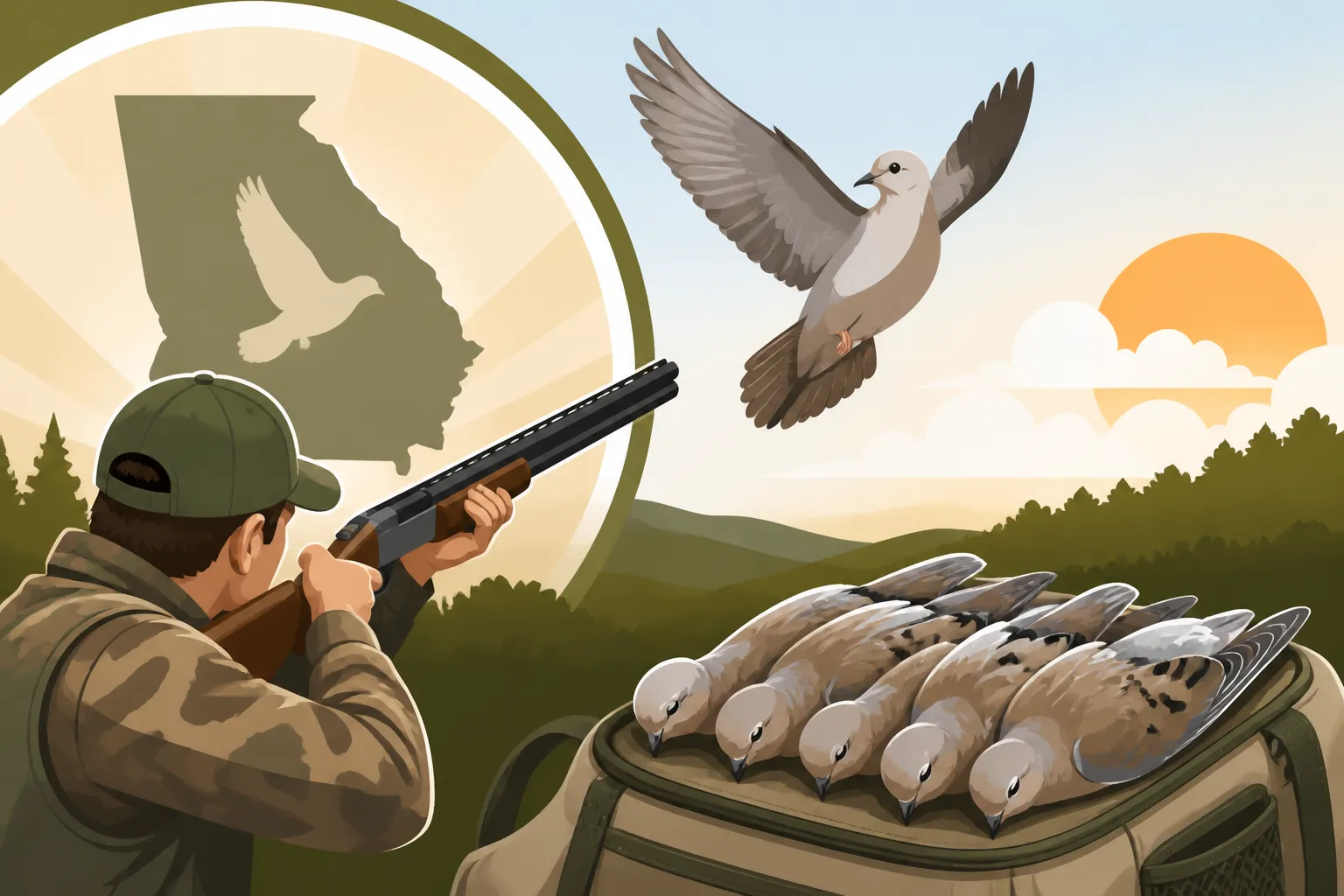
The federal framework, which Georgia adheres to as doves are migratory birds, sets the stage. Currently, the daily bag limit for mourning doves in Georgia is 15 birds. This means on any given day, you cannot harvest more than 15 doves. It sounds simple enough, but when the birds are flying hot and heavy, and you're with a group, it's surprisingly easy to lose count. Many hunters use clickers or simply lay out their birds to count as they go, especially during a fast-paced shoot.
Beyond the daily limit, there’s also a possession limit. This often trips up new hunters or those who travel. The possession limit for doves in Georgia is three times the daily bag limit, meaning 45 doves. This applies to doves in your freezer, doves in your cooler on the way home, or doves that have been processed and stored. It’s not about how many you can shoot in a season, but how many you can legally possess at any given time. So, if you go out and shoot your limit of 15 birds on opening day, you can add another 15 on the second day, and a final 15 on the third day, bringing your total to 45. But after that third day, you cannot shoot more until you have consumed or given away enough doves to fall back under that 45-bird possession limit. It's a key distinction that keeps hunters honest and conserves the resource.
Daily Versus Possession Limit Clarified
The distinction between a daily bag limit and a possession limit is fundamental to migratory bird hunting regulations, and doves are no exception. Think of the daily bag limit as your "on-the-spot" allowance – the maximum number of birds you can legally take from sunrise to sunset during an active hunting day. When you're out there, boots on the ground, calling doves over a carefully Setting Up a Dove Field Before Opening Day, once you've shot your 15, your shotgun needs to be unloaded and cased. No more shooting for the day, even if the birds are still pouring in.
The possession limit, however, looks at the bigger picture. It's the total number of migratory game birds, fresh or frozen, you can have in your physical control or stored at your home. This limit exists to prevent commercialization and over-harvesting over multiple days. Imagine you're hunting near Albany, Georgia, for a long weekend. You shoot your limit of 15 doves on Friday, and then another 15 on Saturday. You now possess 30 doves. If you go out on Sunday and bag another 15, you've hit your possession limit of 45 birds. From that point on, you cannot harvest any more doves until you've reduced your overall stash, perhaps by cooking some up for a delicious meal or sharing them with friends and family. This system encourages consistent, responsible harvesting rather than binge-hunting.
Why the Limit Matters to Hunters
These limits aren't just bureaucratic red tape; they're cornerstones of wildlife conservation and sustainable hunting. The Georgia Department of Natural Resources (DNR), in cooperation with the U.S. Fish and Wildlife Service, relies on population surveys and hunter harvest data to set these limits. If hunters consistently exceed the limits, it can have a direct, negative impact on dove populations, potentially leading to reduced limits or even shortened seasons in the future. It’s a collective responsibility that we all share.
For the individual hunter, adhering to the limit is about ethics and avoiding serious legal trouble. An accidental over-limit can be costly. Fines for migratory bird violations in Georgia can range from several hundred to thousands of dollars, depending on the severity and number of birds. Plus, there's the very real risk of losing your hunting privileges, which for many of us, is far worse than any fine. Game wardens are diligent, especially during the busy Georgia Dove Season Opening Weekend, and they will check. Having a clear understanding and a system for counting your birds ensures you can enjoy the hunt without that cloud of worry hanging over you. It keeps the tradition alive and well for future generations, allowing ample opportunities for Pass-Shooting Doves Over a Water Hole for years to come.
Navigating Dove Season Splits and Special Regulations
Georgia's dove season isn't one continuous stretch; it's typically broken into multiple "splits." These splits are designed to coincide with different migratory waves of doves, allowing hunters to target local birds early in the season and then later waves as they move through the state. This staggered approach maximizes opportunity while still maintaining conservation goals. However, these varying dates and potential specific regulations for each split add another layer of complexity to keeping track of the rules.
Generally, Georgia offers three distinct dove season splits. The first split usually kicks off around Labor Day weekend, often the busiest and most anticipated part of the season. This is when local birds, often plump from summer forage, are abundant. The second split typically falls in October or November, catching birds migrating through Georgia from further north. The third and final split often runs from December into January, targeting late-season migrants. Each split has its own opening and closing dates, and while the bag limit usually remains consistent across all splits, it’s always wise to double-check the current year’s regulations.
Beyond the calendar, there are also federal regulations that apply to all migratory bird hunting. For instance, the Georgia DNR website, or a reliable hunting app like GoHunt, will remind you that you absolutely must have a valid Georgia hunting license, a Georgia Big Game/Migratory Bird license (if you're a resident, this is often bundled into a Sportsman's License), and importantly, you need to be HIP (Harvest Information Program) certified. Georgia Migratory Bird Certification is a quick, free registration that helps wildlife agencies gather data on migratory bird hunters, which is crucial for setting future season dates and bag limits. Without it, your hunt is technically illegal, even if you have all your other licenses in order.
Key Season Dates and Splits
The specific dates for Georgia's dove season splits can shift slightly year to year, so relying on last year's calendar is a recipe for disappointment, or worse, a violation. It’s essential to consult the most current Georgia DNR hunting regulations annually. You can usually find these online on the official Georgia DNR website, often titled "Georgia Hunting Regulations & Seasons." Many hunters also find digital resources, like the GoHunt app, incredibly useful for quickly checking dates, times, and specific rules even when they're out in the field. These apps often provide GPS-enabled maps that show public land boundaries, which can also be a lifesaver.
Typically, the first split is the big one, often starting in early September and running for a couple of weeks. This is usually when you'll find the biggest crowds and the most active birds. The second split usually picks up in late September or October, and it might be shorter, but can offer fantastic hunting opportunities as new birds move into the state. Finally, a third split often runs for a couple of weeks in December or early January, providing a chance for some late-season action, sometimes in colder weather with fewer leaves on the trees, which can make for interesting hunting challenges. Knowing these dates is critical for planning your hunts, especially if you're traveling or coordinating with a hunting club.
Federal Regulations and Migratory Bird Rules
Doves, as migratory birds, fall under federal protection and management, meaning that state regulations must align with federal guidelines established by the U.S. Fish and Wildlife Service. This dual layer of regulation means hunters need to be aware of both state and federal requirements. One of the most important federal requirements, as mentioned, is the Harvest Information Program (HIP) certification. It’s a simple, free process, typically completed when you purchase your hunting license, that identifies you as a migratory bird hunter and ensures your harvest data contributes to national management efforts. Don't skip it!
Beyond HIP, there are also rules concerning baiting and possessing lead shot. While Georgia Dove Field Baiting Rules dictate that you cannot hunt over a "baited" field (defined as placing out grain or other feed to attract birds), normal agricultural practices are generally fine. It’s a nuanced area, so understanding the specifics is critical. Also, while most dove hunting in Georgia allows lead shot, if you happen to be hunting on certain federal lands or specific wildlife management areas (WMAs) with waterfowl habitat, non-toxic shot might be required. Always check WMA-specific regulations if you're hunting public land, as their rules can sometimes be more restrictive than statewide regulations.
Practical Tips for Maximizing Your Dove Hunt Within Limits
So, you've got your licenses, you know the dates, and you understand the limits. Now comes the fun part: the actual hunt! But even seasoned dove hunters can sometimes get a little too focused on the action and forget about staying within the rules. Here are some practical tips to ensure you have a fantastic time while always respecting the bag limit and the resource.
One of the best strategies is to have a clear plan for counting your birds. Many hunters use a simple clicker, especially if they're shooting a lot. Others prefer to lay out their birds as they retrieve them. If you’re hunting with a group, designating one person to keep a running tally can be helpful, especially if everyone is pitching in on retrieves. It’s also wise to educate everyone in your hunting party, especially newer hunters, about the daily and possession limits before the hunt begins. A quick briefing can prevent accidental over-harvesting and ensure everyone is on the same page. Apps like GoHunt can sometimes include features for harvest tracking, making it easier to log your success and stay compliant.
Another practical consideration is managing your shooting during those intense "flurries" of activity. Sometimes, doves come in so thick and fast that it feels like you can't miss. In these moments, it's easy to lose track. Instead of just blasting away, try to take deliberate shots, focus on clean kills, and then collect your birds. This not only ensures you stay within the limit but also promotes ethical hunting by minimizing cripples and lost birds. And speaking of retrieves, a good bird dog is invaluable. Not only do they make the hunt more enjoyable, but they also drastically reduce the number of lost birds, which is crucial for ethical hunting and for accurately counting your harvest towards the bag limit. Remember, a lost bird still counts against your daily limit.
Field Management and Ethical Harvesting
When doves are flying thick and fast, it’s easy to get caught up in the excitement and just keep pulling the trigger. However, good field management and ethical harvesting go hand-in-hand with respecting the bag limit. Instead of just trying to shoot every bird that flies by, consider being more selective. Focus on clean, ethical shots within your effective range. This reduces the chance of wounding birds that are never recovered, which still count towards your limit and is certainly not the outcome any ethical hunter wants.
Many experienced dove hunters develop a rhythm: shoot a few birds, retrieve them, then resume hunting. This helps keep an accurate count and ensures no birds are wasted. If you're working a field with others, as is common for Working a Dove Field on Opening Day, communicate. If you're nearing your limit, let your buddies know. You can always shift your focus to enjoying the fellowship, helping retrieve for others, or simply observing the flight patterns. The goal isn't just to shoot doves; it's to enjoy the experience responsibly. The satisfaction of a well-executed hunt within the rules far outweighs the fleeting thrill of an extra bird or two.
Counting Your Birds and Avoiding Violations
Accurately counting your harvest is probably the single most important practical tip for staying legal. It sounds obvious, but in the heat of the moment, with birds diving and weaving, it's easily forgotten. A simple clicker counter, easily found at sporting goods stores, is a hunter's best friend. Keep it on your vest or lanyard and click once for every bird you put down. When you hit 15, that's it for the day.
Another method is to use your vest or a bucket to visibly keep track of your birds. As you retrieve each one, place it in a dedicated spot. This visual cue can be very effective. If you're using a dog, make sure you know exactly how many birds the dog has retrieved for you. Don't rely on memory alone. The consequences of exceeding the bag limit are significant, ranging from substantial fines to license suspension, so taking a few extra seconds to count is always worth it. Responsible hunting means playing by the rules, ensuring that this cherished tradition continues to thrive across the beautiful fields and skies of Georgia.
| Category | Description | Limit Details |
|---|---|---|
| Daily Bag Limit | Maximum number of doves you can harvest in one calendar day. | 15 mourning doves |
| Possession Limit | Maximum number of doves you can have in your physical control or stored. | 45 mourning doves (3x daily bag limit) |
| Season Splits | Georgia typically has multiple staggered season periods to maximize opportunity. | Varies annually; check current GA DNR regulations |
| Federal Rule | Requires HIP certification for all migratory bird hunters. | Yes, mandatory and free to obtain |
| Baiting Rule | Illegal to hunt doves over a baited area. | Yes, strict regulations apply |
| Shot Type | Lead shot is generally allowed, but non-toxic shot may be required on some WMAs or federal lands. | Check specific area regulations |
Disclaimer
Please note that hunting regulations, including bag limits and season dates, are subject to change by the Georgia Department of Natural Resources (DNR) and federal agencies. While we strive to provide accurate and up-to-date information, it is the hunter's sole responsibility to consult the most current official Georgia hunting regulations before engaging in any hunting activity. Always confirm all rules and requirements directly with the Georgia DNR or other relevant authorities to ensure compliance.