Georgia Diamondback Rattlesnake Encounters Afield
For any Georgia hunter who spends time in our wild landscapes, the thought of encountering a rattlesnake, especially a big diamondback, is never far from mind. That sudden buzz, the quick flick of a tail in the undergrowth, it can make your heart leap right into your throat. This guide is here to walk you through everything you need to know about these iconic, yet intimidating, reptiles, from understanding their behavior to minimizing your risk and knowing exactly what to do if you ever come face-to-face with one in the field.
Understanding Georgia's Diamondback Rattlesnakes
Georgia is home to a few different species of rattlesnakes, but when people talk about the "big one," they're almost certainly referring to the Eastern Diamondback Rattlesnake. These impressive reptiles are truly a sight to behold, with their striking patterns and formidable reputation. They're an important part of our ecosystem, but it's crucial for us as hunters to understand them to ensure both our safety and theirs.
Identifying the Eastern Diamondback
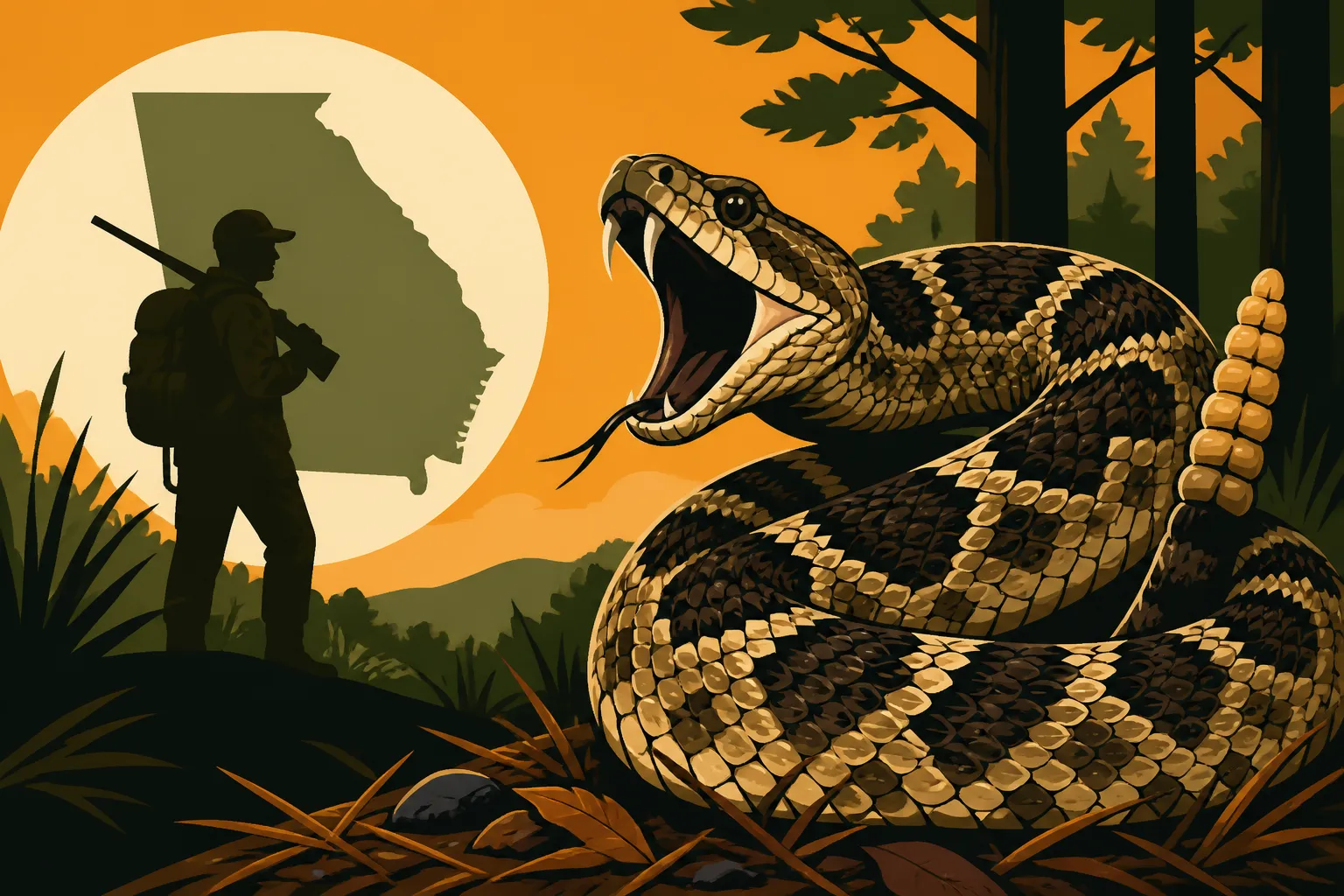
Identifying an Eastern Diamondback isn't usually too difficult if you get a good look, but in a tense moment, it can be easy to misinterpret what you're seeing. The most defining characteristic, of course, is the rattle on the end of its tail, which it vibrates rapidly to produce that unmistakable warning sound. However, not all rattlesnakes rattle before striking, and sometimes their rattle can be muffled by leaves or grass.
The pattern on their back is also a huge clue. Eastern Diamondbacks have a series of dark, diamond-shaped patterns outlined by lighter scales running down their body. These diamonds are often quite distinct and can be a dull brown, olive, or even grayish color, contrasting with a lighter background. They have a distinctly large, triangular head, much wider than their neck, and two light lines on the side of their head—one running from the eye down to the corner of the mouth, and another diagonal stripe just behind the eye. Their scales are keeled, meaning they have a ridge down the center, giving them a rough, dull appearance. Juveniles look very similar to adults, just smaller, which can sometimes lead to confusion with other smaller snake species. Always err on the side of caution if you're unsure.
Where They Live and Their Behavior
Eastern Diamondbacks are primarily found in the Coastal Plain region of Georgia, though their range can extend slightly into the lower Piedmont. They prefer dry, sandy areas, often associated with pine forests, palmetto thickets, and wiregrass ecosystems. You'll find them in longleaf pine savannas, maritime forests, and even agricultural fields bordering these habitats. They are masters of camouflage, and despite their size, can be incredibly difficult to spot curled up amidst pine needles, palmetto fronds, or tall grass.
These snakes are largely ambush predators. They spend a lot of their time coiled, patiently waiting for prey like rabbits, squirrels, and even small birds to wander by. They are not inherently aggressive; their primary goal is usually to avoid confrontation. When threatened, their first line of defense is often to remain motionless, hoping you don't see them. If that fails, they'll usually start rattling a warning. This is their way of saying, "Hey, I'm here, back off!" A strike is typically a last resort, used only if they feel directly threatened or cornered. They can strike quickly and from a surprising distance, sometimes up to two-thirds of their body length, so maintaining a respectful distance is paramount. This is why when you're using a mapping tool like GoHunt to scout an area, paying attention to the terrain type can give you a heads-up on potential snake habitats. If you see vast stretches of longleaf pine or sandy scrub, consider it prime diamondback country.
Minimizing Your Risk of an Encounter
The best way to handle a rattlesnake encounter is to avoid having one in the first place. As hunters, we often find ourselves in prime snake habitat, so a proactive approach to safety is essential. It's not about being paranoid, but about being aware and prepared for the environments we choose to explore.
Essential Gear and Footwear
When you're out in the field, especially in areas known for rattlesnakes, your gear choices can make a significant difference. High-quality snake boots or snake gaiters are probably the most crucial piece of equipment. These aren't just for looks; they provide a crucial barrier against fangs that can penetrate typical leather or canvas boots. They extend high enough to protect your lower legs, which is where most bites occur. Don't skimp on this — your safety is worth the investment. Many experienced Georgia hunters will tell you that Snake Boots for Georgia Swamp Ground are non-negotiable, particularly in the warmer months.
Beyond footwear, consider wearing sturdy pants, even if it's hot. Denim or thick canvas can offer a small extra layer of protection compared to lightweight hunting pants. A good pair of gloves might not protect against a direct bite, but they can be useful if you're clearing brush or moving logs where a snake might be hiding. A walking stick or trekking pole isn't just for stability; it can be used to probe thick grass or move obstacles without putting your hands or feet directly into potential danger zones. When you're packing your Warm-Weather Clothing for Georgia Hunters, remember that protective gear is also part of staying safe.
Situational Awareness and Terrain
Vigilance is your best friend when hunting in snake country. Always pay attention to where you're putting your feet and hands. Step over logs, don't step on them, as a snake might be coiled on the other side or underneath. If you need to retrieve an arrow or reach into thick cover, use your walking stick to probe first. When sitting down, always check the area around your chosen spot thoroughly.
Understanding the terrain and how snakes utilize it can also inform your movements. Sunny, warm days, especially after a cool night, can bring snakes out to bask. Conversely, on very hot days, they might seek shade under bushes, logs, or in burrows. They often use natural funnels or edges, like the borders of fields, logging roads, or creek banks, as travel corridors. If you're using a mapping app, like one that might be part of a GoHunt subscription, to plan your route, look for these types of features. They can be great for deer, but also great for snakes. When you're Scouting Georgia Public Land Before Season, make a mental note of these high-risk areas. If you're still-hunting, move slowly and deliberately, constantly scanning the ground ahead of you. Don't rush through thick cover. Give yourself time to see potential threats before you're on top of them.
Here's a quick reference for common Georgia snakes:
| Feature | Eastern Diamondback Rattlesnake | Copperhead | Cottonmouth (Water Moccasin) | Non-Venomous Mimics (e.g., Rat Snake) |
|---|---|---|---|---|
| Head Shape | Large, distinctly triangular | Triangular | Triangular | Oval or round |
| Pupil Shape | Elliptical (cat-eye) | Elliptical | Elliptical | Round |
| Facial Pits | Yes (between eye and nostril) | Yes | Yes | No |
| Pattern | Dark diamonds with light borders | Hourglass bands | Dark, often blotchy, juveniles brightly tipped tail | Variable (e.g., solid, blotched, striped) |
| Tail End | Rattle | Tapering | Tapering | Tapering |
| Behavior | Coils, rattles warning | Often freezes, strikes if threatened | Stands ground, open mouth warning | Usually flees |
| Habitat Focus | Dry pine forests, sandy areas | Woodlands, rocky areas | Aquatic, near water | Varied, often near human habitation |
What to Do If You Encounter a Rattlesnake
No matter how prepared you are, an encounter can still happen. The key is to remain calm, control your instincts, and react safely. Panic is your biggest enemy in these situations.
Freezing and Assessing the Situation
Your immediate reaction if you see or hear a rattlesnake should be to freeze. Stop moving, immediately. Trying to run or jump away hastily can lead you into another snake or cause you to stumble, putting you in a worse position. Once you're still, assess the snake's location relative to you, its posture, and its apparent mood. Is it coiled and rattling aggressively, or is it merely passing through?
If the snake is rattling, it’s giving you a clear warning. This is its way of saying "I'm here, and I feel threatened." Respect that warning. Remember, a strike is a defensive action, not an offensive one. Most often, the snake wants to be left alone as much as you want to leave it alone. Do not poke it, throw things at it, or try to get a better look for a photo. Your goal is to disengage safely. If you’ve got a hunting partner, let them know quietly where the snake is located.
Slowly Backing Away
Once you've assessed the situation, the next step is to slowly and calmly back away. Maintain a safe distance, ideally several feet, and keep your eyes on the snake. Avoid sudden movements or quick steps that might startle it further. Walk away in the direction you came from, or in a clear path that takes you out of the snake's perceived strike zone without turning your back completely or stumbling.
The idea is to give the snake space and allow it to feel unthreatened. As you move away, its defensive posture should relax. If you're on a trail, consider finding an alternate route around the area. If you're deep in the woods, just make sure you put significant distance between yourself and the snake before resuming your hunting. Sometimes, a snake might be sunning itself on a logging road. Rather than trying to encourage it to move, it's safer for everyone if you simply take a wide detour around it. This is where having a good sense of your surroundings, perhaps using a GPS feature on an app like GoHunt, can help you navigate safely around an unexpected obstacle.
First Aid and Aftermath of a Bite
Despite our best efforts, bites can and sometimes do happen. Knowing what to do in the immediate aftermath can be life-saving. This isn't just about knowing facts; it's about being prepared for a high-stress emergency.
Immediate Steps After a Bite
If you or a hunting partner are bitten by a suspected venomous snake, the very first and most critical step is to call for emergency medical help immediately. In Georgia, that means calling 911. Time is of the essence. Try to remember what the snake looked like (color, pattern, general size), but do not try to capture or kill it for identification. Your safety and the victim's immediate care are paramount.
While waiting for help, keep the bitten limb as still as possible and below the level of the heart, if practical. Remove any tight clothing, jewelry, or watches from the affected limb before swelling starts. Keep the victim calm and reassured. Panicking can increase heart rate, which can potentially spread venom faster. If you have a First Aid Kits for Remote Swamp Ground, apply a clean, dry dressing to the bite area. Do NOT try to cut the wound, suck out the venom, apply a tourniquet, or use ice. These old wives' tales are not only ineffective but can actually make the situation worse by causing more tissue damage or restricting blood flow inappropriately. The only effective treatment for venomous snakebite is antivenom, which must be administered by medical professionals.
Seeking Professional Medical Attention
Once emergency services are on their way, relay as much information as you can about the bite, including the time it occurred and any symptoms developing. Symptoms can include intense pain at the bite site, swelling and bruising that spreads rapidly, nausea, dizziness, and weakness. Some people might also experience numbness or tingling around the mouth, or a metallic taste.
Even if symptoms seem mild at first, it's crucial to seek professional medical attention. The effects of venom can sometimes be delayed or worsen over time, and a medical professional will be able to monitor the situation, administer antivenom if necessary, and treat any complications. Being prepared for a medical emergency in the backcountry is just as important as knowing your game species. This is particularly true if you are hunting alone in remote areas, or in places like Hunting Okefenokee Swamp Fringe Deer where medical assistance might be a long way off. It's a sobering thought, but one that all responsible hunters need to consider as part of their overall safety plan.
Disclaimer
This article is for general informational purposes only and does not constitute professional advice. Laws, prices and regulations vary by location and change over time. Consult a qualified professional for guidance on your specific situation.