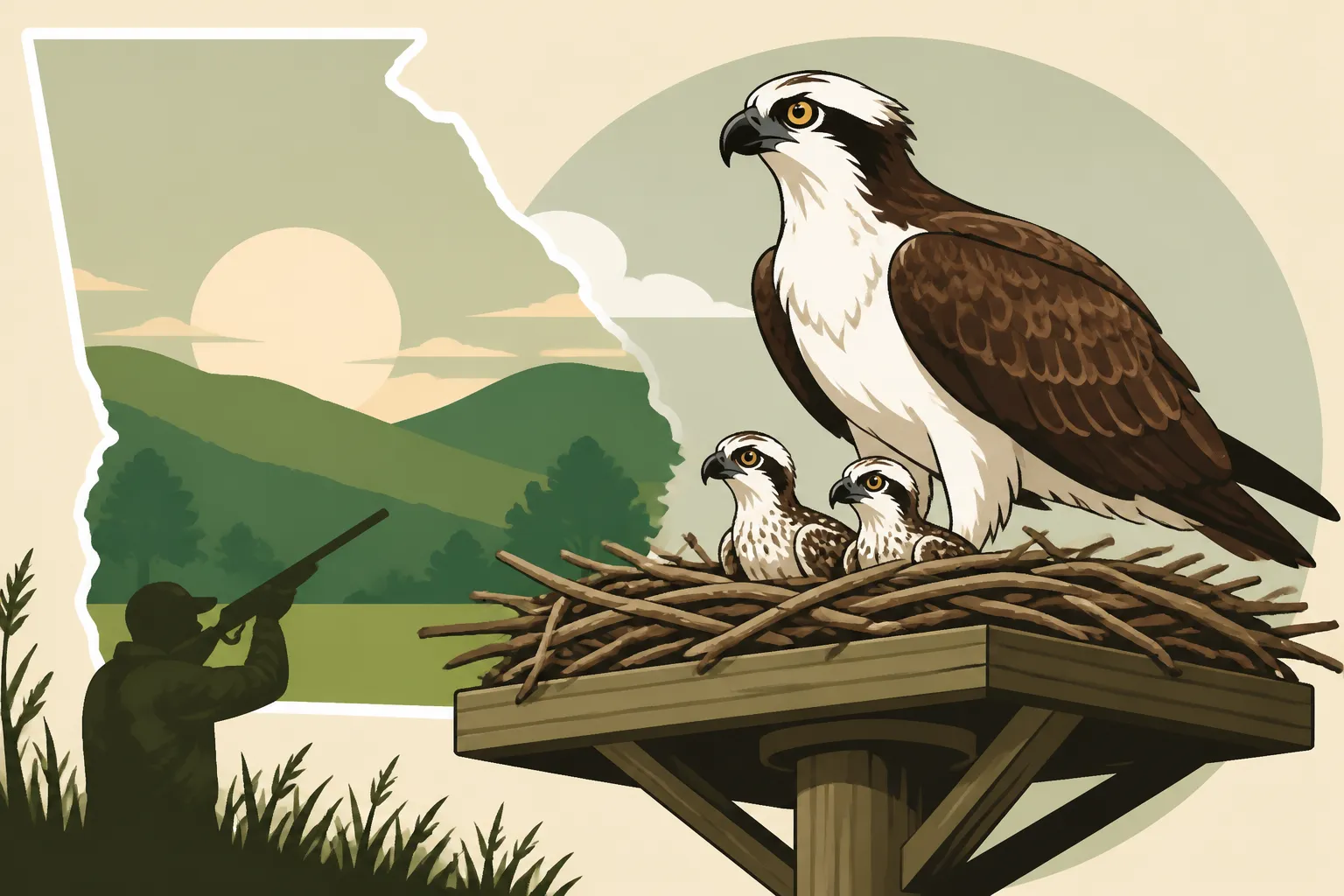
Georgia Osprey Nesting Platforms
The sight of an osprey soaring gracefully overhead, then plunging feet-first into the water to snatch a fish, is one of Georgia's most breathtaking natural spectacles. But for many years, these magnificent raptors faced significant challenges in finding safe, suitable nesting sites, especially as natural snags and dead trees became scarce in developing coastal and riverine areas. This guide dives into the crucial role of human-made nesting platforms in supporting Georgia's osprey population, detailing why they're needed, how they're built, and where they make the biggest difference.
The Plight of the Osprey in Georgia: Why Nesting Platforms Became Essential
The majestic osprey, often called the "fish hawk," has made a remarkable comeback in many parts of North America, and Georgia is no exception. However, their journey back from the brink wasn't without considerable effort, and the provision of suitable nesting habitat remains a critical component of their continued success. These birds are particular about their nesting sites, needing sturdy structures high above the water with an unobstructed view and safe access to fishing grounds.
Historical Challenges for Osprey Populations
Like many raptors, ospreys faced significant population declines in the mid-20th century, primarily due to the widespread use of certain pesticides that weakened their eggshells, leading to reproductive failure. While those chemicals were eventually banned, the recovery was still hampered by another pressing issue: habitat loss. As Georgia's coastlines and major river systems saw more human development, the natural tall trees and snags that ospreys traditionally used for nesting began to disappear. Think about those old, towering cypress trees in a swamp or dead pine snags along a marsh edge—prime real estate for an osprey nest, but also often the first to go when land is cleared or managed differently.
Furthermore, traditional nest sites were sometimes vulnerable to disturbances from boats, development noise, or even predators if not high enough. Without these robust, natural perches, ospreys struggled to find safe places to raise their young, even if food sources were abundant. This created a bottleneck in their recovery, highlighting the need for direct human intervention to provide what nature was increasingly lacking.
Current Habitat Needs and Pressures
Today, while the chemical threats have largely receded, the pressure on prime osprey nesting habitat continues. Coastal development, riverfront construction, and even changes in forestry practices can limit the availability of tall, stable structures. Ospreys are incredibly adaptable, often choosing man-made structures like channel markers, power poles, and cell towers when natural options are scarce. However, nesting on power poles can lead to electrocution risks for the birds and power outages for humans, making these "alternative" sites less than ideal for everyone involved.
This is where dedicated nesting platforms step in. They offer a safe, stable, and strategically placed alternative, mimicking the best aspects of natural nest sites while mitigating the risks associated with human infrastructure. These platforms are a testament to how proactive conservation efforts can directly support wildlife populations, allowing these incredible birds to thrive once again. Understanding the specific needs of ospreys in a dynamic environment like Georgia's diverse landscapes, from the coastal marshes to the larger river systems, is key to their continued prosperity. You can see similar efforts with another majestic bird in Georgia Bald Eagle Recovery Near the Coast.
Designing and Building an Effective Osprey Platform
Building an osprey nesting platform isn't just about sticking a pole in the ground; it's a thoughtful process requiring specific design considerations, suitable materials, and careful construction to ensure longevity and avian safety. The goal is to create a structure that is both attractive to ospreys and resilient against Georgia's often humid and occasionally stormy weather.
Key Design Considerations and Dimensions
When designing an osprey platform, you need to think like an osprey. What would they look for? First and foremost, height is crucial. Ospreys prefer their nests to be well above the surrounding terrain or water, offering them a commanding view of their territory and fishing grounds, as well as protection from ground predators. A typical platform might be mounted on a sturdy pole ranging from 20 to 50 feet tall, depending on the specific location and surrounding obstructions.
The platform itself needs to be spacious. An adult osprey nest can be quite large, often a foot or two deep and three to five feet across. The platform should be at least 30-36 inches square or round, providing enough surface area for the nest and for fledglings to stretch their wings before their first flight. It's helpful to include a small lip or border around the edge of the platform to help contain initial nesting material. Drainage is also essential; holes in the platform base prevent water from pooling, which could rot the nest material and chill chicks.
Placement of a perch, slightly above or beside the nest, is a nice touch. Ospreys love to survey their domain from a high perch, and it provides a spot for the non-incubating parent to rest. Finally, ensure the entire structure is stable enough to withstand strong winds and the weight of a growing family of ospreys.
Recommended Materials and Construction Tips
The materials chosen for an osprey platform must be durable, weather-resistant, and non-toxic.
Pole:
- Treated Wood: A heavy-duty, pressure-treated lumber pole, often 6×6 inches or larger, is a common choice. Ensure it's rated for ground contact.
- Steel Pipe: Galvanized steel pipe, often 4-6 inches in diameter, offers excellent durability and resistance to rot and insects. This is especially good for saltwater environments where wood degrades faster.
- Old Utility Poles: Sometimes, retired utility poles can be repurposed, offering a robust and cost-effective option if acquired safely and legally.
Platform Base:
- Treated Plywood or Composite Decking: A base of marine-grade or pressure-treated plywood, at least 3/4 inch thick, or composite decking materials, will resist rot. Attach it securely to a frame.
- Recycled Plastic Lumber: This material is incredibly durable, rot-proof, and environmentally friendly, though it can be more expensive upfront.
- Metal Grating: Some designs use heavy-gauge galvanized metal grating for the base, ensuring excellent drainage.
Framing:
- Treated 2x4s or Metal Angle Iron: A sturdy frame beneath the platform surface provides support and stability.
Fasteners:
- Use galvanized or stainless steel bolts, screws, and nails to prevent rust, which can weaken the structure over time, especially in humid Georgia conditions.
Construction Tips:
- Safety First: Erecting tall poles requires heavy equipment and expertise. Consider hiring professionals or working with experienced volunteers.
- Pre-Drill Drainage Holes: Drill several 1/2 to 1-inch holes in the platform base before mounting to ensure good drainage.
- Mounting Perch: Attach a sturdy branch or a piece of treated wood (2×4 or 4×4) vertically near the platform as a separate perch.
- Predator Guards: Consider adding a conical or cylindrical predator guard around the pole, especially if the site might be accessible to climbing predators like raccoons or snakes. This is particularly crucial in areas like the Okefenokee Swamp Region.
- Starter Nest Material: Placing a small amount of non-synthetic nesting material (like sticks or old sod) on the platform can sometimes encourage ospreys to investigate and build upon it.
Here’s a simple table comparing common materials:
| Component | Wood (Treated Lumber) | Steel/Metal (Galvanized Pipe/Grating) | Composite/Recycled Plastic |
|---|---|---|---|
| Durability | Good; requires periodic inspection | Excellent; highly resistant to elements | Excellent; virtually maintenance-free |
| Cost | Moderate | Moderate to High | High |
| Installation | Easier for DIY, but still needs heavy lifting | Requires specialized welding/fabrication | Moderate; can be heavier than wood |
| Maintenance | Can rot, may need sealing/repainting | Minimal; rust-resistant | Minimal |
| Weight | Moderate | Heavy | Moderate to Heavy |
| Lifespan | 15-25 years with proper care | 50+ years | 50+ years |
Strategic Placement for Georgia Osprey Platforms
Where you place an osprey nesting platform is just as critical as how you build it. Even the most perfectly constructed platform will go unused if it's not in an ideal location. Ospreys have very specific requirements for their territory, focusing on food availability, safety, and visibility.
Ideal Locations Near Water Sources
Ospreys are obligate piscivores, meaning fish make up almost their entire diet. Therefore, the absolute most important factor for platform placement is proximity to suitable fishing grounds. Think large rivers, lakes, reservoirs, coastal marshes, estuaries, and even large ponds. In Georgia, this means areas along the Altamaha River, the Flint River, Lake Lanier, Lake Allatoona, or the vast coastal marshes. Areas with abundant fish populations and clear water for hunting are paramount.
The platform should ideally be within a mile or two of a productive body of water. While ospreys can fly further for food, closer proximity means less energy expenditure, which is especially important when feeding hungry chicks. Consider placing platforms along major water bodies where you see signs of other raptors or healthy fish populations. Prime examples are the expansive Hunting Coastal Georgia Marsh Waterfowl zones, which are rich in aquatic life.
Visibility is another key factor. Ospreys prefer an unobstructed view from their nest, allowing them to survey their territory for prey and potential threats. Avoid placing platforms directly within dense tree canopies or areas with tall buildings that would block their sightlines. A solitary pole rising above the landscape is often the most attractive.
Safety Considerations and Permitting Requirements
While attracting ospreys is the goal, ensuring their safety and avoiding conflicts with human activity are equally important.
Distance from Human Disturbance:
Ospreys generally tolerate some human activity, but excessive or sudden disturbances can cause them to abandon a nest. Try to place platforms a reasonable distance from heavily trafficked areas, busy roads, or residential zones, if possible. A good rule of thumb is at least 200-300 yards from frequent human activity, though this can vary. Platforms in quieter areas, such as those found while Scouting Georgia Public Land Before Season, are often more successful.
Electrical Line Clearance:
Avoid placing platforms too close to power lines. Ospreys are large birds with wide wingspans, and landing or taking off from a nest near power lines can lead to electrocution. Maintain significant clearance as recommended by local utility companies. If an osprey is already nesting on a power pole, working with the utility to install a nearby alternative platform can sometimes encourage them to relocate safely.
Predator Protection:
As mentioned earlier, a predator guard on the pole is a wise investment, especially in areas with raccoons, snakes, or even domestic cats. These guards prevent climbing animals from reaching the nest and preying on eggs or chicks.
Permitting:
This is a critical step, especially for structures placed on public lands, near waterways, or in protected areas.
- State Regulations: Georgia's Department of Natural Resources (DNR) may have specific guidelines or require permits for construction within certain wildlife areas or near navigable waters. Always check with the Georgia DNR Wildlife Resources Division.
- Federal Regulations: Ospreys are protected under the Migratory Bird Treaty Act. While building a platform to aid them is generally encouraged, any actions that could harm them or disturb an active nest are illegal. If working in a wetland or navigable waterway, you might also need permits from the U.S. Army Corps of Engineers.
- Landowner Permission: If you plan to erect a platform on private land, you absolutely must have explicit permission from the landowner. If on public land, consult the managing agency (e.g., U.S. Forest Service for Chattahoochee-Oconee National Forest Hunting areas, or state agencies for WMAs).
Ignoring permitting requirements can lead to fines, forced removal of the structure, and wasted effort. Always do your homework before breaking ground!
The Positive Impact of Osprey Nesting Platforms on Georgia's Ecosystem
The presence of osprey nesting platforms goes far beyond simply providing a home for a single bird species. These structures contribute significantly to local ecosystems, foster community engagement, and serve as beacons of successful conservation. Their impact ripples through both the natural world and the human communities that choose to support them.
Conservation Success Stories and Ecological Benefits
Georgia's osprey population is a true conservation success story, and nesting platforms have played a pivotal role in this comeback. Where once these magnificent raptors were rare, now their nests are a common sight along many of Georgia's waterways. This isn't just about boosting numbers; it's about restoring a vital link in the food chain. Ospreys are apex predators of the aquatic environment, and a healthy osprey population is often an indicator of a healthy fish population and a thriving aquatic ecosystem.
By providing safe nesting sites, platforms allow ospreys to reproduce consistently, contributing to stable local populations. This, in turn, helps maintain ecological balance by naturally controlling certain fish populations. Think of them as natural fish managers, constantly patrolling and consuming, especially in areas rich with fish like those found in Georgia Coastal Marsh Teal Numbers.
Moreover, these platforms often become hubs of activity for other wildlife. Small songbirds might find shelter in the lower reaches of the pole, and insects are naturally drawn to the structure. While not always intended, the platform becomes a micro-habitat, supporting biodiversity around its base and within the nest itself. The very act of observing ospreys nesting provides valuable data for researchers studying raptor behavior, migration patterns (relevant to Georgia Waterfowl Migration Timing), and reproductive success, further enhancing our understanding of these birds and the environments they inhabit.
Fostering Community Engagement and Education
Osprey nesting platforms are highly visible symbols of conservation that can unite communities. When a local group or an individual decides to undertake a platform project, it often involves fundraising, local volunteers, and coordination with environmental organizations or state agencies. This process builds a sense of shared responsibility and pride in local wildlife.
The platforms themselves become educational tools. Seeing an active osprey nest from a distance, perhaps from a park trail or a boat, instantly sparks curiosity and interest in nature. Schools often use these platforms as outdoor classrooms, teaching students about raptor biology, wetland ecology, and the importance of conservation. Signs posted near platforms can explain the project, identify the birds, and share fascinating facts about osprey life cycles. This direct interaction with local wildlife fosters environmental stewardship among all ages.
From a community perspective, these platforms can even add to local tourism, drawing birdwatchers and nature photographers who contribute to the local economy. The image of a thriving osprey family, fishing and soaring over a Georgia waterway, is a powerful reminder of nature's resilience and the positive impact humans can have when they choose to support it. Much like initiatives to help Georgia Wildlife Rehabilitation for Injured Game, these efforts show a direct, tangible commitment to protecting our natural heritage for future generations to enjoy.
Disclaimer
This article is for general informational purposes only and does not constitute professional advice. Laws, prices and regulations vary by location and change over time. Consult a qualified professional for guidance on your specific situation.