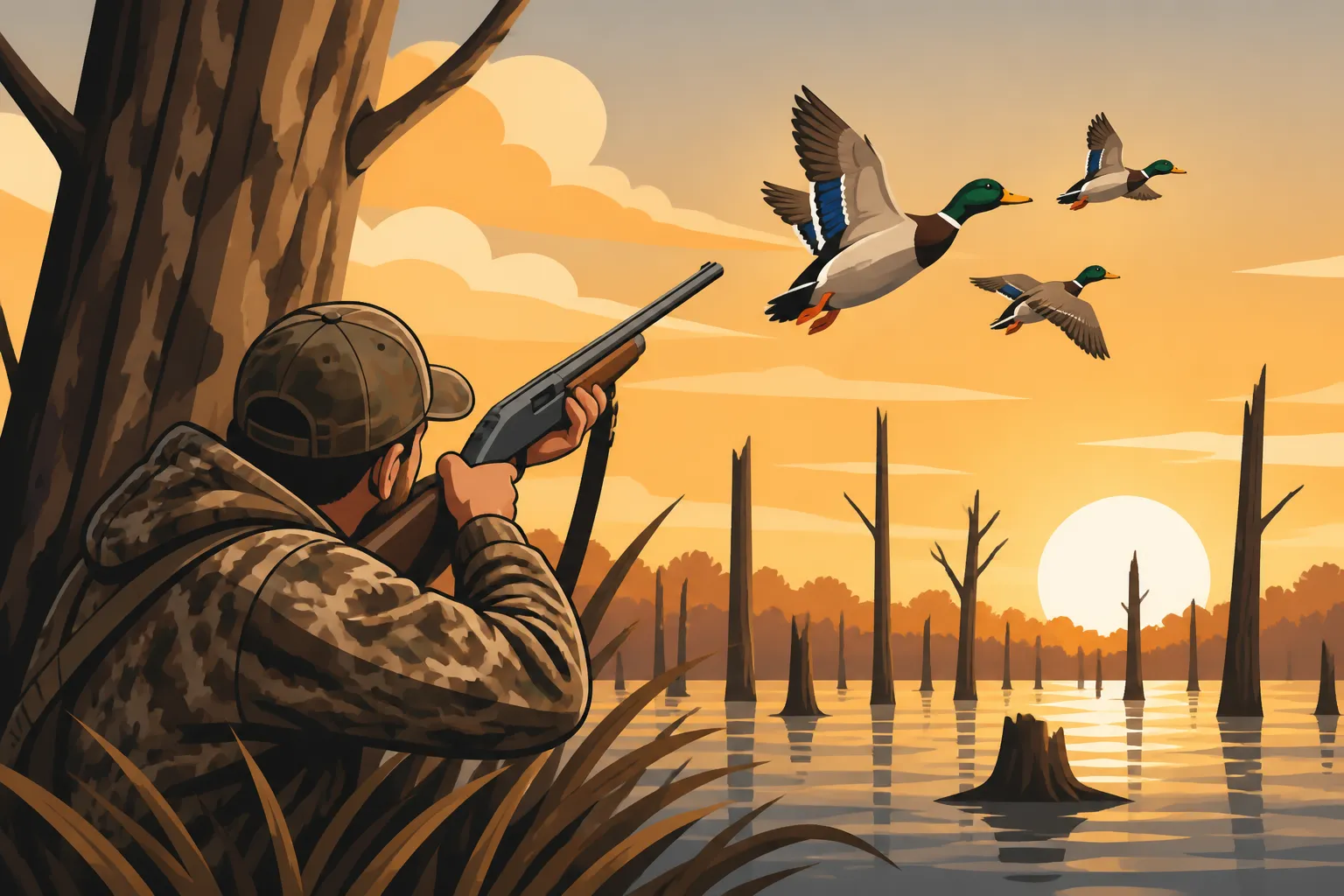
Hunting Flooded Timber for Mallards
For many duck hunters in Georgia, the thought of mallards cupped up and dropping into flooded timber is a dream, but actually making it happen can feel like chasing a ghost. It's a whole different ballgame than sitting in a blind on open water, fraught with challenges like deciphering subtle duck sign, navigating dense woods, and knowing how to make your spread look natural in a sea of trees. This guide will walk you through everything you need to know to hunt flooded timber for mallards successfully, turning those elusive dreams into tangible reality.
Understanding Flooded Timber Habitat for Mallards in Georgia
Hunting flooded timber for mallards is an art form, especially in Georgia where the habitat can vary widely from river bottoms to cypress sloughs. It's not just about finding water in the woods; it's about understanding why the ducks are there and what they're looking for. Mallards, particularly, are drawn to specific types of timber that offer both food and sanctuary.
Preferred Tree Species and Food Sources
When mallards move into flooded timber, they're not just looking for a place to sit; they're looking for a meal. In Georgia, that often means acorn-bearing oak trees. Pin oaks, water oaks, willow oaks, and overcup oaks are like magnets for ducks. When these trees drop their acorns into shallow, flooded woods, it's a buffet that mallards can't resist. The tannin in acorns helps them store fat for migration, making these spots prime real estate. You might also find them in areas with pecans or other mast crops. Beyond acorns, don't overlook areas with smartweed, wild millet, or other moist-soil plants that produce seeds. These can be less obvious but equally productive food sources. The key is to look for areas where the water is shallow enough for ducks to dabble and feed, typically less than 18 inches deep, allowing them to reach the bottom without diving.
The Importance of Water Levels and Flow
Water levels are paramount when hunting flooded timber. Too shallow, and ducks might not feel secure enough to land or may struggle to feed. Too deep, and they can't reach the acorns on the bottom. The sweet spot is usually 6-18 inches. This often means paying close attention to recent rainfall and river stages. In some areas, water levels can fluctuate daily due to rainfall or controlled releases from dams, and this can dramatically shift where ducks decide to feed. A slight rise or fall of a few inches can activate or deactivate a prime timber hole. Furthermore, stagnant water can develop an oily film or ice over faster in cold weather, so ducks might prefer areas with a subtle flow or seepage that keeps the water fresher. Understanding the hydrology of your chosen area, whether it's a river bottom, a natural depression, or a managed impoundment, is crucial for predicting mallard movements. This is where tools like those found on GoHunt can be invaluable for analyzing historical water data and satellite imagery.
Scouting and Identifying Key Flooded Timber Spots
You can't just stumble into a successful timber hunt; it requires diligent scouting. This process combines aerial reconnaissance with on-the-ground investigation, helping you pinpoint those elusive honey holes where mallards feel safe and have plenty to eat.
Using Aerial Imagery and Topographical Maps
Before you ever set foot in the woods, spend time poring over aerial maps. Look for areas adjacent to major rivers or swamps that have dense stands of hardwood trees and show signs of flooding. Creek channels, subtle elevation changes that create shallow depressions, and clusters of oak trees will jump out at you. You can often spot areas that have standing water from previous seasons or appear darker green due to water saturation. Pay attention to how different timber types transition into each other. For example, a lower-lying area of cypress and tupelo might transition into higher ground with oaks, and the edge where these meet, especially if there's standing water, can be a perfect hidey-hole. Look for openings in the canopy that might indicate a small slough or pocket, as ducks prefer overhead cover but also need a clear landing zone. Mapping applications are incredibly helpful for this, allowing you to mark potential spots, measure distances, and plan your entry and exit routes, which is vital for a quiet approach. Remember, the goal is to find those secluded spots, not necessarily the biggest expanse of timber.
On-the-Ground Reconnaissance and Reading Duck Sign
Once you've identified potential spots on your maps, it's time for boots on the ground. This needs to happen well before the season, or at least before opening day, to avoid disturbing the birds. Walk the edges of the timber or even wade in if water levels permit. Look for fresh duck droppings on stumps, logs, or floating debris. Feathers stuck to branches or floating on the water are another clear indicator. Listen for the distinct chatter of feeding mallards during the early morning or late evening. If you jump ducks, note their flight path and where they were sitting – this gives you valuable clues about their preferred loafing and feeding areas. Pay close attention to the bottom of the flooded timber; are there tell-tale churned-up areas where ducks have been dabbling for acorns? Are there small, shallow pockets of water with fresh acorn caps? These are gold mines. Don't be afraid to get a little muddy. Identifying travel corridors, where ducks fly in and out, is also critical for positioning yourself for the hunt. For more information on identifying good hunting spots, consider looking into guides on Scouting Georgia Public Land Before Season.
Setting Up for Success: Decoys, Blinds, and Calling
Once you've found your spot, the real work begins: setting up to convince wary mallards that your timber hole is the safest, most appetizing place to be. This involves thoughtful decoy placement, effective concealment, and realistic calling.
Decoy Spreads for Timber
Decoy spreads in flooded timber are much different than open water spreads. You're not trying to create a massive landing strip. Instead, you want to mimic a small, natural group of ducks loafing and feeding in tight quarters. The goal is to make it look like a quiet, undisturbed area.
Table: Flooded Timber Decoy Spread Strategies
| Scenario | Recommended Decoy Count | Decoy Types | Spread Pattern | Notes |
|---|---|---|---|---|
| Light Timber/Open Pockets | 6-12 (mallards, a few wood ducks) | Mallards (drakes & hens), 1-2 Wood Ducks | Loose "J" or "U" shape | Create a small landing hole in the curve. Place some decoys near cover, others slightly more exposed. A few feeding decoys can add realism. Consider adding a jerk string or a subtle spinning wing decoy (where legal) to add motion, mimicking feeding birds in the shallows. Ducks are often flying fast in timber, so motion can catch their eye. |
| Dense Timber/Tight Holes | 3-6 (mallards only) | Mallards (mostly hens) | Tight cluster | Focus on hyper-realism. Place decoys in very natural, feeding postures. Less is often more. The goal is to make it look like a few contented birds. A slight gap in the cluster serves as a small landing zone. Avoid bright drakes if hunting pressured birds; hens tend to look safer. Consider using fewer full-body decoys if space is extremely limited, opting for just heads and bodies. |
| Mixed Species (e.g., Wood Ducks) | 6-10 (mixed mallards, wood ducks) | Mallards, 2-3 Wood Ducks | Scattered clusters | Place mallards in one or two small groups, and wood ducks (which often prefer thicker cover) closer to the edge of brush or stumps. This mimics how these species might naturally associate. When hunting timber, you'll often encounter a variety of species. Remember to review Georgia Waterfowl Hunting on Coast and Swamp to know what other birds might be in the area. |
Always use a mix of drakes and hens, but leaning slightly more towards hens can give a more natural, less intimidating look. Keep your lines tangled and natural; ducks don't land in perfect rows. A few feeding or preening decoys add immense realism. Remember to account for the shallow water by weighting your decoy keels properly or using short anchor lines.
Effective Concealment and Positioning
In flooded timber, your blind is often the timber itself. You want to blend in seamlessly. Find a large tree or a cluster of smaller trees that offers good concealment. If possible, pick a tree with a dark background to help you disappear. Utilize natural cover like downed logs, stumps, or thick brush to break up your outline. Don't just stand against a tree; try to sit on a small stool or bucket to reduce your profile. If the water is deep enough, a layout blind designed for water can be incredibly effective, allowing you to lie flat and disappear, but these are more common in larger, open water timber holes. For smaller, tighter spots, simply brushing in a natural hide with surrounding vegetation is often best. The most critical aspect of positioning is to ensure you have a clear shooting lane. You might be perfectly hidden, but if you can't swing your shotgun, it's useless. Clear out any small branches or vines that might impede your shot well before the birds are in range. Consider how the light will hit your position at different times of day and choose a spot that minimizes glare or shadows that could give you away. For specific advice on setting up blinds, you might find tips in Brushing In a Blind on a Field Edge applicable to natural timber scenarios.
Mastering the Call
Calling in flooded timber is different from open fields. The sound doesn't travel as far, and ducks are often coming in lower and faster. Soft, contented calls are often more effective than loud, aggressive hailing calls. Start with a soft greeting call or a few contented clucks and quacks. If the ducks respond, you can increase the intensity slightly, but always read the birds. A soft feed call can be incredibly effective in bringing them those last few yards. Many successful timber hunters swear by the "whistle," mimicking a pintail or widgeon, which can often bring in mallards that are wary of traditional mallard calls. Practice your calls to sound natural and not overly aggressive. The goal is to sound like a flock of happy, feeding ducks. Remember that sometimes the best call is no call at all. If birds are locked on your decoys and coming in, put the call down and get ready to shoot.
Adapting to Conditions and Ethical Considerations
Hunting flooded timber is rarely static. Conditions change, ducks get pressured, and you need to be able to adapt while always keeping ethical hunting practices at the forefront.
Weather Shifts and Duck Behavior
Georgia weather can be notoriously fickle, and these changes directly impact mallard behavior in flooded timber. A sharp cold front often pushes new birds into the region and makes existing birds more active and hungry. On these cold, crisp mornings, ducks will be eager to feed, and your chances are higher. However, extreme cold can freeze shallow timber holes, forcing ducks to more open, deeper water, or smaller pockets that remain unfrozen, so you might need to adjust your target areas. Warm fronts, conversely, can make ducks lethargic and less inclined to move or feed actively. Rain can be a double-edged sword: a light drizzle can provide excellent cover and keep ducks moving, but a heavy downpour can make visibility poor for both you and the birds. High winds can make ducks fly lower and faster, making calling more challenging and demanding quicker shots. Always check the forecast and understand how it might influence the ducks' preferences. A valuable resource for understanding migration patterns and local conditions can be found through platforms like GoHunt, which often have community forums or up-to-date reports.
Dealing With Pressure and Finding New Spots
Flooded timber spots, especially those holding mallards, can get pressured quickly, particularly on public lands or easily accessible private tracts. Ducks that have been shot at will become incredibly wary, flaring at the slightest sign of danger. When this happens, you need to adjust. One strategy is to move deeper into the timber, farther from access points. Most hunters won't walk or wade as far, so you might find unpressured birds. Another tactic is to change your timing: instead of hunting first light, try hunting mid-morning after the initial rush, or late afternoon when birds might be returning to roost. Reducing your calling volume and making your spread even more minimalist can also help. If a spot is truly burned out, don't be afraid to pull up stakes and find a new one. Georgia offers plenty of public opportunities, but it requires effort. Resources like the Georgia Outdoors map tool or apps with detailed land ownership data can help you scout for new, less-pressured timber holes. Sometimes, simply walking past other hunters will lead you to productive ground.
Safety in Flooded Environments
Safety is paramount when hunting flooded timber. Wading through knee-deep (or sometimes waist-deep) water over uneven ground, with stumps, fallen logs, and hidden holes, presents significant hazards. Always wear snake boots or sturdy chest waders to protect against snakes and cold water. A good wading staff can be a lifesaver, helping you gauge depth and avoid falling. Hunt with a partner whenever possible, and always let someone know where you're going and when you expect to return. Be mindful of currents if you're in a river bottom, as they can be stronger than they appear. If using a boat, ensure it's stable and you know its limits in shallow, timbered water. Carry a waterproof flashlight or headlamp, a fully charged phone in a waterproof bag, and a first-aid kit. Understanding your physical limits and not taking unnecessary risks will ensure you have a safe and enjoyable hunt. For those hunting in specific regions, knowing how to approach conditions such as Recovering a Deer From a Cypress Swamp can provide valuable insights into navigating treacherous terrain.
Disclaimer
Always consult the Georgia Department of Natural Resources (DNR) for the most current hunting regulations, season dates, and license requirements before heading afield. This guide is for informational purposes only and does not supersede official state regulations.