Binocular Harnesses Worth Wearing
There’s nothing quite as frustrating as being in the Georgia woods, whether you’re deep in the Chattahoochee National Forest or picking your way through a South Georgia pine flat, and fumbling with your binoculars. Either they’re bouncing off your chest on a flimsy neck strap, getting tangled in briars, or worse, you hear that dreaded thud as they hit the ground when you lean over. It's not just an inconvenience; it can be the difference between spotting that buck working a Scrape Lines Along a Logging Road and it vanishing before you even get your glass up. This guide is all about making sure your optics are protected, comfortable, and always ready for action with the right binocular harness.
Why a Binocular Harness is Essential for Georgia Hunters
Let’s be honest, hunting in Georgia means dealing with a diverse and often challenging environment. From the humid early archery season to the unexpected downpours of late fall, your gear takes a beating. A simple neck strap just doesn’t cut it when you’re navigating thick undergrowth, climbing into a stand, or trying to stay quiet.
Protecting Your Investment from the Elements
Binoculars are an investment, plain and simple. Good glass isn't cheap, and the last thing you want is for them to get scratched, fogged, or filled with Georgia's ever-present red clay. Think about those damp, misty mornings when the dew clings to everything, or the sudden afternoon thunderstorm that pops up seemingly out of nowhere. A quality binocular harness acts like a protective shell, shielding your expensive lenses from moisture, dust, and accidental bumps.
Most harnesses feature a main compartment that fully encloses your binoculars, often with a quiet magnetic or buckle closure. This isn't just about keeping them clean; it's about prolonging their life and ensuring they perform when you need them most. You might be carefully making your way through a dense rhododendron thicket in the North Georgia mountains, and without that protective cover, your lenses would be constantly exposed to abrasive branches and leaves. It’s peace of mind, knowing your optics are safe, even when you’re pushing through the toughest cover.
Enhancing Comfort and Reducing Neck Strain
If you’ve ever worn binoculars on a traditional neck strap for more than an hour, you know the pain. That thin strap digs into your neck, especially when you add the weight of a decent pair of 10x42s. After a long morning of Still-Hunting South Georgia Pine Flats, your neck and shoulders will be screaming. This is where a binocular harness truly shines.
Instead of concentrating all that weight on a small area of your neck, a harness distributes it evenly across your shoulders and back, often with wide, padded straps. This makes a world of difference during those all-day sits or extended treks across public land. You'll barely notice the weight, freeing you up to focus on the hunt, not on adjusting a painful strap. It means you can spend more time scanning the woods, looking for that flick of an ear or the horizontal line of a deer’s back, without constant discomfort reminding you of your gear.
Keeping Optics Accessible and Ready for Action
Picture this: You’re hunkered down by a Piedmont Creek Bottom Funnels, and a mature buck steps out, feeding along the edge of the hardwoods. Your binoculars are on a neck strap, swinging around, and you have to wrestle them up to your eyes, making noise and precious movement. With a well-designed harness, your binoculars are secured snugly against your chest, yet instantly accessible.
Many harnesses are designed for one-handed operation, meaning you can quietly and quickly pull your binoculars out, glass the area, and slip them back in, all with minimal movement and noise. This quick deployment is crucial, especially when hunting wary Georgia whitetails. It’s about efficiency in the field. You can spot distant movement, confirm it’s a legal buck under Georgia Antlered Buck Limits, and then get your weapon up, all without missing a beat. This rapid access also helps if you're trying to quickly verify an animal's identity when calling coyotes in Georgia farm country.
Key Features to Look For in a Quality Harness
Not all binocular harnesses are created equal. Just like choosing the right rifle caliber for Georgia deer, selecting the best harness means considering the features that matter most for your hunting style and the Georgia environment.
Material Durability and Weather Resistance
Georgia’s weather is a mixed bag, to say the least. From scorching hot, humid days to chilly, damp winter mornings, your gear needs to stand up to it all. Look for harnesses made from robust, high-denier nylon or Cordura fabrics. These materials are not only tough against snags and abrasions but often come with a DWR (durable water repellent) coating or are inherently water-resistant.
Quietness is another huge factor. When you’re still-hunting or trying to slip into a treestand, the last thing you want is a noisy fabric announcing your presence. Test out the harness in a quiet environment before you buy, listening for any crinkling or rubbing sounds. Zippers should be heavy-duty and easy to operate with cold hands, and buckles should be strong yet silent. A good harness will feel substantial in your hands, not flimsy, indicating it's built to withstand the rigors of many seasons afield. The goal is to have gear that performs, day in and day out, whether you're dealing with a fine mist or a full-blown downpour.
Customization and Fit for All Body Types
One size rarely fits all, especially when it comes to hunting gear that needs to move with you. A quality binocular harness should offer ample adjustability in its straps to ensure a snug, comfortable fit, regardless of your body type or how many layers of clothing you’re wearing. This is particularly important when Warm-Weather Clothing for Georgia Hunters gives way to heavier insulation in late season. The shoulder straps should be wide and padded to distribute weight, and the chest and back straps should allow you to position the main pouch exactly where you want it – high enough for easy access, but low enough not to impede drawing your bow or shouldering your rifle.
Consider how the harness will sit over your backpack or under your jacket. You want it to integrate seamlessly with your other gear, not fight against it. Some harnesses even offer modular systems, allowing you to attach different pouches or accessories, further customizing it to your needs. Take the time to adjust all the straps, mimic hunting movements, and ensure there are no pinch points or areas that will cause discomfort after hours in the field.
Storage and Organization Beyond Just Binos
While the primary purpose is to carry your binoculars, many harnesses offer additional storage solutions that can be incredibly useful. Think about those small essentials you always need quick access to: a rangefinder, a grunt tube, your truck keys, or even a small map. Front pockets, side pouches, and internal dividers are common features.
Some harnesses have dedicated, quiet pockets for a rangefinder, which is a game-changer when you're in a stand and need to quickly range a distant deer without fumbling. Others might have elastic loops for wind checkers or small calls. This added organization means less digging through your main pack and more efficiency in the field. For instance, if you're using a planning tool like GoHunt, having your rangefinder and binos readily available makes verifying distances on your digital map much faster, allowing you to identify exact spots where that deer will enter a shooting lane you scouted virtually. Being able to access your GoHunt app on your phone while your binos are secure, yet accessible, streamlines your hunting decisions.
Different Types of Binocular Harnesses
Just like there are different hunting methods for White-Tailed Deer Across Georgia, there are various styles of binocular harnesses, each with its own set of advantages and disadvantages. Understanding these differences will help you choose the best fit for your specific hunting pursuits.
Chest Pack Style Harnesses
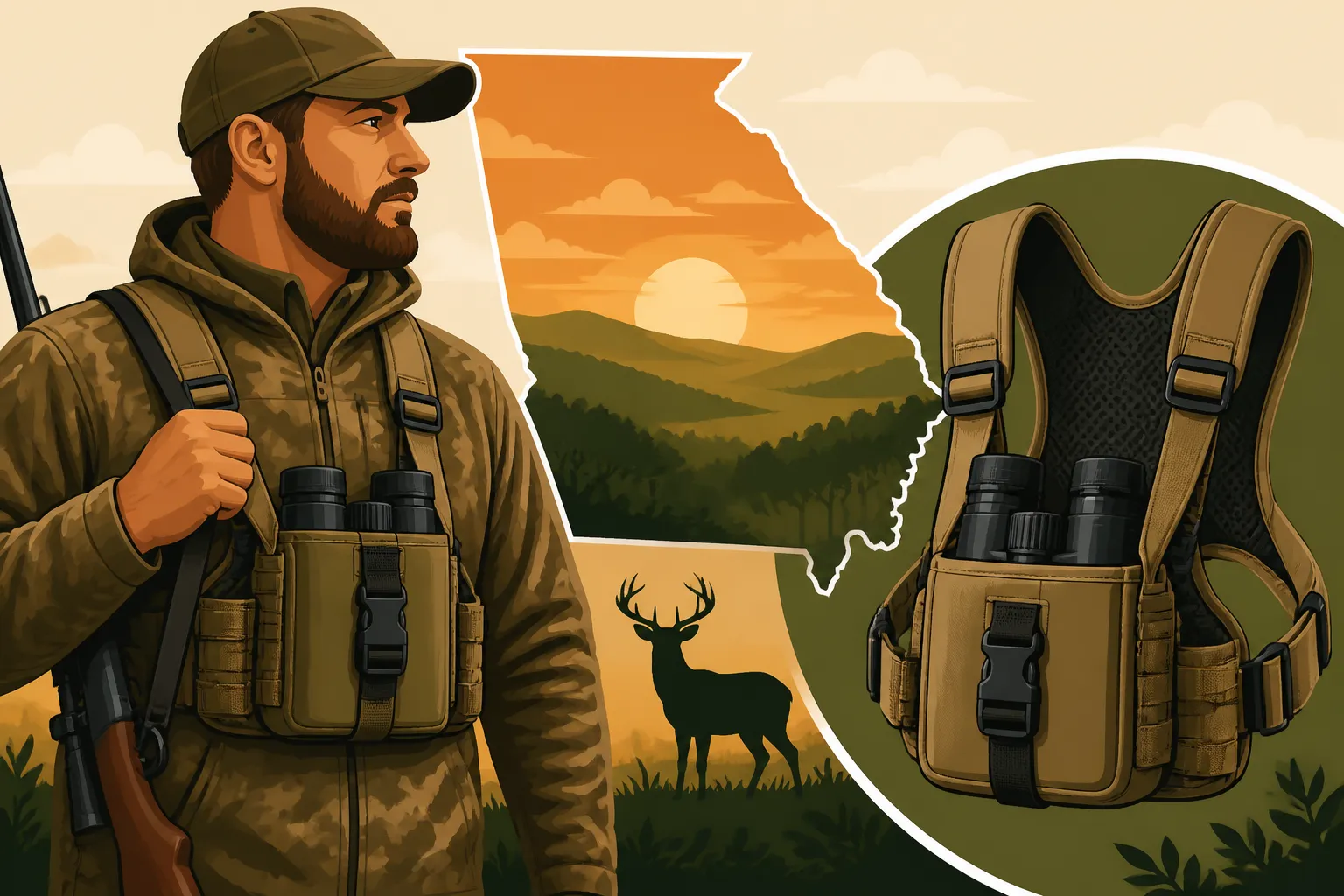
This is probably the most common and popular style among serious hunters, and for good reason. Chest pack harnesses feature a primary pouch that completely encloses your binoculars, often with a quiet, magnetic, or buckle flap closure. They sit front and center on your chest, distributing the weight over your shoulders and back.
Pros:
- Maximum Protection: The enclosed design offers superior protection from dust, rain, and impacts, which is invaluable in Georgia's varied terrain and weather.
- Ample Storage: Most chest packs come with additional pockets for rangefinders, calls, wind indicators, or even a small snack. This keeps essential items organized and within easy reach.
- Quick, Quiet Access: Designed for one-handed operation, you can often flip open the lid, grab your binos, and close it silently with minimal movement.
- Comfort: The wide straps distribute weight effectively, significantly reducing neck strain compared to a traditional strap.
Cons:
- Bulkier: Compared to simpler systems, they can feel a bit bulky, especially when worn under a heavy jacket or with a backpack.
- Can Trap Heat: On really warm days, the chest pack can trap some body heat against your torso. This is something to consider for early Bowhunting Georgia's Early Archery Season in September.
Simple Strap Harnesses
These are the minimalist option, often consisting of a few elastic or nylon straps that crisscross your chest and back, attaching to your binoculars with small loops or quick-release clips.
Pros:
- Lightweight and Low Profile: If you prefer minimal gear and don't need extra storage, these are incredibly light and don't add much bulk.
- Better Ventilation: Less material means less heat trapped against your body, which can be a plus on those warmer Georgia hunting days.
- More Affordable: Generally, these are the least expensive harness option.
Cons:
- Limited Protection: They offer virtually no protection for your binoculars from dust, rain, or impacts, leaving your expensive glass exposed.
- No Extra Storage: You won't find extra pockets for a rangefinder or other small essentials, meaning you’ll need to carry those elsewhere.
- Binos Can Swing: While better than a neck strap, binoculars can still swing a bit more than with a chest pack, especially during vigorous movement.
Integrated Vest Systems
Some manufacturers offer hunting vests that have an integrated binocular harness and often other specialized pockets for calls, radios, or even hydration bladders. These are designed to be an all-in-one solution for carrying essential gear.
Pros:
- Excellent Weight Distribution: The vest design spreads the weight of your binoculars and other gear over a much larger area of your torso, making it very comfortable.
- High Capacity Storage: These systems typically offer the most storage, allowing you to carry a wide array of gear.
- Streamlined Gear Access: Everything is organized and accessible, often with dedicated pockets for specific items.
Cons:
- Can Be Hot: The extra fabric of a full vest can be very warm, potentially making it unsuitable for hot weather hunts.
- More Expensive: As a more complex, multi-functional piece of gear, these are usually the most costly option.
- Less Versatile: If you don't need all the features, you might be carrying unnecessary bulk and weight.
- Specific Fit: Getting the right size can be crucial, as a poorly fitting vest can still lead to discomfort.
| Harness Type | Pros | Cons | Best Use Case |
|---|---|---|---|
| Chest Pack Style | Maximum protection, ample storage, quick/quiet access, comfortable | Bulkier, can trap heat | All-around hunting, especially in varied weather and terrain |
| Simple Strap Harness | Lightweight, low profile, good ventilation, affordable | Limited protection, no extra storage, binos can swing | Minimalist hunting, fair weather, short excursions |
| Integrated Vest System | Excellent weight distribution, high capacity storage, streamlined access | Can be hot, more expensive, less versatile, specific fit requirements | Hunters needing extensive gear storage, long treks, cold weather |
Tips for Choosing and Using Your Harness in Georgia
Picking out the perfect binocular harness isn't just about what looks good; it's about what works best for you and the unique challenges of hunting in Georgia.
Matching Your Harness to Your Hunting Style and Terrain
Georgia offers a huge variety of hunting environments, and your harness choice should reflect that. Are you often clambering up steep ridges in the North Georgia mountains, chasing bears or deer? Then a harness that keeps your binoculars super secure and protected from scrapes and drops is paramount. Hunting the North Georgia Mountain Bear Zone demands robust gear that can handle tough conditions. Perhaps you’re frequently in a climbing stand, silently waiting on a buck along a Piedmont Field Edge. Here, silent operation and quick, one-handed access are critical.
If you’re primarily Hunting Georgia Swamp and River Bottom Deer, where humidity is high and the ground is often wet, a harness with excellent weather resistance and durable, quick-drying materials is a must. The ability to carry a rangefinder in an easily accessible pocket is also a huge plus, as distances can be tricky to judge in dense timber. Think about your average hunt: how far do you walk? How much other gear do you carry? Do you rely heavily on your optics for scanning? This self-assessment will guide your decision. Many hunters even use tools like GoHunt to scout areas virtually, so having hands-free binos while you navigate to a precise mapped location is a definite advantage.
Proper Adjustment for Optimal Comfort and Access
Even the best binocular harness is only as good as its fit. Take the time to properly adjust all the straps before you head into the woods. Start by putting on your typical hunting layers, including any backpack you might wear. This ensures the harness will fit correctly when you’re actually hunting.
The main pouch should sit comfortably on your chest, high enough that you don't have to strain to retrieve your binoculars, but not so high that it interferes with your head movement or drawing a bow. The shoulder straps should distribute the weight evenly without digging in. Walk around, squat down, lean over, and mimic shouldering your rifle or drawing your bow. Make sure there are no pinch points and that your binoculars can be accessed smoothly and silently with one hand. A common mistake is having the harness too loose, allowing the binoculars to bounce around as you walk. A snug, but not restrictive, fit is key to both comfort and accessibility. Remember, you want your gear to be an extension of you, not a hindrance.
Maintenance and Longevity for Your Gear
Just like you clean your rifle after a day in the field, your binocular harness needs a little love to ensure it lasts season after season. After a particularly dusty or muddy hunt, take a damp cloth and wipe down the exterior. If it gets truly soaked, let it air dry completely before storing to prevent mildew and unpleasant odors, which could definitely ruin a perfectly good hunt.
Check the stitching, zippers, and buckles periodically for any signs of wear and tear. A broken buckle or a frayed strap can ruin a hunt and potentially lead to damage to your expensive binoculars. Many harness manufacturers offer replacement parts, so it's often an easy fix if you catch it early. Proper care will ensure your harness remains a reliable piece of gear, keeping your optics protected and ready for action, whether you're scouting new public land before season using GoHunt's detailed maps or in the thick of it during Georgia's Long Firearms Deer Season.
Disclaimer
This article is for general informational purposes only and does not constitute professional advice. Laws, prices and regulations vary by location and change over time. Consult a qualified professional for guidance on your specific situation.