Georgia Feral Hog Population Estimate
Georgia's landscape is a truly beautiful thing, but for many landowners and hunters, the relentless presence of feral hogs casts a long shadow over that beauty. It's a never-ending battle against an intelligent, destructive, and incredibly prolific adversary. Trying to get a handle on just how many of these wild pigs are out there feels like trying to count raindrops in a thunderstorm—impossible and frustrating. This guide aims to shed some light on the challenge of estimating Georgia's feral hog population, the factors driving their numbers, and what their pervasive presence means for our state.
The Elusive Nature of Feral Hog Population Estimates
When we talk about managing wildlife, one of the first things biologists try to figure out is how many animals there are. This population estimate helps guide hunting seasons, bag limits, and conservation efforts. But when it comes to feral hogs in Georgia, that standard playbook gets tossed right out the window. Pinpointing their exact numbers is an exercise in futility, fraught with so many variables that any precise figure is almost immediately outdated.
Why Pinpointing Numbers is So Difficult
Think about deer, turkeys, or even black bears. While challenging, wildlife agencies have established methods for estimating their populations. We have consistent harvest data, breeding patterns that are relatively predictable, and behaviors that make them somewhat observable. Feral hogs, on the other hand, are a different beast entirely. They're incredibly secretive, often nocturnal, and possess an uncanny ability to disappear into the densest cover our Georgia swamps and thickets have to offer. Trying to count them is like trying to count ghosts that leave behind a path of destruction.
Their rapid reproduction is another enormous hurdle. A sow can breed at just six months old and produce multiple litters per year, with each litter averaging four to eight piglets, sometimes more. This means that even if you could get a snapshot of a population, it would change dramatically in a matter of months. A small group can explode into a localized epidemic before you even realize what's happening. Their wide range and adaptability also mean they aren't confined to specific habitats, making concentrated counting efforts nearly impossible across such diverse terrain.
The Challenges of Traditional Census Methods
When you think about traditional wildlife census methods, you might imagine aerial surveys from planes or helicopters. While effective for some species in open terrain, these are largely ineffective for feral hogs in Georgia's typically dense woodlands, thick swamps, and agricultural fields. The canopy cover simply hides too many of them, and the cost of such extensive surveys across the entire state would be astronomical for such limited returns. They might give you a rough idea of activity in very open areas, but that’s a small fraction of where hogs reside.
Trail cameras, while fantastic for monitoring deer and other game, also present challenges for accurately estimating hog populations. You might get thousands of photos of hogs, but without individual identification markers (which are often impossible to see clearly or consistently on every animal), it’s hard to differentiate between the same hog showing up repeatedly and many different hogs. Furthermore, hogs can quickly learn to avoid cameras or simply move through areas not covered by your limited camera setup. Direct counts, like those used for certain bird populations, are completely out of the question; these animals are far too mobile, widespread, and wary to be reliably counted by human observers on foot.
Understanding Georgia's Feral Hog Presence and Growth
Despite the difficulties in assigning a precise number, one thing is universally agreed upon: Georgia's feral hog population is massive and continues to grow at an alarming rate. It’s not a question of if you have hogs in a given area, but how many and how often they visit. This persistent presence is having profound impacts across the state, from our farmlands to our delicate ecosystems.
A Look at the Current Estimates
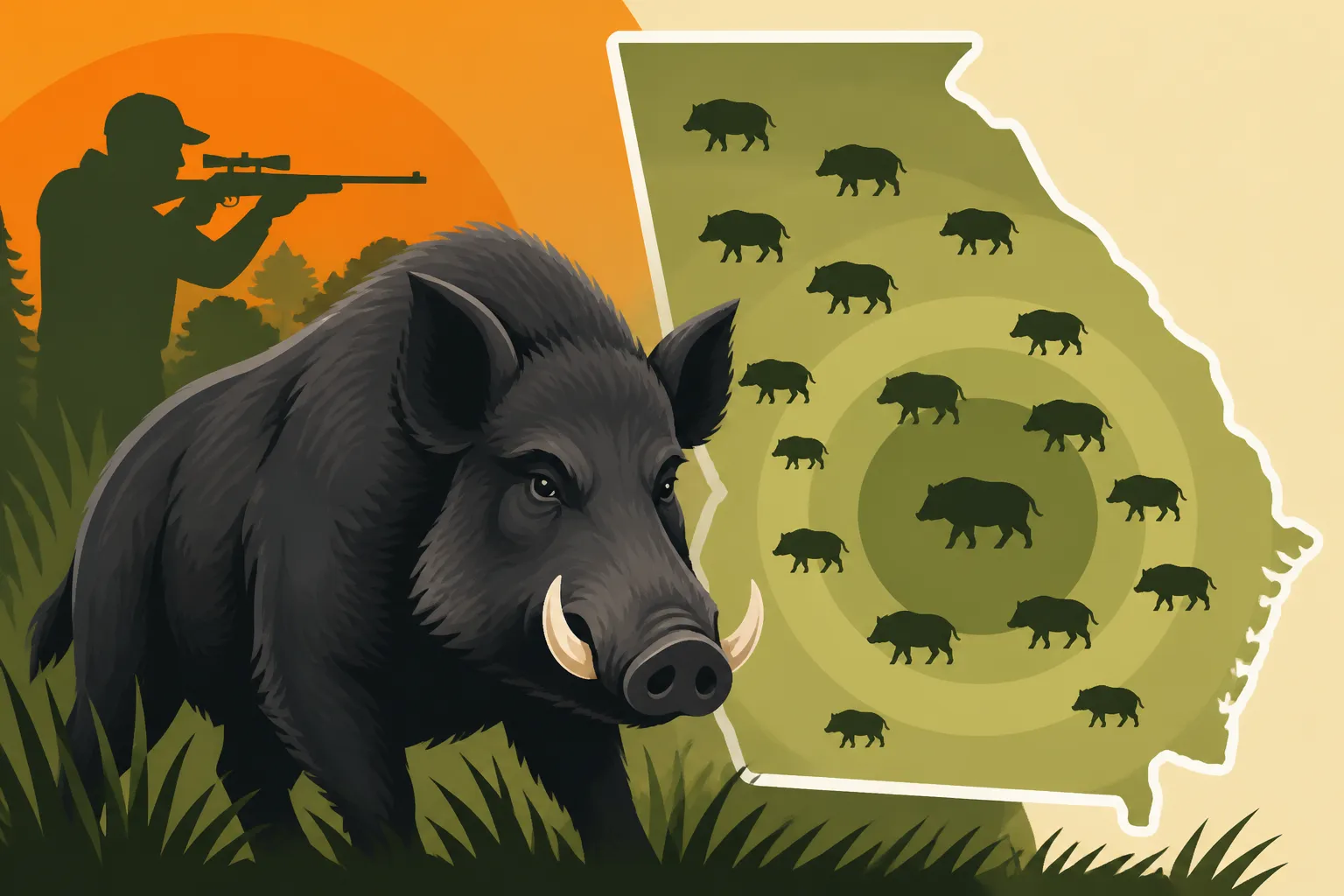
While a concrete, statewide population number remains elusive, most wildlife experts and agricultural departments in Georgia generally agree that the state's feral hog population is in the millions. This isn't a figure to be taken lightly; it means that these animals are truly ubiquitous, found in every one of Georgia's 159 counties. The general consensus points to a population that has been steadily increasing over the last few decades, with no signs of slowing down. It’s not uncommon to hear estimates hovering around the 1.5 to 2 million mark, but these are truly educated guesses, given the inherent difficulties in tracking such an adaptable and rapidly reproducing species.
What's more important than an exact number is understanding the trend: the population is expanding both in sheer numbers and in geographical distribution. There's a persistent threat that these animals pose, and it's something landowners, farmers, and hunters deal with daily. For hunters looking to help manage this problem, knowing general areas of high activity can be crucial, and resources like GoHunt can sometimes provide insights into reported hog movements or concentrations based on community data, offering a tactical advantage when planning hunts to target these destructive animals.
Factors Contributing to Their Explosive Spread
The primary driver behind the explosive spread of feral hogs in Georgia is their incredible reproductive capacity. As mentioned, sows can begin breeding as young as six months old, often producing two litters a year, sometimes even three if conditions are favorable. Each litter can range from four to twelve piglets, leading to an exponential growth rate that few other large mammals can match. This biological advantage allows them to quickly rebound from any control efforts, making population reduction a continuous uphill battle.
Compounding this reproductive prowess is the lack of significant natural predators for adult hogs in Georgia. While coyotes and bobcats might occasionally take a piglet, adult feral hogs are tough, aggressive, and often too large for most native predators. They also have an incredibly adaptable diet, eating almost anything from roots and tubers to insects, eggs, fawns, and even carrion. This "omnivore" lifestyle means they thrive in almost any habitat, from the humid river bottoms to the drier pine forests and suburban fringes. Georgia's mild climate, combined with abundant food sources, creates an ideal environment for them to flourish year-round. This is precisely why Georgia has implemented very liberal hunting regulations, allowing for year-round hunting with no bag limits, as explained in articles like Georgia Feral Hog Regulations.
Regional Distribution and Hotspots Across Georgia
You might think feral hogs are just a "South Georgia problem," but that couldn't be further from the truth. While some regions definitely see higher concentrations and more intense damage, these animals have effectively colonized every corner of the state, adapting to vastly different landscapes with remarkable success.
Where Feral Hogs Concentrate Most Heavily
Feral hogs are masters of finding and exploiting prime habitat, and in Georgia, that often means areas with abundant water and food. River bottoms and swamp lands are classic hog hotspots, offering dense cover for bedding, plentiful water for cooling and wallowing, and a consistent supply of acorns, roots, and other forage. Places like the Altamaha, Ocmulgee, and Flint River corridors are notorious for their dense hog populations, providing ideal conditions for them to thrive and expand. These areas are tough to hunt, but they are critical for understanding where these animals multiply.
Beyond the natural wetlands, agricultural areas are huge magnets for hogs. Fields of corn, peanuts, soybeans, pecans, and even newly planted winter wheat offer a buffet they simply can't resist. Southwest Georgia, known for its extensive agriculture, is particularly hard-hit. Farmers in counties with significant agricultural output often report the highest levels of hog activity and damage, leading to significant financial losses. You can read more about this in resources detailing Which Georgia Counties Have the Most Hogs. Even suburban areas are seeing increased hog activity as they push into green spaces and unmanaged lands, creating new challenges for homeowners and local authorities.
The Impact on Different Georgia Landscapes
The impact of feral hogs on Georgia's diverse landscapes is nothing short of catastrophic. In agricultural fields, their rooting behavior can destroy acres of crops overnight, making it impossible for farmers to bring in a harvest. They dig up planted seeds, eat ripening produce, and flatten fields, costing farmers millions of dollars annually. Beyond the immediate crop loss, their activity compacts soil, damages irrigation systems, and can spread diseases to livestock, creating a constant headache and financial burden for those who rely on the land for their livelihood. This severe economic toll on producers is highlighted in discussions about damage feral hogs cause in South Georgia.
Ecologically, the damage is just as severe. Hogs are an invasive species, and their rooting disturbs delicate native plant communities, leading to erosion and altering soil composition. They compete with native wildlife for food sources like acorns and mast, putting pressure on deer, turkeys, and bears. Even more alarming, they are voracious predators of ground-nesting birds like turkeys and quail, consuming eggs and even young poults. They also prey on fawns, salamanders, and other small mammals, directly impacting the survival rates of our treasured native species. This predation significantly contributes to challenges for species like turkeys, as discussed in topics such as Nest Predation and Georgia Turkey Hatches. Their wallowing can also degrade water quality in streams and ponds, affecting aquatic life.
Methods Used to Estimate and Monitor Feral Hogs
Given the monumental challenge of counting every single hog in Georgia, wildlife managers and researchers rely on a combination of indirect assessment techniques and scientific modeling to understand population trends and distribution. While these methods don't provide a precise "hog census," they offer valuable insights into the scale of the problem and where control efforts are most needed.
Indirect Assessment Techniques
Since direct counting is largely impractical, wildlife agencies and researchers turn to indirect indicators. One of the most common methods involves analyzing hunter harvest data. While Georgia doesn't have a mandatory check-in system for hogs like it does for deer or turkey, surveys of hunters can provide an indication of perceived hog numbers and harvest success rates. If hunters are consistently reporting higher numbers of hogs taken, it suggests a robust or growing population. This data, however, is often self-reported and can be influenced by hunting effort rather than just population density.
Landowner surveys are another critical tool. Farmers and private land managers are often on the front lines, witnessing the damage firsthand. Their reports on the frequency of hog sightings, the extent of property damage, and the perceived density of hogs on their land offer crucial anecdotal evidence that helps paint a broader picture of distribution and intensity. Additionally, widespread use of trail cameras, even if not for precise counting, provides visual evidence of hog presence and activity patterns across various habitats. While GoHunt primarily focuses on hunting locations, its community features or mapping tools could potentially aggregate user-reported hog sightings or damage photos, offering another layer of crowdsourced "indirect assessment" for interested hunters and landowners trying to understand local hog pressure.
Scientific Research and Modeling Efforts
Beyond surveys and anecdotal evidence, scientific research plays a vital role in understanding feral hog dynamics. Universities and state wildlife agencies conduct detailed studies on hog movements, reproductive rates, and survival, often using telemetry (radio collars) on individual animals. This research provides critical data points that feed into population modeling. By understanding litter sizes, breeding frequency, and mortality rates, scientists can develop mathematical models that project population growth and density, even without a precise initial count. These models help inform management strategies and predict future challenges.
Genetic analysis is another emerging field that contributes to understanding hog populations. By studying the genetic makeup of hogs in different regions, researchers can track their spread, identify source populations, and even determine how much interbreeding occurs between wild hogs and domestic swine. This information is valuable for understanding the true "wildness" of the population and how quickly new areas are being colonized. While no one is going to give you an exact figure for How Many Feral Hogs Georgia Has, these scientific approaches refine our understanding and confirm the scale of the ongoing invasion, helping wildlife managers grasp the sheer volume of the animals they are dealing with.
The Economic and Ecological Fallout of High Hog Numbers
The true cost of Georgia's burgeoning feral hog population extends far beyond just numbers on a spreadsheet. It’s a tangible, daily reality for farmers battling crop destruction and a quiet, insidious threat to the natural balance of our state's precious ecosystems. The frustration is real, and the impacts are profound and far-reaching.
Agricultural Devastation and Farmer Frustration
For Georgia farmers, feral hogs are an unmitigated disaster. Imagine working tirelessly to plant and cultivate a field of corn, peanuts, or pecans, only to wake up one morning and find swaths of it torn up, rooted through, and trampled by a sounder of wild pigs overnight. This isn't an isolated incident; it's a recurring nightmare. Hogs can destroy entire fields, costing farmers hundreds of thousands of dollars in a single season. They don't just eat the crops; their incessant rooting damages irrigation lines, fences, and farm equipment, leading to additional repair costs and labor.
The financial strain is immense, but the emotional toll can be even heavier. Many farmers feel like they're fighting a losing battle, pouring their hearts and resources into their land only to have it laid waste by an animal with no natural boundaries or respect for property lines. The need for constant vigilance, expensive trapping programs, and continuous hunting efforts adds another layer of burden. For some, the damage is so severe they are forced to change planting strategies or even abandon certain crops altogether. Finding effective hog control solutions is paramount, and platforms like GoHunt could potentially facilitate connections between landowners desperate for help and hunters looking for opportunities to target these destructive animals.
Environmental Harm and Native Species Threat
Beyond agriculture, feral hogs are an ecological bulldozer. Their characteristic rooting behavior not only destroys crops but also churns up forest floors, wetlands, and riparian zones. This disturbance disrupts sensitive native plant communities, preventing regeneration and promoting the spread of invasive weeds. It leads to increased soil erosion, particularly along stream banks, degrading water quality and impacting aquatic habitats. Wallowing in sensitive wetland areas can destroy the delicate structure of these vital ecosystems.
Perhaps even more concerning is their direct threat to native wildlife. Feral hogs are opportunistic omnivores, meaning they'll eat whatever they can get their tusks on. This includes the eggs and young of ground-nesting birds like wild turkeys and bobwhite quail, contributing significantly to declines in these species. They also prey on fawns, amphibians, reptiles, and invertebrates, competing directly with native species for food resources like acorns, which are crucial for deer, bears, and squirrels. The Georgia DNR and conservation groups are deeply concerned about this environmental degradation, as hogs undermine countless efforts to restore and protect Georgia's biodiversity. It’s a stark reminder that an invasive species can quickly unravel decades of conservation work.
What Hunters and Landowners Can Do
Dealing with Georgia's rampant feral hog population isn't just a job for wildlife agencies; it's a collective effort that requires active participation from landowners and hunters. While we might never eliminate them entirely, effective management strategies can help mitigate their devastating impact and protect our valuable resources.
Active Management and Control Strategies
Since there's no closed season or bag limit for feral hogs in Georgia, hunting is one of the most accessible and effective tools for population control. Year-round hunting pressure can help keep local populations from exploding, though it rarely leads to complete eradication. Many hunters employ various tactics, from traditional spot-and-stalk during daylight hours to specialized night hunting with thermal imaging or night vision. Night hunting is particularly effective because hogs are often nocturnal and can be more easily approached under the cover of darkness. For more on this, you can check out guides like Thermal Hunting Georgia Hogs at Night.
Trapping is another highly effective method, especially for removing entire sounders. Traps range from simple box traps to large, sophisticated corral traps with remote triggers. The key is to bait the traps consistently to draw in as many hogs as possible before setting the trigger. Once caught, removal is typically a clean and efficient process. You can find more details on this in articles like Baiting a Feral Hog Trap Site. Some hunters also utilize dogs, which can be particularly effective in dense cover for locating and baying hogs, allowing for a targeted harvest. This method is explored further in Running Dogs on Georgia Feral Hogs. For those looking to combine efforts, remember that you can hunt hogs Hunting Hogs Alongside Any Other Georgia Season, making them a target of opportunity.
Collaboration and Continued Monitoring
Individual efforts are important, but combating Georgia's pervasive hog problem requires a collaborative approach. Landowners can work together to establish trapping lines across property boundaries, creating a larger, more effective control zone. Sharing information about hog movements and activity patterns can help everyone stay one step ahead. Wildlife agencies, like the Georgia Department of Natural Resources (DNR), offer resources and advice for landowners struggling with hog damage. They often provide guidance on best practices for trapping and removal, as well as information on monitoring populations.
Continued monitoring, even without precise counting, is essential. Keeping track of damage, noting the size and frequency of sounders, and reporting any unusual hog activity helps contribute to the overall understanding of the problem. This shared knowledge allows for more adaptive management strategies. Understanding Why Feral Hogs Spread So Fast in Georgia underscores the need for constant vigilance and a proactive stance. By working together, sharing resources, and maintaining consistent pressure, hunters and landowners can make a tangible difference in reducing the destructive impact of feral hogs across Georgia's farms and wildlands. It’s a marathon, not a sprint, and every bit of effort helps protect the land we cherish.
| Estimation Method | Description | Pros | Cons |
|---|---|---|---|
| Hunter Harvest Data | Surveys of hunters on number of hogs taken and perceived population trends. | Easy to collect, provides broad trend data. | Self-reported bias, influenced by hunting effort, not pure population density. |
| Landowner Surveys | Reports from farmers/landowners on damage, sightings, and perceived density. | Direct impact assessment, localized insights. | Anecdotal, subjective, not standardized for statewide comparison. |
| Trail Camera Monitoring | Analysis of photographic evidence over time. | Confirms presence, indicates activity patterns. | Difficult to differentiate individual hogs, labor-intensive analysis, limited spatial coverage. |
| Damage Assessments | Quantifying crop loss and property destruction. | Highlights economic impact, indicates high-pressure areas. | Doesn't directly count animals, damage severity can vary independently of exact numbers. |
| Scientific Modeling | Using biological data (reproduction, survival) to project population dynamics. | Provides population trends and growth predictions. | Relies on assumptions, requires detailed biological data which can be hard to gather for hogs. |
| Genetic Analysis | Studying DNA to track spread and relatedness of populations. | Identifies source populations, reveals dispersal patterns. | Costly, doesn't provide absolute numbers, more about spread than density. |
Disclaimer
The information provided in this guide is for general informational purposes only and is not intended as legal advice. Hunting regulations, licensing requirements, and wildlife management practices in Georgia are subject to change. Always consult the latest official regulations from the Georgia Department of Natural Resources (DNR) before engaging in any hunting activities.