Blood Trailing After Dark in Georgia
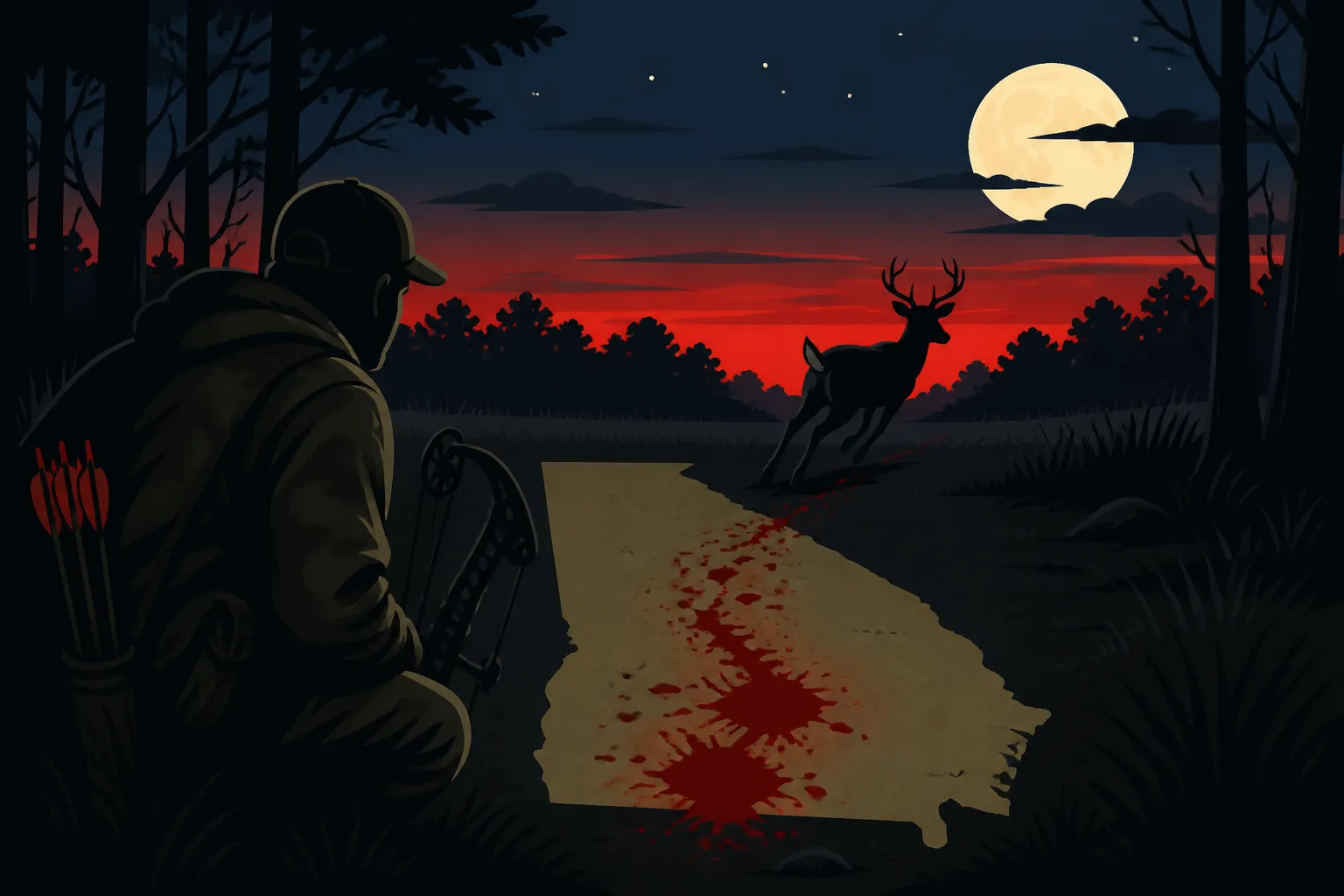
There's nothing quite like the knot in your stomach when you make a shot on a Georgia deer, only for darkness to fall before you can recover it. The humidity hangs heavy, the air cools just enough to make you shiver, and the woods transform into a maze of shadows and unfamiliar sounds. Blood trailing after dark in Georgia presents unique challenges, often leading to frustration and the heartbreaking loss of an animal. This guide will walk you through the essential strategies, gear, and mindset you need to successfully locate your deer when the sun has set.
The Unique Challenges of Night Trailing in Georgia
Trailing a deer in broad daylight can be tough enough in Georgia's diverse terrain, but when night descends, the difficulty multiplies. It's not just about turning on a flashlight; it's about navigating a completely different sensory landscape, often under immense pressure. The subtle clues you might pick up effortlessly during the day become almost invisible, and the environment itself presents new hurdles.
Diminished Visibility and Tricky Terrain
The most obvious challenge, of course, is the profound lack of light. Headlamps can only illuminate a small cone in front of you, leaving the periphery shrouded in darkness. This makes it incredibly hard to spot faint specks of blood, disturbed leaves, or broken twigs that would be clear indicators during the day. Georgia's terrain doesn't help either. Whether you're in the steep, rocky Appalachian foothills, the thick pine plantations of the Piedmont, or the dense, swampy bottoms of the Coastal Plain, the cover can be incredibly unforgiving.
Imagine trying to follow a faint blood trail through a thick patch of privet hedge or across a sprawling field of shoulder-high broom sedge in the pitch black. The shadows play tricks on your eyes, making every twig look like a splotch of blood and every dark leaf appear promising. The ground itself can be uneven, full of hidden stumps, roots, and holes, making a slow, deliberate pace essential, yet frustratingly slow when you're anxious. If your deer crossed into areas like a cypress swamp, the challenge of Recovering a Deer From a Cypress Swamp becomes exponentially harder at night, with water making blood sign disappear or become unrecognizable.
Increased Predator Activity and Spoilage Concerns
Another very real and often overlooked aspect of night trailing in Georgia is the increase in nocturnal predator activity. Coyotes, bobcats, and even feral hogs are much more active after dark. While a deer that has been recently shot might not be immediately attractive, as time stretches on, the scent of blood becomes a beacon. You're not just racing against the clock for recovery; you're often in a silent competition with scavengers. The last thing any ethical hunter wants is to find their hard-earned deer partially consumed by predators.
Beyond predators, the warm Georgia nights present a significant concern for meat spoilage. Even in October, temperatures often remain mild, and a deer left overnight without proper field dressing can begin to spoil quickly, especially if it's been gut-shot. This adds another layer of urgency to your night trailing efforts. If you're out in the early archery season, when temperatures can still be quite high, concerns about Field Dressing a Deer in Warm Weather become paramount, and the need for quick recovery is even more critical.
Essential Gear for Successful After-Dark Blood Trailing
Approaching a night trail unprepared is a recipe for failure and potentially even danger. Having the right tools at your disposal will significantly increase your chances of success and ensure your safety in the Georgia woods after hours. Think of it as a specialized kit, distinct from your regular hunting pack.
Lighting the Way: Headlamps, Flashlights, and UV Lights
Your most critical tool for night trailing is, without a doubt, a good light source. In fact, you need several. A high-quality headlamp is non-negotiable, allowing you to keep both hands free for navigating tricky terrain or pushing through brush. Look for one with a bright beam (at least 500 lumens) and a long battery life, preferably with a red-light option to preserve your night vision when you're not actively trailing. Many hunters swear by having multiple Headlamps for Walking Out After Dark – one on your head, and a spare in your pack, or even a handheld flashlight to complement it.
Beyond standard white light, a UV or "blood tracking" light can be incredibly helpful. While not a magic bullet, these lights can make dried blood fluoresce, sometimes revealing faint trails that are invisible to the naked eye under white light. They work best on dried blood against natural backgrounds like leaves and dirt. It's a tool that takes some practice to master, but in challenging conditions, it can be a lifesaver. Always carry extra batteries for all your light sources; you never want to be caught in the dark without them.
Navigation and Communication Tools
Getting lost while blood trailing at night is a serious risk, especially if you're deep in unfamiliar woods or on sprawling public land. A reliable GPS unit or a smartphone with a robust mapping app like GoHunt is absolutely crucial. Before you even head out, mark your starting point, the shot location, and the last known blood sign. As you trail, mark your path regularly with waypoints. This creates a digital breadcrumb trail that allows you to retrace your steps if the trail goes cold or you become disoriented. The GoHunt app, for instance, allows for detailed mapping and waypoint creation, which is invaluable for intricate tracking efforts.
In addition to navigation, reliable communication is vital. Cell service can be spotty in many parts of Georgia's remote hunting areas. Carry a fully charged cell phone, but also consider a satellite messenger or two-way radios if you're hunting with a partner. You'll want to communicate your progress, any difficulties, and certainly if you find the animal. Having a way to call for help in an emergency is paramount, which is why a well-stocked First Aid Kits for Remote Swamp Ground is also a must-have item in your pack, alongside these communication devices.
Tracking Aids and Safety Gear
Beyond lights and navigation, a few other items can make a significant difference. Biodegradable flagging tape is essential for marking your trail, especially when you lose blood or want to mark the last known sign. Brightly colored ground markers or even small glow sticks can also be useful for marking spots on the ground without permanently altering the landscape. A small pair of binoculars, even 8x or 10x, can help you scan ahead for the deer itself or for larger blood splashes that might be just beyond your headlamp's direct beam.
Don't forget personal safety items. The Georgia woods are home to various critters, including venomous snakes. Wearing snake boots, even in cooler weather, is a smart precaution, particularly when you're focused on the ground and not looking where you step. Long pants and sleeves, along with a good insect repellent, are also crucial, as mosquitoes and ticks are often out in full force on warm Georgia nights. You can get excellent Bug Protection for Early Archery Season products that last all night. Finally, a small backpack to carry all this gear, along with water and a snack, is advisable.
Strategic Approaches to Night Trailing
The key to successful night trailing isn't just having the right gear; it's also about having the right mindset and a methodical approach. Panic, haste, and disorganization are your worst enemies. You need to be patient, systematic, and willing to admit when it's time to pause.
Slow and Methodical Progress
When the adrenaline is pumping and the minutes are ticking by, it's incredibly tempting to rush. Resist this urge at all costs. Trailing at night requires an even slower, more deliberate pace than during the day. Stop frequently, turn off your headlamp periodically to let your eyes adjust to the ambient light (if any), and then slowly scan the area with your white light and UV light. Look not just for blood, but for disturbed leaves, overturned moss, scuffed earth, or broken twigs that indicate the deer's path.
When you find a spot of blood, mark it immediately with flagging tape or a ground marker. This is where the systematic approach comes in. Don't move from that spot until you've found the next sign. Imagine a grid search, moving slowly from one marked spot to the next. This ensures you don't overshoot the trail or get disoriented. It might feel painstakingly slow, but it prevents you from getting completely lost or missing critical sign. Remember that Tracking a Deer Through Georgia Pine Straw can be particularly difficult at night, as the subtle disturbances are hard to pick out.
Marking Your Path and Establishing a Grid
As mentioned, marking your path is non-negotiable. Every time you find a confirmed sign of blood or a clear track, place a piece of flagging tape or a small ground marker. Don't skimp on this. If the trail goes cold, these markers will allow you to return to the last known sign and search systematically in a wider circle. Some hunters even attach a small piece of reflective tape to their flagging, making it easier to spot with a headlamp beam from a distance.
When the trail becomes sporadic or disappears completely, start expanding your search in a grid pattern around the last confirmed sign. Visualize expanding concentric circles or a series of parallel lines. Move slowly, carefully examining every inch of ground. Pay attention to natural travel corridors – fence lines, creek bottoms, logging roads, or even subtle deer trails. Deer often follow the path of least resistance, even when injured. Using your mapping app to mark these areas and track your search pattern can be incredibly effective. A strong mapping tool like the one offered by GoHunt allows you to drop pins and visualize your search grid.
Knowing When to Back Out and Resume at Daybreak
This is perhaps the hardest decision a hunter faces: when to call off a night trail and return in the morning. Your instincts will scream at you to keep going, but sometimes, perseverance can lead to destroying the trail, getting lost, or simply exhausting yourself without success. If you've spent a few hours trailing, the blood sign has become minimal or non-existent, and you're covering significant ground without progress, it's time to consider backing out.
Before you leave, mark the very last spot of confirmed blood or sign with extra care. Place multiple markers, perhaps even leaving a distinct item (like a bright bandanna) that you can easily spot in the morning. Take a moment to record your GPS coordinates for that last sign. Returning in the morning with fresh eyes, in natural light, often reveals a trail that was completely missed under the artificial glow of a headlamp. It’s a gut-wrenching decision, but one made for the best chance of recovery. Consider the conditions – a cold front might preserve the meat longer, but heavy rain could wash away the trail. Factors like these, and where the deer is likely to be (e.g., in a swampy area versus an open field), can influence your decision.
Common Pitfalls and How to Avoid Them
Even with the best gear and intentions, night trailing can go wrong. Understanding common mistakes can help you sidestep them and increase your chances of a successful recovery. It's about being proactive and learning from the experiences of others.
Rushing the Trail and Destroying Evidence
The most common mistake is impatience. Rushing through the woods, frantically sweeping your light, will almost certainly lead to you walking past critical blood sign or, worse, stepping on and obliterating it. When you're moving too fast, your eyes can't adjust to the subtle differences in terrain and color. You might miss a faint spray on a leaf or a small divot in the soil.
Instead, force yourself to slow down. If you're with a partner, one person can be the primary "tracker," moving slowly and methodically, while the other acts as a spotter, scanning ahead and to the sides. Use your flagging tape liberally. Every time you confirm a sign, mark it, then move forward to find the next. If you can't find the next sign within a reasonable distance (say, 10-15 yards), return to your last marker and expand your search pattern slowly. This also helps you avoid getting caught in situations where Hunting Pressure on Georgia Public Land means other hunters might inadvertently walk over your trail if you aren't deliberate.
Ignoring Your Instincts and Trusting Poor Sign
Deer trailing is part science, part art, and a big part intuition. Sometimes, your gut will tell you something isn't right – that a "blood spot" is just a rust-colored leaf, or that the "track" is actually just a rock. Don't override these instincts just because you're desperate to find the deer. Trust only confirmed, undeniable blood, hair, bone fragments, or clear tracks.
A common pitfall is following "splash" trails that look promising but are actually just accidental drips from a wounded animal that has moved on in a different direction. True blood trails will typically show a progression of movement. Also, be wary of relying solely on UV lights; while useful, they can sometimes highlight other fluids or substances that aren't blood. Always confirm anything a UV light shows with white light and visual inspection. Always be critical of what you're seeing, especially when visibility is poor. Learning to read subtleties, like the difference between fresh and old sign, is key to Reading Georgia Mud for Fresh Deer Movement, even at night.
Overlooking Safety in the Darkness
When you're singularly focused on finding your deer, it's easy to forget about your surroundings and personal safety. The Georgia woods at night can be dangerous. Besides the aforementioned snakes and uneven terrain, there are other risks. Getting tangled in briars, stumbling into a creek, or even accidentally encountering another person in the dark (especially if they're also out trailing or are up to no good) are all possibilities.
Always let someone know where you are and your estimated return time, even if they're just waiting back at camp. Carry a charged phone or satellite messenger. Wear appropriate clothing and footwear; Warm-Weather Clothing for Georgia Hunters might involve lighter layers, but proper snake boots and long pants are always wise. If you're on public land, wearing blaze orange or blaze pink, even at night (where regulations allow), can increase your visibility to others, although most deer hunters will be off the woods after legal shooting hours. Ultimately, if a situation feels unsafe, disengage. No deer is worth risking your life or limb.
Disclaimer
Hunting is an inherently risky activity. This guide provides general information and best practices for blood trailing after dark in Georgia. Always prioritize safety, adhere to all local and state hunting regulations, and use good judgment. The author and publisher are not responsible for any accidents, injuries, or unsuccessful hunts that may occur.