GPS Units Versus Phone Apps
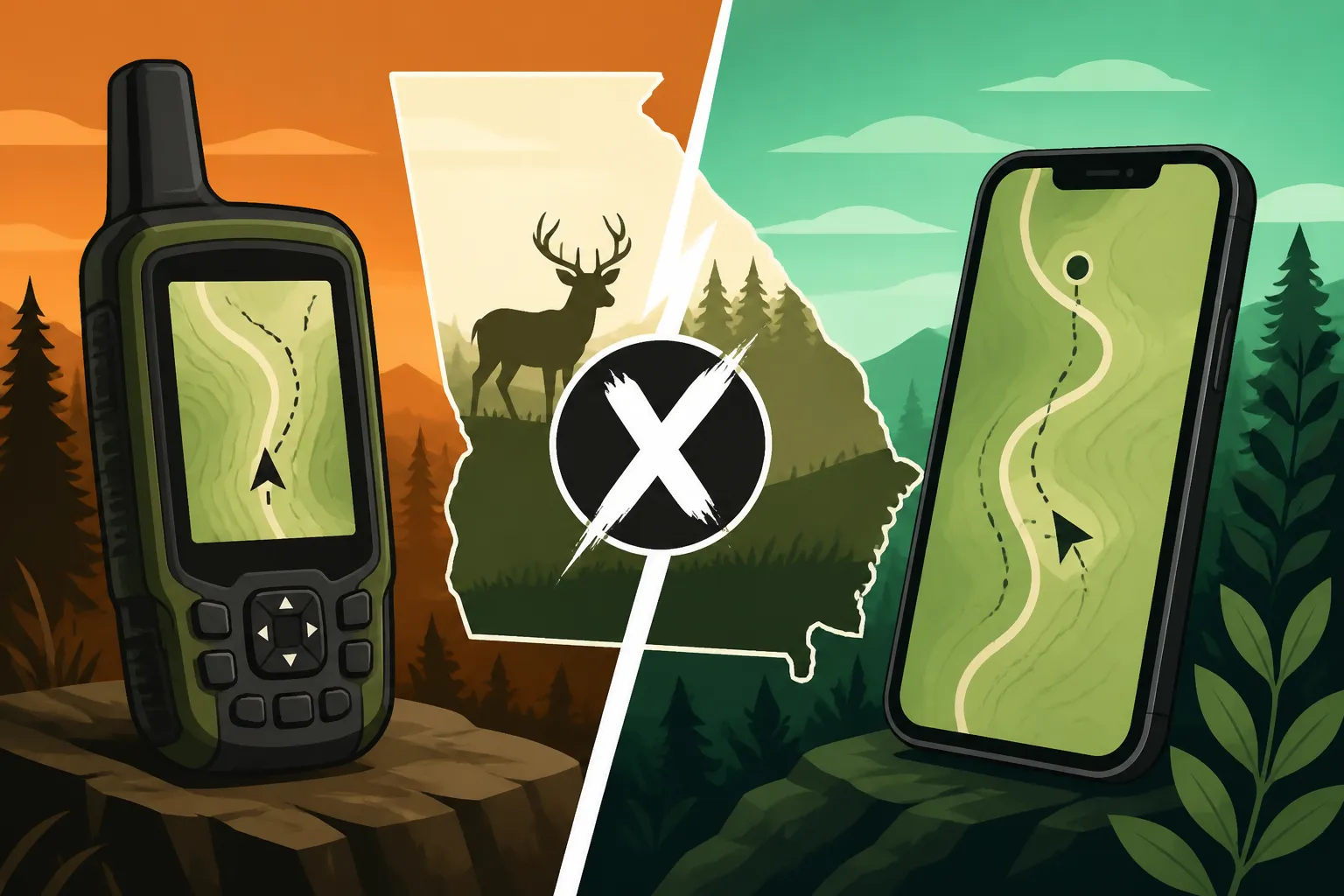
There's nothing quite like that heart-stopping moment when you look up from the track you've been following, only to realize the landscape around you looks utterly foreign, and your internal compass has spun completely out of control. Getting turned around in the vastness of Georgia's diverse hunting lands, whether it's a deep mountain holler or a sprawling swamp bottom, is a real and unsettling experience that can quickly ruin a hunt and even become dangerous. This guide will walk you through the ongoing debate between dedicated GPS units and the ever-evolving navigation apps on your smartphone, helping you understand the pros and cons of each so you can confidently find your way, no matter where your next hunt takes you.
The Traditional Workhorse: Dedicated GPS Units
For decades, dedicated GPS units were the gold standard for backcountry navigation, and for good reason. Before smartphones became ubiquitous, these rugged devices were the only reliable way to pinpoint your location in remote areas without relying on maps and compass skills alone. Many seasoned hunters still swear by them, and there are some compelling arguments for keeping one in your pack.
Advantages of a Standalone GPS
When you pick up a purpose-built GPS unit, you're usually holding a device designed from the ground up to withstand the rigors of the outdoors. They're often built to be waterproof, capable of shrugging off a sudden downpour or an accidental splash into a creek. They can take a tumble from a treestand or a rough ride in a truck bed without skipping a beat, unlike the fragile glass screens of most smartphones. This robust durability is a huge peace of mind when you're miles from the truck.
Another significant advantage is their predictable and extended battery life. Most dedicated GPS units run on standard AA or AAA batteries, which are easy to carry spares for and replace in the field. They are engineered to conserve power, often lasting for days of continuous use, whereas a smartphone running a mapping app can drain its battery in just a few hours, especially in cold weather. Imagine you're deep in the Chattahoochee National Forest Hunting in the North Georgia mountains, chasing a hot gobbler during Spring Turkey Hunting in Georgia, and suddenly your phone dies. A dedicated GPS, with its backup batteries, ensures you still have your navigation tool.
Furthermore, dedicated GPS units are designed for one primary function: satellite acquisition and navigation. They generally acquire satellite signals quickly and maintain them reliably, even under heavy canopy or in deep ravines where cell service is non-existent. You're not relying on cell towers or internet connectivity; you're talking directly to satellites orbiting Earth. Many units also feature physical buttons, which might seem old-fashioned, but they're a blessing when you're wearing gloves in freezing temperatures or when your hands are wet or muddy, allowing for precise control without having to swipe a touchscreen.
Drawbacks of Dedicated GPS Units
While reliable, dedicated GPS units do come with their own set of considerations. The initial cost can be a barrier for some hunters, as these specialized devices can range from moderately priced to quite expensive, particularly for models with advanced features or pre-loaded, high-detail maps. This investment is often higher than simply using an app you already own or subscribing to a mapping service.
Moreover, the user interface on many traditional GPS units can feel less intuitive, especially for those accustomed to the sleek, touch-friendly designs of modern smartphones. There's often a learning curve involved in mastering the menus, buttons, and specific functions. It might take some dedicated time at home to really get comfortable marking waypoints, creating routes, and understanding all the display options. This can be frustrating when you're trying to quickly mark a rub line or a fresh track in the field.
Updating maps on older GPS units can also be a cumbersome process. Sometimes it requires connecting to a computer, downloading specific files, or even purchasing updated map cartridges. This is a stark contrast to smartphone apps that often update seamlessly in the background or with a simple tap. Lastly, while they excel at navigation, dedicated GPS units are single-purpose tools. They won't tell you the weather forecast, show you public land boundaries with multiple layers, or help you identify game sign like a feature-rich app might. Their functionality is focused, which is a strength, but also a limitation in the age of multi-tool devices.
The Modern Contender: Smartphone Apps
The advent of powerful smartphones has revolutionized nearly every aspect of our lives, and hunting navigation is no exception. With high-resolution screens, powerful processors, and access to a vast array of applications, your phone has become a legitimate, and often preferred, navigation tool for many hunters in Georgia.
Advantages of Hunting Apps on Your Phone
The sheer convenience of using a hunting app on your phone is hard to beat. Most hunters already carry their phone everywhere, so adding a powerful mapping application means one less device to remember. Your phone is a multi-functional tool; it’s your camera, communication device, and now, your primary navigation system. This integration means you can seamlessly switch from checking Georgia Deer Harvest Records to marking a stand location, all on the same device.
Cost is another significant draw. While some premium hunting apps require a subscription, many offer free versions with basic mapping capabilities, and even the paid subscriptions are often more affordable than the upfront cost of a high-end dedicated GPS unit. These subscriptions typically unlock detailed satellite imagery, topographic maps, and crucial layers like public and private land boundaries, which are invaluable when you're trying to determine if you're on legal ground or asking for Getting Private Land Permission in Georgia.
The user interfaces of smartphone apps are generally far more intuitive than traditional GPS units. They leverage familiar touchscreen gestures, vibrant displays, and well-designed menus, making it easy to zoom, pan, mark waypoints, and draw routes with minimal effort. Many apps, like GoHunt, offer incredibly rich features that go far beyond simple navigation. They can overlay weather radar, show moon phases, provide sunrise/sunset times, and even offer tools for blood trailing or measuring distances for shot placement. You can scout new areas from your couch by looking at Reading Aerial Photos for Piedmont Deer or Finding Sign in Big Chattahoochee Timber, then take that detailed knowledge directly into the field on your phone.
Disadvantages and Risks of Relying Solely on Your Phone
Despite their many benefits, relying exclusively on your phone for navigation during a hunt carries notable risks. The most common and frustrating issue is battery drain. Running GPS, downloading map data, and keeping the screen active—especially in cold weather or areas with poor cell service where your phone constantly searches for a signal—can rapidly deplete your battery. There’s nothing worse than having your phone die halfway through an evening sit or, even worse, when you're Tracking a Deer Through Georgia Pine Straw after dark.
Durability is another major concern. Most smartphones are not designed for the harsh realities of the Georgia woods. A fall onto rocky ground or into a puddle can easily crack a screen, damage internal components, or render the device completely unusable. While rugged cases and waterproof bags can help mitigate these risks, they don't offer the same level of inherent protection as a dedicated GPS unit.
Cell service dependence, while less of an issue than it once was, can still be a problem. While most quality hunting apps allow you to pre-download maps for offline use, you still need service to download those maps in the first place, or to access real-time features like weather radar. If you forget to download maps before heading into a remote area like the Okefenokee Swamp Region, you could find yourself with a beautiful map showing no detail whatsoever. Finally, glare from direct sunlight can make smartphone screens difficult to read, forcing you to find shade or cup your hands around the screen, which isn't always convenient.
Making the Choice: Which is Right for Your Georgia Hunt?
So, how do you decide between the old guard and the new tech? The answer often isn't an either/or proposition, but rather a thoughtful integration of both. Your hunting style, the terrain you frequent, and your personal comfort level with technology will all play a role in your decision.
Hybrid Approach: The Best of Both Worlds
For many serious Georgia hunters, the most effective strategy is a hybrid approach, leveraging the strengths of both technologies. Think of your smartphone app, especially a powerful one like GoHunt, as your primary planning and navigation tool. You can use it at home to meticulously scout areas, mark potential stand sites, identify Hunting Piedmont Creek Bottom Funnels, and analyze terrain. In the field, it's fantastic for real-time tracking, marking game sign, and utilizing those rich map layers.
However, a dedicated GPS unit or at least a robust portable charger should always be considered your backup. If your phone battery dies, or if you drop it and crack the screen, you still have a reliable way to get back to your vehicle. Pre-downloading maps for offline use on your phone app is non-negotiable for any serious hunt, especially if you plan on exploring areas with spotty or non-existent cell service. For example, if you're hunting the Blue Ridge Wildlife Management Area, you know cell signal is fleeting at best. Having those maps downloaded on your phone, plus a small, rugged GPS like a Garmin eTrex tucked into your pack, means you’re prepared for anything.
Considerations for Georgia's Diverse Terrain
Georgia's landscape is incredibly varied, and what works well in one region might be less ideal in another. Understanding these differences can help you tailor your navigation strategy.
In the rugged Hunting North Georgia Mountain Country, where elevation changes are dramatic and cell service can vanish without warning, the reliability and durability of a dedicated GPS unit shine. The ability to quickly and accurately mark waypoints and see your precise elevation is critical for navigating steep ridges and deep hollows. The physical buttons are also a huge plus when your fingers are cold or wet from morning dew. But even here, GoHunt can give you invaluable insights into topography and public land boundaries during the planning phase.
Down in the vast, often wet, South Georgia swamps and river bottoms, like those found when Hunting Georgia Swamp and River Bottom Deer, moisture is your biggest enemy. A waterproof dedicated GPS unit is almost a necessity, or at the very least, a heavy-duty waterproof case for your phone. Here, precise tracking and the ability to mark a return path are vital in landscapes that can look identical for miles. The flat terrain might offer slightly better cell coverage in some spots, but it's never a guarantee.
Across the rolling hills and agricultural lands of Georgia's Piedmont region, cell service tends to be more consistent, making smartphone apps a very strong contender. You're often hunting around field edges, timber stands, and creek bottoms that are more defined. Here, the detailed satellite imagery and property boundary overlays offered by apps like GoHunt are incredibly useful for staying on track and avoiding trespass. Even so, it's wise to still download those maps offline because you never know when you'll hit a dead zone.
Ultimately, the best navigation system is the one you know how to use proficiently, is reliably charged, and is resilient enough for the environment you're hunting. Practicing with your chosen tools at home and in less stressful environments before you head out into the unknown is the most important step of all.
Comparison of GPS Units and Smartphone Apps for Hunting
Here's a quick look at how dedicated GPS units stack up against smartphone apps for hunters:
| Feature/Aspect | Dedicated GPS Units | Smartphone Apps (with hunting subscriptions) |
|---|---|---|
| Durability | Excellent (rugged, waterproof, shock-resistant) | Variable (fragile without robust case, not inherently waterproof) |
| Battery Life | Excellent (long-lasting, replaceable standard batteries) | Poor to Moderate (drains quickly, especially in cold/poor service) |
| Reliability | Excellent (dedicated satellite acquisition, no cell needed) | Good (offline maps possible, but initial download/some features need service) |
| Cost (Initial) | Moderate to High | Low (already own phone) to Moderate (subscription fees) |
| User Interface | Can be complex, physical buttons | Highly intuitive, touch-screen, familiar |
| Map Updates | Can be cumbersome, sometimes costly | Frequent, often automatic, included in subscription |
| Additional Features | Primarily navigation | Rich (weather, public/private land, moon phase, blood trailing) |
| Visibility | Good (transflective screens in sunlight) | Variable (prone to glare, hard to read in bright sun) |
| Learning Curve | Moderate | Low (familiar phone interface) |
Final Thoughts on Navigating Georgia's Wilds
Choosing between a dedicated GPS unit and a hunting app on your smartphone isn't about finding a single "best" solution. It's about building a reliable system that empowers you to explore Georgia's incredible hunting opportunities safely and confidently. Whether you're chasing deer during Georgia's Long Firearms Deer Season in the Piedmont or pursuing hogs year-round in the deep swamps, being prepared with robust navigation is crucial.
Many hunters will find that a combination of both technologies provides the ultimate peace of mind. Use the feature-rich, user-friendly apps for planning and primary navigation, always ensuring you've downloaded your maps for offline use. And always, always have a backup plan, whether that's a fully charged, rugged dedicated GPS unit or a high-capacity portable charger for your phone, tucked away in your pack. Knowing your way around the woods frees you up to focus on the hunt itself, making your time afield more enjoyable and far safer.
Disclaimer
This article is for general informational purposes only and does not constitute professional advice. Laws, prices and regulations vary by location and change over time. Consult a qualified professional for guidance on your specific situation.