Rangefinding Binoculars Worth the Cost
For many Georgia hunters, that split-second decision on a deer stand or in a turkey blind can feel like a high-stakes gamble. You spot your target, your heart rate spikes, but then that nagging question creeps in: "Exactly how far is that shot?" This uncertainty, especially in our varied Georgia terrain, leads to missed opportunities or, worse, poorly placed shots. This guide is all about diving deep into rangefinding binoculars, exploring whether they're truly worth the investment for hunters across our beautiful state, and how they can sharpen your aim and boost your confidence.
The Perennial Dilemma: To Rangefind or Not to Rangefind?
Every Georgia hunter, whether chasing deer through the pines of the Coastal Plain or calling gobblers in the North Georgia mountains, has faced the age-old question of shot distance. It's a critical piece of the puzzle, yet often the most overlooked or simply guessed at. The debate over whether to rely on estimation or invest in technology like rangefinding binoculars is a lively one, and for good reason. Your success, and the ethical harvesting of game, hinges on that accuracy.
The Old-School Approach: Estimating Distances
Ah, the good old days, or for some, the current days! Many of us grew up learning to eyeball distances. We'd look at a fence line, judge a football field's length, or use landmarks we'd pre-marked. In familiar food plots or open fields, with plenty of practice, this method can work reasonably well. You get a feel for what 100 yards looks like, or 200 yards, especially if you've walked it off a hundred times. For a seasoned hunter who hunts the same 40 acres year after year, with known clearings and trails, estimation can sometimes be sufficient for those close-range, ethical shots.
However, Georgia's diverse landscapes throw curveballs at this traditional approach. The dense hardwoods of the Piedmont, the undulating terrain of the mountains, or the seemingly endless, featureless pine flats of South Georgia can play tricks on your eyes. A small sapling might look further away, or a buck in heavy cover might appear closer than he actually is. Throw in changing light conditions – the first grey light of dawn or the deepening shadows of dusk – and even the most experienced eye can be fooled. The consequence of being off by even 10 or 20 yards, especially with modern fast-shooting bows or flat-shooting rifles, can be the difference between a clean kill and a frustrating miss, or worse, a wounded animal. It's a gamble we often take, but one that comes with inherent risks.
The Precision Problem: Why Guessing Can Cost You
Let's be honest, how many times have you settled into your stand, looked across a beautiful spread of timber or a freshly cut field, and thought, "That feeder looks about 150 yards… or maybe 175?" And then a deer steps out, not exactly at the feeder, but halfway between it and that big oak. Now what? Your internal calculator starts spinning, trying to extrapolate, adjust, and guess. This isn't just about missing a trophy; it's about the ethical responsibility we bear as hunters. A poorly ranged shot can lead to a long, arduous tracking job, or a lost animal.
Modern firearms and bows are incredibly precise, but they require equally precise input from the shooter. Bullet drop and arrow trajectory are unforgiving. If you think a deer is at 200 yards, but it's actually at 250, your holdover for that shot will be significantly off. For archers, this problem is even more acute. A 10-yard misjudgment can result in a complete pass-over or, conversely, a shot that hits low. In the heat of the moment, with adrenaline surging, our perception of distance can become even more distorted. The precision problem isn't just about hitting the target; it's about hitting it right. And in Georgia, where shots can often be taken through small windows in dense cover or across surprisingly long field edges, that precision becomes paramount. Knowing the exact distance eliminates one crucial variable, allowing you to focus purely on shot execution.
What Exactly Are Rangefinding Binoculars?
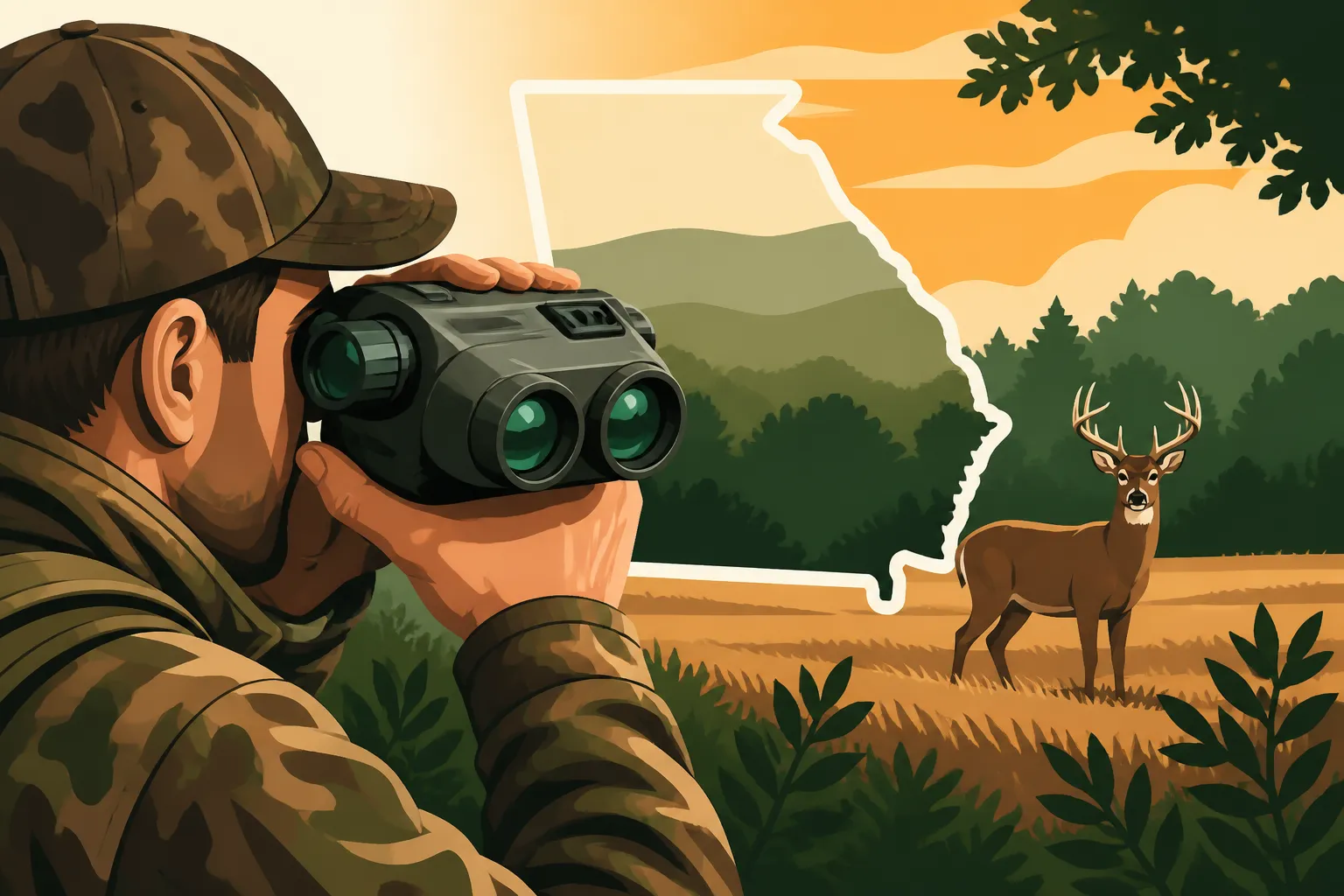
So, you've heard the term, maybe seen them in a catalog or at your local outdoor store, but what's the real scoop on rangefinding binoculars? Essentially, they're exactly what they sound like: a pair of high-quality binoculars with an integrated laser rangefinder built right in. Instead of carrying two separate pieces of equipment – one for glassing and one for ranging – you've got a single, convenient unit that does both jobs. This combination offers a streamlined experience in the field, reducing clutter and potentially saving precious seconds when it counts.
The Technology Under the Hood
At their core, rangefinding binoculars use a laser to determine distance. When you press a button, a tiny, invisible laser beam is emitted from the device. This beam travels to your target, reflects off of it, and then travels back to a receiver within the binoculars. The device then measures the incredibly short amount of time it took for the laser to make that round trip. Since the speed of light is a known constant, the internal computer can very accurately calculate the distance to the target based on that travel time. Most modern units can range targets out to impressive distances, often well over 1,000 yards for reflective targets, and several hundred yards for non-reflective targets like a deer.
Beyond just simple distance, many rangefinding binoculars offer advanced features. This includes angle compensation, which is incredibly useful in hilly or mountainous terrain, like our North Georgia mountains. A deer at 300 yards uphill or downhill is effectively a shorter horizontal distance than a deer at 300 yards on flat ground. Angle compensation calculates this "shoot-to" distance, giving you a more accurate hold. Some models also include ballistics calculators that can provide precise holdover points for your specific rifle and ammunition, taking into account temperature, altitude, and barometric pressure. This kind of sophisticated technology aims to remove as much guesswork as possible from your shot setup.
Advantages Over Separate Units
The primary advantage of rangefinding binoculars is undoubtedly convenience and efficiency. Picture this: you're still-hunting a Piedmont creek bottom, slowly easing through the timber. You spot a buck moving through the trees. With separate binoculars, you'd glass him, then lower them, reach for your handheld rangefinder, acquire the target again, get a reading, and then raise your rifle or bow. That's a lot of movement, a lot of time, and a lot of opportunity for the deer to spot you or slip away.
With rangefinding binoculars, the process is seamless. You're already glassing, already observing the animal. A quick press of a button, and the distance instantly appears in your field of view, often overlaid on the image. Your hands stay mostly still, your eyes remain on the target, and you save critical seconds. This integrated approach can be a game-changer when time is of the essence, especially for species like deer or turkey that are constantly on the move. It also means one less piece of gear to fumble with, drop, or forget. For hunters who value minimalism and efficiency in the field, this combination is incredibly appealing. It simplifies your gear list, allowing you to focus more on the hunt itself and less on managing your equipment.
Are They Truly Worth the Investment for Georgia Hunters?
This is the million-dollar question, isn't it? When you look at the price tag, especially on some of the higher-end models, it's easy to wonder if rangefinding binoculars are just an expensive luxury. But for a Georgia hunter navigating our incredibly diverse landscapes and pursuing a variety of game, the answer often leans heavily towards "yes," especially when you consider the tangible benefits they bring to your hunting experience. It's not just about the monetary cost, but the value they add in terms of confidence, ethical hunting, and overall enjoyment.
When Precision Matters Most: Long Shots and Tricky Terrain
Georgia offers a wide range of hunting scenarios where precision ranging isn't just nice to have, it's absolutely crucial. Imagine you're hunting big deer on the sprawling farmlands of Southwest Georgia. You might have a shot opportunity across a vast peanut field, easily stretching out to 250 or 300 yards. In such situations, even a slight miscalculation in distance can mean the difference between a clean kill and a frustrating miss. Similarly, if you're pursuing a Georgia Black Bear Without Bait in the North Georgia Mountains, a shot might present itself across a steep ravine or up a challenging incline. The actual "shoot-to" distance can be significantly different from the straight-line distance, and an angle-compensating rangefinder built into your binoculars will give you the precise information you need.
For bowhunters, precision is arguably even more critical. While most shots are taken at closer ranges, those ranges are often tight and specific. Knowing if that alley through the timber is 28 yards or 35 yards can mean the difference between hitting vitals or wounding the animal. Bowhunting Georgia's Early Archery Season can present unique challenges, with dense foliage impacting visibility. Having an instant, accurate range allows you to quickly adjust your pins and make a confident shot. Whether you're trying to Hang a Stand on a Mountain Saddle and want to know distances to potential shooting lanes, or you're stalking a Feral Hog Hunting Year-Round in Georgia and need to assess a quick shot opportunity in thick brush, the ability to instantly and accurately range a target provides an undeniable advantage.
Efficiency in the Field: Saving Time and Movement
We've all been there: that moment when a prime target steps out, and you're fumbling with gear. Separate binoculars, then a rangefinder, then back to the rifle or bow. Every second counts, especially when deer are alert, or turkeys are closing the distance rapidly. The beauty of rangefinding binoculars is that they streamline this process dramatically. You're already glassing, evaluating the animal, and scouting for shot placement. With a rangefinding binocular, a quick press of a button gives you the distance right there in your field of view. There's no need to break eye contact with the animal, no clumsy swapping of devices, and less movement to potentially spook game.
This efficiency is invaluable across various Georgia hunting pursuits. When you're Calling a Georgia Gobbler Off the Roost, you might need to quickly range the strutting tom as he emerges from cover. For deer hunters, especially during Hunting the Rut in Mid-October when bucks are cruising, quick ranging can be the key to capitalizing on a fleeting opportunity. The ability to scan, spot, and range a potential target with a single, fluid motion allows you to react faster and more confidently. This translates not just to more successful hunts, but also to a more enjoyable and less stressful experience in the field. When you're relying on a tool like GoHunt to scout and understand terrain, combining that with rangefinding binoculars on your actual hunt provides a comprehensive advantage.
Understanding the "Cost" Beyond the Price Tag
When considering the cost, it's important to look beyond just the dollar amount. Yes, rangefinding binoculars typically come with a higher upfront price than buying separate, entry-level binoculars and a rangefinder. However, consider the long-term value. These are often premium optics, meaning you're getting excellent light transmission, clarity, and durability that will serve you for many seasons. The quality of the optical glass and coatings often surpasses what you'd find in budget-friendly separate units, leading to better viewing, especially in the low-light conditions prevalent during prime hunting hours.
Furthermore, the "cost" of not having accurate ranging can be significant. It can be a lost trophy, a missed opportunity, or the emotional toll of a wounded animal you can't recover. For many, investing in technology that increases their chances of a clean, ethical kill is a worthwhile expenditure. It's also worth noting that the market offers a range of options, from more basic models that simply provide distance, to high-end units with integrated ballistics. You can often find a model that fits your specific needs and budget without breaking the bank. Think of it as an investment in your hunting success and, more importantly, in your ethical responsibility as a Georgia hunter. When you use tools like GoHunt to plan out your routes and stand locations, knowing your effective range for each spot with rangefinding binoculars adds another layer of preparedness.
Choosing the Right Rangefinding Binoculars for Georgia
So, you're leaning towards making the leap. That's fantastic! But with so many options out there, how do you pick the right pair of rangefinding binoculars for hunting our diverse Georgia landscapes? It’s not just about the biggest number on the range readout; it's about finding the right balance of features, optical performance, and ergonomic comfort for your specific hunting style.
Key Features to Consider
When you start looking at rangefinding binoculars, you'll quickly notice a dizzying array of specifications. Here are the crucial ones for Georgia hunters:
- Magnification and Objective Lens Diameter: For general hunting in Georgia's varied terrain, a 10×42 or 8×42 configuration is typically ideal. 10x magnification gives you enough power to pick out details at longer distances, while the 42mm objective lens gathers plenty of light for dawn and dusk observations. Binocular Choice for Georgia Whitetails is paramount, and a good balance here ensures versatility.
- Maximum Ranging Distance: While some units boast ranges of 2,000+ yards, realistically, for deer, turkey, or bear in Georgia, you'll rarely be shooting past 300-400 yards. Look for models that reliably range deer-sized targets out to at least 500-700 yards. Overkill on max range often adds to the price without providing much practical benefit in our woods.
- Angle Compensation (ARC/BOW/Rifle Mode): This is HUGE for Georgia. As mentioned, our rolling hills, steep mountains, and even slight changes in elevation in the Piedmont can affect actual bullet or arrow trajectory. An angle-compensating feature, often labeled ARC (Angle Range Compensation) or specific bow/rifle modes, provides the "shoot-to" distance, which is far more important than the line-of-sight distance on inclines or declines.
- Scan Mode: This allows you to continuously range multiple targets or track a moving animal. It's incredibly useful for scanning a treeline for hidden deer or ranging different trees in a food plot to find a clear shooting lane.
- Display Clarity and Brightness: The readout needs to be clear and easy to read in varying light conditions, from bright midday sun to near-darkness. Some models offer adjustable brightness settings, which is a big plus.
- Ergonomics and Weight: You'll be carrying these, possibly for long hours, especially on Scouting Georgia Public Land Before Season trips or extended hunts. Make sure they fit comfortably in your hands, feel balanced, and aren't overly heavy. Remember, you're combining two devices into one, so a little extra weight is often inherent.
Optical Quality Versus Ranging Performance
Here's where many hunters get hung up. Do you prioritize pristine optical clarity or lightning-fast, ultra-long-distance ranging? Ideally, you want both, but often there's a trade-off, particularly in different price brackets. For most Georgia hunting, good optical quality is usually sufficient, combined with reliable ranging performance.
You're not usually glassing vast open plains for miles on end here; you're often looking into shaded timber, thick swamp edges, or across moderately sized fields. Excellent light gathering and edge-to-edge clarity are beneficial for identifying game in low light, which is crucial during Georgia's Long Firearms Deer Season or Primitive Weapons Hunting in Georgia. However, if the ranging element is slow, inconsistent, or frequently gives "error" readings on deer-sized targets, then the optical quality, no matter how superb, won't help you much when it's time to take a shot.
Focus on finding a reputable brand that offers a solid balance. Read reviews, and if possible, try them out in person. Look through them, test the ranging speed and accuracy on various targets at different distances. Pay attention to how quickly the range appears and if it's consistent. A rangefinder that accurately delivers distance to deer out to 600 yards with moderate speed and clear optics is often more practical for Georgia hunters than one that boasts 2,000-yard reflective ranging but struggles to pick up a deer past 400 yards through thick brush.
Integrating with Your Hunting Style
The best rangefinding binoculars for you will ultimately depend on how and where you hunt in Georgia.
- For Treestand Hunters: If you spend most of your time in a treestand overlooking a food plot or a long shooting lane, the ability to pre-range multiple points is a huge advantage. A unit with a scan mode will let you quickly get ranges on various trees, stumps, or fence posts around your stand. This setup allows you to use GoHunt or similar apps to scout your area, identify key landmarks, and then confirm distances with your rangefinding binoculars.
- For Stalkers/Still-Hunters: If you're constantly on the move, like when Still-Hunting South Georgia Pine Flats or Hunting Piedmont Farmland Deer, the integrated nature of rangefinding binoculars is invaluable. It keeps your hands free, reduces bulk, and allows for quick, discreet ranging as opportunities arise. Weight and ergonomics will be particularly important here.
- For Mountain Hunters: If you hunt the rugged terrain of North Georgia, the angle compensation feature is non-negotiable. Knowing the true ballistic distance for uphill and downhill shots can prevent a lot of frustration. A durable, waterproof unit will also be essential given the unpredictable mountain weather. For example, when you're trying to Read a Ridge for North Georgia Deer, you'll appreciate how easily you can get accurate distances while evaluating the terrain.
- For Bowhunters: While many bowhunters still use small, separate rangefinders, the integrated nature of rangefinding binoculars allows for faster, less movement-intensive ranging, which is critical when a buck steps out suddenly. Clear glass for low-light conditions is also a major plus for bow season.
Consider your primary method, the species you target most often, and the typical terrain you hunt. A little forethought here, perhaps by reviewing your GoHunt maps and planning out likely shot scenarios, will help you narrow down the field and find the perfect rangefinding binoculars that are truly worth the investment for your Georgia hunting adventures.
| Feature | Benefit for Georgia Hunters | Consideration Notes |
|---|---|---|
| Integrated Design | Streamlined gear, faster target acquisition, less movement in the field. | Combines binoculars and rangefinder into one unit, reducing bulk. |
| Angle Compensation | Crucial for accurate "shoot-to" distances in varied Georgia terrain (mountains, hills, creek bottoms). | Essential for ethical shots uphill or downhill. Look for ARC, Bow, or Rifle mode options. |
| Optical Quality | Clear viewing, good light transmission for dawn/dusk, easy target identification in thick cover. | Focus on reputable brands for glass quality. A good balance with ranging performance is key; pristine optics aren't always necessary for Georgia's typical hunting ranges. |
| Ranging Performance | Reliable and fast distance readings on deer/turkey-sized targets, even in moderate brush. | Prioritize consistent accuracy on animals over extreme long-range reflective targets. Scan mode is a huge plus for moving game or scanning areas. |
| Ergonomics & Weight | Comfortable for extended use, easy to handle discreetly, especially important for stalking. | Try before you buy if possible. Balance, button placement, and overall feel in hand matter. |
| Durability/Weather | Withstands humidity, rain, and bumps common in Georgia's outdoor conditions. | Look for waterproof and fog-proof ratings. Rubber armor helps with grip and impact resistance. |
| Battery Life | Ensures the unit is ready when you are, even on multi-day hunts. | Check battery type and expected life. Some units have auto-shutoff features to conserve power. |
Disclaimer
This article is for general informational purposes only and does not constitute professional advice. Laws, prices and regulations vary by location and change over time. Consult a qualified professional for guidance on your specific situation.