Hunting Georgia Black Bear Without Bait
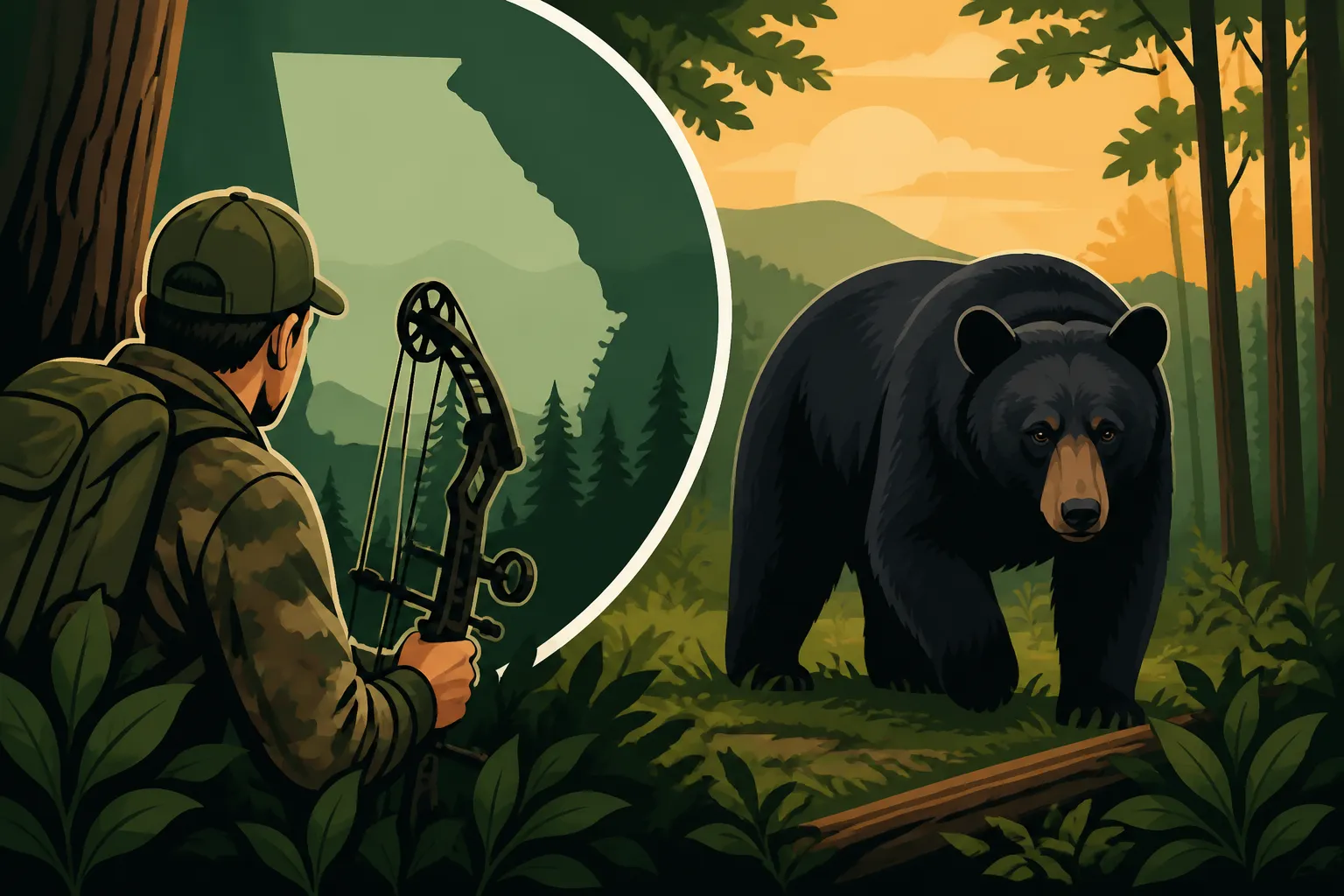
Hunting black bear in Georgia, especially when you commit to doing it without the aid of bait, can feel like an insurmountable challenge. Many hunters, faced with the sheer density of Georgia's woods and the elusive nature of bears, might wonder if it’s even possible to consistently find success without the draw of a food pile. This guide is dedicated to those who seek that deeper connection to the wild, offering comprehensive strategies and insights to ethically pursue Georgia black bears on their own terms.
Understanding Georgia's Black Bear Population and Habitat
Before you even think about stepping into the woods, it's vital to have a solid grasp of where Georgia's black bears live, how many there are, and what drives their movements. This isn't just about reading a map; it's about understanding the animal's behavior and adapting your strategy to their wild patterns, especially when you're not luring them to a specific spot.
Bear Numbers and Regional Distribution
Georgia's black bear population is surprisingly robust and growing in certain areas, which is fantastic news for hunters looking for a challenge. Historically, bears were primarily concentrated in the mountainous regions of North Georgia, and that's still where you'll find the highest densities. Imagine sprawling hardwood forests, dense rhododendron thickets, and deep creek bottoms – prime bear country. These areas, like the Chattahoochee-Oconee National Forest, offer vast tracts of public land where bears can roam relatively undisturbed.
However, over recent decades, the bear population has expanded significantly beyond these traditional strongholds. We now have established bear populations in the Central and Southern zones, specifically the Ocmulgee River corridor and the Altamaha/Okefenokee Swamp region. While these populations aren't as dense as in the mountains, they represent exciting new opportunities. The habitat in these central and southern areas often consists of thick river bottom swamps, pine plantations, and agricultural lands, which provide both cover and varied food sources. Knowing these distinct zones is crucial, as each presents different challenges and requires unique hunting approaches. Understanding where these bears roam is the first step in planning any hunting trip, and a deep dive into Georgia's Three Bear Hunting Zones can help you pinpoint the best areas for your efforts.
The increase in bear numbers, while great for hunting, also means that bears are becoming more adaptable to different environments. This adaptability makes hunting them without bait even more intriguing, as you're truly tracking an animal that relies on its natural instincts rather than a human-supplied food source. It forces you to become a better woodsman, focusing on subtle signs and deep woods knowledge rather than simply waiting on a known food source.
Natural Food Sources and Seasonal Patterns
Hunting without bait is, at its heart, hunting food. Bears are driven by their stomachs, and their entire year revolves around finding calories, especially as they prepare for hibernation. If you can understand what they're eating and when, you're halfway to finding them. This knowledge is your alternative to a bait pile.
In spring, after emerging from their dens, bears are often looking for fresh green browse. Think tender shoots, grasses, and clovers. They're also opportunistic and will flip rocks for insects, grubs, and even scavenge winter kills. This is a time when they are trying to regain weight lost during hibernation. Finding a lush, sun-drenched clearing or a recently burned area (where new growth quickly appears) can be a hotspot. As spring progresses into early summer, soft mast starts to become available. Wild blueberries, blackberries, and huckleberries are absolute magnets for bears. Scouting for these berry patches, especially on clear-cuts or forest edges, can be incredibly productive. These aren't always easy to find, often requiring miles of walking and searching, but when you locate a productive patch, you've found a temporary gold mine.
As fall approaches, which coincides with Georgia's bear hunting seasons, the focus shifts dramatically to hard mast, primarily acorns. Oak species, both white and red oaks, are critical. White oak acorns are preferred earlier in the season due to their lower tannin content, while red oaks become more important later, as their acorns persist longer on the ground. Bears will gorge on acorns, putting on massive amounts of fat for winter. Identifying productive oak stands, especially those in transition areas between bedding cover and water, is key. Persimmons and other less common mast trees also draw bears. A poor acorn year in one area might push bears to travel farther, making them more predictable if you can find the scattered food sources. Conversely, a bumper crop can mean they are spread out and harder to pinpoint. The challenge lies in adapting to these yearly fluctuations, which is why we’ll dive deeper into Hunting Bears Over Natural Food in the Mountains.
Understanding these seasonal shifts in natural food sources is the cornerstone of bait-free bear hunting. It requires diligent scouting, often through trial and error, but the rewards are immense. You're not just hunting a bear; you're hunting its entire ecosystem, its seasonal rhythm, and its instinctual drives.
Georgia's Bear Hunting Zones and Regulations Without Bait
Georgia's bear hunting opportunities are distinct across the state, broken down into specific zones, each with its own season dates, bag limits, and often unique challenges. When you're hunting without bait, adhering strictly to these regulations and understanding the nuances of each zone becomes even more critical, as you're relying solely on your skill and knowledge of the animal's natural behavior.
Northern Bear Zone Specifics
The Northern Bear Zone, encompassing the vast mountain ranges of North Georgia, is the state's traditional bear hunting ground. This is where most hunters focus their efforts, and for good reason—it boasts the highest bear densities and offers vast tracts of public land within the Chattahoochee National Forest. Hunting here without bait means embracing the rugged terrain and dense cover.
The seasons in the Northern Zone typically include an archery-only period, followed by a firearms season. These dates are crucial to know, as they influence bear behavior. During the archery season, bears might still be actively feeding on late summer berries or early fall mast, and less pressured. As firearms season opens, increased hunter pressure can push bears into thicker, more remote areas. Success often hinges on extensive pre-season scouting to locate preferred food sources like white oak flats, persimmon trees, or even isolated apple trees left over from old homesteads. Treestand setups in this zone need to account for mountainous thermals and steep terrain, making mobility and careful planning essential. Many Wildlife Management Areas (WMAs) within this zone have their own specific regulations regarding access, vehicle use, and camping, which should always be checked before your hunt. For a detailed breakdown of the specific dates and rules for this prime bear country, refer to Georgia Northern Zone Bear Season Rules.
Hunting the Northern Zone without bait demands physical fitness and a willingness to cover a lot of ground. You'll be navigating steep slopes, crossing numerous creeks, and pushing through rhododendron thickets. It's not a sit-and-wait game; it's an active pursuit that often rewards persistence and an intimate knowledge of the specific mountain you're hunting. Think long hikes, careful glassing from overlooks, and tracking subtle signs that other hunters might overlook.
Central and Southern Zone Regulations
While the Northern Zone is often the default for Georgia bear hunting, the Central (Ocmulgee) and Southern (Altamaha/Okefenokee) Bear Zones offer distinct, albeit more limited, opportunities. These zones often have significantly shorter seasons, sometimes just a few days or a weekend, and are often managed as quota hunts, meaning you have to apply and get drawn for a permit. This scarcity makes success here even more of a coveted achievement.
The Ocmulgee Bear Zone, nestled along the Ocmulgee River corridor, features a mix of bottomland hardwoods, swamps, and agricultural fields. Bear densities here are lower than in the mountains, but the bears can grow quite large due to ample food sources. Hunting without bait in this zone means focusing on natural food sources like acorns in the river bottoms, persimmon trees along field edges, or even areas where bears might be raiding corn or peanut fields. Because the season is so short and pressure can be concentrated, scouting becomes paramount. You need to know exactly where bears are feeding and traveling before the season opens. The habitat here can be dense and wet, often requiring rubber boots and a willingness to push through thick cover. Detailed information on these unique hunts can be found in resources like Georgia Central Zone Bear Season Rules and Georgia Southern Zone Bear Weekend Dates.
The Altamaha/Okefenokee Zone, particularly around the vast Okefenokee Swamp, presents its own set of challenges. This is true wilderness, characterized by cypress swamps, pine islands, and extensive marshlands. Bear sign can be harder to spot in the soft, wet ground, but bears are definitely present. Here, hunting without bait means understanding the movements of bears through a watery landscape. Focus on higher ground, pine islands, and the fringes of the swamp where bears might be foraging for palmetto berries or other seasonal foods. Access can be challenging, often requiring boats or extensive walking through tough terrain. These hunts are generally for the truly adventurous, offering a remote experience that is unlike anything else in Georgia. Given the limited nature of these hunts, every bit of pre-season intelligence and every hour spent scouting becomes a critical investment.
Scouting Strategies for Bait-Free Bear Hunting
When you take bait out of the equation, your scouting efforts become the single most important factor in whether you'll even see a bear, let alone have a shot opportunity. This isn't just about walking around in the woods; it's about becoming a detective, piecing together clues, and anticipating bear movements based on their natural patterns and available resources.
Locating Bear Sign and Travel Corridors
Think of bear sign as the breadcrumbs left behind by these elusive animals. Learning to identify and interpret these signs is fundamental to bait-free hunting. Fresh bear scat is perhaps the most obvious indicator. Its contents will tell you what they've been eating – berries, acorns, corn husks, or even insect parts. The freshness helps determine how recently a bear was in the area. Larger piles usually indicate a larger bear, but always be cautious.
Tracks are another key. Look for five toes and prominent claws, especially in muddy areas around creek bottoms, spring seeps, or trails. Fresh tracks, particularly if you can see clear claw marks and a defined outline, are gold. Follow them, if possible, to get a sense of their direction of travel. Rub trees, often pine trees with rough bark, are where bears will scratch, rub, and sometimes bite, leaving hair and claw marks. These often serve as territorial markers or simply places they enjoy scratching. The height of the rubs can give you an idea of the bear's size. Keep an eye out for "bear trees" – often larger trees with scars from climbing, especially if there's a den nearby or cubs have been present. Look for these signs in transition areas: along ridgelines that connect different drainages, along the edges of thick cover leading to known food sources, or near water sources. These are their travel corridors, and knowing them means knowing where to set up an ambush. Learning to interpret these subtle cues is a skill that takes time, but it’s an absolute game-changer, as detailed in guides like Scouting Georgia Public Land Before Season.
Moreover, don't overlook old logging roads or seldom-used trails. Bears, despite their wild nature, often take the path of least resistance. These can be excellent places to find tracks, scat, and even rub trees. Identifying consistent crossing points along these corridors is like finding a superhighway for bears, increasing your chances of an encounter. It requires walking, looking down, and looking up, constantly processing the information the forest provides.
Using Technology for Remote Scouting
In today's hunting world, technology can be an incredible asset, especially for remote scouting for bears without bait. Before you even set foot in the woods, you can cover vast amounts of ground from your computer or phone. Mapping applications are your best friend here. Tools like GoHunt (which offers detailed satellite imagery, topo maps, and land ownership overlays) are invaluable. You can identify potential food sources like oak ridges or clear-cuts that might hold berry bushes, remote bedding areas in thick draws, and possible travel corridors between them. Look for pinch points, saddles, and creek bottoms that naturally funnel animal movement.
Overlaying topographical maps allows you to identify elevation changes that impact thermals – a critical factor for scent control in mountainous terrain. Satellite imagery, particularly recent high-resolution images, can reveal hidden clearings, recent timber cuts, or even individual mast trees that might be drawing bears. Pay attention to changes in vegetation density and type. Pine plantations often offer dense bedding cover, while mature hardwoods provide food. A quality mapping application lets you mark waypoints for potential stand sites, identified food sources, or fresh bear sign, saving you countless hours of wandering aimlessly. It's like having an aerial view that helps you eliminate unproductive areas and focus your ground scouting efforts. For tips on maximizing these tools, check out Scouting With the Georgia Outdoors App.
Beyond just identifying features, these apps also let you understand land ownership. This is crucial for public land hunters, ensuring you stay within legal hunting boundaries and avoid trespassing on private parcels. Many apps, like GoHunt, offer public and private land boundaries, making it much easier to navigate complex land mosaics. By leveraging these digital tools, you can formulate a highly targeted scouting plan, making your limited time in the field far more productive.
Glassing and Spot-and-Stalk Potential
In certain parts of Georgia, particularly the more open areas of the Northern Zone (like clear-cuts, power lines, or expansive mountain slopes), glassing can be an incredibly effective scouting and hunting technique for bears. Unlike hunting deer, where often only a twitch of an ear is visible, a bear is a much larger animal that can sometimes be spotted from a distance.
The strategy involves finding a high vantage point that overlooks large sections of potential bear habitat. This could be a mountain ridge, a logging road with an expansive view, or the edge of a large clear-cut. Use high-quality binoculars (10x or 12x) or even a spotting scope if you're covering vast distances. Systematically scan the area, focusing on edges where different habitat types meet, natural clearings, and areas where natural food sources are abundant. Bears are often most active during the early morning and late evening, when they're moving between bedding and feeding areas. Patience is paramount; bears can appear almost out of nowhere.
Once a bear is spotted, the real challenge begins: the spot-and-stalk. This requires exceptional stealth, knowledge of the wind, and an understanding of the terrain. Plan your approach carefully, using natural cover to conceal your movement. Always keep the wind in your favor, as a bear's nose is its primary defense. Move slowly, deliberately, and be prepared to freeze if the bear shows any sign of detecting you. This method is incredibly demanding but offers a thrilling, intimate hunting experience. It's especially effective in areas like the Ocmulgee Zone where Spot-and-Stalk Tactics for Ocmulgee Bears can be adapted to bear behavior. It's important to differentiate between observing a bear and initiating a stalk; always prioritize safety and ethical shot opportunities.
Effective Hunting Methods for Bait-Free Zones
Without the predictability of a bait site, hunters must rely on classic hunting techniques that tap into a bear's natural movements and feeding habits. This means becoming a keen observer, a silent mover, and a patient strategist. These methods require more effort and skill, but the satisfaction of a successful unbaited hunt is unmatched.
Still-Hunting and Stalking Tactics
Still-hunting is perhaps the most challenging and rewarding method for pursuing bears without bait. It’s an active form of hunting where you move slowly and deliberately through the woods, stopping frequently to glass and listen, essentially hunting the bear on its own terms. The key is to move at a snail's pace—take a few steps, then stop for several minutes, scanning every shadow, every thicket, and listening for the subtle sounds of a foraging animal. Think of it as a moving ambush.
Wind direction is absolutely critical. Always hunt into the wind or with a quartering wind to prevent your scent from reaching the bear. Pay attention to thermals, especially in mountainous terrain, as they shift with the rising and falling sun. Focus on areas where you’ve found fresh sign or identified natural food sources. As you move, use natural cover to break up your silhouette. Wear quiet clothing that won't rustle against branches. A bear's hearing and nose are phenomenal, so every crunch of a leaf or snap of a twig can blow your hunt. This technique demands immense patience and discipline. It forces you to connect with the forest on a deeper level, noticing nuances you'd miss if you were simply rushing to a stand. While typically associated with deer, the principles of Still-Hunting South Georgia Pine Flats can be effectively adapted for bears, especially in similar flat, dense cover. The focus remains the same: silent movement, keen observation, and capitalizing on natural pathways.
When you do spot a bear, the still-hunt transitions into a full-on stalk. This requires an even greater level of focus and stealth. Plan your route to stay out of the bear's line of sight, use every bit of cover, and monitor the wind constantly. It's a game of cat and mouse, where the slightest mistake can send your quarry crashing through the woods.
Ambush Hunting Over Natural Food Sources
This method is the closest you'll get to baiting without actually using bait. It involves setting up an ambush point near a known, active natural food source during the bear season. As discussed earlier, acorns are king in the fall, but persimmons, muscadines, and other wild fruits can also be highly attractive. Your pre-season scouting is paramount here to identify exactly which trees or patches are producing, and which are showing recent bear activity.
Once you’ve identified a prime feeding area, you need to choose your ambush site. This could be a treestand, which offers an elevated view and helps carry your scent away, or a well-concealed ground blind. Consider the prevailing wind direction and the thermals when placing your stand. Bears typically move into feeding areas during low-light hours, so plan your entry and exit routes carefully to avoid spooking them. Make sure your setup allows for a clear, ethical shot opportunity. Sometimes, finding a stand location on a mountain saddle can be highly effective, as bears often traverse these natural funnels between bedding and feeding areas, as suggested by techniques in Hanging a Stand on a Mountain Saddle.
Patience is key with ambush hunting. Bears don't always adhere to strict schedules, and they can be unpredictable. You might sit for hours, or even days, without seeing one. However, if you've done your scouting diligently and chosen a truly active food source, your odds are significantly higher. This method allows you to capitalize on a bear's most fundamental drive: hunger. It requires discipline to sit still, remain quiet, and be ready when the moment finally arrives.
Drive Hunting Considerations
Bear drives, while less common than deer drives, can be an effective (and legal in many areas) method for hunting bears without bait, particularly in thick cover where still-hunting is extremely challenging. This method requires a group of hunters and careful planning, prioritizing safety above all else. The basic concept involves "drivers" pushing through a section of cover, attempting to move bears towards "standers" positioned along escape routes or natural funnels.
For a bear drive to be successful and safe, a few things are absolutely critical. First, you need enough hunters to effectively cover the area and potential escape routes. Typically, you'd want at least three or four, if not more, depending on the size of the block you're driving. Second, detailed communication is essential. Everyone needs to know their role, their position, and the safety zones for shooting lanes. Walkie-talkies can be incredibly helpful. Third, understand bear behavior. Bears often try to circle back through the drivers or use the thickest, nastiest cover to escape. Positioning standers on elevated ground or along natural barriers like creek banks or clear-cut edges can be more productive. The principles are similar to Deer Drives With Three or Four Hunters, but with bears, you're dealing with an animal that is more resilient and more prone to slipping away unnoticed.
Before starting, all hunters must be fully aware of property lines, safety zones, and the direction of the drive. Standers should be concealed and ready, and drivers should move slowly, making noise, but remaining aware of their surroundings. This method is not for the faint of heart and requires meticulous organization and strict adherence to safety protocols. It's a high-energy, potentially exciting way to hunt bears in areas where other methods are less feasible due to dense cover. Always confirm local regulations as some WMAs may restrict group hunting activities or specific driving techniques.
Gear and Equipment for Non-Baited Bear Hunting
Hunting black bear without bait demands a thoughtful approach to your gear. Every item you carry, from your optics to your weapon, plays a crucial role in your success and safety. You're relying on your own two feet and keen senses, so equipping yourself properly for the unique challenges of Georgia's diverse bear habitats is non-negotiable.
Essential Optics and Navigation Tools
When you're not sitting over a bait pile, your eyes become your most important scouting and hunting tool. High-quality optics are essential. A good pair of binoculars, ideally 10×42 or even 12×50, will be your constant companion. They help you pick apart distant cover, confirm bear sign, and ultimately spot a bear before it spots you. Look for binoculars with excellent low-light performance, as bears are often most active during dawn and dusk. In open mountainous terrain, a spotting scope can be a game-changer for identifying bears at extreme distances, allowing for a more strategic stalk. The focus should always be on clarity and durability, as your optics will endure the elements.
For navigation, a reliable GPS unit or a smartphone with a robust mapping application is absolutely critical. Apps like GoHunt offer detailed satellite imagery, topographical maps, and public/private land overlays, allowing you to navigate dense forests, mark waypoints for bear sign or stand locations, and understand the terrain. Make sure you download offline maps, as cell service is often nonexistent in prime bear country. Always carry a physical compass and a printed map as a backup; electronics can fail. A reliable headlamp or flashlight is also crucial for early morning entries and late evening exits. These tools are the foundation of any successful unbaited bear hunt, helping you cover ground efficiently and safely, as detailed in Optics for Georgia Mountains and Swamp. Without them, you're quite literally stumbling in the dark, risking getting lost or missing crucial opportunities.
Firearm and Bow Selection for Black Bear
Choosing the right weapon for black bear hunting is a critical decision, focused on ethics, effectiveness, and ensuring a quick, humane harvest. Georgia's bear regulations permit various firearms and archery equipment, but when hunting without bait, your shots might be less controlled and at varying distances, demanding a reliable setup.
For firearms, you'll want a rifle chambered in a cartridge with sufficient energy and bullet construction to reliably dispatch a black bear. Popular choices often include the .270 Winchester, .30-06 Springfield, .308 Winchester, and even larger calibers like the .300 Win Mag. The key is using premium, heavy-for-caliber bullets designed for deep penetration and controlled expansion. Avoid light, frangible bullets intended for varmints or deer. While a .243 can take a bear, many seasoned hunters prefer something with more kinetic energy for larger bears, or for less-than-ideal angles. Familiarity with your chosen rifle and precise shot placement are far more important than caliber alone. Practice shooting from various field positions, not just off a bench, to be prepared for real-world scenarios. A deeper look at Rifle Calibers for Georgia Bear can help guide your decision.
For archery, a compound bow or crossbow with adequate draw weight and kinetic energy is necessary. Georgia has minimum draw weight requirements for deer, which usually suffice for bear (often 40 lbs or more). However, for bears, you want to maximize penetration. Use strong, sharp broadheads—fixed blade designs are often preferred for their reliability, though some mechanicals perform well with adequate kinetic energy. Heavy arrows, in the 450-500 grain range, combined with a high draw weight, will deliver the deep penetration needed for a bear. Practice shot placement meticulously on a 3D target, focusing on the vitals, as a bear's bone structure and thick hide require precise execution. While focused on deer, the insights in Bow Draw Weight for Georgia Whitetails are relevant for ensuring your setup is powerful enough for bear. Ensure your bow or crossbow is sighted in perfectly and you are confident out to your maximum ethical shooting range.
Clothing, Safety, and Recovery Gear
Hunting bears in Georgia, especially in the early seasons, often means dealing with warm, humid weather. Lightweight, moisture-wicking layers are essential to manage sweat and regulate body temperature. As the season progresses into fall, layering remains key, allowing you to adapt to fluctuating temperatures. Snake boots are an absolute must-have in many parts of Georgia, particularly in the low country and swamps, where venomous snakes are common. Don't skimp on this; a snakebite in a remote area is a serious emergency. High-quality bug repellent is also non-negotiable, especially during early archery season, to ward off ticks, mosquitoes, and gnats.
Safety gear goes beyond just blaze orange (check current regulations for specific requirements, as they vary by season and WMA). A comprehensive first-aid kit is crucial for treating minor injuries or stabilizing a more serious one until help arrives. Carry enough water for your entire hunt, plus extra, and high-energy snacks. A reliable headlamp with fresh batteries is vital for navigating in the dark. Don't forget bear spray, particularly if you're hunting in dense cover where close encounters are more likely. While rare, it's a valuable last line of defense.
Once a bear is down, the work truly begins. Bears are heavy, and recovering them from rough terrain can be incredibly challenging. A sturdy game cart (for relatively flat terrain), good game bags (essential for warm weather to keep meat clean and cool), and a strong knife are indispensable. Consider a bone saw or even the gutless method to lighten the load if you're deep in the backcountry. A strong rope can also be invaluable for dragging or moving the animal. Detailed advice on Handling a Bear After the Shot will be important for anyone venturing out. Remember, this isn't just about bagging a bear; it's about getting the meat out efficiently and safely. Every piece of recovery gear should be chosen with this ultimate goal in mind.
Challenges and Rewards of Hunting Without Bait
Hunting black bear in Georgia without bait is a commitment. It's a choice to embrace a more traditional, demanding, and often more solitary hunting experience. It comes with its own unique set of frustrations, but for those who commit, the rewards can be profound.
The Difficulty and Frustration Factor
Let's be realistic: hunting bears without bait is harder. Significantly harder. The success rates for unbaited hunts are generally lower than those utilizing bait, simply because you're removing a major attractant that concentrates animals. This means you're going to put in more miles, spend more hours scouting, and likely endure more empty sits. The sheer vastness of Georgia's public lands, combined with the dense cover and the bear's uncanny ability to disappear, can lead to immense frustration.
You might scout for weeks, find what you think is perfect sign, set up your ambush, and never see a single hair. You might hike miles into a remote mountain basin, only to find the acorns you were banking on have already been eaten or were a poor crop that year. The weather can turn, making an already tough hunt even more miserable. The physical demands are higher—you're covering more ground, often in rugged terrain, and if you do harvest a bear, the recovery is a monumental task. There's no sugarcoating it: the "grind" is real. It tests your patience, your dedication, and sometimes, your sanity. Many hunters start with the best intentions for a bait-free hunt but eventually succumb to the allure of a more "guaranteed" method simply because of the sheer effort involved. It's okay to feel that frustration; it's part of the journey.
Ethical Considerations and Fair Chase
Despite the difficulty, the choice to hunt bears without bait often stems from a deeply held ethical conviction and a desire for a "fair chase" experience. For many, baiting, while legal in certain areas and for specific species, removes an element of the challenge and connection to the animal's natural existence. Hunting a bear that is actively foraging, moving through its natural habitat, and relying purely on its instincts provides a profound sense of accomplishment.
There's an undeniable satisfaction in outsmarting an animal as intelligent and wary as a black bear on its own terms. It means you've truly learned its habits, understood its environment, and demonstrated superior woodsmanship. It's about respecting the animal enough to meet it in its wild state. This pursuit fosters a deeper connection to nature, forcing you to become an acute observer of the ecosystem around you, from the type of mast on the ground to the subtle shifts in wind direction. When you finally achieve success through these methods, the sense of pride and validation is immense. It's not just about the meat or the trophy; it's about the journey, the challenge overcome, and the intimate dance with a truly wild creature. This approach speaks to the core of what traditional hunting often represents.
Maximizing Success and Learning Opportunities
Even with the challenges, there are ways to maximize your success and, perhaps more importantly, maximize your learning experience when hunting bears without bait. First and foremost, consistency is key. One scouting trip or one weekend hunt isn't enough. The more time you spend in the woods, observing, learning, and adapting, the better your chances become. Bears are creatures of habit, but their habits shift with food sources, weather, and pressure.
Secondly, adaptability is crucial. If the acorns aren't falling in your favorite spot, be ready to move and find another food source. If hunter pressure is high, be willing to hike farther and deeper into remote areas where others won't go. Use your technology (like your GoHunt app) to constantly reassess and pivot your strategy. Don't be afraid to try new areas or unconventional tactics.
Third, continuous learning is paramount. Read everything you can about black bear behavior, habitat, and natural food sources. Talk to successful bear hunters who employ similar methods. Keep a hunting journal to document what you see (or don't see) in specific areas, noting food sources, weather, and sign. This will build a personal knowledge base that no app or book can fully provide. Consider reaching out to experienced hunters or joining a club that focuses on these challenging methods. The journey itself is a huge part of the reward, and every failure is a lesson learned. The more you put into it, the more you'll get out of it, whether that's a bear on the ground or an invaluable understanding of Georgia's wild places.
| Scouting Without Bait: Tools & Tips | Purpose | How It Helps You Find Bears |
|---|---|---|
| High-Quality Binoculars (10x-12x) | Remote Observation & Detail Scouting | Scan vast areas like clear-cuts or mountain slopes for bears or subtle signs. Identify distant mast trees or rub lines. Pick apart thick cover for movement. |
| GPS Unit / Mapping App (e.g., GoHunt) | Navigation, Topography, & Feature Identification | Identify potential food sources (oak ridges, berry patches), bedding areas, and travel corridors from aerial views. Mark fresh bear sign, stand locations, and entry/exit routes. Understand elevation for thermal planning. |
| Physical Compass & Map | Backup Navigation | Essential safety backup in case of electronic device failure or loss of signal. Helps you orient yourself in dense terrain. |
| Rubber Boots / Snake Boots | Protection & Stealth in Wet/Dense Habitat | Navigate wet creek bottoms, swamps, and dense undergrowth silently and safely. Essential for protection against venomous snakes common in Georgia. |
| Quiet, Layered Clothing | Stealth & Temperature Regulation | Minimizes noise when still-hunting or stalking. Allows adaptation to Georgia's variable temperatures, from cool mornings to warm afternoons, preventing overheating or chilling. |
| Bear Sign Identification Skills | Interpreting Bear Activity | Recognize and interpret fresh scat (diet, age), tracks (size, direction), rub trees (territorial, travel), and feeding areas. This provides real-time intel on bear presence and movement patterns. |
| Knowledge of Natural Food Sources | Predicting Bear Locations | Understand seasonal availability of mast (acorns, persimmons), berries, and other forage. Bears will be concentrated in areas with abundant current food, serving as your "bait site." |
| Wind & Thermal Awareness | Scent Control & Approach Planning | Crucial for all still-hunting and stalking. Bears have an incredible sense of smell. Always approach or set up with the wind in your favor to avoid detection. Understand how thermals rise and fall with the sun in mountainous areas. |
| Patience & Persistence | Mental Fortitude | Unbaited hunting often involves long periods without seeing a bear. Persistence in scouting and on stand is key to eventual success. Don't get discouraged by the lack of immediate results. |
Disclaimer
Hunting is an inherently dangerous activity. This guide provides general information and recommendations. Always check the latest Georgia Department of Natural Resources (DNR) hunting regulations and laws before venturing afield, as rules can change. Prioritize safety by wearing appropriate blaze orange (where required), informing others of your hunting location, and always practicing ethical hunting practices. The author and publisher are not responsible for any incidents or injuries that may occur.