Hunting Standing Cover Left After Harvest
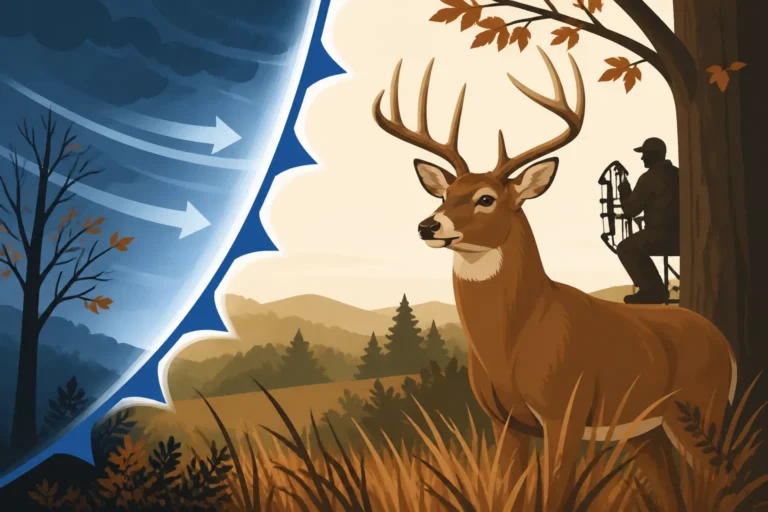
You've been watching that sprawling cornfield or that lush soybean plot all season, envisioning a buck slipping out at golden hour. Then, the combines roll in, or the tractors disc up the last of the crop, and suddenly, your prime hunting ground looks like a barren wasteland. All that deer activity seems to vanish overnight, leaving you wondering where those phantom whitetails went. But here's the secret: they didn't disappear. They simply shifted, often into the overlooked pockets of standing cover left after harvest. This guide will walk you through how to find and effectively hunt these crucial late-season refuges across Georgia, turning post-harvest frustration into late-season success.
Understanding Post-Harvest Landscapes in Georgia
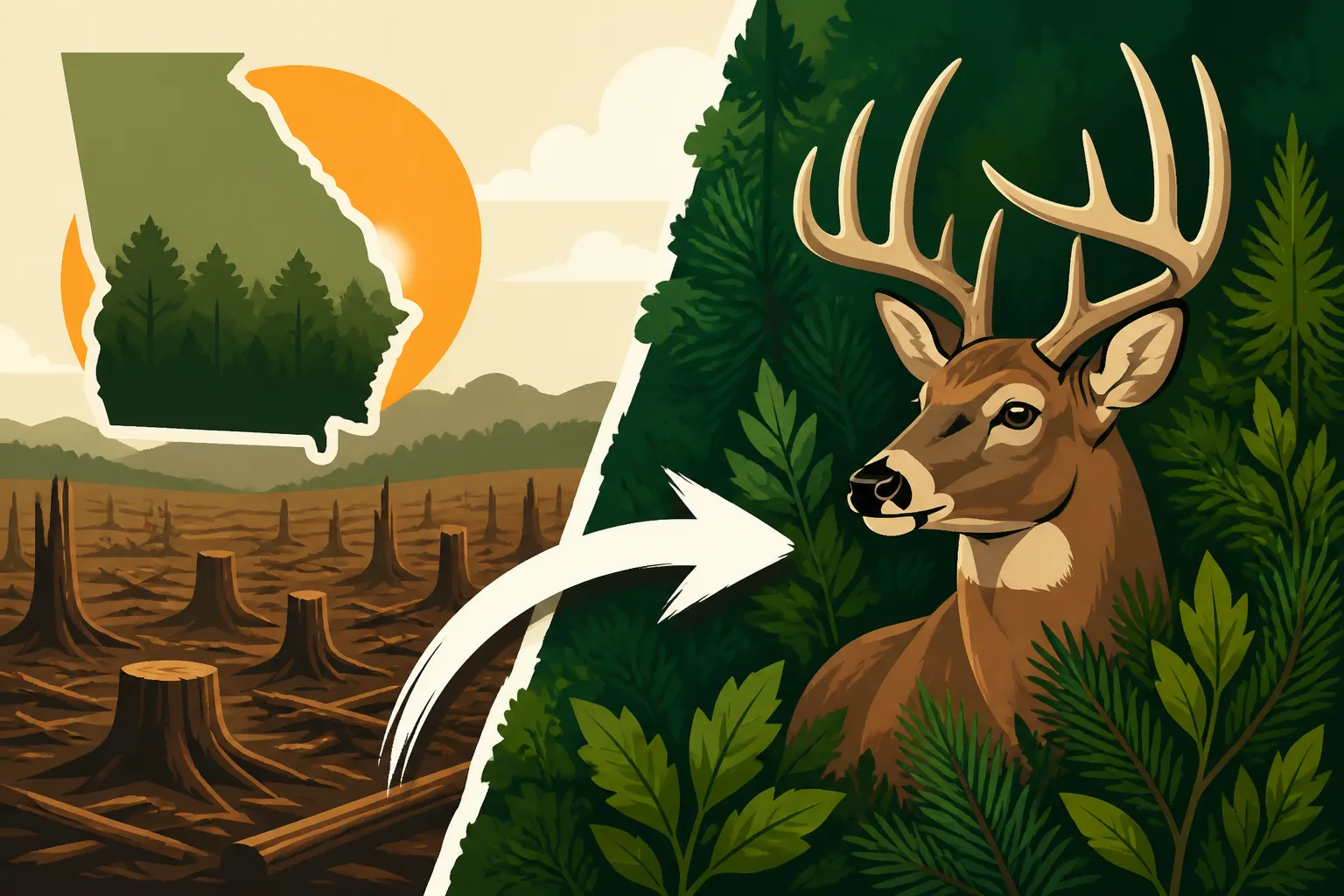
The agricultural cycle in Georgia dictates much of our deer movement, especially once crops mature and are removed. What was once a buffet and a sanctuary quickly becomes an open, vulnerable expanse. This dramatic shift forces deer to adapt, and savvy hunters know exactly where to look for them when the fields are bare.
The Immediate Impact of Harvest on Deer Movement
Imagine a vast field of standing corn or tall soybeans during the early archery season. It's a deer paradise, offering abundant food, unparalleled security, and a network of hidden trails. Bucks feel safe bedding deep within, does raise their fawns, and the entire herd relies on it for survival. Then, almost overnight, heavy machinery rolls through, reducing that dense cover to stubble. This isn't just a food source disappearing; it's their entire sense of security evaporating.
Deer are creatures of habit, but they're also masters of adaptation. When their primary cover is removed, they don't just vanish into thin air. Instead, they’ll gravitate to the next best available cover that offers both concealment and, ideally, some residual food. This means a sudden, often dramatic, shift in their travel patterns and bedding locations. You'll see a consolidation of deer in smaller, denser areas that were perhaps less appealing when the crops were standing tall. Think about the edge effect – deer that once comfortably fed deep in the field will now hug the remaining tree lines, fencerows, and thickets, relying on them for quick escape routes back to deeper woods.
Identifying Key Types of Standing Cover
So, what exactly constitutes "standing cover" once the combines have left their mark? It’s more than just the timbered edges of a field. In Georgia, this can mean a variety of overlooked features, each presenting unique hunting opportunities.
First, consider unharvested strips or corners that farmers sometimes leave due to equipment limitations, wet spots, or as a deliberate food plot for wildlife. These small, isolated pockets can become deer magnets, acting as a mini-refuge in a sea of openness. Deer will instinctively seek out these remnants, especially if they still offer a bit of food, such as a few missed ears of corn or a patch of soybeans too small to justify harvesting.
Next are the ubiquitous fencerows and hedgerows. These lines of brush, small trees, and briars often border fields, serving as natural travel corridors and low-profile bedding areas. In the Piedmont region, where agricultural lands intermingle with more mature hardwoods, these fencerows can be surprisingly thick and offer more seclusion than you might think. Deer will use these to move between larger woodlots, bedding down in the densest sections during the day, especially if they are insulated by a dense canopy or thick briars.
Small woodlots or timber islands are another prime example. These are often isolated groves of trees, perhaps too small to be economically timbered or too wet for farming, that sit right in the middle of or adjacent to agricultural fields. After harvest, these become high-value bedding and staging areas. Deer will use them as secure daytime hideouts, only venturing out to feed under the cover of darkness. These woodlots often offer surprisingly dense undergrowth, providing the critical security deer crave.
Lastly, don't overlook creek bottoms, swamp edges, or even areas of thick, regenerating timber on adjacent properties. While not strictly "standing cover left after harvest," these natural features become critically important because of the harvest. If a field borders a swamp, the deer will simply pull back into the dense, often impenetrable swamp edge during daylight hours. Similarly, areas of young pines or recently clear-cut timber with dense regrowth, though tough to hunt, offer exceptional thermal and security cover. As you scout, remember to expand your search beyond the immediate field edge. These distant havens often feed the deer that eventually make their way to the remnants of the harvest. You might even find success still-hunting through these areas, similar to how one might approach Still-Hunting South Georgia Pine Flats.
Scouting and Locating Productive Standing Cover
Finding these hidden gems of cover is where the real work—and often the real fun—begins. It requires a keen eye, good tools, and a willingness to put boots on the ground. Don't assume all cover is equal; some pockets are magnets, others are rarely used.
Using Aerial Maps and On-the-Ground Reconnaissance
Before you even step foot in the woods, pull up your aerial maps. Tools like GoHunt or similar mapping applications are invaluable for overlaying satellite imagery with property boundaries. Look for areas adjacent to or within large agricultural fields that show distinct changes in vegetation. Scan for those small, unharvested strips, the meandering lines of trees and brush that denote fencerows, and any isolated patches of timber. These are your starting points. Pay close attention to the transitions—where open fields meet dense woods, or where a narrow finger of timber extends into a cultivated area. These subtle features, often overlooked by other hunters, become significant post-harvest. This process is similar to how one might go about Reading Aerial Photos for Piedmont Deer in other contexts.
Once you’ve identified potential spots on your map, it's time for some on-the-ground reconnaissance. The best time to do this is right after the harvest, but before heavy hunting pressure sets in. Walk the edges of these identified cover areas. Look for fresh tracks entering and exiting the thicket. Are there distinct trails beaten down by deer traffic? How many? Are there any larger, older tracks, indicating mature bucks?
Don't be afraid to poke around inside the cover, especially if it's on public land or property where you have access. Deer will often leave tell-tale signs within these secure zones. Look for rubs and scrapes, particularly those that are fresh, indicating recent activity. Check for droppings and bedding areas – flattened grass or pine straw in a sheltered spot, often with good visibility downwind. This level of detailed scouting before the season, or after such a dramatic habitat change, is always beneficial, as detailed in guides like Scouting Georgia Public Land Before Season.
Reading Deer Sign Within the Cover
Once you're actually in a patch of standing cover, it’s like reading a secret language. Deer use these areas not just for hiding, but for moving, feeding, and resting. Learning to interpret the signs they leave behind will tell you if the cover is truly productive.
First, look for well-worn trails. These aren't just faint lines; they're often distinct paths that deer use repeatedly to access bedding, food, or escape routes. Pay attention to how these trails enter and exit the cover. Do they lead to a nearby woodlot? A creek bottom? A neighboring field that still has some leftover forage, perhaps some scattered peanuts after a harvest or a standing soybean field? The direction and intensity of these trails are huge clues.
Next, focus on bedding areas. Deer will seek the densest, most sheltered spots within the cover to bed down during daylight hours. This could be a thicket of briars, a patch of tall, undisturbed grass, or an area of young pines so thick you can barely push through. Look for impressions in the leaves or dirt, often with a fresh deer dropping or two nearby. These spots will often have excellent wind advantage, allowing deer to smell danger from multiple directions, while also offering good visual obstruction. A mature buck will often bed with his back to the wind, facing downwind, or on a slope where he can see below him.
You'll also find browse lines where deer have been feeding on woody vegetation, briars, or any remaining green growth. While the primary food source might have been the harvested crop, deer will supplement their diet with available browse within the cover. The presence of fresh browse indicates consistent use. Don't forget to check for rubs and scrapes, even older ones. A well-placed rub line from earlier in the season might indicate a travel corridor that a buck still uses, especially if the cover now offers more security. These signs, when fresh, are a clear indication of recent deer activity, guiding your setup. For hunters focused on specific crops, understanding how deer transition from a Standing Peanut Field or a Standing Soybean Field into these dense pockets is key.
Considering Pressure and Proximity to Food
Deer density and behavior are heavily influenced by hunting pressure. In areas with high hunting pressure, deer become incredibly nocturnal and will seek out the absolute densest, most overlooked pockets of cover during daylight hours. These are the spots where hunters typically don't want to go – the briar patches, the tangled creek bottoms, the thickest young pines that scratch at your clothes. These become critical sanctuaries. Knowing this, your scouting should focus on finding the hardest to reach spots within these cover areas, as these are often where the big bucks will hold up.
Secondly, always consider the proximity to remaining food sources. Even after harvest, there can be gleanings from corn or soybeans. Additionally, natural food sources like acorns (especially white oaks if they dropped late), winter greens, or even planted food plots on neighboring properties become increasingly important. Deer will hold tight in the security of the standing cover, waiting for dusk to move out to these feeding areas. Your job is to intercept them during these transitions.
This means you’re looking for the path of least resistance for a deer to travel from bed to food, while maximizing their sense of security. Identifying these "highways" in the woods, whether they are trails along a creek or through a thicket, becomes your primary objective. Hunters targeting Piedmont Farmland Deer will find this interplay between cover, food, and pressure particularly relevant.
Effective Hunting Tactics for Standing Cover
Once you've done your homework and identified promising pockets of standing cover, it's time to devise a hunting strategy. These areas often require different tactics than hunting open woods or field edges.
Still-Hunting and Driving Small Blocks of Cover
Hunting dense, standing cover often means getting in there with the deer. Still-hunting is an incredibly effective tactic for these areas, but it demands patience, stealth, and a keen awareness of the wind. The idea is to move slowly, almost imperceptibly, taking one or two steps, then pausing for several minutes to observe, listen, and scan every inch of the cover. Think of it as stalking, but at a glacial pace. Use your binoculars to pick apart the dense foliage, looking for horizontal lines in a vertical world – a deer's back, a leg, or an antler tine. Focus on moving into the wind or with a slight crosswind, using the terrain and cover to mask your approach. The goal isn't to cover ground quickly, but to surprise a deer in its sanctuary before it knows you're there. A good pack, like those designed for a Packs Built for a Chattahoochee Day Hunt, can carry essentials without being cumbersome.
For smaller, more manageable blocks of cover, a small-scale deer drive can be highly effective, especially with just a few hunters. This isn't a chaotic, large-group drive; it's a strategic maneuver. One or two "drivers" slowly and quietly push through the thick cover, making just enough noise to encourage deer to move. Meanwhile, one or two "standers" are positioned quietly on the downwind side, or along likely escape routes. The key is to understand how deer will naturally try to escape the pressure. They'll often skirt the edges of the cover or try to slip out the back door. Communication and safety are paramount with any drive. Ensure everyone knows the plan, safety zones, and wears appropriate blaze orange, perhaps even a Blaze Orange Jackets Versus Vests scenario. For more on this, check out our guide on Deer Drives With Three or Four Hunters.
Setting Up Ambush Points on Edges and Funnels
If still-hunting isn't your preference, or the cover is too dense to navigate effectively, setting up an ambush point on the edges or within key funnels is your next best bet. Deer will eventually have to move out of these secure pockets, and you want to be waiting.
Consider placing a treestand on the edge of the standing cover, overlooking a trail that leads to a food source or another bedding area. The advantage of a treestand is elevation, allowing you to see over some of the dense vegetation and giving you a better shot angle. Make sure your entry and exit routes are quiet and undetected. You want to slip in before daylight and leave after dark, without alerting any deer using the cover. This is especially true when setting up for Treestand Setups in North Georgia Mountains, although the principles apply to lower elevations too.
Ground blinds are also excellent for hunting these dense areas. A properly brushed-in ground blind can offer incredible concealment right on the edge of a thicket or within a funnel. Deer often feel safer near ground cover, so a ground blind can feel more natural to them. Position your blind so you have a clear shot lane to a primary trail, and ensure you have a good backdrop to break up your silhouette. For tips on setting up, check out Using a Ground Blind on Georgia Public Land.
Focus heavily on funnels. These are natural pinch points that force deer movement through a confined area. This could be a narrow strip of timber between two fields, a small break in a dense fencerow, or a creek crossing. Deer will often utilize these funnels to travel between different areas of cover or between cover and food. Setting up near a funnel significantly increases your chances of intercepting deer. A great example of this is understanding a Hunting a Funnel Between Two Swamps, which applies to any topographical or vegetative choke point. Always consider wind direction when choosing your setup, as deer will use it to their advantage.
Utilizing Scents, Calls, and Decoys
While dense cover often limits visibility, scents and calls can still be valuable tools to pull a deer out of its hiding spot or divert one on a trail. During the rut, doe estrus or buck urine scents placed strategically can pique a buck's curiosity and draw him closer to your ambush point. Even in the late season, a simple deer lure can sometimes convince a wary deer to investigate.
Grunt calls and rattling antlers can be surprisingly effective in dense cover, especially during the peak or secondary rut periods. A subtle grunt might be just enough to stop a deer in a small opening for a shot, or even draw a buck closer if he thinks another buck is encroaching on his territory. Because of the limited visibility, you might not need to rattle as aggressively as you would in open woods; softer, more intermittent rattling can often be enough to get a buck to investigate without scaring him off. Our guide on Rattling and Grunting in Georgia offers more insights.
Decoys are generally less effective within dense standing cover due to visibility constraints. However, if you are set up on the edge of cover with good visibility into an adjacent field or open area, a decoy can be a powerful attractant. A doe or buck decoy placed within sight of a trail leading out of the cover might be enough to draw a deer into bow or rifle range, making him feel secure enough to approach. Remember, it's about making the deer feel safe, and a realistic decoy can help with that illusion.
Standing Cover Hunting Strategy Comparison
| Cover Type | Characteristics | Ideal Hunting Method | Key Considerations |
|---|---|---|---|
| Unharvested Strips | Small, dense, often overlooked. Contains residual food. | Stand/Blind on Edge, Still-Hunt | Wind, deer entry/exit points, minimal pressure |
| Dense Fencerows | Linear, thick brush & small trees. Connects larger cover. | Still-Hunt, Edge Ambush | Travel corridors, bedding pockets, wind direction |
| Small Woodlots/Islands | Isolated timber patches within or near fields. | Stand/Blind, Small Drive | Bedding areas, escape routes, approach undetected |
| Creek Bottoms/Swamp Edges | Natural, often impenetrable cover. Linear travel. | Still-Hunt, Edge Ambush | Wind & thermals, water crossings, dense bedding |
| Thinned Pines/Clear-Cuts | Regenerating timber, very thick. Great security. | Still-Hunt, Driver/Stander | Slow movement, shooting lanes, extreme density |
Conclusion
Hunting standing cover left after harvest in Georgia isn't just a late-season tactic; it's a testament to understanding deer behavior and adapting your approach. When the wide-open fields seem devoid of life, remember that the deer haven't vanished. They've simply retreated to the security of those overlooked thickets, fencerows, and small woodlots. By utilizing aerial maps, thorough ground scouting, and smart hunting strategies—whether that's a slow, methodical still-hunt or a carefully placed ambush—you can unlock incredible opportunities. Don't be afraid to push into the thick stuff; that's often exactly where the big bucks are hiding. The deer that survive the initial rush of hunting season often become masters of using this dense cover. Knowing their habits and how to approach these areas can mean the difference between an empty truck bed and a successful hunt. Remember, the Late-Season Food Sources for Georgia Whitetails found adjacent to these pockets will be critical magnets as well.
Disclaimer
Hunting is an inherently dangerous activity. Always prioritize safety, understand and follow all Georgia Department of Natural Resources regulations, and obtain proper landowner permission before accessing any private property. Ensure you are familiar with your equipment and capable of ethical shot placement.