Running Beagles on Georgia Cottontails
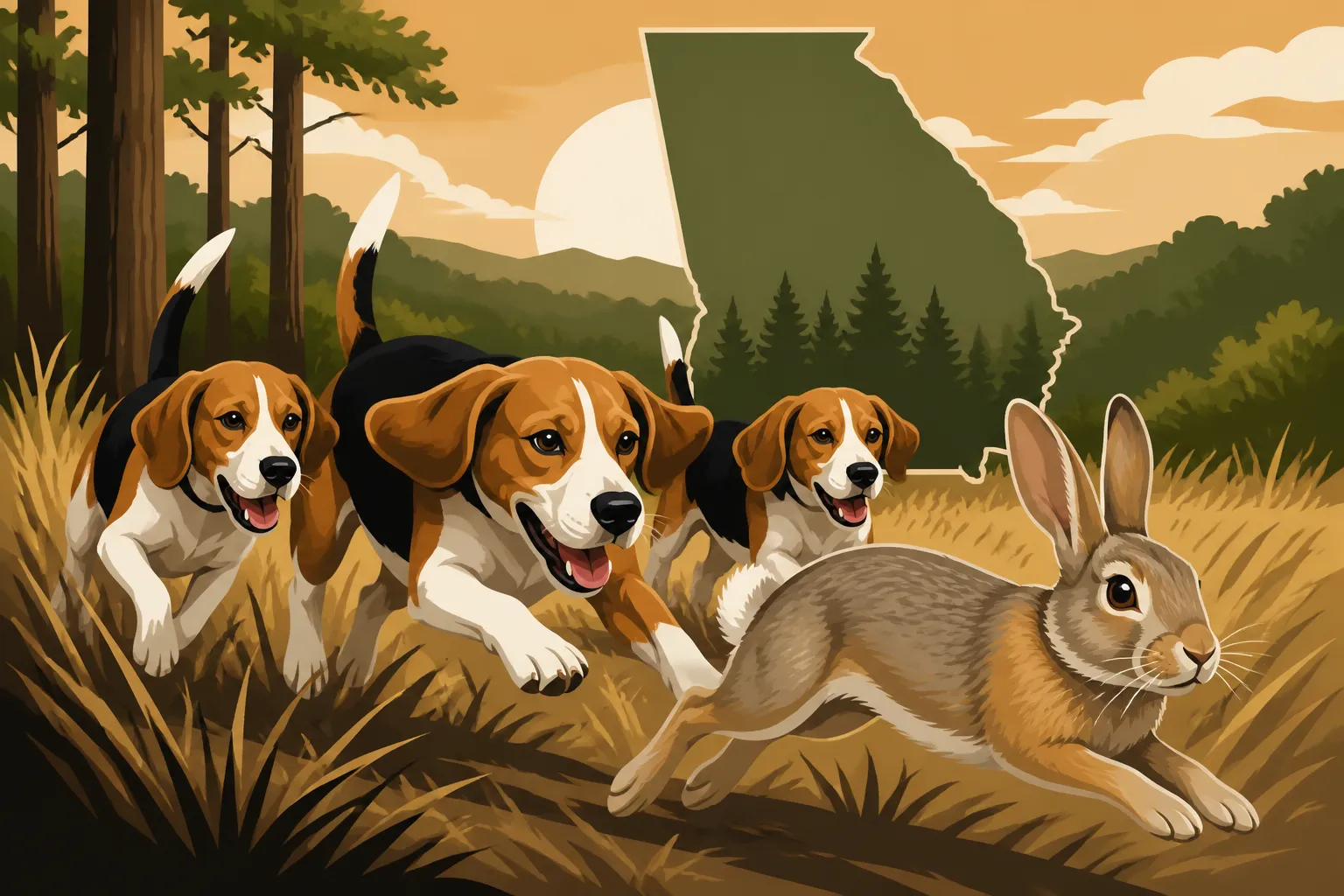
There’s nothing quite like the sound of a pack of beagles in full cry, their voices rising and falling as they unravel a rabbit’s scent trail through the briars and thickets of Georgia. If you’ve ever found yourself struggling to flush cottontails from dense cover, or just longed for the camaraderie and tradition of a classic rabbit hunt, you know the unique challenge and immense satisfaction this pursuit offers. This guide is all about helping you understand the ins and outs of running beagles on Georgia cottontails, from finding the best habitat to training your furry companions and executing a successful hunt.
Understanding Georgia Cottontails and Their Habitat
Hunting cottontail rabbits in Georgia can be a fantastic experience, especially when you have a good pack of beagles to do the hard work of rooting them out of their hiding spots. But before you unleash the hounds, it's crucial to understand where these little bundles of speed prefer to live and how their behavior influences a hunt. Georgia’s diverse landscape offers plenty of rabbit habitat, but knowing the specifics will greatly improve your chances.
Where to Find Cottontails in Georgia
Cottontails are masters of cover. They thrive in areas that offer a rich mosaic of dense escape cover and accessible food sources. Think about places where the land meets in a messy, overgrown way. In Georgia, that often means field edges, particularly those bordering agricultural fields like peanuts, soybeans, or corn that offer waste grain and green browse. These rabbits love the transition zones, the "edge habitat" where one type of cover gives way to another.
You’ll find cottontails tucked into thick fencerows that have grown up with briars, wild plum, honeysuckle, and young pines. These linear strips of cover act like rabbit highways, providing both food and protection from predators. Creek bottoms and swamp fringes are also prime real estate, especially if they have dense undergrowth and downed timber. The moist soil encourages lush vegetation, offering year-round forage. Young clear-cuts or pine plantations in their early stages, say 1 to 5 years old, are absolutely rabbit magnets. The dense new growth, including briars and small saplings, creates an impenetrable fortress where cottontails feel safe. When scouting for potential spots, look for these types of habitat. Using mapping tools like those offered by GoHunt can be incredibly helpful for identifying these features, even before you step foot on the property.
The Elusive Nature of Georgia Cottontails
Despite their seemingly abundant numbers, cottontails can be surprisingly elusive without the aid of a good dog. They spend much of their day tucked into dense cover, creating small "forms" or depressions in the grass where they rest. Their camouflage is superb, making them almost impossible to spot until they burst out at your feet. This is precisely why beagles are such a game-changer for rabbit hunting. A rabbit’s defense mechanism is to sit tight, hoping to go unnoticed. If that fails, they'll bolt, often running in tight circles within their familiar home range, which is exactly what a well-trained beagle pack exploits. They'll push the rabbit, but the rabbit usually doesn't leave its preferred briar patch or thicket for long. Instead, it will circle back, often using the same escape routes, which sets up excellent shot opportunities for positioned hunters. Understanding this circling behavior is key to anticipating where the rabbit will reappear.
Choosing and Training Your Beagle for Georgia Conditions
The heart of a successful rabbit hunt with dogs lies, of course, with the dogs themselves. Beagles are born with an incredible sense of smell and a natural desire to hunt, but even the best bloodlines benefit from dedicated training, especially for the unique challenges of Georgia’s varied terrain.
Selecting the Right Beagle Puppy
When you’re looking to bring a beagle into your life specifically for hunting Georgia cottontails, don't just pick the cutest face in the litter (though that's hard to resist!). Bloodlines matter. Look for puppies from proven hunting parents—dogs that have demonstrated a strong nose, a good retrieve drive, and the stamina to run all day. A good breeder will be able to tell you about the parents' hunting styles, whether they're "jumpers" (quick to find the first rabbit) or "starters" (good at working out cold trails). You also want a puppy with a friendly, eager-to-please temperament. While beagles are generally good-natured, an overly shy or aggressive pup might be more challenging to train and less enjoyable in a pack setting. Spend time with the litter, observe how the puppies interact, and ask the breeder plenty of questions about their health history and hunting lineage.
Basic Training for the Field
Your beagle's training starts long before they ever hit the briar patch. Basic obedience is paramount. Commands like "sit," "stay," "come," and "heel" are not just for house pets; they are critical safety commands in the field, especially when hunting around roads or other hazards. Start these lessons early, making them fun and rewarding. Leash training is also vital, as you'll often be walking your dogs to and from hunting spots.
Beyond obedience, you need to cultivate their natural hunting instincts. Introduce them to rabbit scent early. This might involve using a rabbit hide or even taking them to areas where you know rabbits are present. The goal is to get them excited about the smell. Take them on short walks in low-pressure cover, letting them explore and use their nose. Praise them enthusiastically when they show interest in a trail or scent. Resist the urge to push them too hard, too fast. Building their confidence and allowing them to learn at their own pace is crucial for developing a strong, independent hunter. Early exposure to different types of terrain, from open woods to dense thickets, will also make them more adaptable to various Georgia hunting scenarios.
Advanced Scent Work and Chasing Skills
Once your beagle has a good grasp of basic obedience and shows a keen interest in rabbit scent, it’s time to refine their hunting skills. This often involves working them with older, experienced dogs. There's no better teacher for a young beagle than a seasoned veteran that knows how to unravel a cold trail and hold a line. If you don't have access to experienced dogs, consider joining a local beagle club where you can run your pup with other hunters' packs.
Encourage them to work together, to "pack up" and cooperate on a trail. You'll want to teach them to stay on a rabbit's scent and avoid other critters like deer or squirrels, which can be tempting distractions in Georgia’s woods. This comes with repetition and consistent correction. If a dog gets off on a deer trail, call them back, praise them for returning, and then steer them back to an area with rabbit sign. Another important aspect is encouraging them to "bark on trail" or "chop." This is the beautiful "music" of the hunt, letting you know exactly where the dogs are and how hot the trail is. Different beagles have different barks, and experienced hunters learn to distinguish what their pack is telling them, from a hesitant "sniffing" bark to a full-throated, continuous "chase" bark.
Essential Gear and Tactics for Beagle Hunting in Georgia
Rabbit hunting with beagles is a tradition for a reason, and a big part of that is the active, engaging nature of the hunt. It's not about sitting still; it's about moving with your dogs, anticipating the rabbit's moves, and being ready when the shot opportunity arises. Proper gear and smart tactics are key to success and safety.
Must-Have Gear for Hunter and Dog
First, for the hunter, a lightweight, fast-handling shotgun is ideal. Most rabbit hunters opt for a 12-gauge or 20-gauge, often with an open choke like improved cylinder or modified, as shots are usually close and fast. For example, a 20-gauge shotgun with a modified choke is a popular choice for quick, close-range shots in dense cover. For ammunition, shot sizes 6 or 7.5 are common for cottontails, providing a good pattern without excessive penetration. Always carry enough shells for the day.
| Gauge | Recommended Choke | Shot Size | Typical Range | Notes |
|---|---|---|---|---|
| 12-Gauge | Improved Cylinder / Modified | 6 or 7.5 | 15-30 yards | Versatile, good pattern density. |
| 20-Gauge | Improved Cylinder / Modified | 6 or 7.5 | 10-25 yards | Lighter, faster swinging, popular for dense cover. |
Next, for your dogs, investing in quality GPS tracking collars is non-negotiable. Dogs can cover a lot of ground in thick cover, and being able to pinpoint their location, especially if they get out of sight or sound, is a lifesaver. Brands like Garmin Alpha or GoHunt's mapping system with GPS tracking capabilities are excellent for this. These systems allow you to see your dog’s movement in real-time on a handheld device. A good dog vest can protect them from briars and sharp sticks, while a reflective collar adds visibility. Always carry plenty of water for your dogs, especially on warmer days, and a basic first-aid kit for both humans and canines. Lastly, remember that Georgia Blaze Orange Requirements dictate that all hunters on public land, or private land where permission is not explicitly given, wear at least 500 square inches of visible blaze orange above the waist during firearms seasons. Even during archery or small game season, it's wise for safety. You can also find blaze pink options under Georgia law.
Driving Techniques and Hunter Positioning
When the beagles hit a trail and start to sing, the real tactical game begins. Rabbits almost always circle back to their home range. Your job as a hunter is to anticipate that circle and position yourself for a shot. This often involves two primary tactics: "driving" and "blocking."
In a "drive," one or two hunters, often called "pushers," will follow the dogs, moving slowly and deliberately through the cover, pushing the rabbit ahead of the hounds. Other hunters, the "blockers," will station themselves along known rabbit escape routes or at logical points where the rabbit is likely to cross. These might be a narrow opening in a fencerow, a clear lane along a field edge, or a gap in a briar patch. For example, if you’re Hunting a Funnel Between Two Swamps, you’d want a blocker positioned strategically at the narrowest point. Communication is key. Hunters should know each other's positions, and the pushers need to listen to the dogs intently to gauge the speed and direction of the chase. You'll want to practice Deer Drives With Three or Four Hunters if you're adapting those techniques for rabbits.
Reading Your Dogs and the Chase
Learning to "read" your beagles is one of the most rewarding aspects of this type of hunting. Their barks are a language unto themselves. A steady, rhythmic chop often indicates a hot, fresh trail, and the rabbit is moving. A more intermittent or "checking" bark might mean the rabbit has momentarily stopped, gone to ground, or the dogs are working out a difficult scent loss. When the barks suddenly change direction, you know the rabbit has turned.
Your dogs’ behavior also tells a story. If they're all piled up, noses to the ground, they're working a tight circle in thick cover, or perhaps the rabbit has gone into a hole. You might need to move in closer to help them, or try to kick the rabbit out. If they suddenly fall silent, it could mean the rabbit has totally outsmarted them, or more likely, gone into a den. Always give your dogs time to work. Sometimes what sounds like a lost trail is just a rabbit playing games, and a determined pack will eventually pick it back up. Knowing when to move and when to stand still, listening to the symphony of the hounds, is an art learned over many days in the Georgia woods.
Regulations and Best Practices for a Safe Hunt
Hunting with beagles for cottontails is a deeply enjoyable pursuit, but like all hunting activities, it comes with responsibilities. Understanding Georgia’s hunting regulations and adhering to best practices ensures a safe, legal, and respectful experience for everyone.
Georgia Rabbit Season Dates and Bag Limits
Before you even think about releasing your dogs, make sure you're hunting within the legal season. The Georgia Rabbit Season Dates typically run from mid-November through the end of February or early March, providing ample opportunity during the cooler months. It's always best to consult the current Georgia Department of Natural Resources (DNR) hunting regulations annually, as dates can sometimes shift slightly. Georgia has a generous daily bag limit for rabbits, allowing hunters to take up to 10 cottontails per day. This means you can enjoy extended hunts and potentially fill your freezer with delicious wild game. Remember that all hunters are required to possess a valid Georgia hunting license, and if you’re a resident, exploring Georgia Resident Hunting License Options can often save you money through bundles like the Sportsman's License.
Safety Considerations and Etiquette
Safety should always be your top priority. When running beagles, you’re often moving through thick cover, and the dogs can push a rabbit towards other hunters or even roads. Always know where your hunting partners are. Communicate frequently, especially if you’re working a drive. Wear plenty of blaze orange or pink so you are highly visible to everyone else. This is not just a suggestion; it's a legal requirement in many situations, as discussed earlier under How Much Blaze Orange Georgia Requires.
Respect for landowners is paramount, especially when hunting on private property. Even if you have verbal permission, it’s always a good idea to confirm boundaries and avoid straying onto neighboring properties. When Knocking on Doors in South Georgia Farm Country for permission, always be courteous and offer to share some of your harvest. If your dogs inadvertently chase a rabbit onto posted land, you are generally allowed to retrieve your dogs, but you cannot carry a firearm or continue to hunt on that property without permission.
Finally, consider the welfare of your dogs. Hunting in Georgia often means contending with warm temperatures, even in late fall. Ensure your dogs have access to fresh water throughout the day. Check them regularly for ticks, thorns, and cuts. Snake boots are a must-have for hunters, and while there are options for dogs, being vigilant about where your dogs are running, especially in snake country, is crucial. Keep a close eye on their energy levels and know when it’s time to call it a day. A well-cared-for dog is a happy and effective hunting partner for many seasons to come.
Disclaimer
Please be aware that hunting regulations, seasons, and licensing requirements can change. Always consult the latest official Georgia Department of Natural Resources (DNR) regulations and guidelines before planning any hunting trip. This guide is for informational purposes only and should not be considered legal advice. Stay safe and hunt ethically.