Georgia Muskrat and Mink Trapping Trends
The world of furbearer trapping in Georgia often feels like a well-kept secret, overshadowed by the more popular deer and turkey seasons. But for those of us who appreciate the challenge and skill involved, pursuing elusive creatures like muskrats and mink offers a unique connection to the land. However, understanding the subtle shifts in their populations, the current trapping trends, and the ever-evolving regulations can be incredibly frustrating. This guide will take a deep dive into the fascinating world of muskrat and mink trapping in Georgia, exploring their habitats, effective techniques, and how to navigate the current landscape to ensure a successful and responsible season.
Understanding Muskrats and Mink in Georgia's Diverse Landscapes
Before you can ever hope to catch a muskrat or a mink, you really need to understand them – where they live, what they eat, and how they behave. Georgia's incredibly diverse geography, from the Appalachian foothills to the coastal plains, offers a variety of habitats that these furbearers call home. Knowing their preferences is the first step in successful trapping.
The Elusive Muskrat: Wetland Architects of Georgia
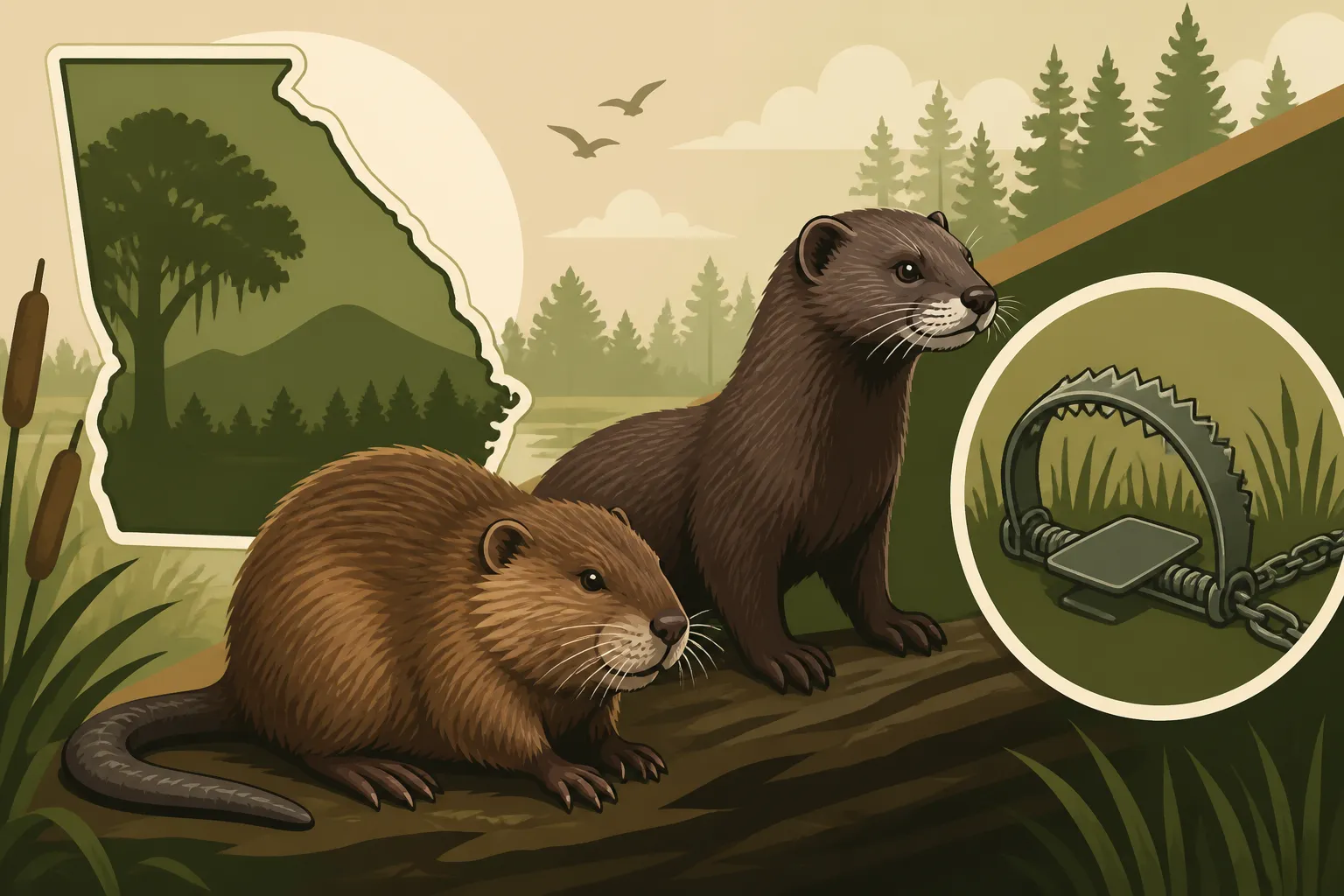
Muskrats (Ondatra zibethicus) are semi-aquatic rodents, and while they might not be as widespread or numerous as some other furbearers in Georgia, they are certainly present in the right conditions. They are most commonly found in areas with permanent water and abundant emergent vegetation. Think slow-moving streams, marshy edges of ponds, beaver ponds, and even drainage ditches that hold water year-round. They're like the little engineers of the wetland, constantly building and maintaining their homes.
These industrious creatures build lodges from vegetation or burrow into banks, often with underwater entrances to keep them safe from predators. Their diet consists primarily of aquatic vegetation like cattails, water lilies, and sedges, though they might occasionally eat small fish or mussels. When you're scouting for muskrats, you're looking for these tell-tale signs: chewed vegetation, small feeding platforms made of mud and plant matter along the water's edge, and their distinctive, narrow runs through dense marsh grass. I remember once spending hours trying to figure out what was nibbling all the cattails in a particularly quiet corner of a WMA near the Altamaha River, only to finally spot a muskrat swimming leisurely across a small pool. Their presence is often subtle until you know what to look for.
Mink: The Stealthy Predators of Riparian Zones
Mink (Neovison vison) are a different beast altogether. While also semi-aquatic, they are opportunistic carnivores, fiercely predatory, and far more mobile than muskrats. They're typically found along the banks of rivers, streams, lakes, and marshes throughout Georgia, wherever there's a reliable food source and plenty of cover. If a waterway has muskrats, chances are it has mink, as muskrats are a favored prey item! Mink also target fish, frogs, crayfish, small mammals, and birds. They’re like shadows along the water's edge, always on the move.
Mink don't build lodges like muskrats; instead, they den in hollow logs, rock crevices, abandoned burrows, or under rootwads along the bank. Their territories can be quite large, especially for males, meaning they cover a lot of ground in their search for food. When scouting for mink, you'll want to look for tracks along muddy banks, scat on rocks or logs, and evidence of their hunting prowess, like feathers or fish scales near a den site. I've often seen them disappear into the thick undergrowth along a creek bottom near my property in the Piedmont, moving with an almost liquid grace that makes them incredibly hard to spot if you're not paying close attention. Their presence is a sign of a healthy aquatic ecosystem.
Current Trapping Trends and Regulations in Georgia
Trapping in Georgia, especially for smaller furbearers like muskrats and mink, is heavily influenced by a mix of market dynamics, conservation efforts, and the specific rules set forth by the state. Understanding these trends and regulations is paramount for any trapper hoping to be successful and lawful.
Navigating the Fluctuations of Fur Prices and Trapper Interest
Let's be honest, the fur market isn't what it used to be. Global demand and prices for wild fur have seen significant fluctuations over the years, and this directly impacts trapper interest, particularly for less glamorous furs like muskrat and mink. When prices are low, fewer trappers target these species because the time, effort, and fuel costs simply don't justify the return. This can be incredibly disheartening for seasoned trappers who remember better days. It's a real challenge to maintain the passion when the economic incentive isn't there.
However, trapping isn't just about the money for many. It's about heritage, wildlife management, and the satisfaction of pitting your wits against nature. Many trappers continue their pursuits regardless of price, often targeting these smaller furbearers as part of a larger mixed bag alongside raccoons, opossums, and bobcats. Georgia Raccoon Season Dates and Georgia Fox and Bobcat Trapping Season often overlap, making it efficient to target multiple species in the same general area. For those trying to gauge the market or find local buyers, staying informed is key. Tools like the GoHunt app or website, while primarily focused on big game hunting, sometimes offer forums or community features where trappers can share information on local fur buyers or market trends, even if it's not their primary function. It's about finding that community knowledge wherever you can get it.
Georgia's Furbearer Regulations: What You Need to Know
Georgia's trapping regulations are designed to manage furbearer populations sustainably. For muskrats and mink, like other furbearers, there's a specific season during which you can legally trap them. This season typically runs through the colder months when their fur is prime. It’s absolutely critical to consult the current Georgia Hunting Seasons and Regulations Guide every single year, as dates, legal trap types, and other rules can change. You can't just rely on what you remember from last year; things move fast in the world of wildlife management.
The state outlines specific legal trap types, which generally include foothold traps (like coilsprings and longsprings) and body-gripping traps (like Conibears), often with size restrictions. For muskrats and mink, smaller traps are generally used. There are also strict rules about how often traps must be checked – typically at least once every 24 hours – to ensure animal welfare and compliance. Failure to adhere to these regulations can result in hefty fines and loss of trapping privileges. I’ve seen good intentions go bad simply because someone didn’t double-check the current rulebook. Always, always verify. For detailed information on permits, make sure you look into Georgia Trapping License Requirements.
The Impact of Habitat Changes on Muskrat and Mink Populations
Just like any wildlife species, muskrat and mink populations are directly linked to the health and availability of their habitats. In Georgia, we've seen significant changes over time due to urbanization, agricultural expansion, and alterations to wetland ecosystems. As swamps are drained, creeks are channelized, and natural riparian buffers are cleared, the ideal homes for muskrats and mink diminish. This can lead to localized declines, even if statewide populations remain stable in other areas.
For trappers, this means that finding productive ground can become more challenging. Areas that were once teeming with muskrats might now be housing developments, or a meandering stream might have been turned into a straight drainage ditch, vastly reducing mink habitat. Conversely, beaver activity can sometimes create new prime muskrat and mink habitat by flooding areas and creating new ponds and marshy edges. It's a dynamic landscape. Being able to read the land and understand these changes is crucial for locating active populations. Tools like GoHunt's mapping features can sometimes help identify current waterways, wetlands, and adjacent land uses, giving trappers a leg up in scouting potential new areas, especially on public lands where permission isn't an issue. Scouting Georgia Public Land Before Season is invaluable, and understanding habitat changes is a big part of that.
Effective Trapping Techniques for Georgia's Environment
Trapping muskrats and mink successfully in Georgia requires a deep understanding of their movements, habits, and the environment they inhabit. It's not just about setting a trap; it's about making a perfect presentation in the right spot.
Mastering Muskrat Sets for Georgia's Waterways
Muskrats are creatures of habit and often travel predictable routes in and out of the water. This makes them relatively straightforward to trap once you locate their activity. The key is to find those travel lanes, feeding areas, and den sites.
One of the most effective methods is the run set. Muskrats create discernible runs or trails in shallow water, especially through dense vegetation, as they travel between feeding areas and their lodges or burrows. Placing a body-grip trap (like a #110 or #120 Conibear) directly in one of these runs, completely submerged, is incredibly effective. The trap should be anchored securely to prevent the animal from escaping with the trap. Another excellent option is a feeding station set. Muskrats often build small platforms of mud and vegetation where they sit to eat. Placing a foothold trap (a #1 or #1.5 coilspring or longspring) on one of these platforms, or a Conibear in an underwater approach to it, can be very productive. Castor mound sets, using their own scent gland secretions, can also draw them in, especially during the breeding season. You'll often find muskrats active along the edges of small ponds, sloughs, and even larger rivers where the current is slow. I've had great success in sluggish backwaters off the Oconee River, setting traps near fresh vegetation clippings. For additional habitat scouting, information on Hunting a Funnel Between Two Swamps can offer insights into these transition areas that often hold furbearers.
Stealthy Mink Sets in Georgia's Riparian Zones
Mink are more challenging. They are intelligent, curious, and constantly on the move, covering much larger territories. Their opportunistic nature means they'll investigate any promising scent or hidey-hole, which trappers can exploit.
Pocket sets are a go-to for mink. This involves digging a small "pocket" into the bank of a stream or pond, just above the waterline, about 6-8 inches deep and 4-6 inches wide. Place a small piece of bait (fish, frog, or even a muskrats carcass) at the back, and set a foothold trap (again, a #1 or #1.5 coilspring) at the entrance, just under the lip of the bank. The mink, naturally curious, will investigate the scent and step into the trap. Ensuring the trap is stabilized and blended into the bank is crucial. Cubby sets also work well, especially with more protective traps like a #120 Conibear. Build a small box or cover a natural cavity with logs or rocks, place bait and lure inside, and set the body-grip trap at the entrance. Mink love to explore confined spaces. Blind sets along narrow game trails on creek banks, under rootwads, or at log crossings can also be productive, but require excellent knowledge of the mink's travel patterns. When targeting these quick predators, consider using a visual attractant, like a bird wing or bright piece of tin, near your set. GoHunt's detailed topographic maps can help identify pinch points, old log crossings, and thick cover along river systems that mink frequently use for travel.
Essential Gear Considerations for Small Furbearers in Georgia
Having the right gear is non-negotiable for effective and ethical trapping. For muskrats and mink, you're generally looking at smaller, more sensitive traps.
- Traps: #1 or #1.5 coilspring or longspring foothold traps are excellent for both species, especially in pocket or feeding station sets. For body-grip sets, #110 or #120 Conibears are ideal for muskrats in runs and for mink in cubbies or pocket entrances. Make sure your traps are clean, functional, and dyed or waxed to prevent rust and help them blend into the environment.
- Anchoring and Drowning Systems: Because muskrats and mink are agile and strong for their size, proper anchoring is vital. Dragging a trap from a bank set is a common issue. Secure stakes (rebar stakes are popular) are a must. For water sets, using drowning wires or weights can quickly dispatch the animal, promoting humane trapping practices. This is especially important in public access areas where Georgia Public Land Hunting Hours are regulated, and you want to ensure quick checks.
- Baits and Lures: Fish scraps, fresh meat (like beaver or muskrats carcass), and even some commercial fruit-based baits work for muskrats. For mink, strong, musky lures, fish oil, and fresh meat or fish are highly effective. Don't be shy with your lure, but don't overdo it either.
- Tools: A good pair of trapper's pliers, wire cutters, a digging tool (trowel or small shovel), gauntlets for handling animals, and a sturdy pack to carry your gear are all essential. And, of course, your current hunting and trapping license. Don't forget your Georgia WMA Access Stamp Requirement if you're on public land.
Conservation and Management of Furbearers in Georgia
Trapping isn't just a recreational pursuit; it's a vital component of wildlife management and conservation. In Georgia, trappers play an understated but incredibly important role in maintaining healthy ecosystems and monitoring furbearer populations.
The Trapper's Role in Georgia Wildlife Management
Trappers are often the unsung heroes of wildlife conservation. By removing furbearers, they can help manage populations, preventing overpopulation that can lead to disease outbreaks or habitat degradation. For instance, trapping can help reduce local pressure on specific areas where muskrat numbers might be impacting sensitive aquatic vegetation, or where mink might be preying too heavily on local waterfowl or turkey poults. While muskrat and mink aren't usually considered nuisance animals in the same way feral hogs might be (see Feral Hog Hunting Year-Round in Georgia), their populations do contribute to the broader ecosystem balance.
Beyond population control, trappers also act as vital eyes and ears on the ground. They spend countless hours in the remotest parts of Georgia's wild places, observing wildlife health and reporting unusual occurrences. This anecdotal information can be crucial for biologists tracking disease outbreaks or shifts in animal distribution. For example, if a trapper consistently notes poor fur quality or signs of disease in mink in a particular river system, that information is valuable for agencies involved in Georgia Wildlife Disease Monitoring. This boots-on-the-ground knowledge is irreplaceable.
Georgia DNR's Furbearer Conservation and Monitoring
The Georgia Department of Natural Resources (DNR) is tasked with managing all wildlife populations in the state, including furbearers like muskrats and mink. This involves setting appropriate trapping seasons, establishing bag limits (though typically not for common furbearers like these, but common for other species), and conducting surveys to monitor population trends. Their decisions are based on scientific data collected through various methods, including trapper harvest reports, track counts, and habitat assessments.
The goal is always to ensure sustainable populations for future generations. DNR also provides educational resources, like hunter and trapper education courses, to promote ethical and responsible practices. They understand that trappers are a critical constituency for conservation, contributing license fees that directly fund wildlife management programs. While some species like deer have specific antler restrictions (refer to Why Georgia Caps Antlered Bucks at Two), furbearers are generally managed through season lengths and legal methods.
Future Outlook for Muskrat and Mink in Georgia
Looking ahead, the future of muskrat and mink in Georgia, and trapping in general, will likely continue to be a blend of challenges and opportunities. Habitat loss remains a significant concern, especially in rapidly developing areas. As Georgia's population grows, pressure on natural spaces increases, directly impacting wetland and riparian habitats crucial for these species. Climate change also plays a role, with altered rainfall patterns potentially affecting water levels in critical habitats.
However, there are also opportunities. Continued conservation efforts, particularly wetland restoration projects and smart land-use planning, can help mitigate some of these losses. The passion and dedication of Georgia's trapping community will also be essential. By staying informed, adhering to regulations, and advocating for wildlife habitat, trappers can ensure that muskrat and mink remain a part of Georgia's rich natural heritage. Technology, like advanced mapping on GoHunt, can also help trappers identify and adapt to new hunting grounds and changing environmental conditions, keeping the tradition alive and thriving for years to come.
Comparison of Muskrat and Mink Trapping Considerations in Georgia
| Feature | Muskrat | Mink |
|---|---|---|
| Primary Habitat | Permanent wetlands, marshes, slow streams, pond edges, beaver ponds | Rivers, streams, lakes, marshes, riparian zones |
| Diet | Mostly aquatic vegetation, some mussels/fish | Fish, frogs, crayfish, muskrats, small mammals, birds |
| Movement | More localized, distinct runs/trails | Wide-ranging, patrol shorelines and waterways |
| Typical Traps | #110/#120 Conibears, #1/#1.5 Footholds | #120 Conibears, #1/#1.5 Footholds |
| Best Sets | Run sets, feeding station sets, castor mound sets | Pocket sets, cubby sets, blind sets along banks |
| Preferred Bait | Vegetation, apple, muskrats carcass | Fish, fresh meat, musky lures |
| Challenge | Moderate (once active areas found) | High (due to intelligence and mobility) |
| Conservation | Manage local wetland vegetation impacts | Predator control, ecosystem balance |
Disclaimer
This article is for general informational purposes only and does not constitute professional advice. Laws, prices and regulations vary by location and change over time. Consult a qualified professional for guidance on your specific situation.