Habitat Work on Georgia WMAs
Ever scout a Wildlife Management Area (WMA) in Georgia and scratch your head, wondering why one section looks like a park, another like a tangled mess, and still another like it's just been torched? You're not alone. It can feel like a riddle sometimes, but there's a method to that madness! This guide is here to pull back the curtain on the crucial habitat work happening across Georgia's WMAs, explaining why it's done, what techniques are employed, and most importantly, how understanding these efforts can dramatically improve your hunting success on public land.
The Foundation: Why Georgia WMAs Need Active Habitat Management
For many hunters, a WMA is simply "public land" – a place where you can hunt without needing permission from a private landowner. But these aren't just untouched wild areas. Georgia's Wildlife Management Areas are actively managed landscapes, and that "management" is essentially habitat work. Without these ongoing efforts, many of our favorite game species wouldn't thrive, and hunting opportunities would dwindle. It's a fundamental truth that good hunting starts with good habitat, and that's precisely what WMA managers are striving to create and maintain.
Battling Ecological Succession
One of the biggest reasons for active management is to fight against ecological succession. Left completely undisturbed, most open or semi-open habitats in Georgia would eventually revert to mature, dense forests. While mature forests have their place, they often lack the diverse understory plants, sunlight, and early successional cover that many game species like deer, turkey, and quail desperately need. Think about it: a thick canopy means very little sunlight hits the forest floor, stifling the growth of nutritious browse and forbs that deer eat, or seed-producing plants that turkeys and quail rely on. Habitat work is about maintaining a variety of successional stages, ensuring there's always plenty of young, vibrant growth.
This natural progression doesn't just affect plant life; it directly impacts animal populations. Deer, for example, thrive in areas with a mosaic of thick cover for bedding and abundant forage for feeding. If an entire WMA becomes a uniform, mature pine plantation with no understory, it becomes a biological desert for deer. Turkey poults need dense, bug-rich cover to hide from predators, which they won't find in a sterile forest floor. Why Georgia Turkey Numbers Declined is a complex issue, but habitat loss is a huge part of it. The work on WMAs tries to reverse these trends.
Addressing Specific Species Needs
Different game animals have different habitat requirements, and WMA management aims to cater to a diverse range of species. What's good for a wild turkey might not be ideal for a wood duck, and what helps a bobwhite quail might not be a top priority for a black bear. Therefore, WMA managers develop plans that often create a patchwork of different habitat types across the landscape. This might mean managing one section for early successional growth to benefit quail and rabbits, while another section focuses on maintaining mast-producing hardwoods for deer and squirrels, or even impounding water for migratory waterfowl.
Consider the needs of Georgia's diverse wildlife. White-tailed deer need a mix of cover and food sources throughout the year. Wild turkeys need open woods for strutting, dense undergrowth for nesting, and bugging areas for poults. Bobwhite quail are especially dependent on specific early successional habitats with bare ground, seed-producing plants, and overhead cover. Even species like black bears benefit from diverse habitats that provide various food sources like acorns, berries, and insects at different times. The goal isn't just "more animals," but healthier, more resilient populations that can withstand environmental pressures.
Key Habitat Management Techniques on Georgia WMAs
The tools WMA managers use are varied, often mimicking natural processes or correcting past land-use impacts. These techniques are scientific, planned interventions designed to optimize the land for wildlife and, by extension, for hunters. Understanding these techniques can help you interpret the landscape when you're scouting.
Prescribed Burning
Perhaps the most iconic and widespread habitat management tool in Georgia, prescribed burning involves intentionally setting controlled fires under specific weather conditions. It might look alarming at first, but it's an incredibly effective and natural process, especially in our longleaf pine ecosystems.
The primary goal of prescribed burning is to reduce hazardous fuel loads, preventing catastrophic wildfires, but its ecological benefits are immense. Fire clears out dense underbrush, allowing sunlight to reach the forest floor. This encourages the growth of tender, nutritious forbs and grasses that deer, turkey, and quail prefer, rather than tough, woody shrubs. It also helps control parasites like ticks and creates open ground for turkeys to scratch and poults to forage for insects. Many native plant species in Georgia actually require fire to germinate and thrive. When you're Scouting Georgia Public Land Before Season, look for areas that have been recently burned; these can be excellent for early-season browse and insect activity.
Timber Management and Thinning
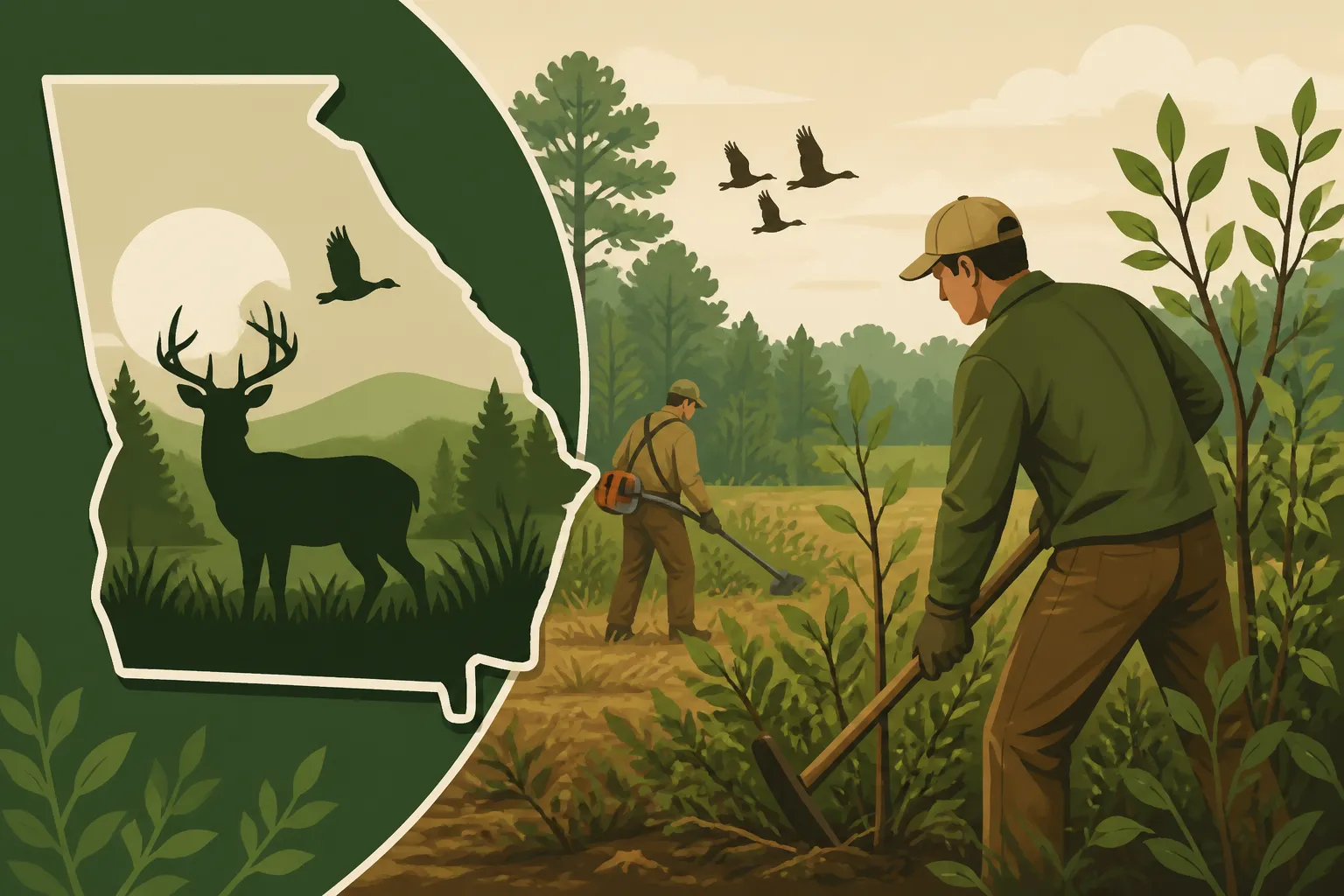
Timber harvesting on WMAs isn't just about cutting trees for revenue; it's a critical habitat management practice. Techniques can range from selective thinning to larger clear-cuts, each serving a specific purpose. Thinning operations remove a percentage of trees, allowing more sunlight to reach the forest floor and promoting the growth of understory vegetation. This creates better browse for deer and improves visibility for hunters. It also allows remaining trees to grow larger and healthier, producing more mast (acorns, hickory nuts) in the long run.
Clear-cuts, though sometimes visually jarring, are vital for creating early successional habitat. As the cut-over area regrows, it provides incredibly dense cover for fawns, rabbits, and quail, along with abundant young browse for deer. These areas can be challenging to hunt but often hold high densities of deer looking for cover and food. You might also see areas managed as pine plantations, where trees are planted in rows. Even these areas are often thinned multiple times throughout their growth cycle, and sometimes prescribed fire is used between rows to maintain understory. Knowing Timber Cuts and Where Deer Move After can give you a significant advantage.
Food Plots and Supplemental Forage
While natural forage is the backbone of wildlife diets, WMA managers sometimes plant food plots to provide supplemental nutrition or to concentrate game for hunter access. These plots typically consist of cool-season annuals (like oats, wheat, clover) for fall and winter, or warm-season annuals (like corn, sunflowers, sorghum) for spring and summer. They offer a readily available food source, especially during lean times of the year or in areas with limited natural forage.
For hunters, food plots can be magnets for deer and turkeys. They're often located in strategic areas to draw animals out into more open terrain, making them more visible. It's important to remember that these aren't just "bait stations" but are managed as part of a broader habitat strategy. They also provide valuable nutrition that can help deer through the rut and winter, and turkeys through nesting season. Understanding Late-Season Food Sources for Georgia Whitetails is key to hunting these areas effectively.
Water Level Management
For waterfowl and certain other wetland species, managing water levels is paramount. Many WMAs contain impoundments or "moist-soil units" where water levels are manipulated throughout the year. These areas are flooded in the fall and winter to create prime foraging and resting habitat for migrating ducks and geese. In the spring and summer, the water is drawn down to expose mudflats, allowing moist-soil plants like millet, smartweed, and sedges to grow, which produce abundant seeds. These seeds then become a vital food source when the units are reflooded.
This cyclical management ensures a consistent food supply for waterfowl using the Atlantic Flyway, and also provides habitat for wading birds and other wetland creatures. Hunting Coastal Georgia Marsh Waterfowl often involves understanding these managed water bodies, whether natural or man-made.
Other Important Techniques
- Bush Hogging/Mowing: Similar to burning, mowing can remove woody competition and promote desirable herbaceous growth along field edges, old logging roads, and under power lines, creating travel corridors and browse.
- Herbicide Application: Used selectively to control invasive species or undesirable woody plants that outcompete beneficial forage.
- Planting Mast Trees: Encouraging or planting oak, persimmon, and other mast-producing trees provides long-term food sources.
- Beaver Dam Management: Beavers can create valuable wetland habitat, but they can also flood timber and roads. WMA managers often manage beaver populations and their dams to maintain a balance.
How WMA Habitat Work Shapes Hunting Opportunities
All this intensive habitat management isn't just for the animals; it directly impacts how, when, and where you'll find game on a WMA. Understanding these management objectives can be your secret weapon for success.
Creating Diverse Hunting Environments
Because WMA managers are constantly working to create a mosaic of habitats, you'll find incredible diversity across different WMAs, and even within a single WMA. One WMA might be known for its extensive pine flatwoods perfect for Still-Hunting South Georgia Pine Flats and quail, while another boasts rugged mountain hardwoods ideal for deer and bear. Within one large WMA, you might encounter dense clear-cuts holding young bucks, mature hardwoods full of acorn-eating deer, and managed fields attracting turkeys.
This diversity means hunters can often find conditions that suit their preferred hunting style or target species. It also means that if one area isn't producing, understanding the habitat types can help you quickly shift to a different area that might be more productive based on current conditions, such as recent burns or seasonal food availability.
Influencing Game Movement and Density
The habitat work directly influences where game animals live and how they move. Areas with high-quality forage and secure bedding cover will naturally attract and hold more animals. For instance, a recently thinned pine stand with fresh, green browse sprouting on the forest floor will likely be a hot spot for deer. A clear-cut that's grown up for 3-5 years offers incredible escape cover and browse, concentrating deer into tighter areas, even if they're difficult to penetrate.
Similarly, specific management actions can funnel animals. A long, narrow food plot bordered by thick cover can create a natural travel corridor. Prescribed burns can push deer and turkeys into unburned pockets temporarily, only for them to return once fresh growth emerges. Using mapping tools like onX Hunt can help you identify recent burn boundaries, timber cuts, and food plots, giving you clues about where animals might be concentrated or traveling.
Providing Accessibility and Infrastructure
Part of WMA management also involves maintaining access roads, parking areas, and sometimes even primitive camping sites. These aren't habitat features per se, but they are crucial for hunters to actually reach the managed habitat. Managers often try to balance access with the need for sanctuary areas, meaning some parts of a WMA might be more remote or require more effort to reach, which can be exactly where you find less pressured animals.
Well-maintained infrastructure also helps WMA staff perform their duties, whether it's planting food plots, conducting burns, or monitoring wildlife populations. It makes their work more efficient, which in turn leads to better hunting opportunities for you.
Maximizing Your Hunt on Managed Public Land
Now that you understand what WMA habitat work entails, how can you use that knowledge to put more game in your freezer and enjoy your public land experiences even more? It's all about scouting smarter and being adaptable.
Scouting with an Eye for Habitat
When you're Scouting Georgia Public Land Before Season, don't just look for tracks and rubs. Look for the types of habitat that create those signs. Identify areas of recent burning, timber thinning, or food plots. Pay attention to how different habitat types transition into one another, as these "edge" areas are often prime locations for game movement. A field edge backed by thick cover is almost always a good bet, especially if it's a managed food plot.
Consider using digital mapping apps like onX Hunt. These apps often have layers that can show you timber types, property lines (crucial on WMAs that may border private land), and even topography that helps predict how animals will use the land. Some even show recent satellite imagery that can reveal timber cuts or larger-scale habitat changes before you ever step foot on the ground. When planning a hunt, check WMA specific regulations for activities like Trail Camera Rules on Georgia Public Land.
Understanding Seasonal Changes in Habitat Use
The effectiveness of different habitat features changes throughout the year, driven by both natural cycles and management activities. In late summer/early fall, freshly mowed or burned areas might offer new, succulent browse for deer. Come late fall and winter, mature oak stands providing acorns (mast) become crucial. Food plots are especially important in the colder months when natural forage is scarce.
For turkey hunting, early spring sees gobblers using open areas for strutting, moving towards thicker cover for nesting hens. During the summer, turkey broods will often frequent areas with a good insect population, often found in recently burned or disturbed areas. This means your scouting efforts should be ongoing, not just a one-time event before opening day. Understanding Late-Season Food Sources for Georgia Whitetails can really extend your success.
Consulting WMA-Specific Information
Every WMA is unique, and each one has specific management objectives and rules. Before you hunt, always check the Georgia Department of Natural Resources (DNR) website or the Go Outdoors Georgia platform for current regulations, season dates, and any specific notes about the WMA you plan to visit. Sometimes, WMAs will post maps showing recent burns, timber cuts, or food plot locations.
This information is invaluable. Some WMAs might have areas designated for specific types of hunting, or temporary closures due to ongoing habitat work. Being informed means you won't accidentally stumble into a restricted area or waste time hunting in a section that's been recently disturbed and is temporarily unproductive.
Adapting Your Tactics
Finally, be ready to adapt your hunting tactics to the habitat you find. If you're in a dense clear-cut, still-hunting might be more effective than sitting a stand. If you're hunting open, thinned pines, you might need to hunt closer to the edges or use longer-range optics. In areas with extensive prescribed burns, deer might be more wary of open areas, pushing them into nearby unburned pockets or along drainages.
Embrace the variety that WMA management creates. Each habitat type offers unique challenges and opportunities. The hunters who consistently succeed on Georgia's public lands are often those who understand the language of habitat management and can read the landscape for clues about where the game is and how it's using the terrain.
Habitat Management Techniques and Benefits on Georgia WMAs
Here's a quick overview of common habitat management practices you'll encounter on Georgia WMAs and what they mean for wildlife and hunters:
| Technique | Primary Purpose | Key Benefits for Wildlife | Benefits for Hunters | Target Species |
|---|---|---|---|---|
| Prescribed Burning | Reduce fuel, promote herbaceous growth | Increased browse, insect availability, bare ground | Improved visibility, concentrated deer/turkey | Deer, Turkey, Quail |
| Timber Thinning | Increase sunlight to forest floor, promote understory | More nutritious forage, diverse cover | Better sightlines, better browse for deer | Deer, Turkey |
| Clear-cutting | Create early successional habitat | Dense bedding cover, abundant young browse | Concentrations of deer, rabbit, quail | Deer, Rabbit, Quail |
| Food Plots | Supplemental nutrition, attract game | Consistent food source, improved health | Attracts and holds game, predictable locations | Deer, Turkey, Doves |
| Water Level Mgmt. | Optimize wetlands for waterfowl and moist-soil plants | Foraging and resting habitat, seed production | Attracts and holds waterfowl, specific hunting opps. | Waterfowl, Wading Birds |
| Bush Hogging/Mowing | Control woody growth, create edges, promote new growth | Browse, travel corridors, insect foraging | Clears access, creates travel funnels, edges to hunt | Deer, Rabbit, Turkey |
| Herbicide Application | Control invasive species, undesirable plants | Reduce competition for beneficial native plants | Improves habitat for game, increases forage quality | All game species |
Disclaimer
This article is for general informational purposes only and does not constitute professional advice. Laws, prices and regulations vary by location and change over time. Consult a qualified professional for guidance on your specific situation.