Chattahoochee WMA in White County
For many hunters, the idea of pursuing game in Georgia's stunning mountain country is a powerful draw, but the reality of steep terrain, dense cover, and finding productive public land can feel incredibly daunting. This guide is all about navigating the opportunities and challenges of Chattahoochee Wildlife Management Area in White County, offering practical insights to help you plan a successful hunt in one of Georgia's most scenic—and sometimes most frustrating—hunting destinations.
General Overview of Chattahoochee WMA and North Georgia Hunting Challenges
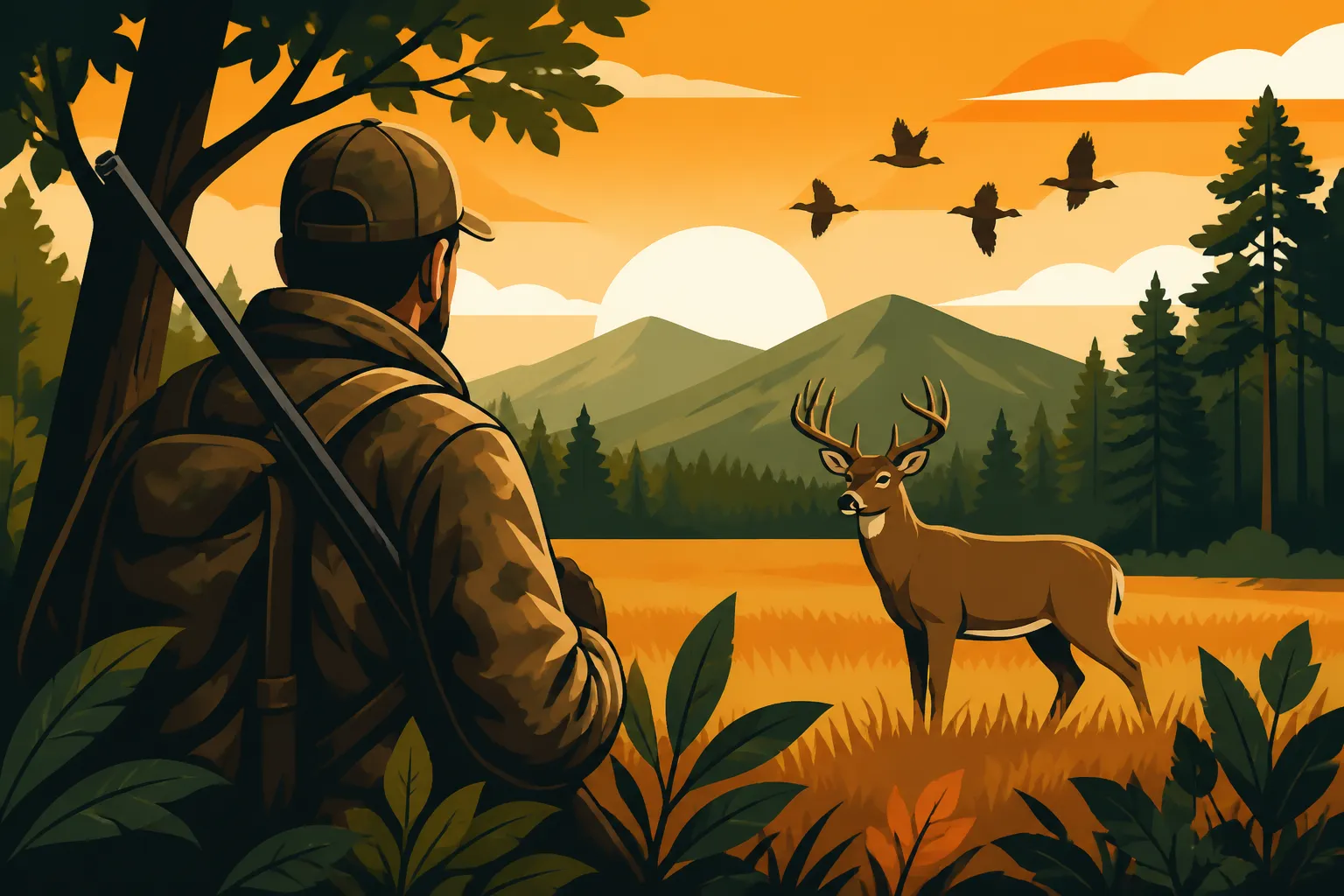
Chattahoochee WMA isn't just another patch of woods; it's a significant portion of public land nestled within the Chattahoochee National Forest, offering hunters a taste of genuine mountain hunting. The sheer scale and ruggedness of this area are what make it both incredibly appealing and incredibly challenging. Unlike the flat pine plantations or agricultural fields of South Georgia, the mountain WMAs demand a different kind of preparation, a different kind of strategy, and frankly, a different kind of hunter.
The frustrations are real: endless ridges, thick rhododendron thickets that seem impenetrable, and the constant battle with elevation changes. It's easy to feel overwhelmed, like you're just wandering aimlessly in a sea of green and brown. But beneath that challenging exterior lies a rich habitat that supports a diverse array of game, rewarding those who are willing to put in the effort and understand its unique characteristics.
Location and Unique Features
Chattahoochee WMA is situated primarily in White County, though its boundaries can sometimes blur with adjacent national forest lands that offer similar hunting experiences. It's part of the larger Chattahoochee National Forest, a vast expanse of federally managed land stretching across northern Georgia. What truly sets this WMA apart are its dramatic elevation changes, often reaching over 3,000 feet, creating a complex tapestry of steep slopes, deep hollows, and hardwood ridges. This isn't flat-land hunting; expect to climb, descend, and traverse some serious inclines.
The area is characterized by mature hardwood forests, particularly oak and hickory, which are crucial for deer and bear forage, especially during the fall mast crop. You'll also encounter dense evergreen thickets, like mountain laurel and rhododendron, which provide excellent bedding cover but can be a nightmare to navigate. Numerous small creeks and drainages cut through the landscape, acting as natural travel corridors for game and offering vital water sources. The ruggedness means fewer roads and less easy access compared to many other WMAs, which can be both a deterrent for some and a major draw for others seeking solitude and less pressured game. This remoteness often translates into a more "wild" hunting experience, where encounters with other hunters can be few and far between once you get off the beaten path.
Common Hunter Frustrations
Let's be honest, hunting mountain terrain like Chattahoochee WMA can test even the most seasoned hunter's patience. One of the biggest frustrations is simply the physical toll. You might spend hours climbing a ridge, only to find the sign is old, or the deer are simply not there, requiring you to descend and climb again. The sheer effort involved can burn through energy reserves quickly, making a multi-day hunt a true endurance test. Another common complaint revolves around finding distinct game sign. Unlike agricultural areas where deer patterns can be predictable around food sources, deer in vast, unbroken mountain timber can seem to vanish. They have endless places to hide, and their movements are often dictated by subtle changes in topography, wind, and food availability across a massive area.
Furthermore, the dense vegetation, particularly the rhododendron thickets, can be incredibly difficult to penetrate, making still-hunting or tracking a real challenge. Visibility is often limited to mere yards, which means you need to be constantly aware of your surroundings and ready for quick shots. Lastly, navigating these vast, featureless (to the untrained eye) woods can be disorienting. Even with GPS tools, understanding the nuances of how Wind and Thermals on a Mountain Ridge affect deer movement or how to read a contour map for optimal stand placement takes considerable experience. Many hunters get discouraged when they realize their usual tactics from flatter land simply don't translate effectively here.
Species and Seasons on Chattahoochee WMA
Chattahoochee WMA is a multi-species destination, offering opportunities for deer, bear, and turkey, along with some small game. However, understanding the specific seasons and regulations is absolutely crucial, as they can differ from statewide seasons and even from other WMAs. The mountainous habitat naturally favors certain species, and success often hinges on targeting the right animal during the right time, with appropriate tactics.
Deer Hunting Opportunities
Deer hunting is arguably the most popular pursuit on Chattahoochee WMA. While deer densities might not be as high as in some fertile Piedmont or Coastal Plain regions, the challenge of pursuing a mountain buck here is incredibly rewarding. The deer tend to be wilder, more cautious, and often require hunters to cover extensive ground. The WMA offers both archery and firearms seasons, typically aligning with the broader state schedule but often with specific WMA dates. Bowhunting Georgia's Early Archery Season can be particularly challenging and rewarding, as the woods are still thick with foliage, and temperatures can be high, making stealth and scent control paramount.
During the firearms season, hunters typically spread out across the ridges and valleys, often focusing on areas with good mast production. Finding oak flats with fresh acorns can be key to locating deer, especially during the early part of the season. Deer drives, while less common than in some other areas, can be effective in breaking up large blocks of cover and pushing deer toward waiting standers. However, due to the rugged terrain, organizing and executing a drive requires careful planning and communication among hunters. The "cluster" nature of this type of article encourages comparisons: unlike hunting Piedmont Farmland Deer where food sources might be very concentrated, deer on Chattahoochee WMA often move more broadly across the landscape, making consistent scouting for fresh sign, rather than just food plots, a more critical strategy.
Bear and Turkey Prospects
Chattahoochee WMA falls within Georgia's Northern Bear Zone, making it a prime location for bear hunting. The dense forests and rugged terrain provide excellent habitat for black bears, which tend to be more abundant in these mountain regions. Bear season here is typically short and specific, often just a few days or a week, making it a highly anticipated event for dedicated bear hunters. As outlined in Why Chattahoochee WMA Draws Bear Hunters, the WMA offers some of the best opportunities in the state for pursuing these elusive creatures, though it requires specific knowledge of bear behavior and habitat. Bears will often key in on concentrated food sources like blackberry thickets in summer or heavy mast crops in the fall, so scouting for these areas is critical.
Wild turkeys also call Chattahoochee WMA home, providing thrilling spring hunting opportunities. While turkey populations can fluctuate, the WMA's vast timber offers plenty of roosting and strutting grounds. Hunting here often involves aggressive "run-and-gun" tactics, covering ground to locate gobbling birds, especially on public land. Calling a bird off a high ridge or out of a deep hollow can be an unforgettable experience. However, turkeys on public land like this WMA can be heavily pressured and wise to common calls, demanding patience and realistic setups. Adjusting your tactics and being willing to cover miles of ground, as often discussed in Run-and-Gun Turkey Tactics on Public Land, will significantly increase your chances of success.
Small Game and Other Seasons
Beyond the big game, Chattahoochee WMA also offers opportunities for small game hunting. Squirrels, particularly gray squirrels, are abundant throughout the hardwood forests, especially during years with good acorn crops. A morning squirrel hunt can be a fantastic way to introduce new hunters to the woods, hone tracking skills, or simply enjoy a less pressured day afield. Rabbit hunting, while possible, is generally more challenging due to the lack of expansive open fields or fencerows found in other parts of Georgia; rabbits here are often found in brushy clear-cuts or along creek bottoms.
Coyote hunting is also an option year-round on most WMAs, and the dense cover provides good opportunities for predator calling. While not explicitly listed as a primary target for Chattahoochee WMA, understanding that you can hunt Coyote Calling in Georgia Farm Country might inspire a similar approach in the mountain fringes or logging cuts. Before heading out for any species, always double-check the current Georgia Department of Natural Resources (DNR) regulations and specific WMA supplemental rules, as seasons, bag limits, and legal weapons can change annually.
Navigating the Terrain: Access and Tactics
The rugged landscape of Chattahoochee WMA is its defining characteristic, dictating how hunters access the area and the strategies they employ. Simply put, if you plan to hunt here, you must be prepared for physical exertion and understand how to use the terrain to your advantage. This isn't a place for casual strolling; it's a place where effective navigation and strategic movement are paramount to success.
Access Points and Parking
Access to Chattahoochee WMA is typically via a network of forest service roads, many of which are gravel and can be rough, especially after heavy rains. These roads often have designated parking areas or pull-offs, but it's important to be aware of any WMA-specific rules regarding vehicle access and parking. Some roads may be gated or seasonal, requiring you to walk further to reach your desired hunting area. Consulting a detailed map, such as those found on an app like onX Hunt, is invaluable for identifying these access points, understanding road conditions, and locating legal parking. Relying solely on general navigation apps can lead to frustrating dead ends or impassable roads.
When planning your approach, consider how far you're willing to walk from your vehicle. The further you get from main access points, the less human pressure you're likely to encounter, which can greatly improve your chances of seeing game. However, this also means a longer, more difficult haul for any harvested animal. Always factor in retrieval when selecting your starting point. Knowing your entry and exit routes intimately before heading into the woods, especially in low light conditions, is a critical safety measure.
Understanding the Topography
Understanding the topography is the single most important skill for hunting Chattahoochee WMA. The mountains aren't just hills; they are complex systems of ridges, saddles, draws, benches, and hollows, each playing a role in how game animals move. Deer, bears, and turkeys will often use these features to their advantage, traveling along contour lines, through saddles, or in the bottoms of draws to conserve energy, avoid predators, and exploit thermal currents. Learning to read these topographical features, whether on a physical map or a digital one via GoHunt or onX Hunt, allows you to predict game movement.
For instance, Reading a Ridge for North Georgia Deer involves understanding that deer often travel just below a ridgetop on a bench, or use saddles as natural funnels between drainages. During the morning, deer might be feeding lower in the hollows and then move up to higher, thicker bedding cover as the day progresses, using specific draws or benches for their ascent. Conversely, in the evening, they might reverse this pattern. Understanding thermals—how warm air rises in the morning and cool air descends in the evening—is also crucial, as your scent will travel with the air currents. Hunting from a stand or blind with the wind (and thermals) in your favor is paramount.
Effective Hunting Strategies
Given the challenging terrain, successful hunting strategies on Chattahoochee WMA often blend patience, stealth, and adaptability. Still-hunting, moving slowly and deliberately through the woods, stopping frequently to observe and listen, can be highly effective, especially in areas with fresh sign. You'll want to focus on connecting natural features like creek bottoms, saddles, and benches, moving from one potential hot spot to another. This is far more effective than simply crashing through the woods.
Setting up treestands or ground blinds strategically along known travel corridors, especially those influenced by topography or food sources, can also pay off. A classic strategy is to hang a stand on a saddle or a prominent bench connecting two ridges, knowing that deer will often use these features to cross from one drainage to another. For bear, focusing on areas with current mast crops or dense berry bushes, and setting up downwind of those food sources, can be fruitful. For turkeys, identifying prominent roosting ridges or open areas where they might strut in the mornings is key, then attempting to call them in. Given the density of cover, archery hunting can be particularly challenging, requiring close encounters and precise shot placement. Treestand Setups in North Georgia Mountains often emphasize quiet entry and exit, and positioning for short-range shots.
Rules and Regulations Specific to Chattahoochee WMA
Hunting on any Wildlife Management Area in Georgia comes with a specific set of rules that often go beyond the general statewide regulations. Chattahoochee WMA is no exception. These rules are put in place to manage wildlife populations, ensure hunter safety, and preserve the quality of the hunting experience for everyone. Ignorance of these regulations is no excuse, so thorough research before your hunt is essential.
General WMA Rules
All Georgia WMAs share a baseline of regulations. This typically includes requirements for a valid Georgia hunting license, appropriate Big Game or Migratory Bird licenses/stamps, and a WMA stamp. Georgia Hunting Licenses and What They Cost will outline the various options you might need. Furthermore, most WMAs require hunters to check in and check out, either physically at a kiosk or electronically through the Georgia DNR's "Go Outdoors Georgia" platform. This system helps the state track hunter effort and harvest data.
Blaze orange or blaze pink requirements are also standard on WMAs during firearms seasons for deer and bear, and often during other seasons as well, to ensure hunter visibility and safety. Georgia Blaze Orange Requirements will detail how much material is needed and when. Certain types of equipment, such as ATVs, may have restricted use, often limited to designated trails or prohibited altogether. Camping rules, especially primitive camping, can vary widely, so if you plan to stay overnight, verify the specific WMA's regulations. Respect for signage, such as "No Hunting Zones" or private property boundaries, is also paramount.
Specific Chattahoochee WMA Regulations
Chattahoochee WMA often has additional rules tailored to its unique environment and management objectives. These might include specific dates for archery, primitive weapons, or firearms hunts that differ from the statewide schedule. For example, some WMAs might have quota hunts, requiring pre-application and a lottery drawing, though Chattahoochee typically allows open access during designated periods. There may also be specific regulations regarding antler restrictions for deer (e.g., minimum antler points or spread), or specific limits on doe harvest. It's not uncommon for mountain WMAs to have shorter seasons or different bag limits for certain species to balance hunting pressure with population sustainability.
Always consult the most current Georgia Hunting Regulations guidebook, paying particular attention to the WMA-specific section for Chattahoochee WMA. This will detail legal weapons (e.g., centerfire rifles, shotguns, muzzleloaders, archery equipment), any restrictions on ammunition, and specific times of day when hunting is permitted. Additionally, be aware of any temporary closures or special regulations that might be posted at WMA entrances or on the DNR website, such as prescribed burns or timber operations that could impact access or hunting conditions.
Permits and Licenses
To hunt Chattahoochee WMA, you'll need the appropriate Georgia hunting licenses. For residents, this typically means a basic hunting license and a Big Game License if you're pursuing deer, bear, or turkey. A WMA license is also required for access to Wildlife Management Areas. Non-residents will need equivalent non-resident licenses, which usually cost more. While most hunting on Chattahoochee WMA doesn't require a quota hunt permit for deer or turkey, bear hunting often has very specific season dates that are carefully managed.
It's crucial to purchase and carry proof of all required licenses and permits. The "Go Outdoors Georgia" system allows you to purchase licenses online, and you can often carry proof on your phone. However, in areas with poor or no cell service, a printed copy or a screenshot stored locally is a smart backup. Before planning a trip, review Georgia Resident Hunting License Options or Georgia Nonresident Hunting License Options to ensure you have everything covered. Don't let a simple paperwork oversight ruin your hunt and potentially lead to a citation.
Preparing for Your Hunt: Essential Gear and Scouting
Successfully hunting Chattahoochee WMA isn't just about showing up with a gun or bow; it's about meticulous preparation, both in terms of physical conditioning and understanding the landscape before you ever step foot into the woods. The rugged nature of this WMA demands thoughtful gear selection and dedicated pre-season scouting.
Pre-Season Scouting
Pre-season scouting is arguably the most critical component for success on Chattahoochee WMA. Unlike flatter, more easily accessible public lands, finding productive spots in this vast mountain terrain requires significant legwork and keen observation. Start by pouring over maps, both topographical and aerial, using tools like onX Hunt or GoHunt. Look for key features such as prominent ridge lines, saddles, creek bottoms, benches, and areas with distinct changes in vegetation. Identify potential bedding areas (thick cover on leeward slopes) and feeding areas (oak flats or areas with soft mast like persimmons). Use Scouting Georgia Public Land Before Season as a guide.
Once you've identified potential areas on the map, it's time for boots-on-the-ground scouting. Hike into these areas before the season, looking for fresh deer tracks, rub lines, scrape lines, and active feeding signs (like disturbed leaves under oak trees). Pay close attention to trails that connect different habitat types. During the summer, also look for bear sign, such as torn-up logs, claw marks on trees, or scat. This physical scouting helps you verify what you see on the map, understand the actual difficulty of the terrain, and get a feel for prevailing wind patterns in specific areas. Consider hanging trail cameras in promising spots, adhering to all WMA rules regarding their placement. Understanding game movement during the pre-season is far easier than trying to figure it out on opening day when the pressure is on.
Essential Gear Considerations
Given the physical demands and unpredictable nature of mountain hunting, your gear choices are paramount. First and foremost, invest in high-quality, comfortable, and waterproof hiking boots with excellent ankle support. You will be covering miles on uneven, often steep, terrain, and flimsy footwear will lead to misery and potential injury. Layered clothing is also essential, as temperatures in the North Georgia mountains can fluctuate significantly, from chilly mornings to warm afternoons, even during deer season. Opt for moisture-wicking base layers and versatile outer layers that can be shed or added as needed. Snake boots are also a wise consideration, especially during warmer months, as the WMA is home to various venomous snakes.
Navigation tools are non-negotiable. A reliable GPS unit or a smartphone app with downloaded offline maps (like onX Hunt) is crucial for staying found and pinpointing promising areas identified during scouting. Always carry a compass and know how to use it as a backup. Other essential items include a comfortable, durable pack to carry water, snacks, a first-aid kit, a headlamp, and game processing tools. If treestand hunting, a lightweight, packable stand or a saddle system with climbing sticks is ideal for navigating the rugged terrain. For bear hunting, a powerful rifle and appropriate ammunition, as detailed in Rifle Calibers for Georgia Bear, are critical. Don't forget bug spray, especially during the early archery season, as gnats and mosquitoes can be relentless.
Table of Key Chattahoochee WMA Hunting Information
Here's a quick overview of some key details for hunting on Chattahoochee WMA:
| Feature/Species | Typical Characteristics/Season Notes | Key Hunting Strategy |
|---|---|---|
| Terrain | Steep ridges, deep hollows, hardwood forests, dense thickets | Prioritize physical fitness, use topographical maps, hunt saddles and benches |
| Deer | Moderate density, wilder deer, abundant mast crops (oaks) | Scouting for fresh sign, still-hunting, stand placement on travel corridors |
| Black Bear | Good population in Northern Bear Zone, short, specific seasons | Focus on mast crops, berry thickets, and dense bedding areas; patience is key |
| Wild Turkey | Good populations, challenging due to terrain and pressure | Aggressive "run-and-gun" tactics, locator calls, stealthy setups |
| Small Game | Squirrels abundant, rabbits less common in typical habitats | Target oak flats for squirrels, clear-cuts/creek bottoms for rabbits |
| Access | Forest service roads (gravel), some gated/seasonal access | Use onX Hunt/GoHunt for roads/parking, be prepared for long walks |
| Regulations | WMA-specific dates, check-in/out, blaze orange (firearms), WMA stamp | Always check current GA DNR regulations specific to Chattahoochee WMA |
| Best Time to Go | Early Archery (less pressure, tough visibility), Firearms (rut, mast) | Pre-season scouting is paramount regardless of season |
Disclaimer
This article is for general informational purposes only and does not constitute professional advice. Laws, prices and regulations vary by location and change over time. Consult a qualified professional for guidance on your specific situation.