Bear Hunting Gear in Georgia
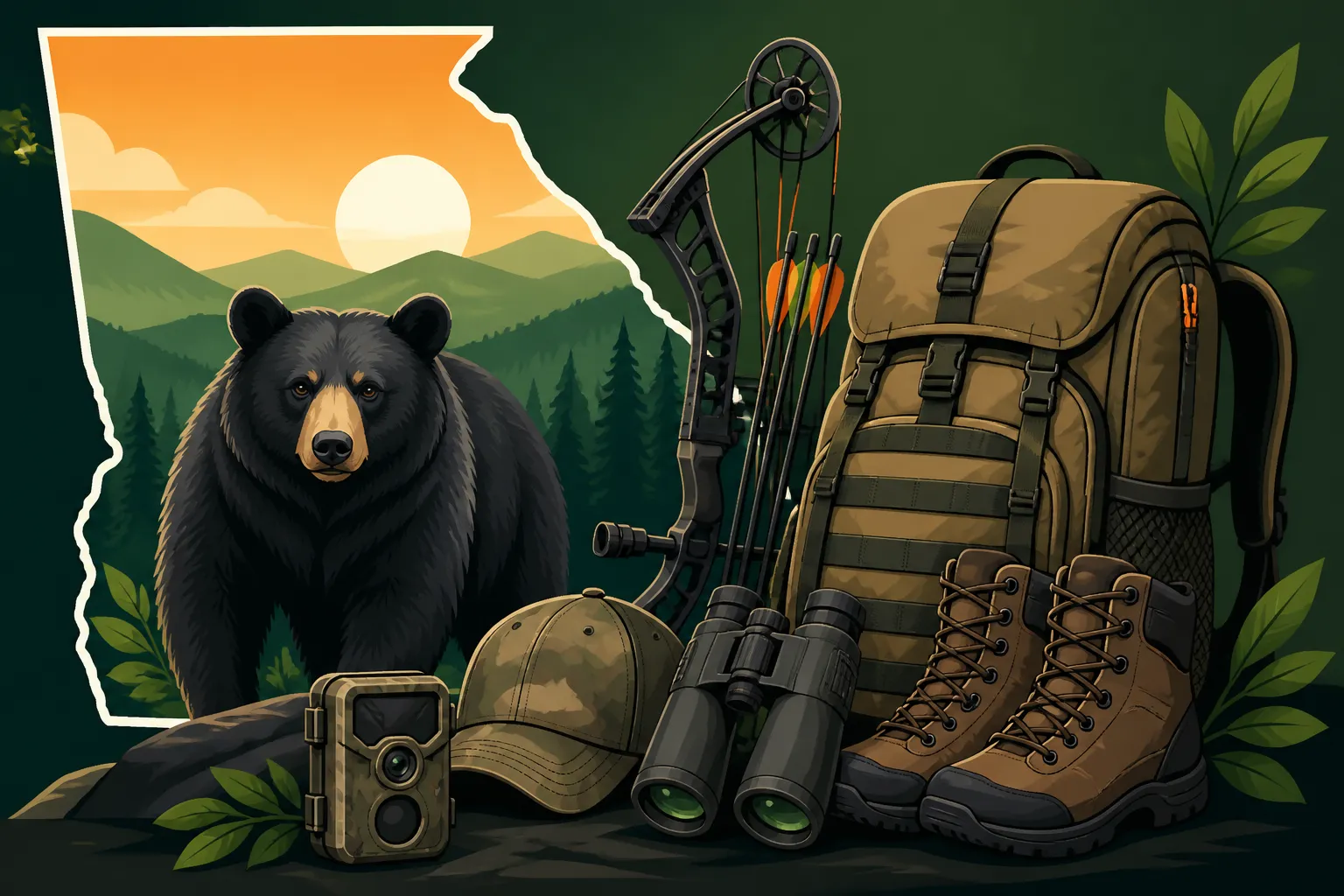
Stepping into the Georgia woods to hunt black bear can feel like an entirely different ballgame than deer or turkey. The sheer power and unpredictable nature of these animals, combined with the varied and often rugged terrain across our state's bear zones, means your gear choices aren't just about comfort—they're about safety, efficiency, and ultimately, success. This guide is here to walk you through the essential gear you'll need to confidently and effectively pursue black bears in Georgia, ensuring you're prepared for whatever the hunt throws your way.
Understanding Georgia's Diverse Bear Hunting Conditions
Georgia offers a surprisingly varied landscape for bear hunting, from the steep, unforgiving Appalachian peaks of the north to the sprawling, watery lowlands of the south. The gear you pack should absolutely reflect these stark differences, because what works in Rabun County might leave you soaking wet and frustrated in Clinch County. It's not a one-size-fits-all situation, and understanding your specific hunting grounds is the first step to making smart gear choices.
North Georgia Mountain Bear Zone Challenges
The mountains of North Georgia present perhaps the most physically demanding bear hunting conditions in the state. We're talking about steep inclines, thick rhododendron thickets, vast mature hardwoods, and often unpredictable weather that can swing from warm and sunny to cold and damp in a matter of hours. Bears here are often found ranging large territories, making long hikes and careful scouting paramount. Your gear needs to be durable, lightweight enough for those climbs, and adaptable to changing conditions. This is where you really need to consider your footwear and pack system, as every ounce feels like a pound halfway up a mountain.
Spot-and-stalk or stand hunting in these areas means you need optics that can cut through shadows and identify bears at a distance, often in very low light. The cover can be so dense that tracking a bear after the shot becomes a whole new challenge, requiring you to rely heavily on your navigation tools and tracking skills. Knowing how to read a ridge line and understand Wind and Thermals on a Mountain Ridge is critical here, not just for the hunt but for recovery.
Ocmulgee and Altamaha/Okefenokee Swamp Bear Zone Realities
Venture south, and the challenges completely flip. The Ocmulgee and Altamaha/Okefenokee bear zones are characterized by flat, often swampy terrain, dense river bottoms, cypress sloughs, and thick palmetto flats. These areas can be incredibly hot and humid, even into the late fall, and mosquitos are a constant companion. Visibility can be extremely limited, often measured in yards rather than hundreds of feet, making close-quarters encounters more common.
Access can also be a major hurdle, with many areas requiring long walks through boggy ground or even boat access. Your gear needs to prioritize quick drying, insect protection, and rugged waterproof construction. Forget about those comfortable, heavy mountain boots; here, you'll want something lighter, more water-resistant, and definitely snake-proof. Recovery in these dense, wet environments also brings unique challenges, often requiring specialized tools and a lot of grit.
Rifles and Ammunition for Georgia Bears
When it comes to putting down a Georgia black bear, you need a rifle that delivers enough energy and penetration to reliably anchor an animal that can weigh several hundred pounds and has a thick hide and heavy bone structure. While a bear isn't as robust as a Cape buffalo, it's a formidable animal that requires respect and appropriate stopping power. Choosing the right caliber and bullet construction is absolutely vital for a humane harvest.
Appropriate Calibers for Black Bear
For Georgia black bears, you want a cartridge that can deliver a heavy, well-constructed bullet with ample kinetic energy. Many popular deer calibers will suffice, but opting for something on the heavier side within those calibers is always a good idea. Think .270 Winchester, .308 Winchester, .30-06 Springfield, or a .300 Winchester Magnum if you're comfortable with the recoil. These calibers offer a good balance of accuracy and power for the varied conditions you might encounter. The key isn't just speed; it's about bullet weight and construction for deep penetration.
A common mistake is assuming that any deer rifle will do the trick without considering bullet type. Bears, especially large boars, can absorb a lot of lead if the bullet doesn't perform. For a deeper dive into choices, check out Rifle Calibers for Georgia Bear. While a lighter caliber like a .243 can technically take a bear, it leaves very little margin for error on shot placement and bullet performance. Always choose a caliber that provides confidence and a clear ethical advantage.
Bullet Construction and Shot Placement
Bullet construction is arguably more important than caliber when hunting bears. You want a heavy-for-caliber, bonded, or monolithic bullet designed for deep penetration and controlled expansion, such as Barnes TSX, Hornady InterBond, Nosler AccuBond, or Federal Trophy Bonded Tip. These bullets are designed to hold together, punch through bone and muscle, and reach vital organs even after encountering resistance. Avoid lightweight, rapidly expanding varmint or thin-jacketed deer bullets that might fragment on impact with a bear's shoulder.
Accurate shot placement is paramount. Aim for the vitals: the lungs and heart. On a broadside bear, this means aiming just behind the shoulder, slightly low, to hit the heart and lungs. Bears are notoriously tough, and a poorly placed shot can lead to a long, difficult, and potentially dangerous tracking job. Understanding Shot Placement on a Georgia Black Bear is crucial. With a well-placed shot from an appropriate rifle and bullet, a bear often won't go far, but without it, you could have a real challenge on your hands.
Bows and Crossbows for Bear Hunting
Archery hunting for black bears in Georgia presents a unique set of challenges and rewards. It demands even closer encounters and a higher degree of precision than rifle hunting. The gear choices for bowhunters need to prioritize stealth, penetration, and the ability to make a clean, ethical kill within the limited range that archery equipment offers.
Bow Specifications and Broadhead Selection
For bowhunting bears, you want a setup that delivers maximum kinetic energy and momentum. Most modern compound bows with a draw weight of 60 pounds or more are sufficient, but ensure your arrows are properly spined and heavy enough to carry that energy. A heavier arrow will typically penetrate better than a lighter, faster one, which is vital for a bear's dense muscle and bone. Pay close attention to your bow's tuning and practice extensively at realistic distances.
Broadhead selection is paramount. Fixed-blade broadheads with strong, non-vented blades are generally favored for bears due to their superior penetration and reliability, especially when encountering bone. Two-blade or three-blade designs are excellent choices. While mechanical broadheads have improved significantly, choose robust designs specifically rated for large game, ensuring they deploy reliably and hold together. Whatever you choose, make sure it's razor-sharp. Dull broadheads can lead to poor penetration and a wounded animal.
Crossbow Considerations for Bear Hunting
Crossbows have become increasingly popular for bear hunting, offering a bridge between traditional archery and firearms. In Georgia, crossbows are legal during the archery season, making them a viable option for many hunters. When selecting a crossbow for bear, look for models with sufficient power stroke and draw weight to generate high kinetic energy. As with vertical bows, arrow weight and broadhead choice are critical for penetration.
Crossbows often allow for greater accuracy at slightly longer ranges than traditional bows, but ethical hunting distances still apply. Practice extensively to understand your crossbow's capabilities and limitations. A good crossbow scope can greatly aid in precision, especially in low light or tight cover. Remember, even with a crossbow, a bear is a tough animal, and perfect shot placement with a well-constructed broadhead remains the ultimate goal. For more on the specific regulations, you might want to review Crossbow Versus Vertical Bow in Georgia.
Optics: Spotting and Tracking Bears
Optics are an often-underestimated but critically important part of bear hunting gear in Georgia. Whether you're trying to locate a bear across a mountain hollow, confirm legal size, or track a downed animal in the fading light, good glass can make all the difference. Investing in quality optics is a wise decision that will pay dividends on every hunt.
Binoculars and Rifle Scopes
A good pair of binoculars is essential for scanning vast mountain expanses or peering into dense swamp thickets. For most Georgia hunting, 8×42 or 10×42 binoculars strike an excellent balance between magnification, field of view, and light-gathering capability. Look for models with excellent low-light performance, crisp image clarity, and durable, waterproof construction. Brands like Leupold or Vortex offer reliable options that can withstand the rigors of the field. Consider a chest harness to keep your binoculars secure, accessible, and prevent them from swinging around while navigating difficult terrain.
For your rifle scope, you need something robust and reliable. Variable magnification scopes (e.g., 3-9×40, 2-10×42, or 4-12×44) are versatile for the varied distances you might encounter. A good scope will have clear glass, hold zero reliably, and perform well in low light, which is often when bears are most active. An illuminated reticle can be a significant advantage in the deep shadows of Georgia's woods. Ensure your scope is properly mounted and sighted in.
Rangefinders and Thermal Imaging for Recovery
A rangefinder is indispensable, especially for archery hunters or those taking longer rifle shots. Knowing the exact distance to your target removes guesswork and helps ensure precise shot placement. Even in thick cover, being able to quickly range a landmark or a potential shooting lane can be crucial. Look for a rangefinder that is easy to use, has a clear display, and can accurately range through light brush.
While not typically used for initial spotting during legal hunting hours, thermal imaging devices can be invaluable for post-shot tracking and recovery, especially as darkness falls. Many hunters find that a quality thermal monocular, if legal for your specific hunting scenario and zone, can cut through dense cover and rapidly locate a downed bear that might otherwise be impossible to find. Always check the latest regulations, but in situations where thermal is allowed for recovery, it significantly reduces the chances of losing an animal overnight. While primarily discussed for Thermal Hunting Georgia Hogs at Night, the principle of using thermal for recovery can apply to bears if regulations permit its use after the shot. Some states allow it for recovery even if not for hunting.
Clothing and Layering for Georgia Bear Hunts
Georgia weather is notorious for being unpredictable, especially in the transitional seasons when bear hunts often occur. From scorching early season warmth to surprising late-season cold snaps, your clothing choices can make or break your comfort, focus, and overall success. Proper layering and material selection are key to staying comfortable and safe in the varied Georgia climate.
Adapting to Temperature Swings and Humidity
The ability to adapt to rapid temperature changes is crucial. A typical fall day in North Georgia can start frosty, warm up significantly by midday, and then drop again quickly in the evening. In the southern swamps, humidity is a constant companion, making even moderate temperatures feel stifling. Your clothing system should be built around layers that can be easily added or removed. Start with a moisture-wicking base layer to pull sweat away from your skin. Follow with an insulating mid-layer (fleece or synthetic down) for warmth, and then a durable, quiet outer layer that offers camouflage and protection from brush.
Avoid cotton at all costs; once wet, cotton stays wet and can rapidly chill you. Opt for synthetic fabrics or merino wool, which retain insulating properties even when damp. Consider ventilation features like pit zips on jackets. For detailed advice on this, you can check out Lightweight Layering for Warm-Weather Sits. Don't forget a quality rain shell, as pop-up showers are common and can quickly drench unprepared hunters.
Protection from Elements and Pests
Beyond temperature, you need protection from the physical elements of the Georgia woods. Snake boots are almost non-negotiable in many parts of the state, especially the southern bear zones like the Altamaha and Okefenokee. Walking through thick brush, tall grass, and swamp edges significantly increases your risk of encountering venomous snakes. Invest in a comfortable, high-quality pair of snake boots that offer protection up to your knee. See Snake Boots for Georgia Swamp Ground for more on this critical piece of gear.
Insects, particularly mosquitos, ticks, and gnats, are a persistent nuisance in Georgia's bear country, especially in the warmer early season and swampy areas. Carry a reliable insect repellent, ideally one containing DEET or picaridin. Permethrin-treated clothing can also be highly effective at deterring ticks and mosquitos, offering an extra layer of protection. A head net might seem like overkill until you're trying to glass a distant hillside with a swarm of gnats in your face.
Essential Field Gear and Safety
Beyond the primary hunting tools, a collection of essential field gear is critical for any bear hunt in Georgia. These items contribute to navigation, safety, comfort, and the ability to handle unexpected situations far from the beaten path. Being prepared for anything is part of responsible hunting, especially when pursuing a large, powerful animal like a bear.
Navigation and Communication
Reliable navigation is non-negotiable, particularly on large public lands like the Chattahoochee National Forest or extensive WMAs. A GPS unit or a robust smartphone app like GoHunt with downloaded offline maps should be your primary navigation tool. Cellular service can be spotty to non-existent in many remote Georgia hunting areas, so relying solely on phone service for maps is a recipe for getting lost. Mark your vehicle, stand locations, and any significant sign you find. Carry a compass and a physical map as a backup – batteries die, screens break, but a compass usually doesn't fail.
Communication is also vital. While cell service might be absent, a satellite messenger device (e.g., Garmin inReach) allows you to send and receive text messages and, more importantly, trigger an SOS in an emergency, even when out of cell range. This isn't just for you; it's a lifeline for your hunting partners and family who might be waiting at home. If hunting with a group, two-way radios can keep everyone connected, especially during organized drives or when coordinating tracking efforts.
First Aid and Emergency Supplies
A well-stocked first-aid kit is mandatory. Hunting in rugged terrain or dense cover comes with inherent risks of cuts, scrapes, sprains, and other injuries. Your kit should include bandages, antiseptic wipes, pain relievers, blister treatment, gauze, medical tape, and any personal medications you might need. Consider adding a tourniquet and know how to use it, especially if hunting alone or in remote areas. A whistle for signaling is also a simple, lightweight addition that can be invaluable.
Beyond first aid, carry basic emergency supplies: a reliable headlamp or flashlight with extra batteries, a fire starter (lighter, waterproof matches), a small knife or multi-tool, and an emergency blanket or space blanket. High-energy snacks and sufficient water are also critical, especially on long mountain hunts or through hot, humid swamps. Never underestimate how quickly dehydration can set in.
Specialized Gear for Specific Bear Zones
As we've discussed, Georgia's bear hunting zones are incredibly diverse. This diversity means that while core gear remains consistent, specific items become much more important depending on whether you're climbing mountains or slogging through swamps. Tailoring your kit to the specific environment you're hunting in is a sign of an experienced and prepared hunter.
Mountain Zone Specifics
For the steep slopes and dense cover of North Georgia, your footwear needs to be robust. Sturdy, waterproof hiking boots with excellent ankle support and aggressive tread are essential for navigating rocky terrain and steep grades. Consider boots with a stiff sole to reduce foot fatigue on long climbs. A high-quality backpack designed for hunting, with a good internal or external frame, is also crucial. You'll be carrying layers, water, snacks, and potentially meat out of rough terrain. A pack that distributes weight efficiently is a game-changer. For advice on carrying loads, look at Packs Built for a Chattahoochee Day Hunt.
Beyond physical comfort, stealth in the mountains often means a quiet approach. Consider a treestand or saddle that's lightweight and easy to carry up and down mountains. Climbing sticks that bite securely into rough bark are also critical. A good pair of shooting sticks can provide a stable rest for longer shots across clearings or down slopes, which are more common in the mountains.
Swamp and Lowland Zone Specifics
When hunting the Altamaha or Okefenokee zones, water management becomes the primary concern. As mentioned, snake boots are non-negotiable. Additionally, consider lightweight, quick-drying clothing that breathes well and resists snags from brush. You'll likely be walking through standing water or slogging through mud, so waterproof everything that needs to stay dry: electronics, extra clothing, and first-aid supplies. Dry bags or waterproof stuff sacks are excellent for this.
Access often requires specialized gear. If hunting from a boat, you'll need all the necessary safety equipment: PFDs, paddles, a throw cushion, and navigation lights. A sturdy push pole can be invaluable for navigating shallow, vegetated waterways. Game recovery in these areas might mean needing a deer cart or game sled that can handle soft, muddy ground, or even a small boat if the animal goes into deeper water. The dense cover also often means closer shots, so a compact, maneuverable firearm or bow is often preferred.
Post-Harvest Considerations: Processing and Hauling Gear
Successfully taking a bear is only half the battle; the real work often begins after the shot. Recovering, field dressing, and hauling out a large animal, especially in challenging Georgia terrain and often warm temperatures, requires its own set of specialized gear. Being prepared for this critical stage ensures that your hard-earned harvest doesn't go to waste.
Field Dressing and Preservation
Field dressing a bear quickly and efficiently is paramount, particularly in Georgia's often warm weather. A sharp, durable field dressing knife is essential, and carrying a spare or a sharpening tool is a good idea. Many hunters also carry a bone saw for quartering or removing the skull if they plan to taxidermy. The gutless method, which involves skinning and quartering the animal without opening the body cavity, can be very efficient, especially for large bears or when facing a long haul out. Read Field Dressing a Deer in Warm Weather for principles that apply to bears too.
Cooling the meat down as rapidly as possible is critical for preserving quality. Large game bags made of breathable, robust material are necessary for separating meat from hide and keeping it clean. Once the bear is broken down, having a plan for immediate cooling is crucial. Large coolers filled with ice should be ready at your vehicle, especially if you're hunting in warmer weather. For bears taken in areas with specific disease concerns, like a CWD Management Area, you may need to handle carcasses in a particular way.
Hauling and Transport
Hauling a bear, or even quartered portions of one, out of the woods is a strenuous undertaking. Even a medium-sized bear is significantly heavier and more awkward to move than a deer. For mountain hunters, a sturdy frame pack designed to carry heavy loads is invaluable. These packs allow you to bone out the animal and pack the meat efficiently, distributing the weight on your hips and back. This is where a GoHunt mapping system might come in handy for marking the easiest routes to and from your kill site.
In flat, swampy terrain, a robust game cart or sled can be a lifesaver, though they can be challenging to pull through thick mud or dense palmetto. If you're fortunate enough to hunt near suitable waterways, a boat might be the most efficient way to transport your bear. Always consider the terrain, distance, and weight of the animal when planning your extraction strategy. Having a plan beforehand, and ideally, hunting with a partner who can assist, will make this challenging but rewarding task much more manageable.
| Gear Category | Mountain Zone | Swamp/Lowland Zone | Key Considerations |
|---|---|---|---|
| Footwear | Sturdy hiking boots | Snake boots | Ankle support, aggressive tread, waterproofing, snake protection. |
| Clothing | Layered synthetics/wool | Quick-drying synthetics | Adapt to temperature, breathability, snag resistance. |
| Packs | Frame pack | Durable backpack/dry bags | Load carrying, weight distribution, waterproofing. |
| Optics | 10×42 Binos, high-quality scope | 8×42 Binos, durable scope | Low-light performance, clarity, durability. |
| Navigation | GPS/Phone (offline maps), compass | GPS/Phone (offline maps), compass | Offline capability, backup physical map. |
| Insect Protection | Moderate bug spray | Heavy duty bug spray, permethrin, head net | Mosquitoes, ticks, gnats are relentless. |
| Game Recovery | Frame pack, game bags | Game cart/sled, dry bags, boat | Efficient meat transport, cooling, clean storage. |
| Water | Hydration bladder, filter | Water bottles, purification tabs | Essential for long treks, heat, and humidity. |
Disclaimer
This article is for general informational purposes only and does not constitute professional advice. Laws, prices and regulations vary by location and change over time. Consult a qualified professional for guidance on your specific situation.