Handling Rope and Restraint Gear for Gators
There's nothing quite like the rush of an alligator hunt in Georgia. You've scouted, you've waited, and finally, you've got a line on a powerful gator. But the real challenge often begins after the initial hook-up: safely and effectively restraining an animal that's pure muscle and instinct. This guide will walk you through the essential rope and restraint gear, alongside the critical techniques needed to subdue and secure your gator without risking yourself or your hunting partners.
The Raw Power of a Georgia Alligator: Why Restraint is Critical
When you're dealing with an alligator, you're not just dealing with an animal; you're dealing with a prehistoric force of nature. Their power is immense, and underestimating it is a surefire way to find yourself in a dangerous situation. Understanding this raw power is the first step in appreciating why proper restraint is not just important, but absolutely critical.
Understanding the Risks: Teeth, Tail, and Thrashing
An alligator's primary weapons are well-known: rows of razor-sharp teeth and an incredibly powerful bite. But it's not just the bite you need to worry about. Their head thrash can be devastating, capable of dislocating a shoulder or breaking bones if you're caught off guard. Then there's the tail. A gator's tail is a massive, muscular rudder, and a single whip can knock a grown man off his feet or out of a boat in an instant. Add to this the phenomenon of a "death roll" – a gator's natural defense mechanism where it spins its body to disorient or dismember prey – and you have a creature capable of immense damage.
Imagine for a moment you've got a gator alongside your boat, and you're just about to get a mouth restraint on it. Suddenly, it flexes, throws its head, and the main line snags your leg. Or perhaps you're on the bank, trying to pull a gator onto dry land, and its tail whips, catching a partner across the chest. These aren't just hypothetical nightmares; they are very real risks that underscore the necessity of absolute control and respect for the animal's strength. Even a legal, but seemingly "small" forty-eight-inch alligator possesses surprising strength and can put up a formidable fight, especially when it realizes it's been caught.
The Importance of Preparedness and Patience
Given the inherent risks, successful alligator hunting hinges on two key virtues: preparedness and patience. This isn't a hunt where you can wing it. Every piece of gear needs to be in its place, every knot needs to be practiced, and every team member needs to understand their role. Before you even set foot in the boat or on the bank, you should have a clear plan for how you will approach the gator, who will handle which ropes, and who will apply the restraints.
Rushing any step of the process is a recipe for disaster. A gator's struggle might be intense, and it's tempting to try and overpower it quickly. However, a calm, deliberate approach, allowing the gator to tire itself while maintaining constant tension on the line, will save you a lot of grief. Think of it as a chess match, not a wrestling match. You're using strategy and leverage, not brute force alone. Clear communication between everyone on the team is also paramount. Shouting unclear instructions or reacting impulsively can lead to confusion and accidents. A well-drilled team, much like what you'd see on an organized Alligator Hunting in Georgia trip, operates like a single, cohesive unit.
Essential Rope and Restraint Gear for Georgia Alligator Hunters
Just like any specialized hunting, alligator hunting demands specific gear, and for restraint, this is especially true. You can't just grab any old rope or tape and expect it to hold up against the power of a determined gator. Having the right tools, and knowing how to use them, is non-negotiable.
Mainline Ropes and Snatch Hooks
The mainline rope is your primary connection to the gator once you've made your initial catch, whether through harpooning, a snare, or Bowfishing Tactics for Georgia Alligators. This rope needs to be incredibly strong, durable, and ideally, have minimal stretch. Many experienced hunters favor high-quality polypropylene or a similar synthetic blend with a diameter that allows for a good, firm grip – typically between 3/8-inch and 1/2-inch. It needs to be long enough to allow the gator to tire out away from the boat, preventing it from thrashing dangerously close too early.
Snatch hooks, sometimes called "gaffs" or "head hooks," are another crucial piece of gear. Their purpose is to gain control of the gator's head, specifically to close its mouth or maneuver it into a position where you can apply a more permanent mouth restraint. These often feature long, sturdy handles for safety, keeping your hands away from the jaws. Once the gator is alongside, a skilled hunter can use a snatch hook to quickly clamp down on the snout, giving a brief, critical window to secure it. This is a moment of intense focus and coordination, requiring quick, decisive action. Harpoons and Snatch Hooks for Alligators are designed specifically for these high-pressure moments.
Mouth Restraints: Tape, Cable, and Specialized Snares
Once you've got initial control of the gator's head, the next step is to secure its mouth. This is where specialized mouth restraints come into play, each with its own advantages and considerations.
- Duct Tape: This is probably the most commonly used, and certainly the most accessible, mouth restraint. When applied correctly, it can be surprisingly effective. However, it's not as simple as just one wrap. You need multiple, overlapping layers – often 8-10 wraps – to ensure sufficient strength. The challenge with tape is that it can lose adhesion in very wet or muddy conditions, and a strong gator can sometimes pop its jaws if the tape isn't applied tightly enough or if it's frayed during the struggle. Always use high-quality, heavy-duty duct tape.
- Cable Snares or Heavy-Duty Zip Ties: For a more secure, less forgiving option, many hunters opt for small cable snares or industrial-grade, heavy-duty zip ties. These offer a much stronger hold than tape and are less susceptible to water or mud degradation. They require careful application, ensuring you don't inadvertently injure the gator or yourself in the process. They're often faster to apply than multiple layers of tape, which can be a significant advantage when the gator is still very active.
- Specialized Gator Mouth Snares: Some manufacturers produce purpose-built gator mouth snares. These are often made of sturdy webbing or cable, designed to cinch down quickly and securely over the gator's snout. They typically have a handle or pull loop for quick application and tightening, offering perhaps the safest and most efficient method for permanent mouth closure.
Regardless of the method you choose, always have a backup. If you're using tape, have a cable snare ready. If you're using a snare, have extra tape. Redundancy is key when dealing with such a powerful animal.
Body Ropes and Tail Control
Once the head and mouth are securely restrained, your job isn't over. A gator's body, particularly its powerful tail, can still cause significant problems.
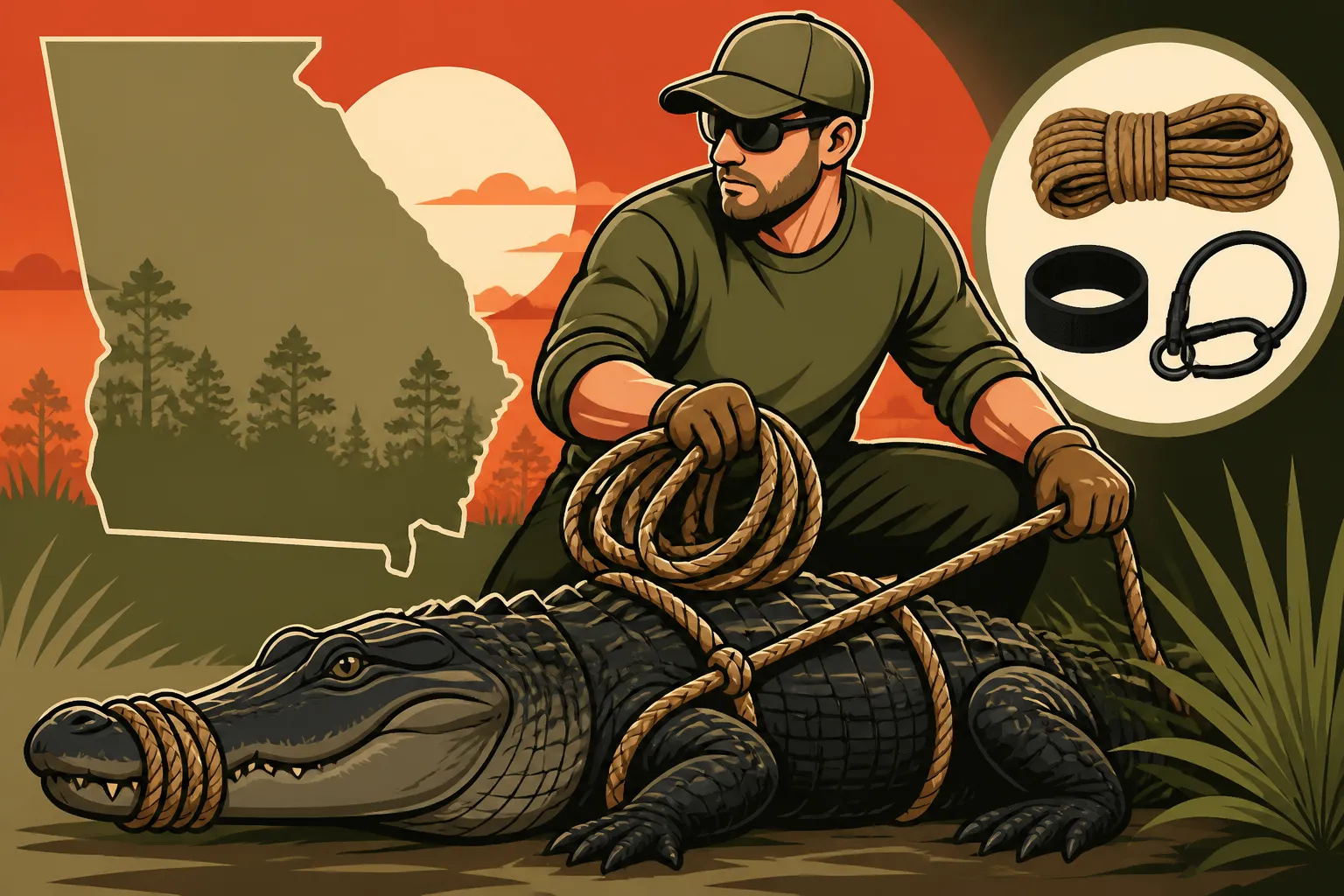
- Body Ropes: These are used to further secure the gator's body, especially when bringing it into the boat or preparing it for transport. A simple loop around the torso, just behind the front legs, can help prevent violent thrashing or rolling. This is less about absolute restraint and more about managing its bulk and preventing unpredictable movements.
- Tail Rope: This is absolutely crucial for safety. The tail whip is incredibly dangerous. Once the head is secure, getting a rope around the base of the tail, near the pelvis, is the next priority. This allows you to control the tail, preventing it from lashing out. Some hunters will even "hogtie" the gator by running the tail rope to the front legs, effectively immobilizing the entire animal. This drastically reduces the risk when you're preparing to Landing an Alligator From a Small Boat or moving it.
Here’s a quick comparison of common restraint tools:
| Restraint Type | Primary Use | Advantages | Disadvantages | Best For |
|---|---|---|---|---|
| Mainline Rope | Initial control, tiring gator | Strong, durable, good leverage | Can cause rope burn, requires constant tension | Initial hook-up, long-distance control |
| Snatch Hook/Gaff | Head control, mouth manipulation | Long reach, quick temporary control | Only temporary, requires skill, can injure gator | Closing mouth for tape application |
| Duct Tape (Heavy-Duty) | Mouth closure | Accessible, effective when layered | Can lose adhesion in water, requires many wraps | Economical, quick for calm gators |
| Cable Snares/Zip Ties | Mouth closure | Very secure, water-resistant, fast | Requires careful application, less forgiving | Reliable, high-security closure |
| Specialized Snares | Mouth closure | Designed for efficiency, very secure | Can be more expensive, less common | Optimal safety and speed |
| Body/Tail Ropes | Body/tail control, transport | Prevents thrashing, immobilizes | Secondary restraint, requires careful placement | Securing after head control, moving |
Techniques for Safely Subduing and Securing Your Gator
Knowing your gear is one thing; effectively employing it in the heat of the moment is another. Subduing and securing an alligator is a choreographed dance of teamwork, precision, and respect for the animal's power.
Initial Control: Getting the Head Under Command
The moment you've successfully hooked or harpooned your gator, the clock starts. The first and most critical objective is to bring the gator's head under control, ideally alongside your boat or near the bank where you can work safely. This typically involves a patient battle on the mainline, allowing the gator to exhaust itself while you maintain steady pressure. You're trying to prevent it from finding solid footing or cover, and instead, force it to expend energy in open water.
Once the gator shows signs of tiring, you can begin to work it closer. This is where a heavy-duty grab hook or a second gaff can come in handy. One hunter can maintain tension on the main line while another uses the grab hook to secure the gator's lower jaw or neck, helping to pull its head alongside the vessel. This maneuver demands careful coordination to avoid the thrashing head and tail. If you're Night Hunting Georgia Alligators From a Boat, bright lights will also play a role in disorienting the gator and making these initial moves safer. The aim is to get that powerful head in a position where its mouth can be safely accessed for restraint.
Applying Mouth and Body Restraints Safely
With the gator's head alongside and somewhat subdued, this is the most critical juncture. Teamwork is absolutely vital here. Typically, one hunter will be dedicated to maintaining a firm grip on the main line or a head rope, keeping the gator's head stable. Another hunter, often positioned to keep their body clear of any sudden thrashes, will then apply the mouth restraint.
If using duct tape, this person will quickly and tightly wrap multiple layers around the gator's snout, ensuring the jaws are completely closed and securely bound. Some hunters use a "door stop" or a short, strong stick inserted into the gator's mouth to keep it slightly ajar for easier, quicker tape application before pulling the jaws shut. If using cable snares or specialized restraints, these are cinched down quickly. The process should be as swift and efficient as possible, minimizing the time the gator is only partially restrained.
Immediately after the mouth is secured, the focus shifts to the tail. The tail whip is incredibly dangerous, and it can happen even after the jaws are taped. A third hunter, or the person who applied the mouth restraint, will quickly loop a tail rope around the base of the gator's tail. This allows for full control of its most powerful appendage, neutralizing the thrashing threat. During all these steps, hunters must constantly be aware of their body positioning, keeping hands and feet well clear of the gator's jaws, head, and tail. Always remember that even a restrained gator can have residual power and surprise movements.
Post-Capture Management and Transportation
Once the gator is fully restrained – mouth taped, tail secured – the challenge shifts to physically moving the animal. Gators are incredibly heavy and cumbersome. Bringing a large gator into a boat, especially a smaller one, requires careful planning and strength. Hunters might need to roll the gator onto a tarp or use a dedicated gator slide to ease it aboard, ensuring its restraints remain tight throughout. Always confirm that the gator meets the Minimum Legal Alligator Length in Georgia before finalizing its capture and preparing it for transport.
During transportation, whether by boat or vehicle, the gator should remain fully restrained and positioned securely to prevent any shifting or potential escape. It's a testament to the effectiveness of proper rope and restraint gear that such a powerful animal can be safely managed once subdued. Even with all the right gear and techniques, the sheer bulk of a large gator can be overwhelming, so enlist enough help and use correct lifting mechanics to avoid injury.
Safety First: Minimizing Risk on an Alligator Hunt
Alligator hunting is an exciting pursuit, but it's inherently dangerous. Prioritizing safety through preparation, communication, and proper gear handling is not just a recommendation; it's a requirement for a successful and injury-free hunt.
The Buddy System and Clear Communication
Never, ever hunt alligators alone. This isn't a solo endeavor. A minimum of two, and preferably three or more, hunters should be present, each with clearly defined roles and responsibilities. One person might be the designated boat operator and main line handler, another the primary restraint applicator, and a third the tail controller. This ensures that tasks are divided, and everyone knows what to do at each stage of the capture.
Verbal communication is paramount. Shouting clear, concise commands and status updates ("Head clear!", "Tail clear!", "Rope on!", "Got him!") prevents misunderstandings and allows everyone to anticipate the next move. Before heading out, discuss potential scenarios and how the team will react. What's the plan if the gator breaks a line? What if someone goes overboard? Thinking through these contingencies beforehand can save lives. As you prepare your strategy, remember to also factor in broader considerations like the Georgia Alligator Quota Hunt Rules and other regulatory details, which can often be found through resources like a robust mapping and hunting app like GoHunt.
Protective Gear and Emergency Preparedness
While no amount of gear can eliminate all risk, certain protective items can significantly reduce the chances of injury. Heavy-duty gloves are a must for handling ropes, preventing rope burn and offering some protection against abrasions. Sturdy, closed-toe footwear is also essential, offering better grip and protection than flip-flops or sandals.
Beyond personal protective gear, ensure your boat (if hunting from one) is well-equipped with all standard safety items: life jackets, throwable flotation devices, and a fully stocked first-aid kit. Alligator encounters can quickly turn ugly, so a kit with supplies for punctures, lacerations, and heavy bleeding is non-negotiable. Knowing basic first aid is also a must. Consider carrying a quality GPS unit or a reliable mapping app on your phone, especially when navigating unfamiliar swamps and waterways at night, as it can be a lifesaver if you need to call for help or find your way back in an emergency. Georgia Alligator Season Opening Date and specific zone rules should be reviewed well in advance.
Practicing with Your Gear Before the Hunt
This might sound like overkill, but practicing with your ropes, snatch hooks, and mouth restraints before you're facing a live gator is invaluable. You can simulate the process on a dummy, a log, or even a heavy-duty punching bag. The goal is to build muscle memory, learn how your knots cinch down, and understand the feel of your gear.
Practice applying tape quickly and securely. Practice handling the snatch hook with precision. Simulate bringing a "gator" alongside and coordinating the movements with your hunting partners. This dry run will expose any weaknesses in your technique or gear, allowing you to fix them long before you're out on the water under pressure. Familiarity breeds confidence, and confidence, coupled with respect for the animal, is your best tool for a safe and successful alligator hunt.
Disclaimer
This article is for general informational purposes only and does not constitute professional advice. Laws, prices and regulations vary by location and change over time. Consult a qualified professional for guidance on your specific situation.