Reporting a Poacher in Georgia
It’s a gut-wrenching feeling, isn’t it? You’re out enjoying Georgia’s beautiful wild spaces, maybe scouting for deer or just hiking a peaceful trail, when you stumble across something that just isn’t right. A shot fired out of season, a spotlight shining where it shouldn't, or illegal bait set up – the realization that someone is disrespecting our wildlife and breaking the law hits hard. It leaves you feeling angry, helpless, and sometimes even a little scared. This guide is here to empower you with the knowledge and steps needed to confidently report a poacher in Georgia, ensuring our shared natural resources are protected.
Understanding the Gravity of Poaching in Georgia
Seeing someone poach is more than just witnessing a minor infraction; it's seeing a crime committed against all of us who care about ethical hunting, wildlife conservation, and the rule of law. The impact of poaching extends far beyond a single animal. It can decimate local populations, spread disease, and undermine the efforts of honest hunters and conservationists who follow every regulation to the letter.
The Real Cost of Illegal Takes
When someone illegally takes game, whether it's an antlerless deer during a closed season, an over-the-limit turkey, or even an alligator without the proper quota hunt permit, the consequences ripple through the ecosystem. Imagine a small deer herd that's carefully managed to ensure healthy buck-to-doe ratios and sufficient resources. A poacher taking multiple deer outside of the legal limits can throw that delicate balance completely off, leading to fewer deer for future generations and potentially impacting the health of the remaining animals.
It's not just about population numbers, either. Poaching often involves unethical methods, like hunting at night with spotlights or using illegal traps, which can cause immense suffering to animals and leave behind cruel evidence that honest hunters are then sometimes wrongly associated with. These actions also strip away the economic benefits that legal hunting brings to Georgia through licenses, tags, and gear sales, funds that directly support the Georgia Department of Natural Resources (DNR) and its vital conservation programs. We all contribute to these programs through our Georgia Hunting Licenses and What They Cost, and when poaching occurs, it's essentially stealing from those collective efforts.
The Ethical Hunter's Dilemma and Responsibility
For many of us who cherish the outdoor lifestyle in Georgia, witnessing or even suspecting poaching creates a real ethical dilemma. There's often a fear of getting involved, a concern about potential retaliation, or the worry that "nothing will come of it." These feelings are completely valid and understandable. No one wants to put themselves or their family at risk, and it can feel daunting to stand up against illegal activity.
However, as stewards of the land and advocates for responsible hunting, we have a collective responsibility. Every time a poacher gets away with it, they become bolder, and the problem only escalates. Our silence can inadvertently enable further illegal activity. Think of it this way: if you saw someone breaking into your neighbor's house, wouldn't you report it? Protecting our wildlife and hunting heritage is just as crucial. It's about upholding the integrity of the sport and ensuring that future generations can enjoy the same opportunities we do. When you see suspicious activity on public land, like some of the vast tracts in the Chattahoochee-Oconee National Forest Hunting, or even on private property where you have permission, it's our duty to act.
How to Effectively Report a Poacher in Georgia
So, you've witnessed something, or you have strong suspicions. What's the next step? The most important thing is to get the information to the right people quickly and efficiently. The Georgia Department of Natural Resources (DNR) Law Enforcement Division is your primary point of contact for wildlife violations.
Contacting Georgia DNR Law Enforcement
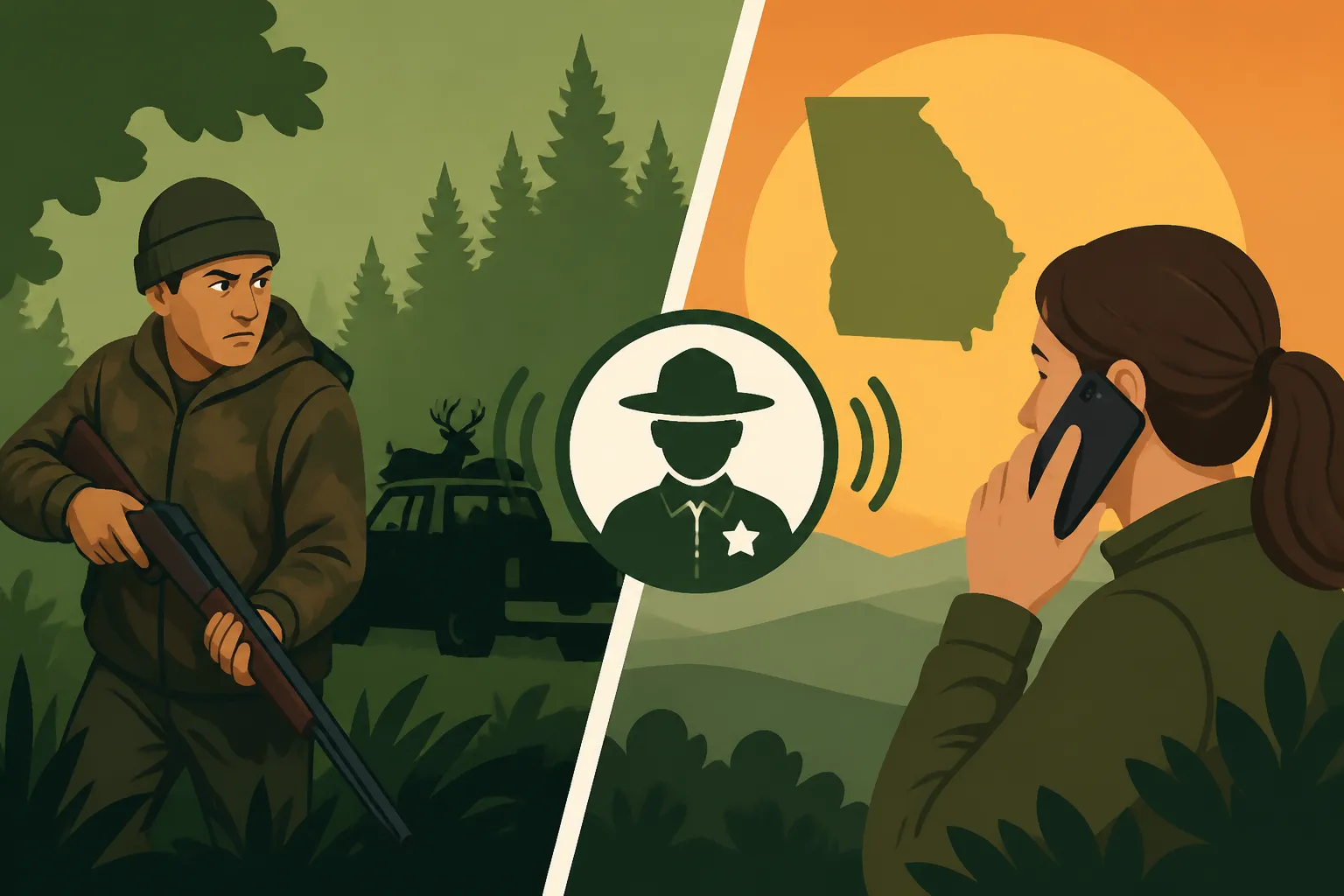
The Georgia DNR has a dedicated program called "Operation Game Thief" specifically for reporting wildlife violations. This is often the quickest and most direct route.
- Operation Game Thief Hotline: The statewide toll-free number is 1-800-241-4113. This line is staffed 24 hours a day, 7 days a week. It's designed to take anonymous tips, which can alleviate some of the concerns about personal safety or retaliation. When you call, be prepared to provide as much detail as possible.
- Online Reporting: For situations that are not immediately urgent or if you prefer to type out your report, the Georgia DNR also offers an online reporting form. You can usually find this on the DNR website under their Law Enforcement or Wildlife Resources Division sections. While it might not be as immediate as a phone call, it allows you to carefully compile all your information.
- Local Ranger Contact: If you know the specific Georgia DNR Law Enforcement Ranger assigned to your county or region, you can also reach out to them directly. Their contact information might be available on local government websites or through inquiries to the DNR main office. This can be particularly useful if you've had previous positive interactions with a local ranger or have ongoing concerns in a specific area.
When making your report, remember that the goal is to provide enough solid information for law enforcement to investigate. Try to remain calm and factual, even if you're feeling agitated.
When to Contact Local Law Enforcement
While the Georgia DNR is the expert on wildlife laws, there are situations where contacting your local Sheriff's Office or Police Department might also be appropriate or even necessary.
- Immediate Danger or Threat: If you witness a poacher acting aggressively, brandishing weapons in a threatening manner, or engaging in other dangerous criminal activity beyond just the poaching itself, call 911 immediately. Local law enforcement can respond faster to immediate threats to public safety.
- Trespassing with Poaching: Poaching often goes hand-in-hand with trespassing, especially on private land. While the DNR handles the wildlife violation, the local Sheriff's Office can address the trespassing aspect. If you have concerns about individuals illegally accessing property, such as if you’ve established Georgia Posted Land Rules or are dealing with issues regarding Georgia Trespass and Permission Law, involving the local sheriff can be crucial. They can often provide a quicker initial response to property violations.
- Lack of DNR Availability: In very rare cases, if you cannot reach the DNR hotline or a local ranger for an urgent matter, your local sheriff's department can act as an intermediary, taking your report and relaying it to the appropriate DNR personnel.
It’s always a good idea to remember that all these agencies work together. Your main goal is to get the information to an authority who can act on it.
What Happens After You Report a Poacher
Reporting a poacher can feel like dropping a message in a bottle – you send it out, but you might not always know if it's found or what happens next. This can be a source of that frustration we talked about earlier. However, understanding the process can help alleviate some of that uncertainty and reinforce the importance of your actions.
The Investigation Process
Once you've made a report to the Georgia DNR, especially through Operation Game Thief, here's a general idea of what typically happens:
- Information Intake: A dispatcher or ranger will take down all the details you provide. They'll categorize the incident and assess its urgency.
- Assignment to a Ranger: The report is then assigned to a Georgia DNR Law Enforcement Ranger in the relevant county or area. These rangers are highly trained professionals who specialize in wildlife law enforcement.
- Initial Assessment and Surveillance: The ranger will review the information. Depending on the strength of the evidence and the nature of the violation, they might begin surveillance of the area, interview potential witnesses, or try to locate the individuals or vehicles described. If you've provided photos or even general locations using mapping tools like GoHunt, it significantly aids their initial assessment and ability to focus their efforts.
- Gathering Further Evidence: This could involve revisiting the scene, looking for physical evidence (spent casings, tracks, carcass remains), or setting up game cameras. If you've been using tools like the Scouting With the Georgia Outdoors App to mark locations of suspicious activity, sharing those exact coordinates can be incredibly helpful for the rangers.
- Confrontation and Apprehension: If enough evidence is gathered, the ranger will confront the suspected poacher(s). This can lead to citations, arrests, and the seizure of illegal game, firearms, or equipment.
It's important to understand that wildlife investigations can take time. Poachers are often elusive, and gathering irrefutable evidence can be a challenge. Don't be discouraged if you don't see immediate action. Your report is a crucial piece of the puzzle, even if it takes weeks or months to result in an apprehension.
Anonymity and Witness Protection
The Georgia DNR's Operation Game Thief program places a high priority on protecting the anonymity of tipsters. You do not have to provide your name or contact information when you call the hotline. Your identity will be kept confidential, even if you choose to provide it, unless you explicitly agree otherwise or if your testimony is absolutely critical for a prosecution, which is rare for anonymous tips.
If you are a direct witness and your testimony is required for a case to move forward, DNR rangers will discuss options for your protection and how your involvement would be handled. They understand the concerns about retaliation and will work to ensure your safety. Remember, Georgia wildlife violations carry significant Georgia Wildlife Violation Penalties, and rangers take these crimes very seriously.
Crucial Information to Gather for Your Report
The more specific and detailed information you can provide, the higher the chances of a successful investigation and prosecution. Think of yourself as a detective gathering clues. Even seemingly small details can be vital.
Key Details to Document
Before you call or submit your online report, take a moment to collect your thoughts and jot down as many of these details as possible:
-
What Happened:
- Type of Violation: Was it hunting out of season, hunting at night, baiting, trespassing, taking over the limit, using an illegal weapon (like an AR-15 during primitive weapons week), or something else?
- Species Involved: What kind of animal was being poached (deer, turkey, bear, alligator, etc.)?
- Number of Animals: How many animals were illegally taken or involved?
- Time and Date: The exact date and time of the incident. If it's an ongoing issue, note the pattern of activity (e.g., "every Tuesday evening" or "around dawn on weekends").
- Location: This is critically important. Provide the most specific location possible.
- Street address if known.
- Closest intersection or landmark.
- Road names and nearest mile marker.
- GPS coordinates (from your phone, a handheld GPS, or by dropping a pin on a mapping app like GoHunt). Mapping tools can also help you determine Finding Georgia Property Lines if you suspect trespassing.
- A description of the area (e.g., "near the old logging road behind the red barn," "along the creek bottom near the power line cut").
-
Who Was Involved:
- Number of Individuals: How many people were you able to see?
- Descriptions: If safe to do so, note physical descriptions (gender, approximate age, hair color, height, build, clothing, distinguishing features like tattoos or scars). Never put yourself in harm's way to get these details.
- Names/Identifiers: If you happen to know any names or nicknames.
-
Vehicles Involved:
- Make, Model, Color: E.g., "dark blue Ford F-150."
- License Plate Number: This is incredibly valuable. Even a partial plate can help.
- Distinguishing Features: Dents, custom rims, bumper stickers, lift kit, broken taillight, specific equipment in the bed (e.g., dog boxes, treestands).
-
Weapons and Equipment:
- Type of Weapon: Rifle, shotgun, bow, crossbow, snare, trap, spotlight.
- Other Equipment: Night vision, thermal optics, dogs (if not legal for the species/method), ATVs, boats.
-
Evidence:
- Photographs/Videos: If you can safely take them from a distance without being detected, photos or short videos can be powerful evidence. Capture vehicles, people (if possible), illegal bait sites, fresh tracks, or any signs of illegal activity. Just make sure your safety is paramount.
- Physical Evidence: Describe any physical evidence left behind, such as spent shell casings, blood trails in an unusual area, illegal bait, or parts of an illegally harvested animal. Do not touch or disturb the crime scene.
Leveraging Technology for Documentation
In today's world, our smartphones are incredibly powerful tools for documenting potential poaching incidents.
- Camera: As mentioned, photos and videos can be invaluable. The metadata on your phone's camera often includes time and GPS coordinates, further strengthening your report.
- GPS/Mapping Apps: Apps like GoHunt or the Scouting With the Georgia Outdoors App allow you to drop precise waypoints, measure distances, and even record tracks. If you're investigating a potential poaching spot, you can mark the exact location where you found evidence, the path the poacher took, or the direction they left in. This geographical data is critical for DNR rangers trying to locate the scene. Knowing the exact coordinates can save them valuable time and help them pinpoint the precise area where a violation occurred, whether it’s a Setting Up on a Piedmont Field Edge where illegal activity is taking place or a deeper wooded area.
- Notes App: Use your phone's notes app to quickly jot down details as they come to mind. It's often easier and safer than fumbling with a pen and paper in the field.
Think about common scenarios: You might be scouting for Georgia's Twelve-Deer Bag Limit and come across a bait pile during archery season where it's not allowed. Or perhaps you're out looking for turkey sign for Spring Turkey Hunting in Georgia and notice someone is hunting outside the legal hours. In these moments, quickly and discreetly documenting what you see with your phone can make all the difference.
Reporting Table: Key Information Checklist
Here's a quick checklist to help you organize your thoughts when reporting:
| Information Category | Specific Details to Provide | Importance |
|---|---|---|
| What | Type of violation, species, number of animals, specific actions | Identifies the crime being committed |
| When | Date, time (exact or approximate), frequency, duration | Establishes timeline for investigation |
| Where | Street address, GPS coordinates (from GoHunt/app), landmarks, directions | Pinpoints the scene for law enforcement |
| Who | Number of people, physical descriptions, names (if known) | Helps identify suspects |
| Vehicles | Make, model, color, license plate, distinguishing features | Crucial for tracking and identification |
| Evidence | Photos/videos, description of physical evidence, weapons, gear | Provides concrete proof for investigation |
| Urgency | Is it ongoing now? Is there an immediate threat to safety? | Determines response priority |
Final Thoughts: Be Brave, Be Smart, Be Safe
Reporting a poacher is an act of courage and a vital contribution to conservation in Georgia. It's not always easy, but it's always the right thing to do. Your actions help protect our wildlife, preserve ethical hunting traditions, and ensure that our natural resources remain abundant for all.
Always remember to prioritize your personal safety. Do not confront poachers yourself. Your role is to observe, document, and report, allowing trained law enforcement officers to handle the dangerous work of apprehension. By working together, we can send a clear message that poaching will not be tolerated in our great state.
Disclaimer
The information provided in this guide is for informational purposes only and is not intended as legal advice. Always consult official Georgia Department of Natural Resources (DNR) regulations and guidelines, or legal counsel, for the most accurate and up-to-date information regarding hunting laws and reporting procedures.