EHD Die-Offs in Georgia Deer
There’s nothing quite like the crushing feeling of finding a deer that didn't make it, especially when you suspect something more insidious than a car accident or a missed shot. For Georgia deer hunters, the sight of multiple deceased deer near a water source, especially in late summer or early fall, often sparks an immediate and justifiable concern: an Epizootic Hemorrhagic Disease (EHD) die-off. This guide is here to walk you through what EHD is, how to spot it, its impact on our beloved deer herd, and what you can do to help and protect your hunting experience.
What is EHD and Why Does it Matter in Georgia?
Epizootic Hemorrhagic Disease, or EHD, is a common viral disease among white-tailed deer, and unfortunately, it's something many of us in Georgia have encountered over the years. It's caused by a virus transmitted by tiny biting midges, often called "no-see-ums." These aren't your typical mosquitoes; they're much smaller, but they pack a punch when it comes to spreading this illness among deer. When conditions are right – typically warm weather and stagnant water where these midges breed – outbreaks can occur, sometimes devastating local deer populations.
The Virus and the Vector
The EHD virus itself is an orbivirus, closely related to the bluetongue virus. It circulates in the deer population, and while some deer may develop antibodies and survive, others are highly susceptible. The crucial part of the puzzle is the vector: the biting midge (genus Culicoides). These tiny insects pick up the virus from infected deer and then transmit it to healthy deer when they take their next blood meal. The life cycle of these midges thrives in warm, humid environments, making late summer and early fall in Georgia prime time for outbreaks, especially after a hot, dry spell followed by some rain that creates perfect midge breeding puddles. Understanding this link between the weather, water, and the midges helps us grasp why EHD seems to pop up at specific times and places.
What makes EHD particularly impactful for hunters is its seasonality and potential for sudden, severe local die-offs. We invest so much time and effort into scouting, planting food plots, and preparing our stands, and then to see a healthy population suddenly dwindle due to disease can be truly heartbreaking. While it rarely wipes out entire regional herds, a severe outbreak can drastically reduce deer numbers in specific areas, turning a promising season into a quiet one. This sudden loss can affect our harvest plans and even the long-term age structure of the deer we pursue.
EHD vs. Blue Tongue: Are They the Same?
It's common to hear EHD and bluetongue mentioned in the same breath, and for good reason: they are both orbiviruses, transmitted by the same biting midges, and cause very similar symptoms in deer. In fact, distinguishing between the two viruses without laboratory testing is virtually impossible for the average person in the field. Both diseases cause hemorrhagic symptoms, meaning they damage blood vessels, leading to internal bleeding, fever, and swelling. For practical purposes, if you see deer exhibiting these classic signs, you're looking at a hemorrhagic disease, and the on-the-ground impact is much the same regardless of which specific virus is responsible.
While researchers and wildlife biologists can differentiate between the EHD virus and the bluetongue virus in a lab, for hunters and land managers, the focus remains on understanding the general disease, its implications, and how to respond. It’s important to remember that neither EHD nor bluetongue are known to be transmissible to humans. So, while you wouldn't want to consume meat from a sick or recently deceased animal, there's no direct public health risk to worry about simply by being in an area where EHD has occurred. This distinction is crucial, especially when discussing other deer diseases, like Chronic Wasting Disease (CWD), which has entirely different implications for hunters and venison consumption.
Let's quickly compare these two closely related diseases:
| Feature | Epizootic Hemorrhagic Disease (EHD) | Bluetongue Virus (BTV) |
|---|---|---|
| Causative Agent | EHD virus (Orbivirus) | Bluetongue virus (Orbivirus) |
| Vector | Biting midges (Culicoides species) | Biting midges (Culicoides species) |
| Primary Host | White-tailed deer (highly susceptible) | White-tailed deer (highly susceptible) |
| Other Hosts | Often affects other ruminants (cattle, sheep), but deer are most impacted by clinical disease. | Can affect domestic livestock (sheep, cattle) more visibly than EHD, but deer still suffer high mortality. |
| Symptoms | High fever, swelling, hemorrhages, weakness, oral lesions, often found near water. | Nearly identical to EHD in deer: high fever, swelling, hemorrhages, weakness, oral lesions, found near water. |
| Mortality Rate | Can be high in naive populations | Can be high in naive populations |
| Seasonality | Late summer, early fall (until first hard frost kills midges) | Late summer, early fall (until first hard frost kills midges) |
| Human Risk | None | None |
Recognizing the Signs of EHD in Deer
Spotting EHD can be disheartening, but knowing what to look for can help you identify outbreaks early and report them to Georgia wildlife officials. The signs are often dramatic, reflecting the acute nature of the infection. It’s not a disease that lingers for months, like some others; deer that contract severe EHD usually succumb within days. Keep an eye out during your late summer scouting or early season hunts, especially around water sources.
Behavioral Changes and Physical Symptoms
One of the first things you might notice in an EHD-affected deer is a drastic change in behavior. Deer that are typically wary and elusive might become unusually tame, lethargic, or disoriented. You might see them walking in circles, stumbling, or simply not reacting to human presence. They're often feverish, which drives them to seek out water to cool down, making creek beds, pond edges, and swampy areas common places to find sick or deceased animals.
Physically, the symptoms are quite telling due to the damage the virus does to blood vessels. Look for:
- Swelling: Especially around the head, neck, tongue, and eyelids. The tongue can be severely swollen and blue, which is where the "bluetongue" name comes from for the related virus.
- Lesions: Sores or ulcers may appear in the mouth, on the tongue, or around the eyes.
- Hemorrhaging: While often internal, sometimes you might see bleeding from mucous membranes. Deer might have bloodshot eyes.
- Fever: Although you can't measure it, the deer's drive to seek water is a strong indicator of high body temperature.
- Lameness: Due to hemorrhages in the hoof tissues, deer can become lame, making it difficult for them to move. Their hooves might even slough off in extreme cases, often seen in deer that survive the initial infection but are left with lasting damage.
When you're out Scouting Georgia Public Land Before Season, or even just checking trail cameras, be vigilant for these signs. A deer standing aimlessly in a field during midday, not feeding, or showing obvious physical distress, is a strong indicator something is wrong.
Finding Deceased Deer
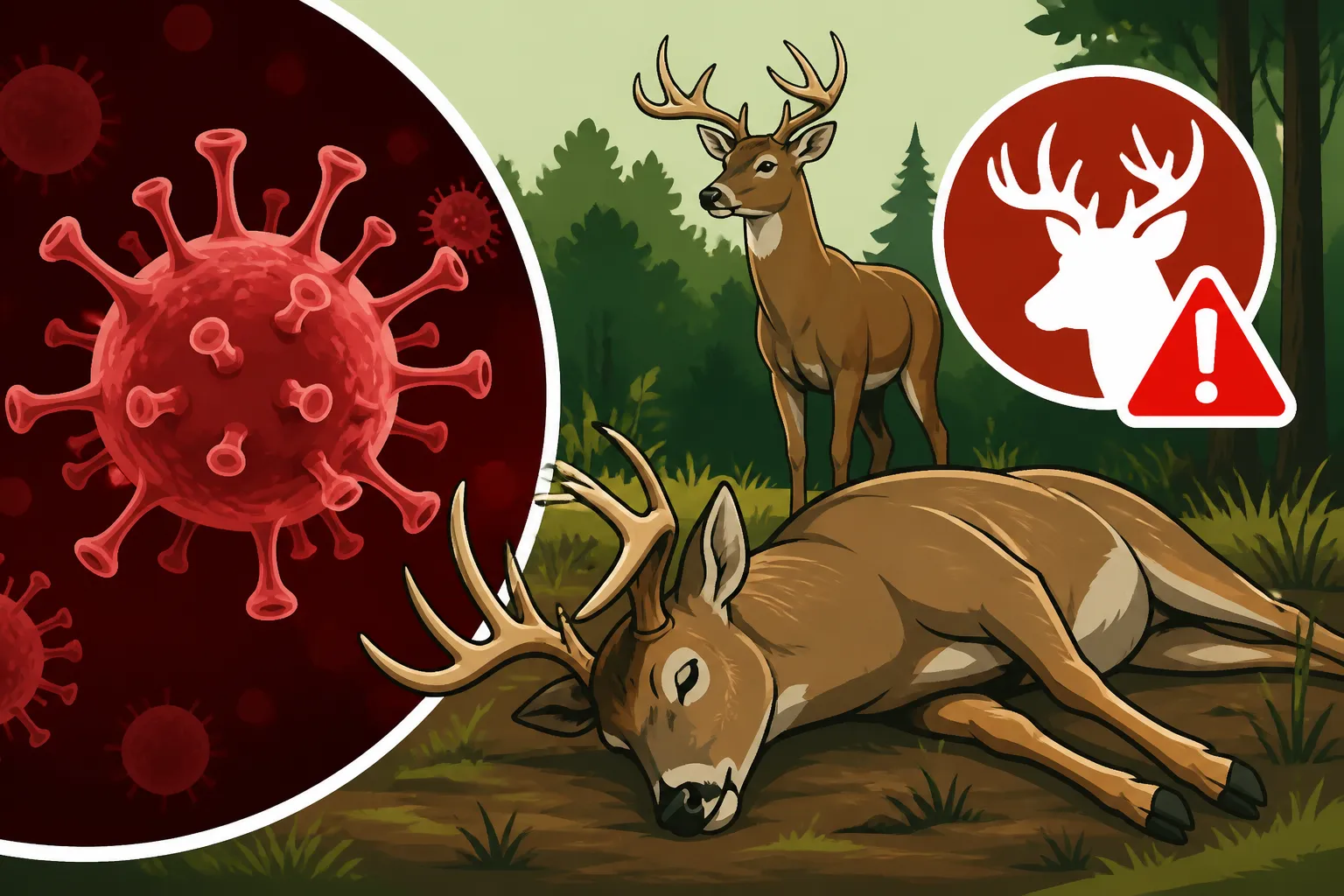
Unfortunately, finding deceased deer is often the most common way hunters become aware of an EHD outbreak. Because the disease causes a high fever and dehydration, affected deer often head to water sources. This means you’ll frequently find carcasses in or near creeks, rivers, ponds, and even muddy puddles. If you find several deer that appear to have died suddenly and are congregated near a water source, it’s a very strong sign of an EHD event.
It's important to differentiate these findings from other causes of deer mortality. While a single dead deer might be due to a variety of factors, multiple carcasses in a concentrated area, especially near water, points strongly to EHD. These deer often appear to be in good physical condition otherwise, aside from the disease-related symptoms, unlike deer that might succumb to starvation or old age. If you're a land manager or lease holder, regularly checking your property, particularly around water, can give you an early warning. Many hunters use mapping resources, like those available on platforms like GoHunt, to identify potential water sources on their property or public land, which then become critical areas to monitor during EHD season. The smell of decay can also be a telltale sign, especially in the thick Georgia heat.
The Impact of EHD on Georgia's Deer Herd
EHD outbreaks can certainly be a gut punch to local deer populations and can alter hunting prospects for a season or two. However, it's crucial to understand that while devastating in specific areas, the disease rarely has a statewide impact that threatens the overall health or numbers of Georgia's robust deer herd. Our herd is resilient, and wildlife management strategies are designed to account for natural fluctuations, including disease.
Localized vs. Widespread Impacts
The impact of EHD is almost always localized. One property, or even just one section of a property with ideal midge breeding conditions, might experience a significant die-off, while a tract just a few miles away might see no effects at all. This patchiness is due to the limited flight range of the midges that transmit the virus. They don't travel far, so an outbreak is typically confined to where the infected midges are actively breeding and feeding. This is why you might hear reports of severe EHD in one Georgia county, while hunters in an adjacent county report a fantastic deer season with no signs of disease.
A severe outbreak in a specific area can significantly reduce local deer density. This might mean fewer deer sightings, a drop in harvest numbers for that specific property, and a noticeable absence of certain age classes if younger, more susceptible deer are hit hard. On the other hand, Georgia's extensive and healthy deer population, as highlighted in reports like the Georgia Deer Population Estimate, generally means the statewide herd can absorb these localized losses without long-term detriment. The sheer number of deer and their widespread distribution act as a buffer against widespread population collapse from EHD.
Recovery and Long-Term Effects
Deer populations in affected areas are remarkably resilient and typically recover within a year or two. Nature abhors a vacuum, and with fewer deer competing for resources, fawn survival rates often increase, and surviving does have excellent breeding success. The reduction in deer numbers can even lead to better forage availability, allowing remaining deer to thrive and reproduce effectively. The survivors of an EHD outbreak also develop immunity to that specific strain of the virus, making them less susceptible in future years.
While the herd itself recovers, there can be some subtle long-term effects. If a significant number of mature bucks are lost in an outbreak, it might take a few years for the buck age structure to rebuild in that specific area. For those focused on Why Southwest Georgia Grows Big Bucks or managing for older age classes, a severe EHD event can certainly be frustrating. However, the foundational genetics remain, and given time and good management, the area will typically return to its previous quality. These natural cycles are part of living with and hunting wild animals.
What Hunters Can Do When EHD Hits
While it can feel helpless to watch a disease impact the deer you love to pursue, there are concrete steps hunters can take. Your involvement is crucial, not just for your own hunting experience but for the overall health and management of Georgia's wildlife.
Reporting Sightings to Wildlife Officials
The most important thing any hunter can do when they suspect an EHD outbreak is to report it to the Georgia Department of Natural Resources (DNR) or your local wildlife agency. Wildlife biologists rely heavily on hunter observations to track disease prevalence and understand where outbreaks are occurring. Even if you only find one or two dead deer, or observe a live deer showing clear symptoms, reporting it contributes valuable data.
When you make a report, try to provide as much detail as possible:
- Exact location: GPS coordinates are best, but detailed descriptions of landmarks are helpful. Using a mapping application like GoHunt on your phone to mark a waypoint is an excellent way to record this accurately.
- Date and time of observation: When did you see it?
- Number of deer: How many sick or dead deer did you observe?
- Condition of deer: Were they alive and showing symptoms, or deceased? If deceased, how fresh was the carcass?
- Contact information: So biologists can follow up if needed.
Timely reporting allows wildlife officials to monitor disease spread, identify hotspots, and potentially collect samples for testing if they deem it necessary. This helps them manage the statewide herd and understand the broader implications of diseases like EHD. You can usually find contact information for your regional DNR office on their official website.
Hunting Strategy Adjustments
Discovering EHD on your hunting property or favorite public land spot will likely necessitate some adjustments to your hunting strategy. First and foremost, resist the urge to abandon the area entirely. While local numbers may be down, deer are incredibly adaptable.
Consider these adjustments:
- Focus on unaffected areas: If you hunt multiple properties or have access to diverse public lands, concentrate your efforts on areas that haven't shown signs of EHD. This might involve exploring different WMA sections or shifting your focus to other counties. For instance, if one area of the Piedmont has been hit, you might consider scouting in areas along the Oconee River Bottomland Public Access where conditions might be different.
- Reduce pressure: In severely impacted areas, it might be wise to reduce hunting pressure for a season or two. This gives the remaining deer a chance to recover and reproduce, helping the population rebound more quickly. It's a tough call, especially if you're trying to Fill Ten Antlerless Tags in a Season, but sometimes patience is the best long-term strategy for herd health.
- Target specific age classes: If fawn and yearling mortality was high, you might adjust your antlerless harvest strategy. Conversely, if mature bucks were hit hard, focusing on a younger buck or an antlerless harvest might be a more sustainable approach. Reviewing Georgia Deer Harvest Records from previous years and comparing them to observations can offer insights.
- Scout new areas rigorously: Use mapping tools and on-the-ground scouting to find areas that might have been spared or where deer from affected areas might have moved. Deer are constantly moving, and some will naturally shift their ranges. Learning to Read Aerial Photos for Piedmont Deer or other regions can reveal overlooked pockets.
Carcass Handling and Safety
Proper handling of carcasses is important for sanitation and to prevent the spread of any potential pathogens, though as mentioned, EHD is not a human health risk. If you find a dead deer that you suspect died from EHD:
- Do not consume the meat: While EHD isn't known to affect humans, a deer that died from the disease was very sick, and its meat quality would be poor, if not spoiled entirely. It's best to leave the carcass alone.
- Avoid unnecessary contact: Use gloves if you need to touch the carcass for identification or reporting purposes.
- Disposal: If the carcass is on private land and accessible, you can bury it deep enough to deter scavengers (at least 2-3 feet). If burial isn't feasible, leaving it to decompose naturally is generally acceptable, as long as it's not near a water source or public area where it could cause a nuisance. If you're on public land, report it to the managing agency, and they will advise on next steps. Do not move carcasses long distances, especially if you also hunt in areas managed for CWD, as moving any deer parts could potentially aid in CWD transmission, although EHD is a different disease entirely.
- Harvested deer: If you harvest a deer that appears healthy, but upon field dressing you notice internal hemorrhaging or other signs consistent with EHD, it’s advisable to discard the animal. When Field Dressing a Deer in Warm Weather, always be observant of the deer's internal condition. If the deer was already battling the disease, the meat quality will be compromised.
By taking these proactive steps and working with wildlife agencies, hunters play a vital role in monitoring and managing the effects of EHD, ensuring the long-term health and abundance of Georgia's incredible white-tailed deer population.
Disclaimer
This article is for general informational purposes only and does not constitute professional advice. Laws, prices and regulations vary by location and change over time. Consult a qualified professional for guidance on your specific situation.