Bowfishing Georgia Rivers in the Off-Season
When deer and turkey seasons fade into the rearview mirror, and the crisp autumn air gives way to the languid heat of a Georgia summer, many hunters find themselves longing for the thrill of the chase. That restless energy, the desire to be out on the water or in the woods, doesn't just disappear with the closing dates. Thankfully, Georgia offers an exhilarating solution: bowfishing its abundant rivers and impoundments during the off-season, keeping your archery skills sharp and your freezer stocked with delicious rough fish.
Understanding Georgia's Bowfishing Opportunities in the Off-Season
The quiet months between major hunting seasons can feel endless, a time of meticulous gear checks and hopeful scouting, but often little actual hunting. Bowfishing emerges as a prime activity to bridge this gap, offering a unique blend of archery prowess and angling excitement. It's not just about passing the time; it's about engaging with Georgia's diverse aquatic ecosystems in a dynamic way that challenges your aim and offers a tangible reward.
Why Bowfishing Fills the Hunting Void
For many of us, hunting isn't just a hobby; it's a fundamental part of our outdoor identity. When the firearms are cased and the tree stands are packed away, a certain void can settle in. Bowfishing directly addresses this by providing an active, hands-on experience that mirrors many aspects of hunting. You're still actively pursuing game, relying on stealth, observation, and precise shot placement. The anticipation as you cruise a shallow flat, eyes scanning for movement beneath the surface, is incredibly similar to waiting for a buck to step out of the timber. It’s a primal connection, trading the dense woods for shimmering water, but keeping the core elements of the pursuit intact. This isn't just fishing with a bow; it's a distinct form of hunting that demands its own specialized skills and keen eye for detail. The satisfaction of a well-placed shot on a hard-fighting carp or gar is every bit as rewarding as a clean deer harvest, perhaps even more so when you consider the unique challenge of shooting through water.
Beyond the mental stimulation, bowfishing also serves a practical purpose. It keeps your archery muscles limber and your shooting form honed. Drawing your bow repeatedly, often at awkward angles or from an unstable platform like a boat, builds the strength and consistency vital for success when Bowhunting Georgia's Early Archery Season rolls around. It’s target practice with live, moving targets, demanding split-second decisions and instinctive aiming. Plus, unlike target practice where you’re just punching holes in paper, bowfishing yields a bounty that can be cleaned, cooked, and enjoyed, providing fresh, wild protein during times when game meat might be scarce. The sheer variety of locations available across Georgia, from wide rivers to smaller creeks, means there's always a new spot to explore, offering endless opportunities for adventure.
Legalities and Species for Bowfishing in Georgia
One of the most attractive aspects of bowfishing in Georgia is the relatively straightforward regulatory framework. Unlike game fish, which have strict seasons, limits, and methods, bowfishing primarily targets "non-game" or "rough" fish. This distinction is critical. In Georgia, you can legally bowfish for species like carp (common carp, grass carp), buffalo (bigmouth, smallmouth), longnose gar, spotted gar, bowfin, and various species of suckers. These fish are often considered undesirable by traditional hook-and-line anglers, sometimes even invasive, and removing them can actually benefit game fish populations. There are typically no closed seasons, daily limits, or length restrictions for these rough fish, offering tremendous flexibility for year-round action.
However, it's absolutely crucial to know your targets. It is strictly illegal to bowfish for any game fish, such as bass, crappie, catfish, or bream. Misidentification can lead to serious fines and penalties, so take the time to learn the distinguishing features of legal bowfishing targets. While many rough fish might seem similar to the untrained eye, their body shapes, fin structures, and mouthparts offer clear indicators. Before you even think about aiming, be 100% certain of what you're shooting at. A quick check on the Georgia Department of Natural Resources (DNR) website or a copy of the current fishing regulations guide is always a good idea to stay informed. Remember, you'll still need a valid Georgia fishing license to participate in bowfishing, just like any other angling activity in the state. Don't forget to check specific rules for certain bodies of water, as some areas might have unique regulations or restrictions.
Best Times and Locations on Georgia Rivers
Georgia's extensive river systems provide a fantastic canvas for bowfishing, each offering unique characteristics and opportunities. Generally, the warmer months of late spring through early fall are prime, as fish tend to move into shallower waters for spawning or feeding. This makes them more visible and accessible. During the day, look for shallow flats, submerged weed beds, and feeder creeks, where carp and other rough fish will congregate. However, many bowfishing enthusiasts swear by night hunting. The cover of darkness often brings fish into even shallower waters, and your boat's bright lights can illuminate them, making them easier to spot and shoot. This method is incredibly effective and adds another layer of excitement, especially when you're targeting species that might be more elusive during daylight hours.
Key Georgia River Systems for Bowfishing
| River System | Primary Species | Best Time to Hunt | Key Characteristics |
|---|---|---|---|
| Altamaha River | Carp, Gar, Bowfin, Buffalo | Spring, Summer (night) | Wide, slow-moving, extensive shallow flats, oxbows, access via Altamaha River Wildlife Management Area |
| Oconee River | Carp, Gar, Bowfin | Spring, Summer | Mix of shallow and deeper sections, productive Hunting Oconee River Bottomland Deer areas |
| Ocmulgee River | Carp, Gar | Spring, Summer | Similar to Oconee, often with good clarity in upper sections, great for Hunting Ocmulgee River Corridor Deer |
| Savannah River | Carp, Gar, Bowfin | Spring, Summer (day/night) | Large river, many backwater areas and oxbows, potential for very large fish |
| Flint River | Carp, Gar, Bowfin | Spring, Summer | Clearer water in some sections, excellent for sight-fishing |
When scouting, pay attention to areas where rivers flatten out and create wide, muddy or sandy flats. During high water, look for flooded timber and fields where fish will move to feed. Using an app like GoHunt can be invaluable for identifying potential hotspots, showing you aerial views of shallow areas, creek mouths, and public access points along these rivers. These tools allow you to pinpoint subtle changes in topography that might attract fish. Remember that river conditions can change rapidly with rainfall, affecting water clarity and depth, so always check local forecasts and river gauges before heading out. Sometimes, when the primary game seasons are shut down, this is your chance to really explore those forgotten river sections.
Essential Gear for Successful Off-Season Bowfishing
Just like any specialized hunting pursuit, bowfishing requires a specific set of tools to be effective and safe. You wouldn't hit the deer woods without your trusty rifle or bow setup, and the same goes for the aquatic realm. Having the right gear not only makes the experience more enjoyable but significantly increases your chances of success. From your bow to your boat, each piece plays a vital role in connecting you with your off-season quarry.
Bow Setups and Accessories
At the heart of your bowfishing setup is, of course, the bow. While you can certainly use your hunting compound, many dedicated bowfishing rigs are designed for the unique demands of the sport. The primary difference is often a simpler draw cycle, sometimes even a non-let-off system, allowing you to shoot quickly and repeatedly without needing to hold a full draw for extended periods. Recurves and traditional bows are also popular choices for their simplicity and instinctive shooting nature. When selecting a bow, prioritize durability and ease of use, as it will likely see a lot of abuse from water, mud, and fish slime.
Attached to your bow, you’ll need a specialized bowfishing reel and an arrow rest. Unlike traditional archery where arrows fly freely, bowfishing arrows are tethered to your reel with strong, often braided, line. Spincast reels are incredibly popular due to their quick line retrieval and ease of use. They mount directly to the bow's stabilizer bushing. Bottle reels, which are essentially large spools that hold a lot of line, are another robust option, known for their reliability. The arrow rest needs to be designed to contain the line and prevent it from snagging or interfering with the shot, often a full-capture or roller-style rest. As for arrows, they are heavy, solid fiberglass or carbon, designed to penetrate water and fish. They lack fletching but feature specialized barbs or expandable points to hold the fish once struck. You can find comprehensive options, including Bowfishing Tackle for Georgia Alligators, that cross over well for larger rough fish. Always ensure your line is securely tied to your arrow and reel, as a lost fish and arrow are a frustrating experience.
Boat and Lighting Considerations for Night Bowfishing
While you can bowfish from shore in certain shallow areas, a boat dramatically expands your opportunities, especially for night bowfishing. A shallow-draft boat, like a jon boat, is ideal for navigating the often-shallow rivers and backwaters of Georgia. These boats are stable, maneuverable, and can get into places larger boats can't. Many bowfishermen use specific Jon Boats for Gator Hunting that are equally effective for carp and gar, due to their robust construction and ample deck space. The boat becomes your mobile shooting platform, so stability is key, particularly when taking shots from a standing position.
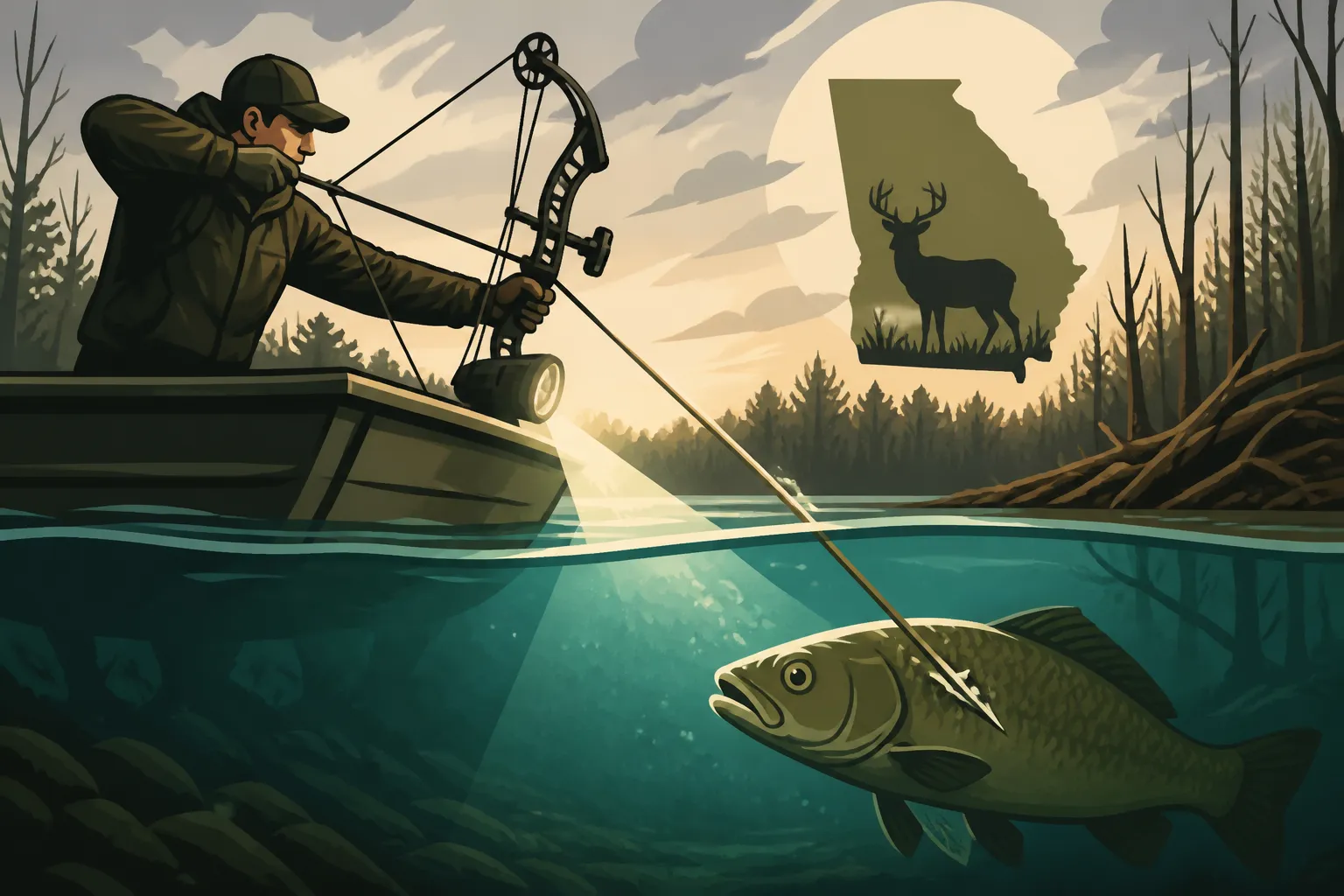
For night bowfishing, proper lighting is not just an advantage; it's an absolute necessity. A robust lighting system, typically consisting of powerful LED or halogen lights mounted to illuminate the water around the boat, allows you to spot fish in the dark. These lights are often powered by a generator or a bank of batteries. The lights penetrate the water, making fish visible as they cruise in the shallows. Without a good lighting setup, night bowfishing is simply not possible. When setting up your boat for night operations, consider the placement of your lights to minimize glare off the water and maximize penetration. Remember to have navigation lights for safety, especially if you're on a busy waterway, and a powerful spotlight for navigating through unlit areas or identifying channel markers.
Safety Gear and River Navigation Tools
Safety should always be your top priority, whether you’re hunting in the woods or on the water. Bowfishing, especially at night or in unfamiliar river systems, carries inherent risks. A well-stocked first aid kit is non-negotiable, particularly when you're in remote locations. Consider a robust First Aid Kits for Remote Swamp Ground that can handle everything from minor cuts to more serious injuries. You'll be dealing with sharp arrow points, potentially slippery boat decks, and the thrashing of large fish, so accidents can happen quickly. Beyond medical supplies, ensure everyone on board is wearing or has immediate access to a personal flotation device (PFD). Drowning is a silent killer, and it’s easily preventable.
River navigation can be tricky, especially in the dark. A reliable GPS unit or a mapping app on your smartphone, like GoHunt, is essential for plotting your course, marking productive spots, and safely finding your way back to the launch. Many rivers have submerged obstacles, sandbars, and shifting channels, so knowing your location at all times is vital. Carry a physical map as a backup, especially if you anticipate areas with poor cell service. Additionally, a powerful air horn or whistle for signaling, a sturdy anchor, and a spare paddle or trolling motor are crucial. Be mindful of changing river levels and currents. What might be an easy run in one direction could become a significant challenge upstream or against a strong current. Staying informed and prepared will ensure your off-season bowfishing trips are not only successful but also safe.
Strategies and Techniques for River Bowfishing
Bowfishing isn't just about randomly shooting arrows into the water; it's a nuanced pursuit that rewards patience, observation, and a keen understanding of fish behavior. Unlike traditional fishing, where you might cast a line and wait, bowfishing is an active form of hunting that requires you to seek out your quarry and make a precise shot. Mastering these strategies and techniques will dramatically improve your success rates and make your off-season river adventures truly memorable.
Spotting Fish in Different River Conditions
The first and most critical step in bowfishing is finding the fish. This often means sight fishing, so water clarity is your best friend. In Georgia rivers, water clarity can vary wildly depending on recent rainfall, current, and the river bottom. On clearer days or stretches of river, you'll be able to spot fish cruising just under the surface, or even partially breaking the water. Look for tell-tale signs like subtle wakes, fin tips, or darker shapes moving against the lighter river bottom. Sometimes, you'll notice muddy trails where bottom-feeding carp have been rooting around. These are prime indicators of activity.
When the water is murkier, spotting fish becomes more challenging but not impossible. You'll need to rely more on instinct and knowledge of fish behavior. Fish still need to breathe, and in stained water, they often come closer to the surface or move into very shallow areas to feed or find warmer water. This is where night bowfishing truly shines. The powerful lights cut through the darkness and often penetrate murky water better than natural daylight, illuminating fish that would otherwise be invisible. Focus your efforts on shallower flats, backwater coves, and areas with submerged structure like logs or rocks, as these spots provide cover and feeding opportunities. Utilizing a GoHunt map can help identify these shallow, structural features even before you hit the water. It’s a constant dance of adapting to the conditions.
Shot Placement and Retrieval Tactics
Shooting fish with a bow presents a unique optical challenge: light refraction. When you look at an object underwater, the light bends, making the fish appear higher than it actually is. This means you need to aim below the fish to hit it. The deeper the fish and the steeper your angle, the more you need to compensate. This phenomenon is often referred to as "aim low," and it's something every bowfisherman learns quickly. There's no hard and fast rule for how much to aim low; it comes with practice and experience, but a good starting point is often to aim at the bottom third of the fish when it appears to be a foot or so deep.
Once you've taken the shot and connected, the fight is on! Bowfishing arrows are designed to hold, but large rough fish like carp and gar are incredibly powerful. Immediately after the shot, secure your bow and grab the line. A strong, steady retrieve is important to bring the fish to the boat. Don't just reel it in; often, you'll need to hand-line the fish in, using the reel primarily to collect the slack. For particularly large or feisty fish, a gaff or a landing net can be incredibly helpful to hoist them into the boat. Be prepared for a mess; these fish can thrash violently, so have a designated cooler or barrel for your catch to contain the chaos and keep your boat clean. Retrieving your arrow can sometimes be tricky if it's lodged in dense vegetation or a log, so patience is key.
Ethical Considerations and Handling Your Catch
While bowfishing targets rough fish that often have no limits, ethical conduct remains paramount. Only shoot what you intend to keep and use. While some species like carp and gar might not appeal to every palate, they are excellent table fare when properly prepared. Taking more than you can reasonably process or consume is wasteful and reflects poorly on the bowfishing community. If you don't plan to eat them, consider using them for fertilizer in a garden or as bait for crabbing or trotlines, but always ensure they are utilized responsibly. Never leave fish to rot on the bank or discard them carelessly.
Once a fish is landed, dispatch it quickly and humanely. A swift blow to the head with a club or mallet is usually sufficient. This minimizes suffering and prevents the fish from thrashing around the boat, potentially causing injury or damage. Proper handling after the catch is also important for food quality. Get the fish on ice as quickly as possible, especially in Georgia's warm off-season temperatures. This prevents spoilage and preserves the flavor. Many bowfishermen find that soaking carp fillets in buttermilk or brining them helps to remove any "muddy" taste. Gar, with their tough skin, often require specialized filleting techniques, but their white, flaky meat is delicious. Exploring different recipes and preparation methods can turn your off-season bowfishing success into a culinary treat.
Maximizing Your Off-Season Bowfishing Adventures
Bowfishing offers a vast playground across Georgia, and with a bit of planning and an adventurous spirit, you can turn a simple day trip into a truly epic off-season excursion. It's an opportunity to explore new waterways, hone your skills, and share unforgettable experiences with friends and family. Don't let the end of deer season signal the end of your outdoor pursuits; instead, let it be the beginning of a whole new kind of hunting adventure.
Exploring Different River Systems
Georgia is blessed with an incredible network of rivers, each with its own character and bowfishing potential. Beyond the major river systems, don't overlook smaller tributaries, oxbow lakes connected to river systems, and even large impoundments. For instance, while you might usually be focused on Hunting Georgia Swamp and River Bottom Deer in the fall, those same river bottoms and adjacent swamps can hold large populations of gar and bowfin in the spring and summer. These areas often have less pressure and offer unique challenges. Take the time to research different areas, looking at maps on GoHunt for access points, potential shallow areas, and historical fish reports.
Consider making a weekend trip out of it, camping near a promising river system. This allows you to hunt both day and night sessions, maximizing your time on the water. Some areas might have public boat ramps, while others might require a bit more effort to gain access. Always be respectful of private property and adhere to all access regulations. Exploring new water forces you to adapt your tactics and observe different fish behaviors, which in turn makes you a more versatile and skilled bowfisherman. The thrill of discovering a new hotspot or a stretch of river teeming with fish is a reward in itself, a true testament to the spirit of exploration that defines many hunters.
Combining Bowfishing with Other Off-Season Activities
One of the great things about bowfishing in the off-season is that it can easily be combined with other outdoor pursuits, making for a truly packed day or weekend. If you're out on the river, why not take along some rods and reels for some casual hook-and-line fishing? You might catch some delicious panfish or even a legal catfish while waiting for the prime bowfishing hours. It's a fantastic way to introduce new people, especially kids, to the joys of being on the water, offering multiple avenues for success and engagement.
Another great option is to tie bowfishing into other year-round hunting opportunities. For example, while you're exploring river edges for carp, you might also be able to scout for Feral Hog Hunting Year-Round in Georgia sign along the banks. Hogs often frequent river bottoms and swamps, and keeping an eye out for their tracks and rooting activity can set you up for future hunts. Similarly, many of the same areas that hold rough fish also offer excellent opportunities for predator calling for coyotes, which can be hunted year-round. Thinking beyond just one species or method can transform your off-season from a quiet lull into a continuous cycle of outdoor adventure, ensuring you're always learning, exploring, and engaging with Georgia's rich natural resources.
Disclaimer
The information provided in this guide is for general informational purposes only and does not constitute legal advice. Hunting and fishing regulations in Georgia can change frequently. Always consult the latest official regulations from the Georgia Department of Natural Resources (DNR) before planning any hunting or fishing activity to ensure compliance with all state and local laws. Safety should always be your top priority when engaging in outdoor activities.