Hunting Ocmulgee River Corridor Deer
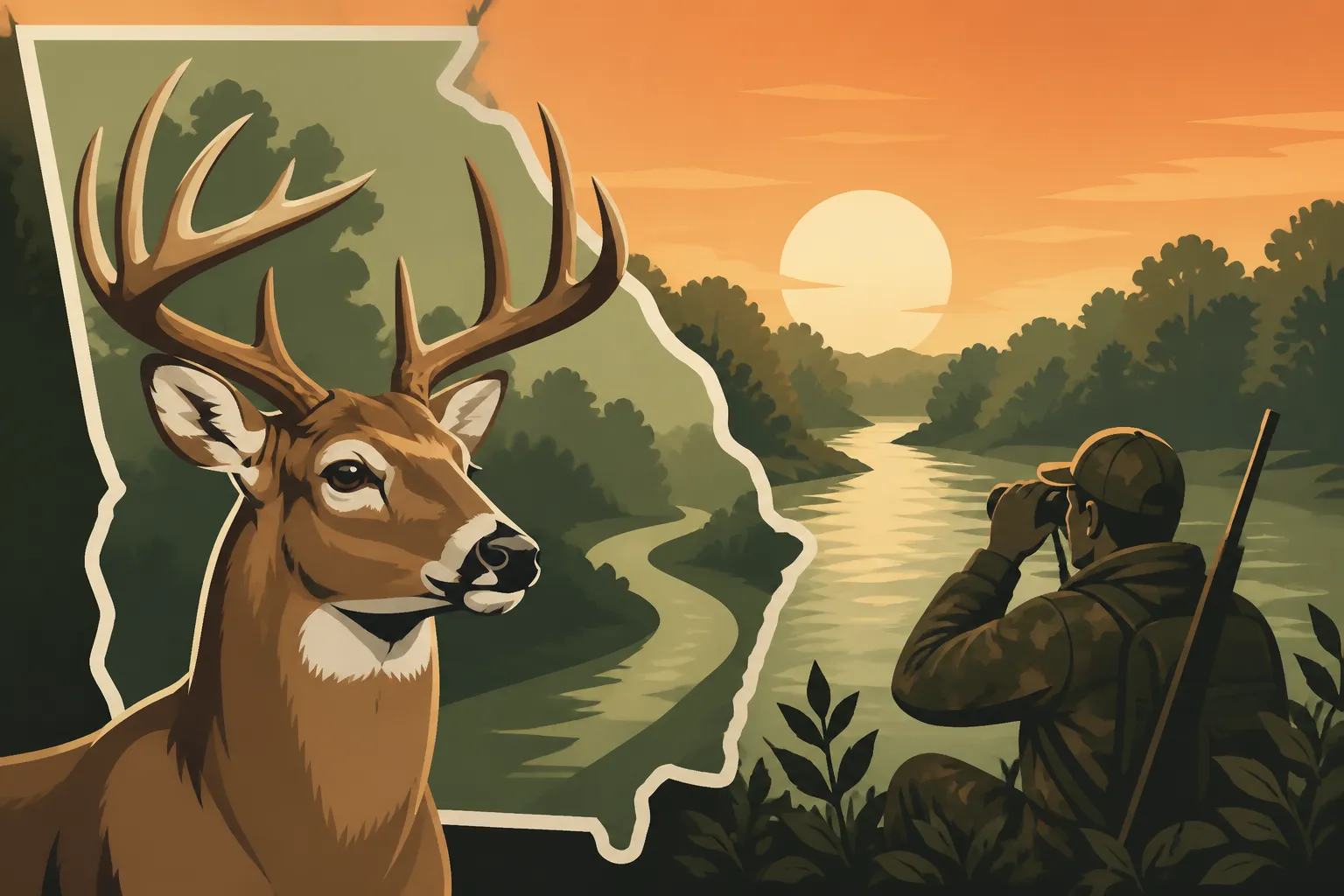
Hunting the Ocmulgee River corridor for deer presents a unique set of challenges that can leave even seasoned Georgia hunters feeling a bit overwhelmed. Between the dense swamps, fluctuating water levels, and the sheer amount of tangled cover, it’s easy to feel like you’re just wandering aimlessly. But with a bit of insight into this distinctive habitat and the right approach, you can turn those frustrations into successful hunts and discover why this region is a secret gem for Georgia whitetails. This guide will help you understand the Ocmulgee’s deer, how to find them, and the best ways to hunt them.
Understanding the Ocmulgee River Corridor Habitat
The Ocmulgee River corridor carves a significant path through central Georgia, and its banks are a world unto themselves. Unlike the rolling Piedmont or the open pine flats of the Coastal Plain, this is an ecosystem defined by water, dense vegetation, and a rich mix of hardwoods and cypress swamps. Deer here thrive in an environment that offers incredible security and abundant food sources, but it also demands a different kind of hunting strategy from us.
Imagine miles of tangled river cane, thick briar patches, and mature bottomland hardwoods — oaks, gums, and elms that drop acorns and other mast, providing a buffet for deer. Interspersed are sloughs, oxbow lakes, and backwater areas that hold water for most of the year, creating natural barriers and travel corridors. This isn't your typical open-woods hunting; visibility can be extremely limited, often to mere yards. The terrain can shift from relatively dry ground to knee-deep muck within a few steps, making travel a sweaty, bug-filled ordeal. But within this challenging landscape, deer find sanctuary from predators and hunters alike, often growing older and larger due to reduced pressure. They adapt to the wet conditions, traversing sloughs and swamps with ease, often preferring to bed in the thickest, nastiest cover imaginable right in the heart of the bottomland.
The Ocmulgee is a dynamic environment. River levels can rise dramatically after heavy rains, pushing deer out of low-lying areas onto higher ground, often adjacent agricultural fields or timber company land. As the water recedes, deer move back into the bottom, following newly exposed food sources and fresh browse. This constant flux means that understanding water levels and their impact on deer movement is absolutely critical to successful hunting here. Don't overlook the edges where the river bottom transitions to uplands; these often serve as crucial travel corridors and feeding areas, especially when the main bottom gets too wet.
Decoding Deer Movement in the River Bottom
Finding deer in the vast, dense Ocmulgee River corridor often feels like searching for a needle in a haystack. But these animals are creatures of habit, and the river bottom's unique features actually funnel their movement in predictable ways, if you know what to look for. Your scouting efforts here need to be meticulous and focused on understanding the flow of both water and deer.
Start by looking at maps, and use tools like onX Hunt to identify key features. Look for subtle elevation changes – even a slight ridge or a patch of higher ground in a swamp can be a prime bedding area. Identify sloughs, creek crossings, and areas where the cover naturally bottlenecks. These are your pinch points, natural funnels where deer movement is concentrated. Pay close attention to oxbows and areas where the river itself creates a bend, as these often have different vegetation and can be natural collection points for deer. This digital scouting can save you countless hours of slogging through the thick stuff.
Once on the ground, your boots are your best friend. Look for fresh tracks in the mud along creek banks, slough edges, and dry runs. Deer trails in the Ocmulgee bottom can be incredibly subtle, or they can be beaten paths carved deep into the mud and vegetation. Don't just look for big tracks; look for consistent travel. Rubs and scrapes, while sometimes harder to find in the dense growth, will indicate breeding activity, particularly during the rut. Reading Georgia Mud for Fresh Deer Movement is an absolute must-read to hone your tracking skills in this environment.
Food sources are another major key. Early in the season, you'll find deer browsing on lush green growth, often near water. As fall progresses, look for dropped acorns from various oak species, persimmons, and even muscadine grapes. Deer will absolutely key in on specific mast crops, and finding a hot feeding area can be gold. Remember that these food sources can be scattered, so covering ground is essential.
You'll also want to consider areas with reduced hunting pressure. Public lands along the Ocmulgee can be quite pressured, especially on opening day. Sometimes, walking an extra half-mile into the thickest swamp or crossing a particularly nasty slough can put you in front of deer that haven't seen a human in weeks. Hunting Pressure on Georgia Public Land discusses strategies for finding these overlooked spots.
Strategic Approaches to Hunting Ocmulgee Deer
Hunting the Ocmulgee River corridor effectively requires adapting your tactics to the unique environment. What works in a pine plantation often won't cut it in the dense, wet river bottom. Precision, patience, and a willingness to get a little uncomfortable are key.
One of the most effective strategies is targeting funnels and pinch points. Deer, even in dense cover, will typically take the path of least resistance. This means they’ll follow slightly elevated ridges, the edges of sloughs, or narrow strips of cover between open water. Setting up a stand, whether a ladder stand, climber, or even a well-camouflaged ground blind, on these natural travel routes can be incredibly productive. A well-placed stand overlooking a beaver pond dam that deer cross, or a narrow strip of dry ground that connects two larger bedding areas, can put you right in their lap. Hunting a Funnel Between Two Swamps offers great insights into identifying and hunting these critical areas.
Still hunting can also be highly effective in the Ocmulgee bottom, especially during periods of high wind or after a rain when the ground is soft and quiet. The dense cover means deer are often close, and moving slowly, stopping frequently to glass and listen, can lead to close-range encounters. Focus on moving into the wind or with a crosswind, always paying attention to thermals in the morning and evening. You're not looking for a deer at 100 yards; you're looking for a leg, an ear twitch, or a patch of hide at 30 yards. Stealth and keen observation are paramount.
For archery hunters, a ground blind can be an excellent option in these dense environments. You can brush it in heavily, disappearing into the vegetation, and it offers great concealment for drawing your bow at close range. Using a Ground Blind on Georgia Public Land offers tips for effective setup. For firearms hunters, shorter, more maneuverable rifles or shotguns loaded with slugs are often preferred, as long shots are rare and quick, close-range reactions are more common.
Seasonality also plays a big role. Early season means hot, humid conditions and heavy bug pressure, but deer are often predictable, feeding heavily. The rut, typically in mid-October in many parts of the Ocmulgee’s range, can turn bucks into wandering fools, making calling and rattling more effective. Hunting the Rut in Mid-October provides specific tactics for this crucial time. Late season, particularly after leaf drop, can open up sight lines and make tracking easier, and deer will be focused on whatever Late-Season Food Sources for Georgia Whitetails are still available.
Ocmulgee River Corridor Hunting Strategy Overview
| Strategy Type | Key Features & Focus | Best Conditions | Gear Considerations |
|---|---|---|---|
| Stand Hunting | Focus on natural funnels, pinch points, slough crossings. | All seasons, especially during predictable feeding/bedding. | Treestand/Ground Blind, reliable mapping (onX Hunt), Thermacell |
| Still Hunting | Slow, deliberate movement, keen observation, quiet steps. | Windy days, soft ground after rain, dense cover. | Lightweight gear, binoculars, good camouflage, scent control |
| Scouting | Trail cameras, track reading, identifying fresh sign. | Pre-season, during season to locate hot spots. | onX Hunt/GoHunt, sturdy boots, bug spray, headlamp |
| Water Level Focus | Monitor river levels; target transition areas during high water. | Post-rain events, early season when water is high. | Rubber boots, waders, understanding deer movement patterns |
Essential Gear for Ocmulgee River Bottoms
Hunting the Ocmulgee River corridor is physically demanding and often takes you far from the beaten path. Having the right gear isn't just about comfort; it's about safety and efficiency when you're deep in the swamp.
First and foremost, your footwear is critical. You absolutely need durable, waterproof boots, and many hunters opt for Snake Boots for Georgia Swamp Ground. This isn't just for peace of mind; it's a practical necessity to protect against venomous snakes and the constantly wet, muddy conditions. Good quality rubber boots that come up high are often preferred for their complete waterproofness and ease of cleaning.
Clothing needs to be breathable and quick-drying. Even in October, Georgia's river bottoms can be surprisingly warm and humid. Lightweight, moisture-wicking layers are essential to manage sweat and stay comfortable. Warm-Weather Clothing for Georgia Hunters will give you excellent advice on specific fabrics and layering systems. Don't forget rain gear; sudden downpours are common, and getting soaked miles from your truck is no fun.
Bugs are a constant companion in the Ocmulgee bottom, especially early in the season. Mosquitoes, gnats, and ticks can turn a pleasant sit into an unbearable ordeal. Carrying robust Bug Repellent That Holds Up in a Tree Stand is non-negotiable. Many hunters also swear by Thermacells or similar devices to create a bug-free zone around their stand.
Navigation is paramount. While you might know the general area, the dense canopy and winding sloughs can make it incredibly easy to get turned around. A reliable GPS unit or a smartphone app like onX Hunt is essential. Download offline maps before you go, as cell service is often spotty or nonexistent in the deeper parts of the river bottom. Mark your truck, your stand locations, and any significant landmarks you pass. This isn't just for finding your way in; it's for finding your way out, especially after dark. GoHunt can also be a valuable resource for planning your trips, researching regulations, and staying informed.
Finally, consider deer retrieval. If you're fortunate enough to harvest a deer, getting it out of the Ocmulgee bottom can be a Herculean task. A game cart, while potentially difficult in very soft mud, can be invaluable on firmer trails. Having a sturdy rope is always a good idea. Sometimes, the easiest way is to quarter the animal and pack it out. Dragging a Deer Out of a Swamp and Recovering a Deer From a Cypress Swamp offer practical advice for these challenging scenarios. Always think about how you’ll get your deer out before you even pull the trigger.
Disclaimer
This article is for general informational purposes only and does not constitute professional advice. Laws, prices and regulations vary by location and change over time. Consult a qualified professional for guidance on your specific situation.