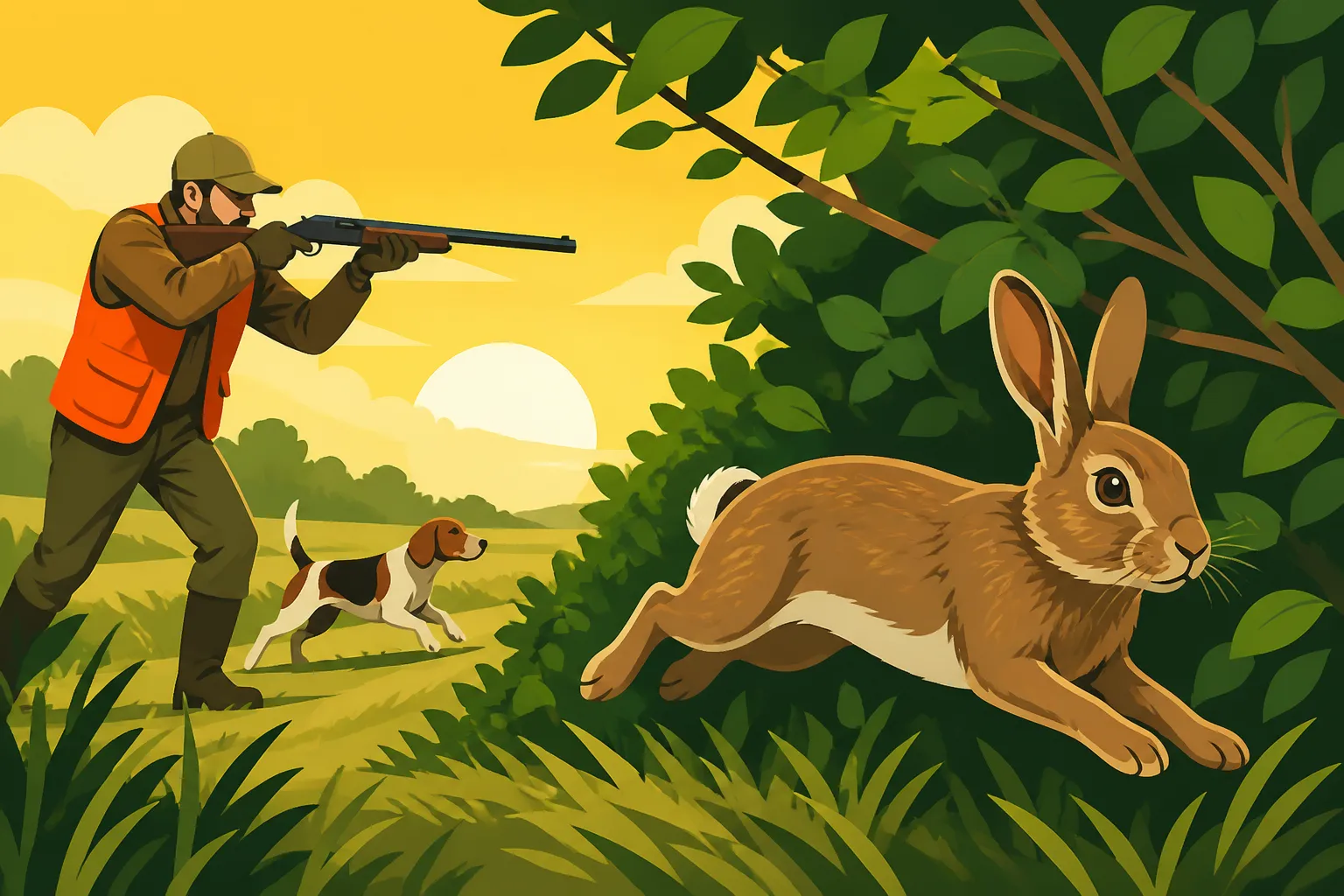
Rabbit Hunting Georgia Fencerows
There’s nothing quite like the crisp air of a Georgia winter morning, a good shotgun, and the thrill of chasing cottontails along an old fencerow. Many hunters feel a bit lost when it comes to consistently finding rabbits, often frustrated by sparse populations or cover that's too thick to effectively hunt. This comprehensive guide is designed to cut through that confusion, helping you identify prime fencerow habitat, gain access, and employ proven tactics to successfully bag Georgia cottontails, whether you’re hunting with beagles or going solo.
The Allure of Georgia Fencerows for Rabbit Hunters
For generations, rural Georgia has been crisscrossed by fencerows – those often-overlooked linear strips of tangled vegetation, old wire, and sometimes even a few neglected trees. While they might seem like mere boundaries, for the savvy rabbit hunter, these fencerows are absolute goldmines. They offer a unique blend of dense cover and accessible travel corridors that make them irresistible to cottontails. If you've been struggling to locate consistent rabbit action, turning your attention to these linear havens might just change your luck.
Why Fencerows are Rabbit Havens
Think about what a rabbit needs: food, shelter from predators, and pathways to move between these necessities. Fencerows provide all three in spades. They often border agricultural fields, offering a ready food source of grasses, clover, and crop remnants. On the other side, they might meet a woodlot, a pine plantation, or another field, giving rabbits diverse foraging opportunities. The tangled briars, honeysuckle, and brush that typically grow up along these fences create an impenetrable fortress from hawks, owls, and coyotes. It’s a natural tunnel system where a rabbit can vanish in a flash, making them feel safe and secure. These linear features essentially act as miniature wildlife corridors, connecting larger blocks of habitat.
Not only do they provide incredible cover, but the diversity of plant life in a fencerow also ensures a year-round food supply. In the summer, you'll find lush green browse, while in the winter, persistent weeds and seeds offer sustenance when other food sources are scarce. The soil disturbance from fence installation and maintenance often encourages pioneer plant species that rabbits particularly favor. Furthermore, the very structure of a fencerow, with its linear nature, creates predictable travel patterns for rabbits, which is a huge advantage for hunters planning their approach.
Beyond just food and shelter, fencerows often provide escape routes. When a predator or hunter enters one side, rabbits instinctively know they can dart down the line, popping out into a field or disappearing into a thicker woodlot further down. This predictability is precisely what makes them so attractive to hunters, especially those working with dogs. The dogs can follow the scent trail along a defined path, making for exciting chases and clearer shooting opportunities as the rabbits circle back or break cover. It's an ecosystem in miniature, thriving along the borders of human cultivation, and it's practically designed for rabbit hunting.
Understanding Rabbit Behavior in Linear Cover
Rabbits, particularly cottontails, are creatures of habit and efficiency. In a fencerow environment, their behavior becomes somewhat predictable. When flushed, a rabbit’s first instinct is usually to hug the thickest cover available, often running along the fencerow rather than straight across open ground. This keeps them within their comfort zone and away from aerial predators. They'll use every twist, turn, and thicket within that linear cover to evade pursuit, often circling back to their original bedding area if given enough pressure and time.
This circling behavior is key for hunters, especially those with beagles. A rabbit, once jumped, will typically run a wide arc before attempting to return to the security of its home territory. Knowing this allows hunters to position themselves strategically along the expected path of return. It's a game of anticipation and patience. For still-hunters, understanding that a rabbit will often stop just inside dense cover after a short dash, hoping to be unseen, can lead to quick shots if you're alert and ready. They rely on their camouflage and the density of the fencerow to disappear.
Furthermore, rabbits are highly sensitive to pressure. If a fencerow is routinely hunted, they might become more prone to "holing up" in underground burrows or dense brush piles rather than running long circuits. Observing the general health and density of the fencerow cover can also give you clues. A very thick, undisturbed fencerow often holds more rabbits, and they might be more willing to run. Conversely, a thinner fencerow bordering heavily trafficked areas might harbor more cautious rabbits that bolt for the nearest hole at the first sign of trouble. Paying attention to these subtle cues can make a significant difference in your success rate.
Scouting and Gaining Access to Productive Fencerows
Finding the perfect fencerow isn't just about spotting a line of brush. It's about careful observation, understanding the landscape, and, crucially, securing permission to hunt. Georgia has a mix of public and private lands, and fencerows exist on both, but the majority of prime rabbit habitat, especially adjacent to agriculture, will be found on private property. Don't let that deter you; with the right approach, getting access is often easier than you think.
Identifying Prime Rabbit Fencerows
When you're scouting for rabbit sign, you're looking for a few key indicators. First and foremost, visual assessment of the cover is critical. You want fencerows that aren't too sparse or too manicured. Ideal fencerows will have a healthy mix of briars, honeysuckle, sumac, small pines, and other dense shrubs that provide year-round concealment. Think about the thickness at a rabbit's eye level – can it easily disappear into that cover?
Next, look for actual rabbit sign. This includes droppings, which are small, round pellets often found in concentrated areas where rabbits feed or rest. You might also spot rabbit tracks in soft mud or snow, especially around openings or crossings in the fencerow. Chewing marks on young saplings or bark, particularly in late winter when other food sources are scarce, are also good indicators. Freshly clipped vegetation, often at a 45-degree angle, can signal recent feeding activity. Using a tool like GoHunt's mapping features can help you identify potential fencerows bordering diverse habitats, even before you step foot on the ground. Look for areas where field edges meet woodlots or swamps, as these transitions are often super productive.
Finally, consider the adjacent habitat. Fencerows bordering soybean fields, winter wheat, clover plots, or even old fallow fields tend to be more productive because they offer abundant food. The best fencerows aren't isolated; they're part of a larger network of cover and food sources. They act as highways for rabbits, allowing them to move safely between different feeding and bedding areas. Don't overlook fencerows near small creeks or drainages either, as these often provide even thicker cover and a consistent water source, making them even more appealing to rabbits.
Navigating Public and Private Land Access
Hunting on public land in Georgia requires understanding specific regulations for Georgia Resident Hunting License Options and WMA access. While some Wildlife Management Areas might have fencerows, they are typically managed for larger game, and rabbit populations can be spotty. Still, it's always worth checking the WMA maps and rules on the Go Outdoors Georgia website to see if a particular area offers small game opportunities. Generally, public land often means longer walks and potentially more competition from other hunters, but it’s always an option if private access isn’t available.
For most dedicated rabbit hunters, especially those looking for consistent success, private land is where it's at. The thought of asking for permission can be daunting, but a polite, well-dressed approach can open many doors. Start by identifying landowners with suitable fencerows, often adjacent to agricultural fields. Knock on their door, introduce yourself respectfully, and clearly state your intentions. Offer to share some of your harvest, or even offer to help with small chores around the farm. Sometimes, just offering to keep an eye on their property for them can be enough. Many landowners appreciate responsible hunters who are considerate and respectful of their property.
When asking for permission, always be prepared to show your Georgia Resident Hunting License Options and demonstrate your knowledge of local regulations, including any How Much Blaze Orange Georgia Requires for safety. Emphasize that you’ll be careful, close all gates, avoid damaging crops or fences, and leave no trash behind. Building a good relationship with a landowner can secure hunting access for years to come. Remember, a "no" is just a "no" for today – you can always try again next season or approach different landowners. persistence and courtesy are key to unlocking those hidden fencerow honey holes.
Effective Strategies for Hunting Fencerows
Once you've found your promising fencerows and secured access, it's time to talk tactics. Rabbit hunting in Georgia, particularly along these linear strips of cover, can be incredibly rewarding, but it requires a strategic approach. Whether you're a traditionalist with a pack of beagles or prefer the quiet art of still-hunting, understanding how to work the fencerow effectively will greatly increase your chances of success.
The Art of Hunting with Beagles in Fencerows
There’s a reason beagles and rabbit hunting go hand-in-hand – they were bred for it! Running Beagles on Georgia Cottontails is a classic method, and fencerows provide the perfect stage. The dogs, with their incredible noses, can pick up a rabbit's scent trail that might be imperceptible to a human. Once a rabbit is jumped, the beagle’s baying chorus is music to a hunter's ears, signaling the chase is on. The linear nature of a fencerow helps contain the chase, making it easier for hunters to predict the rabbit's path.
When hunting with beagles in fencerows, positioning is crucial. As mentioned earlier, rabbits often circle back to their original jump spot or nearby cover. Hunters should spread out, positioning themselves at either end of the fencerow, or at natural breaks and crossings, where a rabbit is likely to emerge. Stand quietly, ready your shotgun, and listen to the dogs. Their changing barks will tell you if the rabbit is gaining distance, turning, or slowing down. Patience is paramount; don't rush your shot. Wait for a clear, safe shooting lane before taking aim.
Beyond just the chase, beagles are excellent at flushing rabbits that might otherwise sit tight. They'll root through the densest briar patches, pushing rabbits out into more open areas where a shot is possible. Working multiple dogs can be even more effective, as they can cover more ground and keep a rabbit moving. Remember to keep your dogs visible and safe, especially if you're hunting near roads or other hazards. Training and conditioning your beagles are also essential, ensuring they can handle the thick cover and endurance required for a good hunt. Consider protective vests for your dogs if the briars are particularly nasty.
Still-Hunting Fencerows for Cottontails
Not everyone has a pack of beagles, and that's perfectly fine! Still-hunting can be incredibly effective and equally rewarding. This method requires stealth, patience, and a keen eye. The idea is to move slowly and deliberately along the fencerow, scanning every inch of cover for a rabbit that might be sitting tight, hoping to go unnoticed. It's a fantastic way to enjoy the solitude of the outdoors and hone your observational skills.
When still-hunting, take a few slow steps, then pause and scan. Look for anomalies in the cover: a pair of ears, the glint of an eye, or the outline of a rabbit nestled amongst the leaves. Rabbits are masters of camouflage, so you're not always looking for a whole rabbit, but rather a part of a rabbit that doesn't quite blend with its surroundings. Pay particular attention to dense brush piles, root wads, or any area that offers maximum concealment. Often, a rabbit will bolt from underfoot, so always be ready for a quick shot. Using a walking stick or a long branch to gently tap into thick cover ahead of you can also help flush rabbits that are holding extremely tight.
Another effective still-hunting tactic is to walk one side of the fencerow while a partner walks the other, or to have a partner walk through the fencerow itself, acting as a human "beagle." This collaborative push can flush rabbits that might otherwise stay put. The key is to communicate and move at a controlled pace. This method also works well for Squirrel Hunting Georgia Bottomland Hardwoods, as both small game species often inhabit similar dense cover. Remember that rabbits will often dash a short distance and then freeze, hoping you haven't seen them. If you flush one and it dives back into cover, pause and scan that area intently; it might be sitting just a few feet away, perfectly still.
Safety Considerations and Regulations
Safety is paramount in any hunting endeavor, and rabbit hunting along fencerows is no exception. Always know your target and what’s beyond it. Fencerows often border open fields, and while this provides good shooting lanes, it also means your shot could carry further. Always be aware of houses, roads, and livestock nearby. Wearing blaze orange, such as a vest or hat, is a non-negotiable safety measure, especially when hunting with others or on public land where it's required. Familiarize yourself with How Much Blaze Orange Georgia Requires before heading out.
The terrain around fencerows can be tricky. Old fence wire, fallen branches, and dense briars can lead to trips and falls. Consider wearing Snake Boots for Georgia Swamp Ground or other protective footwear, especially in warmer months when snakes are active. Good quality gloves will protect your hands from thorns and rough brush. Always carry a small first-aid kit, a whistle, and a fully charged cell phone. Inform someone of your hunting location and expected return time, especially if you're hunting alone.
Finally, always be up-to-date on Georgia Rabbit Season Dates and bag limits. The Georgia Department of Natural Resources (DNR) provides clear guidelines on hunting seasons, which species are open, and any specific regulations for WMAs or other managed lands. Respect posted signs, observe property boundaries, and always get explicit permission before stepping onto private land. Ethical hunting practices ensure a positive experience for everyone and help maintain good relations with landowners and the broader community.
Essential Gear for Your Fencerow Rabbit Hunt
Having the right gear won't guarantee you a limit of rabbits, but it will certainly make your time in the field more comfortable, safer, and ultimately more enjoyable. Fencerow hunting can be rugged, requiring durable clothing, appropriate firearms, and a few essentials to handle the thick cover and potential challenges. Don's skimp on the gear that keeps you protected and efficient.
Shotgun and Ammunition Choices
For rabbit hunting, a fast-handling shotgun is key. Rabbits are small, quick targets that often burst from cover at close range, so you need a gun that can get on target quickly. Most hunters opt for a 12-gauge or 20-gauge shotgun. A 20-gauge is often preferred by many for its lighter weight and less recoil, making it easy to carry all day and comfortable for follow-up shots. A semi-automatic or pump-action shotgun provides quick second and third shots, which can be invaluable when multiple rabbits jump simultaneously from a thicket.
As for chokes, an improved cylinder or modified choke is usually perfect for the close-range shots typical of fencerow hunting. These chokes provide a wider pattern, increasing your chances of hitting a fast-moving target without blowing it to smithereens at 10-20 yards. Tighter chokes can lead to missed opportunities or over-patterning at close range.
Ammunition-wise, lead shot is generally allowed for small game like rabbits on private land in Georgia. The most common shot sizes are #6 or #7.5. These smaller shot sizes throw a dense pattern suitable for rabbits and minimize meat damage. For example, Remington Express Long Range or Federal Top Gun shells in #6 shot are popular choices that offer a good balance of pattern density and stopping power. Always carry enough shells, but don't overpack; a box or two is usually sufficient for a day's hunt.
Clothing and Footwear for Dense Cover
Fencerow hunting means getting into thick, thorny stuff. Forget your lightweight hiking pants; you need durable, briar-resistant clothing. Heavy-duty canvas or synthetic brush pants, often reinforced with a briar-proof facing, are a game-changer. Brands like Filson or Carhartt make excellent options that will stand up to the abuse of thorns and tangled vines. A sturdy long-sleeved shirt will protect your arms. Even in cooler weather, you'll be exerting yourself, so Warm-Weather Clothing for Georgia Hunters that allows for layering is advisable. You want materials that breathe, wick moisture, and hold up to abrasion.
Footwear is equally critical. You'll be walking uneven terrain, potentially through damp areas or across plowed fields. Waterproof, briar-resistant boots are highly recommended. As mentioned earlier, Snake Boots for Georgia Swamp Ground are an excellent choice, offering protection not just from briars but also from potential snake encounters, which are a real concern in Georgia's diverse habitats, especially during warmer spells or in swampy fencerows. Look for boots with good ankle support and aggressive tread for traction.
Finally, don't forget the accessories. A good pair of durable leather gloves will save your hands from countless scrapes and punctures. A sturdy Upland Vests With Water Capacity is perfect for carrying extra shells, a water bottle, snacks, and any harvested rabbits. It keeps your hands free and distributes weight comfortably. A blaze orange hat is not only a safety requirement but also helps keep briars out of your hair. Insect repellent, especially in early or late season, can also be your best friend against ticks and chiggers. Being prepared with the right clothing and footwear makes a world of difference in your comfort and ability to focus on the hunt.
| Fencerow Type | Typical Cover | Rabbit Density | Hunting Strategy | Gear Considerations |
|---|---|---|---|---|
| Agricultural Edge | Briars, honeysuckle, sumac, old wire | High | Beagle drive, still-hunt with pusher | Briar pants, snake boots, light choke |
| Woodline Transition | Thicker brush, small trees, vines | Moderate to High | Beagle drive, strategic stand points | Briar pants, good visibility camo |
| Old Field/Fallow Edge | Weeds, tall grass, scattered brush | Variable (often high) | Still-hunt, careful slow pushes | Waterproof boots, high visibility |
| Creek/Swamp Border | Dense briars, cattails, wetland plants | High (challenging) | Beagles preferred, focused pushes | Waterproof briar pants, snake boots |
Disclaimer
Hunting is an inherently dangerous activity. The information provided in this guide is for informational purposes only and should not replace professional safety training or local legal advice. Always adhere to all local, state, and federal hunting laws and regulations. Exercise extreme caution, know your equipment, and prioritize safety above all else when in the field.