Tracking a Deer Through Georgia Pine Straw
There’s almost nothing more disheartening in the deer woods than making what feels like a solid shot, only to find the blood trail disappear into a sea of Georgia pine straw. That feeling of panic, the doubt creeping in, and the desperate search for even the tiniest speck of crimson can turn a triumphant moment into pure agony. You want to recover your game, honor the animal, and make sure your effort wasn't in vain. This guide will walk you through proven strategies for effectively tracking a deer through the often-challenging terrain of Georgia's pine forests, helping you turn frustration into successful recovery.
The Immediate Aftermath: Don't Rush In
When that arrow or bullet flies, and you see or hear the deer react, your first instinct is often to immediately charge after it. Resist that urge with every fiber of your being. This initial waiting period is perhaps the most critical step in a successful recovery, especially when you're dealing with tricky ground like pine straw. Rushing in can push a marginally wounded deer further, making your tracking job exponentially harder.
Understanding the Waiting Game
The amount of time you should wait depends heavily on your shot placement, or at least, your best guess at it. A deer that’s hit through both lungs or the heart will typically expire quickly, often within sight or a short distance. However, a gut shot deer, or one hit in the liver, can travel a surprising distance and lay down before bleeding out. If you push that deer, it will stand up, stiffen its muscles, and potentially stop bleeding as much, making the trail even harder to follow.
Think about the last time you hunted during Hunting the Rut in Mid-October here in Georgia. Bucks are often on the move, agitated, and less predictable. If you hit one during a moment of high activity, a longer wait might be necessary. For a suspected heart or double-lung shot, 30 minutes to an hour is usually sufficient. The deer often crashes within that time. For anything less-than-ideal – a gut shot, liver shot, or even just uncertainty – extend that wait to at least four to six hours, or even overnight if conditions allow and temperatures are cool. Pushing a gut-shot deer is the cardinal sin of tracking; give it time to bed down and expire.
Marking the Shot Site and Recalling Details
The moment the deer leaves your sight, before you even move from your stand or shooting position, take a mental snapshot of where it was standing and the direction it ran. As soon as it's safe to do so, carefully make your way to the exact spot where the deer was standing when you shot it. This is your "point of impact" or "shot site," and it's gold. Use whatever you have to mark it unmistakably: flagging tape, a brightly colored hat, your backpack, or even just a stick stuck upright in the ground. You might also want to consult your Scouting With the Georgia Outdoors App to pinpoint the exact location.
Once you’ve marked the spot, don’t immediately start looking for blood. Instead, take a few minutes to survey the area. What was the deer doing? What was its body language after the shot? Did it kick, hunch, mule-kick, or just run off normally? What sounds did you hear after the shot – a crash, a prolonged run, or silence? All these details are clues. For example, a loud crash often indicates a quick expiration. A deer that hunched up or tucked its tail often indicates a gut or paunch shot. Recalling the exact angle of the shot can also help you predict which side of the deer the blood trail might start on or what organs might have been hit, giving you a head start when you eventually begin Blood Trailing After Dark in Georgia if the recovery takes that long.
Deciphering the Pine Straw Puzzle
Pine straw, with its uniform reddish-brown carpet, can be a tracker's nightmare. It absorbs blood, hides tracks, and generally makes distinguishing fresh sign from natural forest debris incredibly difficult. But it's not impossible. The key is to slow down, get on your hands and knees if necessary, and learn to identify the subtle nuances.
Understanding Blood Sign in Pine Straw
Blood is your primary indicator, but pine straw changes its appearance and makes it harder to spot. Fresh blood on pine straw will often look darker than it would on green leaves or bare earth because the porous needles absorb it quickly. Instead of bright red splashes, you might see dark, almost black, damp spots.
- Color and Consistency:
- Bright Red, Foamy Blood: This is typically lung blood, often mixed with air bubbles. It indicates a lethal hit and a relatively short trail. In pine straw, you might see small, bright red streaks or frothy spots.
- Dark Red, Watery Blood: This often signifies a muscle hit or arterial hit that's not directly in a vital organ. It can still be a fatal shot, but the deer might go further. Look for darker, more liquid-like patches.
- Dark Red, Clotted Blood: This can indicate a liver shot. It’s usually a fatal shot, but again, the deer can travel a good distance before bedding down. Pine straw will absorb this, so look for dark, almost gelatinous clumps or stained needles.
- Greenish/Brownish, Foul-Smelling Material: This is paunch (gut) contents. If you see this, along with sparse, dark blood, you’ve likely got a gut shot. This means a long wait is crucial. The pine straw may be stained with this material, making it very obvious once you find it.
Remember, the quantity of blood isn't always indicative of the severity of the wound. Sometimes, a deer can bleed profusely from a non-fatal muscle wound, while a fatal internal wound might not produce much external blood.
Tracks, Scuffs, and Subtle Disturbances
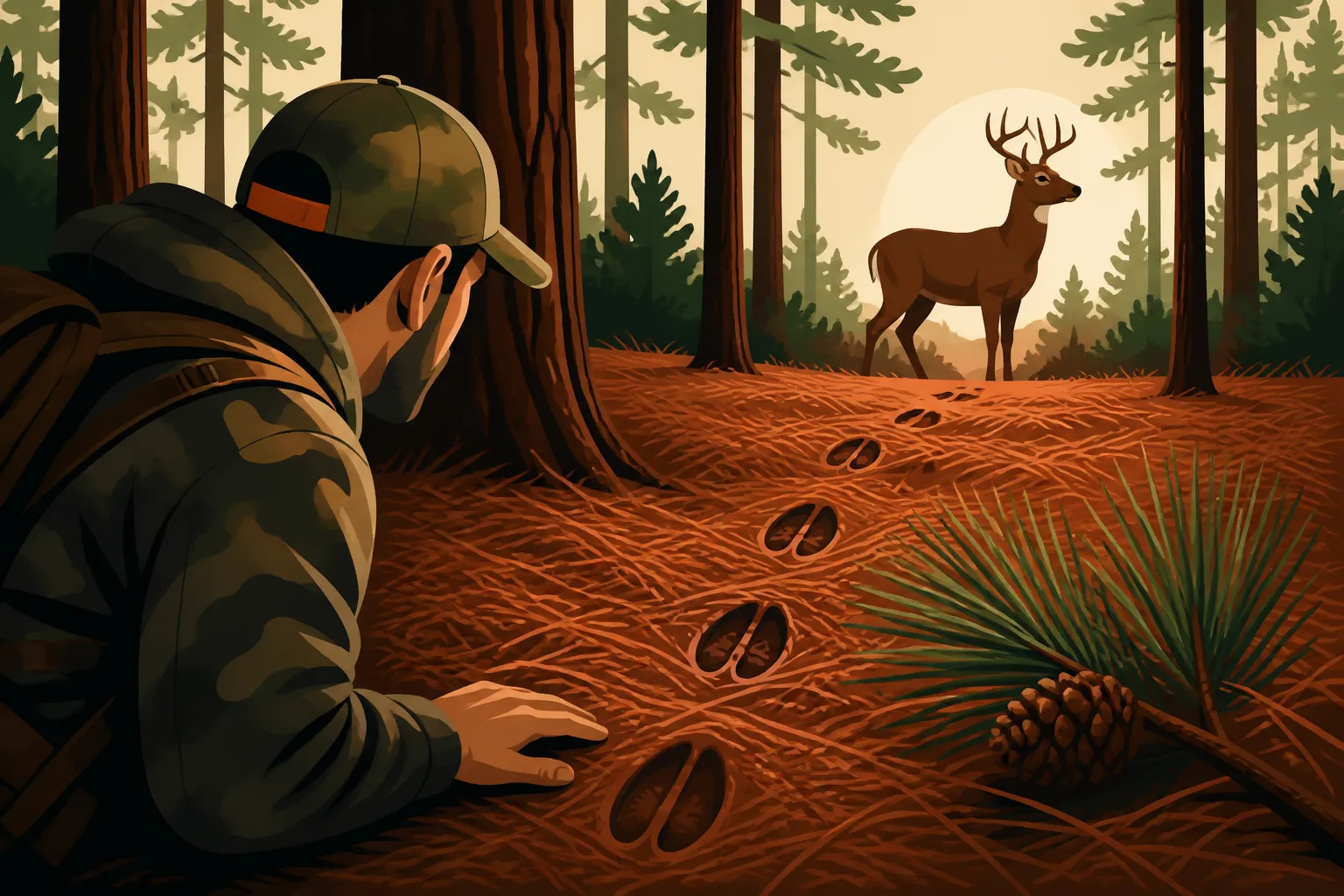
This is where most hunters get frustrated in pine straw. Deer tracks are often completely obscured. But don't give up hope! Instead of perfect hoof prints, you’re looking for disturbances in the pine straw and surrounding vegetation.
- Overturned Pine Needles: As a deer runs, its hooves will displace the pine straw. Look for areas where the lighter, underside of the pine needles has been exposed. This is often the most reliable sign of a deer’s path through a dense pine straw bed. Go slow, look for patterns, and follow the direction of the overturned needles.
- Scuff Marks: Sometimes a deer will scuff its hooves, pushing a small amount of pine straw aside or digging a shallow divot. These can be hard to spot but are clear indicators.
- Broken Twigs and Rubs: Look for broken twigs or small branches along the deer's path. A wounded deer might not clear obstacles as cleanly, or it might be running through thicker cover than usual. You might also find rubbed bark on small trees where it brushed past.
- Flattened Grass or Leaves: Even in a pine forest, there might be patches of grass, ferns, or other undergrowth. A running deer will flatten this vegetation, creating a subtle, temporary trail.
- Hair and Bone Fragments: At the initial shot site and along the first 20-50 yards of the trail, search meticulously for hair. Short, dark hair indicates a body hit. Longer, coarser hair might be from the leg. If you find bone fragments, especially bright white ones, it could indicate a hit to the leg bone or shoulder, which would suggest limited travel for the deer.
You might find it helpful to use the mapping features of a tool like GoHunt to mark every piece of sign you find. This creates a visual breadcrumb trail that helps you stay oriented, especially when the blood gets sporadic or disappears entirely.
Strategies for a Challenging Trail
Even with the best preparation, a deer can sometimes seem to vanish. This is when patience, systematic searching, and a little help can make all the difference.
Expanding the Search Area: The Grid Method
When the trail completely disappears, resist the urge to randomly wander. Instead, implement a systematic search pattern.
- Last Known Blood (LKB): Mark your LKB with a piece of flagging tape or another marker. From this point, search in a concentric circle or a grid pattern.
- Circle Search: Start by walking in a wide circle around the LKB, expanding outwards. Walk slowly, with your head down, looking for any new sign. If you don't find anything, make another, wider circle.
- Grid Search: This is often more effective in open pine forests. From the LKB, have multiple people (if available) spread out in a line, about 10-15 yards apart. Walk in a straight line, looking for sign. When you reach a predetermined distance, pivot and walk back in a parallel line, creating a grid. This ensures every square foot of ground is covered. Tools like GoHunt can help coordinate a grid search, allowing each person to mark their path or discoveries. This systematic approach is crucial, especially in featureless terrain common in South Georgia pine flats.
Utilizing Tools and Backup
Modern hunting tools and human collaboration can significantly increase your chances of recovery.
- Lights, Even During the Day: A good quality headlamp or flashlight can be invaluable, even in daylight. The beam can sometimes highlight blood that's invisible to the naked eye by making it glisten or appear as a different color. This is especially true when searching deep in the shade or under thick canopy where pine straw is exceptionally dense.
- Binoculars: Believe it or not, binoculars can sometimes help you spot overturned pine needles or blood on distant trees before you even get there. When you are Still-Hunting South Georgia Pine Flats, you learn to spot anomalies from afar.
- Extra Eyes and Hands: Two sets of eyes are always better than one, and three or four are even better. More people can cover more ground and spot things others might miss. However, more people can also contaminate a scene. Assign a lead tracker and have others follow a bit behind, expanding the search as needed. Consider calling friends, or even local tracking dog services. Many dedicated handlers and their dogs specialize in Blood Trailing After Dark in Georgia and are incredibly effective.
Knowing When to Call for Help
There's no shame in admitting you need assistance. In fact, it's a sign of responsibility. If you've exhausted your efforts and still can't find the deer, reaching out for help is the next logical step.
- Tracking Dogs: Georgia has a network of experienced tracking dog handlers. These dogs are specifically trained to follow blood trails, even cold or minimal ones, and can often find deer that human eyes would never locate. Search online for "deer tracking dogs Georgia" to find a reputable service near your hunting area. They often work on a fee basis, but the peace of mind and recovered game are well worth the investment.
- Experienced Trackers: Many hunting clubs have members known for their tracking prowess. Don't be afraid to ask for help from seasoned veterans. Their experience in Hunting Georgia Swamp and River Bottom Deer or other challenging terrains might give them insights you haven't considered.
- Give Up (Temporarily): If you suspect a gut shot and haven't found the deer after a thorough search, consider backing out entirely and giving the deer more time. If temperatures are cool (below 50-60°F), waiting until the next morning, especially for a deer that was shot in the evening, is often the best course of action. This strategy might apply particularly if you're hunting during the late season when temperatures are cooler, making a Cold-Weather Sitting Strategy in a Georgia January more comfortable and allowing more time for the animal to expire.
Blood Trailing Sign Characteristics
To help visualize what you're looking for, especially when the pine straw is making things difficult, here's a quick reference table for common blood sign. Remember, pine straw absorbs blood quickly, often making it appear darker and less vibrant than on other surfaces.
| Blood Sign Characteristic | Likely Shot Placement | Appearance in Pine Straw | Notes |
|---|---|---|---|
| Bright Red, Foamy | Lungs (double lung) | Small, bright red spots; possibly with tiny bubbles | Often indicates a quick death; deer typically doesn't travel far. |
| Bright Red, Fluid | Muscle, Artery | Darker red, wet spots; less foamy | Can be fatal, but deer might travel further than with lung shot. |
| Dark Red, Clotted | Liver | Dark, thick spots; sometimes gelatinous clumps | Fatal, but deer can travel a good distance before bedding down. |
| Dark Red, Sparse | Paunch (Gut) | Very few, dark, brownish-red spots; often mixed with contents | Crucial to wait 6+ hours or overnight; deer will travel far. |
| Green/Brown, Undigested | Paunch (Gut) | Foul-smelling greenish/brown material; often with food | Definite gut shot; deer will likely bed close by if not pushed. |
| Brown/Gray Hair | Body (general) | Individual hairs, often short and coarse | Indicates impact; may or may not be severe. |
| White Hair | Brisket, Underside | White, coarse hairs | Can indicate a low hit or a glancing shot. |
| Bone Fragments | Shoulder, Leg, Spine | Small, white, brittle pieces | Indicates a solid hit; may severely impede travel. |
This table can be a handy reference point, but always prioritize patience and thoroughness.
Continuous Learning and Preparation
Every lost deer is a tough pill to swallow, but it’s also an opportunity to learn. Reflect on what happened, review your shot, and consider what you could do differently next time.
Utilizing Technology and Scouting
Before you even step foot in the woods, use mapping apps like GoHunt to understand the terrain. Identify potential bedding areas, water sources, and escape routes. This can give you an advantage when it comes time to track. Knowing the lay of the land, whether you're trying to locate a buck after a shot or just trying to Read a Ridge for North Georgia Deer, is invaluable.
Consider carrying a small, dedicated tracking kit. This could include:
- Plenty of flagging tape (biodegradable, if possible).
- A bright, powerful flashlight.
- Gloves.
- A sturdy knife for marking branches or digging.
- A small spray bottle of hydrogen peroxide, which can make old or sparse blood react and bubble, making it more visible.
Practicing good shooting fundamentals, knowing your weapon (whether it's a Crossbow Versus Vertical Bow in Georgia or a rifle), and understanding vital anatomy will always be your best defense against a difficult blood trail. Remember that factors like Hunting Pressure on Georgia Public Land can also cause deer to run further than usual after a shot, making initial tracking more challenging.
Even if you’re Using a Ground Blind on Georgia Public Land and get a seemingly perfect shot, a deer's reaction can be unpredictable. You might also encounter deer in open areas, necessitating you consider Entry Routes Through a Standing Peanut Field if that's the adjacent cover.
The Ethical Imperative
Ultimately, tracking a deer is an ethical obligation. We owe it to the animal to make every reasonable effort to recover it after taking a shot. Even if you ultimately don't find the deer, the effort itself honors the animal and reflects your commitment as a responsible hunter. Sometimes, despite your best efforts, a deer simply won’t be recovered. It's a humbling part of hunting, but one that drives us to be better and more precise next time. For instance, knowing How Many Antlered Bucks You Can Take each season also reinforces the value and significance of each animal pursued.
If you are hunting in a group, you might consider organizing a methodical Deer Drives With Three or Four Hunters as a last-ditch effort to push the area where you last saw sign, but this should be done with extreme caution to avoid pushing other animals or creating unsafe conditions. Once a deer is recovered, the next steps involve proper care, such as Field Dressing a Deer in Warm Weather, to ensure the meat is handled correctly.
Disclaimer: Always check the latest Georgia Department of Natural Resources hunting regulations before heading afield, as rules and seasons can change.