Headlamps for Walking Out After Dark
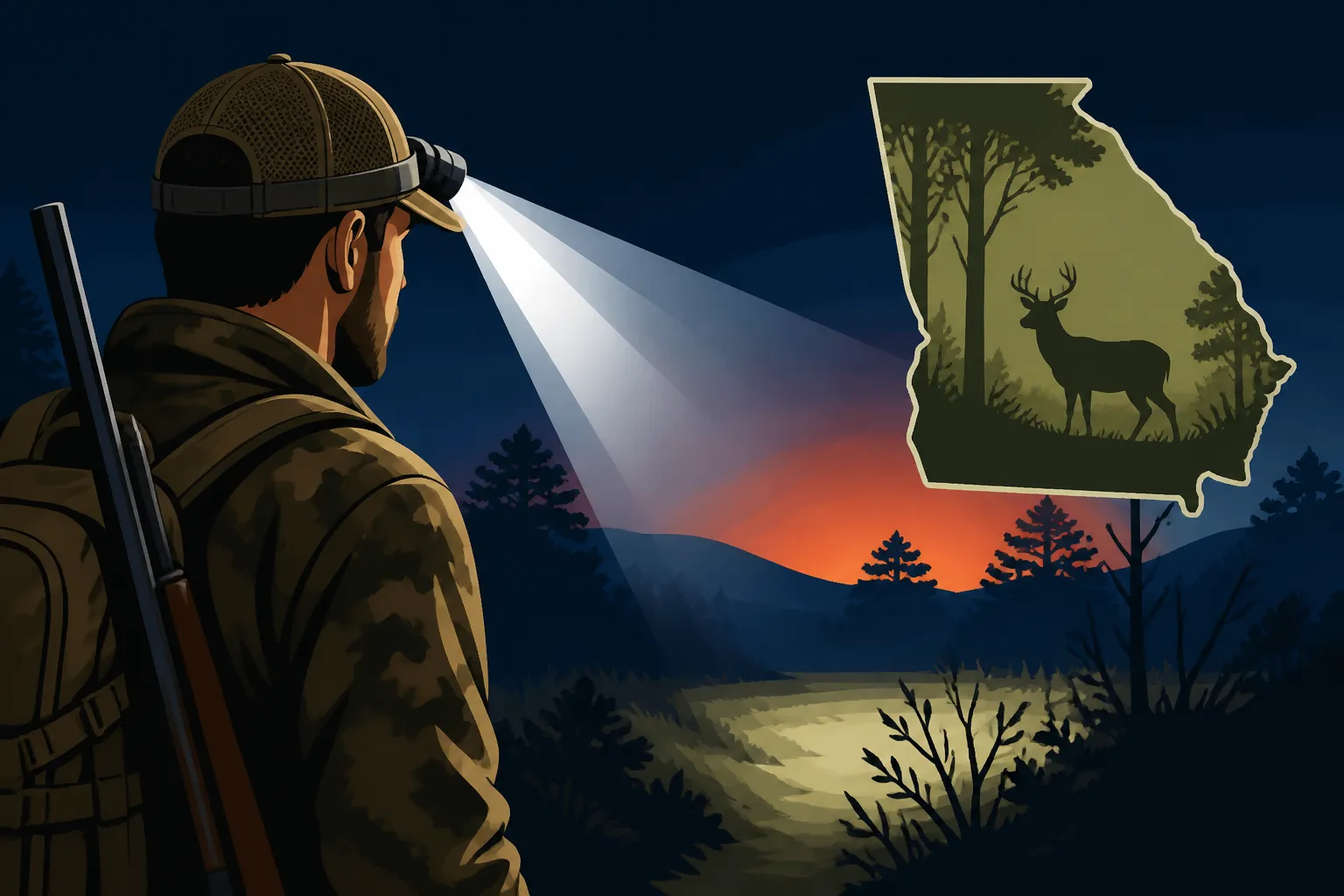
There’s a feeling many of us know all too well: that scramble as the sun dips below the horizon, painting the Georgia sky with fiery oranges and purples, and you realize you still have a solid mile or two of thick woods, creek crossings, or uneven terrain between you and the truck. Suddenly, that familiar path looks entirely different in the fading light, and the rustle of leaves becomes a little more unnerving. Getting lost or taking a tumble in the dark is a real concern for any hunter, and this guide is all about making sure you have the right tools and knowledge to navigate safely after dark, especially with a reliable headlamp leading the way.
Why a Reliable Headlamp Isn't a Luxury, It's a Lifeline in Georgia
Let's be honest, we all start our hunts hoping for a perfect scenario where we're packed up and headed out well before legal shooting light fades. But reality, especially in Georgia's diverse landscapes, rarely plays by those rules. Whether you're tracking a deer, field dressing, or simply had a longer sit than planned, darkness can fall fast. That's when a high-quality headlamp stops being just another piece of gear and becomes an absolute necessity for your safety and success.
Navigating Tricky Terrain in the Dark
Georgia's hunting grounds offer a wonderful variety of challenges. You might be deep in the Hunting Georgia Swamp and River Bottom Deer, where cypress knees and tangled roots wait to trip you up in broad daylight, let alone after sunset. Or perhaps you're in the rolling foothills and steep inclines of the Chattahoochee-Oconee National Forest Hunting, where a misstep on loose rock or a slick leaf-covered slope can lead to a nasty fall.
Without adequate illumination, navigating these environments becomes incredibly risky. You can't see that subtle depression, the fallen log hidden by shadows, or the shallow creek crossing that's suddenly deeper than you remember. A good headlamp projects light exactly where you're looking, giving you crucial seconds to react and place your feet carefully, reducing the chances of a twisted ankle, a bruised knee, or worse, a more serious injury far from help. It allows you to focus on the trail, or lack thereof, instead of fumbling with a handheld light that constantly shifts its beam away from where you need it most.
Safety First: Avoiding Hazards and Getting Home
Beyond just the terrain itself, Georgia's woods are full of other potential hazards after dark. Imagine walking through tall grass or thick brush without seeing what's directly in front of your feet. You could easily step on an unexpected visitor, like a Georgia Diamondback Rattlesnake Encounters Afield or a Georgia Cottonmouth Range in Swamp Country, both of which are far more active when temperatures drop in the evening. A headlamp provides that critical visual awareness, giving you a chance to spot and avoid these creatures before they become a problem.
Furthermore, getting disoriented in the dark is a very real danger, even on familiar land. All the landmarks you used during the day — that crooked oak, the distinctive rock pile — can vanish into a monochrome blur after nightfall. A powerful headlamp, especially when coupled with a GPS app like the one on GoHunt, can illuminate your immediate surroundings enough to confirm your bearings and keep you on track. It's not just about seeing the path; it's about seeing your path and confidently making your way back home, knowing you've minimized the risks of getting lost or injured.
Key Features to Look For in a Georgia Hunting Headlamp
When you're picking out a headlamp for hunting in Georgia, it's not just about grabbing the brightest one on the shelf. There are specific features that will make a world of difference in our unique conditions, from the humidity to the type of cover we often hunt. Thinking through these details before you buy can save you a lot of headaches in the field.
Brightness and Beam Patterns
The lumen count is often the first thing people look at, and it certainly matters. For general walking on a trail, anywhere from 200-500 lumens is usually sufficient. This gives you a clear view of your immediate path without being overkill. However, if you're planning on Tracking a Deer Through Georgia Pine Straw or doing some serious Field Dressing a Deer in Warm Weather after dark, you might want a headlamp with a higher maximum output, perhaps 800-1000 lumens or more, to really cut through the shadows and illuminate the task at hand.
Beyond sheer brightness, consider the beam pattern. Many modern headlamps offer multiple modes: a wide floodlight for peripheral vision and general navigation, and a focused spot beam for long-range visibility or detailed work. Having both options is incredibly valuable. A flood beam is great for setting up a ground blind or gathering your gear, while a spot beam is essential for spotting distant reflectors on a marked trail or shining across a field to check for movement.
Battery Life and Power Source
Few things are more frustrating than a dying headlamp when you're still a long way from the truck. Pay close attention to the advertised battery life for different brightness settings. You want enough juice to cover your potential "after-dark" activities, plus a safety margin. In Georgia's generally mild winters, battery performance is less of an issue than in colder climates, but extreme humidity can still affect some electronics.
You'll typically find headlamps that use either disposable alkaline batteries (AA or AAA) or rechargeable lithium-ion packs. Both have pros and cons. Disposable batteries are easy to swap out in the field if you carry spares, but they add to waste and cost over time. Rechargeable units are more eco-friendly and powerful, but you need a way to recharge them and often a backup power bank if you're on a multi-day trip or just forget to charge. Some models offer hybrid systems, allowing you to use either. For hunting, where reliability is paramount, always carry spare batteries or a fully charged power bank, no matter the type.
Durability and Weather Resistance
Georgia weather can be fickle. One minute it's clear, the next a sudden downpour hits. Your headlamp needs to be able to withstand the elements. Look for an IPX rating, which indicates its resistance to dust and water. An IPX4 rating is usually sufficient for rain and splashes, but an IPX7 or IPX8 rating means it can be submerged for a short period, which is a great feature if you happen to drop it in a creek or a puddle.
Beyond water, consider general durability. Are the housing and lens made of tough materials that can handle accidental bumps against tree trunks or being dropped? The straps should also be robust, comfortable, and easily adjustable, even with gloves on. A headlamp isn't much good if it falls apart the first time it takes a knock or fogs up instantly in our high humidity.
Red Light Mode
This is a non-negotiable feature for hunters. A red light mode is critical for preserving your natural night vision. When you switch on a bright white light, your pupils constrict, and it takes a long time for your eyes to readjust to the darkness once the light is off. A red light provides enough illumination for close-up tasks like consulting a map on Go Outdoors Georgia, rummaging through your pack, or quietly moving without blowing out your night vision.
It's also less likely to spook game. Deer and other animals are less sensitive to red light, making it a valuable tool for those last few moments of gathering gear if there's a chance game is still nearby. Use it when walking to and from your stand, or when doing anything where minimal disturbance is key. Only switch to white light when absolute clarity is needed for safety or specific tasks.
Comfort and Fit
You'll be wearing this thing on your head for potentially hours, sometimes with a hat or beanie underneath. Comfort is crucial. Look for a lightweight design that doesn't feel bulky or heavy. The strap should be wide enough to distribute pressure evenly and be made of a breathable, non-slip material that won't chafe or constantly need readjusting.
Many headlamps come with top straps in addition to the main band, which can help distribute weight and keep the light more stable, especially for models with larger battery packs or heavier lights. Test out the adjustability — can you easily tighten or loosen it with one hand? Does it bounce when you walk at a brisk pace? A well-fitting headlamp becomes an extension of yourself, allowing you to forget it's even there while providing reliable light.
Making the Most of Your Headlamp in the Field
Having the right headlamp is only half the battle; knowing how to use it effectively and keep it in top shape makes all the difference. In the unpredictable world of Georgia hunting, smart preparation and usage can turn a potentially dangerous situation into a smooth, safe exit.
Pre-Hunt Checks and Preparation
The worst time to discover your headlamp isn't working is when you're already in the dark, miles from your vehicle. Before every hunt where there's even a remote chance of being out after legal light, take a moment for these crucial checks:
- Battery Check: Always start with fresh or fully charged batteries. If using disposables, carry a spare set in a waterproof bag in your Packs for a Day on Public Land. For rechargeable units, ensure it's topped off and consider a small power bank if you're pushing its limits.
- Functionality Test: Turn on all modes – white light, red light, flood, spot – to ensure everything is working correctly. Check the beam quality and brightness.
- Strap Adjustment: Make sure the strap is adjusted to fit comfortably over your hat or bare head. A loose headlamp is a nuisance, and a too-tight one can cause headaches.
- Backup Light: Never rely on just one light source. A small, robust handheld flashlight or even the light on your phone (though less practical for hands-free use) can be a lifesaver if your primary headlamp fails. Think of it as your emergency signal or a tool to help you fix your headlamp.
Strategic Use for Tracking and Field Dressing
When the moment of truth arrives, and you're faced with a blood trail or a field dressing task after dark, your headlamp becomes your most valuable assistant.
- Blood Trailing: For Tracking a Deer Through Georgia Pine Straw or through denser cover, a powerful white light with a good spot beam is often best for picking up faint blood signs. The intense light can make blood "pop" against the leaf litter. However, start with a lower setting or even red light to get your eyes accustomed, then dial up the brightness as needed. Some hunters swear by specialized blood-tracking lights with specific color filters, but a good white light is usually sufficient. Remember, keep your eyes scanning for details – disturbed leaves, broken twigs – not just the blood itself.
- Field Dressing: This is where the hands-free advantage of a headlamp truly shines. Whether you're standing up or crouched down, the light follows your gaze, illuminating every cut and internal organ. This greatly enhances safety, reducing the risk of accidental cuts with a sharp knife in the dark. Again, a bright white light is preferred for this detailed, critical work. Having a clean, well-lit workspace helps immensely, especially if you're in a hurry to cool the meat, which is often the case when Field Dressing a Deer in Warm Weather.
Storage and Maintenance for Longevity
Taking care of your headlamp means it will take care of you when you need it most. Georgia's humidity and occasional downpours can be tough on electronics, so proper storage and maintenance are key.
- Keep it Dry: After a hunt, especially if it's been wet or humid, remove the batteries and let the headlamp air out completely. Store it in a dry place. If you keep it in your hunting pack, ensure the pack itself isn't prone to moisture buildup.
- Cleanliness: If your headlamp gets muddy or grimy, wipe it down with a damp cloth. Pay attention to the lens, ensuring it's clear of smudges that can reduce light output. Avoid harsh chemicals that could damage the plastic or seals.
- Battery Storage: For headlamps using disposable batteries, remove them during long periods of storage to prevent corrosion, especially if you won't be using the light for several months. For rechargeable units, follow the manufacturer's recommendations for long-term storage and charging cycles to maximize battery life. Storing them in a Packs for a Day on Public Land in a dedicated, protected pocket can prevent damage.
By being diligent with these small steps, your headlamp will be ready to perform reliably season after season, ensuring you're never caught off guard when the sun goes down.
GoHunt and Other Tools for Nighttime Navigation
Even with the best headlamp on your noggin, navigating Georgia's wild places after dark can be daunting. Thankfully, we have incredible digital tools and good old-fashioned preparedness to make sure you get back to camp safely. Thinking beyond just the light source itself can truly be a game-changer.
Integrating Headlamps with Digital Mapping
Modern hunting has been revolutionized by mapping applications, and they become even more critical when daylight fades. Applications like those available through GoHunt are fantastic resources. Before you even head out, you can mark your stand location, potential game trails, and your vehicle's parking spot as waypoints.
When darkness sets in, your headlamp illuminates your path, while your phone, tucked away or mounted, can show you exactly where you are on the map. The combination is powerful: you're walking safely, scanning the ground with your headlamp, but also periodically checking your digital map to confirm your direction and ensure you're on track. If you find yourself disoriented, a quick glance at the GoHunt map, illuminated by your red light setting to save your night vision, can get you back on course. It's especially useful when trying to retrace your steps through featureless terrain or areas with dense canopy that blocks natural light. Always download offline maps before you go, because cell service can be spotty in many of Georgia's remote hunting areas, and you don't want your navigation tool to suddenly become useless.
Communication and Emergency Preparedness
While a headlamp is about your immediate safety, communication and broader emergency preparedness are about ensuring someone else knows where you are and can help if things go truly awry.
Tell Someone Your Plan: Before you leave the house, always tell a trusted person your hunting location, your intended return time, and what to do if they don't hear from you. This simple step is perhaps the most important safety measure you can take, especially if you're heading into areas far from civilization.
Carry a Charged Phone: Even if you don't have service, your phone's GPS can still function, and you can make emergency calls in some areas with weak signals. Keep it in a waterproof case and ensure it's fully charged. A small portable charger or power bank is a great addition to your Packs for a Day on Public Land.
Signaling Devices: A whistle can carry much further than your voice, especially through thick timber. Some headlamps even have an integrated flashing beacon mode that can serve as a signaling device if you're truly lost or injured and need to attract attention. Consider carrying a small First Aid Kits for Remote Swamp Ground too, as a fall in the dark could easily lead to minor injuries.
Stay Calm: If you do find yourself lost or in trouble after dark, the most important thing is to stay calm. Use your headlamp to illuminate your surroundings, check your GPS, and try to retrace your steps. If you're truly disoriented, it's often better to stay put and signal for help rather than wander aimlessly deeper into unknown territory. The combination of your headlamp providing light and your navigation tools showing your position makes these difficult situations far more manageable.
Headlamp Feature Comparison
To help you decide, here's a quick look at common headlamp features and what they mean for your Georgia hunting experience:
| Feature | Description | Ideal for Georgia Hunting |
|---|---|---|
| Lumens (Brightness) | The total light output; higher numbers mean brighter light. | 200-500 lumens for walking, 800+ for blood trailing/field dressing. |
| Beam Patterns | Options like flood (wide) or spot (focused). | Both are ideal. Flood for general navigation, spot for specific tasks or scanning distant areas. |
| Red Light Mode | Low-intensity red light; preserves night vision. | Essential for quiet movements, checking maps (e.g., GoHunt), and not spooking game. |
| Battery Type | Disposable (AA/AAA) vs. Rechargeable (Li-ion). | Consider hybrid models. Always carry spares or a power bank. |
| Battery Life | How long the light lasts on various settings. | Look for 6+ hours on medium/high, much longer on low/red. |
| IPX Rating | Water and dust resistance (e.g., IPX4 for splash, IPX7 for submersion). | IPX4 minimum for rain, IPX7/IPX8 preferred for swamps or heavy downpours. |
| Durability | Construction materials and resistance to impact. | Rugged housing, shatter-resistant lens; must withstand bumps and drops in the woods. |
| Weight & Comfort | How heavy it feels and how well it fits on your head. | Lightweight, comfortable, and adjustable strap that stays put during movement. |
Remember, the best headlamp is the one you have with you, that's charged, and that you know how to use. Invest wisely, prepare thoroughly, and you'll always find your way back, no matter how dark Georgia's woods become.
Disclaimer
This article is for general informational purposes only and does not constitute professional advice. Laws, prices and regulations vary by location and change over time. Consult a qualified professional for guidance on your specific situation.