Treestands and Saddles on Georgia Public Land
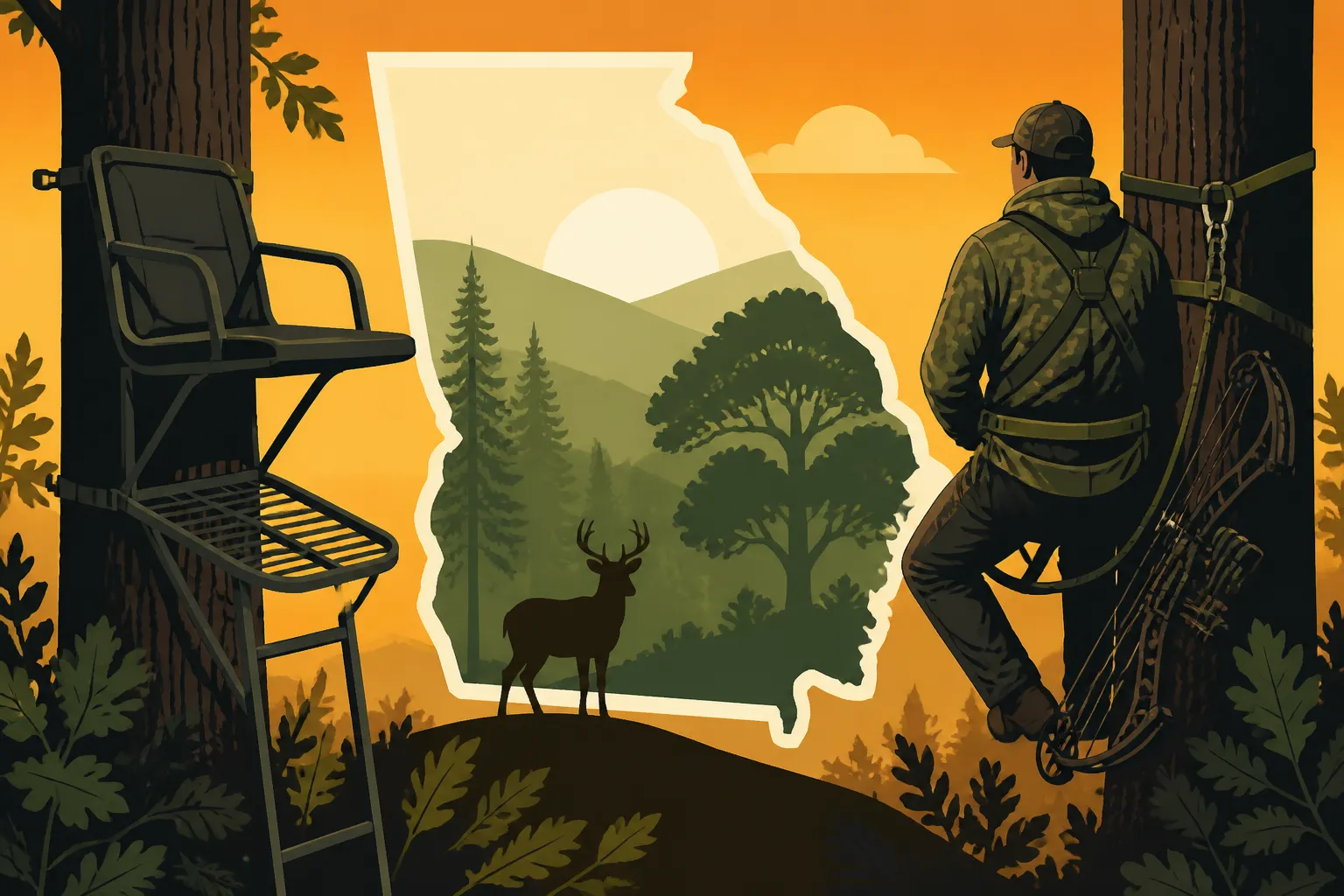
Stepping onto Georgia's public lands with hunting aspirations often means facing a unique set of challenges. From the dense pine thickets of the Coastal Plain to the rugged slopes of the North Georgia mountains, finding a vantage point that offers both concealment and a clean shot, without breaking regulations or your back, can feel like a daunting puzzle. This guide will walk you through the ins and outs of choosing, setting up, and safely using treestands and saddle systems specifically for the diverse public hunting grounds Georgia offers, helping you maximize your time in the field.
Navigating Georgia's Public Land: Unique Considerations for Elevated Hunting
Public land in Georgia, whether it's a Wildlife Management Area (WMA) or a section of the Chattahoochee-Oconee National Forest, presents a different landscape than private acreage. You're not just dealing with the natural environment; you're also contending with regulations, hunting pressure, and the need for ultimate mobility. Understanding these factors is the first step to choosing the right elevated setup.
Understanding WMA and National Forest Regulations
Before you even think about hanging a stand, you absolutely must know the rules for the specific piece of public land you intend to hunt. Georgia's Department of Natural Resources (DNR) publishes regulations that vary between WMAs and National Forest lands, and even within different zones. For example, some WMAs might allow temporary hang-on stands but explicitly prohibit leaving them overnight or for extended periods. Others might permit stands for the entire season but require them to be marked with your name and address or DNR customer ID. The national forests generally have stricter rules about leaving any "permanent" structures. Always, and I mean always, check the specific WMA or National Forest regulations before you head out. A quick check on the Go Outdoors Georgia website or the official WMA guide can save you a lot of grief, and potentially a fine.
Ignoring these rules isn't just a minor infraction; it can lead to serious penalties and even impact your hunting privileges. Imagine hiking miles into a prime spot, only to find you've violated a regulation by using the wrong type of stand or leaving it unattended for too long. It’s a frustrating scenario that's entirely avoidable with a little homework. These rules are in place for a reason – to manage resources, ensure fair chase, and prevent habitat damage. So, be a responsible hunter and know before you go.
The Importance of Mobility and Stealth
When you're on public land, especially heavily pressured WMAs, deer and other game are often on high alert. They’ve seen trucks, heard ATVs, and smelled human scent. Your ability to move quietly, efficiently, and with minimal disturbance is paramount. This is where your choice of elevated hunting gear becomes critical. A setup that’s cumbersome, noisy to transport, or takes an hour to assemble on the fly can ruin your hunt before it even begins.
Mobility isn't just about how fast you can get in and out; it's also about adaptability. What if your perfect treestand location, scouted weeks ago, is now covered in sign that indicates the deer have shifted their patterns due to a late acorn drop or recent logging activity? Or what if someone else beat you to your favorite spot? Being able to quickly pack up your gear and move to a new location, whether it's a hundred yards away or a mile, gives you a significant advantage. This flexibility also applies to responding to changing wind conditions or shifting thermals throughout the day, which are particularly important in Georgia's diverse terrain, from creek bottoms to mountain ridges. Wind and Thermals on a Mountain Ridge is a crucial read for understanding this aspect.
Deciphering Treestands for Georgia Public Land
Treestands have been a staple for elevated hunting for generations, and for good reason. They get you off the ground, out of the deer's primary line of sight and often above their scent cone. But not all treestands are created equal, especially when you factor in the unique demands of public land hunting in Georgia.
Climbing Stands: Pros, Cons, and Best Uses
Climbing stands are the quintessential mobile treestand, designed to be carried in on your back and set up quickly on a suitable tree. They consist of two main sections: a seat section and a platform section, which "walk" up the tree trunk by alternating weight distribution. For a lot of Georgia's public land, especially in areas with mature, straight-trunked pines or hardwoods, a good climbing stand can be an absolute game-changer. They allow you to get into a spot fast and quietly, and just as importantly, get out without leaving any trace.
The biggest advantage of a climbing stand is its self-sufficiency and mobility. You don't need additional sticks or ladders, just the stand itself. This is fantastic for deep woods hunts on National Forest land where you want to cover ground and find fresh sign. They're also relatively quick to set up with practice, making them ideal for morning or evening hunts where every minute of legal shooting light counts. However, they are limited to trees with straight trunks and no lower branches. In Georgia, this often means specific types of pines or older hardwoods. If you find yourself in a gnarly oak flat with low limbs or multi-trunked sweet gums, a climbing stand is useless. Plus, they can be a bit bulkier and heavier than other mobile options, and getting them quietly strapped to your back for a long hike can take some practice. Many hunters find that a good climbing stand like those offered by Summit or Lone Wolf are a worthy investment for their flexibility.
Hang-On Stands: Versatility and Permanent Setup Considerations
Hang-on stands, also known as fixed-position stands, offer incredible versatility when it comes to tree selection. Unlike climbers, they can be hung in almost any tree that's strong enough to support your weight, regardless of its straightness or lower limb structure. This opens up a lot more habitat options, from twisted oak stands to dense swamp edges. To get up to a hang-on, you'll need a separate system of climbing aids, typically climbing sticks or screw-in steps (if allowed and if you own the land – often not allowed on public land due to tree damage).
On public land, the key word with hang-on stands is "temporary." While on private land, you might leave a hang-on stand up for an entire season or even years, public land regulations almost universally prohibit this, or at the very least, require them to be clearly marked and removed after a certain period, or entirely at the end of the season. Theft is also a very real concern when leaving any gear unattended on public ground. This means if you use a hang-on, you're likely packing in the stand and your climbing sticks every single hunt. This can be more cumbersome than a climbing stand, but the advantage of being able to choose almost any tree often outweighs the extra effort for many hunters. For maximizing your choices in the woods, especially when Hanging a Stand on a Mountain Saddle or setting up along Scrape Lines Along a Logging Road, a hang-on provides superior adaptability.
Ladder Stands: Comfort vs. Portability
Ladder stands are the most comfortable and stable of the traditional treestand options. They consist of a seat, a platform, and a ladder section that extends down to the ground. Once set up, they feel incredibly secure, offering plenty of room to stretch out and move around, which can be a huge benefit for long sits, especially during Georgia's often warm hunting seasons. The wider platform and supportive backrests can make a significant difference in comfort, which in turn can lead to more focused hunting.
However, ladder stands are generally a poor choice for public land hunting in Georgia due to their lack of portability and the common regulations against leaving permanent structures. They are bulky, heavy, and require multiple people to set up safely and quietly. Carrying a ladder stand deep into a WMA is simply not practical, and leaving one out is almost always a violation and an invitation for theft. While they might be perfect for a pre-set spot on private land, for the typical public land hunter, the trade-off in mobility and adherence to regulations makes them a non-starter. This type of stand is really reserved for private property where long-term, comfortable setups are the priority.
Embracing the Saddle Hunting Revolution
Saddle hunting has exploded in popularity in recent years, and for good reason. It offers a unique blend of mobility, concealment, and safety that traditional treestands often struggle to match, making it an increasingly attractive option for public land hunters in Georgia.
Why Saddles Shine on Public Ground
The primary advantage of saddle hunting on public land is its incredible mobility and light weight. A typical saddle setup, including the saddle itself, climbing sticks, and a small platform, weighs significantly less than most climbing or hang-on treestand setups. This makes long hikes deep into a WMA or National Forest much more manageable. You can cover more ground, scout more effectively, and relocate quickly if conditions or deer movement dictate a change. The compact nature of the gear also means less bulk to get caught on brush or make noise as you move through thick Georgia cover.
Beyond weight, saddle hunting offers superior concealment. Instead of being perched rigidly on a platform, a saddle allows you to rotate 360 degrees around the tree, using the trunk itself as a form of natural cover. This means deer have a harder time silhouetting you against the sky or seeing you shift position. You can lean into the tree, hide behind it, and subtly adjust your shooting lane without making large, eye-catching movements. This dynamic concealment is particularly effective on pressured public land, where wary deer are constantly looking for threats. For a hunter trying to Find Ground Others Walk Past or operate effectively in high-pressure scenarios, a saddle provides a distinct edge.
Essential Saddle Components and Setup
A complete saddle hunting system typically involves a few key components:
- The Saddle: This is essentially a padded harness that you wear, designed to suspend you comfortably against the tree. Brands like Tethrd, Trophyline, and Novix are popular choices, each offering slightly different designs and features. The most crucial aspect is finding one that fits your body comfortably for long sits.
- Lineman's Belt: This is a short, adjustable strap that wraps around the tree and clips to your saddle, allowing you to remain securely attached to the tree with both hands free while you climb and set your climbing sticks. It's an indispensable safety tool.
- Tree Tether: Once you're at your desired hunting height, the tree tether is what you attach to the tree above you and then clip into your saddle. This is your primary connection for hunting, providing the suspension point.
- Climbing Sticks: These are modular, lightweight sections that you attach to the tree to create steps for ascending and descending. They are far more versatile than a climbing stand's inherent limitations and work on a wider variety of trees.
- Platform or Ring of Steps: Once at height, you'll need something for your feet. A small, lightweight platform or a series of individual "steps" that you arrange around the tree provides a stable base to stand and rotate from.
Setting up a saddle involves a specific sequence. First, you attach your lineman's belt and begin ascending with your climbing sticks, often using an "aider" strap for extra reach. Once you reach your desired height, you deploy your platform or steps, then attach your tree tether and transfer your weight to it. Practice, practice, practice is the key to a quiet, efficient setup, especially in the dark before dawn. The ability to work efficiently and quietly through this process can make or break your hunt, particularly on a morning where Calling a Georgia Gobbler Off the Roost requires maximum stealth.
Mastering the Learning Curve
While saddle hunting offers numerous benefits, it's not without a learning curve. The biggest adjustment for most new saddle hunters is getting comfortable with the unique feeling of being suspended against the tree rather than sitting on a solid seat. It takes some getting used to, both physically and mentally. Your muscles will be working in different ways, and finding truly comfortable positions for long sits requires experimentation with saddle adjustments and platform placement.
Quietness is another critical skill to master. Every piece of gear, from your climbing sticks to your platform, can make noise if not handled correctly. Practice setting up in your backyard or a local woodlot until you can do it silently. This includes silent ascent, silent gear deployment, and silent movements while hunting. Saddle Hunting in Georgia Hardwoods delves deeper into these techniques. Furthermore, shot angles from a saddle are different. You're often shooting around the tree, so practicing shots from various angles and with the tree as an obstacle is essential before hitting the woods for hunting season. Don't go straight to hunting with a saddle without spending ample time becoming proficient and confident with your setup.
Key Considerations for Public Land Setup
Whether you choose a traditional treestand or embrace saddle hunting, there are universal principles that apply to elevated hunting on Georgia's public lands. Ignoring these can lead to frustration, missed opportunities, or worse, an accident.
Safety First: Harnesses, Lifelines, and Practice
I cannot stress this enough: safety is paramount. Every year, hunters are injured, sometimes fatally, in falls from elevated stands. If you're going to hunt from a height, you must use a full-body harness and be attached to the tree from the moment your feet leave the ground until they return to it. This means using a lineman's belt while climbing and a tree tether or lifeline once you're in the stand. No exceptions, no excuses. Treestand Safety Gear for Wet Ground is an excellent resource for understanding the specific components and their importance.
Beyond the gear, practice is your biggest safety tool. Set up your stand or saddle in your backyard and climb into it repeatedly. Get used to clipping in and out, deploying your platform, and moving around. Do this in daylight, then in low light, mimicking hunting conditions. The more comfortable and automatic these movements become, the safer you will be. Ensure all your straps are secure, your buckles are functioning, and your climbing sticks are stable. Check your ropes and straps for wear and tear before every season. A little preventative maintenance and diligent practice can prevent a lifetime of regret.
Wind, Thermals, and Entry/Exit Strategies
In Georgia, especially during our often-mild fall and winter, understanding how wind and thermals affect your scent is critical. Deer rely heavily on their noses, and a gust of wind carrying your scent into their bedding area or travel corridor can bust your hunt before you even see a tail. Your stand or saddle placement should always prioritize keeping your scent away from where you expect deer to approach or be traveling. This often means facing into the prevailing wind or understanding how thermals will carry your scent downhill in the morning and uphill in the evening.
Your entry and exit routes are just as important as your stand placement. You need to be able to get to and from your spot without alerting deer. This means using terrain features for cover, walking slowly and quietly, and avoiding known bedding areas or feeding zones. Often, the best entry route is along a creek bottom or a ridge line that naturally conceals your approach. Use apps like GoHunt or onX to scout these routes digitally, paying attention to topography and potential pinch points. If you have to walk across an open field, do it well before daylight or after dark. Minimizing your presence is key to hunting wary public land deer effectively. A thorough understanding of Wind and Thermals on a Mountain Ridge will serve you well.
Minimizing Your Footprint and Protecting Your Gear
Public land hunting comes with a responsibility to leave no trace. This means packing out everything you pack in, including any trash, spent shell casings, or even marking tape. If you use screw-in steps (where permitted on private land), remove them completely. For treestands or saddles, this also means ensuring your setup doesn't damage the tree. Tree-friendly straps are a must, and avoid anything that girdles or significantly cuts into the bark. The goal is for the next hunter, or even just a hiker, to not even know you were there.
Protecting your gear on public land is also a practical consideration. While I hope every hunter is respectful of others' property, theft can be an issue if you leave gear unattended, even for a short time. If regulations allow you to leave a hang-on stand for a few days, consider using heavy-duty chains and locks to secure it to the tree. Mark your stand with your DNR customer ID as required by some WMAs. Better yet, if you can, pack your stands in and out every time. This not only prevents theft but also allows you the maximum flexibility to move if your chosen spot isn't producing. For deeper insights into leaving no trace, you might look at Trail Camera Rules on Georgia Public Land as it often covers similar ethical considerations for minimizing impact.
Choosing Between a Treestand and a Saddle
The decision between a treestand and a saddle often comes down to personal preference, hunting style, and the specific conditions you'll face on Georgia's public lands. There's no single "best" option; rather, it's about finding what works best for you and your hunt.
Situational Awareness: When Each Shines
Treestands generally shine in situations where you anticipate longer, more stationary sits from a fixed position, or where you prefer the familiarity and comfort of a traditional seat.
- Climbing stands are fantastic for quick, mobile hunts in areas with abundant, suitable trees like mature pine plantations or hardwood bottoms with straight trunks. They are often faster to set up than a hang-on with sticks, assuming you find the right tree.
- Hang-on stands are more versatile for tree selection. If you're hunting gnarly oaks, multi-limbed cypress, or areas with fewer perfectly straight trees, a hang-on with climbing sticks will give you more options. They allow you to set up in very specific spots that a climber simply can't access, such as Hunting a Funnel Between Two Swamps where ideal trees might be scarce. However, packing in both a stand and sticks means more bulk and potential noise.
Saddles, on the other hand, truly excel when extreme mobility, stealth, and adaptability are paramount.
- They are ideal for run-and-gun tactics or when you need to cover significant ground scouting and then quickly set up. Think about chasing spring gobblers where you need to Run-and-Gun Turkey Tactics on Public Land or still-hunting whitetails in dense pine flats.
- Saddles also offer superior concealment and shot angles, making them excellent for pressured public land deer that are constantly looking for threats. The ability to rotate around the tree and use the trunk as cover can be a significant advantage. If you anticipate close encounters and need to be able to adjust your shot quickly without being seen, a saddle is hard to beat.
Ultimately, the terrain and habitat you’re hunting on public land will often dictate which system might be more efficient. Dense, uniform timber might favor a climber, while broken, varied cover might be better suited for a hang-on or saddle.
Comfort, Weight, and Packability
These are critical factors, especially when you're hoofing it deep into Georgia's public hunting grounds.
| Feature | Climbing Stand | Hang-On Stand + Sticks | Saddle System + Sticks/Platform |
|---|---|---|---|
| Comfort | Good, often padded seats, open platform. | Varies by model, generally good, but smaller platform. | Varies, can take getting used to, suspended against tree. |
| Weight | Moderate to heavy (15-25 lbs+) | Moderate (10-15 lbs stand + 5-10 lbs sticks) | Light (3-7 lbs saddle + 5-10 lbs sticks/platform) |
| Packability | Can be bulky, often straps directly to backpack. | Stand and sticks pack separately, can be noisy. | Very compact, all components pack tightly. |
| Tree Versatility | Limited to straight, limb-free trunks. | High, works on most trees with enough trunk strength. | High, works on most trees with enough trunk strength. |
| Setup Speed | Fast with practice, on suitable trees. | Slower, requires multiple stick placements. | Moderate to fast with practice, depending on components. |
If you prioritize comfort for extended sits, a larger climbing stand or hang-on might feel more stable and relaxing. However, if you're covering miles and need to be as light and agile as possible, the weight and packability of a saddle system are undeniable advantages. For many, the choice is a trade-off: comfort in the tree versus comfort on the walk in. Consider how far you typically walk, the type of terrain, and how long you intend to stay in the tree. If you're Hunting into the Extended Southwest Season in January, a comfortable setup for cold weather is a big plus.
Cost and Investment
The initial investment for treestands and saddle systems can vary significantly. Generally, a quality climbing stand or hang-on stand can range considerably in price, with lightweight and feature-rich models at the higher end. Climbing sticks are an additional cost for hang-ons and saddles, and their prices also vary by material and design.
Saddle systems, when you factor in the saddle, sticks, platform, and other accessories, can sometimes have a comparable or even higher initial cost than a basic treestand. However, remember you're investing in a system that offers extreme versatility and mobility. It's not about the cheapest option, but about the best value for your hunting style and safety. Always prioritize quality and safety features, regardless of the system you choose. Look for reputable brands and read reviews from other hunters. Consider it an investment in your safety, comfort, and success in the field.
Ultimately, the best way to choose is to try them out if possible. Visit a local hunting shop that allows you to safely test different setups, or talk to friends who use one system or another. Your body, your hunting style, and the specific public lands you frequent will guide your decision.
Disclaimer
This article is for general informational purposes only and does not constitute professional advice. Laws, prices and regulations vary by location and change over time. Consult a qualified professional for guidance on your specific situation.