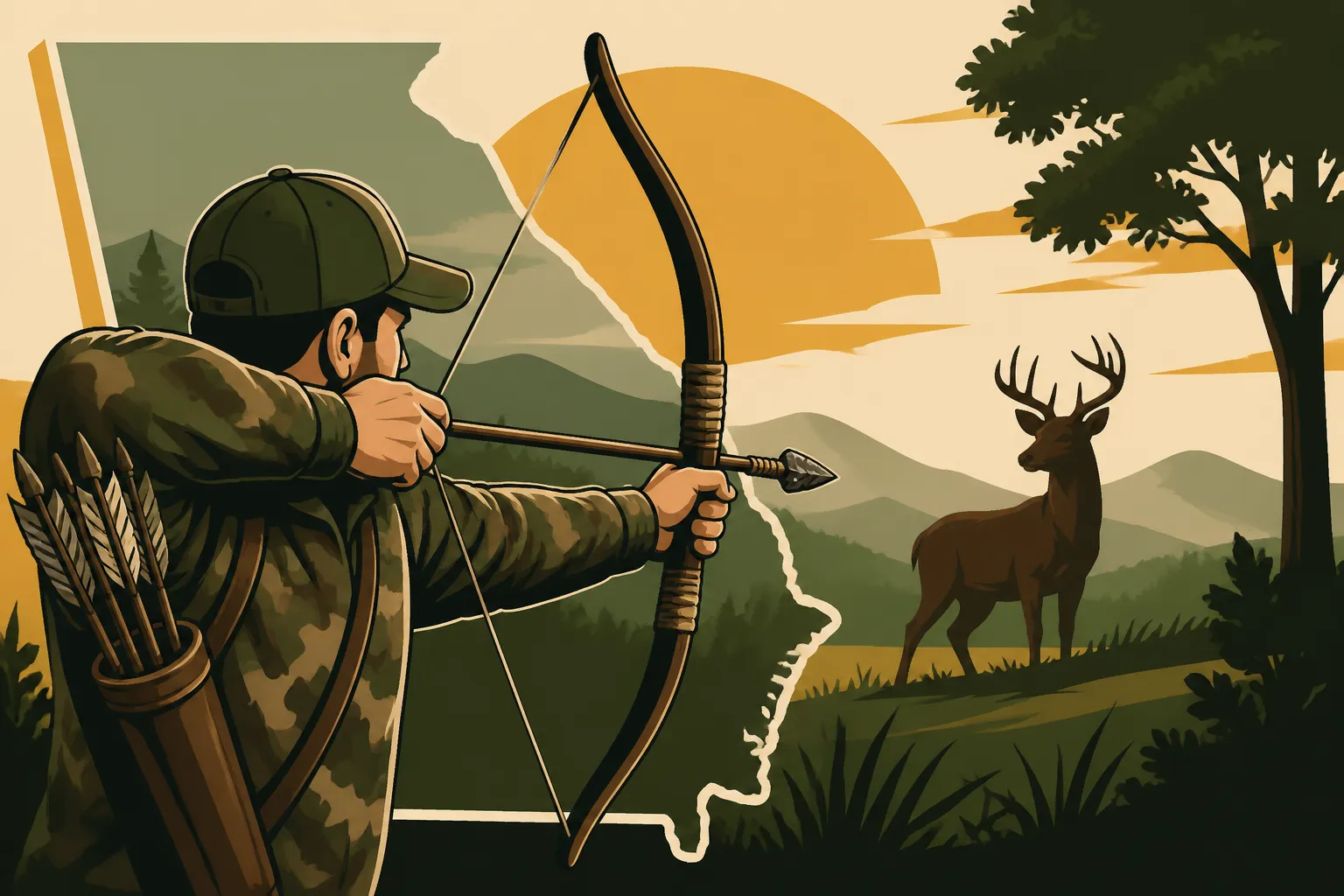
Hunting the Primitive Weapons Week in Georgia
That unique week for primitive weapons in Georgia often feels like a blur, sandwiched between the long archery season and the much-anticipated firearms opener. Many hunters, myself included, have stood in the woods during this period, unsure if they should stick to bowhunting tactics or treat their muzzleloader like a modern rifle. It’s a distinct challenge, but with the right understanding and preparation, this week can be incredibly rewarding. This guide will walk you through everything you need to know to make the most of Georgia's primitive weapons week, from understanding the rules to mastering the strategies that put deer in front of you.
Understanding Georgia's Primitive Weapons Season
The primitive weapons week in Georgia is a special window in the deer hunting calendar, designed to bridge the gap between archery-only opportunities and the full-blown firearms season. It presents a unique blend of challenge and opportunity, allowing hunters to utilize specific equipment that requires a different approach than typical rifle hunting. Knowing the exact definition of a "primitive weapon" and understanding the season's timing are your first steps to success.
What Constitutes a Primitive Weapon in Georgia
When Georgia's Department of Natural Resources (DNR) talks about "primitive weapons," they’re not just throwing around fancy terms. They're referring to specific types of hunting equipment that adhere to a certain set of criteria. For deer hunting during this designated week, this primarily means muzzleloading firearms, but it also encompasses archery equipment, including vertical bows and crossbows.
Let's break down muzzleloaders first, as they're often the star of this particular season. A legal muzzleloader in Georgia can be any firearm that loads from the muzzle, whether it uses black powder or a modern black powder substitute like Pyrodex or Triple Seven. You'll find traditional side-lock rifles, often replicating historical designs, and more contemporary in-line muzzleloaders. The key distinction during primitive weapons season, especially for public lands and statewide regulations, often revolves around optics. For a muzzleloader to be considered "primitive" for this specific week, it generally cannot be equipped with a variable power scope. Fixed magnification scopes (like a 1x or 2.5x) or traditional iron sights and fiber optic sights are typically permitted. This limitation is a deliberate choice to enhance the "primitive" challenge, requiring hunters to get closer to their quarry and make more precise, often shorter-range shots.
Beyond muzzleloaders, all legal archery equipment is also fair game during primitive weapons week. This means if you're comfortable with your compound bow, recurve, or longbow, you can absolutely continue to use it. The same goes for crossbows, which have gained significant popularity and are fully legal during all archery and primitive weapons seasons in Georgia. For a deeper dive into choosing your archery equipment, you might find our guide on Crossbow Versus Vertical Bow in Georgia particularly helpful. The flexibility to use either a muzzleloader or archery gear means you can tailor your hunt to your preferred style, the specific terrain, or even the weather conditions.
Key Dates and Season Structure
The primitive weapons week in Georgia is intentionally a short, specific window, usually falling in late October. This timing is critical because it often coincides with what many hunters refer to as the "pre-rut" or the very early stages of the breeding season for white-tailed deer. This period can be incredibly exciting, as bucks begin to seriously ramp up their activity, seeking out does and establishing their dominance through rubs and scrapes. It’s a transitional time, coming after the heat of early archery season and just before the intense pressure of the general firearms opener.
The brevity of this season – typically just seven days – means that planning is paramount. You don't have weeks to figure things out; you need to hit the ground running. Because it’s often still warm in late October in Georgia, especially in the southern parts of the state, deer activity might not be strictly limited to dawn and dusk, but rather spread throughout the day as bucks begin cruising for does. This can create unique opportunities for hunters who are patient and adaptable. Understanding the nuances of deer behavior during this timeframe is crucial, and you can get more insights into this specific period by checking out our piece on Hunting the Rut in Mid-October.
While the primitive weapons season offers a unique focus, it’s worth noting that statewide archery season is typically still open concurrently. This overlap gives archers a continuous period of hunting access, and it allows hunters who might carry both a bow and a muzzleloader to switch between the two if conditions or personal preference dictate. Always double-check the current year's Georgia DNR Hunting Regulations for the exact dates, as they can shift slightly from year to year. Knowing these precise dates and understanding the biological rhythm of the deer herd during this transitional week will significantly improve your chances of success.
Gear Up for the Primitive Challenge
Hunting with primitive weapons in Georgia is a special experience that requires not just skill, but also the right equipment. Unlike modern firearms, muzzleloaders come with their own unique set of components and maintenance needs. Even if you're sticking to archery gear, there are specific considerations for this particular time of year. Beyond your primary weapon, a host of general hunting accessories will enhance your comfort, safety, and effectiveness in the field.
Muzzleloader Essentials and Setup
Stepping into the woods with a muzzleloader is like taking a mini-trip back in time, but with modern conveniences. The most common types you’ll encounter are traditional side-lock muzzleloaders, which load from a separate pan, and the more popular in-line muzzleloaders, where the primer is aligned directly behind the powder charge for more reliable ignition. Both offer a satisfying challenge, but their maintenance and loading procedures differ.
When it comes to propellants, you've got choices. You can go truly traditional with black powder, which creates a significant cloud of smoke and requires meticulous cleaning. Or, like most modern hunters, you can opt for black powder substitutes such as Pyrodex or Triple Seven. These come in granular form or convenient pre-measured pellets, making loading quicker and often cleaner. For ignition, percussion caps are common for side-locks, while in-lines typically use 209 primers, similar to shotgun primers, offering very reliable ignition even in damp Georgia weather. The projectile itself is another critical decision. Options range from traditional round balls, which are accurate at short ranges, to more modern sabots (a plastic sleeve holding a smaller bullet, like a .45 cal pistol bullet in a .50 cal barrel), PowerBelt bullets, or large conical bullets. Each has its own ballistic characteristics and accuracy sweet spot, so experimentation on the range is key.
Sighting systems for primitive weapons season are constrained by the rules, which often prohibit variable power scopes. This means many hunters opt for bright, fiber optic sights that gather ambient light, or a fixed power scope, typically 1x or 2.5x. Red dot sights are also popular for their quick target acquisition and ease of use, especially in the thick cover often found in Georgia. Regardless of your choice, spend ample time at the shooting range. Muzzleloaders are notorious for their demanding cleaning regimen – black powder is corrosive – so a dedicated cleaning kit with a bore brush, patches, and solvent is not just an accessory, it's a necessity. Being intimately familiar with your muzzleloader's loading sequence, recoil, and trajectory, combined with diligent cleaning, will make all the difference when that moment of truth arrives. For more detailed information, our article on Muzzleloaders Under Georgia Primitive Weapons Rules can provide specific insights into Georgia's unique regulations.
Archery and Crossbow Considerations
If you're an archer, primitive weapons week simply extends your bowhunting opportunities. The same principles apply, but with the added potential for slightly cooler weather or rut-driven buck movement. Your broadhead choice remains paramount. Fixed-blade broadheads are known for their ruggedness and deep penetration, while mechanical broadheads often fly with field-point accuracy and offer large cutting diameters upon impact. Whichever you choose, ensure they are razor-sharp and that your arrows or bolts are consistently tuned to fly true.
Arrow or bolt weight, along with fletching type, plays a significant role in accuracy and kinetic energy delivery, especially for the potentially closer shots typical in Georgia's dense woods. Some hunters also prefer lighted nocks for easier tracking of shot placement and arrow recovery, a practical consideration when hunting in the low light of dawn or dusk. Don't forget the small but essential accessories: a reliable quiver to hold your arrows silently, a smooth release aid if you shoot a compound, and always keep your string waxed to prevent wear and tear.
The absolute most important piece of advice for any archer, regardless of whether you're using a vertical bow or a crossbow, is consistent practice. Simulate hunting scenarios: shoot from an elevated position if you hunt from a tree stand, practice drawing and shooting quickly, and always know your ethical shooting distance. The primitive weapons season can offer some excellent opportunities for bowhunters, often with less competition than the general firearms season. For a comprehensive look at setting up your archery equipment for the woods, check out our guide on Bow and Crossbow Setups for Georgia.
General Hunting Accessories for the Week
Beyond your weapon, a well-thought-out kit of general hunting accessories will significantly improve your comfort, safety, and success during primitive weapons week. October in Georgia can be unpredictable, sometimes starting with chilly mornings and warming up significantly by midday, especially if the sun is out. Layering your clothing is key. Start with a moisture-wicking base layer, add an insulating mid-layer, and finish with a quiet, breathable outer layer. While blaze orange isn't always mandated during primitive weapons season, especially for bowhunters, it's always wise to check current DNR regulations, particularly if hunting on certain Wildlife Management Areas (WMAs). Safety first, always. Our article on Warm-Weather Clothing for Georgia Hunters offers excellent advice for managing temperature fluctuations.
Optics are indispensable. A good pair of binoculars, perhaps 8x or 10x magnification, will help you pick apart distant cover, identify deer, and ensure you’re making an ethical shot. A rangefinder is also crucial for muzzleloader and archery hunters to confidently determine distances, especially given the shorter effective range of these weapons. Just remember, if your muzzleloader scope is fixed-power, ensure your rangefinder isn't providing a magnified view in conflict with primitive weapon rules.
For navigation, don't rely solely on your memory. A reliable GPS unit or a mapping app like GoHunt or onX Hunt on your phone is a game-changer. These tools help you stay oriented on public lands, mark important sign, and navigate safely in and out of your hunting spot, even in the dark. For added edge during the rut, consider bringing scents, calls (grunt tubes, doe bleat cans), and even rattling antlers. Bucks are often on the move during this period, and these tools can sometimes be the missing piece to drawing in a curious or dominant animal.
| Equipment Type | Primary Use | Key Considerations | Average Effective Range (Yards) | Typical Optics Rules (Primitive) |
|---|---|---|---|---|
| Muzzleloader | Deer hunting, medium range | Black powder/substitute, 209 primer, projectile choice | 50-150 | Fixed power scope, red dot, iron sights |
| Vertical Bow | Deer hunting, short range | Broadhead type, arrow tune, consistent practice | 20-50 | None (pin sights, magnifiers for pins) |
| Crossbow | Deer hunting, short-medium range | Bolt type, broadhead, consistent cocking | 30-70 | Fixed power scope, red dot |
| Binoculars | Scouting, animal identification | 8x or 10x magnification, low-light performance | N/A | N/A |
| Rangefinder | Distance measurement | Accurate to +/- 1 yard, quick readout | 5-1000+ | Non-magnifying generally preferred |
| GPS/Mapping App | Navigation, tracking, scouting | Offline map capability, battery life, property lines | N/A | N/A |
Strategic Approaches for Primitive Weapons Week
Primitive weapons week often lands in a sweet spot of the Georgia deer season, capitalizing on increased buck activity that precedes the main firearms rush. This means your strategies should lean heavily into understanding deer behavior during the pre-rut, effectively navigating public lands, and mastering both stand placement and still-hunting techniques. Adapting your approach to these specific conditions will significantly increase your odds of success.
Adapting to the Mid-October Rutting Phase
The timing of primitive weapons week is one of its greatest advantages. It generally aligns perfectly with the pre-rut or the very beginning of the breeding season in many parts of Georgia. This means bucks are shifting from their summer patterns of feeding and growing antlers to actively seeking out does. This period is characterized by a surge in buck sign. You'll often find fresh rubs on trees, where bucks scrape their antlers to leave scent and mark territory, and newly opened scrapes, where they urinate and deposit scent on the ground to advertise their presence to does. Identifying these key indicators can help you pinpoint prime hunting areas.
During this mid-October window, bucks are often on the move, covering more ground in search of receptive does. They might travel through areas they wouldn't normally frequent earlier in the season. This makes calling tactics particularly effective. Grunt tubes, which mimic a buck's vocalizations, can attract curious or territorial bucks. Doe bleats, especially estrous bleats, can signal the presence of a receptive female, potentially drawing in a cruising buck. Even light rattling, simulating two bucks sparring, can pique the interest of a dominant deer eager to assert itself. Tools like GoHunt often provide real-time rut reports and insights, helping you gauge the peak activity in your specific hunting zone.
While deer are increasingly mobile, food sources remain important. As summer forage begins to dwindle, deer will transition to hard mast, with acorns being a primary attractant. Focus on areas with healthy oak stands, especially white oaks, which are preferred earlier in the fall. During the rut, however, bucks might be less focused on feeding and more on finding does, so setting up near travel corridors between bedding areas and traditional doe feeding areas can be highly effective. Understanding how to use these calls and where to position yourself relative to these activities is critical for capitalizing on the early rut. Our article Rattling and Grunting in Georgia can offer specific tips to improve your calling technique during this crucial time.
Public Land Tactics and Pressure Management
Hunting public land during primitive weapons week presents a unique dynamic. While it won't see the opening day crowds of the general firearms season, it can still attract a dedicated group of hunters. Wildlife Management Areas (WMAs) across Georgia often have specific regulations or even dedicated quota hunts for primitive weapons, so always consult the WMA-specific rules before planning your trip. These areas are typically well-managed for wildlife, offering good opportunities, but they also mean you’ll need a WMA Access Permit in addition to your regular hunting license.
For vast tracts like the Chattahoochee-Oconee National Forest, primitive weapons week can offer a brief respite from the extreme pressure seen during general gun season. However, you still need to be smart about your approach. Think "deep woods" tactics. Many hunters will stick close to roads and trails. By venturing further, even just a half-mile to a mile off the beaten path, you can often find overlooked pockets of habitat where deer feel safer. Look for areas with thick cover, natural funnels, or secluded creek bottoms. These less accessible spots often hold mature deer that have learned to avoid easy access points. GoHunt and other mapping applications are invaluable here, allowing you to study satellite imagery and topo maps to identify remote areas, potential bedding thickets, and obscure travel corridors that other hunters might miss.
Successfully managing pressure on public land means understanding hunter behavior and seeking out areas that are harder to reach or less obvious. Deer will quickly adapt to pressure, moving to thicker cover or becoming more nocturnal. Early season scouting, as detailed in our guide on Scouting Georgia Public Land Before Season, helps you identify these hidden gems before the hunting season even begins. Don't be afraid to put in the miles; often, the best hunting on public land is found where other hunters aren't willing to go.
Stand Placement and Still-Hunting Techniques
During primitive weapons week, your approach to moving through the woods and choosing your setup is crucial, especially given the shorter effective range of muzzleloaders and archery gear. Whether you opt for a static stand or a more mobile still-hunting approach, thoughtful execution is key. For stand placement, focus on identifying natural funnel points. These could be narrow strips of timber between two open fields, a saddle on a ridge line, or a pinch point where a creek makes a sharp bend, forcing deer traffic into a confined area. Creek crossings are also prime locations, as deer frequently use them as travel routes. In the often-thick Georgia hardwoods and pine forests, these bottlenecks can provide high-odds ambush points.
Your choice between a treestand and a ground blind often depends on the terrain and your personal preference. Treestands offer an elevated vantage point, helping you see over brush and carry your scent away from a deer's nose. They're excellent for overlooking food plots, natural funnels, or scrape lines. However, ground blinds can be extremely effective in areas where tall trees are scarce, or for hunters who prefer a lower profile. They also offer excellent concealment and can be set up quickly in strategic locations. Regardless of your choice, always ensure your stand or blind is set up with the wind in mind, especially during the rut when bucks are cruising and their noses are their primary defense. For some detailed insights into effective stand placement, you might find Hanging a Stand on a Mountain Saddle a useful read.
Still-hunting, a method where you move slowly and deliberately through the woods, stopping frequently to look and listen, can be incredibly effective during primitive weapons week, especially with muzzleloaders. This tactic demands immense patience and keen observation. The goal isn't to cover ground quickly, but to move silently enough to spot deer before they spot you. Pay close attention to subtle movements, twitching ears, or patches of contrasting color. Always hunt into the wind or with a crosswind to keep your scent from blowing ahead of you. Move in short bursts, using available cover—trees, brush, terrain changes—to break up your outline. This method is particularly suited for thick pine flats or dense hardwoods where shot distances are likely to be short and opportunities for close-range encounters are higher. Our article on Still-Hunting South Georgia Pine Flats goes into greater detail about this stealthy and rewarding technique.
Maximizing Your Chances: Tips and Best Practices
To truly excel during Georgia’s primitive weapons week, it takes more than just showing up. It requires dedication to pre-season preparation, smart field tactics, and a thorough understanding of all legal requirements. These best practices will ensure you’re not only more effective in the field but also compliant with all regulations.
Pre-Season Preparation and Scouting
The success of your primitive weapons hunt often hinges on the work you put in before the season even starts. Unlike the modern firearms season, where longer shots are common, primitive weapons typically demand closer encounters. This makes practicing with your chosen weapon absolutely critical. If you’re using a muzzleloader, spend significant time at the range experimenting with different powder charges and bullet combinations to find what shoots most accurately out of your specific firearm. Learn its trajectory at various ranges, especially from 25 to 100 yards, so you can confidently make an ethical shot when the moment arrives. For archers and crossbow hunters, consistent practice ensures your form is solid, your broadheads fly true, and you can make quick, silent shots under pressure.
Beyond shooting, pre-season scouting is paramount. This isn't just a casual walk in the woods; it's a dedicated effort to understand deer movement patterns. Start by glassing fields and clearcuts from a distance during summer evenings to identify deer concentration areas. Once you have an idea of where deer are, move in closer to find fresh sign: rubs, scrapes, and well-used trails. During the pre-rut, these signs will become more prominent, offering clues to where bucks are actively traveling. Trail cameras, where permitted (always check WMA rules), can be invaluable tools for monitoring deer activity, identifying specific bucks, and understanding their travel times. You’ll want to focus on traditional deer travel corridors that connect bedding areas to feeding areas and water sources, keeping in mind how these might shift as the rut approaches. Our guide on Scouting Georgia Public Land Before Season provides a comprehensive strategy for effective pre-season preparation.
Field Care and Recovery
Taking a deer with a primitive weapon, whether a muzzleloader or archery gear, often means a closer-range shot, but it doesn't always guarantee an immediate drop. The inherent characteristics of these weapons can sometimes lead to different blood trails and recovery challenges compared to high-velocity modern rifles. If you make a shot, the most important thing is patience. Give the deer time. For a suspected good hit, especially with a bow, waiting at least 30 minutes to an hour (or even longer if it’s a questionable hit or late in the day) can be the difference between recovering your animal and losing it. This allows the deer to bed down and expire, rather than being pushed further by your immediate pursuit.
Once you begin tracking, pay close attention to the blood trail. With black powder, the smoke can sometimes obscure your view of the immediate impact, so mark the spot where the deer was standing. Look for color, consistency, and quantity of blood. Bright red, frothy blood indicates a lung hit, while dark red, thick blood might suggest a liver shot. Green matter or stomach contents indicate a gut shot, which requires a much longer wait (at least 6-8 hours, or overnight) to allow the deer to expire. In Georgia’s warm October weather, proper field dressing as quickly as possible is vital to preserve the meat. Remove the internal organs immediately to allow the carcass to cool. If you anticipate a long drag out, or if you're in a remote swampy area, consider using a deer cart or game bags to bone out the animal in the field. Our article Blood Trailing After Dark in Georgia offers critical tips for tracking a deer, even when visibility is low.
Legalities and Reporting Requirements
Successfully hunting primitive weapons week in Georgia means not just knowing your gear and tactics, but also strictly adhering to all state regulations. Before you even head into the woods, take the time to review the most current Georgia DNR Hunting Regulations, which are updated annually. Pay close attention to the specific rules regarding legal muzzleloader configurations (e.g., fixed power scopes only), archery equipment, and any specific WMA rules that might apply to your hunting area. These regulations are designed to ensure ethical hunting and wildlife conservation, and ignorance is no excuse for a violation.
One of the most crucial requirements for deer hunting in Georgia is mandatory harvest reporting. Every deer harvested must be reported to the Georgia Game Check system within 72 hours of harvest, and prior to processing for consumption or before being transferred to a storage facility or taxidermist. This can be done online through the Go Outdoors Georgia website or app, or by phone. This data is vital for wildlife biologists to manage the state’s deer herd effectively. Our comprehensive guide on Georgia Deer Harvest Reporting Rules can walk you through the process step-by-step.
Additionally, be aware of any Chronic Wasting Disease (CWD) management areas or specific regulations that might be in place. While Georgia has had only a limited number of CWD cases, the DNR takes prevention seriously, and there may be carcass movement restrictions or mandatory testing requirements if you harvest a deer within a designated CWD zone. Always check the latest updates from the Georgia DNR to ensure you are fully compliant. By staying informed and following all regulations, you contribute to responsible hunting practices and ensure the future of Georgia's deer population.
Disclaimer
Please be aware that hunting regulations, season dates, and specific requirements can change. Always consult the official Georgia Department of Natural Resources (DNR) website or the current year's Georgia Hunting Regulations guide before planning any hunting activity. This guide is for informational purposes only and should not be considered a substitute for official legal documentation.