.308 Versus .270 for Whitetails
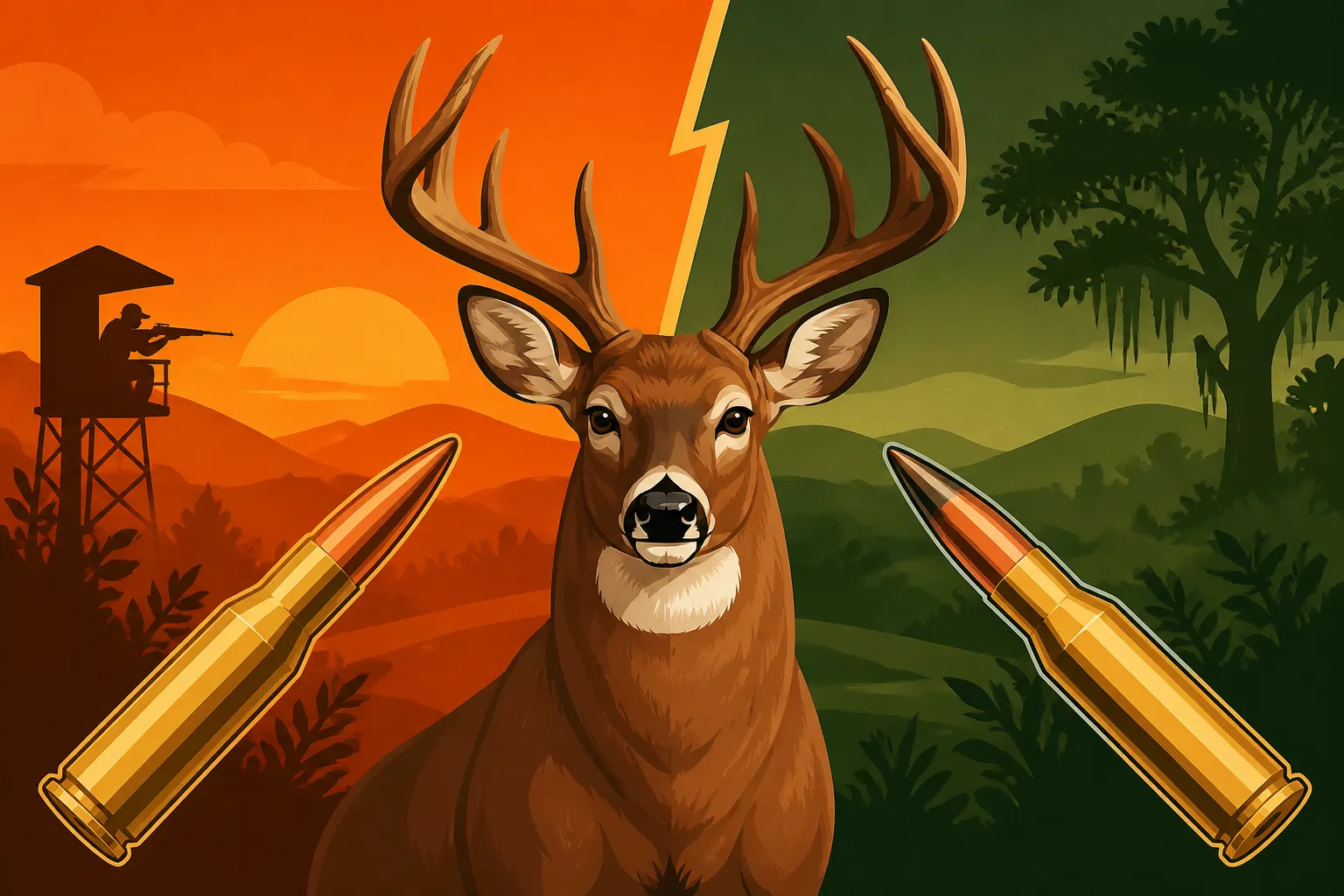
Ah, the age-old debate among Georgia deer hunters! It seems like every deer camp conversation eventually circles back to weapon choice, and two cartridges consistently spark passionate discussion: the venerable .308 Winchester and the lightning-fast .270 Winchester. If you've found yourself agonizing over which one is truly "better" for chasing whitetails through our diverse Georgia landscapes, from the thick pine plantations to the wide-open agricultural fields, you're certainly not alone. This guide aims to cut through the noise, offering a realistic look at how each cartridge performs right here in our neck of the woods, helping you confidently choose the right tool for your specific hunting style and terrain.
Understanding the .308 Winchester in Georgia's Hunting Scenarios
The .308 Winchester is often lauded as the quintessential hunting cartridge, and for good reason. It's an incredibly versatile round that has earned its stripes in countless deer woods across North America, including right here in Georgia. Many hunters lean on the .308 for its reliable performance and manageable characteristics, making it a solid choice for a wide array of hunting situations we encounter down here.
The .308's Reputation for Versatility and Manageable Recoil
Ask any seasoned hunter, and they'll likely tell you the .308 is one of those cartridges that simply works. It's known for its efficiency in a relatively compact package, allowing for lighter rifles that are a joy to carry through dense Georgia undergrowth. The recoil is generally quite manageable, even for smaller-framed shooters or those who might be sensitive to heavy kicks. This means you can practice more comfortably at the range, which translates directly into better accuracy and confidence when that moment of truth arrives in the field.
This manageable recoil also means quicker follow-up shots if needed, a crucial factor when a deer might be quartering away quickly or if you're part of a Deer Drives With Three or Four Hunters in thick cover. Its popularity ensures that ammunition is widely available, with a vast selection of bullet types and weights, so you can always find a load that performs perfectly in your rifle. Whether you're hunting a small private tract or navigating the extensive Chattahoochee-Oconee National Forest Hunting, the .308 feels right at home.
Optimal Bullet Weights and Performance for Georgia Whitetails
When it comes to bullet weights for the .308 Winchester, most Georgia deer hunters gravitate towards the 150-grain to 180-grain range. The 150-grain offerings are often praised for their flatter trajectory out to moderate distances and sufficient energy for clean kills on whitetails. They perform exceptionally well in typical shots of 50-150 yards, which is incredibly common in our often-timbered landscapes.
Stepping up to a 165-grain or 180-grain bullet provides a little more punch and can be beneficial if you anticipate shots through light brush or need a bit more momentum for pass-throughs. While neither the .308 nor any other cartridge is truly "brush busting," heavier bullets tend to retain their energy better. These heavier options also excel at transferring substantial energy to the deer, leading to quick and humane harvests. The sheer knockdown power, combined with the right bullet construction, ensures that even a mature Georgia buck doesn't go far after a well-placed shot. If you're Still-Hunting South Georgia Pine Flats where visibility can be limited, a heavier, slower bullet can sometimes offer a psychological edge.
Practical Applications: From Pine Plantations to Hardwood Bottoms
Picture this: you're sitting in your stand overlooking a mix of thick pine regeneration and a small food plot. A deer steps out at 75 yards. With a .308, you've got a cartridge perfectly suited for this mid-range shot. Its performance is consistent, and you can trust it to do its job. It's not overly fast, so meat damage is typically minimized compared to some hotter rounds, yet it delivers plenty of energy.
Consider hunting one of Georgia's dense hardwood bottomlands, where shots rarely extend beyond 100 yards, and often much closer. A lightweight .308 rifle, especially if you're using a Packs Built for a Chattahoochee Day Hunt, is easy to maneuver in tight spaces, and its shorter barrel options make it less cumbersome when slipping through thick briars or underbrush. And for those really wanting to dial in their scouting, using tools like GoHunt can help you identify exactly where those thickets meet open feeding areas, making your .308 even more effective. Whether you're sitting on a field edge waiting for a buck to emerge or still-hunting through a creek bottom, the .308 offers reliable, versatile performance that most Georgia hunters can appreciate.
The .270 Winchester: A Flat-Shooting King for Georgia Deer
On the other side of the fence, we have the .270 Winchester, a cartridge with a legendary reputation for its flat trajectory and ability to reach out and touch game at longer distances. For hunters who frequently encounter more open terrain or simply prefer the confidence of a fast, accurate round, the .270 often rises to the top of the list.
The .270's Legacy of Speed and Long-Range Accuracy
The .270 Winchester burst onto the scene nearly a century ago and quickly became a favorite for its blistering speed and flat-shooting characteristics. Compared to the .308, the .270 typically pushes its bullets at higher velocities, resulting in a significantly flatter trajectory. This means less bullet drop over longer distances, simplifying holdover calculations and increasing your effective range on deer. If you're accustomed to Zeroing a Rifle for Mixed Distances or anticipating shots past 200 yards, the .270 gives you a distinct advantage.
This inherent accuracy and speed instill a profound sense of confidence in many hunters, particularly those who have practiced extensively at longer ranges. It minimizes the margin for error when a deer steps out at an unexpected distance, making it an excellent choice for hunters who prioritize precision at range. For those expansive Hunting Piedmont Farmland Deer situations or glassing clear-cuts, the .270's capabilities truly shine, providing that extra assurance when a trophy buck makes an appearance far off.
Ideal Bullet Weights and Terminal Performance
For the .270 Winchester, popular bullet weights usually fall between 130 and 150 grains. The 130-grain bullets are screaming fast, often exceeding 3,000 feet per second, which contributes to that remarkably flat trajectory. These lighter, faster bullets deliver excellent energy transfer upon impact, often resulting in dramatic hydrostatic shock that puts deer down quickly and cleanly. They are superb for quick, humane kills on Georgia whitetails.
Moving up to a 140-grain or 150-grain bullet provides a bit more sectional density, potentially offering better penetration, especially on larger-bodied bucks or if you hit a shoulder blade. While still incredibly fast, these heavier bullets can offer a slightly better balance of speed and penetration. The terminal performance of a well-constructed .270 bullet on a Georgia whitetail is impressive; expect clean pass-throughs and minimal tracking if your shot placement is on point. Many hunters who meticulously pattern their Rifle Setups for Georgia Deer Hunting find the .270 incredibly consistent with various factory loads.
Where the .270 Excels: Open Country and Longer Shots
Imagine sitting in a stand overlooking a sprawling winter wheat field or a vast power line cut in South Georgia, where a deer might appear anywhere from 100 to 300 yards away. This is precisely where the .270 Winchester earns its reputation. Its flat trajectory means you can often hold dead-on at ranges where a .308 would require a noticeable holdover, simplifying your shot process under pressure. If you find yourself frequently Hunting a Green Field Planted for Deer or observing deer in large agricultural areas, the .270's capabilities are hard to beat.
This cartridge is particularly favored in regions of Georgia known for more open landscapes, like the vast agricultural tracts of the Coastal Plain, where visibility can stretch for hundreds of yards. It's the kind of round that gives you the peace of mind that if a deer steps out at 250 yards, you've got the cartridge to make that shot ethically. If your hunting style often involves glassing vast stretches of property or using advanced mapping systems like GoHunt to pinpoint those distant field edges or power lines, the .270 will truly shine. It gives you the confidence to take those longer, ethical shots that other calibers might make you second-guess.
Side-by-Side Comparison: .308 vs. .270 for Georgia Deer
Choosing between two excellent cartridges like the .308 and the .270 often comes down to a nuanced understanding of their differences, beyond just ballistic charts. Let's delve into some practical aspects that Georgia hunters consider when making this important decision.
Recoil, Report, and Hunter Comfort
One of the most noticeable differences between these two cartridges is the recoil. Generally speaking, the .308 Winchester, especially with standard hunting loads, tends to have slightly less felt recoil than the .270 Winchester. This can be a significant factor for new hunters, younger shooters (like those participating in Hunting the Georgia Youth Deer Weekend), or anyone who finds heavier recoil distracting or uncomfortable. Less recoil translates to more pleasant practice sessions and can help maintain better form and confidence in the field.
The muzzle report, or the sound of the gunshot, is also a consideration, although both are loud enough to warrant hearing protection. The .270, with its higher velocity and often lighter bullets, can have a sharper crack, while the .308 might sound a bit more "thumpy." Neither is pleasant without ear protection, but the subtle differences might be noted by sensitive ears. Ultimately, a comfortable rifle that doesn't make you flinch is key to accurate shooting, and for some, the .308 might offer a slightly more comfortable shooting experience.
Ammunition Availability and Cost Considerations
Both the .308 Winchester and the .270 Winchester are incredibly popular cartridges, meaning ammunition for both is usually readily available in most sporting goods stores and online retailers. You'll find a wide array of manufacturers producing loads for both, from basic soft points to advanced bonded and monolithic bullet designs. This popularity also means competition, which can often lead to favorable pricing compared to more niche cartridges.
While I can't give you current prices, historically, the cost per box for standard hunting ammunition for both calibers tends to be quite competitive. You'll likely find similar price points for comparable quality hunting loads. However, the sheer volume of .308 produced, partly due to its military heritage, sometimes means a wider selection of budget-friendly practice ammunition, which can save you money if you spend a lot of time at the range honing your skills. When preparing for Georgia's Long Firearms Deer Season, you'll want to ensure you have a good supply, so accessibility is definitely a plus for both.
Versatility Beyond Whitetails
While our focus is primarily on whitetail deer, it's worth considering the broader versatility of each cartridge. Both the .308 and the .270 are quite capable of taking other medium-sized game found in Georgia, such as feral hogs. A well-placed shot from either will certainly put down a hog, whether you're Hunting Feral Hogs Over Bait at Night or encountering them during deer season.
For larger game, like Georgia black bears, both can technically be used, though many bear hunters might lean towards heavier .308 loads or other calibers for extra insurance on a tough animal. The .308, with its heavier bullet options (up to 200 grains for some custom loads), is often considered slightly more versatile for larger or tougher game due to its bullet diameter and potential for deeper penetration. However, the .270, with its speed, is still a potent performer on black bears with appropriate bullet selection.
Here's a quick comparison of some key characteristics:
| Feature | .308 Winchester | .270 Winchester |
|---|---|---|
| Typical Bullet Weights | 150-180 grains | 130-150 grains |
| Trajectory | Good, but more arc at longer ranges | Very flat, less drop at longer ranges |
| Recoil | Moderate, generally less than .270 | Moderate to firm, often slightly more than .308 |
| Effective Range (Deer) | 300-350 yards (hunter skill dependent) | 400-450 yards (hunter skill dependent) |
| Barrel Length Options | Shorter barrels (18-22") perform well | Benefits from longer barrels (22-24") for velocity |
| Ammo Availability | Excellent, widespread, many choices | Excellent, widespread, many choices |
| Best for Georgia | Thick woods, medium range, quick shots, versatility | Open fields, long range, flatter trajectory |
Making Your Choice: Factors Beyond Ballistics
Ultimately, the best cartridge for you isn't just about bullet drop charts or muzzle velocity. It's about how the rifle feels in your hands, how confidently you can shoot it, and how it aligns with the specific hunting situations you encounter in Georgia.
Hunter Skill Level and Shot Confidence
This is perhaps the most critical factor. An ethical harvest is paramount, and a bullet placed perfectly from a rifle you shoot confidently will always outperform a poorly placed shot from a theoretically "better" or more powerful cartridge. If the slightly lighter recoil of the .308 allows you to shoot more accurately, with less flinch, and recover faster for follow-up shots, then it's the superior choice for you.
Similarly, if you've spent years practicing with a .270, are intimately familiar with its trajectory, and have absolute confidence in your ability to make precise shots at range, then that confidence translates directly into ethical kills. Don't let perceived ballistic superiority sway you from a rifle and cartridge combination you know and trust. Your ability to consistently put a bullet where it needs to go – in the vitals – is more important than whether that bullet starts at 2,800 or 3,000 feet per second. Mastering your rifle, whatever the caliber, is key to success on White-Tailed Deer Across Georgia.
Typical Hunting Terrain and Shot Distances in Georgia
Take a hard, honest look at where and how you typically hunt. Are you usually tucked into a treestand in dense timber, hoping for a 50-yard shot at a deer browsing on acorns? Or are you overlooking a vast peanut field, knowing that a buck might step out at 200, 300, or even 400 yards?
For the majority of Georgia hunters, especially those hunting thick private land or smaller public land tracts, shots rarely exceed 150 yards. In these scenarios, the .308 is perfectly adequate and often easier to handle in terms of rifle length and maneuverability. If you primarily hunt tight spots like Hunting Piedmont Creek Bottom Funnels or deep river swamps, the .308 offers a compact and potent package.
However, if your hunting grounds feature sprawling fields, clear-cuts, or power line rights-of-way that demand longer shots, the flatter trajectory of the .270 provides a distinct advantage. It gives you that added reach and confidence when those longer opportunities arise. Before you even step foot in the woods, platforms like GoHunt can give you an incredible bird's-eye view of your hunting lease or public land, allowing you to see those long shots across a clear-cut or the tight timber funnels, directly informing your caliber choice. Understanding your typical shot distances is crucial for selecting the cartridge that truly fits your needs.
Personal Preference and Rifle Fit
Sometimes, it simply comes down to what feels right. The rifle itself—its weight, balance, stock design, and overall ergonomics—plays a huge role in how well you shoot. A rifle chambered in .308 might feel perfectly balanced in your hands, leading to more natural pointing and follow-through. Or, you might find that a specific .270 rifle, despite its slightly increased recoil, just "fits" you better, allowing for more consistent accuracy.
Consider spending time at the range, if possible, shooting rifles chambered in both .308 and .270. Pay attention to how each rifle handles, how easy it is to shoulder, and how quickly you can get on target. The cartridge is just one part of the equation; the entire rifle system must work for you. Many veteran hunters have a favorite rifle and caliber combination that simply "feels right" to them, and that personal connection often translates into better performance in the field. Ultimately, your personal comfort and confidence in your specific rifle and cartridge pairing are paramount for success in the Georgia deer woods.
Disclaimer
This article is for general informational purposes only and does not constitute professional advice. Laws, prices and regulations vary by location and change over time. Consult a qualified professional for guidance on your specific situation.