Best Georgia Ground for Public Land Bear
Finding a solid public land spot to hunt black bears in Georgia can feel like trying to find a needle in a haystack, especially with such diverse habitats across the state. Many hunters feel overwhelmed trying to decipher where bears actually live and thrive beyond the handful of known private land honey holes. This guide aims to cut through that confusion, giving you the insider scoop on the best public land areas to focus your bear hunting efforts in Georgia, along with practical tips to increase your odds.
The Northern Zone: Georgia's Mountain Bear Stronghold
When most folks in Georgia think about bear hunting, their minds immediately drift to the vast, rugged expanses of the North Georgia mountains. And for good reason – this region, encompassing the Chattahoochee National Forest and numerous Wildlife Management Areas (WMAs), is undeniably the heart of Georgia's black bear population. These aren't just any woods; these are sprawling, tough-to-access areas that lend themselves perfectly to bears seeking solitude and abundant natural food sources.
The terrain here is no joke. You'll find yourself navigating steep ridges, deep hollows, and dense laurel and rhododendron thickets that can swallow a hunter whole. This challenging landscape, however, is precisely what makes it so good for bears. They have vast tracts of undisturbed land to roam, den, and forage. Food sources like acorns, hickory nuts, and various berries are plentiful, especially in mast years. Bears will often concentrate in areas with heavy mast production, so identifying those spots is crucial. You can learn more about Hunting the North Georgia Mountain Bear Zone.
Key Public Lands in the Northern Zone
The bulk of public land opportunities in the Northern Zone lie within the Chattahoochee National Forest. This federal land is managed for multiple uses, including hunting, and offers incredible acreage. Within the National Forest, specific WMAs are particularly renowned for their bear populations and hunting opportunities. Areas like the Cohutta Wilderness and surrounding WMAs, such as Blue Ridge WMA or Rich Mountain WMA, consistently produce bear sightings and harvests. These WMAs are managed intensively to provide quality habitat for game, including bears.
When scouting these areas, don't be afraid to put some miles on your boots. Bears will utilize the entire landscape, moving between feeding areas, bedding cover, and water. Look for fresh tracks in muddy creek bottoms, overturned rocks and logs where they've foraged for insects, and scat. Using a robust mapping tool like onX Hunt can be a game-changer here. You can identify potential remote pockets, analyze topography for natural travel corridors like saddles and benches, and mark potential denning areas (often in dense thickets or rock outcroppings) long before season starts. These tools also help you understand property boundaries, which is crucial when hunting areas that border private land.
Strategies for Mountain Bears
Hunting the Northern Zone demands a different approach than hunting deer in the flatlands. Mobility is key, as bears often travel significant distances. Still-hunting through dense cover, especially near known food sources or along creek drainages, can be effective. Setting up a treestand or ground blind near heavily used trails or feeding areas can also work, but bears are wary creatures, and their patterns can be unpredictable. Remember that a long walk in means an even longer walk out, potentially with a bear on your back. Physical conditioning is paramount for success in these mountains. It's also worth understanding Hunting Bears Over Natural Food in the Mountains to better predict their movements.
The season dates for the Northern Zone can be quite specific, often involving archery, primitive weapons, and firearms segments, sometimes with very limited windows. Always double-check the latest regulations from the Georgia Department of Natural Resources (DNR) to ensure you're hunting within the legal framework. Pay attention to specific WMA regulations as well, as they can differ from statewide rules.
The Ocmulgee Bear Zone: Piedmont's Hidden Gems
Moving south into the central part of the state, we encounter the Ocmulgee Bear Zone. This area, largely centered around the Ocmulgee National Forest and associated WMAs, presents a unique and often overlooked public land bear hunting opportunity. Unlike the dense, continuous forests of the northern mountains, the Ocmulgee Zone features a more fragmented landscape of mixed pine and hardwood forests, interspersed with agricultural fields and river bottomlands. The bear population here is smaller and more dispersed, making the hunting experience truly challenging and rewarding.
The bears in the Ocmulgee Zone are often accustomed to living in closer proximity to human activity, though they remain incredibly elusive. Their movements are frequently dictated by food availability and the need for thick cover. River bottoms, especially those along the Ocmulgee River, act as critical travel corridors and provide dense bedding areas. Agricultural fields, particularly corn or peanut fields, can draw bears in during certain times of the year, especially at night. Understanding Where Ocmulgee Bears Range can help you pinpoint these elusive creatures.
Public Land Pockets and Scouting
Public hunting land in the Ocmulgee Zone often consists of parcels within the Ocmulgee National Forest and several WMAs, such as the Ocmulgee WMA itself. These tracts might not be as expansive as their northern counterparts, but they offer quality habitat. Because of the fragmented nature of the land, identifying and focusing on key corridors and cover becomes even more important. Bears will use dense swamp edges, unmanaged timber stands, and creek drains to move between feeding and bedding areas.
For scouting in this zone, mapping tools are indispensable. Use onX Hunt or GoHunt to study aerial imagery, looking for bottlenecks, pinch points, and areas of dense vegetation that bears might use for sanctuary. Pay close attention to transition zones between different habitat types, such as where a hardwood bottom meets a pine plantation or where a managed field borders thick woods. These "edge" habitats are often highways for wildlife, including bears. Focus your ground scouting efforts on finding sign in these areas, especially near potential food sources. Since the Ocmulgee season often runs for very specific, short periods, often just a few days, effective pre-season scouting is non-negotiable. Learn more about Why the Ocmulgee Bear Season Runs Days Not Weeks.
Tactics for Ocmulgee Bears
Given the lower density and more fragmented habitat, a patient approach is usually best in the Ocmulgee Zone. Stand hunting, especially over natural food sources or along established travel routes, can be effective. Spot-and-stalk tactics, while more challenging in thick cover, might be employed in more open pine stands or along field edges if suitable conditions present themselves. Consider Spot-and-Stalk Tactics for Ocmulgee Bears if you're up for a true test of woodsmanship.
It's absolutely critical to be aware of your surroundings and any private land boundaries. Bear activity might draw them onto adjacent private parcels, and knowing exactly where you can and cannot hunt is paramount. Having a digital mapping app on your phone with GPS capabilities ensures you stay on public land.
The Altamaha and Okefenokee Bear Zone: Swamp Bears of the South
Finally, we head to the deep south of Georgia, where the Altamaha and Okefenokee Bear Zone offers a truly wild and challenging bear hunting experience. This zone includes the vast, iconic Okefenokee Swamp region and the sprawling river bottoms of the Altamaha River system. Bears here are big, tough, and masters of their wetland environment. Hunting them is an adventure unto itself, often involving navigating cypress swamps, dense palmetto thickets, and mosquito-laden bottomlands.
The bears in this region thrive in the abundant cover and diverse food sources offered by these unique ecosystems. They are excellent swimmers and will use the water to their advantage, often escaping into impassable swamp areas when pressured. While the population density might not be as high as in the Northern Zone, the sheer wildness of the landscape and the potential for encountering a truly large bear make this zone incredibly appealing to adventurous hunters. Finding specific areas Where Altamaha and Okefenokee Bears Range can narrow your search.
Accessing Southern Swamps
Public land access in this zone can be more challenging due to the wetland nature of the habitat. Key public lands include parts of the Okefenokee National Wildlife Refuge (with specific, often very limited, quota hunts) and numerous WMAs along the Altamaha River, such as the Altamaha River WMA or Sansavilla WMA. Access often involves boats, canoes, or extensive wading. Road systems are often limited, and much of the best bear habitat is deep within the swamp. Read up on Hunting the Okefenokee Swamp Region for more insights into this unique area.
Scouting here involves looking for higher ground within the swamps—small islands, hummocks, or levees that bears use for bedding and travel. Look for rubs on trees, fresh tracks in the mud, and torn-apart logs where they've dug for grubs. Again, satellite imagery on onX Hunt can reveal these subtle elevation changes and potential travel routes through the swamp. It can also help you identify areas of dense cover where bears might bed down during the day. Water levels can significantly impact bear movement and hunting conditions in this zone, so monitoring rainfall and river gauges is a good idea.
Hunting in Wetland Environments
Hunting swamp bears requires specialized gear and a significant tolerance for discomfort. Snake boots are a must, as are robust bug repellents. Your hunting strategy might involve still-hunting slowly through dense cover, focusing on natural funnels created by water features, or setting up on high ground overlooking these funnels. Due to the limited visibility and thick cover, shots are often close-range. Patience and perseverance are key, as is a thorough understanding of blood trailing in extremely difficult terrain. Retrieval of a downed bear from a swamp can be an epic undertaking.
General Public Land Bear Hunting Strategies Across Georgia
Regardless of which zone you choose to hunt, there are some universal truths about public land bear hunting in Georgia. It's often physically demanding, requires extensive pre-season scouting, and a deep understanding of bear behavior and habitat.
The Importance of Pre-Season Scouting
You simply cannot overstate the value of scouting. Bears are creatures of habit to some degree, and finding their preferred feeding, bedding, and travel areas before the season opens is critical. Look for:
- Scat: Fresh droppings indicate recent activity.
- Tracks: Especially along muddy trails, creek beds, and soft ground.
- Foraging Sign: Overturned rocks, torn logs, and claw marks on trees.
- Food Sources: Identify mast-producing trees (oaks, hickory) and berry patches, then return to these areas when they are producing.
- Dense Cover: Bears need thick cover for bedding and security. Look for impenetrable thickets, laurel slicks, or dense pine plantations bordering more open areas.
Using mapping apps like onX Hunt for remote scouting is incredibly effective. You can spend hours virtually walking the land, marking waypoints for potential sign, and identifying access points. Then, verify these spots on the ground. Scouting Georgia Public Land Before Season offers broader tips that apply well to bear hunting.
Understanding Bear Behavior and Habitat
Bears are opportunists when it comes to food. Their diet shifts with the seasons, from early berries and insects to hard mast in the fall. Knowing what they're likely to be eating in a given month will help you narrow down your search areas. They also seek out dense cover for bedding, especially during warm weather or when feeling pressured. Understanding Georgia's Black Bear Population can give you an overview of their distribution and numbers.
Always respect their intelligence and incredible sense of smell. Play the wind, minimize scent, and move slowly and quietly. Bear hunting is often a game of patience and persistence.
Gear Considerations
The rugged nature of Georgia's bear country demands reliable gear. Here's a quick rundown:
| Gear Category | Northern Zone (Mountains) | Ocmulgee Zone (Piedmont) | Altamaha/Okefenokee Zone (Swamp) |
|---|---|---|---|
| Footwear | Sturdy hiking boots, good ankle support | Comfortable, waterproof hiking boots, snake boots recommended | High-quality snake boots or chest waders |
| Clothing | Layered, breathable, rain gear, blaze orange/pink required | Layered, breathable, rain gear, blaze orange/pink required | Lightweight, quick-drying, insect-proof, blaze orange/pink required |
| Navigation | GPS unit, phone with mapping app (onX Hunt, GoHunt) | Phone with mapping app (onX Hunt, GoHunt) | GPS unit, phone with mapping app (onX Hunt), compass |
| Optics | Binoculars (8x-10x), rangefinder | Binoculars (8x-10x), rangefinder | Binoculars (8x), good for low light |
| Bug Protection | Moderate to high | High | Extremely high (head net, permethrin-treated clothing) |
| Other Essentials | First-aid kit, water filter, game bags, durable pack | First-aid kit, ample water, game bags, durable pack | First-aid kit, dry bag, boat/canoe, long rope, durable pack |
Regulatory Awareness
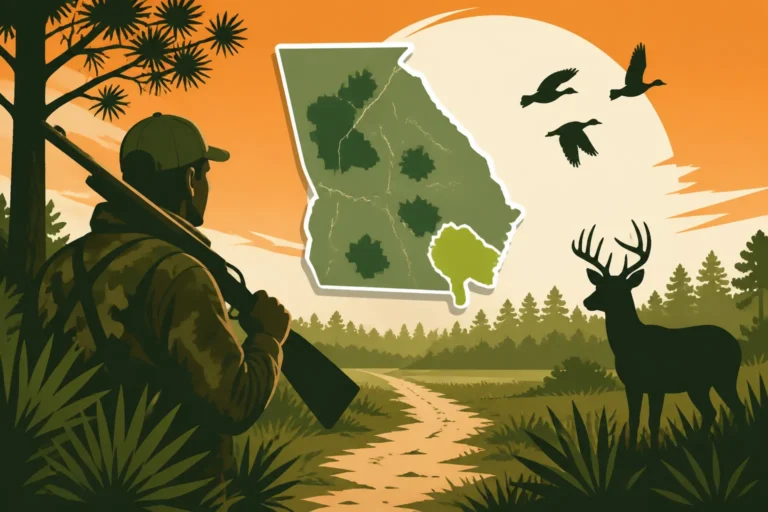
Always, always consult the current Georgia Hunting Regulations from the DNR before heading out. Seasons, bag limits, and specific rules for each bear zone and WMA can change. For instance, Georgia's Three Bear Hunting Zones outlines the primary areas, but each has its own nuances regarding specific dates and methods. Understanding requirements like blaze orange and harvest reporting is essential for a legal and ethical hunt.
Bear hunting in Georgia's public lands is a challenging yet deeply rewarding pursuit. It connects you with some of the wildest places our state has to offer and tests your skills as a woodsman. By focusing on the right areas, dedicating time to scouting, and being prepared for the environment, you can significantly increase your chances of success.
Disclaimer
This article is for general informational purposes only and does not constitute professional advice. Laws, prices and regulations vary by location and change over time. Consult a qualified professional for guidance on your specific situation.