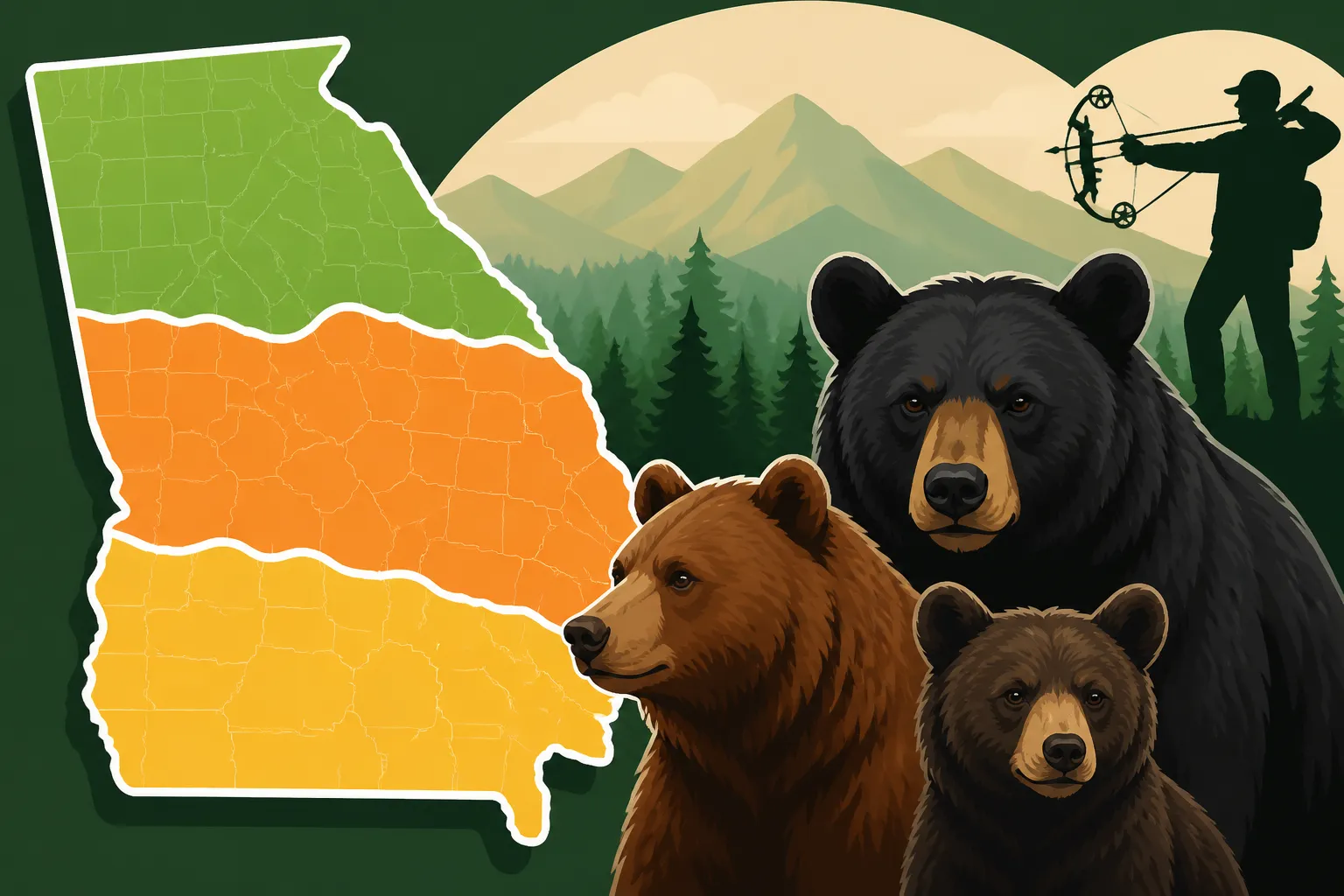
Georgia’s Three Bear Hunting Zones
Trying to make sense of Georgia's bear hunting regulations can feel like trying to untangle a fishing line after a big bite – a frustrating mess of dates, zones, and rules that seem to change just when you think you've got it figured out. Whether you're a seasoned bear hunter or new to the pursuit, understanding where, when, and how to legally pursue a black bear in the Peach State is absolutely critical. This comprehensive guide will break down Georgia's three distinct bear hunting zones, helping you navigate the specifics of each and plan your hunt with confidence.
Understanding Bear Management in Georgia
Georgia's black bear population has seen a remarkable comeback over the decades, a true testament to dedicated conservation efforts. Once confined to isolated pockets, these incredible animals are now thriving and expanding their range, offering exciting opportunities for hunters. However, with growing populations come responsibilities, and the Georgia Department of Natural Resources (DNR) implements specific management strategies to ensure healthy bear numbers while also addressing potential human-wildlife conflicts. This isn't just about limiting harvest; it's about maintaining a balance in our diverse ecosystems.
Bear Population Growth and Distribution
Just a few generations ago, spotting a black bear in Georgia outside of the most remote mountain regions was a rare event. Today, it’s a different story. The latest estimates from the Georgia DNR suggest a robust and growing bear population across the state, with bears expanding their territories into areas where they haven't been seen in over a century. This expansion is most noticeable in the northern mountains, the central Ocmulgee River corridor, and the vast southern swamp systems like the Okefenokee and Altamaha. Each of these regions presents unique challenges and opportunities for hunters, shaped by distinct habitat types and population densities. The success of this re-establishment means that hunters now have a chance to pursue bears in truly wild and diverse landscapes, from steep mountain slopes to dense river bottomlands. Understanding these different distributions is the first step in planning a successful hunt.
The growth isn't uniform, of course. North Georgia, particularly the mountainous counties, remains the stronghold for the largest bear population, with higher densities and a longer-established presence. Here, bears are an integral part of the ecosystem, and their movements often dictate how other wildlife, including deer, behave. In contrast, the Ocmulgee corridor represents a linear expansion, with bears utilizing the dense cover and abundant food sources found along the river system, often moving through agricultural landscapes. Further south, the expansive wetlands and pine flatwoods provide ideal, albeit different, habitats, where bears can grow quite large due to ample forage and less human disturbance in the deepest swamps. This regional variation in population density and habitat directly influences the hunting seasons and regulations designed for each area.
Conservation Efforts and Sustainable Hunting
The thriving black bear population in Georgia is a direct result of decades of strategic conservation. This hasn't been a hands-off approach; it's involved habitat restoration, public education, and, critically, carefully managed hunting seasons. Hunting plays a vital role in modern wildlife management, serving as a tool to control population growth, prevent overpopulation-related issues like disease spread or habitat degradation, and mitigate conflicts between bears and humans, especially as bears move into more populated areas. By allowing regulated hunting, the DNR ensures that the bear population remains healthy and in balance with its environment, preventing either extreme underpopulation or overpopulation.
Every bear taken in Georgia contributes valuable data to the DNR's ongoing research and monitoring efforts. Hunters are required to report their harvests, providing crucial information about bear age, sex, and location. This data is then used to adjust future season lengths, bag limits, and zone boundaries, making sure that hunting remains sustainable for generations to come. It’s a cyclical relationship: responsible hunting supports conservation, and successful conservation provides continued hunting opportunities. Far from being detrimental, regulated bear hunting is a cornerstone of Georgia’s wildlife management philosophy, ensuring these majestic animals continue to roam our wild places.
The Northern Bear Zone: A Mountain Hunter's Challenge
The Northern Bear Zone is perhaps the most iconic and challenging of Georgia's bear hunting areas, encompassing the rugged beauty of the Appalachian Mountains within the state. This is where most Georgia bear hunting traditions were born, steeped in tales of long hauls up steep ridges and tracking through dense rhododendron thickets. If you're looking for a true wilderness experience and a physically demanding hunt, this is your territory. The terrain here is unforgiving but incredibly rewarding for those willing to put in the effort.
Geographic Boundaries and Key Counties
The Northern Bear Zone spans the northernmost counties of Georgia, encompassing the vast majority of the Chattahoochee-Oconee National Forest. We're talking about places like Fannin, Gilmer, Murray, Union, Lumpkin, White, and Habersham counties, to name a few. These are the classic "mountain counties" that most people associate with Georgia's scenic beauty and outdoor recreation. The zone's boundaries largely follow major highways and county lines, but essentially, if you're in the mountains north of I-85 and west of I-75 (roughly), you're likely in prime bear country.
This region is characterized by steep, heavily forested terrain, deep valleys, and numerous creek bottoms. Elevations can range from 1,500 feet to over 4,000 feet, creating diverse microclimates and habitats. Large tracts of public land, including Wildlife Management Areas (WMAs) like Blue Ridge WMA and Rich Mountain WMA, offer extensive hunting opportunities. These public lands are crucial for hunters, providing thousands of acres of relatively undisturbed habitat where bears can roam freely. Understanding the layout of these vast public resources is key, and using mapping tools like GoHunt or the Georgia Outdoors app can be invaluable for pinpointing property lines, topo features, and potential access points when you're Scouting Georgia Public Land Before Season.
Season Dates and Regulations
The Northern Bear Zone typically boasts the longest and most flexible bear season in Georgia, reflecting the robust and well-established bear population in the mountains. Historically, this zone has separate archery and firearms seasons, often running concurrently with the statewide deer seasons for those methods. The archery season might kick off in mid-September, offering a quieter, more intimate hunting experience, while the firearms season usually opens in late October or early November, coinciding with the peak of the deer rut. It's always crucial to check the current year's Georgia DNR Hunting Regulations Digest, as specific dates can shift slightly from year to year.
Regulations in the Northern Zone are relatively straightforward compared to other zones, but still demand careful attention. The general statewide bag limit for bears in Georgia is one per season, and that applies here. There are specific requirements for hunter orange during firearms season, which is critical for safety in areas with high hunter pressure. Unlike some other states, Georgia does not permit baiting for bears in any of its zones, nor can you use dogs for still-hunting bears. However, pursuing bears with dogs is allowed during certain regulated dog hunting seasons, often limited to specific WMAs or dates. Always verify current regulations for details on legal hunting methods and any WMA-specific rules before heading out.
Hunting Strategies and Terrain
Hunting bears in the North Georgia mountains is a physically demanding endeavor that often requires a blend of skill, patience, and good old-fashioned grit. The steep slopes and dense vegetation make for slow going, so physical fitness is a definite advantage. Many hunters focus on finding natural food sources, like oak ridges laden with acorns, or berry patches in late summer and early fall. Bears will travel significant distances to gorge on these seasonal foods, making these areas natural hotspots. Water sources, especially during dry spells, can also concentrate bear activity.
Still-hunting and stand hunting are common tactics. For those who prefer a more mobile approach, still-hunting slowly through known bear habitat, pausing frequently to glass and listen, can be effective. This is particularly good for covering a lot of ground in areas where bears might be widely dispersed. For hunters who prefer a more static approach, setting up a treestand or ground blind along known travel corridors, near food sources, or along ridge lines can yield results. Access points like old logging roads or hiking trails can get you into the backcountry, but be prepared to leave the beaten path to find undisturbed areas. Remember, bears are notoriously shy and will often move into the thickest cover available when pressured. Patience and persistence truly pay off when you are Hunting the North Georgia Mountain Bear Zone.
The Central Bear Zone: A Unique River Corridor Hunt
Shifting gears entirely from the rugged mountains, Georgia's Central Bear Zone offers a hunting experience unlike any other. This zone primarily encompasses portions of the Ocmulgee River corridor and its surrounding floodplains, a ribbon of dense habitat weaving through a largely agricultural and more developed landscape. Bears here utilize the vast bottomland hardwoods, swamps, and thickets along the river, making for a challenging but potentially rewarding hunt in a very different environment.
Defining the Ocmulgee River Corridor
The Central Bear Zone is essentially defined by the Ocmulgee River and its extensive floodplain, stretching through counties like Bibb, Jones, Twiggs, and Houston. Imagine a green artery of wilderness cutting through the rolling farmlands and pine plantations of Georgia's Piedmont and Upper Coastal Plain. This corridor provides crucial cover, water, and food sources for bears, allowing them to thrive and expand their range even within close proximity to human settlements. These aren't your typical mountain bears; they're adept at navigating swampy terrain and thick river cane, often leaving tell-tale signs along muddy banks.
The habitat is predominantly bottomland hardwood forests, often inundated during periods of heavy rain, interspersed with dense palmetto thickets and overgrown fields on the fringes. The sheer density of the vegetation makes visibility extremely limited, requiring hunters to rely heavily on tracking skills and an intimate knowledge of bear behavior in such environments. Unlike the continuous public lands of the northern zone, much of the Ocmulgee corridor involves a mix of private timberlands, farms, and smaller parcels of public land, such as portions of the Ocmulgee Wildlife Management Area. This patchwork land ownership requires careful scouting and a good understanding of property boundaries, a task made easier with modern mapping apps that can help delineate private versus public parcels.
Limited Season Opportunities
Perhaps the most defining characteristic of the Central Bear Zone is its incredibly short and often unpredictable season. Unlike the multi-week seasons in the mountains, the Ocmulgee bear season is typically a very limited window, often just a single weekend or a few select days in late fall. This brevity reflects a smaller, though growing, bear population that the DNR aims to manage conservatively while still providing hunting opportunities. Because of this limited timeframe, preparation is paramount; you might only get one or two chances to be in the woods during the open season.
The exact dates for the Ocmulgee bear hunt can vary annually, so consulting the current Georgia DNR Hunting Regulations Digest is non-negotiable. These limited seasons often generate significant hunter interest, especially from those who enjoy the challenge of hunting in dense river bottom habitat. Success in this zone often hinges on being in the right place at the right time, and having done your homework long before the season even opens. The short season means you need to be ready to capitalize on any opportunity, which might mean scouting extensively to understand bear movement patterns and preferred feeding areas in the weeks leading up to the hunt.
Tactics for River Bottom Bears
Hunting in the Ocmulgee River bottoms requires a specialized set of tactics and a willingness to get wet and muddy. Bears here are masters of concealment, disappearing into dense cane brakes and palmetto thickets with surprising ease. Still-hunting, moving slowly and deliberately through the bottomlands, is a popular and often effective method. Hunters look for fresh tracks in the mud along sloughs, trails leading into thick cover, or signs of recent feeding in acorn flats. The sheer density of the cover means shots are often close-range, so precise shooting is critical.
Due to the limited visibility, using calls, though not always traditional for bears, can sometimes draw a curious bear closer, especially during the rut when sows are receptive. Another strategy involves locating natural funnels, such as narrow strips of dry ground between two swamps or pinch points where the river pushes bears into a smaller travel corridor. Setting up a ground blind or a low-profile treestand in these areas, particularly near active feeding sites, can be productive. Remember that the river itself often acts as a highway for bears, so focusing your efforts along the main channel and its major tributaries can increase your odds when Hunting the Ocmulgee Bear Zone. Just be prepared for mosquitos, especially in the early fall seasons, and dress appropriately for the warm, humid conditions of the river bottoms.
The Southern Bear Zone: Okefenokee and Altamaha Wilds
Venture further south in Georgia, and you'll encounter the Southern Bear Zone, a realm of expansive wetlands, vast pine flatwoods, and some of the state's most remote and wild country. This zone is unique, not only for its distinct habitat but also for its incredibly limited and highly sought-after hunting opportunities. It's a land of big bears and even bigger mosquitoes, where the cypress trees stand sentinel and the alligators keep watch.
Altamaha and Okefenokee Region Boundaries
The Southern Bear Zone is actually composed of two distinct geographic regions: the Altamaha River corridor and the legendary Okefenokee Swamp. The Altamaha region, often referred to as Georgia's "Little Amazon," encompasses the extensive river delta and its surrounding bottomlands, flowing through counties like Long, McIntosh, and Wayne. This area is characterized by vast tracts of swamp, tidal marsh, and dense lowland forests, providing a rich mosaic of habitats for bears.
Further south and inland lies the Okefenokee region, centered around the massive Okefenokee Swamp, one of North America's largest intact blackwater wetlands. This includes portions of Charlton, Clinch, and Ware counties. The Okefenokee's impenetrable cypress forests, vast prairies, and numerous islands (or "houses") create an ideal sanctuary for bears, allowing them to grow to impressive sizes. Access to many parts of both the Altamaha and Okefenokee is often challenging, requiring boats or specialized vehicles, adding to the mystique and challenge of hunting these wild places.
Weekend-Only Hunts and Draw Odds
Just like the Central Zone, hunting opportunities in the Southern Bear Zone are extremely limited and are almost exclusively managed through quota hunts. These are typically short, weekend-only hunts, often taking place on specific Wildlife Management Areas (WMAs) or through special permits for regions bordering the Okefenokee National Wildlife Refuge. The dates are usually in late fall or early winter, depending on the specific location and the DNR's management objectives.
Because of the scarcity of opportunities and the allure of hunting in such a unique environment, draw odds for these quota hunts can be quite low. This means applying through the Georgia DNR's quota hunt system is your primary path to getting a tag. It requires planning well in advance, understanding the application deadlines, and perhaps accumulating preference points in some cases. Sites like GoHunt can be useful for researching past draw odds and strategizing your application. While the chances might seem slim, landing one of these tags is a truly special privilege, offering a chance to experience a truly wild Georgia bear hunt in an ancient landscape. The feeling of anticipation during the application period is almost as intense as the hunt itself! For more details, you can look into Applying for a Georgia Alligator Quota Hunt as the application process for various quota hunts, including bear, often shares similar procedures.
Navigating Swamp and Coastal Plain Terrain
Hunting bears in the Southern Bear Zone is an exercise in mental and physical endurance, demanding specific skills to navigate the challenging terrain. Forget steep mountain climbs; here, your adversaries are dense palmetto, knee-deep mud, cypress knees, and, yes, plenty of mosquitoes and snakes. Most hunts involve extensive walking through thick undergrowth, often with wet feet, or using small boats (like jon boats or canoes) to access more remote areas. The low-lying, often flooded landscape means visibility is usually very limited, similar to the Ocmulgee, but on a much larger, more expansive scale.
Successful tactics often revolve around finding the higher ground – "islands" or hummocks within the swamp – where bears will often bed, travel, and find food. Look for signs like rubs on trees, scat, and tracks along drier edges or elevated pathways. Bears in these areas primarily feed on palmetto berries, acorns from water oaks, and various other swamp fruits and vegetation. Knowledge of tides, water levels, and even alligator behavior can be beneficial here, as they all influence bear movement. Given the potentially long drags over difficult terrain, considering a pack frame or a game cart (if the ground allows) for extraction is a smart move. When pursuing these bears, you're not just hunting an animal; you're immersing yourself in one of Georgia's most ancient and formidable wildernesses. Being prepared with the right Warm-Weather Clothing for Georgia Hunters and sturdy snake boots is essential.
Obtaining Your Bear License and Tags
Navigating the licensing requirements is a fundamental first step for any hunter in Georgia, and bear hunting adds a few extra layers to the process. It’s not just about buying a general hunting license; there are specific big game endorsements and, for some zones, quota hunt applications that need to be understood. Don’t wait until the last minute – get your ducks (and bears!) in a row well before the season opens.
General Hunting License Requirements
Before you can even think about chasing a black bear, you need to possess a valid Georgia hunting license. For residents, this typically means a basic hunting license, or often, the more comprehensive Resident Sportsman's License, which bundles various permits, including big game, into one convenient package. Non-residents have similar options, with annual or shorter-term licenses available. You'll also need a Georgia Big Game License in addition to your base hunting license, as bears fall under this category.
These licenses can be purchased easily online through the Georgia DNR's "Go Outdoors Georgia" platform, at various license vendor locations (like sporting goods stores), or by phone. It's crucial to ensure your license is current and that you have all the necessary endorsements for the game you intend to hunt. Many hunters opt for the Sportsman's License because it simplifies the process and covers most general hunting activities, including deer, turkey, and bear. For a full breakdown of costs and options, check out Georgia Hunting Licenses and What They Cost. Always carry proof of your license while in the field, whether it's a physical copy or stored digitally on your phone via the official app.
Bear Harvest Record and Checking Procedures
Once you've successfully harvested a bear in Georgia, your responsibilities don't end there. Proper reporting is not just a legal requirement but a vital part of the DNR's ongoing bear management and data collection. Every bear harvest must be reported to the Georgia DNR within 24 hours of the kill. This can usually be done online through the "Go Outdoors Georgia" system or by calling a toll-free number provided by the DNR. You'll need to provide details like the date and time of harvest, county, specific location (often by WMA or nearest town), and the bear's sex.
Additionally, successful bear hunters are often required to submit a tooth from the harvested bear for aging purposes. The DNR provides specific instructions on how to extract and submit this tooth. This biological data, combined with harvest numbers, helps wildlife biologists monitor the health and age structure of Georgia's bear populations, influencing future hunting regulations and conservation strategies. Failing to report a harvest or submit required biological samples can result in penalties, so always adhere to these rules meticulously. These reporting procedures are critical for all big game, including understanding Georgia Deer Harvest Reporting Rules.
Quota Hunts and Application Process
For those aiming to hunt in the more restricted Central or Southern Bear Zones, or certain specific WMAs in the Northern Zone, you'll likely need to participate in a quota hunt. These hunts are limited to a specific number of hunters to manage pressure and harvest numbers in sensitive areas. The application process for quota hunts is a separate step from simply buying a license. You'll typically apply through the "Go Outdoors Georgia" system, designating your preferred hunt area and dates.
Applications for bear quota hunts generally open in late spring or early summer, with deadlines usually in mid-summer. It's important to mark these dates on your calendar well in advance. While some quota hunts are purely random draws, others might utilize a preference point system, rewarding applicants who have applied in previous years but were unsuccessful. Understanding the nuances of these systems can significantly improve your odds over time. The results are usually announced a few weeks after the application deadline, giving successful applicants time to plan their trip. Utilizing resources like the GoHunt app or website can sometimes help hunters track application periods and past draw results, giving you an edge in strategizing your applications for these highly coveted opportunities.
| Bear Hunting Zone | Primary Location | Typical Season Length | Main Hunting Method | Key Challenge |
|---|---|---|---|---|
| Northern Zone | North Georgia Mountains (Chattahoochee NF) | Long (Archery & Firearms) | Still-hunting, Stand Hunting | Steep Terrain, Dense Cover |
| Central Zone | Ocmulgee River Corridor | Very Short (1-2 Weekends) | Still-hunting | Limited Visibility, Swampy Ground |
| Southern Zone | Okefenokee Swamp & Altamaha Delta | Weekend Quota Hunts Only | Spot & Stalk, Still-hunting | Remote Access, Very Dense Swamps |
Key Regulations and Ethical Considerations
Beyond understanding the specific zones and their seasons, successful and responsible bear hunting in Georgia demands a thorough grasp of general hunting regulations and a commitment to ethical practices. These aren't just arbitrary rules; they're designed to ensure fair chase, promote safety, and maintain a positive public perception of hunting.
Baiting, Dogs, and Other Restrictions
Georgia has clear rules regarding methods of take for black bears, and it's essential to know them inside and out. As mentioned, baiting bears with any substance, natural or artificial, is strictly prohibited in all bear hunting zones across the state. This means you cannot put out corn, pastries, or any other food attractant to draw bears to your hunting location. The focus is on fair chase, relying on scouting and natural bear movements.
While the use of dogs for still-hunting bears is not permitted, Georgia does allow the use of dogs for bear hunting in specific, highly regulated dog hunting seasons, often confined to certain WMAs or periods within the Northern Bear Zone. These seasons are very distinct from still-hunting. Always consult the current regulations for exact dates, locations, and any specific requirements for dog hunting. Other restrictions include minimum caliber requirements for firearms and projectile types, as well as rules regarding the use of artificial lights. Understanding these limitations is not just about avoiding a citation; it's about respecting the game and the spirit of the hunt.
Carcass Care and Public Land Etiquette
Successfully harvesting a bear is a significant accomplishment, but the work isn't over when the animal is down. Proper carcass care, especially in Georgia's often warm weather, is critical to preserve the meat and hide. Bears have a thick fat layer, and their meat can spoil quickly if not cooled rapidly. Field dressing immediately and efficiently is paramount, followed by quartering the animal and getting it on ice as soon as possible. Consider packing large game bags and plenty of ice in your vehicle, especially if you're hunting in warmer parts of the season.
When hunting on public land, extending courtesy and respect to fellow hunters and other outdoor enthusiasts is crucial. This includes parking in designated areas, not blocking gates or roads, and leaving no trace of your presence. Pack out everything you pack in, and dispose of offal responsibly, away from trails or water sources. Adhering to treestand placement rules on WMAs and following all signage is also part of good etiquette. Always remember that your actions reflect on the entire hunting community. Being a good steward of the land and a considerate user of public resources helps preserve access for everyone. Understanding Treestand Setups in North Georgia Mountains is good for practical application of these rules.
Safety First: Planning for a Bear Hunt
Bear hunting, particularly in Georgia's challenging terrains, presents unique safety considerations that demand careful planning. First and foremost, always inform someone of your hunting plans – your exact location, expected return time, and who to contact if you don't check in. Carrying a reliable communication device, like a satellite messenger or a fully charged cell phone (though service can be spotty in remote areas), is highly recommended.
Beyond communication, physical preparedness is key. Whether you're navigating steep mountain trails or slogging through dense swamps, bear hunting can be physically exhausting. Stay hydrated, carry enough food, and know your limits. Be mindful of potential wildlife encounters beyond bears, including venomous snakes and aggressive feral hogs. A well-stocked first-aid kit is non-negotiable. During firearms season, wearing adequate blaze orange is not just a regulation but a critical safety measure, especially in areas where other hunters might be present. Always handle firearms safely, be absolutely certain of your target and what's beyond it, and follow all safety protocols. Investing in the right Bear Hunting Gear in Georgia can make all the difference for safety and success.
Planning Your Georgia Bear Hunt
So, you've got the zones down, the regulations understood, and the license in hand. Now comes the exciting part: putting together a plan for your Georgia bear hunt. This involves everything from pre-season legwork to making sure your gear is dialed in and knowing who to turn to for local insights.
Scouting and Research
The key to a successful bear hunt, especially in Georgia’s diverse and often challenging terrain, lies in thorough pre-season scouting and research. Don't just show up on opening day hoping for the best. Start by poring over maps – topographic maps will reveal elevation changes, ridges, and saddles in the mountains, while aerial imagery is invaluable for identifying dense cover, water sources, and potential travel corridors in river bottoms and swamps. Tools like the Georgia Outdoors app or commercial mapping platforms can be instrumental here. Use these to mark potential bedding areas, feeding zones (like oak flats or palmetto thickets), and travel routes.
During your physical scouting trips, look for fresh bear sign: tracks, scat, rubs on trees, and overturned rocks or logs where bears have been foraging. Pay attention to natural food sources, noting what's available and when. Are the acorns dropping? Are the berries ripe? Bear movements are heavily dictated by food availability. Consider placing trail cameras on public land (where allowed) to monitor activity patterns and identify potential trophy animals. The more time you spend understanding the specific area you plan to hunt, the better your chances of encountering a bear. Remember, the goal is to find where the bears want to be, not just where it's convenient for you.
Gear Essentials for Bear Country
Georgia's varied bear habitats demand gear that can withstand humidity, ruggedness, and potential wetness. For the Northern Zone, sturdy hiking boots with good ankle support are a must for navigating steep, rocky terrain. Lightweight, breathable layers are important as temperatures can fluctuate, and you'll be working hard. A reliable rifle in a suitable caliber (like a .30-06, .308, or 6.5 Creedmoor) with quality optics is essential for potential longer shots in the mountains. A good pack to carry essentials, water, and eventually bear meat, is also critical.
In the Central and Southern Zones, particularly the swamps and river bottoms, rubber boots or snake boots are almost non-negotiable due to water, mud, and venomous snakes. Long-sleeved shirts and pants, preferably in quick-drying fabrics, will help protect against insects and thorns. A smaller, waterproof pack is often sufficient, and bug repellent is your best friend. Firearms here might favor shorter barrel lengths for maneuverability in thick cover, and a powerful, accurate cartridge for close-range shots. Regardless of the zone, always carry a sharp knife, a headlamp, a basic first-aid kit, and plenty of water. A game cart can be a lifesaver for getting a bear out of difficult terrain, especially in the flat but dense swamps.
Working with Local Resources
Don't underestimate the value of local knowledge. If you're new to a particular bear zone, consider reaching out to local DNR rangers, biologists, or even established hunting clubs in the area. They can often provide invaluable insights into current bear activity, habitat conditions, and specific challenges of a given area. While they can't give away secret spots, they can offer general guidance that might save you days of fruitless scouting.
Another option, especially for the more remote or challenging quota hunts, is to consider hiring a reputable local guide. A good guide will have intimate knowledge of the terrain, bear behavior in that specific area, and all the necessary logistics for a safe and successful hunt. They can be particularly valuable in areas like the Okefenokee, where navigating the swamps requires specialized equipment and experience. Even if you don't hire a guide, talking to local businesses – tackle shops, general stores, or gas stations near your hunting area – can often yield surprising tips from locals who have observed bear activity over the years. Building these relationships can enrich your hunting experience and increase your odds of success.
Disclaimer
The information provided in this guide is intended for informational purposes only and is not a substitute for official regulations. Hunting laws and regulations in Georgia are subject to change. Always consult the most current Georgia Department of Natural Resources (DNR) Hunting Regulations Digest and any applicable local ordinances before engaging in any hunting activities. It is the hunter's responsibility to know and obey all applicable laws.